







Phone.com is a low-cost voice over internet protocol (VoIP) provider with plans starting at $15 to $18 per user monthly. However, team chat is missing from its feature list, and voicemail transcription and call analytics are limited to the Pro plan.
For most businesses, Nextiva is the best Phone.com alternative because its entry plan combines voice, video meetings, team chat, and business SMS for $15 per user monthly, billed annually.
To help you choose, I evaluated seven Phone.com alternatives based on pricing, features, AI, ease of use, customer support, and how completely each one replaces Phone.com.
| Provider | Best for | Starting price, billed annually | Starting price, billed monthly |
| Nextiva | Unified communications from the base plan | $15 per user/month | $23 per user |
| Zoom Phone | Low per-user cost | $16 per user/month | $18 per user |
| RingCentral | Third-party integrations | $20/month | $30 |
| Dialpad | Built-in call AI | $15/month | $27 |
| Vonage | Building a plan from add-ons | $13.99 per user/line | $19.99 per user/extension |
| Grasshopper | Unlimited extensions at a flat rate | $14/month | $18 |
| Google Voice | A simple business number | N/A | $10 per user |
Pricing may change without notice. Some providers also run limited-time promotional discounts, so the price you see at checkout may be lower than the list prices shown here. Confirm current rates on each provider's pricing page.
Why you can trust Fit Small Business
Methodology: How I evaluated the best Phone.com alternatives
I selected these alternatives based on the features Phone.com either lacks or restricts to its Pro plan, including unified communications, built-in AI, and native integrations. I scored each provider against six weighted criteria using published vendor documentation, pricing pages, and feature pages verified on Sept. 23, 2026.
Scores reflect documented capability and cost, not laboratory testing.
- Pricing and value (25%): I compared entry prices under both annual and monthly billing, checked what each plan includes before add-ons, and rewarded providers that publish their rates plainly. Providers that hide tier pricing behind a sales call scored lower.
- General features (25%): This covers call handling, voicemail and transcription, business texting, video meetings, team chat, and mobile and desktop apps. Features included at the entry tier counted for more than features sold as upgrades.
- Advanced features and AI (15%): I looked for call transcription, summaries, coaching, IVR, analytics, and integration libraries, and gave weight to AI capabilities documented as part of the calling product rather than sold separately.
- Ease of use and setup (10%): I assessed how much technical work a small business needs to launch the system, how clearly the admin settings are documented, and whether a trial is available without a credit card.
- Customer support (10%): I checked which support channels each provider publishes, whether support is included on every plan, and whether round-the-clock coverage is stated rather than implied.
- Fit as a Phone.com replacement (15%): This criterion measures how completely each provider covers what Phone.com does, plus the gaps that send people looking: team chat, larger meetings, included transcription and recording, and integrations.
- Why consider a Phone.com alternative?
- Best Phone.com alternatives compared
- Nextiva: Best overall Phone.com alternative for unified communications
- Zoom Phone: Best for low per-user cost
- RingCentral: Best for third-party integrations
- Dialpad: Best for built-in call AI
- Vonage: Best for building a plan from add-ons
- Grasshopper: Best for unlimited extensions at a flat rate
- Google Voice: Best for a simple business number
- How to switch from Phone.com without losing your number
- How to choose a Phone.com alternative
- Bottom line
Why consider a Phone.com alternative?
Phone.com does the basics well and prices them low, which suits solo operators and small offices that only need calls, voicemail, and a professional greeting. The gaps show up as a team grows and starts expecting one app for every conversation.
Here's where Phone.com falls short and the reasons why you should consider an alternative:
- No team chat: Phone.com's feature list covers voice, video meetings, texting, and fax, but not internal team messaging, so teams end up paying separately for a chat tool.
- Smaller meetings: Video meetings hold up to 100 participants. Nextiva, RingCentral, and Vonage all support larger rooms on their mid-tier plans.
- Features gated to Pro: Voicemail transcription, call analytics, and application integrations that deliver screen pops and click-to-dial are Pro-only. Plus and Basic subscribers pay more to get them.
- Add-ons that lift the real price: Call recording runs $8 a month and is included only with Pro, an IP phone connection is $4.99 a month per device, global numbers start at $4.99 a month, and Live Answer-Connect plans start at $90 a month. A $18 plan rarely stays $18.
- AI isn’t built into the Core plans: Unlike competitors that bundle AI features into their phone plans, Phone.com's AI receptionist (formerly AI-Connect) is a separate add-on with an additional monthly cost. Our guide to AI in VoIP covers what those tools now do.
Phone.com also gets several things right that you should insist on from any replacement: a 30-day money-back guarantee, no port-in fees when you bring a number over, and HIPAA-compliant video for Plus and Pro subscribers.
Best Phone.com alternatives compared
Provider | Key features | AI features | Integrations | Free trial | My score (out of 5) |
| Nextiva | • Unlimited voice calling • Business SMS • Video meetings • Team chat • Call routing | AI transcription on Scale | Unified communications + business app integrations | Demo; no credit card required | 4.54 |
| Zoom Phone | • Unlimited US & Canada calling • SMS & MMS • Post-call summaries • Voicemail prioritization • Zoom Workplace integration | Post-call summaries, task extraction & voicemail prioritization | Zoom ecosystem + third-party integrations | None but with free basic plan | 4.39 |
| RingCentral | • Unlimited US & Canada calling • Team messaging • Video meetings • Call monitoring • Auto attendant | AI Receptionist & Conversational Intelligence available as add-ons | 500+ integrations | 14 days, up to 20 lines | 4.31 |
| Dialpad | • AI transcription • Call summaries • AI Live Coach • AI Scorecards • Business texting | Extensive built-in call AI, coaching & summaries | Business app integrations, including Miro | 14 days | 4.28 |
| Vonage | • Unlimited domestic calling • SMS & MMS • Video meetings up to 200 participants • Team messaging • Call recording on Advanced | AI capabilities available within broader Vonage portfolio | 20+ VBC App Center integrations | Not published | 3.94 |
| Grasshopper | • Unlimited users & extensions • Unlimited calls & texts • Instant response texts • Custom greetings • Call forwarding | AI call summaries & call sentiment | Limited compared with full UC platforms | 7 days, no credit card | 3.81 |
| Google Voice | • Unlimited domestic calling • Unlimited US texting • Voicemail transcription • Call recording • Desk phone support | Limited compared with AI-focused VoIP platforms | Google Workspace ecosystem | None but with free basic plan | 3.73 |
How it compares to Phone.com
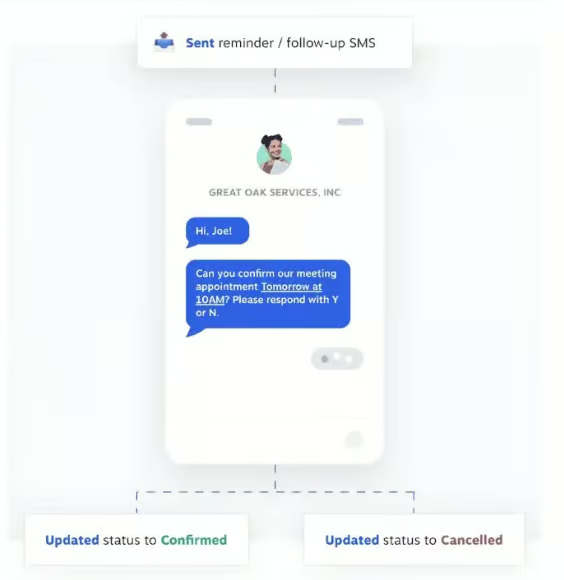
Nextiva's entry plan carries the pieces Phone.com either omits or reserves for Pro. Core includes inbound and outbound voice, business SMS, video meetings with screen and file sharing, call routing, team chat, and the mobile app, so a team that currently pays Phone.com plus a separate chat tool consolidates into one subscription.
Nextiva also publishes a 99.999% uptime figure and includes 24/7 support on every plan, while Phone.com's support hours are not tied to plan tier on its pricing page.
The tradeoff is at the low end: Nextiva's Core plan caps business SMS at 100 messages per user monthly and treats toll-free minutes as an add-on, so a texting-heavy team needs the Engage plan.
My expert opinion
I chose Nextiva as the best overall Phone.com alternative because it delivers a complete communications stack at a price a Phone.com subscriber will recognize. At $15 per user monthly on an annual term, Core matches Phone.com's entry plan but includes a broader communications stack with voice, video, team chat, and business texting.
For teams that handle customer conversations and not just calls, Engage adds inbound call center tools, live chat, and advanced reporting without moving to a separate platform. Nextiva is the alternative I would pick for a growing business that wants one bill and one app.
Pricing
| Plan | Billed annually | Billed monthly | Key inclusions |
| Core | $15 per user monthly | $23 per user monthly | Voice, video meetings, team chat, business SMS (100 per user), call routing, mobile app, shared team email (3 accounts) |
| Engage | $25 per user monthly | $50 per user monthly | Everything in Core, plus a toll-free number with up to 2,000 minutes, 500 SMS per user, inbound call center, live chat and chatbot, advanced reporting, shared team email (10 accounts) |
| Scale | $75 per user monthly | Contact sales | Everything in Engage, plus unlimited SMS, up to 10,000 toll-free minutes, AI transcription, skills-based routing, journey orchestration |
Annual pricing applies to new small business customers with one to 100 employees on a 12-month or longer term.
Standout features
- Team chat in the base plan: internal messaging sits beside calling and video, which is the single biggest functional gap against Phone.com.
- Toll-free minutes included: Engage bundles up to 2,000 toll-free minutes and Scale up to 10,000, so inbound campaigns do not need a separate number provider.
- Rooms: Send messages to colleagues and start audio or video meetings quickly. Create a new room by clicking the plus icon next to the “Rooms” option under the “Team Collaboration” section in the NextivaONE app.
- 24/7 support on every plan: Nextiva states that all plans include round-the-clock support, alongside a published 99.999% uptime figure.
How it compares to Phone.com
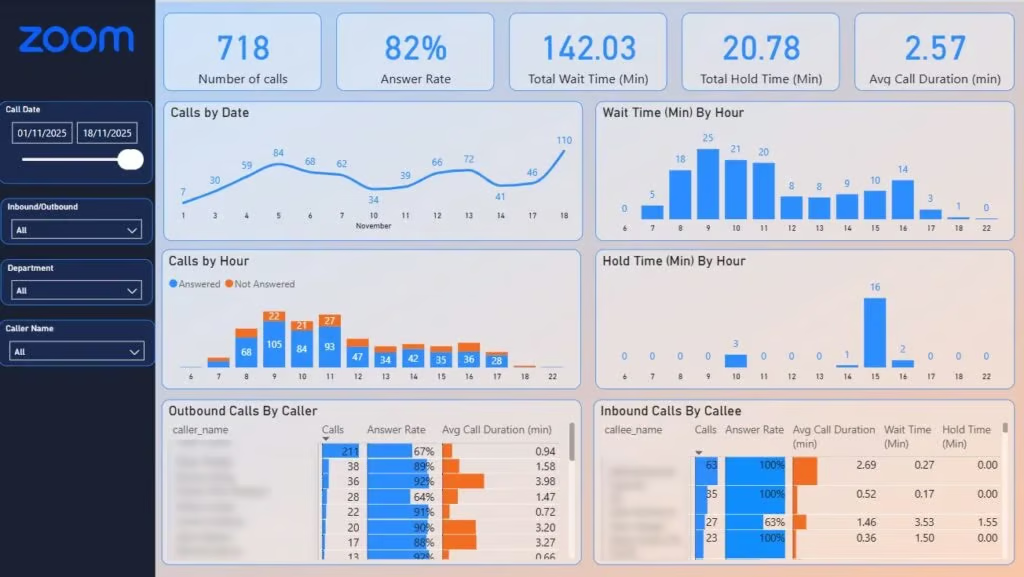
Zoom Phone costs slightly more than Phone.com's entry plan but includes unlimited domestic calling in the US and Canada, domestic SMS and MMS, and built-in AI features such as post-call summaries, voicemail prioritization, and task extraction. Because the phone service attaches to a Zoom Workplace account, a team already running Zoom meetings gets calling and conferencing under one login.
The limitation is scope: international calling is metered at the entry tier, and the larger meeting capacity and unlimited domestic fax only arrive on the Business Plus bundle.
My expert opinion
I chose Zoom Phone as the best low-cost Phone.com alternative because it is the cheapest plan on this list that still includes unlimited domestic calling, texting, and AI call notes. At $16 per user monthly on an annual term, it costs less than Phone.com's starting plan while removing the add-on math that inflates a Phone.com bill.
Teams that meet more than they call should look at Pro Plus or Business Plus, which bundle the phone service with Zoom Workplace features instead of charging for them separately. If your reason for leaving Phone.com is price, this is the first plan to price out.
Pricing
| Plan | Billed annually | Billed monthly | Key inclusions |
| US and CA Unlimited | $16 per user monthly | $18 per user monthly | Unlimited domestic calling in the US and Canada, metered international calling, domestic SMS and MMS, post-call summaries |
| Pro Plus | $20.50 per user monthly | $24 per user monthly | Unlimited domestic calling bundled with Zoom Workplace Pro features and unlimited in-meeting AI use |
| Business Plus | $24.50 per user monthly | $29 per user monthly | Everything in Pro Plus, plus unlimited domestic online fax, meetings for 300 participants, and the full AI feature set |
Standout features
- Post-call summaries: Calls come back as written recaps, so reps stop typing notes after every conversation.
- Unlimited domestic calling at the entry price: The cheapest plan already covers the US and Canada without a minute bundle.
- One account for calls and meetings: The phone service attaches to Zoom Workplace, which removes a second vendor for teams that already meet on Zoom.
How it compares to Phone.com
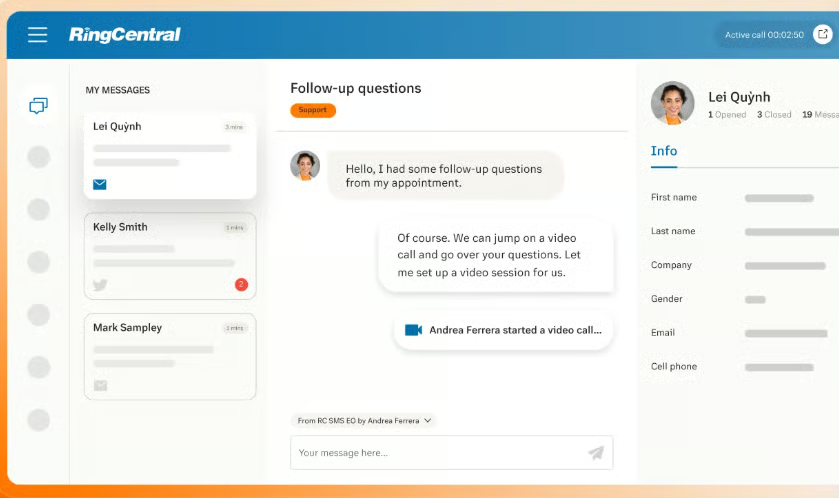
RingCentral connects to more than 500 integrations, which is the clearest gap against Phone.com, where application integrations such as screen pops and click-to-dial are a Pro-plan feature. RingCentral also publishes 99.999% availability and includes voice, auto attendant, online meetings, team messaging, fax, and conferencing in its trial account, so you can test the whole platform against your current Phone.com setup for 14 days on up to 20 lines.
The catch is that the newest AI tools are priced separately: an AI Receptionist starts at $49, and Conversational Intelligence starts at $60, on top of the per-user plan.
My expert opinion
I chose RingCentral as the best Phone.com alternative for integrations because its library reaches into the software small teams already run, from CRM and help desk platforms to calendars and productivity suites. That matters most for sales and support teams, where a call that logs itself in the CRM saves more time than any single calling feature.
RingCentral is also the safest choice for a business that expects to add departments, since you can attach call queues, analytics, and AI modules as needed. Budget for the add-ons, not just the base plan alone. For a wider look at platforms in this class, see our guide to the best office phone systems.
Pricing
| Item | Published price | Notes |
| RingEX plans | $30 to $35 per user per month, or $20 to $25 per user per month for annual billing | Prices are for 1 to 100 users. If users exceed 100, contact sales for custom pricing. |
| Free trial | 14 days | Up to 20 phone lines; includes voice, auto attendant, meetings, team messaging, fax, and conferencing; SMS excluded |
| AI Receptionist | Starts at $49 | Add-on |
| Conversational Intelligence | Starts at $60 | Add-on |
Standout features
- More than 500 integrations: RingCentral connects to the CRM, help desk, and productivity tools most small teams already pay for.
- Unlimited calling in the US and Canada: Domestic calling is not metered, which removes the minute bundles Phone.com sells.
- Call monitoring: RingCentral offers a whisper feature that lets managers speak to team members without the other party hearing. It also has barge and takeover capabilities, enabling team leaders to speak to all the participants in the call and disconnect the call being monitored.
How it compares to Phone.com
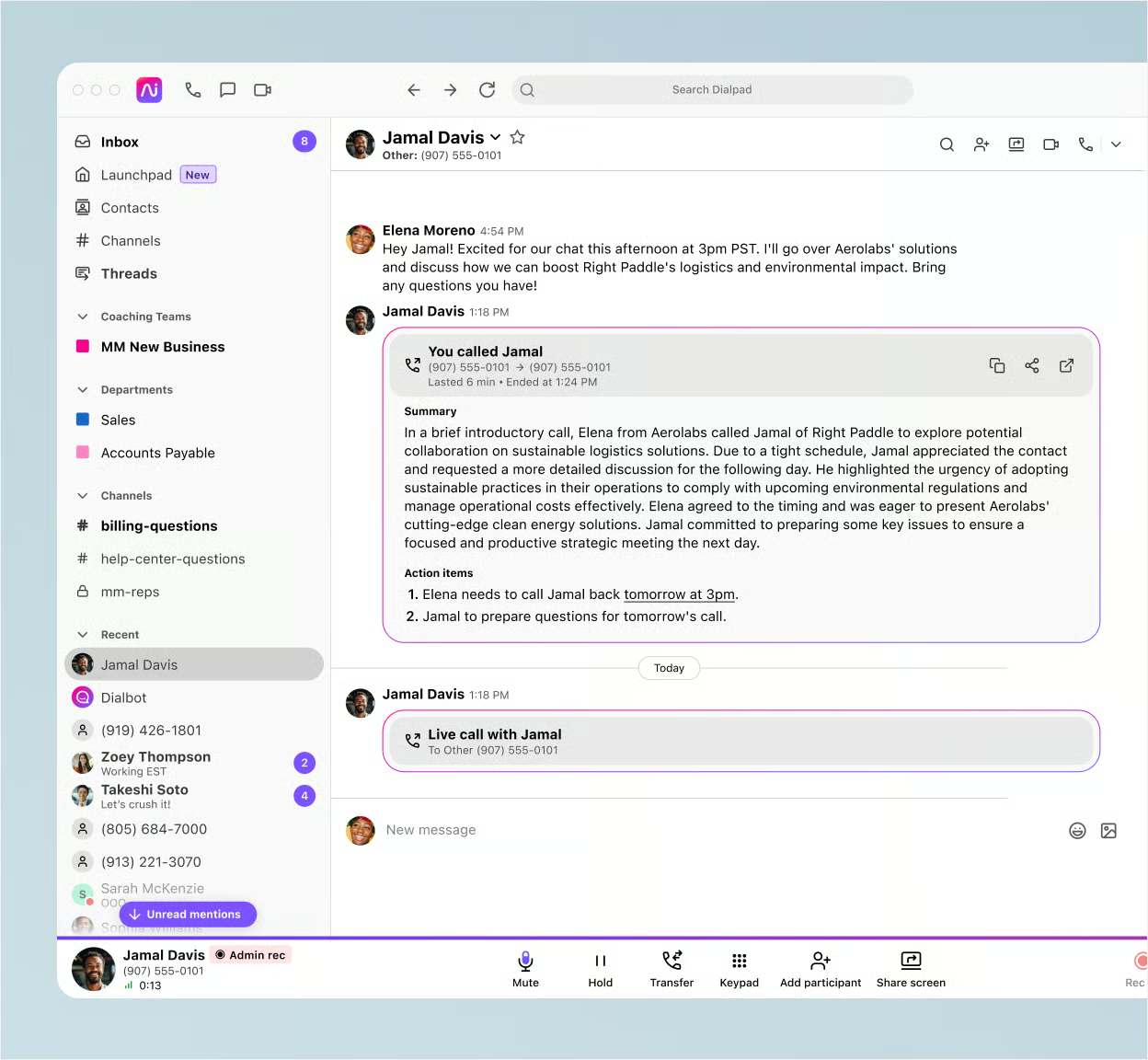
Dialpad builds AI into the call itself — it’s not being sold as a separate product. Its published feature set includes AI transcription, call summaries, AI Live Coach, AI Playbooks, and AI Scorecards, alongside the standard IVR system, visual voicemail, voicemail-to-email, business texting, call recording, and call transfer. Phone.com publishes none of those AI capabilities, and its voicemail transcription is limited to the Pro plan.
Dialpad is also a wider product family than a Phone.com subscriber may need, with separate Connect, Support, and Sell lines, so check which plan carries the coaching tools before quoting a price internally.
My expert opinion
Dialpad is the recommended Phone.com alternative for AI because its transcription and coaching tools are part of the calling product, not an upsell. For a small sales or support team, that means every call arrives with a searchable transcript and a written summary, and supervisors can see how a conversation went without listening to a recording.
However, the overall pricing system is quite complex — Dialpad's product lineup takes longer to price than a simple per-user plan. If your reason for leaving Phone.com is that calls disappear the moment they end, Dialpad solves that directly.
Pricing
| Item | Published price | Notes |
| Dialpad Connect plans | $27 to $35 per user per month, or $15 to $25 per user per month for annual billing | This is for the Standard and Pro plans, respectively; contact sales for custom pricing for the Enterprise plan |
| AI Agent | Conversation-based pricing | Billed with AI Agent credits rather than per user |
Standout features
- AI transcription and call summaries: Conversations become searchable text and a short recap without anyone taking notes.
- AI Live Coach: Agents get prompts during the call, which shortens ramp time for new hires.
- AI Scorecards and Playbooks: Managers review calls against a consistent standard rather than by memory.
- Miro integration: Brainstorm and organize ideas through this virtual whiteboard. Use the pre-made templates, sticky notes, and text boxes for easier collaboration.
How it compares to Phone.com
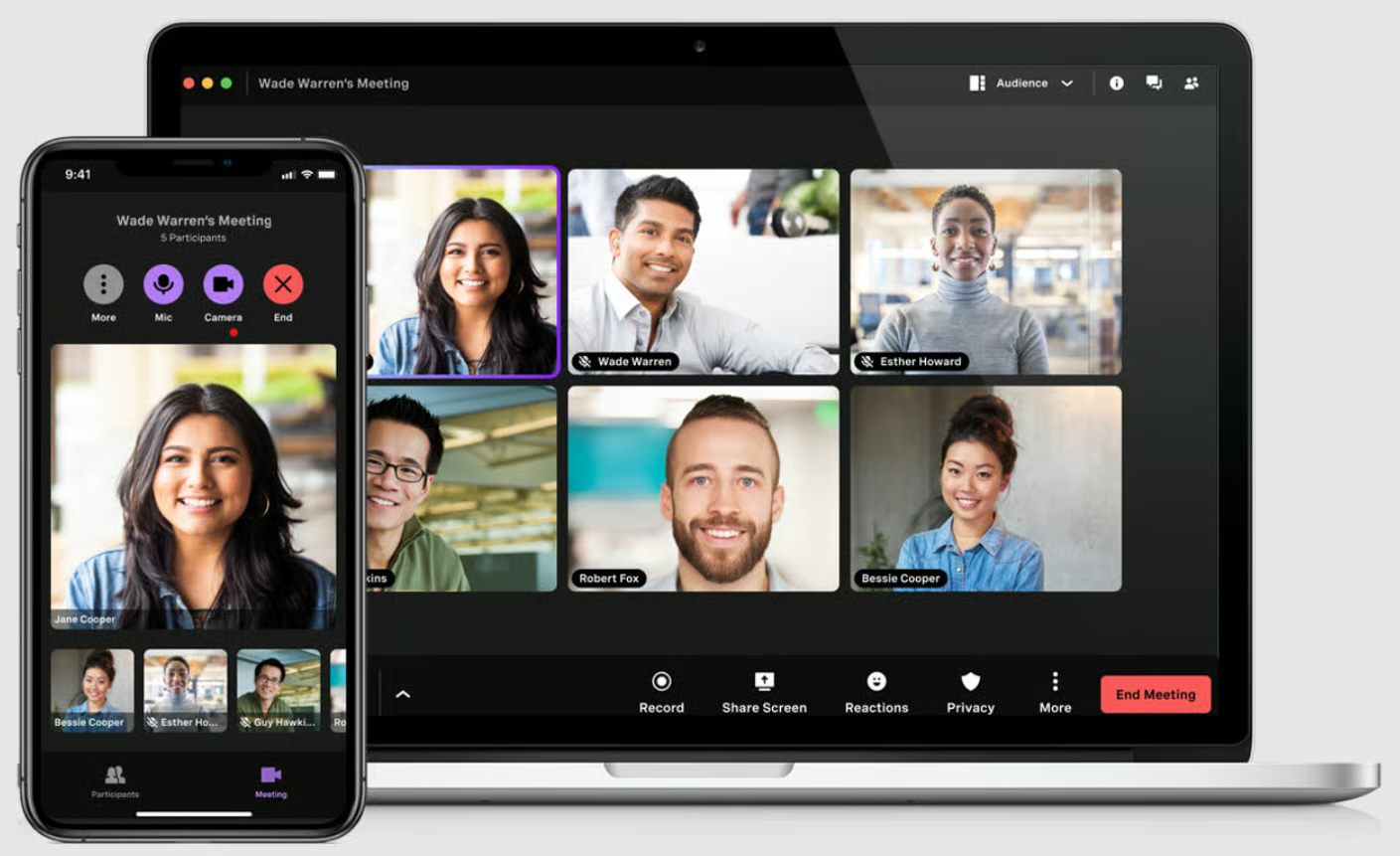
Vonage sells a small base plan and a long list of upgrades, which is a familiar model for anyone who has assembled a Phone.com account from add-ons. The difference is what the middle tier includes: Premium adds unlimited video meetings for up to 200 participants, team messaging, single sign-on, desk phone support, and the VBC App Center with more than 20 integrations.
That is double the meeting capacity of Phone.com's 100-participant video meetings, plus the team chat Phone.com does not list.
Call recording is still rationed: the Advanced plan includes 15 hours of on-demand recording a month, not unlimited recording.
My expert opinion
I chose Vonage as the best Phone.com alternative for businesses that want to pay only for what they use. Its Mobile plan covers unlimited domestic calling, SMS and MMS, voicemail, and the desktop and mobile apps, and you can add meetings, recording, or integrations as needed. That suits a team with uneven requirements, such as one department that records calls and another that never does.
Read the terms before you sign: annual plans require a minimum one-year contract, while monthly plans carry no early termination fee.
Pricing
| Plan | List price, per user monthly | Promotional price shown for annual billing | Key inclusions |
| Mobile | $19.99 | $13.99 with the 30% promotion | Unlimited domestic calling, SMS and MMS, voicemail, desktop and mobile apps |
| Premium | $29.99 | $20.99 with the 30% promotion | Everything in Mobile, plus unlimited video meetings for up to 200 participants, team messaging, VBC App Center, single sign-on, desk phone support |
| Advanced | $39.99 | $27.99 with the 30% promotion | Everything in Premium, plus on-demand call recording for 15 hours monthly, visual voicemail with transcription, call groups |
Standout features
- Meetings for up to 200 participants: Premium doubles Phone.com's video capacity without a separate conferencing tool.
- VBC App Center: More than 20 integrations can be switched on per user rather than across the whole account.
- Month-to-month option: Monthly plans have no minimum term and no early termination fee, which suits seasonal teams.
How it compares to Phone.com
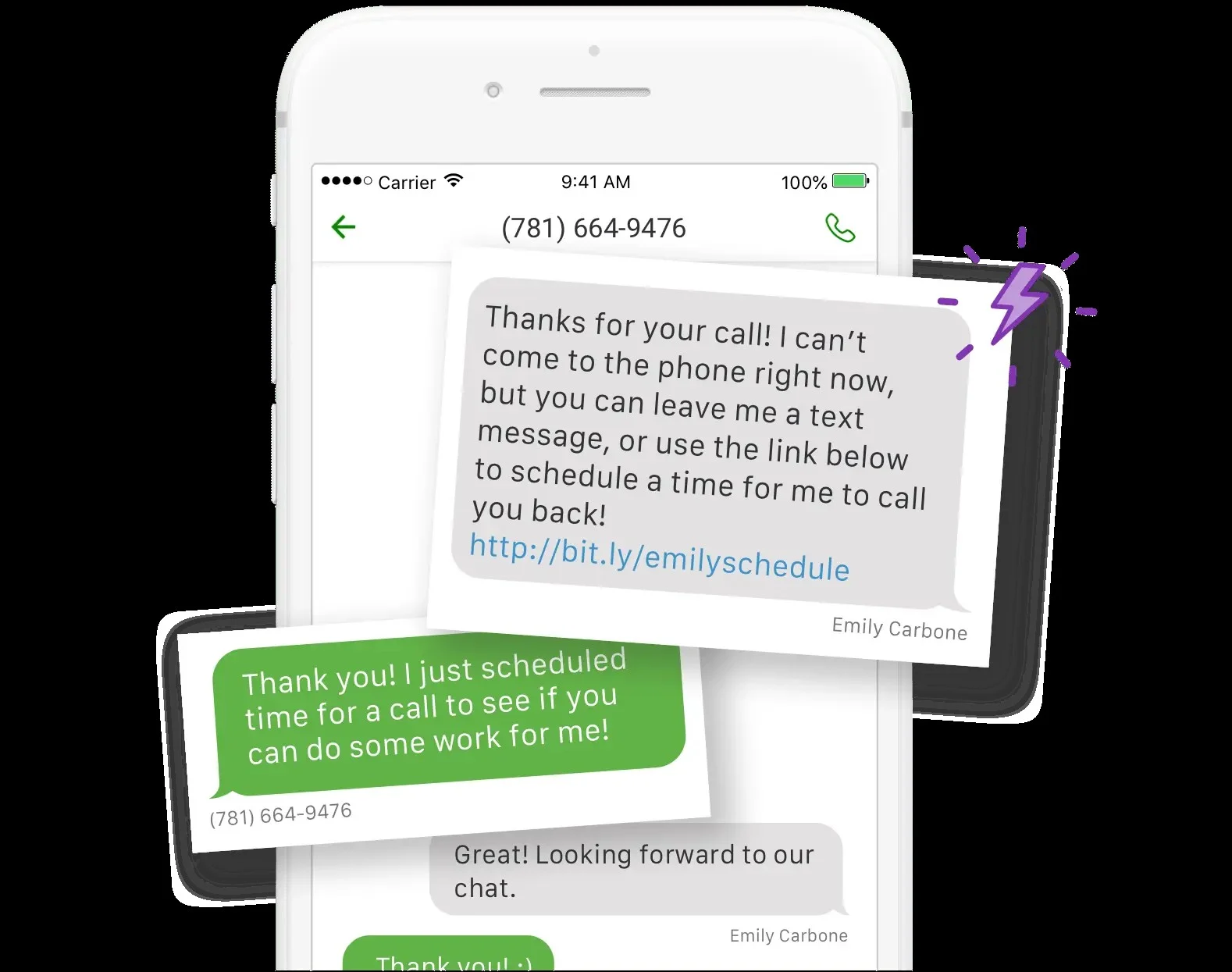
Grasshopper prices by plan rather than by seat, and it advertises unlimited users, unlimited extensions, and unlimited calls, minutes, and texts. For a five-person team that only needs a shared business line with departmental extensions, that structure costs less than Phone.com's per-user billing.
Grasshopper also includes an AI call summary and business call sentiment in its feature list, which Phone.com does not publish.
The limitation is scope: Grasshopper is a calling and texting service, not a UC platform, so there are no video meetings and no team chat.
My expert opinion
I chose Grasshopper as the best Phone.com alternative for teams that want extensions without per-seat pricing. It is the simplest product here to set up, and the flat-rate structure means adding a seasonal hire does not change the bill.
The feature list stays close to the phone itself: custom greetings, voice-to-text, instant response texts, call forwarding, virtual fax, and a virtual receptionist. Businesses that need meetings or internal chat should look at Nextiva instead.
Our walkthrough on how to use the Grasshopper phone system covers the setup steps.
Pricing
| Tier | Monthly billing | Annual billing | Inclusions |
| True Solo | $18 | $14/month | Unlimited calls and texts, mobile and desktop apps, custom greetings, voicemail transcription |
| Solo Plus | $32 | $25/month | Adds shared numbers, phone menu, shared extensions, call forwarding |
| Small Business | $70 | $55/month | Adds advanced call routing and configurations, call recording, call tracking |
Standout features
- Instant response: Missed calls trigger an automatic text reply, so a busy owner does not lose the lead.
- AI call summary and call sentiment: Both appear in Grasshopper's published feature list, which is unusual at this price.
- Customized business greeting: Welcome your customers professionally and establish brand identity with a customized phone greeting. Let them know about business hours even without speaking to a live customer representative.
How it compares to Phone.com
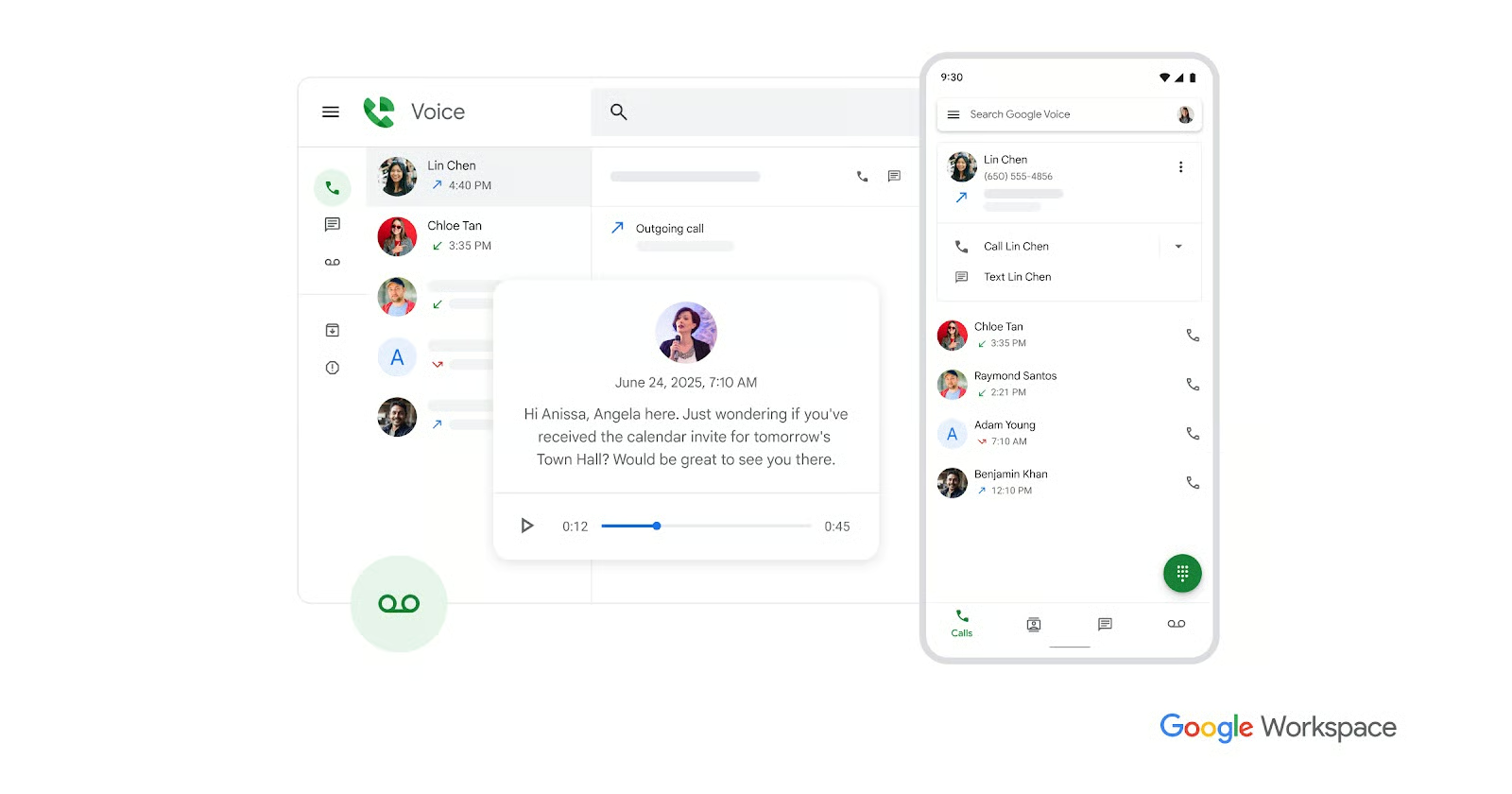
Google Voice is the cheapest way off Phone.com at $8.40 per user monthly, and for teams already on Google Workspace it adds a business line without a new vendor. Starter covers a single number with call forwarding, unlimited domestic calling, unlimited US texting, voicemail transcription, three-way calling, call transfers, call recording, and desk phone support for up to 10 users. Voicemail transcription is included at the entry tier, where Phone.com reserves it for Pro.
The ceiling is low: auto attendants, ring groups, and call queuing only arrive on the Standard plan, which requires a Google Workspace subscription.
My expert opinion
I chose Google Voice as the best Phone.com alternative for basic business calling because it strips the decision down to a number, an app, and a monthly rate. For consultants, contractors, and small offices that already live in Gmail and Google Calendar, the setup takes minutes, and the bill is predictable.
It is not a unified communications platform, and businesses that route calls through departments will outgrow Starter quickly. Treat it as a replacement for a phone line, not for a phone system. Our roundup of virtual phone systems covers heavier options in the same price range.
Pricing
| Plan | Price per user monthly | Annual billing | Users | Key inclusions |
| Starter | $8.40 | $7 | Up to 10 | One number with call forwarding, unlimited domestic calling, unlimited US texting, voicemail transcription, call recording, desk phone support |
| Standard | $16.80 | $14 | Unlimited | Everything in Starter, plus auto attendants, ring groups, call queuing, on-demand call recording, eDiscovery, SIP Link |
| Premier | $26.40 | $22 | Unlimited | Everything in Standard, plus automatic call recording, advanced reporting in BigQuery, unlimited international billing locations |
Note: Standard and Premier require a Google Workspace subscription.
Standout features
- Voicemail transcription at the entry tier: Starter includes it, whereas Phone.com gates transcription behind Pro.
- Workspace-native setup: numbers, users, and permissions live in the same admin console as email and calendar.
- Desk phone and ATA support: existing hardware can stay in place during a switch.
- Google Meet integration: Collaborate easily with colleagues or meet clients virtually through Google’s video conferencing platform. This works on any browser, eliminating the need to download software or plugins.
How to switch from Phone.com without losing your number
Number portability is what worries small business owners most about switching, and it has the clearest rules. Your number belongs to you, not to your provider, and Phone.com charges no port-in fees. Work through the move in this order.
- Keep the old account open: Start the port before you cancel. Canceling first releases the number and can lose it for good.
- Collect your account details: The new provider needs the account number, the service address, and a recent invoice or PIN that matches the Phone.com record exactly.
- Test on a trial first: RingCentral runs a 14-day trial for up to 20 lines and Grasshopper a seven-day trial with no credit card, which is enough time to check call quality from your actual office.
- Rebuild call handling before cutover: Greetings, menus, extensions, business hours, and voicemail boxes do not transfer, so set them up on the new system while the old one still answers.
- Watch the billing date: Phone.com offers a 30-day money-back guarantee, and Vonage requires a minimum one-year term on new annual accounts, so time the cancellation against both calendars.
How to choose a Phone.com alternative
Start with the gap you are trying to close. Most businesses leave Phone.com for one specific reason, and naming it narrows this list to two or three options.
- Total cost, not sticker price: Add the features you currently buy as add-ons — recording, extra numbers, transcription, desk phone connections — and compare that total, not the entry plan.
- Channels your team actually uses: If voice is all you need, a calling-only service such as Grasshopper or Google Voice is cheaper. If your team chats and meets all day, a UC platform such as Nextiva pays for itself by replacing a second subscription.
- Integrations with your CRM: A phone system that logs calls into your customer records saves more staff time than any individual calling feature. RingCentral's library is the widest here.
- AI that fits your workflow: Ask whether you need notes after the call, coaching during it, or an assistant answering it, since those are three different products at three different prices.
- Billing terms: Annual plans cut the per-user rate but lock you in, and Vonage requires a minimum one-year contract on new annual accounts. Monthly billing costs more and keeps you flexible.
- Involve your team: The people who answer calls all day will spot a clumsy interface in an afternoon, which is what free trials are for.
Frequently asked questions (FAQs)
What is the best alternative to Phone.com?
Nextiva is the best alternative for most businesses because its entry plan bundles voice, video meetings, team chat, and business SMS for $15 per user monthly on an annual term. If price is the deciding factor, Zoom Phone starts at $16 per user monthly with unlimited domestic calling, and Google Voice starts at $7 per user monthly for a basic business line.
Can I keep my phone number if I leave Phone.com?
Yes. Numbers are portable between carriers, and Phone.com charges no port-in fees. Start the port with your new provider before you cancel Phone.com, because canceling first can release the number.
Why do businesses switch away from Phone.com?
Most leave for features the plans do not include. Team chat is absent from Phone.com's feature list, video meetings cap at 100 participants, and voicemail transcription, call analytics, and application integrations are limited to the Pro plan. Add-ons such as call recording at $7.99 a month also raise the effective price.
Do Phone.com alternatives support HIPAA compliance?
Phone.com states that Plus and Pro users get HIPAA-compliant video. Requirements differ by provider and plan, so ask any vendor for a business associate agreement in writing before you move protected health information onto their platform.
Which Phone.com alternative is best for a solo business owner?
Grasshopper suits solo owners who want extensions, an automatic text reply to missed calls, and a flat monthly rate. Google Voice is the better pick if you already use Google Workspace and want the lowest possible bill for one professional number.
Bottom line
Nextiva is the best Phone.com alternative for 2026 because it replaces the whole stack, not just the phone line: voice, video, team chat, and business SMS arrive in the entry plan at $15 per user monthly on an annual term, with 24/7 support and a published 99.999% uptime figure.
Zoom Phone is the cheaper way to keep unlimited domestic calling, Dialpad is the choice when AI notes and coaching matter most, and Grasshopper and Google Voice cover solo operators who need a professional number rather than a platform.
Before you commit, price the features you currently buy as Phone.com add-ons and run a free trial from the office where the calls actually happen. For a wider shortlist, see our guides to the best VoIP service for small businesses, the cheapest VoIP services, and the best OpenPhone alternatives.
