







Social media: We all know it, have it, and use it to market our businesses in some way, and with good reason — it can be one of the most powerful tools to grow your online presence. But social media in 2025 can also be tricky to navigate, being one of the most unpredictable marketing channels. With trends shifting nearly every day, brands are bound to commit a few social media fails every now and then.
Below, I dissect 14 of the biggest failed social media campaigns from brands large and small and what we can learn from them.
- 1. Duolingo’s ‘death’: Too much attempt at controversy
- 2. Burger King’s International Women’s Day X post: Clickbait on the wrong platform
- 3. Audi’s #PaidMyDues Campaign: Irrelevant social content
- 4. Listerine’s Partnership with Scarlett London: Brand & influencer mismatch
- 5. Bioré’s TikTok creator partnership: Faking authenticity
- 6. Ryanair’s X Post: Taking brand humor too far
- 7. Queensland Symphony Orchestra’s ad: Trusting AI to tell an authentic story
- 8. Safety Warehouse’s Facebook: Misleading event mechanics
- 9. Draper James’ Instagram dress giveaway: Unclear contest mechanics
- 10. McDonald’s meme-jacking Ad: Being too niche
- 11. Kyte Baby’s Scripted TikTok apology: Being inauthentic on social media
- 12. Jaguar’s rebrand: Departing from your core brand identity
- 13. British Museum’s TikTok: Riding on the wrong trend
- 14. #WonkaGate: Underdelivering on event promotions
- How to avoid social media mistakes and fails (do’s & don’ts)
- How to address a social media scandal or blunder
- 9 statistics on brands & customers on social media
- Frequently asked questions (FAQs)
- Bottom line
1. Duolingo’s ‘death’: Too much attempt at controversy
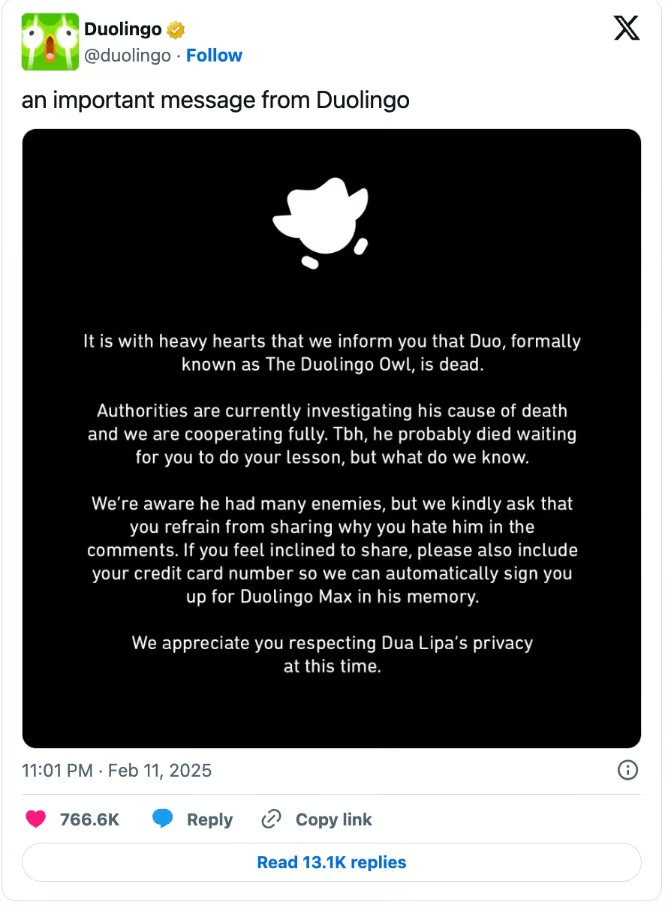
The language-learning app Duolingo is no stranger to online virality, especially through its well-loved owl mascot. But in February 2025, it went viral for the wrong reasons. The app announced on social media that its beloved mascot, Duo, had “died” in a dramatic accident — only to bring it back three weeks later, saying it faked its death as a test to get users to complete their language lessons.
While some fans celebrated the owl’s return, not everyone was happy and saw the stunt as a cheap ploy for virality, even for Duolingo, a brand known for its unconventional marketing. Some even called the stunt unoriginal and out-of-touch, especially in the midst of so many pressing real-world issues.
2. Burger King’s International Women’s Day X post: Clickbait on the wrong platform
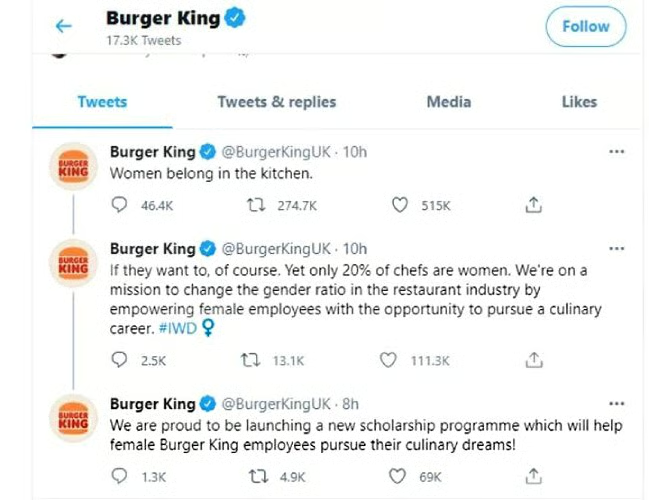
We’re all familiar with brands riding on special occasions to launch promotions and campaigns. While there is nothing inherently wrong with that, Burger King’s Women’s Day post is a great example of how to do it the wrong way.
The tweet starts with a simple sentence: “Women belong in the kitchen.” While obviously meant as clickbait to get readers to engage with the post (the thread announced the launch of a culinary scholarship program for women), users were quick to call the brand out for promoting outdated ideas. Needless to say, the tactic backfired, and Burger King ultimately took the post down to avoid a potential social media scandal.
3. Audi’s #PaidMyDues Campaign: Irrelevant social content
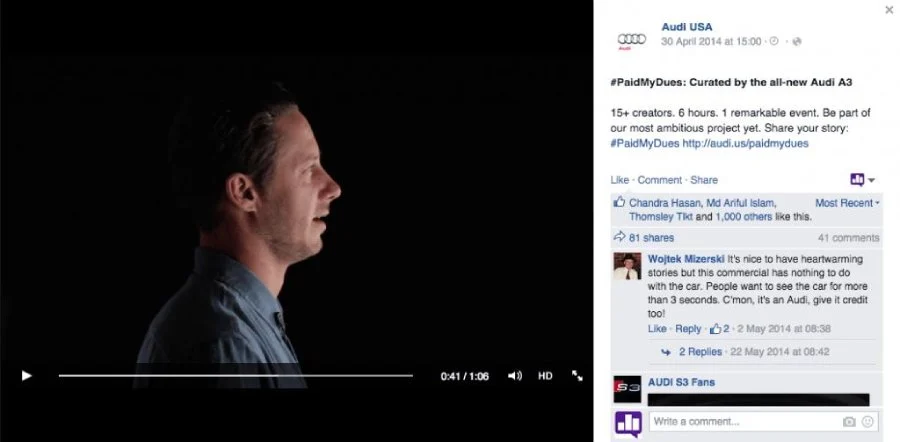
Taking risks can sometimes reap great rewards for your brand — but not always. A brand that learned this the hard way is Audi with its #PaidMyDues Facebook and Instagram campaign. The campaign had a noble concept: to highlight Audi drivers to humanize the brand and be more relatable to its customer base.
While the campaign launched with good intentions, Audi’s followers eventually turned against the new direction, finding the videos of drivers irrelevant to what they wanted from the brand on Instagram. Soon enough, Audi’s Instagram and Facebook posts were flooded with negative comments, and the brand returned to posting regular car images after a few weeks.
4. Listerine’s Partnership with Scarlett London: Brand & influencer mismatch
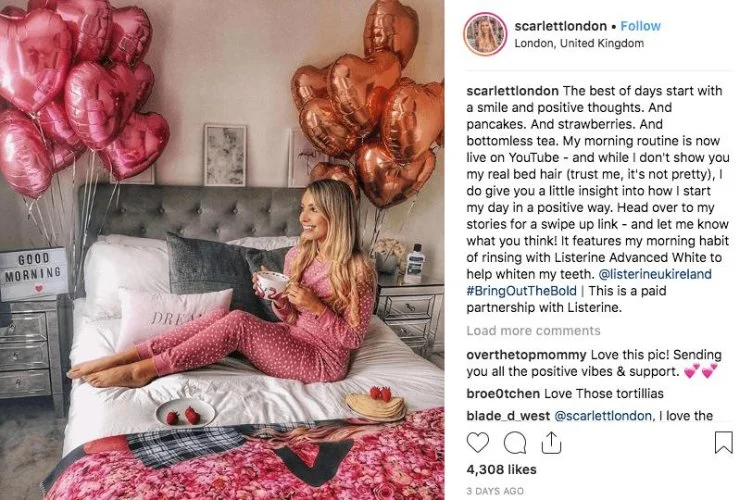
Influencer marketing campaigns can be a great way to introduce your brand to niche audiences. However, one of the biggest mistakes brands make is partnering with influencers who don’t accurately match or represent their brand values. This was the case with Listerine’s partnership with lifestyle influencer Scarlett London on Instagram.
As an influencer, Scarlett London is best known for her lifestyle, fashion, and wellness content. So when one of her posts advertised a partnership with Listerine, followers found the overall effect jarring and inauthentic. Many found London’s social media content to have no correlation to the Listerine brand or product at all. Many called out her photo for being far too staged and irrelevant to her fans’ interests.
5. Bioré’s TikTok creator partnership: Faking authenticity
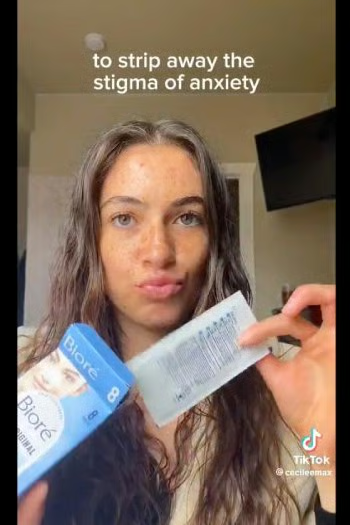
Many brands have taken advantage of TikTok’s trademark authentic-feeling videos to promote products in more personal ways, especially through creator partnerships. One example is Bioré, which partnered with TikTok creator Cecilee Max-Brown to create relatable content promoting its products.
The TikTok video shows Max-Brown in a “get ready with me” routine as she discusses struggling with mental health issues while applying Bioré’s products. While the video is undoubtedly personal, many found it off-putting to imply that the brand’s skincare products helped alleviate mental health issues and called the brand out for capitalizing on personal struggles.
6. Ryanair’s X Post: Taking brand humor too far
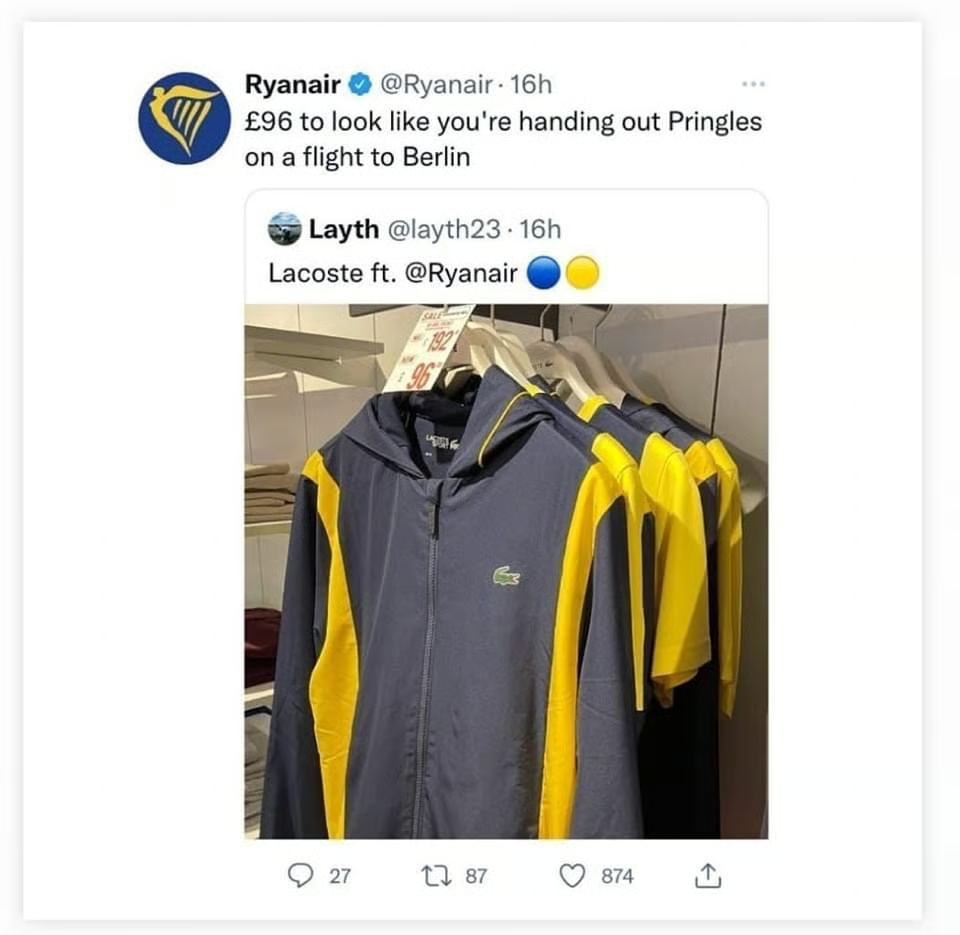
Organic social media can be an excellent platform to promote your brand personality and attract like-minded people. One of the best players of this strategy is the European budget airline Ryanair, which has since been known for its humorous, tongue-in-cheek approach to social media.
Unlike most airlines, Ryanair’s social media is full of humor and memes, often involving a lot of snark. While most users are already familiar with (and enjoy) this unconventional approach, one particular tweet poking fun at Ryanair’s cabin crew struck the wrong way, with many finding it insensitive and disrespectful. In a rare move for the usually unapologetic airline, Ryanair quietly took down the post.
7. Queensland Symphony Orchestra’s ad: Trusting AI to tell an authentic story
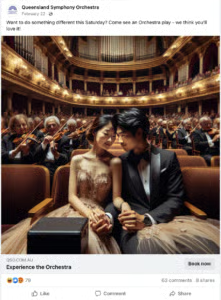
If you’ve been online in the past few years, you’re likely aware of the atmospheric growth of AI. And while AI can have many uses for marketing, it’s far from perfect. Case in point: The Queensland Symphony Orchestra’s AI-generated Facebook ad — one of the more modern social media blunders brought on by AI adoption.
While AI tools like ChatGPT can make your processes more efficient, they’re only tools to assist your marketing efforts — not take over them completely. In this case, the Queensland Symphony Orchestra’s AI-generated image ad served the opposite of its intended effect, coming off as low-quality and unprofessional instead of inviting and attractive.
8. Safety Warehouse’s Facebook: Misleading event mechanics
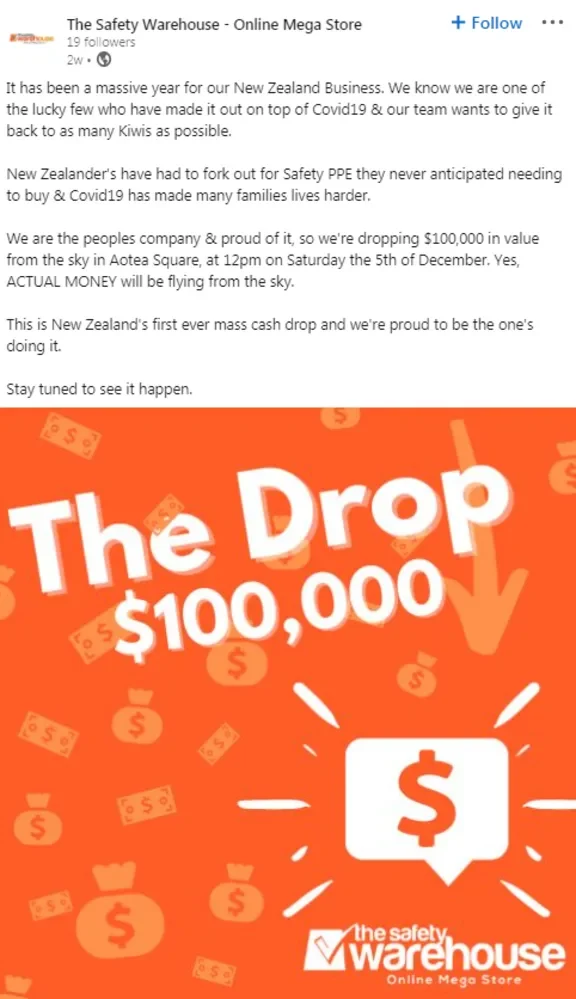
Events are a tried-and-true way to drum up attention and interest in your business. Event marketing can be a cost-effective way to generate new leads. However, it can also be difficult to set up and execute, especially through social media. One brand that learned this the hard way is the New Zealand-based Safety Warehouse, which announced a $100,000 cash drop on Facebook as a promotional event.
However, people were eventually dismayed at the event upon realizing that the promised “cash” was actually store vouchers, leading to backlash against the brand. Instead of apologizing for its blunder, the brand went on the defensive, saying it was “unfairly characterized.” Since then, the brand has taken down its original Facebook post.
9. Draper James’ Instagram dress giveaway: Unclear contest mechanics
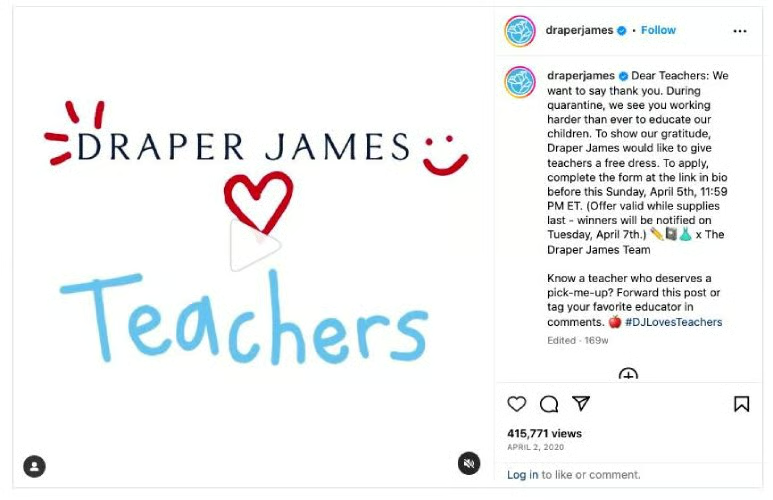
Social media giveaways can be a great way to boost engagement without breaking the bank. However, one major obstacle is in the mechanics. Social media contests are no different from real-world contests, so you need to clearly define and communicate your rules and contest requirements to eliminate confusion among participants.
This proved to be retail brand Draper James’ biggest misstep in its Instagram dress giveaway, which offered free dresses to teachers as a token of support. However, the post didn’t specify exactly how many dresses the company was giving away — only to sign up for the giveaway via a link. Seen enough, the link garnered nearly one million registrations. The problem: The company only had 250 dresses to give away.
10. McDonald’s meme-jacking Ad: Being too niche
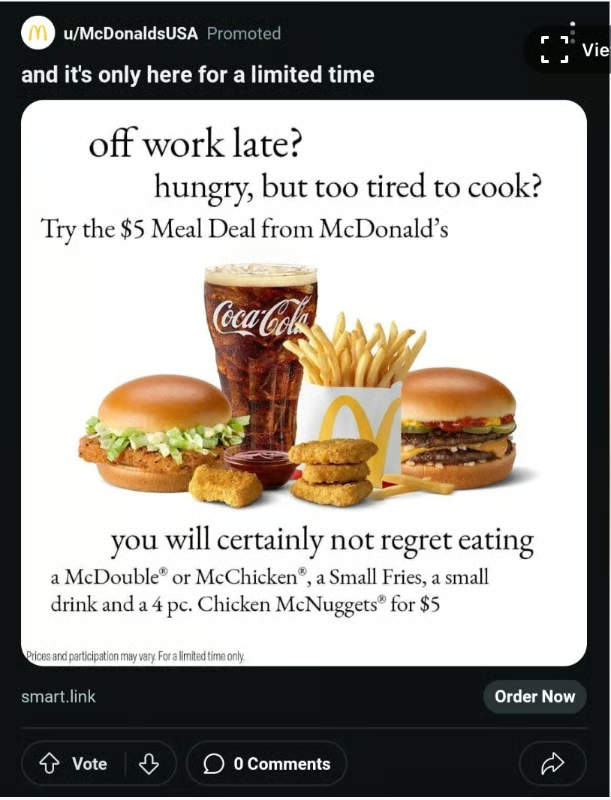
Here’s another example of what to not post on social media: a meme that’s a few years too late. Last year, McDonald’s released ads on Reddit referencing the “Hungry, but too tired to cook” meme — from back in 2020. If you know anything about memes, you know they have a lifespan of no more than a few weeks. Plus, not everybody in McDonald’s audience base was familiar with the niche meme, leading to some very confused social media followers.
11. Kyte Baby’s Scripted TikTok apology: Being inauthentic on social media
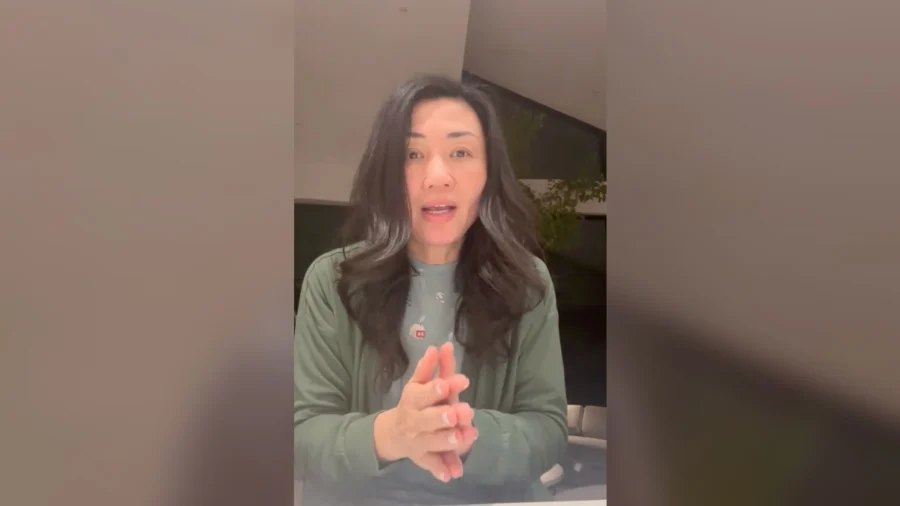
If you’re ever part of a social media controversy, the next step is an official apology. But a public apology is precisely what made for one of Kyte Baby’s biggest failed social media campaigns in the last year. The baby clothing brand came under fire when one of its former employees posted about being forced to resign after requesting to work remotely to care for a sick child.
This caused an online boycott of the brand, which, in turn, caused its founder, Ying Liu, to post an apology video on TikTok. The only problem was that the apology video was scripted, which didn’t go over well with the TikTok crowd. Liu eventually posted another apology video, this time unscripted, directly addressing the issue.
12. Jaguar’s rebrand: Departing from your core brand identity
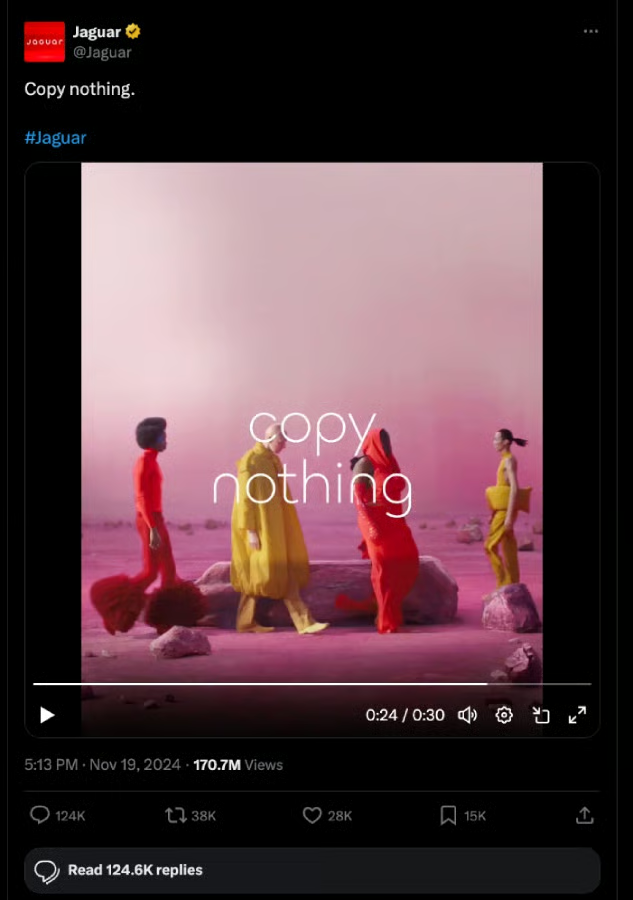
Launching a rebrand is always tricky, and no brand knew that better than Jaguar. In November 2024, Jaguar surprise-announced a rebrand on X and Instagram. It was more than a little jarring to long-time fans and the general public, but especially for the former.
Jaguar has long been known as a sleek, luxury car brand, so it took people by surprise when it launched an ultra-modern, creative, and stylish video that felt more akin to a high-fashion shoot than the luxury automotive brand people knew Jaguar for. Reactions ranged from mild bewilderment to wondering if Jaguar still sold cars.
13. British Museum’s TikTok: Riding on the wrong trend
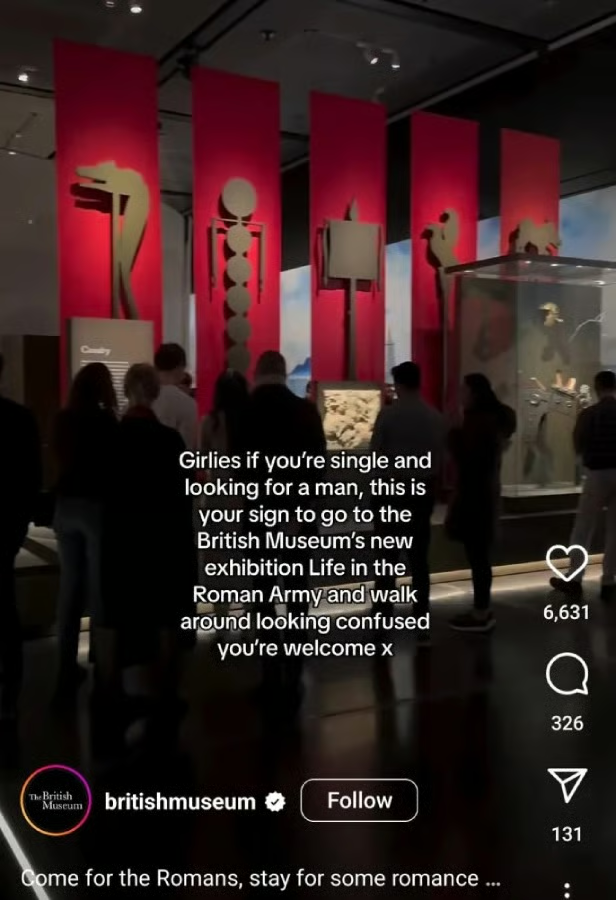
Jumping on social media trends can be a great way to make your brand feel accessible and fun — especially when you’re an institution like the British Museum with a reputation for being “stuffy” or “old-fashioned.”
However, instead of delighting followers, its TikTok post following a popular and unserious TikTok trend drew negative reactions. The message suggested single women could meet more men by visiting the Roman Army exhibit and acting confused, a move some called sexist and backward.
14. #WonkaGate: Underdelivering on event promotions
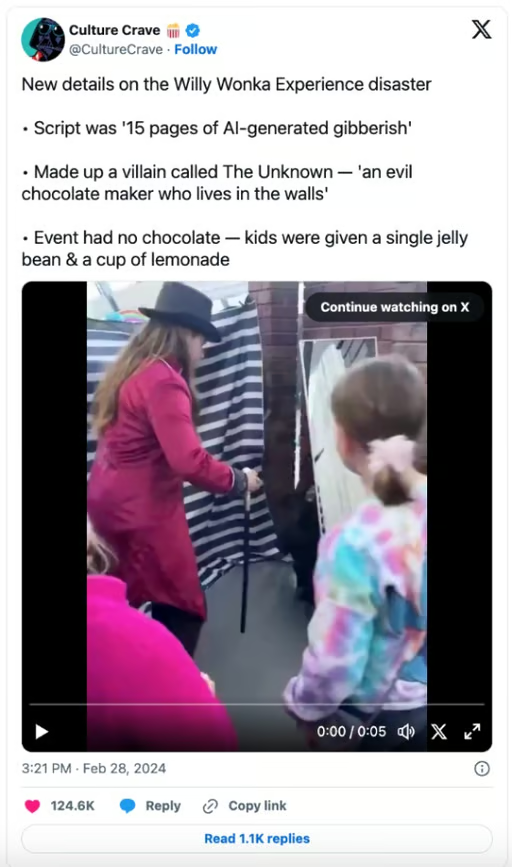
The failed ‘Willy Wonka Experience’ in Scotland quickly became one of the biggest marketing fiascos in recent memory. (Source: @culturecrave on X) 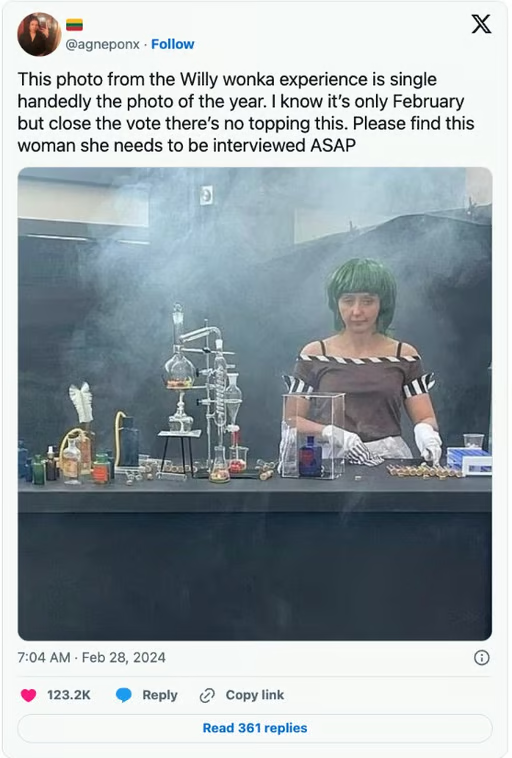
Images of the failed event quickly went viral. (Source: @agneponx on X)


Finally, one of the biggest failed social media campaigns from the past year was the now-infamous failed “Willy Wonka Experience” in Scotland, which went viral for massively underdelivering on promises of a live Wonka-themed extravaganza. Instead, attendees were greeted with haphazard sets and a few underprepared actors, images of which immediately spread on social media, with some calling it a “Fyre Festival 2.0.”
The event especially went viral for being such a far cry from the promised “immersive experience of pure imagination” advertised by organizers on social media, which were even accompanied by AI-generated images of a Willy Wonka fantasyland. Organizers eventually refunded attendees’ tickets.
How to avoid social media mistakes and fails (do’s & don’ts)
Social media can be challenging, but it still offers a wealth of opportunities for your small business’s growth. While there is no one-size-fits-all social media marketing strategy for every business, a few basics remain true, like knowing your audience, doing lots of research and planning, and staying agile.
Here are some key do’s and don’ts to avoid social media campaign fails like those above.
Social media do’s
- Have a social media plan: A strategic social media plan can save you from social media disasters by defining your audience, tone, goals, brand voice, and best practices for marketing on each channel.
- Know your audience: Social media audiences differ on each platform, and you’ll need to understand your audience’s interests and habits on each one.
- Play to each platform’s strengths: Each social media platform is unique. X is for short-form content or quick news updates. TikTok thrives at authenticity. When planning your social media strategy, research and understand each platform’s ecosystem so that you can use it appropriately.
- Conduct significant research: Many of the social media blunders above directly resulted from failing to do enough research. When planning a campaign, do background checks on trends, influencers, hashtags, and more before associating them with your brand.
- Post regularly: Content drives social media. For your brand to remain relevant, publish fresh and valuable content regularly. Plan a content calendar that addresses your audience’s interests and needs, and follow each platform’s best practices for how often to post. Some of the best free social media scheduling tools can help you schedule content in advance.
- Interact with users authentically: You already know that social media is all about interaction. But more than that, it’s about interacting authentically with people as human beings, not as faceless entities. People still come on social media first and foremost for human connection, not to be sold a product or service.
Social media don’ts
- Clog your followers’ news feeds: Good social media marketing is about finding the sweet spot between being memorable without being so persistent or sales-y that followers block you from their news feeds. While it varies for each platform, aim for at least a few times per week.
- Be too self-promotional: People use social channels to interact with others. One of the biggest social mistakes you can make is being too overtly self-promotional, which can turn people away from your brand. Instead, focus on building genuine relationships and delivering value to your customers.
- Crosspost everything: Don’t make the mistake of crossposting the same content across all your social channels. Something that plays well on one platform might even hurt your brand on another. Have a separate strategy for each social platform, and focus particularly on the platforms that best fit your brand.
- Talk at your audience (talk with them): Many bad social media posts share the mistake of talking at audiences instead of with them. When writing social media captions, talk like one of your target customers to be more engaging instead of communicating mono-directionally.
- Jump on every viral trend. If there’s one thing to learn from the failed social media campaigns above, it’s that hopping on every viral trend isn’t always the best option. Research each trend carefully first to make sure it’s a good brand fit, and don’t sacrifice losing your most dedicated followers for a few new ones.
How to address a social media scandal or blunder
It’s best to take preventive measures to avoid making mistakes on social media, but it’s sometimes inevitable to fall into one. Social media mistakes can happen to anyone — even the biggest corporations — and what matters most is how you respond and act on them. If you find yourself in a social media scandal or blunder, follow my response tips.
- Acknowledge your mistake: Even if you made your post with good intentions, negative feedback means that it still caused harm in some way. The best thing to do is to apologize and acknowledge your error—both outwardly and internally. Your customers’ concerns should always come first, and their feedback can help steer your company in the right direction moving forward.
- Address the issue directly: Skirting around or completely ignoring your blunder will do more harm than good, so the best course of action is to address it head-on. Publish a clear crisis communication announcement focused solely on the issue, including how your company is learning from it and committed to doing better in the future.
- Be apologetic and appreciative: It isn’t enough to just address the issue — how you address it matters just as much and will impact how customers perceive your brand. To keep your brand in good standing, keep your statement apologetic and appreciative. Apologize for your mistake, then thank your followers for calling it out.
- Respond politely: You’ll likely also get negative comments flooding your notifications and inboxes. While it may seem like an impossible battle, try to respond to each politely and considerately and show you hear their concern. Take note of their criticism, and communicate what you’re doing to alleviate the situation.
- Make things right: After addressing your mistake, you have the opportunity to make things right and come out even better. For example, if a customer called your brand out on social media for getting their order wrong, sending them a gift box could improve your standing. Think of ways to give back to your customers genuinely.
- Follow through on your commitments: Finally, every social media blunder is an opportunity for growth. Whatever issue you corrected and the knowledge you gained from it, make sure to follow through on your commitment to do better, whether that includes changing a store policy or revising an entire brand strategy.
9 statistics on brands & customers on social media
Social media evolves every day. But it’s still your best bet for establishing meaningful connections with your customer community and reaching new audiences.
It’s no secret that social media now defines how brands and customers interact, but more important than ever is understanding who your audiences are and what they expect. Use the statistics below to guide your social media strategy.
- 93% of consumers think it’s important for brands to keep up with online culture. The good news is that 94% of consumers already think brands do a good job of it.
- 40% of consumers think positively of brands that jump on viral online trends. However, 27% think it’s only good if it’s done within the first 48 hours of the trend.
- 78% of social media users say a brand’s social media presence significantly impacts their trust in that brand. The biggest factors in this are the brand’s social media content (37%), responsiveness to customers (32%), and personalized responses (15%).
- Nearly 75% of customers expect brands to respond to queries on social media within 24 hours — an increase from just 69% of customers the previous year. In fact, customers say personalized customer service should be brands’ number one priority in 2025.
- 78% of business owners say that managing online crises too late can harm their brand’s reputation, employee morale, and overall sales.
- 46% of consumers consider a brand’s social responsibility when deciding whether or not to purchase from that brand. 70% also say they want brands to be transparent about their social and environmental efforts.
- 90% of consumers say harmful content on brands’ social media pages negatively impacts their reputation. This can be anything from content published by the brand itself to negative comments or reviews left on posts.
- While customers have seen more brands take public stances on social issues, less than 30% of customers think it’s a good idea to do so. And even then, customers expect full transparency and honesty.
- 39% of social media users are less likely to interact with AI-generated content than human-made content on social media. Only 31% prefer AI-generated social media content.
Frequently asked questions (FAQs)
Why does social media fail?
The most common reason social media fails is not understanding your audience or being inauthentic in your messaging. For example, a common social media mistake brands make is trying to sound trendy by using common slang to capture young audiences, which comes off as inauthentic. Another common mistake is being too self-promotional about your brand instead of focusing on your audience’s interests and needs.
How do I avoid social media fails?
The best way to avoid social media errors is to thoroughly research your audience on each social platform and craft a strategy that engages their interests. It’s also important to be authentic.
Create content that centers on your audience’s needs and wants instead of being overly promotional about your brand, and respond promptly to concerns and messages. It’s also important to stay agile and respond to shifting trends while maintaining your brand identity.
Why do businesses fail on social media?
The foremost reason businesses fail on social media is not doing the right research to understand their audiences on each social platform. This leads businesses to create content that’s neither interesting nor relevant to their audiences and eventually gets ignored. Other reasons businesses fail on social media are taking on too many platforms instead of focusing on the few most relevant ones and being overtly self-promoting or inauthentic.
Bottom line
There’s no overstating the power of social media in connecting brands and audiences in more personal and authentic ways. And while it can sometimes be tricky to navigate, its benefits far outweigh its risks in the long run. All it takes is the proper know-how and strategy. The social media fails from brands above are good lessons to learn from to craft better campaigns for your business.
