







Social media marketing can be a tricky area to navigate—I know, I’ve been there. Many small businesses I’ve encountered are often in a rush to get on social media, viewing it as the young, hip, and dynamic platform to show off their businesses to the world. However, they are confronted by a laundry list of blockers and pain points. Here are some of the most common issues they’ve encountered:
- With so many diverse audiences on social media, how do we target the right market?
- How do we choose the right social media platform to market on? What kind of content do we need to post?
- What’s the difference between organic and paid social media marketing? Which is more effective?
- How much of my budget and time should I allocate to social media marketing?
- How effective is social media in marketing my business?
I’m well aware of all these dilemmas, and yes—social media marketing can be a highly effective tool for your business’ growth, but only with the right know-how. While there are no set guidelines on how to best grow your business on social media, a few best practices remain true, like setting a defined audience and focusing on the few best platforms for your best chances at success.
Equally important is to know the social media landscape. Keep reading for 20 social media marketing statistics to keep in mind as you carry out your social media marketing strategy.
- 1. Social media is the #1 most popular advertising channel for small businesses
- 2. Businesses spend 14.5% of their marketing budgets on social media
- 3. Most small businesses spend between $200 & $2,000 a month on social media marketing
- 4. 38% of small business owners (SBOs) say Facebook is the most effective social media advertising platform
- 5. SBOs find social media marketing up to 7% more effective than digital ads
- 6. Social media ads take up 30% of small business’ ad budgets
- 7. 9 out of 10 business owners say audiences’ social media preferences are more important than demographics
- 8. For SBOs, photos & videos are 81% more effective than news articles when educating new customers
- 9. 83% of small businesses post on social multiple times a week
- 10. 25% of internet users use social media to find new products to buy
- 11. 55% of consumers discover new businesses on social media
- 12. 66% say social media’s biggest benefit is increasing sales
- 13. Instagram is the #1 platform people use to find new products
- 14. 33% of consumers are highly likely to buy from a small business recommended by a social media influencer
- 15. 29% of social media influencers are paid in product freebies
- 16. 88% of Gen Z use YouTube more than any other social media platform
- 17. Over 90% of adults aged 36+ use Facebook
- 18. 51% of consumers want to see content about products or services from brands on social media
- 19. TikTok has a 5.63% higher engagement rate than Facebook
- 20. 93% of all internet users are on social media
- Frequently Asked Questions
- Bottom Line
1. Social media is the #1 most popular advertising channel for small businesses
Advertising on social media remains as popular as ever, with recent reports saying that 70% of small businesses use it as part of their marketing efforts, 36% higher than the second most popular channel, print advertising. It’s no wonder: social media advertising is relatively low-cost, low-effort, and effective at reaching specific audience sets and growing your brand presence.
But that is also its biggest challenge—it’s an increasingly crowded and competitive platform. To maximize your chances at success, focus your efforts on a few of the most effective social media platforms, and make sure you have a well-defined customer persona to target.
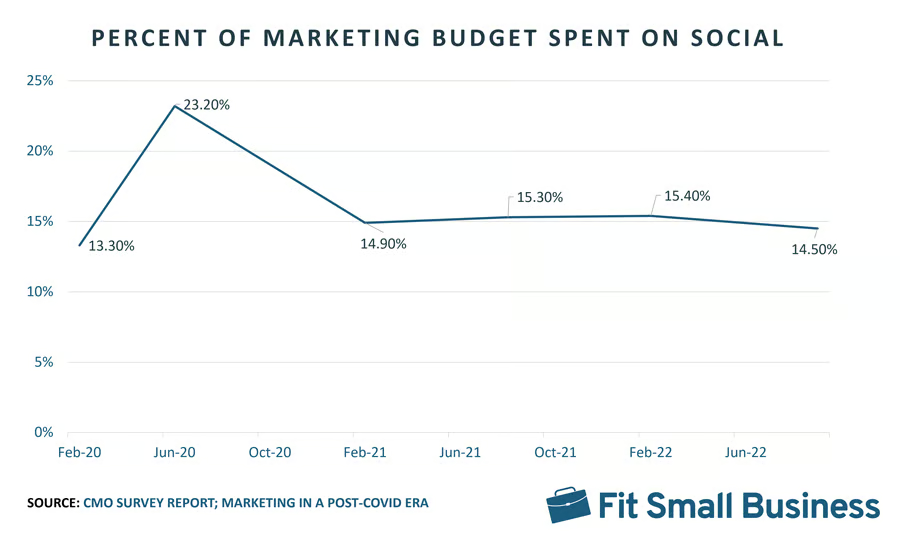
2. Businesses spend 14.5% of their marketing budgets on social media
No two marketing budgets are the same, but on average, business owners spend 14.5% of their marketing budget on social media strategies, according to the CMO’s 2022 survey. While this figure has decreased since the height of the pandemic in June 2020, when businesses spent over 23% of their budget, experts project these social media marketing stats to grow even further in the next few years as social media steadily regains influence.
By September 2022, experts predicted companies would spend an average of 16.8% on social media. And in the next five years, they project that number will increase to over 21%, nearing the high set in the early days of the COVID-19 pandemic.
3. Most small businesses spend between $200 & $2,000 a month on social media marketing
Like any other marketing strategy, social media comes with costs. These involve everything from content creation to setting up paid social media ads and even collaborating with social media influencers. On average, most small businesses spend between $200 and $2,000 a month on social media marketing.
These social media statistics vary with every business, but the biggest costs usually go toward hiring a social media manager or partnering with a social media agency. Meanwhile, the smallest costs go to paid social media advertising, which can cost as little as $1 per day.
4. 38% of small business owners (SBOs) say Facebook is the most effective social media advertising platform
Recent years have witnessed the growth of modern social media giants like TikTok and Snapchat. But 38% of small business owners still find Facebook the most effective to advertise on.
These social media marketing stats line up with the fact that Facebook remains the most popular social media platform in the world for both users and marketers. Insider Intelligence found that it had over 2.14 billion users in 2023—nearly 800 million more than Instagram, the second-largest platform.
5. SBOs find social media marketing up to 7% more effective than digital ads
Digital marketing encompasses many fronts, and two of the most prominent are social media marketing and paid ads on Google or websites. However, social media marketing statistics from Visual Objects found that 7% more small business owners found social media as their most successful digital marketing strategy than paid ads on Google and Microsoft.
Still, we recommend using both tactics to best maximize your business’ digital presence. However, with the social media marketing stats above in mind, allocate slightly more time and budget to social media—it’s an interactive platform that’s far better for engagement compared to the one-sided nature of digital ads.
6. Social media ads take up 30% of small business’ ad budgets
Paid ads are one of the most proven and reliable methods to gain results within a period of time, and social media ads remain the most popular, as the previous stat shows. According to social media advertising statistics, small businesses spent up to 30% of their advertising budget on social media alone in 2021. However, some spent as little as 10% of their budget.
With social ads being a relatively cost-effective method, maximize their effectiveness by choosing a few best platforms, setting clear objectives and budgets, and targeting the right audience sets. Learn more about how social media advertising works and how to use it to grow your business.
7. 9 out of 10 business owners say audiences’ social media preferences are more important than demographics
Knowing your audience is crucial to any marketing campaign’s success. And new research has found that understanding their specific preferences is more vital than simply knowing their basic demographics like age, gender, and location. While those details are still important, a recent survey found that 9 out of 10 business owners found that understanding their preferences played a more key role in increasing revenue.
Audience demographics are always part and parcel of creating social media marketing campaigns. While these are always relevant, even more effective is to know what content and experiences they like and dislike, how, where, and when they like them, and so on. Keep these social media marketing statistics in mind when creating your next social campaign.
8. For SBOs, photos & videos are 81% more effective than news articles when educating new customers
Social media is a great tool for educating audiences about your product or service. When it comes to the best type of content to post, most small business owners find photos and videos most effective at generating engagement—81% more effective than sharing business news and updates.
In the highly populated social media landscape, visual content is what grabs and captures audiences’ attention most effectively, even when educating users about new products (think infographics, product photos, and demo videos).
9. 83% of small businesses post on social multiple times a week
Consistency is key to your social media strategy’s success, as evidenced by social media marketing statistics from GetApp. The survey found that 83% of small businesses posted new content on social media multiple times per week, with only a small percentage posting once a week or less. And 19% of small businesses even posted on social media several times a day.
A good frequency to aim for on social media is between two and five times a week. This is just enough to leave a memorable impression on your followers while not overpopulating their feeds. However, this also varies for each social platform—for instance, on Instagram, once per day is enough, while Pinterest thrives on as much content as possible, per Constant Contact.
10. 25% of internet users use social media to find new products to buy
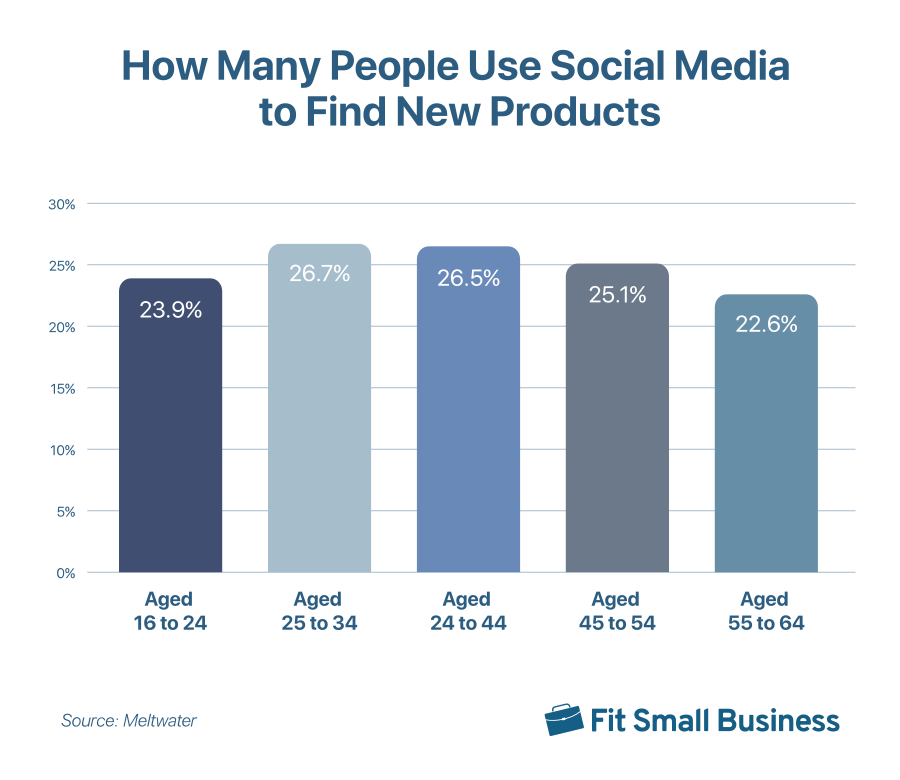
While social media may be saturated, you’ll still find a decent chance of gaining new customers and increasing sales from it. According to social media business statistics from Meltwater, 25% of social media users across all age groups say their primary use of social media was to find new products to buy.
That’s a quarter of the online population with a high level of purchase intent, making social a great channel for generational marketing to any segment. To best turn these users into sales, make your products easy to access from social media: link your online store to your social profiles, or you can even use in-app purchase features available on Facebook and Instagram.
11. 55% of consumers discover new businesses on social media
If there’s one advantage small and local businesses have over big-name legacy brands, it’s social media marketing. This is because recent social media marketing statistics from Sprout Social found that 55% of customers discover new brands and small businesses on social media. This means you have a much higher chance of reaching new customers on social media than on other channels like TV, radio, or print ads.
12. 66% say social media’s biggest benefit is increasing sales
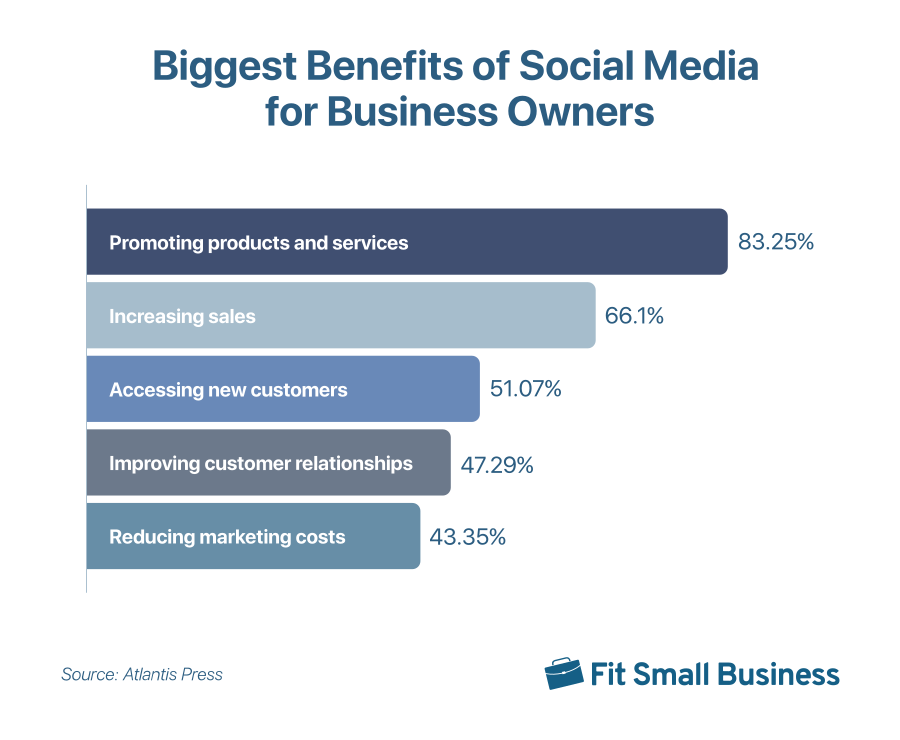
It’s no wonder social media marketing growth is part of every business’ strategy: it offers a multitude of benefits, including helping increase business revenue. A 2022 study found that 66% of business owners say that the biggest benefit of using social media to market their business was in helping increase sales. Meanwhile, 51% say social media is most helpful for accessing new customers, and 47% said it improves customer relationships.
There’s no question about it: social media is one of the most beneficial tools your small business can have. However, on such a dynamic platform, different outcomes require different strategies. For best results, first identify your business goals and objectives clearly, then plan out your social media strategy—find out how in our guide on making a social media business plan.
13. Instagram is the #1 platform people use to find new products
Facebook may retain its throne as the most used social platform, but people use different social media platforms for different reasons. For instance, TikTok is the go-to for short-form entertaining content, while X (formerly Twitter) is where users flock for breaking news. But when it comes to finding and researching brands and products, Hootsuite’s 2023 survey found that Instagram is the top social media platform of choice, followed by Facebook and Pinterest.
As Instagram is such a visual platform, it’s since become the go-to for brands to show off their products, whether through posts, Reels, or Stories. You might say that scrolling through Instagram is today’s equivalent of window shopping at malls. When marketing on Instagram, plan out your content strategy beforehand—make sure you have a good mix of organic and paid content.
The best gameplan relies on Instagram reels, stories, and posts to provide a glimpse of your products or services in action, enticing viewers to consider your product. Facebook and Pinterest can also serve this purpose. To entertain customers, produce some short, quippy videos and grow a TikTok following. But if you need to announce breaking news or stay on top of a customer service issue, you’ll definitely want to develop an effective X marketing plan.
14. 33% of consumers are highly likely to buy from a small business recommended by a social media influencer
If you’re thinking of entering influencer marketing, take these social media marketing statistics as a green light. A 2021 study found that 33% of consumers are highly likely to buy from a small business if they’re recommended by an influencer on social media, even if they aren’t familiar with its products.
As social media becomes more saturated with brands, more consumers are leaning on influencers as figures of trust when making purchase decisions. To best benefit from this strategy, opt for smaller micro or nano influencers over big names—they’re more likely to have a direct connection with specific audiences and cost much less.
15. 29% of social media influencers are paid in product freebies
Entering influencer marketing might seem like a daunting and costly task, but that isn’t usually the case: nearly one in three (29%) of social media influencers are paid in product freebies given by brands. Only 12% of influencers are paid more than $1,000 for their posts, while 19% are paid less than $500.
There’s no better time to start partnering with social media creators. There are thousands of smaller, more niche influencers with a more engaged follower community, and most are happy to take free products in exchange for a promotion post on social media, which can give a significant boost to your brand awareness with your target audience.
16. 88% of Gen Z use YouTube more than any other social media platform
You’d be forgiven for assuming that TikTok would be the best way to market to Gen Z audiences, today’s youngest consumers. However, statistics on social media marketing find that YouTube is still their most-used social media site, with 88% of the population active on the platform. This was more than Instagram and TikTok, which came in second and third place, respectively.
This means if you want to market to Gen Z, creating video content like demos or vlogs—or even partnering with YouTube creators—is probably your best chance at reaching success.
17. Over 90% of adults aged 36+ use Facebook
In spite of all the new social platforms that have sprung up in recent years, from BeReal to Meta’s Threads, Facebook is still the most used platform for older generations, namely Gen X (aged between 36 and 55) and Baby Boomers (aged over 55). Ninety percent of Gen X and 96% of Boomers use Facebook regularly, compared to just 36% of Gen Z.
Older generations have a markedly different use of social media than younger folks. They prefer using it for social connection and staying updated with friends and family instead of finding new trends or researching brands. When marketing to older generations, use clear, simple language, create helpful and informative content (like product demos and use cases), and make your links easy to access.
18. 51% of consumers want to see content about products or services from brands on social media
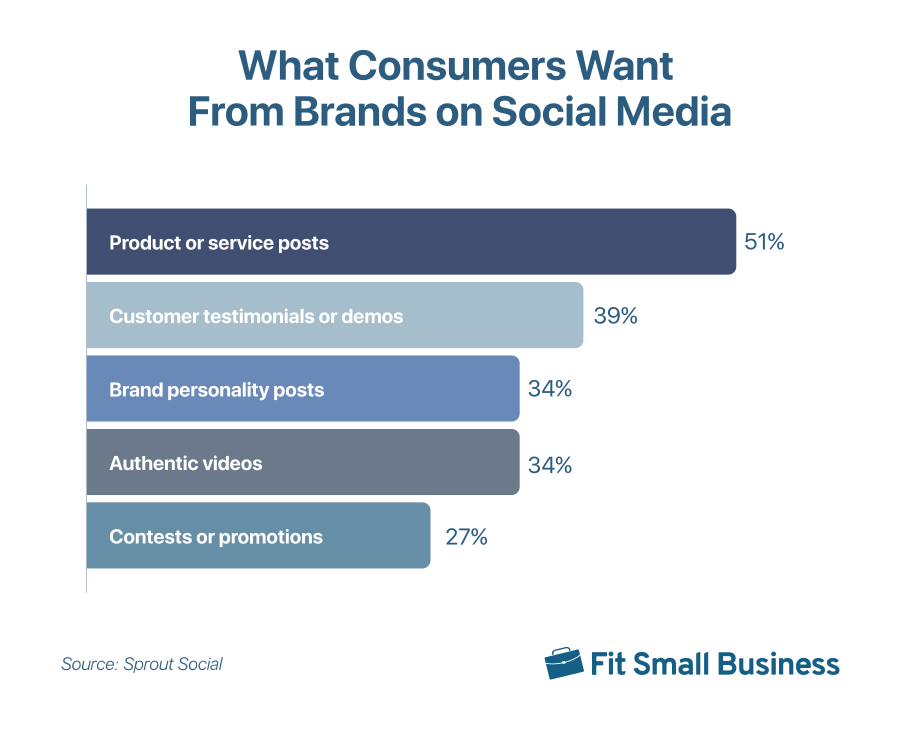
When it comes to what users want from your brand, social media usage statistics say that the majority (51%) still prefer content about your product or service. Many customers use social media to make more informed purchase decisions and, therefore, want to know about what your brand offers. Meanwhile, a growing number are also becoming more interested in seeing customer testimonials, with 39% selecting it as their preferred brand content.
19. TikTok has a 5.63% higher engagement rate than Facebook
While Facebook is more popular, TikTok is the more active platform of the two, at least in the past year. RivalIQ’s study found that Facebook posts had an average engagement rate of 0.06%, while TikTok averaged 5.69%—a total difference of 5.63%. It’s not all that surprising: the TikTok platform is built specifically around engagement, with its quick videos, comments, and duets, so it’s a great platform overall to build an active online community.
20. 93% of all internet users are on social media
Just how many people use social media? Stats on social media users estimate it to be 4.89 billion this year alone. That’s over half of the world’s population and about 93% of all internet users. All these social media marketing stats mean that social media has become part of daily life for approximately half of the world.
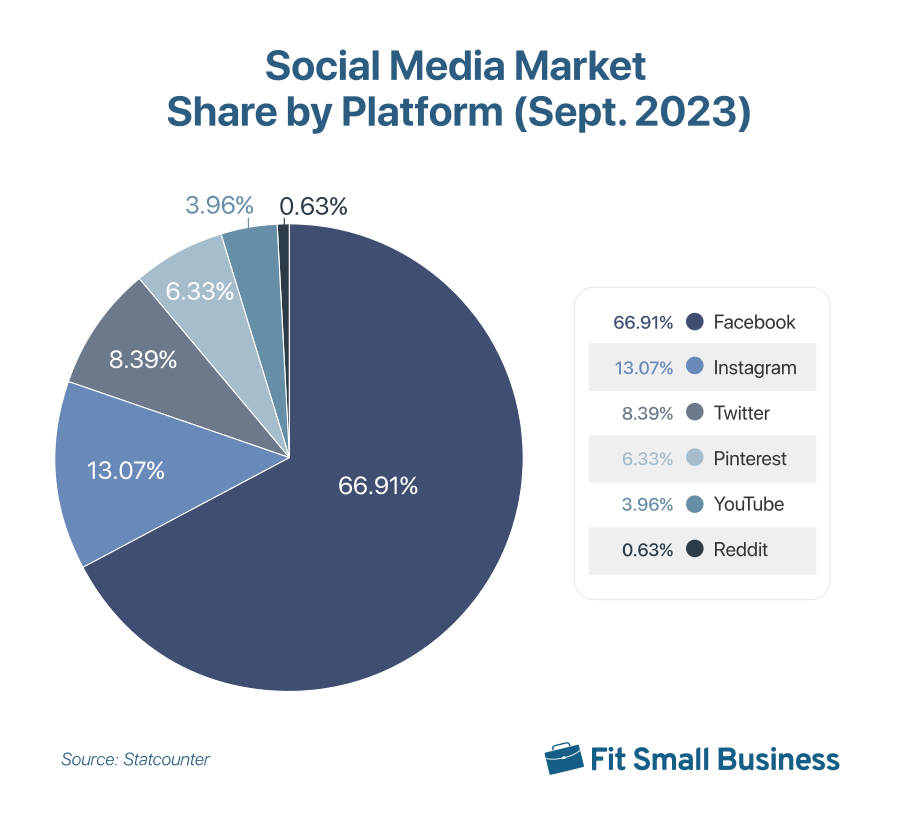
Facebook still retains the largest social media market share, with Instagram, Twitter, and Pinterest just behind, per Statcounter. Check out the social media comparison chart below on the number of social media users by platform.
Frequently Asked Questions
How much time do small businesses spend on social media?
According to Market Street Media, most small businesses generally spend about six hours a week on social media marketing. Much of this time is spent planning and creating content, setting up social media ads, engaging with customers, and analyzing social media performance across various platforms.
Which social channels work best for local small businesses?
While different social platforms work better than others for different types of businesses, The 2022 Small Business Advertising Report revealed that 38% of small businesses say Facebook is the most effective platform for business-to-consumer (B2C) marketing. This is due to its diverse organic and ad content formats and wide audiences. YouTube and Instagram are effective for gaining brand awareness and finding new customers. Meanwhile, LinkedIn is most effective for business-to-business (B2B) marketing.
What are some benefits of social media marketing?
According to social media marketing stats, over 80% of small businesses say social media’s biggest benefit is in helping promote products and services. Many also find social media beneficial for increasing sales, gaining new leads, strengthening customer relationships, and reducing marketing costs. Some businesses also find social media helpful for consumer research and gaining feedback.
Bottom Line
Social media marketing is more prominent than ever, with good reason: it’s a cost-effective strategy for every stage of the marketing journey. And, these social media marketing facts prove that it’s one of today’s biggest landscapes in marketing that can grant your business substantial growth—but it does take a certain know-how of the landscape to get right. Use the social media marketing statistics above as a guide to power your small business’ social strategy.
