







The accelerated digitalization of the world we live in underscores how essential it is to build a strong online brand presence for long-term success. Foundational to this is having a business website designed for an excellent site visitor experience. Below are 32 of the most relevant web design statistics that highlight the importance of design, including stats on user experience, marketing, ecommerce, and mobile web design.
General Web Design Statistics
Business websites contain a large amount of information, capabilities, and services, and what holds it all together is effective web design. The following web design stats highlight the importance of web design in building an online brand presence, web design industry statistics, and general web design best practices.
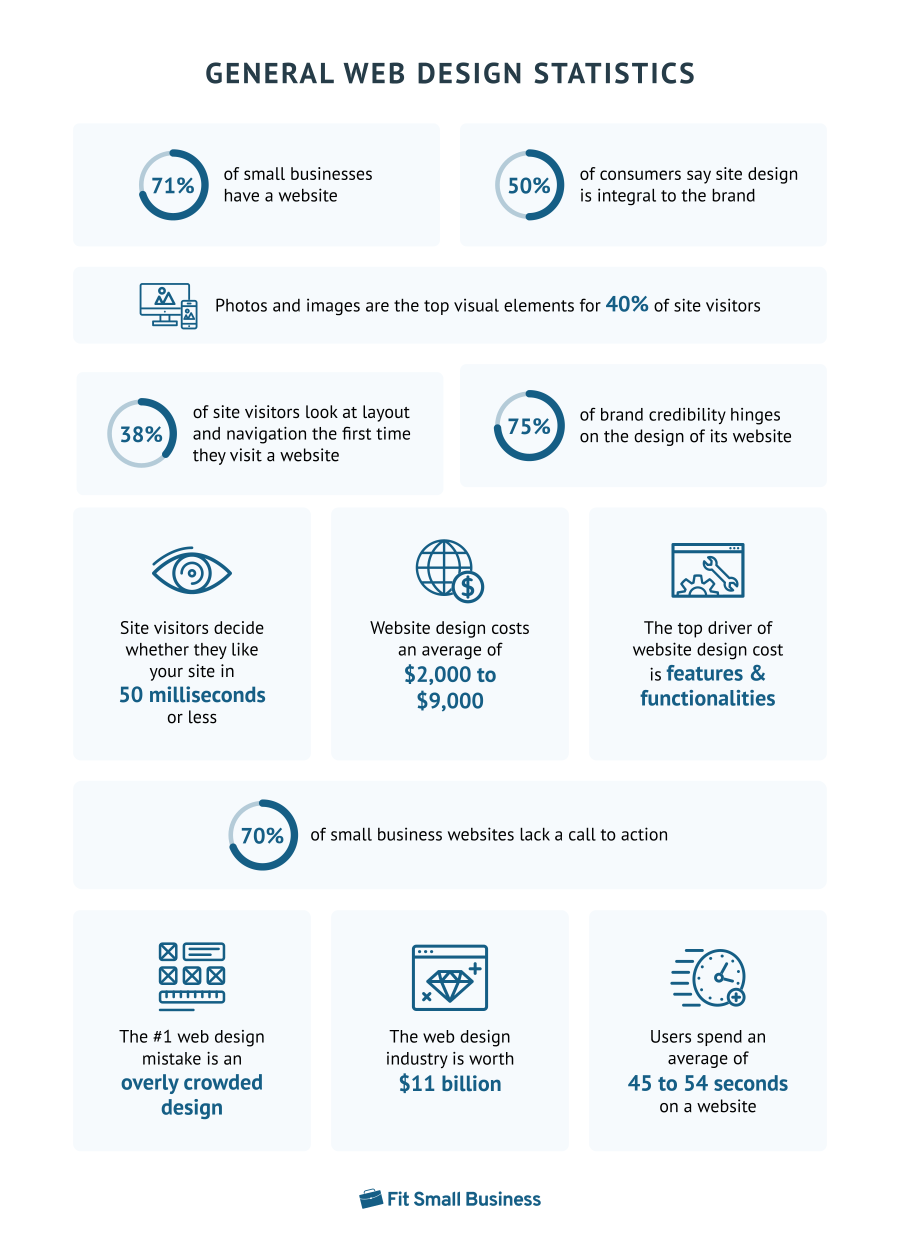
1. 71% of small businesses have a website
In today’s digital world, an online presence is essential for businesses big and small, with more economic activities conducted digitally every day. From discovering new stores to online shopping, consumers are increasingly going digital. As of 2022, 71% of small businesses have their own website to follow consumers’ activities—and with current digital trends, it’s a number likely to keep increasing.
2. 50% of consumers believe a company’s website design is integral to the brand
A crucial element of your business’ branding is that it encompasses every aspect of your company’s public-facing channels. In 2023, that also includes your website. A 2021 survey found that 50% of consumers believed a company’s website design was a central facet of its overall brand—both its visual layout and functionality.
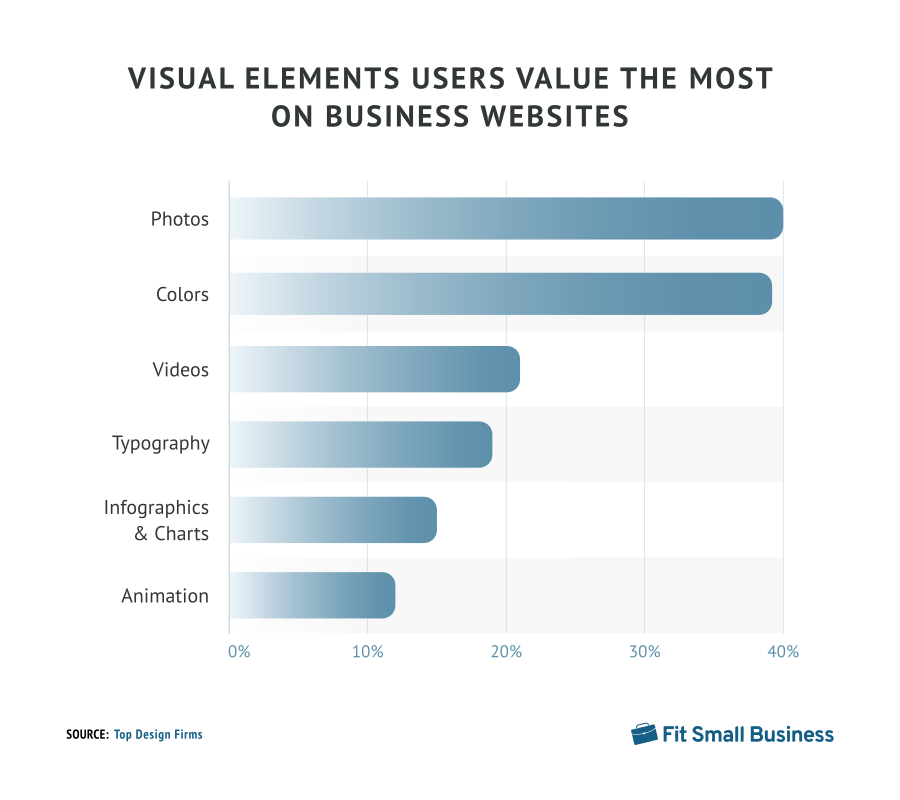
3. Photos & images are the top visual elements for 40% of site visitors
It’s no secret that visual content plays a vital role in any marketing strategy. The same goes for website design, with 40% of website visitors voting pictures and videos as the most valuable element of any website’s design, ranking higher than colors, videos, and animation.
4. 38% of website visitors look at a site’s layout or navigational links on their first visit
Most websites contain a significant amount of information as well as basic website elements, all housed together under the same website domain. However, for your site visitors, some website elements hold more value than others, such as navigational links and layouts. In fact, 38% of website visitors look out for these particular elements first on their initial visit to your website.
5. 75% of brand credibility hinges on the design of its website
In an age where many business transactions are held online, a key aspect to gaining your customers’ trust is building credibility. In fact, according to recent research, 75% of a company’s credibility hinges on its website. For this reason, it’s vital to not only have a digital presence for your business, but also that it’s professional, helpful, and well-designed.
6. Site visitors decide whether they like your site in 50 milliseconds or less
First impressions are crucial for any brand, and in 2023, they take faster than ever to form. According to a recent study, website visitors take less than 50 milliseconds to decide whether or not they liked a website—that’s less than 0.05 seconds for your website’s design to make a positive impression.
7. Small business website design costs an average of $2,000 to $9,000
In 2022, the average market rate for website design for a small business site of eight to 16 pages was anywhere between $2,000 and $9,000. This includes website costs for everything from domain hosting and SSL certificates to the content management system (CMS) and ecommerce functionalities.
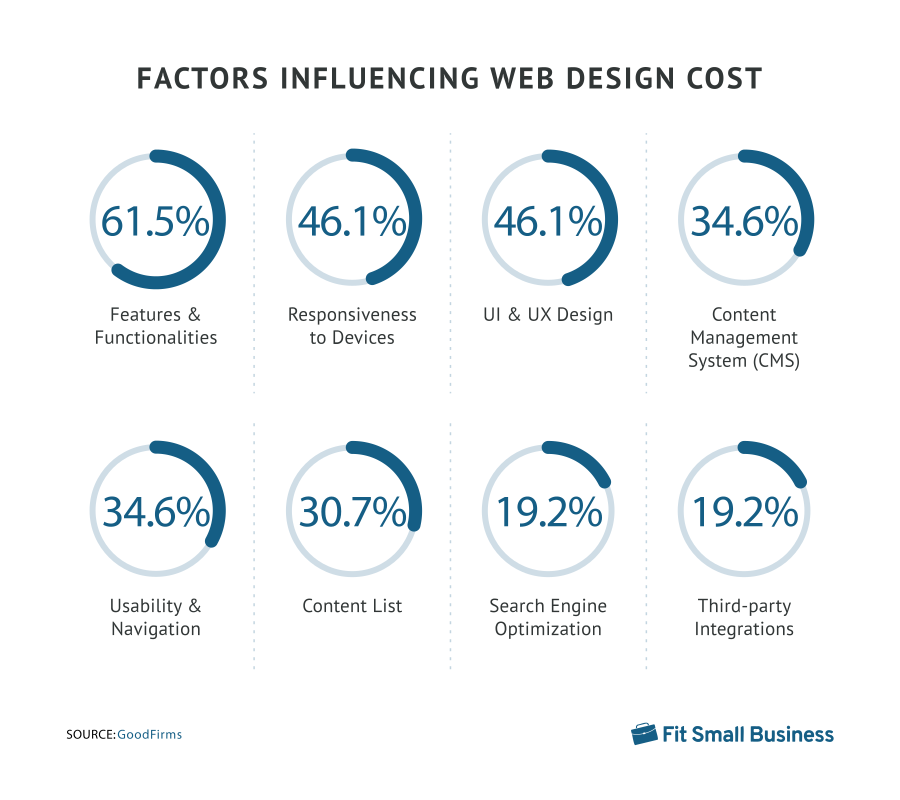
8. The top driver of website design cost is features & functionalities
A number of factors go into designing a small business website, each with its own cost. However, the number one factor influencing the cost of designing a website is its features and functionalities at 61.5%, followed by user experience (UX) and user interface (UI) design at 46.1%. Other factors include its responsiveness to devices, content management system, usability, content list, search engine optimization (SEO), and third-party integrations.
9. 70% of small business websites lack a call to action
Calls to action (CTAs) have long been an integral element of any marketing campaign, from billboards and printed flyers to digital advertisements. For websites, CTAs usually take the form of a clear, easily accessible button. However, 70% of small business websites lack a call to action, which could lead to a poor website user experience as users won’t know where to navigate. This could potentially result in a loss of revenue for your business.
10. The #1 web design mistake is an overly crowded design
While it can be tempting to include as much information and as many functions as possible on every page of your site, web design statistics show that doing so could be detrimental to your success. A recent survey found that 84.6% of web designers said a crowded website is the number one web design mistake, and could quickly drive visitors away from your site.
Other common web design mistakes include hidden navigation functions, ineffective typography, white space use, and a lack of a call to action.
11. The web design industry is worth $11 billion
According to a study by IBISWorld on current website design industry statistics, the web design industry in the U.S. was worth $11 billion as of 2022, when measured in revenue. While the figure is a slight decrease from 2021’s $11.2 billion, the study also found that the number of businesses is expected to rise in the near future, suggesting possibilities for growth.
12. Users spend an average of 45 to 54 seconds on a website
As websites grow more and more ubiquitous, the average time a user spends on a website is steadily declining. In 2022, the average time spent on a website by each user was anywhere from 45 to 54 seconds. Factors that contribute to users spending less time on websites are slow loading times, bad website design, and poor content.
Web Design Stats on UX (User Experience)
A positive user experience (UX) is the cornerstone of any good small business website and plays a key role in customer conversion and retention. This is created through effective web design and layout. The UX web design stats below highlight the relevance of user experience in any website and how they can make or break your website’s success.
13. 38.5% of site visitors form an opinion about a brand based on their first website experience
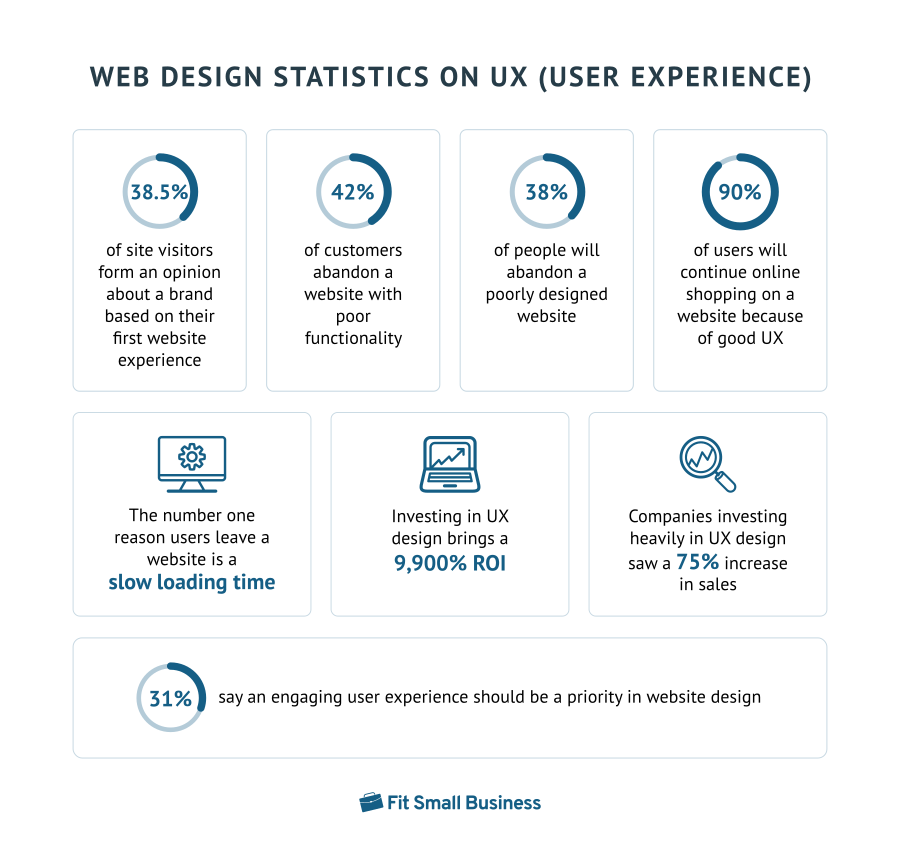
It’s no secret that first impressions are crucial—this goes for your website too. 38.5% of people form their opinion on a business based on their first experience with their website. Their first experience interacting with a business’ website is crucial in determining whether or not they return for a second visit and, eventually, convert into paying customers.
14. 42% of customers abandon a website with poor functionality
A website’s design pertains not only to its visual appearance but also to how it responds to users. Functionality is vital to your website’s success. According to design experts, 42% of customers leave websites that fail to perform functions well, whether that’s in failing to perform ecommerce sales, submitting form entries, or fetching search results.
15. 38% of people will abandon a poorly designed website
Your small business website is only one of the millions on the internet, all competing for consumers’ attention and interest. For this reason, 38% of site visitors will stop engaging with websites with poor designs or layouts and visit another webpage instead. A poorly designed website can easily cost potential customers’ attention and interest—make sure yours isn’t one of them.
16. 90% of users will keep shopping on a website because of good UX
Good UX can generate revenue—and for ecommerce businesses, a good website user experience can also guarantee customer retention. As of 2022, up to 90% of users would continue shopping with a brand that offers an excellent user website experience from start to finish.
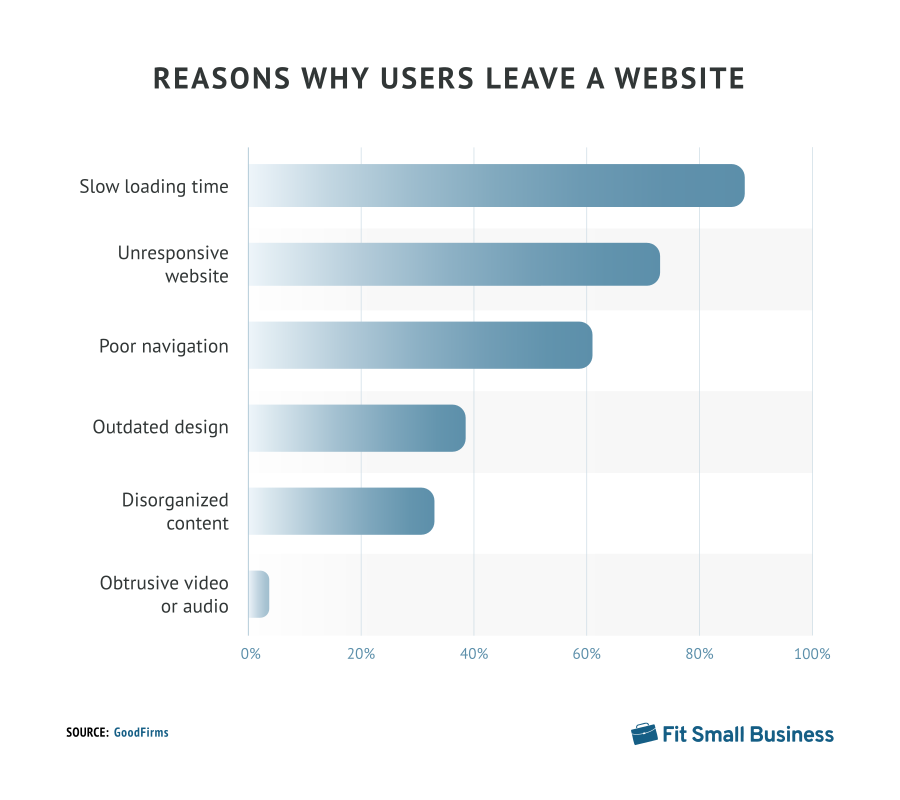
17. The number one reason users leave a website is a slow loading time
Your website’s loading time also plays a significant role in creating a positive user experience. In fact, 88.5% of users cited a slow loading time as their top reason for abandoning a website. This ranked higher than other factors, such as a lack of website responsiveness, poor navigation and content structure, outdated website design, or obtrusive audio or video.
18. Investing in UX design brings a 9,900% ROI
Need more proof that creating solid UX brings long-term value? A recent study by Amazon Web Services found that every dollar invested into creating good UX design brings $100 in return, equating to a 9,900% return on investment (ROI). This encompasses every stage of the customer journey—the study also found that companies with a UX designer had positively impacted customer conversion, retention, and long-term satisfaction.
19. Companies investing heavily in UX design saw a 75% increase in sales
Amazon Web Service’s study also found that businesses that invested in UX designers the most were rewarded (with a 75% increase in sales). These companies, termed “design unicorns,” are organizations that place a high value on their products’ design and consider them a fundamental aspect of their company’s identity. Meanwhile, the study also found that other companies that described themselves as “design-centric” also saw a slightly lesser increase of 60% in sales.
20. 31% of website visitors say an engaging user experience should be a priority in website design
With an increasing amount of economic activity now performed online, consumers have higher expectations from brands when it comes to their online experiences, particularly on websites. A recent study found that 31% of website visitors believed an engaging website that put users’ needs and wants first was crucial to creating a positive user experience.
Web Design Statistics for Marketing & Ecommerce
The past few years have accelerated digitalization for brands and consumers alike. From discovering new brands via social media to purchasing from online stores, the digital economy continues to grow every day. For small businesses, this places greater importance on optimizing their websites to meet consumers’ growing demands. Keep reading for the most relevant facts about web design for digital marketing and ecommerce.
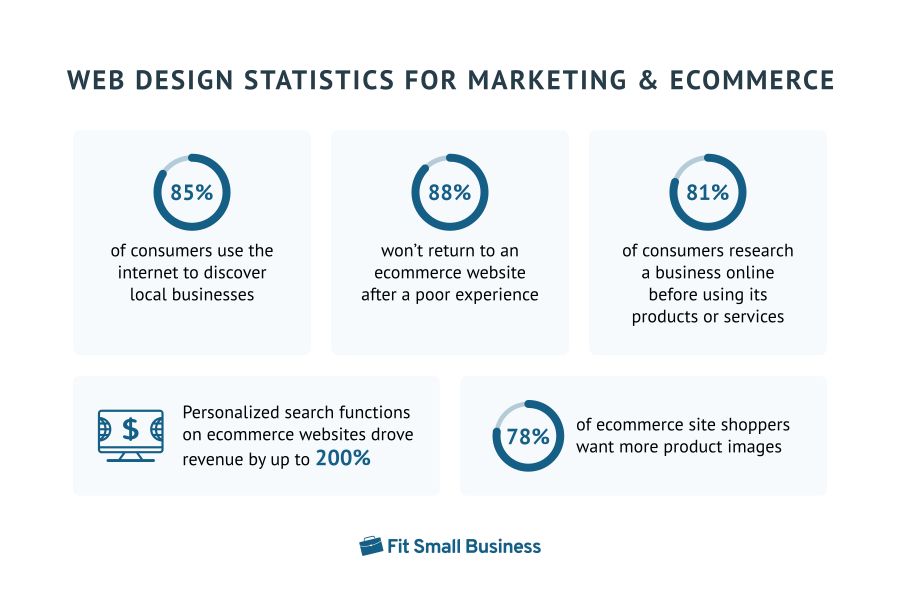
21. 85% of consumers use the internet to discover local businesses
For many local businesses, online discoverability can be your best potential for reaching new customers. Eighty-five percent of today’s consumers search online for new local businesses to try out, and 34% do so daily. For these customers, your website is likely their first point of contact with your business and can determine whether or not they convert into customers.
To increase online visibility and get found more often in search, you will need to publish search-friendly content on a regular basis. Today, this is made far easier with the emergence of dozens of AI content writers that can write well-rounded, search-optimized content in a fraction of the time.
22. 88% won’t return to an ecommerce website after a poor experience
Customer loyalty is key to your business’ long-term success. In today’s digital world, this also includes how often customers visit and engage with your website, which depends on whether or not they have a positive website experience. According to a study by Amazon Web services, 88% of online shoppers stated they wouldn’t return to a website after having a negative user experience.
23. 81% of consumers research a business online before using its products or services
In an age of more accessible information than ever, consumers are increasingly well-informed and conscious about where they spend their money. Overall, 81% of today’s consumers do online research about brands before deciding to purchase from them. This means that for eight out of 10 consumers, your website is their first point of contact with your business and plays a key role in converting them into customers.
24. Personalized search functions on ecommerce websites drove revenue by up to 200%
When it comes to ecommerce website design, minor upgrades can reap major rewards. A modification as simple as a personalized search function on retailers’ websites increased ROI by up to 200%, one study found.
25. 78% of ecommerce site shoppers want more product images
With the ubiquity of ecommerce and online shopping in today’s economy, customers are looking for a more heightened online shopping experience. This can sometimes be as simple as having more images displayed on your website—a recent survey found that 78% of online shoppers wanted ecommerce websites to include more product images.
Mobile Web Design Stats
With more consumers partaking in the digital economy every day, your business’ accessibility and functionality on mobile devices are more crucial than ever. From improving customer retention to increasing overall sales, the following mobile web design stats highlight the importance of mobility in creating a positive experience for your customers.
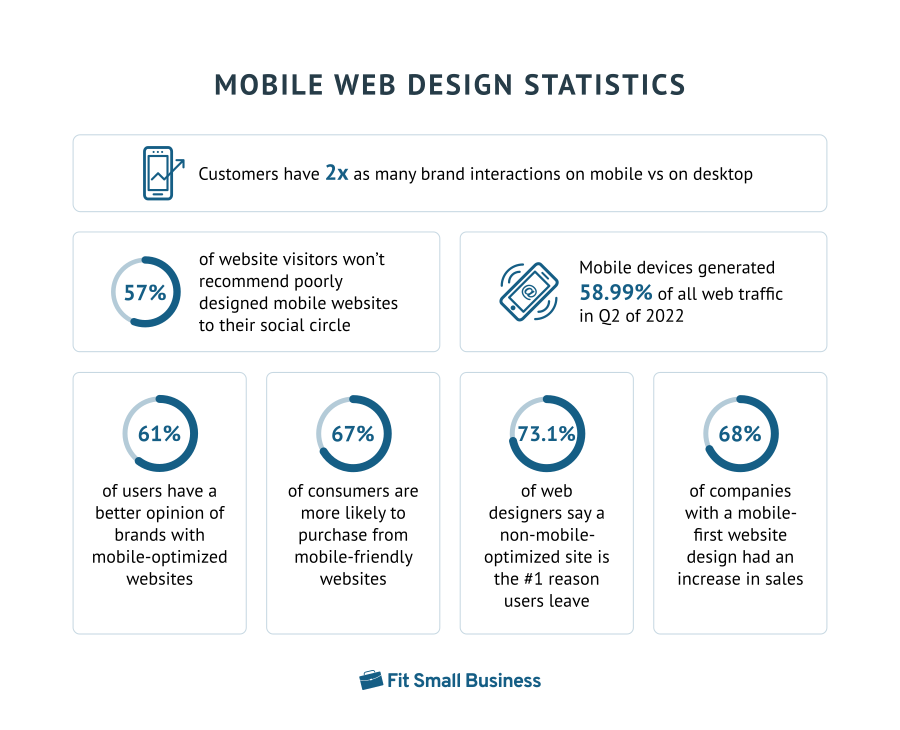
26. Customers have 2x as many brand interactions on mobile vs on desktop
With so much of the internet now easily accessible on smartphones, it’s inevitable that ecommerce is just as valuable to customers on mobile as it is on desktop—sometimes even more. In 2022, consumers had twice as many interactions with brands on their mobile phones than on desktop computers—-further highlighting that consumers are doing more activities than ever using their mobile phones.
27. 57% won’t recommend a poorly designed mobile website
Word-of-mouth is a powerful marketing tool, even for your website’s visitor traffic. Of millions of website visitors, 57% would not recommend a poorly designed mobile website to their family and friends, which could potentially account for a significant loss in website traffic.
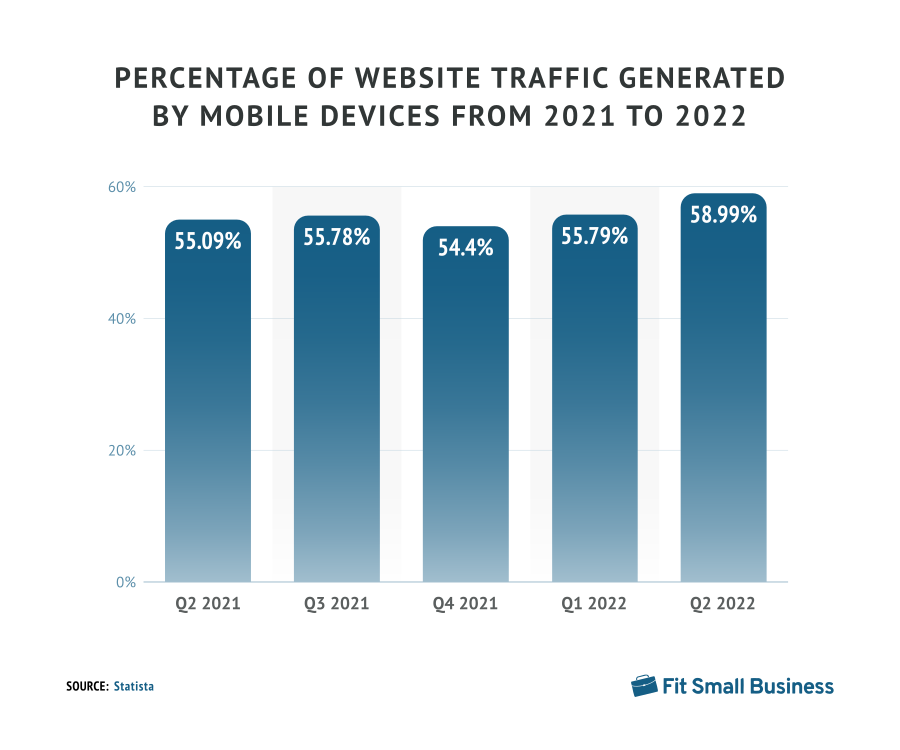
28. Mobile devices generated 58.99% of all web traffic in Q2 of 2022
As mobile devices grow more ubiquitous, the amount of internet traffic they generate also increases. In the second quarter of 2022, mobile devices accounted for 58.99% of all internet traffic, an increase of 3.9% in just one year.
29. 61% of users have a better opinion of brands with mobile-optimized websites
As more consumers use their mobile phones to research brands before making a purchase, the demand for mobile-optimized websites also grows. As of 2022, 61% of users form a more favorable opinion of brands with mobile-friendly websites, both in terms of design and functionality. This, in turn, leads to a higher chance of customer conversions.
30. 67% of consumers are more likely to purchase from a mobile-friendly website
Beyond customer conversions, mobile-optimized websites also impact other stages of the customer journey. Sixty-seven percent of consumers stated they were more likely to purchase a brand’s product or service if they had a mobile-friendly website.
31. 73.1% of web designers say a non-mobile-optimized site is the number one reason users leave
In today’s world of smartphone-carrying consumers, it isn’t enough that your business’ website is accessible on mobile—it needs to function well there too. Otherwise, it could cost a significant portion of your target consumers: 73.1% of web designers believe a non-mobile-friendly website is the top reason users leave a website.
32. 68% of companies with a mobile-first website design had an increase in sales
With a rising number of ecommerce activities done on smartphones, it’s no surprise that your mobile website design directly impacts your business’ sales. In fact, 68% of companies with a mobile-first website design directly experienced an increase in sales.
Frequently Asked Questions
What makes a good website design?
Ultimately, the sign of good business website design is a positive user experience that produces conversions. This is created by an easy-to-navigate site visitor journey, valuable information, and content, and a visually pleasing layout—all on a fast-loading site. Other characteristics of good website design include a strong brand identity in content and visuals, helpful functions like chatbots or forms, search engine optimization, and strong security.
Is web design still in high demand?
With the digital world growing more dynamic and necessary every day, web development continues to be in high demand in 2023, with no signs of slowing down. This also includes the web design industry. The U.S. Bureau of Labor Statistics predicts that demand for web designers and developers will grow by 23% by 2031—a higher average than normal—thanks to the constant growth of mobile and ecommerce technologies.
What are the current biggest web design trends?
The biggest web design trends surround factors like creative website navigation, simple but bold typography and text, and dynamic scrolling effects—all leading toward capturing attention and encouraging engagement. These are likely to continue, as is the explosion of AI content marketing, optimization, and distribution tools. This includes personalized and AI-generative content, faster load time, data visualization, and accessibility, among others.
Bottom Line
In an economy growing more digital every day, building a strong brand presence online is more crucial than ever to your long-term success. A key part of this is your business’ website and how it’s designed. As these web design statistics show, several factors come into making a good website design, from UX elements to mobile functionality. When you’re ready to get started, learn how to make a small business website that gives site visitors a great experience and a good impression of your brand.
