







I’ve been working remotely for five years, and Zoom has always been a staple among my employers and clients since it’s familiar and easy to use. Still, some teams I’ve worked with prefer other Zoom alternatives, such as Google Meet or Microsoft Teams, while others lean toward RingCentral for its extensive communication tools. Each option offers unique features that stand out compared to Zoom.
In this article, I’ll share what I’ve learned from using these platforms to help you find the best Zoom alternative.
- RingCentral: Best for small teams that need one platform for calls, chat, and meetings
- GoTo Meeting: Best for on-the-go teams seeking secure, mobile-friendly meetings
- Google Meet: Best for businesses already using Google Workspace
- Microsoft Teams: Best for remote teams looking for a centralized collaboration space
- Zoho Meeting: Best for startups looking for affordable video meeting solutions
- Webex Meetings: Best for companies regularly hosting large-scale webinars and events
Why You Can Trust Fit Small Business
- Zoom alternatives compared
- RingCentral: Best for small teams that need one platform for calls, chat & meetings
- GoTo Meeting: Best for on-the-go teams seeking secure, mobile-friendly meetings
- Google Meet: Best for businesses already using Google Workspace
- Microsoft Teams: Best for remote teams looking for a centralized collaboration space
- Zoho Meeting: Best for startups looking for affordable video meeting solutions
- Webex: Best for companies regularly hosting large-scale webinars and events
- How to choose the best Zoom alternative
- Frequently asked questions (FAQs)
Zoom alternatives compared
| Best Zoom alternatives | Free plan | Monthly starting price (per user) | Key features | Our Score |
|---|---|---|---|---|
 | ✅ | $16.99 |
| 4.68 out of 5 |
| Visit Zoom | ||||
 | ✅ | $40 |
| 4.93 out of 5 |
| Visit RingCentral | ||||
 | ✅ | $14 |
| 4.84 out of 5 |
| Visit GoTo Meeting | ||||
 | ✅ | $8.40 |
| 4.68 out of 5 |
| Visit Google Meet | ||||
 | ✅ | $4 (billed annually) |
| 4.58 out of 5 |
| Visit Microsoft Teams | ||||
 | ✅ | $2 |
| 4.53 out of 5 |
| Visit Zoho Meeting | ||||
 | ✅ | $14.50 |
| 4.49 out of 5 |
| Visit Webex Meetings | ||||
Which document management software is right for you?
Take the quiz to find out which Zoom alternative suits your business needs.
Question 1 of 3
How many people typically join your meetings?
RingCentral: Best for small teams that need one platform for calls, chat & meetings
How RingCentral compares to Zoom
- Both RingCentral and Zoom provide free video conferencing.
- RingCentral meetings run for up to 24 hours, while Zoom allows up to 30 hours.
- All RingCentral plans include AI tools, but Zoom’s AI companion is limited to paid plans.
My expert opinion
RingCentral is my top choice among Zoom alternatives because it brings phone, chat, and video together in one unified communication platform. I can host unlimited HD meetings with up to 200 participants and access collaboration tools like screen sharing and private or group chat to keep conversations flowing during meetings.
As one of the leading business phone systems, RingCentral integrates with over 300 third-party apps, including customer relationship management (CRM) systems and productivity tools. This makes it a strong option for businesses seeking a communication solution that connects seamlessly with their existing tech stack.
However, for large-scale events, I’d need to upgrade to the more expensive Webinar plan. When budget matters, I recommend Google Meet since it offers reliable video and audio conferencing for up to 500 participants at a lower cost.
Pricing
RingCentral’s video solutions range from free meetings to large-scale event hosting. The free Meetings plan includes HD video, messaging, and AI tools like captions, transcripts, and meeting summaries. The Town Halls plan starts at $40/organizer monthly, supporting up to 10,000 attendees with interactive tools such as polls and Q&A.
The Rooms plan costs $49/room monthly for seamless hybrid meetings, while the Webinars & Events plan starts at $119/organizer and adds studio-quality production, CRM integrations, and multilingual captioning.
Standout features
- RingOut: Place calls instantly with one click from any phone or internet-connected computer.
- Waiting rooms: Keep participants in a virtual lobby until you approve them to join the meeting.
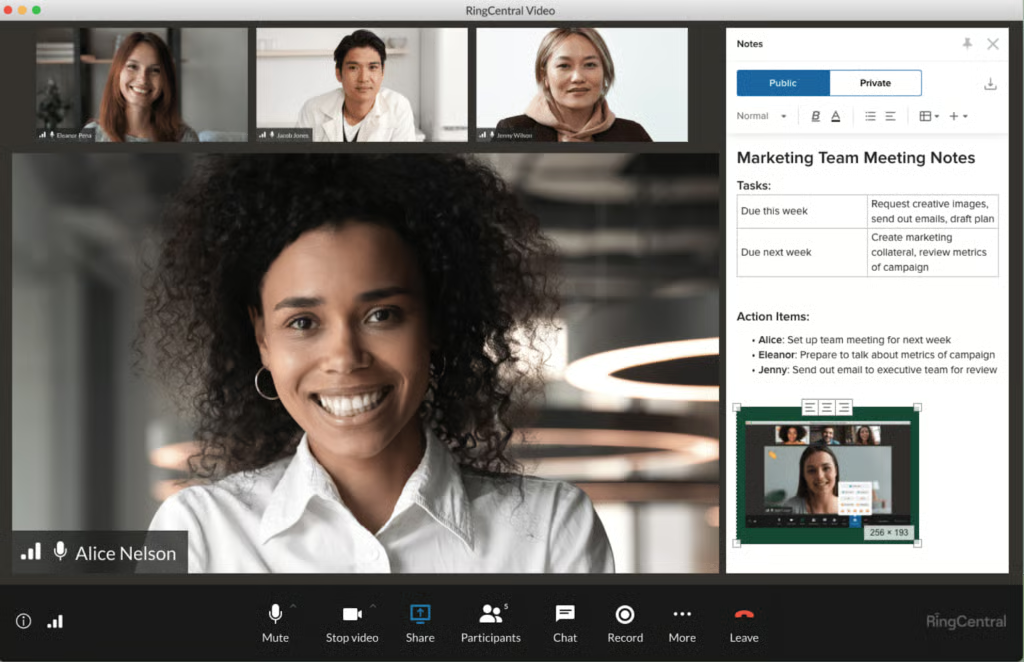
- Collaborative notes: Capture and share meeting notes in real time, assign tasks, and download them for later use.
GoTo Meeting: Best for on-the-go teams seeking secure, mobile-friendly meetings
How GoTo Meeting compares to Zoom
- Zoom meetings have a 30-hour limit, while GoTo Meeting allows unlimited meeting durations.
- Both platforms provide Webinar add-ons for hosting large events or conference calls.
- Zoom includes local storage and 10GB of cloud space, whereas GoTo Meeting’s higher-tier plans offer unlimited cloud recording.
My expert opinion
GoTo Meeting works well for me as a remote professional because it delivers consistent, high-quality video conferencing. Every plan includes HD video and encrypted audio, so I know my meetings are secure. I also appreciate the commuter mode, which limits the screen display to a mic icon and allows me to switch to audio-only while driving.
Since I often work from different locations, I appreciate that GoTo Meeting lets me join from any device, whether it’s my laptop, phone, or tablet. Its collaboration tools, like drawing features and shared meeting notes, make it easy to keep discussions focused and productive no matter where I am.
Although the paid plans give me access to advanced tools, the free version is limited to only three participants and 40-minute meetings. If I needed a free conference call service with stronger collaboration features, I’d consider Google Meet instead.
Pricing
GoTo Meeting offers a free plan with limited features, including a 40-minute cap and up to three attendees. Paid plans start with the Professional tier at $14 monthly, providing unlimited meetings for 150 participants, screen sharing, and breakout rooms.
The Business plan, priced at $19 monthly, increases capacity to 250 participants and adds tools like remote access, drawing features, and AI transcriptions. The Enterprise plan includes personalized onboarding, a dedicated success manager, and add-ons for hosting up to 3,000 attendees or integrating conference room hardware.
Standout features
- Slide to PDF: Automatically saves presentation slides as a downloadable PDF after the meeting.
- Commuter mode: Enables safe, low-bandwidth audio calls with a color-coded mobile interface for on-the-go meetings.
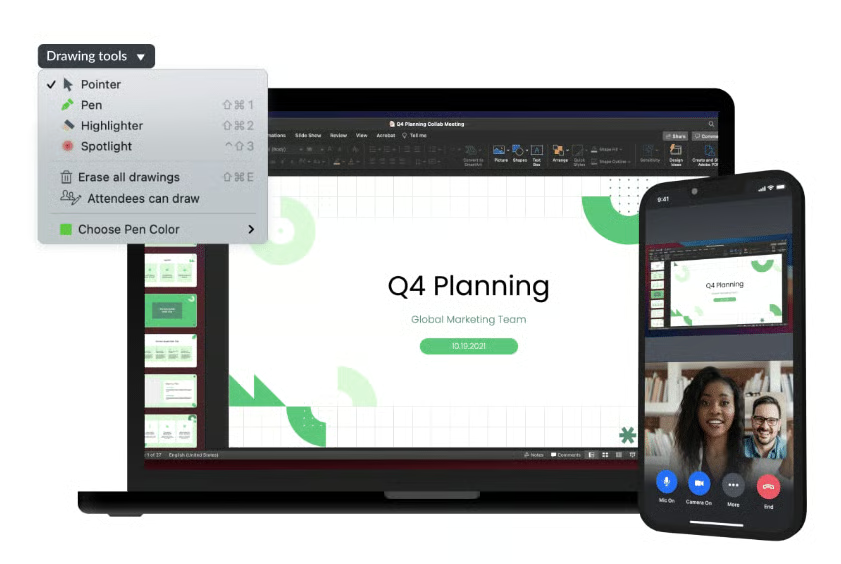
- Drawing tools: Lets you annotate and emphasize key points during live presentations.
Google Meet: Best for businesses already using Google Workspace
How Google Meet compares to Zoom
- Both platforms support up to 1,000 participants in their highest-tier plans.
- Google Meet’s free plan allows meetings up to 24 hours, while Zoom extends to 30 hours.
- All paid Zoom plans include breakout rooms, but this feature is only available in Google’s Business Standard plan.
My expert opinion
I find Google Meet to be a perfect fit since it’s part of the Google Workspace ecosystem that I already use daily. It’s simple to navigate and connects with Google Drive and Docs, allowing me to share files and collaborate in real time during meetings.
When I compare Zoom and Google Meet, I notice both integrate with Google Calendar for scheduling and invites. But what I like about Google Meet is that I can launch meetings instantly from Gmail, Docs, Slides, or Sheets without opening another tab. It also works great on mobile, and its noise cancellation and adaptive audio make every conversation sound clear and professional.
The only drawback I’ve experienced with Google Meet is its limited customer support. For businesses that need round-the-clock help, I usually recommend GoTo Meeting since it offers stronger support coverage.
Pricing
Google Meet offers a free version for Gmail users, but its full functionality requires a Google Workspace subscription. Plans start with the Business Starter plan at $8.40/month for 100 participants and 30GB of storage, while the Business Standard plan increases capacity to 150 participants and adds meeting recording and noise cancellation.
The Business Plus plan expands access to 500 participants, 5TB of storage, and attendance tracking. For large organizations, the Enterprise plan accommodates up to 1,000 participants with advanced security.
Standout features
- Anonymous joins: Allow guests to join meetings from their computers without signing in to a Google account.
- Livestreaming: Stream meetings to large audiences or across your organization so viewers can watch without joining the call.
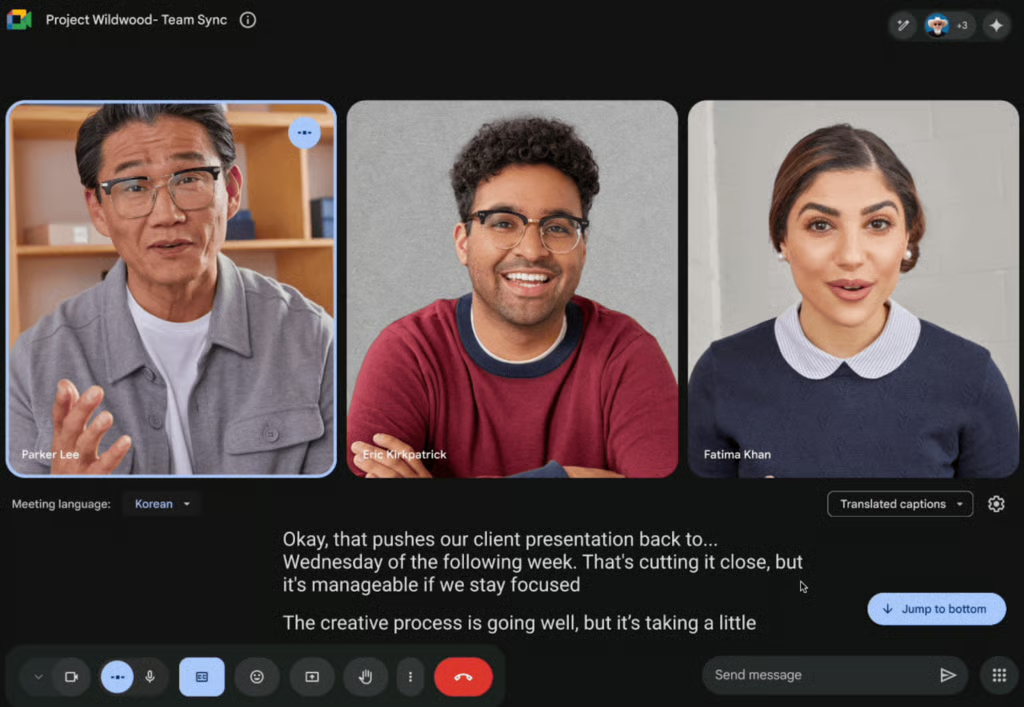
- Translated captions: Convert spoken English into French, German, Portuguese, or Spanish in real time for global participants.
Microsoft Teams: Best for remote teams looking for a centralized collaboration space
How Teams compares to Zoom
- Both Zoom and Microsoft Teams provide free plan options.
- Zoom is a more straightforward choice for video calls, while Teams is often used as an all-in-one collaboration tool.
- Each platform includes core meeting tools like chat, recording, and cloud storage
My expert opinion
I consider Microsoft Teams the best Zoom alternative for businesses that want to combine meetings with collaboration tools. It gives me an all-in-one workspace where I can host video meetings, manage projects, and work directly with Microsoft apps like OneDrive, Excel, PowerPoint, and Word. These integrations make it easier to handle daily operations and long-term projects without switching platforms.
The free version already covers most of what I need, including screen sharing, noise suppression, and English captions. It also provides unlimited chat, 5GB of cloud storage, and one-hour group calls for up to 100 participants. When I need longer sessions or more features, I can upgrade to Teams Essentials, which adds 30-hour meetings, live captions in 30 languages, and larger file-sharing options.
I also like that I can add AI-powered features through Microsoft Copilot to improve productivity, though it does require an extra subscription. For a lower-cost option with built-in AI, I’d suggest RingCentral since it offers meeting summaries and smart insights across all plans without additional fees.
Pricing
Microsoft Teams has a free plan and three annual paid tiers starting at $4. The free version includes unlimited chat, 60-minute meetings for up to 100 participants, and 5GB of cloud storage. The Essentials plan extends meetings to 30 hours, supports 300 participants, and adds live captions and 10GB of storage. Business plans include email, whiteboards, 1TB of cloud storage, and Microsoft 365 apps like Word, Excel, and PowerPoint for enhanced collaboration and event hosting.
Standout features
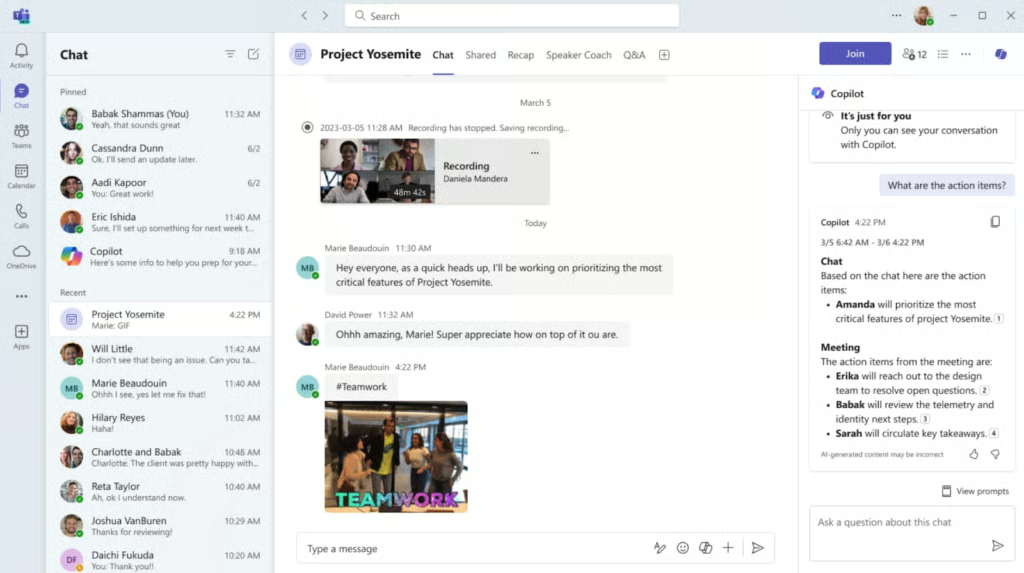
- Instant chat: Send quick messages for discussions or feedback, or use chat with yourself to jot notes and share files between devices.
- Slash commands: Enter short commands like “/files” to perform quick actions or access recent files instantly.
- Call recordings: Record meetings with automatic cloud storage, transcripts, and live English captions for easy reference.
Zoho Meeting: Best for startups looking for affordable video meeting solutions
How Zoho Meeting compares to Zoom
- Zoom’s free plan allows 40-minute meetings, while Zoho Meeting extends sessions to 60 minutes for both meetings and webinars.
- Breakout rooms are included in all Zoom plans but require a paid Zoho Meeting plan.
- Zoom starts at $16.99 per user monthly, whereas Zoho Meeting costs as little as $2 per month.
My expert opinion
Out of all the Zoom alternatives I’ve tested, I’ve found Zoho Meeting to be the most affordable option for video conferencing and webinars. I appreciate that it offers a free plan for hosting up to 100 attendees and that the paid plans start at just $2 a month for 250 participants with 24-hour sessions. It’s a great choice for small teams or solo professionals who need a reliable and budget-friendly meeting platform.
When I compare Zoom and Zoho Meeting, I notice that both have similar free versions, but Zoho stands out because of its strong security features. Every plan includes two-factor authentication, which I find essential for verifying attendees. I also like that I can lock meetings, remove participants, and control access to recordings, giving me more peace of mind during confidential discussions.
The only real drawback I’ve encountered is the limited storage space, which is 5GB for meeting plans and 10GB for webinar plans. Buying extra storage costs $3 a month for every 25GB, which can add up over time. If I needed more room for recordings or file sharing, I’d choose GoTo Meeting instead since it offers unlimited cloud recording.
Pricing
Zoho Meeting offers Meeting and Webinar plans for different business needs. The free plan supports up to 100 participants for 60-minute meetings or webinars. Paid plans start for as low as $2/month and extend duration to 24 hours for up to 250 participants and include collaboration tools like screen sharing, chat, and whiteboards.
For larger events, the Webinar Standard and Professional plans start at $9 and expand capacity to 3,000 attendees, and add advanced features like registration, co-hosting, email invites, and live streaming.
Standout features
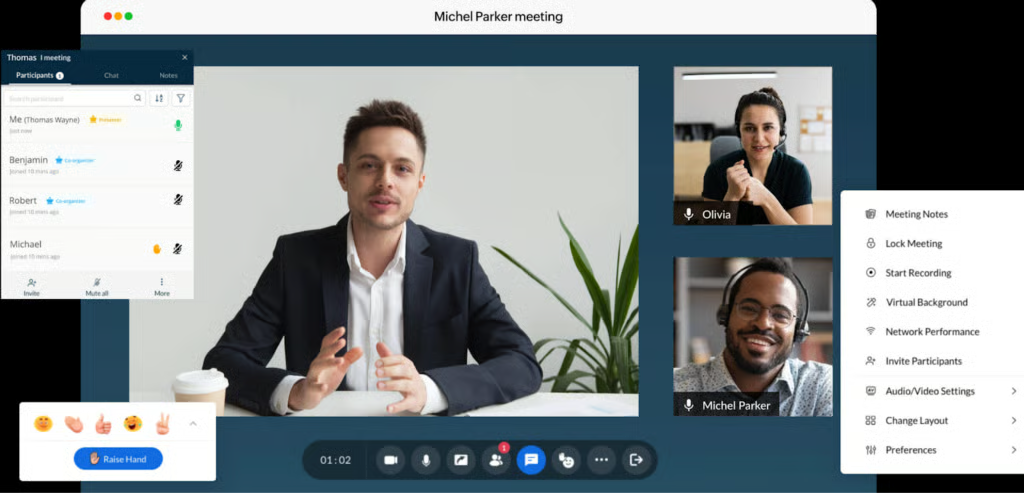
- Meeting reports: Access detailed analytics based on your plan, including session length, engagement levels, and meeting activity.
- Remote access: Take control of another participant’s screen for real-time troubleshooting or collaboration during a meeting.
- Meeting polls: Gather instant feedback or opinions from participants through polls during meetings or webinars.
Webex: Best for companies regularly hosting large-scale webinars and events
How Webex compares to Zoom
- Both Zoom and Webex cap free meetings at 40 minutes.
- Webex offers local cloud recording storage on its free plan, which Zoom lacks.
- Zoom meetings can last up to 30 hours, while Webex limits sessions to 24 hours.
My expert opinion
I consider Webex by Cisco one of the best Zoom alternatives for hosting large webinars and customer-facing events. I like that its Events plan can handle up to 100,000 attendees and includes professional features such as custom branding, on-demand video hosting, and digital business cards. I also appreciate the option to add event strategy and production support when organizing major virtual conferences.
What I find most useful is Webex’s ability to reach global audiences with real-time translation in 13 languages and closed captioning in 100 languages. During sessions, I can use tools like moderated Q&A, emoji reactions, gesture recognition, and live polls to make events more interactive and engaging for participants.
The only downside I’ve experienced is the limited cloud storage, as users outside the Enterprise plan get only up to 10GB. For businesses that require more recording space, I recommend RingCentral for its one-year unlimited cloud retention or Microsoft Teams for its 1TB of file storage under the Business Basic plan.
Pricing
Webex by Cisco offers a free plan and several paid options starting at $14.50 per month for businesses needing advanced collaboration tools. The free version supports up to 100 participants for 40 minutes and includes noise removal, local recording, and chat.
Paid plans support 200 or more participants, up to 24 hours meeting duration, cloud recording, captions, and encryption. Higher-tier plans combine video and phone features, large-scale event hosting, and up to 1,000-person meeting capacity for enterprise users.
Standout features
- Background noise removal: AI-powered noise cancellation filters out distractions like typing, doorbells, or chatter for clearer conversations.
- Calendar integrations: Sync with Google or Microsoft calendars to schedule meetings and send invitations seamlessly.
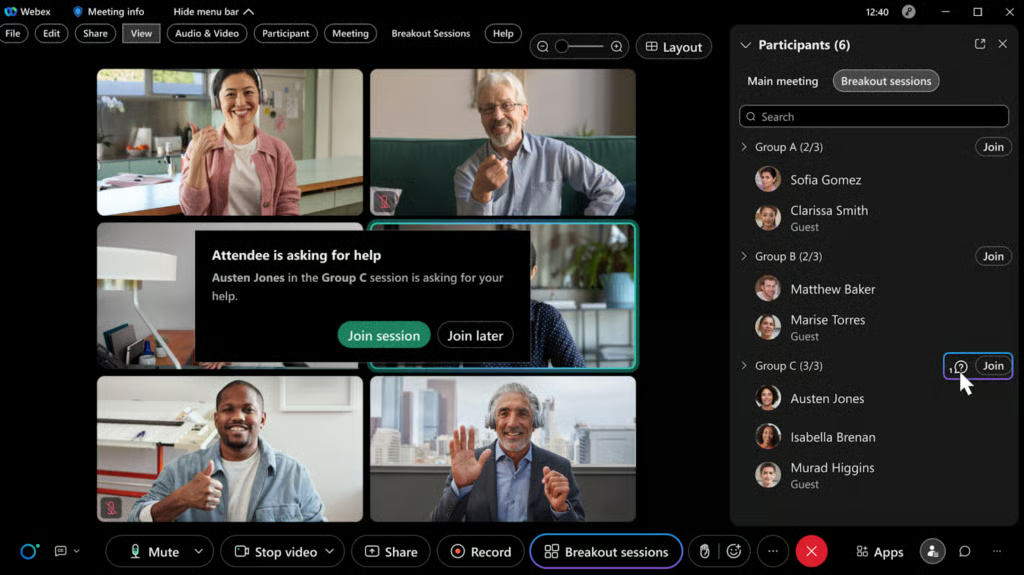
- Breakout sessions: Split meetings into smaller groups for focused discussions, workshops, or team activities.
How I evaluated the best Zoom alternatives
To determine the best Zoom alternative, I researched similar providers and compared their affordability, features and tools, user-friendliness, and customer support options. I also calculated an expert score based on each provider’s value for money and overall popularity among small business owners.
I looked at affordability based on entry-level plan costs under $30 per user, the availability of free tiers, and potential discounts for annual or volume purchases. Platforms that offered more value through flexible pricing and ongoing savings received higher scores.
Core communication tools were essential to my evaluation. I prioritized options that support large participant limits and include in-meeting collaboration tools like chat and screen sharing on both desktop and mobile devices.
To see which tools go beyond the basics, I reviewed features like meeting recording, breakout rooms, integrations, and AI capabilities such as live captions and summaries. Services with robust built-in options earned top marks over those requiring paid add-ons.
Ease of setup and day-to-day use weighed heavily in the scoring. Platforms that required minimal technical skill and provided a clean, intuitive interface were ranked higher for accessibility and efficiency.
Support quality was measured through service availability, contact methods, and security mechanisms. I gave higher ratings to providers offering 24/7 coverage, multiple contact channels, and comprehensive knowledge bases.
Finally, I factored in overall value, popularity, and user experience based on years of testing and firsthand feedback. I awarded higher scores to platforms that deliver a balanced mix of strong performance and cost-effectiveness.
How to choose the best Zoom alternative
Zoom remains one of the top video conferencing platforms, but your business may benefit from an alternative that offers stronger tools for collaboration, scheduling, or workspace management. When comparing options, focus on how each provider supports your meeting needs, team workflow, and security standards.
- Capacity and meeting duration: Each platform varies in meeting length and participant capacity. Zoom’s free plan supports 40-minute sessions for up to 100 participants, while its higher-tier plans extend to 30-hour meetings with 300 participants. If your team mostly hosts short client meetings, a basic plan should be sufficient. However, businesses that run webinars or large sessions should choose a provider with extended meeting limits and webinar support.
- Collaboration tools: For remote or hybrid teams, look for platforms that combine messaging, screen sharing, and whiteboards in a single interface. These tools promote real-time collaboration and make project discussions more productive without switching between multiple apps.
- Conference calling and scheduling: If you often hold external meetings or client calls, choose a provider that supports dial-in access or dedicated conference lines. Plus, many platforms now include built-in schedulers that let you invite attendees, share access links, and sync with apps like Google Calendar or Outlook.
- Meeting security and user access: Strong security should be a priority. Look for end-to-end encryption and secure cloud storage to protect sensitive data. Healthcare organizations should also choose HIPAA-compliant platforms that safeguard patient information. Features like meeting passwords and single sign-on confirm attendee identities and prevent unauthorized access.
- Third-party apps and integrations: The best alternative to Zoom should integrate with your existing business tools. Many platforms connect directly with CRMs, workflow systems, and communication apps like Slack, Salesforce, and Google Workspace. This integration streamlines workflows and helps your team manage tasks and meetings from one platform.
Frequently asked questions (FAQs)
What is the best free Zoom Alternative?
Google Meet is the best free Zoom alternative because it offers secure, high-quality video meetings for up to 60 minutes and supports 100 participants. It’s simple to use and integrates well with Google Workspace tools. Other free Zoom alternatives worth trying include RingCentral, Microsoft Teams, and GoTo Meeting.
Is Google Meet better than Zoom?
Google Meet is better for businesses that rely on Google Workspace and need affordable, integrated video conferencing. However, Zoom provides more scalability and longer meeting durations, making it ideal for hosting large or extended sessions. The right choice depends on your team size, meeting frequency, and collaboration needs.
Who is Zoom's biggest competitor?
Microsoft Teams is Zoom’s strongest competitor for collaboration and productivity, while RingCentral excels in unified communications and app integrations. Both offer strong alternatives for small businesses that provide scalable and secure meeting platforms tailored to modern hybrid work environments.
