


As a solopreneur, I often struggle to manage the many tasks on my plate. I am always on the lookout for tools that can help me and other small business owners manage our daily responsibilities effectively. One of my favorite recommendations in this regard is the call management system. If you’re new to the concept, call management systems can transform your customer service strategy and act as a support to your team.
These systems combine various tools, like auto attendants and smart routing, to handle calls more efficiently. If you’re interested in simplifying your life as a business owner, I have evaluated several call management software options to help you choose the right solution for your needs. Below are my top picks:
- RingCentral: Best overall call management system
- Dialpad: Best for voice intelligence features
- Nextiva: Best for customer service support
- Grasshopper: Best for multiple phone numbers
- Vonage: Best for spam protection
- Phone.com: Best for scalable plans
- Ooma: Best for international calling
- What is a call management system?
- Comparing the best call management systems
- How to choose the right call management system?
- RingCentral: Best overall call management system
- Dialpad: Best for voice intelligent features
- Nextiva: Best for customer service support
- Grasshopper: Best for multiple phone numbers
- Vonage: Best for spam protection
- Phone.com: Best for scalable plans
- Ooma: Best for international calling
- Core features of call management systems
- Benefits of using a call management system
- Frequently asked questions (FAQs)
- Bottom line
What is a call management system?
Before we start, let’s define our terms. For those who don’t know, a call management system is a powerful platform designed to simplify call handling. It automatically collects data from callers and sends each call to the right customer service representative. Using a variety of tools, including call queues, call groups, and interactive voice response (IVR) systems, this platform ensures that every caller is connected to the proper support.
Comparing the best call management systems
| Call management systems | Monthly starting price (per user) | Key features | Our score out of 5 |
|---|---|---|---|
 | $30 |
| 4.83 |
| Visit RingCentral | |||
 | $27 |
| 4.61 |
| Visit Dialpad | |||
 | $36 |
| 4.36 |
| Visit Nextiva | |||
 | $18(flat rate) |
| 4.30 |
| Visit Grasshopper | |||
 | $19.99 |
| 4.24 |
| Visit Vonage | |||
 | $18 |
| 4.23 |
| Visit Phone.com | |||
 | $19.95 |
| 4.21 |
| Visit Ooma | |||
How to choose the right call management system?
Now that you’re familiar with some of the best call management systems available, let’s take a moment to explore some key tips for selecting the perfect fit for your needs. Before you dive deeper into the details of the providers listed below, keep this list in mind as a guide to making an informed decision. You can also revisit this section at any time as you explore your options.
- Determine your budget: Although many call management systems have similar prices, some are still more expensive than others. Before getting caught up in all the special features and tools, keep your budget in mind and choose a solution that fits your financial capacity.
- Identify essential features and integrations: While many call management systems share common core features, it is also important to consider the specific features and integrations that are most beneficial for your business. As you review the list of providers, consider whether each platform offers the necessary functionalities and integrates well with your existing workspace tools.
- Prioritize user-friendliness: Call management systems should benefit both you and your team, offering an easy-to-navigate interface for callers as well. Therefore, consider whether the provided features are necessary and easy to use.
- Leverage free trials: Although you may be tempted to sign up for a provider before trying it out, maximizing free trials or product demonstrations is one of the best ways to determine the best fit for your team’s technical expertise. So make sure to take your time and try out the product before committing to a monthly or annual subscription.
RingCentral: Best overall call management system
My expert opinion
RingCentral is my top call management solution for small businesses because it offers essential and advanced calling features, including unlimited audio conferencing, chat, and call log reports. As an all-in-one unified communications (UC) solution, users on the entry-level plan receive a multi-level auto-attendant and interactive voice response (IVR), as well as shared features like call park, which are often included in higher subscription packages by other providers.
However, one of the best aspects of RingCentral is that it extends beyond VoIP capabilities, enabling teams to consolidate various communication channels, including chat, calls, and video conferencing. The solution enables you to distribute calls within a team based on various criteria, including the day of the week and the number dialed.
RingCentral offers team messaging and file-sharing, with unlimited storage for Enterprise subscribers, making it an ideal solution for those looking for robust VoIP software. However, for a simpler and more affordable VoIP phone system, consider Grasshopper, which offers unlimited business messaging and shared phone numbers starting at $18 per month.
Pricing
| Plans and pricing (per user)* | Core | Advanced | Ultra |
|---|---|---|---|
| Monthly | $30 | $35 | $45 |
| Yearly | $20 | $25 | $35 |
| *This pricing is based on one to five users. RingCentral offers volume discounts as the number of users increases on each plan. | |||
Standout features
- Visual voicemail: Get through your messages quickly by reading all your voicemails instead of listening to them. Users can also select which voicemail messages to prioritize.
- AI assistant: RingCentral offers several artificial intelligence features, including note-taking assistance during calls, transcriptions, and post-call summaries with agent suggestions.
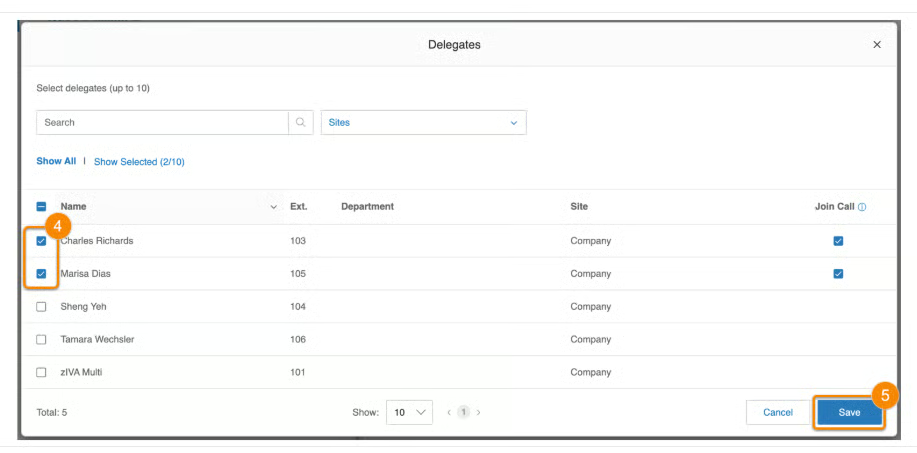
- Call delegation: This feature enables admin assistants to place and receive calls on behalf of executives. Each executive can have up to 10 assistants assigned.
Dialpad: Best for voice intelligent features
My expert opinion
Whenever I compile a list of call management systems, Dialpad consistently rises to the top of my favorites due to its artificial intelligence (AI) capabilities. As a fully integrated UC powerhouse packed with intelligent features, Dialpad offers advanced speech recognition and natural language processing, enabling agents to tackle customer inquiries with remarkable efficiency.
Dialpad’s AI offers impressive features, including sentiment analysis and real-time transcription, enabling supervisors to quickly identify calls that require immediate attention. Along with unlimited calling, team messaging, and voicemail transcription, Dialpad AI offers additional functionalities, including real-time assist cards and AI playbooks.
Even with all of these advanced features, extension dialing is only available on Dialpad’s Enterprise plan. If extension dialing is critical for your operations, I recommend Grasshopper because it offers extensions even at the base-level plan. Grasshopper also offers flat-rate pricing, enabling businesses to save on monthly call costs without the lack of transparency associated with enterprise pricing.
Pricing
| Plans and pricing (per user)* | Standard | Pro | Enterprise |
|---|---|---|---|
| Monthly | $27 | $35 | Contact sales for pricing |
| Yearly | $15 | $25 |
Standout features
- Live speech coaching: Speech coaching utilizes AI technology to provide feedback on how agents speak. This AI-powered tool can be used for training or as real-time feedback that prompts agents to use fewer fillers, speak up, or slow down when talking.
- Caller ID: When your team makes a call, you can choose which caller information will be displayed to the call recipient. Use a custom caller ID to protect your personal number when using your cell phone.
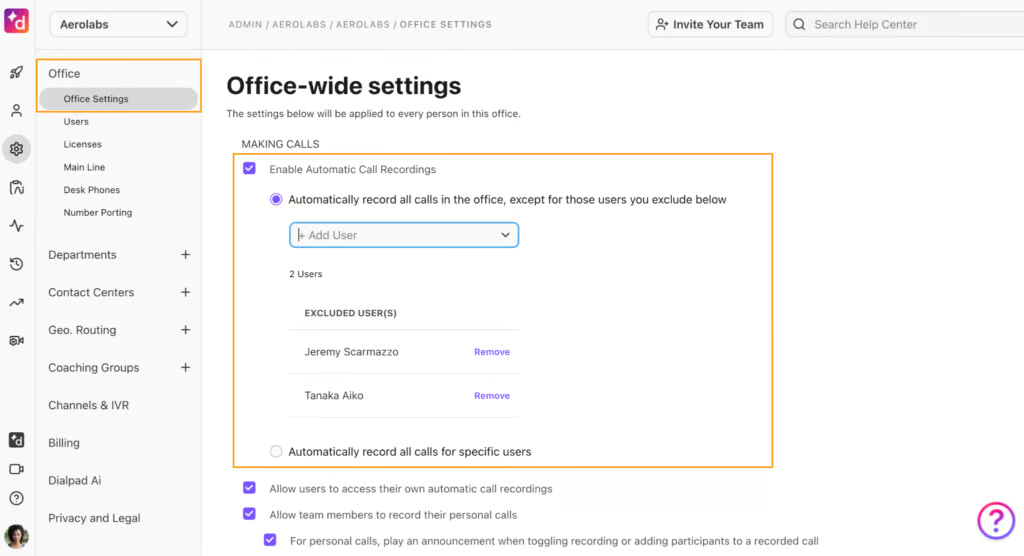
- Call recording: Record your business calls with a single click. You can start or pause recordings with one click, an excellent complement to AI-powered real-time call transcription.
Nextiva: Best for customer service support
My expert opinion
When considering call management systems, Nextiva consistently stands out as one of the best options for call centers, as it excels in creating phone systems that prioritize customer support and experience. Across its various plans, Nextiva offers customizable, intelligent, and skill-based routing to ensure that calls are directed to the most suitable agent for each situation.
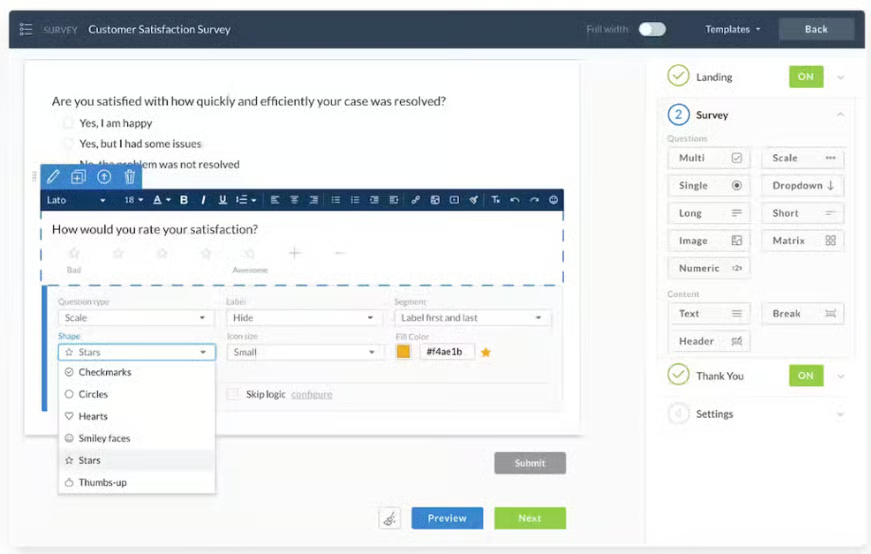
Additionally, the built-in survey and feedback features make it easy to evaluate the efficiency of your call flows, allowing you to respond effectively to customer needs. Furthermore, Nextiva’s higher-tier plans offer omnichannel support, making its services particularly valuable for those who require comprehensive contact center features.
Best of all, Nextiva also offers an impressive allocation for mobile SMS and multimedia message service (MMS), allowing up to 2,000 messages to be sent and received per user. While the provider offers robust call management and messaging capabilities, many of the AI features incur usage-based fees. If you want complete access to AI transcription and summarization, consider Dialpad, which offers both as core features.
Pricing
Small business plans
| Plans and pricing | Core | Engage | Powersuite |
|---|---|---|---|
| Monthly | $36 | $50 | $75 |
| Yearly | $15 | $25 | $50 |
Enterprise plans
| Plans and pricing* | Essential | Professional | Premium |
|---|---|---|---|
| Per agent/per month | $129 | $159 | $199 |
| Usage-based pricing (per agent/min) | $0.018 | $0.020 | $0.024 |
| Concurrent pricing | $179 | $209 | $239 |
| *Nextiva provides two types of plans: small business plans for smaller teams, and enterprise plans for more comprehensive call management systems or contact centers. | |||
Standout features
- Intelligent routing: Predetermine how calls are routed and configure settings based on the time of day or the skill set of agents. Nextiva’s skills-based routing enables you to direct customers to specific team members who are equipped to handle their unique concerns.
- Custom ringback: Ringbacks are audio files that play in place of a ringing sound. Add custom ringback tones and create the right mood and ambiance while customers wait for your team to answer the phone.
- Surveys: Create voice or digital questionnaires to gather feedback from existing and potential clients. Customize and automate surveys, then automatically send them to customers when specific conditions are met.
Grasshopper: Best for multiple phone numbers
My expert opinion
Grasshopper consistently ranks among my top choices for business phone number apps because it provides multiple virtual numbers alongside an effective call management system. With Grasshopper, users can obtain a cost-effective virtual phone number and select from vanity, local, or toll-free options. The service charges a monthly flat rate that varies based on the number of users, extensions, and phone numbers selected.
Additionally, all Grasshopper plans offer the same core features, which include unlimited business texting, call forwarding, and voicemail. The highest plan allows for up to five phone numbers, but if you need more, you can get an additional Grasshopper number for just $10 per month per number.
At the same time, while Grasshopper offers a variety of virtual phone numbers, it does not provide international numbers. If you need these types of numbers, a provider like RingCentral may be a better option for overseas businesses, as RingCentral offers additional international numbers for only $5.99 per user per month.
Pricing
| Plans and pricing* | True Solo | Solo Plus | Small Business |
|---|---|---|---|
| Monthly | $18 | $32 | $70 |
| Yearly | $14 | $25 | $55 |
| *Grasshopper offers a flat monthly rate, but discounts are available for annual billing | |||
Standout features
- Live virtual receptionist: Grasshopper collaborates with Ruby Receptionists to provide users with access to live, US-based receptionists. Bilingual agents are also available to answer your Grasshopper calls.
- Custom greetings: Customize your greetings and messages with Grasshopper’s professional voice actors. This feature offers a more personalized and human touch to your phone system, making a good first impression on new callers.
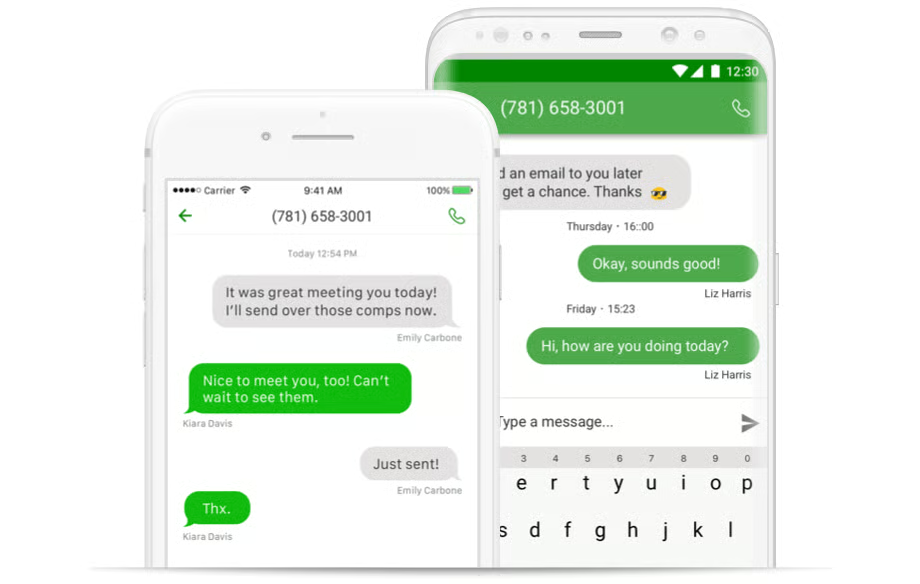
- Business texting: Send instant updates and quick responses through business texting. Unlike other popular providers that limit texting to a set number each month, all Grasshopper plans include unlimited business texting.
Vonage: Best for spam protection
My expert opinion
Maintaining clear lines of communication is essential for ensuring that potential clients can reach you. However, spam calls can disrupt this process by distracting agents with unwanted interruptions, potentially leading to financial loss or unintentional disclosure of sensitive information. To address this issue, call screening features, such as Vonage’s Spam Shield, can help you identify illegal robocalls, allowing you to decide whether to answer them or not.
Enable Spam Shield to effectively identify and detect spam calls. Additionally, there is an option available to block all calls that are flagged as spam through the online platform. The best part is that the service requires no configuration, and once it’s activated, it operates automatically.
Unfortunately, of the 40-plus features Vonage offers, nearly half are paid services, including Spam Shield and AI assistance. For teams seeking more comprehensive access to call management features and AI assistants, I recommend RingCentral, which provides automated call screening and artificial intelligence capabilities.
Pricing
| Plans and pricing (per extension)* | Mobile | Premium | Advanced |
|---|---|---|---|
| Monthly | $19.99 | $29.99 | $39.99 |
| Yearly | $13.99t | $20.99 | $27.99 |
| *Pricing includes one main local company number. The provider requires a minimum one-year contract. | |||
Standout features
- Simultaneous ring: Alert different team members by simultaneously ringing all their devices to ensure your calls are answered. Vonage allows you to alert up to five different phone numbers before sending the call to voicemail.
- Business inbox: This paid and optional feature allows businesses to address customer needs using SMS, MMS, and Facebook Messenger captured in business inboxes. Customers can send you SMS messages or Facebook messages, which can be accessed through your Business Inbox. Cross-channel texting costs $9.99 per month.
- Call announce: Identify who’s calling and the purpose of the call before connecting the caller to your staff. This feature can be used in conjunction with call screening, allowing you to answer the call, send it to voicemail, or transfer it to another extension or department.
Phone.com: Best for scalable plans
My expert opinion
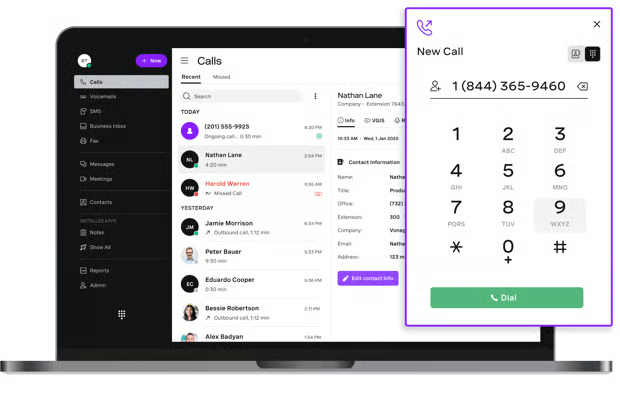
Many of the call management system providers on this list offer specialized plans tailored to various business types. However, Phone.com stands out due to its flexible mix-and-match plans, which are particularly beneficial for businesses with fluctuating call volumes. You can even design a call flow that routes your calls according to business hours, which is especially useful for smaller teams or businesses that cannot provide extended customer support hours.
Additionally, Phone.com is notable because it is one of the few providers that offers HIPAA-compliant voice and video calling. This feature provides an extra layer of data protection, not only for healthcare providers but also for any business that handles sensitive customer or client information. But while Phone.com offers plans tailored for different teams, the features offered are not as comprehensive as those offered by other providers on this list.
For example, access to call recordings is not included in the base plans, meaning small teams must pay an additional fee to access this feature. The AI-powered features, such as routing and appointment scheduling, are also unavailable on the base plan. If you’re looking for a simple phone system that offers a variety of features, I recommend Ooma, which also has a HIPAA-compliant mode for certain subscriptions.
Pricing
| Plans and pricing (per user) | Basic | Plus | Pro |
|---|---|---|---|
| Monthly | $18 | $27 | $40 |
| Yearly | $15 | $22.50 | $33.33 |
Standout features
- HIPAA-compliant conferencing: Across plans, Phone.com offers both audio and video conferencing, which adheres to heightened compliance standards, making it an excellent choice for healthcare providers or those handling sensitive data.
- Auto-attendant: With custom greetings and menus, calls are automatically directed through the business phone system, making it easier to handle changing call volumes and flows.
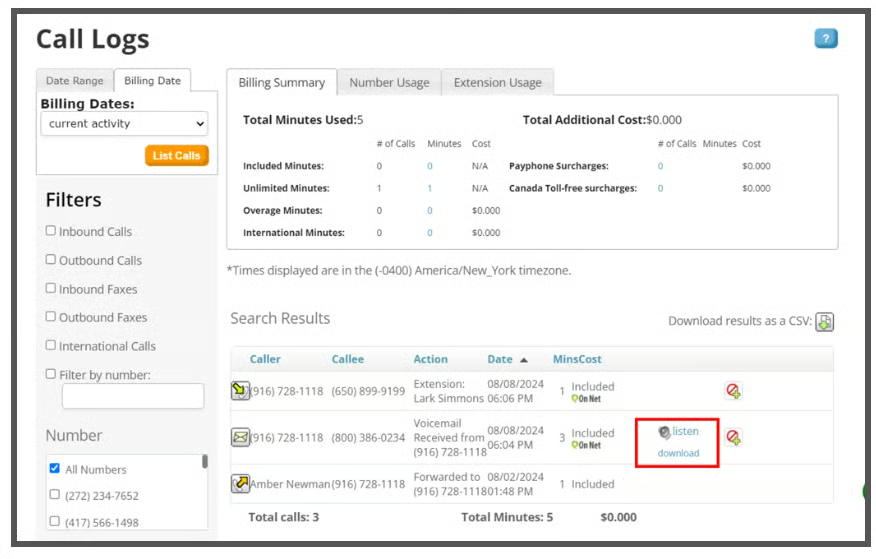
- Call logs: Monitoring your call analytics is especially crucial when handling multiple customers and a steady flow of incoming calls. Call logging provides a clear overview of all your call data through an easy-to-access dashboard.
Ooma: Best for international calling
My expert opinion
When I think of Ooma, I often think of reliable small business phone systems, but Ooma is also ideal for global and overseas calling. In addition to Ooma Office plans, it offers multiple global calling plans, including low international rates on the Basic and Premier service plans, as well as a World plan, which provides unlimited minutes to landlines in over 60 countries and to mobile phones in more than 10 countries.
Additionally, the World Plus plan provides unlimited calling to landlines in over 70 countries and to mobile phones in more than 40 countries. Ooma also includes various call management features, such as ring groups, virtual fax, call transfer, and music-on-hold. However, one downside of this provider is its limited number of third-party integrations, especially with Microsoft Office 365 and Google.
If you use various productivity tools that sync with your phone system, consider a provider like RingCentral. While Ooma is limited in integrations, RingCentral offers a competitive entry-level plan and supports over 300 third-party integrations.
Pricing
| Plans and pricing (per user) | Essentials | Pro | Pro Plus |
|---|---|---|---|
| Monthly | $19.95 | $24.95 | $29.95 |
Standout features
- Virtual fax: This feature enables individuals to send and receive faxes digitally. Each user is assigned a unique number linked to their extension, granting direct access to their digital faxes.
- Enhanced call block: Screen all incoming calls against a database of known robocall numbers to block unwanted calls. Ooma’s call blocking tools also help identify potential anonymous callers, allowing your team to create block lists.
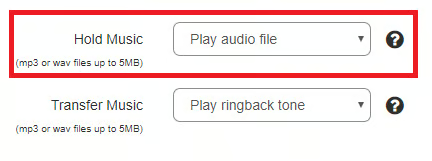
- Hold music: This feature allows you to play an audio file when a caller is on hold, which helps improve the customer’s mood and fills the silence while they wait.
Core features of call management systems
When it comes to navigating communication tools, a robust call management system is best for businesses that need more advanced call routing. By offering a range of powerful features, these systems are designed to elevate your business’ communication game. To learn more about these features, select the tabs below and discover how they can transform the way you connect with your clients and streamline your operations.
Automatic call distribution (ACD)
Automatic call distribution, or ACD, is a telephone system that automatically routes calls to specific destinations based on predetermined rules. Within many call management systems, ACD is a fundamental feature because it enables the design of complex call flows, making it easier to manage the distribution of incoming and outgoing calls.
Interactive voice response (IVR)
When designing a call management system, an interactive voice response (IVR) is typically employed to greet incoming callers with customizable messages and automated greetings.
Regardless of the complexity of the call flow, IVRs interact with callers by interpreting their speech or keypad inputs. This functionality streamlines the process, ensuring callers are efficiently routed to the appropriate department or representative.
Call queues
Whether you manage high call volumes in a busy call center or handle a steady flow of incoming calls from potential clients, call queuing is a crucial feature for managing multiple calls simultaneously.
Specifically, call queues automatically put callers on hold when there is no agent or employee available to assist them. Within call management systems, queues often include predetermined rules as well as engaging hold music or callback systems, making the waiting experience more pleasant and efficient.
Conference calling
When evaluating call management features, it’s essential to recognize that while enhancing individual customer experiences is a primary focus, the system should also facilitate collaboration and information sharing among teams.
As part of this functionality, it’s important to consider support for video and audio conferencing capabilities, which are vital for hosting multiple callers simultaneously. This ensures that teams can communicate effectively and share information in real-time, regardless of their location.
Call monitoring and reporting
Many call management systems, in addition to facilitating call routing, are designed to effectively track and analyze call data, enhancing the efficiency of your call flows. This is particularly beneficial if you are using a call management system within a call center or for a team of agents or representatives.
Features such as call monitoring and reporting make it easier to evaluate call quality and provide feedback on how to improve your call management processes. Detailed call logs also enable you to track your billing, which is crucial for businesses that make outgoing or international calls or manage business messaging campaigns.
CRM integrations
Most call management systems offer integrations with third-party applications and workspace tools. Therefore, one of the most valuable features a provider can offer is integration with customer relationship management (CRM) software.
By connecting with a CRM, call management systems can access customer data during a call, enabling them to route callers based on their previous interactions for a more personalized experience. Additionally, while on the call, CRMs enable agents to easily access customer information and update that data after the call is resolved.
Benefits of using a call management system
In addition to the core features of a call management system, several key benefits are associated with using these systems. Check out the list below to learn more about how a call management system can benefit your business.
- Better customer service: One of the primary concerns within call centers, or when managing high volumes of incoming calls, is the ability to respond efficiently and effectively to customer inquiries. However, by adopting a call management system, you can establish a call flow that enables customers to receive help more quickly and obtain accurate responses from the appropriate sources.
- Increased agent productivity: Call management systems primarily benefit agents by automating various tasks within the call center, such as routing calls to the appropriate locations and creating self-service options for customers. This helps agents manage calls more efficiently by allowing them to engage only with those who truly need their assistance.
- Lower costs: Instead of hiring additional receptionists or front desk employees to manage incoming calls, a call management system reduces the operational expenses associated with call handling.
- Improved overall team performance: By outsourcing call handling to a technological system, you can free up your team members to focus on what matters most, thereby enhancing the efficiency and effectiveness of the entire team.
How I evaluated the best call management systems
Frequently asked questions (FAQs)
What is a call management system used for?
A call management system is primarily used to handle telephone calls by routing them to the correct extension or department. Therefore, businesses can benefit from utilizing a call management system because it makes it easier for customers or clients to reach their desired location or individual.
Is call management software suitable for small businesses?
Call management software is particularly beneficial for small business owners who may not have a dedicated team of receptionists or agents to handle incoming calls. This software often utilizes technologies such as virtual receptionists and automated menus, which enable incoming calls to be transferred and routed without requiring a person to answer the phone.
Can I integrate CMS with my CRM?
A key feature of many call management systems (CMS) is their integration with popular customer relationship management (CRM) platforms. When selecting the right CMS for your business, it’s important to determine whether your CRM is one of the native integrations. If not, consider finding a provider from the list above that can integrate with your current tools.
Bottom line
The right call management system simplifies communication and enhances customer experience. With features like engaging hold music, seamless call transfers, and unlimited calling, your team can take support to the next level. Call management software also enables your agents to handle both inbound and outbound calls with ease, ensuring exceptional service at every interaction.
With advanced routing and queuing capabilities, you can distribute workloads more efficiently, allowing your team to excel and your customers to feel valued. RingCentral emerged as the best overall solution in my evaluation because of its advanced call routing features, affordable pricing, and robust third-party integrations. To learn more, sign up for RingCentral’s free trial and see if it matches your business needs.
