


In today’s fast-paced work world, it’s becoming increasingly common for companies to hire remotely. There are steps you can take to ensure you are hiring remote employees who are just as successful and productive as on-site employees. Being clear about what you’re looking for in a candidate, defining the skills and experience required for the role, and ensuring candidates align with your company values and culture will help you find a good fit for your organization.
Our guide will discuss how to hire remote employees, from creating your job description to conducting virtual interviews and making your offer.
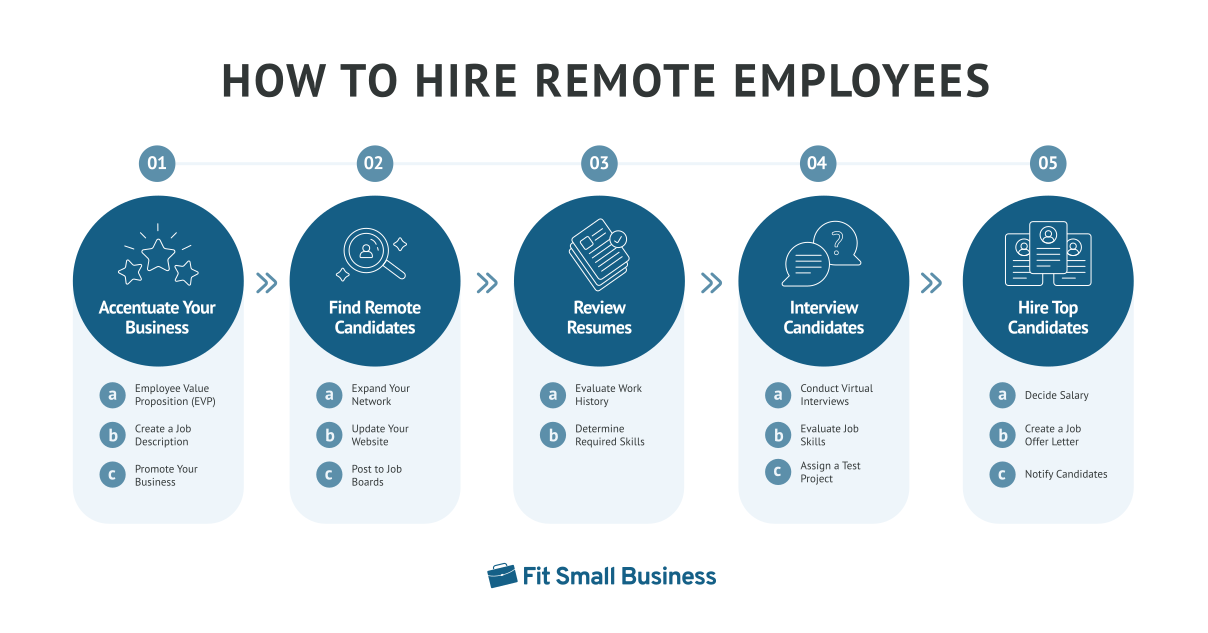
Step 1: Accentuate Your Business
Unlike local candidates, remote job candidates are less likely to have heard of your company and generally won’t have the opportunity for an in-person visit to your facility. Therefore, you must emphasize the positive qualities of your business in other ways.
Have an Employee Value Proposition That Covers Remote Working
Having an employee value proposition is a part of any sound remote hiring strategy. An employee value proposition (EVP) is your company’s overall value to current and future employees relative to other employment options they may have. It combines the company mission, culture, benefits, and compensation and is usually part of a larger employer branding strategy.
To appeal to remote employees, your EVP should put extra focus on flexibility and helping remote workers feel like part of the team. For remote workers, this is a critical aspect of an EVP and how they will evaluate your company versus other options. Be sure to highlight this in your job description as well.
Create a Job Description That Speaks to Remote Workers
A good job description does more than just list the role and candidate requirements. It sells candidates on why your company is a great workplace, speaking in a voice that relays your unique culture and core values.
For remote workers, that means an emphasis on flexibility, which is usually a key reason they want to work remotely. It’s also about having a culture that values productivity over face time and focuses on strong communication and self-motivation.
Additionally, your job description should list the following
- Position overview
- Duties and responsibilities
- Skills and experience required
- Ideal candidate statement
- Compensation
- Company benefits
Promote Your Business
In addition to selling your company culture, you need to be able to sell your company’s ability to manage remote workers, who often feel detached and alone. Some companies are better than others at managing remote workers, so you want to give remote candidates confidence that you can successfully manage working with employees no matter where they work.
This could be promoting how many of your employees work remotely or the processes and tools you use to keep remote workers in the loop. You should mention this in your job description, EVP, and during the interview.
Step 2: Find Remote Candidates
It is now time to post your job openings and begin finding qualified remote candidates.
Expand Your Network
For any job opening, you’ll want to reach out to your network, including current employees, family and friends, business partners, etc. Employee referrals are the highest-quality source for new hires. For on-site job openings, this is usually focused around your geographic area. However, for remote workers, you need to expand your thinking. Candidates around the world are potential employees.
Update Your Website
If you post job openings on your website, you’ll need to update your website when you’re ready to hire for a remote position. Be sure the posting highlights the fact that the job is remote and not specific to your business location.
Post to Remote-specific Job Boards
Several sites focus specifically on remote job opportunities. If you’re using a talent management system or recruiting software, you can automatically post your job to multiple sites with a single click.
Here are some remote job posting sites you may wish to consider:
| Features | Price | |
|---|---|---|
| ZipRecruiter |
| Plans start at $16 per job post daily Offers a four-day free trial |
| FlexJobs |
| Starts at $399 per month Offers a trial with five free postings |
| We Work Remotely |
| Starts at $299 per month Does not offer a free trial |
| Upwork |
| 5% of payments made to contractors and freelancers |
In addition to sites focused just on remote workers, you can also check out freelancing websites. These sites cater to remote work on a more piecemeal, part-time basis. If you’re looking for administrative help, you can check virtual assistant sites and services.
Step 3: Review Resumes
Take the time to review each resume that is submitted. You can perform a quick scan to see if the candidate already has a job history in your industry/business. If they do not show the experience or education in a quick scan, you can remove them from candidacy. If they do have the background you are looking for, take a deeper dive into their resume.
When evaluating candidates for remote work, there are a few criteria to look for in addition to the standard job qualifications.
Pay Attention to Work History
A quick review of a candidate’s resume will give you an overall impression of their qualifications. Pay close attention to their work history and how it aligns with your job opening. Have they worked in your industry before? Have they worked in a position with the same or similar title to your job opening? Additionally, do they have a history of working remotely? Often, folks with a background in startups and freelancers are used to being productive when working remotely.
Look at Required Skills
The next review of a resume is to look at the skills a potential candidate is bringing to the table. Has the candidate included technical skills in previous jobs you require in your current open position? Just as important as technical skills are soft skills that every remote worker must have, such as self-motivation and being proactive in a virtual environment.
Step 4: Interview Remote Candidates
Once you have evaluated applicants for consideration, your next step is to interview candidates that best meet your needs. Interviews can be conducted in several ways for remote employees, primarily via phone or video conferencing.
You can test for communication skills by making all of your interactions a combination of video conferencing calls, phone calls, and email messages. Many businesses have successfully hired remote workers by conducting only video interviews. Be sure to let team members who will work closely with the candidate have a chance to interview as well. This will help in the decision-making process as the team can decide if the candidate would make a good fit.
In addition to being productive remotely, you’ll need someone good at communicating. You won’t be able to chat around the water cooler to get a sense of how they’re doing, so communicating well at a distance is critical for remote workers to be successful. Do they seem well-organized? Can they articulate clearly and concisely? Are they comfortable with modern communication tools like Skype, Slack, or Zoom? The interview is your chance to evaluate their communication skills.
During the interview process, you can get a feel for productivity at a distance by assigning the candidate a complex task with a deadline. The task will test to see if they can remain motivated outside of an office. The timeline will test their ability to be proactive and get things done quickly. The test project should closely resemble the kind of work the person would be doing if hired. It will be up to you to decide if this test project will be a paid assignment.
Some job seekers feel like test projects are a way for companies to get free work, so paying for the project indicates you are serious about evaluating their skills for possible employment. Be sure this is one of the last steps in your hiring process so that you are not spending a lot of money and time on candidates you are not considering.
Step 5: Hire Your Top Remote Candidate
Now that you’ve conducted your interviews and reviewed all notes and the test project, it is time to hire your top candidates.
Decide on a Salary
We recommend deciding on salary early and including it in your job description. However, if you haven’t already decided on a salary for the position, you will need to make this decision before sending the formal job offer letter. The more competitive your salary, the more likely a candidate will accept the position. You can find out what the market salary is for any given position on the Bureau of Labor and Statistics website.
Formalize a Job Offer
When you decide on which candidate(s) to hire, create a job-specific offer letter that outlines the position, start date, salary, etc.
Notify Candidates
Notify those workers that you will hire with a phone call or an email to give them the details of the job opportunity. Once you have made your decision on which candidates you will hire, it is a good business practice to notify all other applicants that you have reached a decision and they are no longer considered for the position.
Pros & Cons of Hiring Remote Workers
Hiring remote workers can open up the number of available job candidates and create more satisfied employees, but it’s not for everyone. Here are some pros and cons to help you decide if remote workers are right for your business:
| PROS | CONS |
|---|---|
| Attract more candidates from anywhere | Requires you to have the right processes and tools for remote workers |
| Employees like the flexibility of remote work | Requires you to trust workers to be productive without direct oversight |
| Reduce overhead like rent and facilities | Not applicable for a number of positions, e.g., retail sales, manufacturing, etc. |
| Works very well for certain positions, like tech, graphic design, writing, and freelance positions | |
Hiring Remote Employees Frequently Asked Questions (FAQs)
What are the advantages of hiring remote workers?
The top advantage of hiring remote workers is that you can look beyond your geographic location to find talented candidates throughout the world. This can bring expertise to your company as well as diversity. Additionally, by hiring remote-only employees, you reduce the overhead costs associated with a brick-and-mortar office building.
How do you attract and retain remote employees?
Having a culture that promotes flexibility and teamwork will help you attract and retain remote employees. They want to feel included but also like they have the room to work on their own. Be sure to consistently communicate with your remote employees and hold virtual meetings to collaborate as a team.
What are the risks of hiring remote workers?
One of the risks of hiring remote workers is they may not be truthful about the actual hours they are working. And you generally have no way to know if a remote employee is working their full schedule. However, putting time tracking software in place, wherein a remote employee must clock in and out, can help circumvent this issue.
Bottom Line
Leveraging remote workers can be a great way to attract more qualified candidates while reducing overhead costs at the same time. However, hiring and managing remote workers successfully requires you to have the appropriate processes and tools in place. If you do this, you can build a highly productive, global workforce.
ZipRecruiter can make finding and hiring remote candidates a snap. All candidate resumes will be kept in one place for your review. Plus, it offers templates you can use throughout the hiring process.
