







Ooma is an affordable phone system for small businesses and home-based entrepreneurs, but it comes with a one-time activation fee, limited collaboration tools, and fewer integrations. If you’re looking for better Ooma alternatives, I’ve researched options that offer more value for your money. I focused on business phone systems that stand out in pricing, features, and overall usability.
- Nextiva: Best smart call routing
- Zoom Phone: Best startups cutting costs
- RingCentral: Best for hybrid teams
- Talkroute: Best for local businesses with high call volume
- GoTo Connect: Best for global teams
- Grasshopper: Best for teams sharing a business number
- Phone.com: Best for busy professionals needing phone answering
- eVoice: Best for solopreneurs
Why you can trust Fit Small Business
- Best Ooma alternatives compared
- Which Ooma alternative is right for you?
- Nextiva: Best smart call routing
- Zoom Phone: Best for startups cutting costs
- RingCentral: Best for hybrid teams
- Talkroute: Best for local businesses with high call volume
- GoTo Connect: Best for global teams
- Grasshopper: Best for teams sharing phone numbers
- Phone.com: Best for busy professionals needing phone answering
- eVoice: Best for solopreneurs
- Factors to consider when choosing the best Ooma alternative
- FAQs
Best Ooma alternatives compared
| Ooma alternatives | Monthly starting price (per user) | Key features | Our rating |
|---|---|---|---|
 | $19.95 |
| 3.92 out of 5 |
| Visit Ooma | |||
 | $23 |
| 4.90 out of 5 |
| Visit Nextiva | |||
 | $10 |
| 4.76 out of 5 |
| Zoom Phone | |||
 | $30 |
| 4.64 out of 5 |
| Visit RingCentral | |||
 | $19 |
| 4.52 out of 5 |
| Visit Talkroute | |||
 | Custom |
| 4.30 out of 5 |
| Visit GoTo Connect | |||
 | $18 |
| 4.24 out of 5 |
| Visit Grasshopper | |||
 | $18 |
| 3.94 out of 5 |
| Visit Phone.com | |||
 | $14 |
| 3.34 out of 5 |
| Visit eVoice | |||
Which Ooma alternative is right for you?
Nextiva: Best smart call routing
My expert opinion
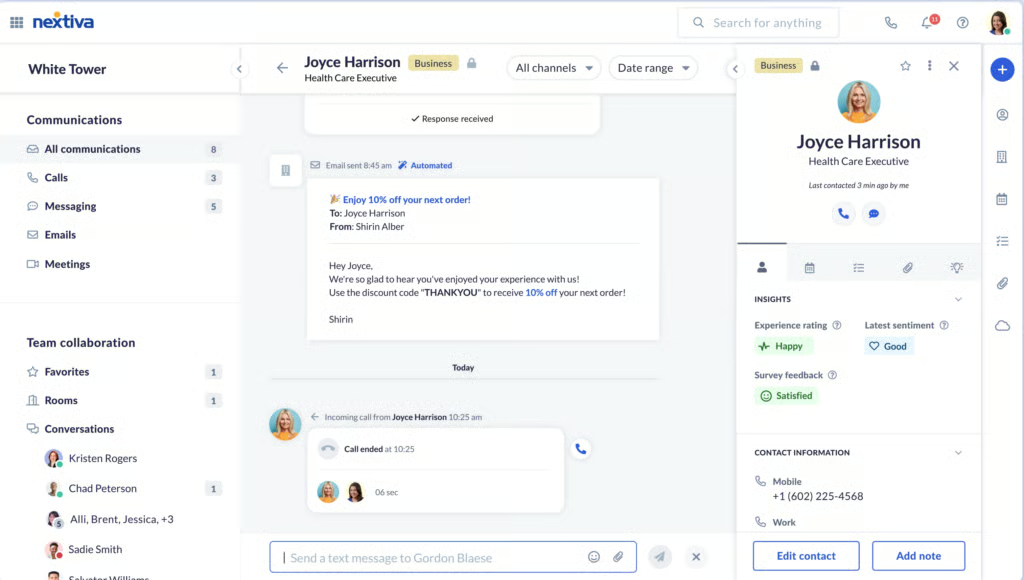
Ooma’s call routing system feels a bit outdated, requiring users to manually enter departments and extensions. In contrast, Nextiva is a stronger alternative for teams that want smarter, automated call management without needing a live receptionist. Its user-friendly drag-and-drop call flow builder makes it easy to customize how calls are handled, giving you more control and flexibility in directing callers to the right person or department.
Its auto-attendant works alongside an advanced interactive voice response (IVR) system with conversational AI. You can create custom greetings, set up menu options, and define routing paths based on caller needs. While Nextiva’s setup is powerful, RingCentral offers deeper customization with multilevel IVR menus. If your business needs more complex call flows, RingCentral may be the better fit.
What actual users say:
User feedback highlights Nextiva’s ease of use, responsive customer support, and flexible communication features. While most reviews are positive, a few users mentioned frustrations with specific tools like the fax portal and voicemail setup.
“All the UI’s are easy to understand and use. If something is tricky, their support team is quick to answer. I like that there is more control on the user end than having to always call support to implement a change.” — G2 review
“The only feature I am not very fond of is the vFax Portal. It looks a bit outdated, and there is a lot of clicking back and forth in order to view a different fax.” — G2 review
“I like the flexibility of the product. It can be used to text, call, record calls, voicemail, and generally to communicate.” — GetApp review
“My least favorite feature is having to upload a WAV file for the voicemail [greetings].” — GetApp review
Pricing & top features
Nextiva has three monthly plans starting from $23 per user. You can get up to 50% discount if you opt for the annual prepayment.
- Set up custom call routing rules to manage incoming calls.
- Experience high-definition audio on every call with best-in-class technology.
- Monitor voice calls in real time and assign virtual phone numbers through a secure portal.
Zoom Phone: Best for startups cutting costs
My expert opinion
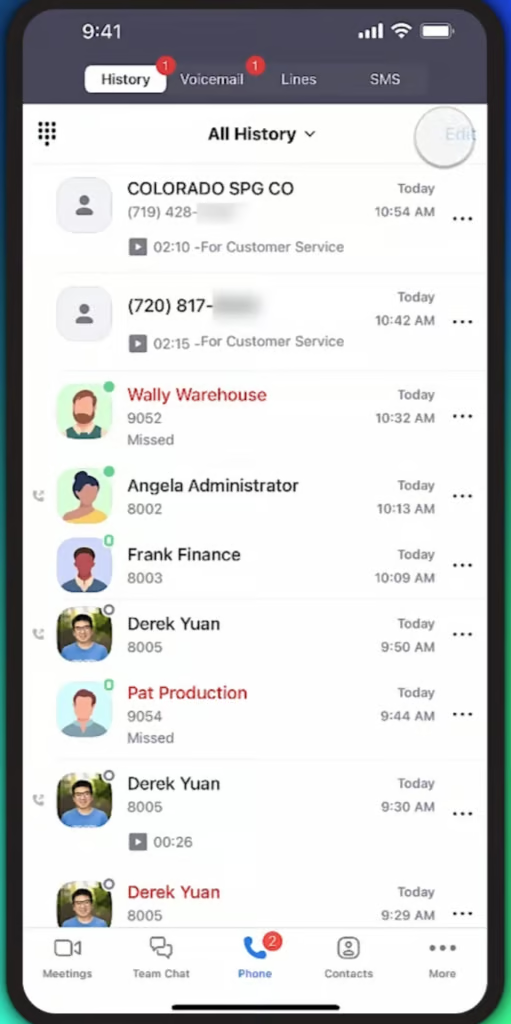
If you’re scaling fast and want affordable alternatives to Ooma, Zoom Phone is a more budget-friendly choice. Monthly subscription starts at just $10 per user with a pay-as-you-go option.
Pick from metered or unlimited calling plans and customize them per user, depending on individual calling needs. All plans include a solid feature set, with HD video meetings, call management tools, and collaboration features like screen sharing, breakout rooms, and team chat.
Zoom Phone can also be bundled with Zoom Workspace to create an AI-powered platform for voice, video, and chat. It offers advanced video conferencing capabilities, a big advantage over Ooma’s limited video options.
What I least like about Zoom Phone is that international calling is capped at 19 countries. If your business needs broader global coverage, GoTo Connect is a stronger choice with support for calling over 50 countries.
What actual users say:
Users appreciate Zoom Phone for its reliability, cross-platform access, and seamless integration with other Zoom tools. Still, some reviews point out room for improvement in mobile usability and caller ID visibility.
“Easy to use, available on almost every platform, works 99% of the time and does everything we need for our day-to-day operations. We can stay connected and coordinated easily despite being distributed geographically.” — G2 review
“It can be a little clunky on some of the versions of the app – primarily the phone app. Not much screen space to work with for a mobile phone so can’t blame too much.” — G2 review
“It works across apps, while sitting at my desk, or on the road on my cell phone. It takes voice and video and integrates well into the Zoom family.” — GetApp review
“There’s no way of checking the full call details when it’s ringing or copying the number before answering the call to be prepared for clients. Caller ID could be improved as well.” — GetApp review
Pricing & top features
Zoom Phone offers flexible monthly pricing per user: $10 for metered calling, $15 for unlimited regional calls, and $20 for unlimited calling to one of 48 supported countries.
- Access phone, chat, and meetings in one AI-powered platform across desktop and mobile.
- Use Zoom’s AI Companion to generate post-call summaries.
- Automatically extract tasks from voicemails to stay organized and save time.
RingCentral: Best for hybrid teams
My expert opinion
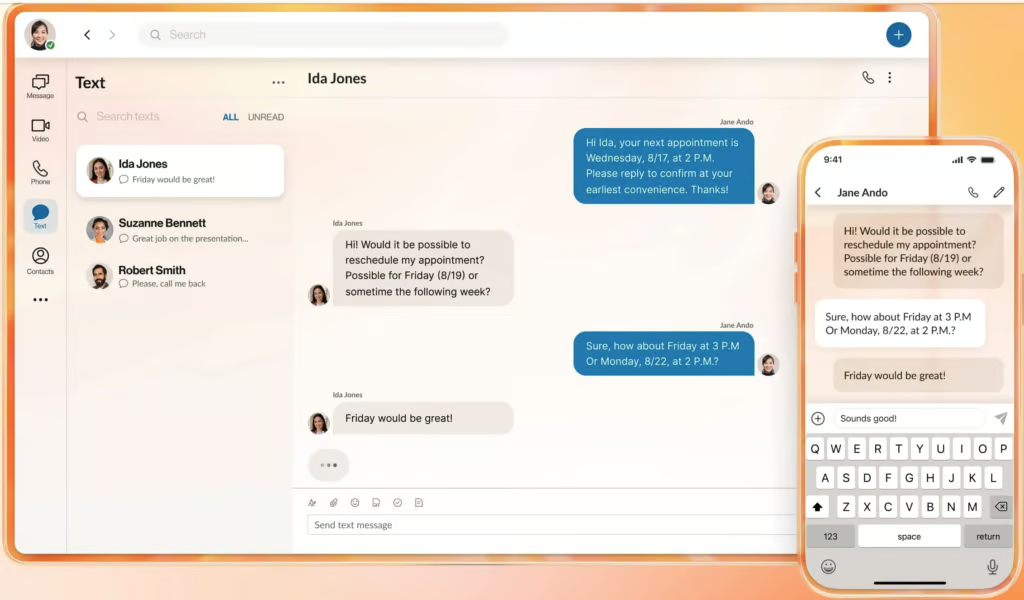
Ooma offers over 100 features across its platform, but its collaboration tools fall short compared to AI-driven solutions. RingCentral works for hybrid teams seeking a powerful AI-powered platform that brings calls, texts, fax, and video together in one place.
RingCentral also outshines Ooma when it comes to app integrations. It connects with over 300 third-party tools for productivity and marketing automation, while Ooma sticks mainly to customer relationship management (CRM) integrations with far fewer options.
However, Ooma does have the edge in domestic calling. While both providers offer unlimited calling in the US and Canada, Ooma goes further by including unmetered calls to Mexico and Puerto Rico. Neither platform includes unlimited business texting, though. If that’s a must-have, Grasshopper is a better pick since every plan includes unlimited texting.
What actual users say:
Many users value RingCentral for its all-in-one communication capabilities that make managing calls, messages, and meetings easier across devices. Some mention occasional syncing or notification issues, but overall, they say it gets the job done for team collaboration.
“RingCentral is a helpful phone system for our business to manage leads and staff.” — GetApp review
“Sometimes the notifications settings can get messed up without any intervention. We have faced issues on fixing it but overall when it works well [it’s] awesome.” — GetApp review
“What I like best about RingEX is its all-in-one unified communication system. It allows me to make and receive calls, send messages, hold video meetings, and manage voicemails all in one platform. The interface is user-friendly and works seamlessly across desktop and mobile devices.” — G2 review
“One thing I dislike about RingEX is that the mobile app can sometimes be laggy or slow to sync with recent activity, especially when switching between devices.” — G2 review
Pricing & top features
RingCentral offers three subscription tiers, ranging from $30 to $45 per user. A 33% discount applies if you subscribe annually.
- Share files and assign tasks within the team messaging interface
- Set automated SMS replies for missed calls, outside business hours, and specific keywords detected within text messages.
- Switch calls between your phone, desktop, and tablet with a single click.
Talkroute: Best for local businesses with high call volume
My expert opinion
While Ooma includes 500 toll-free minutes, Talkroute stands out by offering unlimited toll-free minutes across the US and Canada with no caps. This makes it a strong choice for local service-based businesses that want to give customers a professional, no-cost way to reach them while avoiding overage fees. It’s a rare benefit that most VoIP providers don’t offer.
Talkroute focuses on the basics, delivering core features like voice calls, texts, and meetings. Its a clean and straightforward interface that works well for local businesses with simple communication needs. However, it lacks support for group messaging, which can be a drawback for text campaigns. If you need to send messages to multiple recipients, Grasshopper is a better option with built-in automated SMS features.
What actual users say:
Talkroute gets high marks from users for its straightforward setup and mobile-friendly design that keeps teams connected. Still, some users would like to see more advanced features, CRM integrations, and support for faxing or international calls.
“Talkroute’s simplicity and ease of use are what I love most. It provides a seamless way to manage business calls, texts, and voicemails without needing expensive hardware.” — G2 review
“There could be more advanced features integration options with CRMs, but overall, it suits small to mid-sized businesses well.” — G2 review
“The mobile app is a game changer. Prior to Talkroute we would have someone answer our landline and take messages. Now calls are routed to our mobile phones.” — GetApp review
“I wish Talkroute supported faxing and international calling.” — GetApp review
Pricing & top features
Talkroute monthly plans range between $19 for one user and $59 for 10 users. Custom pricing is available for Enterprise accounts.
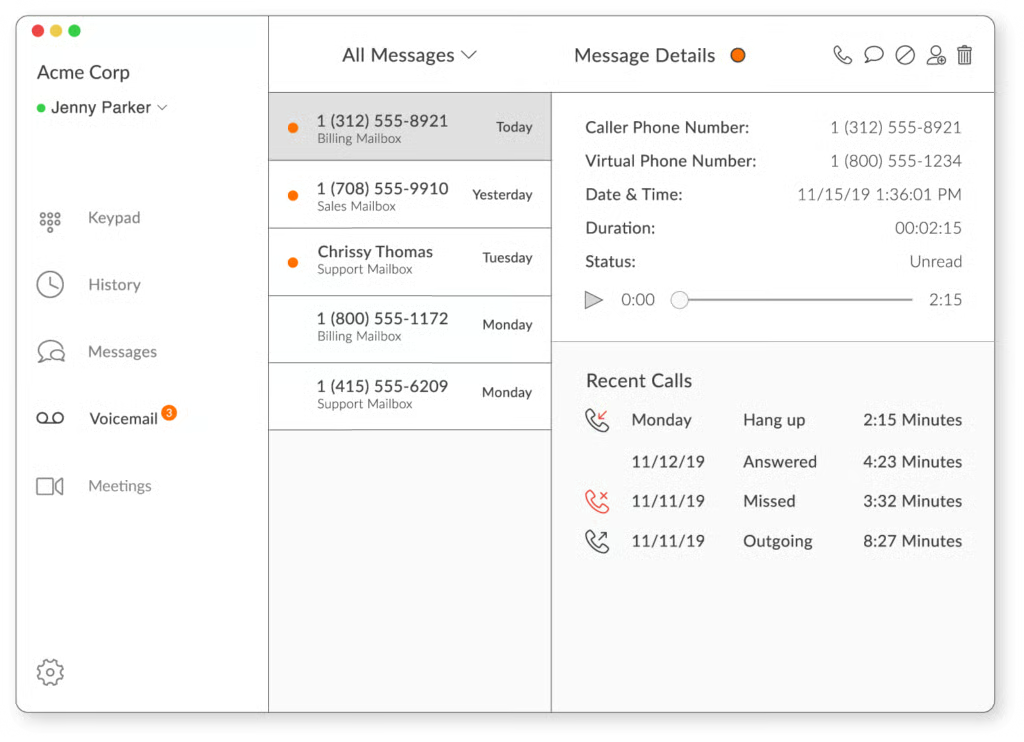
- Customize voicemail greetings for each of your mailboxes.
- Route all incoming calls to a single cell phone, landline, VoIP, or softphone.
- Host meetings with up to 100 participants from any location.
GoTo Connect: Best for global teams
My expert opinion
Ooma offers unlimited international calling, but it’s limited to home phone users and only available as a paid monthly add-on. GoTo Connect is a stronger alternative for global teams because it includes international calling at no extra cost across all plans.
It’s a great fit for companies with clients or partners overseas, offering predictable pricing and high-quality global calls. You can place unmetered calls to over 50 countries, including Hong Kong, Taiwan, France, Canada, and South Africa.
One downside to GoTo Connect is its limited access to international phone numbers. If building a local presence in other countries is part of your strategy, this could be a drawback. In that case, Phone.com is a better option, offering multiple international number choices along with feature-rich VoIP plans.
What actual users say:
Long-time users often highlight GoTo Connect’s reliability and productivity-boosting features. While many appreciate its call filtering and ease of use, others feel limited by its smaller integration network and messaging restrictions.
“I’ve been using GoTo Connect for over 3 years now, and I can confidently say it’s been a game-changer for my business. The platform is reliable, easy to use, and packed with features that help streamline our communication and enhance productivity across the board.” — G2 review
“GoToConnect offers some integrations (like Microsoft Teams and Salesforce), but its ecosystem is limited compared to competitors.” — G2 review
“We really like the ability to filter calls based on the kind of customer assistance needed. GoTo also shows us who is calling, and it is almost always accurate.” — GetApp review
“The main thing I don’t like is not having the ability to send a message to a phone number that is not in your contacts. You have to call the person back, or wait for them to call you back.” — GetApp review
Pricing & top features
GoTo Connect offers custom pricing for its three subscription plans. Contact the sales team for a personalized quote.
- Works with over 180 desk phone models for flexible hardware compatibility
- Connect web and desktop apps to move from chat or call into an instant meeting
- Design custom call flows with a drag-and-drop visual interface for easy management
Grasshopper: Best for teams sharing phone numbers
My expert opinion
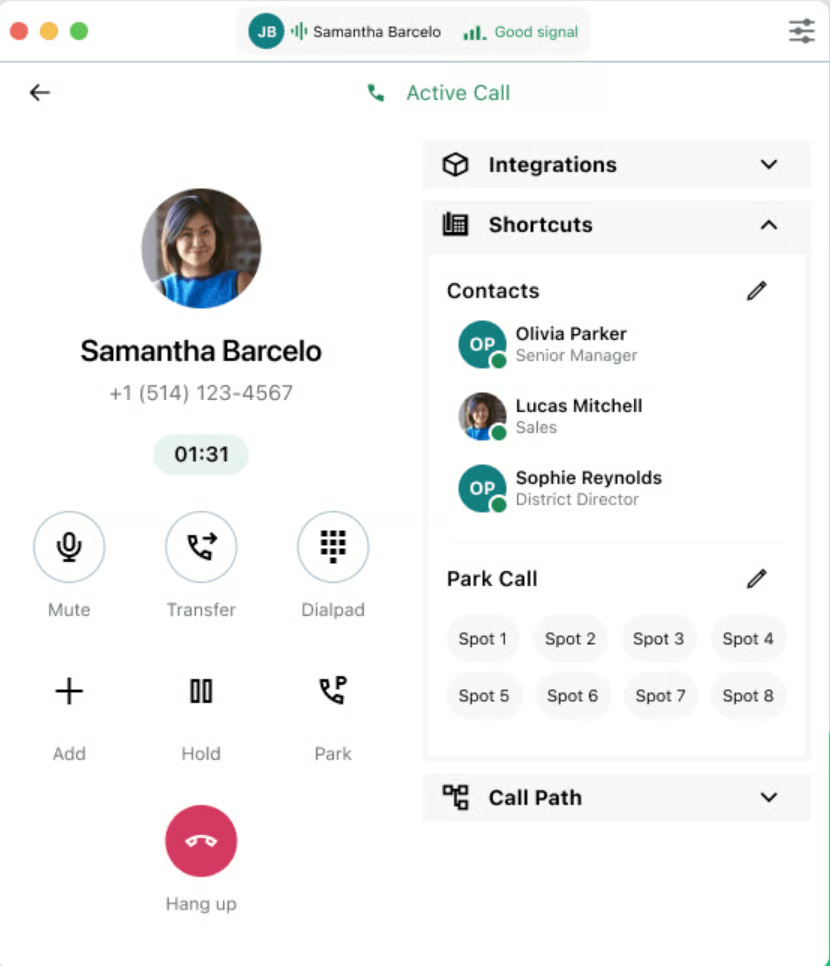
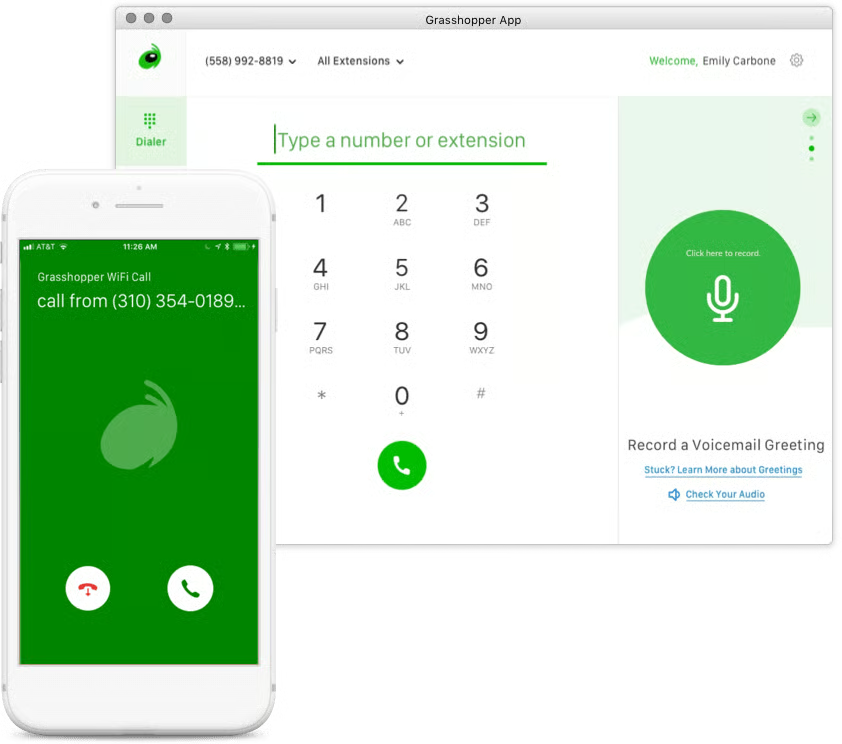
Most VoIP services like Ooma charge per user, per plan, which can add up fast. If you’re looking to avoid that and want to share numbers and extensions across your team, Grasshopper is your best bet. It supports unlimited users under a fixed monthly rate and includes multiple phone numbers and virtual extensions with each account.
All plans come with the same core call handling features like voicemail, call forwarding, and custom greetings. The main differences between plans are the number of included users, phone numbers, extensions, and call recording support.
Grasshopper is a smart choice for budget-conscious teams that only need basic calling features and don’t rely on advanced collaboration tools. But if this is something you require, Zoom Phone is one of the top Ooma competitors to consider as it combines phone, video, and chat in one platform.
What actual users say:
Grasshopper is often praised for covering the basics like calls, texts, voicemails, and even faxes. However, some users feel limited by its US/Canada availability and report challenges with support access and account management.
“It is a powerful tool to make calls and receive text messages, along with listening to faxes and voice messages after calls.” — G2 review
“It can be difficult to find support and manage your account.” — G2 review
“That I was able to text and…get extensions dialed for different employees along with visual voicemail.” — GetApp review
“Missing chat support & only available in USA & Canada.” — GetApp review
Pricing & top features
Grasshopper offers three subscription tiers from $18 to $70 per user, per month. You can save up to 17% monthly if you pay annually.
- Add more Grasshopper numbers anytime without changing your plan
- Ring all lines simultaneously to reduce caller wait times
- Get professionally recorded greetings by experienced voice actors.
Phone.com: Best for busy professionals needing phone answering
My expert opinion
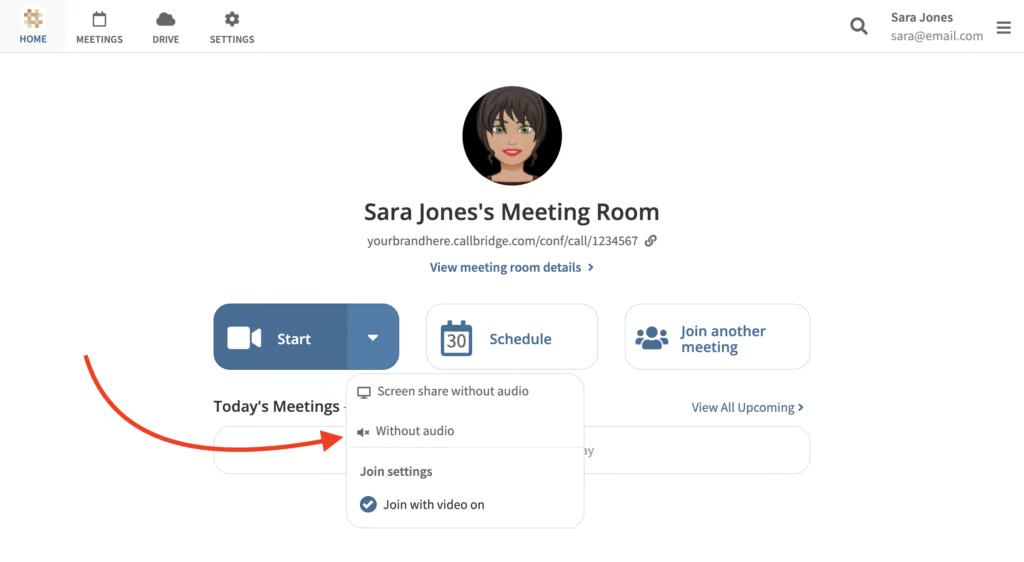
Phone.com is worth considering if you want to bundle VoIP service with a professional answering solution. Unlike many providers, it offers both a phone system and a 24/7 receptionist service to help your business maintain a polished, professional image.
There are two answering service options: AI or live receptionists. Live agents provide a friendly, human voice to greet callers, which helps build trust and ensure customers feel heard. The AI receptionist, on the other hand, is ideal for automating tasks like call handling and appointment scheduling.
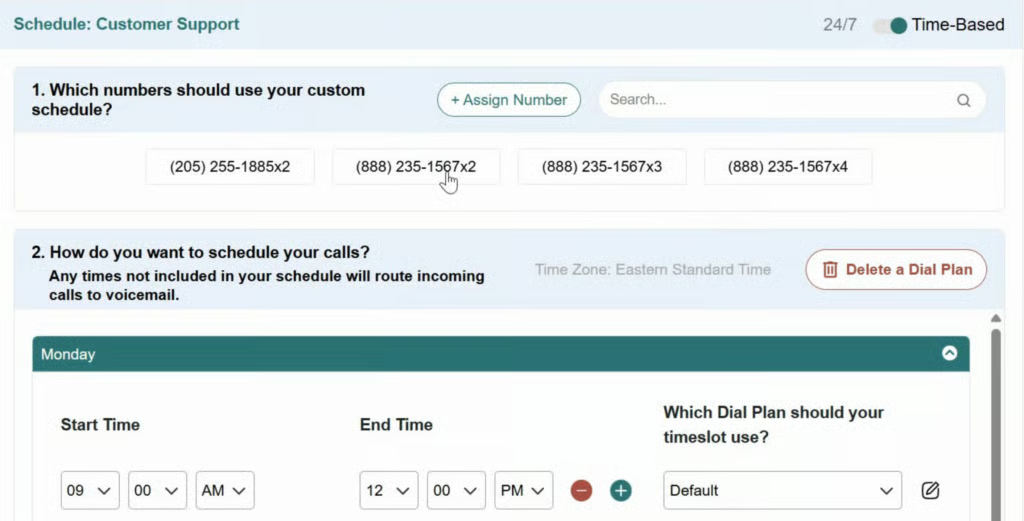
However, Phone.com falls short when it comes to advanced customization. If your business deals with high call volumes and needs flexible call routing or multilevel menus, RingCentral is the better choice. It offers a complete call management system designed to deliver a smooth and professional caller experience.
What actual users say:
Phone.com is popular among small businesses for its affordability and flexibility, especially when you need a business line without extra hardware. That said, some users found limitations with complex call flows and occasional issues with app stability.
“Needed a dedicated business phone for my business. Phone.com allows me to have a business phone without having a separate physical phone.” — G2 review
“We were looking for complicated call flows and phone business hour rules, as well as multiple numbers pointing to different flows, etc. and Phone.com could not handle that level of complexity to our satisfaction.” — G2 review
“Great [telecom] resource for small business, easy to add phone lines, text message customers, receive fax, and great price point.” — GetApp review
“Doesn’t seem to work well with Apple products; the desktop app crashes all the time.” — GetApp review
Pricing & top features
Phone.com has three monthly subscription plans starting from $18 to $40 per user. Save 17% if you opt for annual billing.
- Claim a local number in any supported country and pay only standard U.S. local rates.
- Customize your virtual meeting with logos and brand-specific visuals.
- Greet every caller using a live or AI receptionist that delivers a friendly, polished experience.
eVoice: Best for solopreneurs
My expert opinion
eVoice is a solid Ooma alternative for solopreneurs who want a straightforward platform with the essentials for managing calls and messages. Features like auto-attendant and call routing direct callers to the right department, delivering a professional experience without needing extra staff. Its single-tier plan includes three phone numbers, voicemail, custom greetings, and hold music, which gives your business a polished presence while keeping things simple.
As your business grows, you can add extra features like call recording, live receptionist services, voicemail transcription, and professionally recorded greetings. That said, the mobile app is fairly limited and mainly handles calls and texts. If you need a more modern and full-featured mobile experience, Nextiva is a better choice. Its NextivaONE app offers a unified workspace for calling, video, messaging, and collaboration.
What actual users say:
eVoice earns positive feedback from solo professionals and small teams for its simple pricing and easy-to-use features. Users also appreciate the flexibility to scale up or down through affordable add-ons, though some mention long wait times when reaching tech support.
“Simplified pricing for solopreneurs and professionals. Basic features are easy to use.” — Capterra review
“…the tech support wait times are at least 20 minutes per session.” — Google Play review
“As my business grew, I was able to modify and use the different features they have. I love the fact that you can have affordable recordings that give your business a better presentation. When times were a bit slow, I was able to downgrade with no trouble…” — Apple App Store review
Pricing & top features
eVoice offers a single plan structure at $14 per user every month. Price is reduced to $12 if you make an annual prepayment.
- Host conference calls with up to 94 participants.
- Set up multiple extensions so each employee can receive calls directly.
- Create a custom phone number using digits or memorable words.
My methodology
Factors to consider when choosing the best Ooma alternative
Before switching to a new VoIP provider, it’s important to look beyond price and examine how the platform fits your team’s workflow. The right Ooma alternative should match your business goals, communication style, and tech preferences.
- Budget
Look for a solution that fits your current budget but can still grow with your business. Some providers charge per user, while others offer flat-rate pricing with shared features across your team. - Communication channels
Decide which channels you need (voice, video, SMS, or chat) and choose a platform that supports them in one place. Unified platforms help your team collaborate more efficiently without juggling multiple tools. - Features
Prioritize the features your business actually uses, like call routing or voicemail transcriptions, over flashy extras. This helps avoid overpaying for tools that won’t improve your day-to-day operations. - Integrations
If your team uses CRM or productivity software, choose a VoIP provider that connects with those apps. The right integrations save time, reduce manual tasks, and give you more insights from customer interactions. - Ease of use
A clean, intuitive interface reduces the learning curve and helps your team adopt the system quickly. Look for platforms with simple admin controls, mobile access, and clear setup instructions.
Ultimately, the best Ooma alternative depends on your business size, communication needs, and how much flexibility you want in managing calls and collaboration. RingCentral is our top pick because of its all-in-one communication tools, advanced features, and strong integration options. But if your team needs smart call routing with a simple drag-and-drop setup, Nextiva is a better match.
FAQs
What are the disadvantages of Ooma?
Ooma charges a one-time $49 activation fee, which adds to upfront costs. It also falls short in collaboration tools and offers fewer app integrations compared to top-tier VoIP platforms.
What is the best VoIP home phone service?
Ooma is a popular choice for residential users because it offers free home phone service when you purchase an Ooma Telo adapter. But if Ooma isn’t a fit, Google Voice is a solid alternative with its free personal plan for basic calling needs.
Will Ooma work during a power outage?
Your Ooma service won’t work during a power or internet outage unless you have backup power for your devices. However, Ooma offers solutions like the Telo 4G Safety Phone for homeowners, Ooma Connect with wireless internet for businesses, and mobile apps that keep you connected on the go.
