







I like to think of SEO audits as a “health checkup” for your website. They’re not necessarily fun, but they’re essential to keeping your website in tip-top shape and knowing how to get it ranking higher on Google. And the only way to audit is through SEO audit tools that give you stats on your site’s health and quality and even recommend the best keywords to get it ranking. Below are my best SEO audit tools for small businesses and their use cases.
- Semrush: Overall best SEO audit tool
- SE Ranking: Best for checking your website’s keywords
- Similarweb: Best for researching your website’s audience
- HubSpot Website Grader: Best for quick website speed and performance checks
- SpyFu: Best for analyzing competitors’ keywords
- Screaming Frog: Best for advanced technical SEO audits
- Moz: Best for checking backlinks to your website
- Best SEO audit tools at a glance
- Semrush: Overall best SEO audit tool
- SE Ranking: Best for checking your website keywords
- Similarweb: Best for researching your website’s audience
- HubSpot Website Grader: Best for quick website speed & performance checks
- SpyFu: Best for analyzing competitors’ keywords
- Screaming Frog: Best for advanced technical SEO audits
- Moz: Best for checking backlinks to your website
- Frequently asked questions (FAQs)
- Bottom line
Best SEO audit tools at a glance
| Free plan | Starting cost | On-page & off-page SEO audit | Technical SEO audit | My score | |
|---|---|---|---|---|---|
 | ✓ | $117.33/month | ✓ | ✓ | 4.98/5 |
| Visit Semrush | |||||
 | ✕ | $52/month | ✓ | ✓ | 4.70/5 |
| Visit SE Ranking | |||||
 | ✓ | $125/month | ✓ | ✓ | 4.39/5 |
| Visit Similarweb | |||||
 | ✓ | N/A (free forever) | ✓ | ✓ | 4.34/5 |
| Visit HubSpot Website Grader | |||||
 | ✓ | $33/month | ✓ | ✕ | 3.75/5 |
| Visit SpyFu | |||||
 | ✓ | $259/year | ✕ | ✓ | 3.62/5 |
| Visit Screaming Frog | |||||
 | ✓ | $39/month | ✓ | ✕ | 3.56/5 |
| Visit Moz | |||||
Why you can trust Fit Small Business
Semrush: Overall best SEO audit tool
My expert opinion
Semrush covers all SEO aspects — on-page, off-page, and technical — meaning it audits your website’s content and technical aspects. It checks everything from your content’s missing keywords to broken links. It also helps you research keywords you can add to your site to help it appear on Google more easily.
For instance, say you own an artisan cafe. Semrush can give you the best keywords or key phrases, like “What is artisan coffee” or “Best artisan coffee shops,” to add to your website or blogs to help them rank higher in Google search results.
Because Semrush has a free-forever plan, I find it the best website audit tool for any small business with one site. It’s free to use all its auditing tools, as long as you just have one website to manage (plans only increase if you have multiple websites). There’s a bit of a learning curve, but after spending some time exploring its tools, it should be easy enough to navigate.
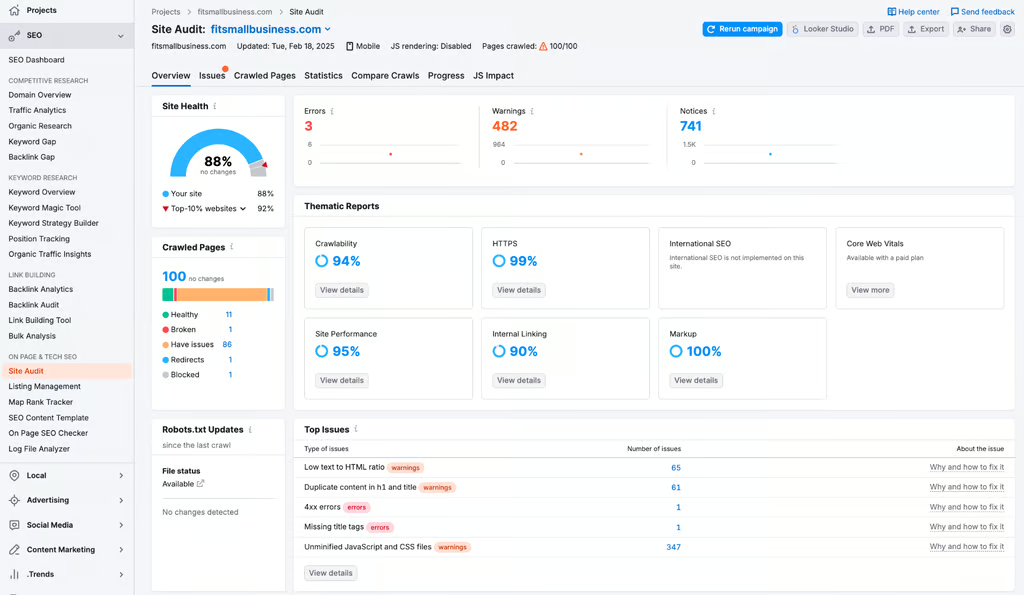
Semrush is the most comprehensive SEO auditing software by far. (Source: Semrush) 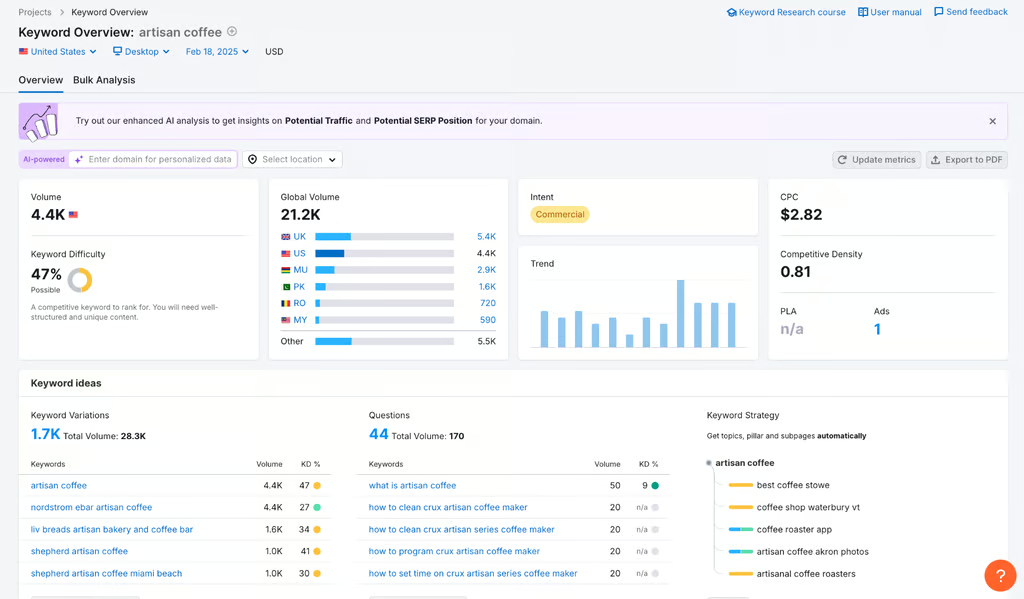
It also has tools to help you find the right keywords to help your website rank on Google. (Source: Semrush)


Plans & pricing
| Free | Pro | Guru | Business | |
|---|---|---|---|---|
| Monthly cost (annual billing) | $0 | $117.33 | $208.33 | $416.66 |
| Websites | 1 | 5 | 15 | 40 |
| On-page & technical website audit | ✓ | ✓ | ✓ | ✓ |
| Website traffic analytics | ✓ | ✓ | ✓ | ✓ |
| Keyword research | ✓ | ✓ | ✓ | ✓ |
| Competitor analysis | ✕ | ✓ | ✓ | ✓ |
| Audience research | ✕ | ✓ | ✓ | ✓ |
| Content marketing platform | ✕ | ✓ | ✓ | ✓ |
SE Ranking: Best for checking your website keywords
My expert opinion
SE Ranking is the best SEO audit tool for checking your website keywords. Upon onboarding, you’ll be prompted to enter up to 750 keywords you want to track on your website, and it’ll show you their search volume and average ranking positions.
From there, you can use your insights to see which keywords are helping your site rank on Google and which ones you need to trim. It’s the most detailed tool for analyzing your site’s keywords.
You can even analyze certain blog topics you want to write about, and it’ll give you a comprehensive brief of the best keywords to include in your blog to help it rank on Google, as well as your site’s biggest competitors. Overall, it has the most comprehensive keyword analysis tools, so it’s the best SEO audit software if you write blogs and want to focus specifically on growing your content’s reach online.
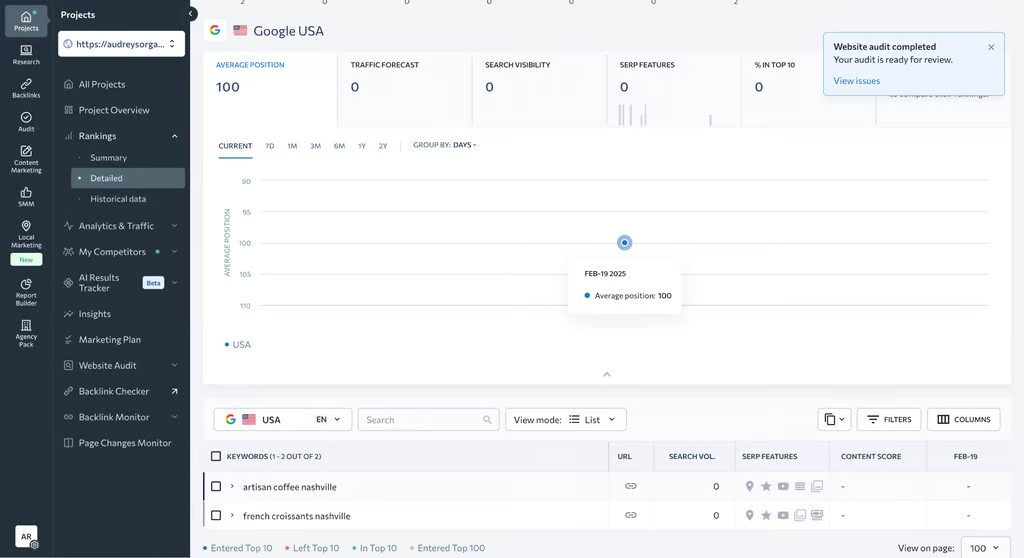
SE Ranking lets you track your website’s keywords. (Source: SE Ranking) 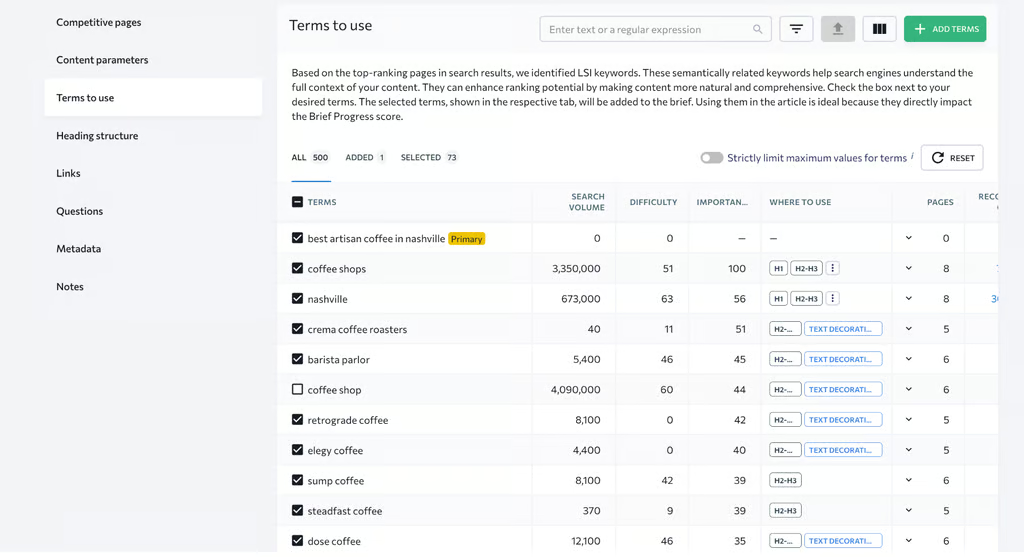
It also recommends keywords for your blogs to help them appear in Google search results. (Source: SE Ranking)


Plans & pricing
| Essential | Pro | Business | |
|---|---|---|---|
| Monthly cost (annual billing) | $52 | $95.20 | $207.20 |
| Websites to track | 5 | 30 | Unlimited |
| Keywords to track | 500/day | 2,000/day | 15,000/day |
| On-page & technical website audit | ✓ | ✓ | ✓ |
| Keyword tracking & research | ✓ | ✓ | ✓ |
| Competitor keyword analysis | ✓ | ✓ | ✓ |
| Keyword recommendations for blogs | Add-on | ✓ | ✓ |
| Content idea generator | Add-on | ✓ | ✓ |
| Local marketing platform | Add-on | ✓ | ✓ |
| Historical data | ✕ | 3 months | All-time |
Similarweb: Best for researching your website’s audience
My expert opinion
Similarweb isn’t so much for evaluating the technical side of your website (although it does a technical site audit on paid plans). But it’s one of the best SEO audit tools specifically for researching your audience and their interests. Its dashboard lets you see your website’s audience demographics, including age, gender, location, how long they spend on your site, and how many pages they visit.
More importantly, it also shows you their topic interests and other sites they visit, essential for publishing content that resonates with your target audience. It also lets you see your website’s total monthly visits on a graph compared to your competitors. It’s overall a handy, beginner-friendly tool for seeing your website’s performance over time and learning about your online audience.
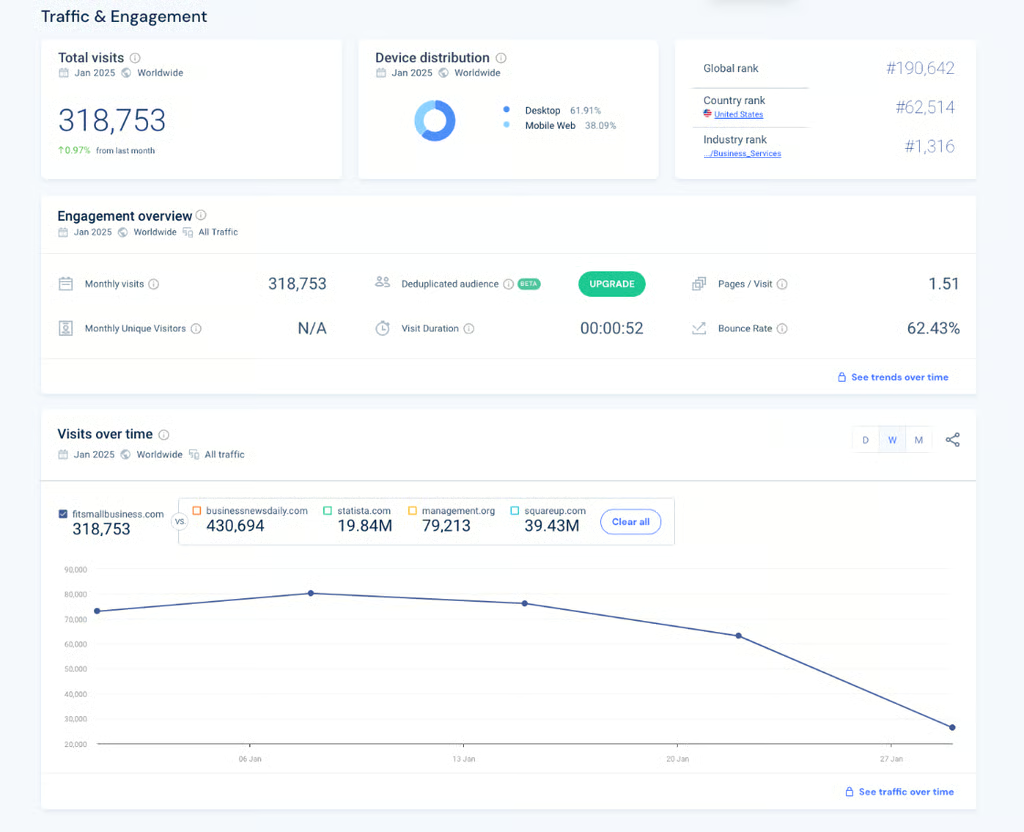
Similarweb shows your website’s visitor traffic and other stats. (Source: Similarweb) 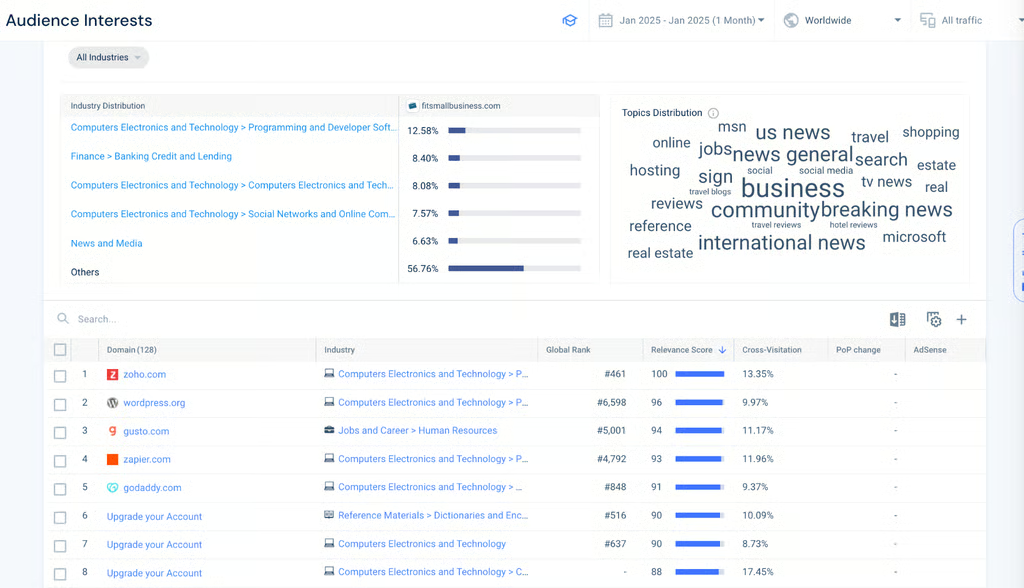
It also shows your audience demographics, interests, and other sites they spend time on. (Source: Similarweb) 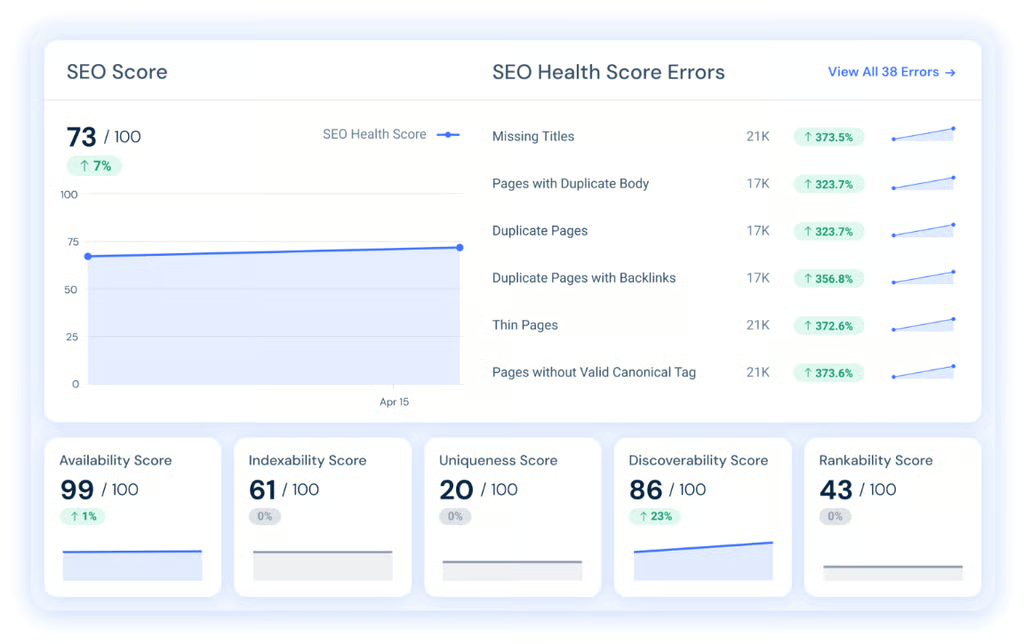
Higher plans also let you run technical SEO audits. (Source: Similarweb)


Plans & pricing
| Basic | Starter | Professional | |
|---|---|---|---|
| Monthly cost | $0 | $125 | $333 |
| Websites | 5 | 100 | 500 |
| Website traffic performance | ✓ | ✓ | ✓ |
| Audience demographics & interests | ✓ | ✓ | ✓ |
| Website competitors list | ✓ | ✓ | ✓ |
| On-page & technical website audit | ✕ | ✓ | ✓ |
| Keyword research | ✕ | ✓ | ✓ |
| Market analysis | ✕ | ✓ | ✓ |
HubSpot Website Grader: Best for quick website speed & performance checks
My expert opinion
The HubSpot Website Grader is one of my favorite website auditing software because of its convenience, even if it isn’t as comprehensive as Semrush or SE Ranking. It’s completely free, with no signup required, and it gives an overview of your site’s on-page and technical SEO performance, including its security and mobile-friendliness. And it’s one of the easiest tools — there are no complicated dashboards to navigate.
It’s for these reasons that I find HubSpot Website Grader a great option for quick site speed and performance checks. It’s ideal for those who don’t need a deep dive into a website’s keywords and technical issues but just need a quick checkup to ensure everything’s working or see what needs immediate attention. It also offers recommendations on what to do next to improve your site.
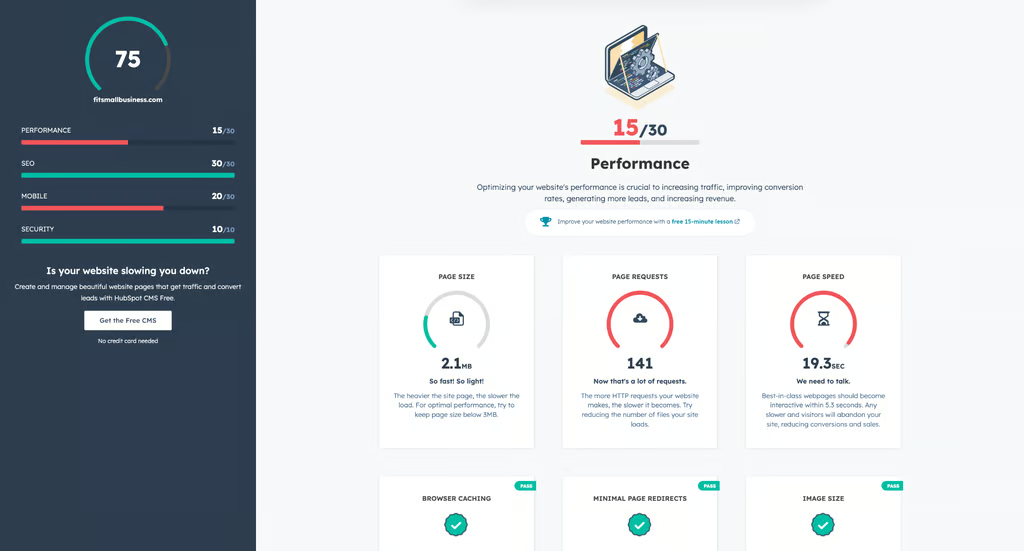
HubSpot’s free website checker scores your site’s technical performance… (Source: HubSpot) 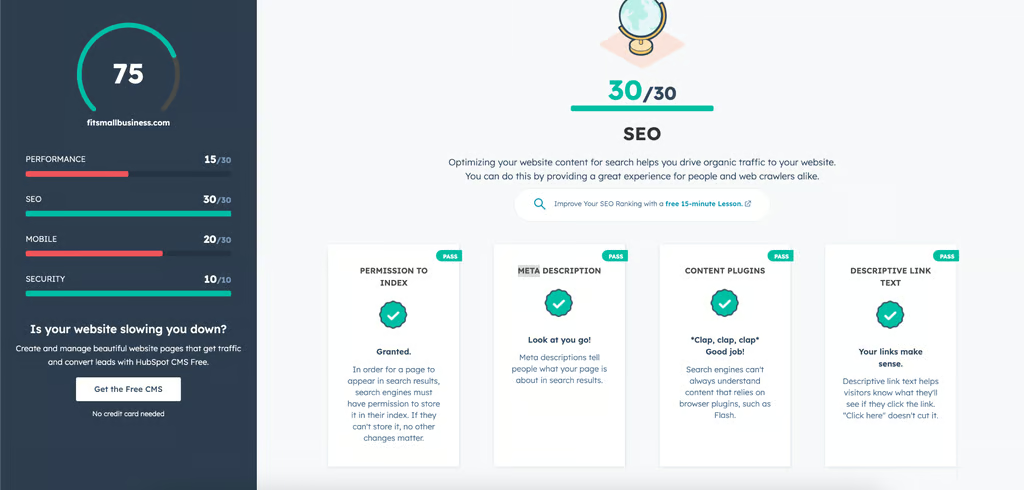
…As well as your on-page SEO. (Source: HubSpot) 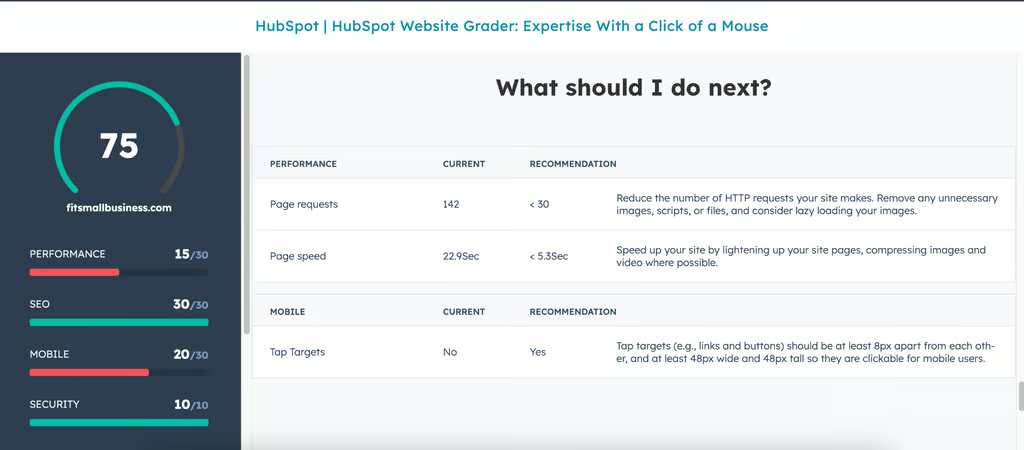
It also recommends the next steps to improve your website. (Source: HubSpot)


Plans & pricing
HubSpot Website Grader is 100% free as part of HubSpot’s suite of free tools.
SpyFu: Best for analyzing competitors’ keywords
My expert opinion
SpyFu has some of the best SEO audit tools specifically for seeing who your website’s top competitors are and how your content can outrank theirs on Google. The dashboard shows all your top competitors for organic and paid clicks, the keywords you’re sharing, and the keywords unique to your website. Aside from your competitors, it also shows your website’s traffic over time and how many keywords it’s ranking for in Google search results.
However, SpyFu’s biggest drawback is that it doesn’t do any technical website audits, so I only recommend it as a competitor analysis tool. It doesn’t check your site’s links, website speed, or any of those technical details. Use it instead to find out who your website’s biggest competitors are and see all the content gaps you can fill to get ahead of them on Google.
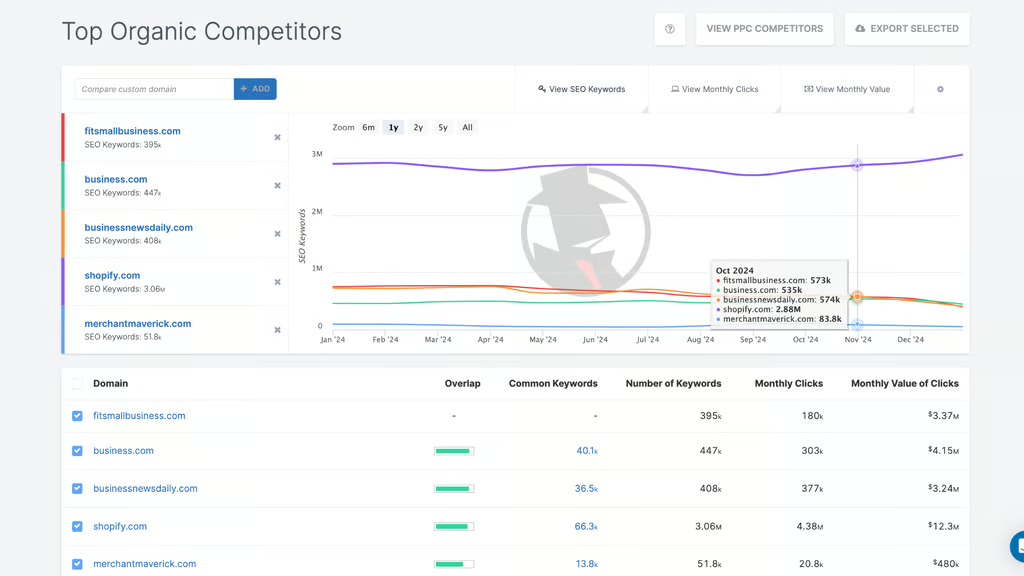
SpyFu shows your website’s biggest competitors. (Source: SpyFu) 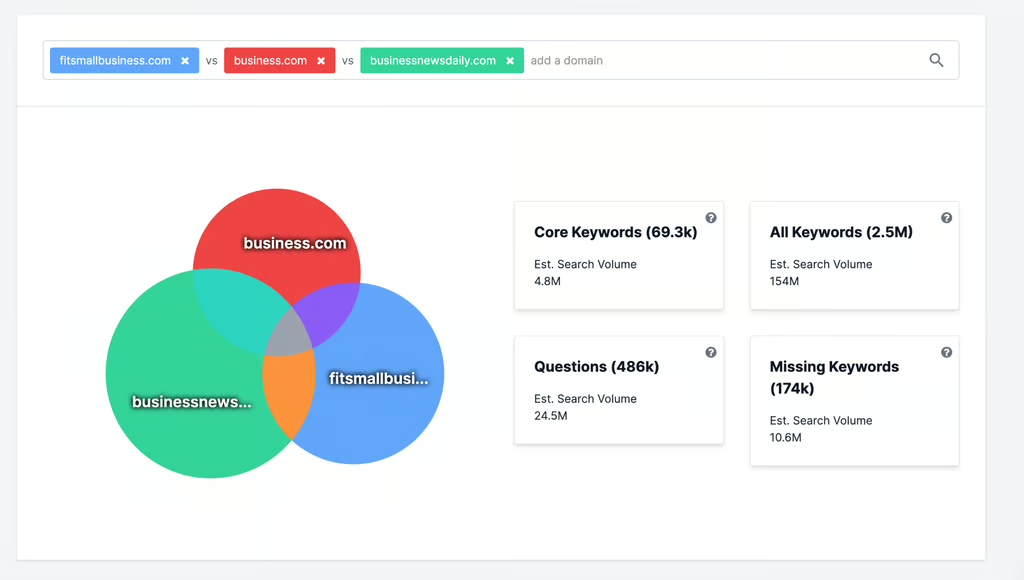
It also shows your keyword overlaps and gaps with competitors. (Source: SpyFu)


Plans & pricing
| Free | Basic | Professional | |
|---|---|---|---|
| Monthly cost (annual billing) | $0 | $33 | $58 |
| Competitor analysis | ✓ | ✓ | ✓ |
| Website traffic analysis | 5 | 10,000 | Unlimited |
| Competitor keywords | 5 | 10,000 | Unlimited |
| Tracked keyword rankings | ✕ | 5,000/week | 15,000/week |
| Historical data | ✕ | 6 months | 10-plus years |
Screaming Frog: Best for advanced technical SEO audits
My expert opinion
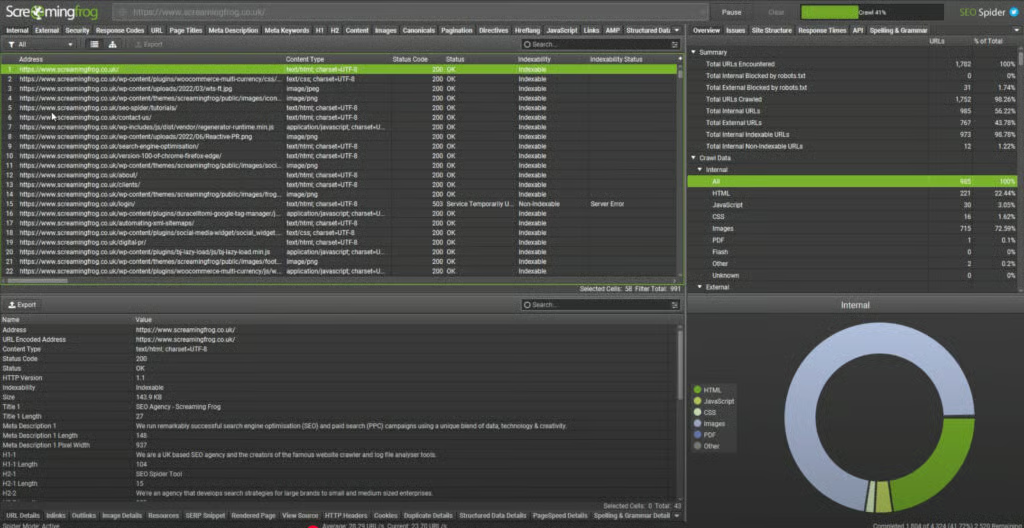
Screaming Frog has the most comprehensive technical SEO audits, so it’s definitely the best technical website audit software. It’s also free for the first 500 URLs — enough for most small business websites — and runs a comprehensive check on your site’s broken links, metadata, sitemaps, and website architecture. In other words, it checks all the essential stuff of your site’s technical SEO.
The main disadvantages of Screaming Frog are that it requires installation on your computer, and the interface can be complicated to navigate. As such, the best way to use it is for regular maintenance checks on your website’s technicalities. However, it doesn’t give recommendations, so you’ll need more advanced technical SEO know-how to get the most out of it.
Plans & pricing
| Free | Paid | |
|---|---|---|
| Annual cost | $0 | $259 |
| Crawled URLs | 500 | Unlimited |
| Find broken links | ✓ | ✓ |
| Analyze page titles & metadata | ✓ | ✓ |
| Analyze website structure | ✓ | ✓ |
| Analyze duplicate pages | ✓ | ✓ |
| Generate XML sitemaps | ✓ | ✓ |
| Check mobile-friendliness | ✕ | ✓ |
| Scheduled crawls | ✕ | ✓ |
| Crawl with OpenAI & Gemini | ✕ | ✓ |
Moz: Best for checking backlinks to your website
My expert opinion
Your backlinks play a role in your Google ranking, and Moz’s Inbound Links tool is a handy resource that shows you all of those links in a neat list. Plus, it shows the anchor text with those links, aka the text where those links appear. It’s a helpful way to understand how your site is being used as a resource across the web.
If you publish a lot of blogs as a way to get your website discovered, Moz’s Inbound Links tool is invaluable. It’s also free for 10 keyword queries per month and is an easy way to see your top-performing posts through traffic and external links — and build your content around those top-performing posts.
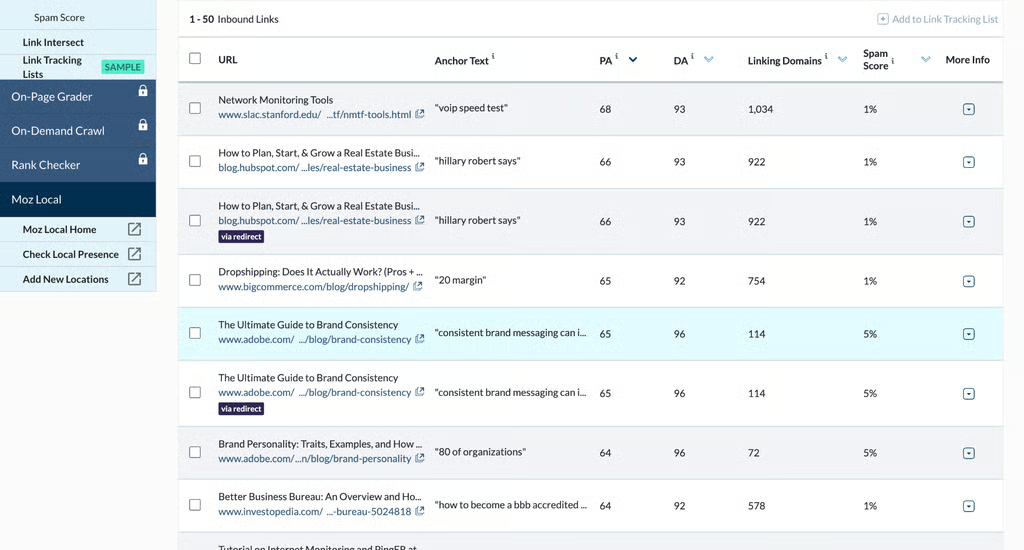
Moz lists all your site’s backlinks. (Source: Moz) 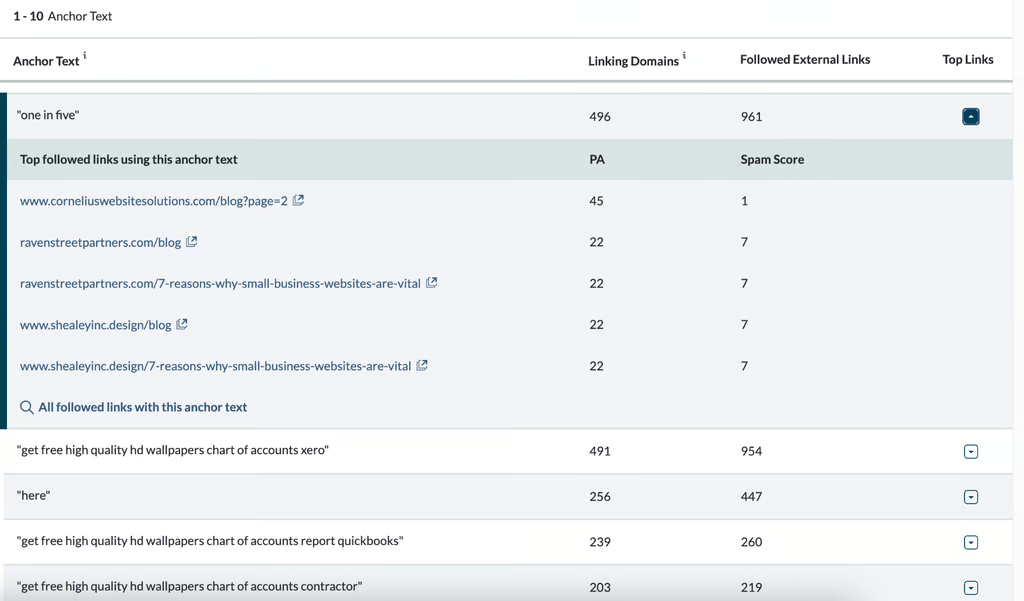
It also lists your backlinks’ most popular anchor text. (Source: Moz)


Plans & pricing
| Free | Starter | Standard | Medium | Large | |
|---|---|---|---|---|---|
| Monthly cost (annual billing) | $0 | $39 | $79 | $143 | $239 |
| Backlink queries per month | 10 | 75 | 5,000 | 20,000 | 70,000 |
| Results per backlink query | 50 | 5,000 | 10,000 | 40,000 | 50,000 |
| Keyword queries per month | 10 | 75 | 150 | 5,000 | 15,000 |
| Competitive research | 10 | 20 | 50 | 75 | 100 |
| Websites to track | 1 | 1 | 3 | 10 | 25 |
| Users | 1 | 1 | 1 | 2 | 3 |
| Link tracking lists | ✕ | ✕ | 1 | 30 | 60 |
Methodology: How I evaluated the best SEO audit tools
Not all SEO audit tools are built the same, as you may have noticed from the examples above. Some specialize in technical SEO, others in keywords. But the best offer some of both, plus some extra handy tools to improve your website even further. Below are the criteria I used to score the best SEO audit tools.
Ideally, these tools should have free plans or be free to start. The more website pages the platform can audit, the higher your score. I also evaluated the starting costs of their paid plans, whether they offered monthly contracts, and whether costs increased after one term.
Technical SEO is one-half of a website audit. This involves checking your website speed, broken links, site structure, mobile friendliness, sitemaps, and overall website performance.
The other half of an SEO audit is on- and off-page SEO, aka the content side of your website. This involves auditing your site’s keywords, metadata, and backlinks and giving content ideas and recommendations to expand your website’s reach.
Aside from auditing your website, I gave extra credit to platforms with extra tools, like audience research, competitor analysis, traffic insights, and security and online listings checkers.
I also personally tested the tools above and graded them based on their features, ease of use, value for money, and customer support.
Frequently asked questions (FAQs)
Which is a free SEO audit tool?
Some of the best SEO audit tools with free plans are Semrush for content and technical SEO, HubSpot Website Grader for quick site speed and performance checks, and Moz for checking your site’s backlinks and keywords. However, I recommend Semrush most of all because it does the most comprehensive audits by far, and it’s free forever for one website.
Are SEO audits worth it?
Yes. SEO audits are valuable if you want to grow your website’s reach and authority. An SEO audit can give you a list of your website’s content and technical issues that prevent it from appearing on search engines like Google, and some will give recommendations on how to fix them. For instance, some SEO audit tools let you do keyword research to let you know the best keywords that can help your site rank on the first page of Google.
How long should an SEO audit take?
A comprehensive SEO audit covering technical and on-page SEO usually takes several minutes. After the audit, you’ll be given a list of your site’s issues to fix to help it rank better on search engines like Google. Fixing those issues can take longer, depending on their complexity, and some require ongoing maintenance. For example, fixing your keyword rankings can take a months-long content marketing campaign.
Bottom line
If you want to grow your website’s reach, don’t neglect an SEO audit. An SEO audit is the best way to track your website’s health and keep it in tip-top shape for the long term. It might just be what you need to help customers and subscribers find your website, blog, or online store on Google. Start with the best SEO audit tools above.
