


.jpg?w=288)
.jpg?w=288)


Automated phone systems are vital for effective call routing. They offer features like call queues, personalized greetings, and voicemail, helping small businesses improve communication and the caller experience. Monthly fees typically range from $15 to $40 per user, depending on the provider.
To help you discover the perfect fit for your needs, I’ve put together a list of the best auto attendant phone systems along with their unique use cases and an overview of how each solution can transform your business communications.
| Automated phone systems | Best for | Monthly starting price |
|---|---|---|
| RingCentral | Small businesses | $30 |
| Nextiva | Customer communication | $23 |
| GoTo Connect | Scalable plans | Contact sales |
| MightyCall | Cloud call centers | $20 |
| Grasshopper | Virtual numbers and extensions | $18 |
| Talkroute | Business messaging | $19 |
| Vonage | Mobile call management | $19.99 |
- Comparing the best auto attendant phone systems
- Choose the best auto attendant phone system
- Which auto-attendant phone system is right for you?
- RingCentral: Best overall automated attendant phone system
- Nextiva: Best for customer communication
- GoTo Connect: Best for scalable plans
- MightyCall: Best for cloud call centers
- Grasshopper: Best for virtual numbers and extensions
- Talkroute: Best for business messaging
- Vonage: Best for mobile call management
- How to choose the best auto-attendant phone system
- How I evaluated the best auto attendant phone systems
- Frequently asked questions (FAQs)
- Bottom line
Comparing the best auto attendant phone systems
| Best auto attendant phone systems | Multi-level auto attendant | Key features | Rating out of 5 |
|---|---|---|---|
| RingCentral | ✔ |
| 4.85 |
| Nextiva | ✔ |
| 4.74 |
| GoTo Connect | ✔ |
| 4.73 |
| MightyCall | ✔ |
| 4.64 |
| Grasshopper | ✖ |
| 4.62 |
| Talkroute | ✔ |
| 4.57 |
| Vonage | ✔ |
| 4.35 |
Choose the best auto attendant phone system
Take our quiz to determine which auto attendant phone system works best for you.
Which auto-attendant phone system is right for you?
RingCentral: Best overall automated attendant phone system
My expert opinion
I consider RingCentral the best overall auto attendant phone system because of its effective call management and routing tools, such as IVR, custom business hours, call handling, and a dial-by-name directory. These tools enable businesses to handle any call type, volume, and flow with self-service capabilities, such as an AI-powered receptionist that can route calls and answer simple inquiries.
Its multilevel auto attendant enables users to create complex call flows, and the Visual IVR editor simplifies call management with intuitive customization of phone tree menus and inbound call routing. But, despite its extensive features, RingCentral does not offer unlimited text messaging. For expanded business messaging, consider Talkroute or Grasshopper.
Pricing
| Plans and pricing (per user)* | Core | Advanced | Ultra | Customer engagement bundle |
|---|---|---|---|---|
| Monthly | $30 | $35 | $45 | Contact sales for pricing |
| Yearly | $20 | $25 | $35 |
*Pricing is for 1-100 users, but custom pricing is available for larger teams.
Standout features
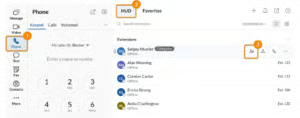
- Phone extensions: Assigning extensions allows you to connect multiple departments from different locations. Each employee also gets a distinct number with voicemail and answering rules.
- Shared lines: Share a single phone line across multiple phones to answer calls from any phone and efficiently distribute calls within your workspace.
- Call delegation: Enable admins to assign assistants to answer calls on behalf of a line owner. A delegate can manage multiple incoming calls for up to 10 executives.
Nextiva: Best for customer communication
My expert opinion
Nextiva is always my top choice for customer experience and engagement, making it one of the best auto-attendant platforms for call management. As an experience management solution, employees working off-site can use the Nextiva mobile app and remote call management features to handle calls from anywhere. This allows you to maintain professionalism and accessibility to your customers.
Like RingCentral, Nextiva has a multilevel auto attendant with intuitive menu options and submenus. It’s completely customizable, letting you record announcements, assign phone numbers, and configure call forwarding. Despite this fact, Nextiva is one of the only providers that only offers CRM integrations as an add-on for its small business plans. If you want a provider that includes a suite of third-party apps without the extra fees, consider RingCentral.
Pricing
| Plans and pricing (per user)* | Core | Engage | Scale |
|---|---|---|---|
| Monthly | $23 | $50 | $75 |
| Yearly | $15 | $25 |
*Nextiva also offers enterprise-grade contact center plans with multiple pricing tiers.
Standout features
- Directed call pickup: This feature lets you pick up an incoming call on another user’s extension using a feature access code. It is helpful if a teammate is away from their desk.
- Voicemail transcription: Nextiva uses AI to convert voicemail audio to written transcripts, making it easier to access messages on the go.
- Smart call routing: Automatic transaction routing and AI features directly send calls to the correct department for more efficient call management.
GoTo Connect: Best for scalable plans
My expert opinion
GoTo Connect is my top choice for scalable plans because it offers three distinct phone subscriptions with different automated phone system features. For example, the business phone plan includes unlimited auto attendants and custom greetings, making it more straightforward to build multi-line phone systems and handle a large number of calls.
However, the downside of this scalability is that most of GoTo Connect’s more advanced AI tools, such as AI chat analysis and assistants, are not available on the base plan. For more advanced auto attendant features across all plans, I recommend looking into Talkroute.
Pricing
- Contact sales for pricing on the business phone, customer experience, or contact center plans.
Standout features
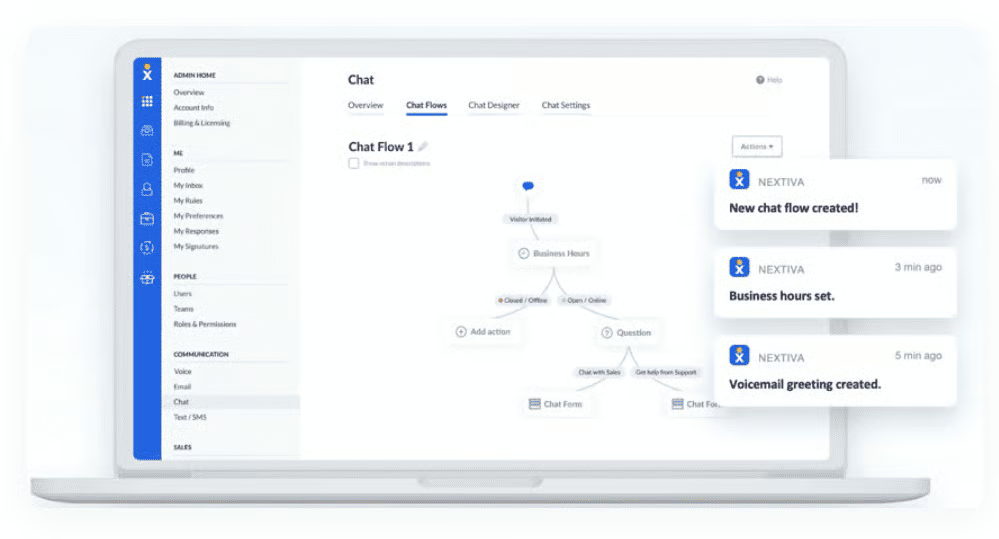
- Customizable dial plans: Use the visual call flow editor to create unlimited dial plans with customizable call routing, scheduling, and auto attendant features.
- Text-to-speech greetings: Create messages and greetings for your auto attendant system with the help of AI.
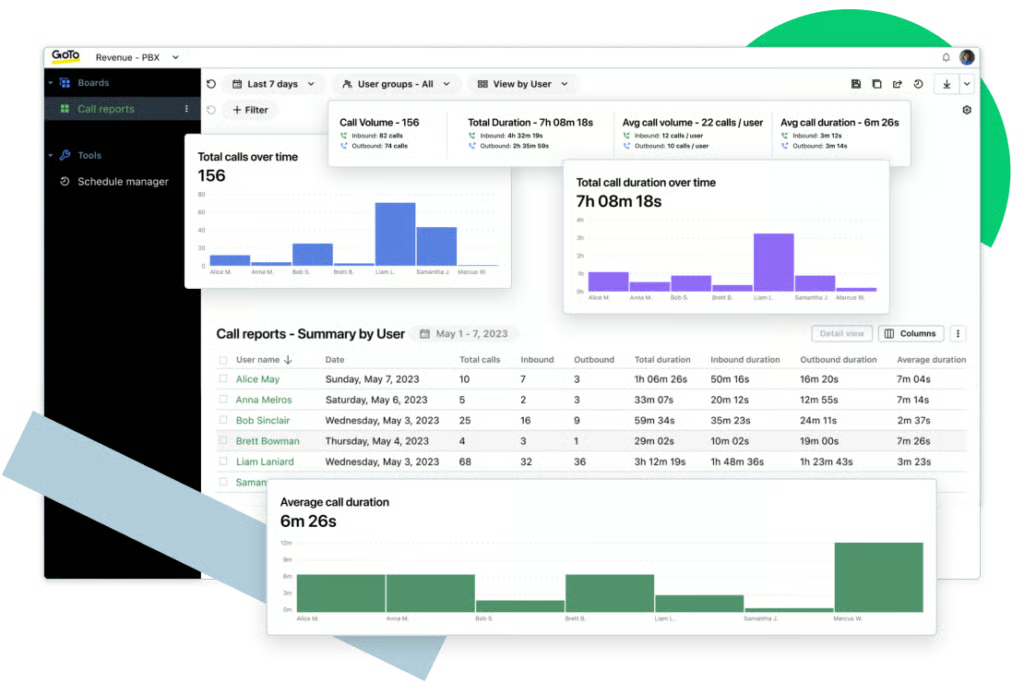
- Call routing optimizer: The call analytics features let you view changes in your call flow and optimize routing to create the best customer journeys.
MightyCall: Best for cloud call centers
My expert opinion
Although there are many reasons why you may be interested in an auto attendant phone system, call centers, sales, and customer support teams often benefit the most from this feature. Therefore, I wanted to choose at least one standout provider for cloud call center solutions, and MightyCall is my top choice.
As a low-cost, fully cloud-based system, MightyCall doesn’t require expensive hardware, which minimizes maintenance costs and upfront fees. The mobile app also enhances flexibility by letting you manage calls on the go. However, MightyCall lacks collaborative features like video conferencing. For teams that want a more expansive feature set for remote work, try GoTo Connect. It facilitates file sharing and messaging, streamlining communication flows.
Pricing
| Plans and pricing* | Core | Pro | Power | Enterprise |
|---|---|---|---|---|
| Monthly | $25 | $45 | $65 | $75 |
| Yearly | $20 | $38 | $54 | $65 |
*There is a 3-user minimum for the Core, Pro, and Power plans.
Standout features
- Call verification: MightyCall utilizes STIR/SHAKEN protocols to block unwanted and spam calls, ensuring customers can reach your business when needed.
- Cold transfer: This involves passing an incoming call to another agent or department without prior notification to the receiving party. It creates an efficient and seamless call management flow, optimizing resource utilization and the customer journey.
- Call notes: Allow agents to document calls and add comments or notes after a call. This makes it easier to capture and share important information with the team.
Grasshopper: Best for virtual numbers and extensions
My expert opinion
Grasshopper is my preferred choice for small teams because it offers affordable shared phone numbers with multiple extensions. This allows you to present a professional image with a single business number that connects to various extensions for sales, support, and management. These features eliminate the need for multiple phone lines, helping to reduce costs while maintaining efficiency and organization.
Depending on the size of your business, Grasshopper offers the best options for solopreneurs and small businesses. It also offers essential voice features, like different virtual phone number options. However, if you need a unified communications solution with extensive collaboration tools, you’re better off with Nextiva. It’s a powerful collaboration solution with voice, chat, video, and customer engagement tools.
Pricing
| Plans and pricing | True Solo | Solo Plus | Small Business |
|---|---|---|---|
| Monthly | $18 | $32 | $70 |
| Yearly | $14 | $25 | $55 |
Standout features
- Call blasting: This paid add-on rings up to 15 lines simultaneously, helping you avoid missed calls and reduce wait times.
- Instant Response: Automatically send a text message to new callers when you miss their call. Showcase your brand by inserting images and website links.
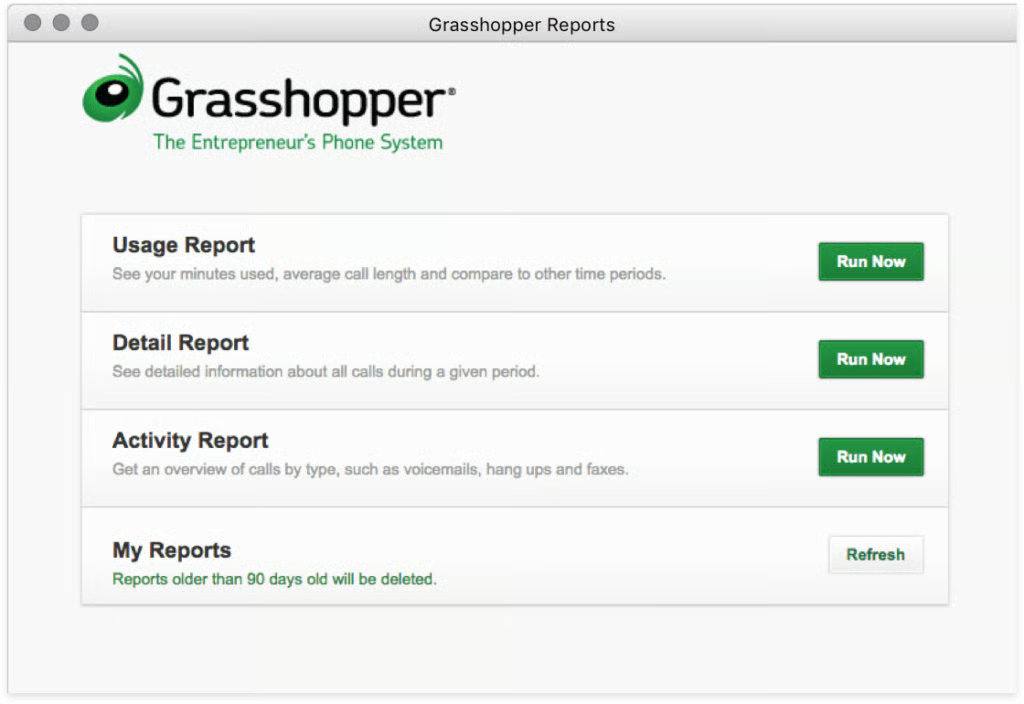
- Call analytics: Collect usage, activity, and call information data. Each report includes call-tracking metrics that deliver valuable insights into every aspect of your calls.
Talkroute: Best for business messaging
My expert opinion
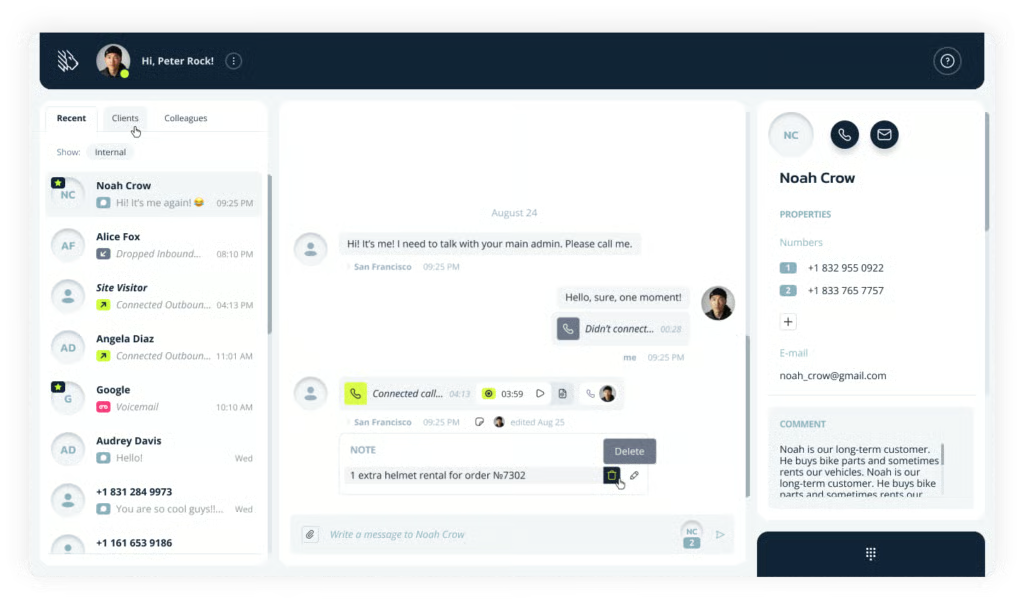
As your business grows, Talkroute’s metered and unmetered texting is ideal for small teams relying on SMS to communicate with customers. Use your primary business number to send and receive text messages, ensuring timely responses to customer inquiries. Whether it’s a quick question, feedback, or a service inquiry, Talkroute’s business text messaging allows for rapid replies, resulting in better response times and higher customer satisfaction.
At the same time, when I compare Talkroute to top competitors in the market, it often falls short on third-party integrations because it doesn’t have native integrations and requires Zapier to establish connectivity. For a more inclusive auto attendant phone system, RingCentral offers robust third-party integrations with over 500 business apps, including CRM platforms.
Pricing
| Plans and pricing | Basic | Plus | Pro | Enterprise |
|---|---|---|---|---|
| Monthly | $19 | $39 | $59 | Contact sales |
| Users | 1 | 3 | 10 | 20+ |
Standout features
- Voice Studio: Talkroute’s voice talent services provide professional-sounding prompts for your phone system. Submit a script through a website form and receive your voice-over recording after three days.
- Call reporting and analytics: Access detailed historical reports and call information, including date, time, caller ID, and status. When retrieving information, use filter options to select the specific data you want to view.
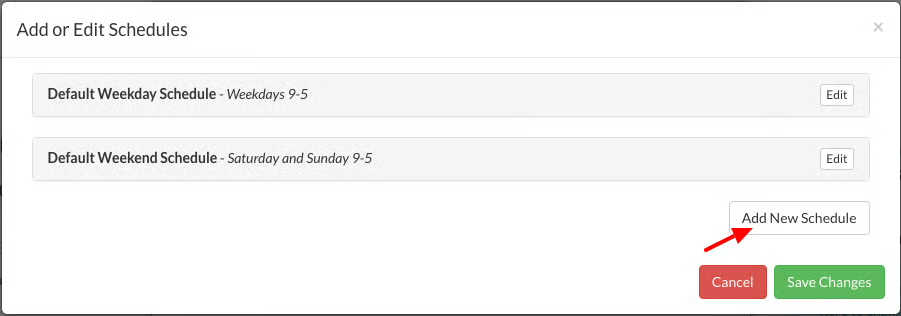
- Scheduled call forwarding: Create a custom weekly schedule for routing your calls to specific extensions. You can also set up times for calls to ring on specific phones.
Vonage: Best for mobile call management
My expert opinion
Vonage is my top choice for managing mobile calls due to its user-friendly mobile application and extensive range of remote calling features. Vonage Business Communication (VBC) offers several “Never Miss a Call” features, such as voicemail-to-email and call forwarding, which can be easily set up with a single click.
You can also use the App Center to add integrations from Vonage or third-party providers, like virtual assistants or CRMs. However, the à la carte service means that adding VoIP features, such as virtual phone extensions, local numbers, and business call recording, incurs additional monthly fees. For a more affordable automated phone system, check out Grasshopper.
Pricing
| Plans and pricing (per line) | Mobile | Premium | Advanced |
|---|---|---|---|
| Monthly | $19.99 | $29.99 | $39.99 |
| Yearly | $13.99 | $20.99 | $27.99 |
Standout features
- Mobile call management: The Vonage mobile app lets you manage your business phone system on Android or iOS. Call forwarding, simultaneous rings, and follow-me features make mobile call management more convenient.
- Busy lamp field (BLF): This feature allows you to view the call status of up to 50 lines in your phone system. You can also use BLF keys to speed-dial extensions and streamline employee communication.
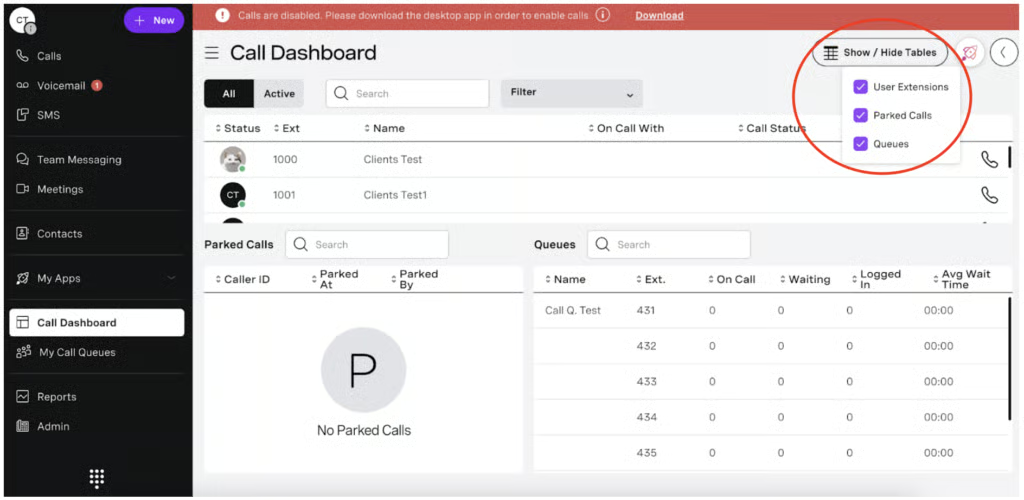
- Call dashboard: Display user extensions, parked calls, and call queues, with customizable settings to control which tables or information are displayed.
How to choose the best auto-attendant phone system
Choosing the best auto-attendant phone system starts with mapping the caller journey. Think about why people call your business, what information they need, and where each call should go before you compare providers.
Before choosing a system, consider the following:
- Caller intent: Identify the most common reasons customers call, such as sales, support, billing, appointments, reservations, or emergency requests.
- Menu structure: Keep the phone menu short and easy to follow. Too many layers can frustrate callers, while too few options can route calls to the wrong person.
- Department routing: Decide whether callers need to reach individuals, teams, departments, locations, or voicemail boxes. This helps you build a phone tree that reflects how your business actually operates.
- After-hours handling: Plan what happens when customers call outside business hours. You may need a separate greeting, emergency routing, voicemail, or a callback option.
- Greeting updates: Consider how often your business hours, promotions, staff, or departments change. Assign someone to keep greetings and routing rules up to date.
- Caller experience testing: After setup, call your business number and test every menu option. Confirm that the greeting is clear, the menu is easy to follow, and each option routes correctly.
- Future changes: Consider how your phone tree may evolve as your business grows. A good auto-attendant should make it easy to add departments, locations, extensions, or seasonal routing later.
How I evaluated the best auto attendant phone systems
I looked at several VoIP phone systems with auto attendants in their subscription plans. From there, I selected the top seven providers by evaluating critical factors for small business owners, including pricing, key features, and ease of use.
Specifically, I assessed the top auto attendant phone systems by using the criteria below:
- Cost (20%): Cost is a key factor when choosing an automated phone system for small business owners. I rated each provider based on the current cost of its plans and confirmed whether there is a free trial, annual billing, termination fees, and volume discounts.
- General Features (30%): A small-business phone system with an auto attendant should include basic features, such as menus, voicemail transcription, and unlimited domestic calling. Providers who offered standard tools like number porting, integrations, and mobile apps also received higher scores.
- Advanced Features (15%): An automated phone call system should include advanced call management tools to ensure a smooth call routing experience. These include custom greetings, analytics, call handling capabilities, working hours configuration, and virtual numbers.
- Ease of Use (10%): Usability is crucial for businesses new to setting up automated phone systems. The system should be easy to set up and operate, particularly for small businesses with limited in-house technicians and IT experts. An intuitive interface is also essential, enhancing the overall user experience and boosting providers’ ratings.
- Customer Support (10%): In my review, I assessed each provider’s support options, including phone, live chat, and an email ticketing system. As I looked through several auto-attendant phone systems for small businesses, I awarded extra points to those that offered 24/7 support across all channels.
- Expert Score (15%): To develop my expert score, I considered each phone system’s standout features and overall value for the cost. I also evaluated its interface and phone menu editors for usability. Finally, I reviewed online reviews from real customers to gauge each platform’s popularity and ease of use.
Frequently asked questions (FAQs)
How much does an auto attendant cost?
The cost of an auto attendant varies based on the service provider. While some providers charge extra for auto attendant features as an add-on, most include them as part of the monthly fee for a business phone answering system. On this list, Grasshopper and Vonage offer the lowest-cost plans for a phone system with auto attendant features. However, higher-tier or enterprise plans can be more expensive.
What are the advantages of an automated business phone system?
The primary benefit of using an auto attendant is enhancing the caller experience. Auto attendants greet callers, provide company information, and route calls to the right destination, helping create more efficient call flows. They also support self-service by instantly providing callers with the answers they need and reducing wait times for human agents to answer.
How do I set up an automated phone system?
Setting up an automated phone system first requires choosing a service provider. You can use our guide to find the right auto attendant phone system for your business. Then, create a call management plan using the provider portal, dashboard, or mobile application.
Your plan should include custom messages and call flows, so begin by recording or uploading call greetings, then construct menu options to route calls through your business directory. Finally, you can enable additional features, like voicemail options, custom caller IDs, and call forwarding to extensions and business phone numbers.
Bottom line
Auto attendant phone systems are essential for businesses looking to enhance their call management and elevate customer service. Acting as virtual receptionists, they expertly route calls to the right departments, individuals, or extensions. By efficiently managing call flows, auto attendants not only minimize wait times but also handle high call volumes with ease. This ensures that every caller enjoys a polished, professional experience, making your business stand out in a competitive landscape.
RingCentral stands out among its competitors for its advanced features, including IVR menus, custom greetings, and user extensions. If you’re interested, sign up and try RingCentral today.