





Cafes and coffee shops merge operational aspects of both restaurants and retail. An agile point-of-sale (POS) system that can facilitate quick customer interactions and build customer loyalty is required to manage a cafe efficiently. In my experience working in cafes, the best POS systems are affordable and deliver reliable, fast, and customer-focused functions that make it easy for guests to return again and again.
Based on my evaluation, the five best cafe and coffee shop POS systems for 2026 are:
| Best for | Minimum monthly software fee | |
|---|---|---|
| Toast | Full-service cafes with food menus | $0 |
| Square for Restaurants | Fast, simple coffee shop operations | $0 |
| SpotOn | New cafe owners needing guided setup | $0 |
| Lightspeed Restaurant | Advanced inventory and multi-location cafes | $189 |
| KORONA POS | Flexible payment processing and lower fees | $59 |
- Cafe POS systems compared
- Toast: Best for full-service cafes with food menus (best overall)
- Square for Restaurants: Best fast, simple coffee shop operations
- SpotOn: Best for new cafe owners needing guided setup
- Lightspeed Restaurant: Best for advanced inventory and multi-location cafes
- KORONA POS: Best for flexible payment processing and lower fees
- How I evaluated coffee shop POS systems
- Key features to look for in a cafe POS system
- How to choose a cafe POS system
- Frequently Asked Questions (FAQs)
- Bottom Line
Cafe POS systems compared
| Our Score (out of 5) | Contract Length | In-person Processing Fees | |
|---|---|---|---|
| Toast | 4.13 | 2 years | From 2.49% + 15 cents |
| Square for Restaurants | 4.01 | Month-to-month | 2.6% + 15 cents |
| SpotOn | 3.93 | Month-to-month | From 1.99% + 25 cents |
| Lightspeed Restaurant | 3.81 | 1 year | Varies by processor, Lightspeed Payments: 2.6% + 10 cents |
| KORONA POS | 3.79 | Month-to-month | Varies by processor |
How I chose the best cafe POS systems
I evaluated cafe POS systems using a weighted rubric of 25 data points that compares pricing, general POS features, cafe-specific tools, ease of use, and overall value, with a focus on speed of service, order customization, and customer management. I also validated results through user feedback and real-world performance insights. Read more about our methodology below.
Toast: Best for full-service cafes with food menus (best overall)
Why I chose Toast
Toast is an industry-leading POS system that is used throughout different food businesses. Affordable subscription options, industry-grade hardware, and niche cafe features make Toast perfectly suited for cafes. Online ordering is a key feature that suits cafes, as takeout orders are super popular for coffee shops and similar food businesses.
Toast’s industry-grade hardware can withstand splashes of coffee and steam from milk frothers. Its Pay-as-You-Go Starter plan enables smaller businesses to get off the ground, its hardware is built to engage your customer base, and its tools give you all you need to be effective with your business over the long term.
Who should use it:
Toast is great for any cafe owner but really shines with smaller shops that are poised to grow.
Toast pricing
Monthly software fees:
- Starter Kit: $0
- Point of Sale: $69
- Build Your Own: Custom quote
Hardware costs:
- Pay-as-You-Go plans include free hardware for up to two terminals (processing rates listed below).
- The standard price for a stationary terminal with a router and card reader is $719.10
- One-time installation fees: $0 for self-installation, $75 per hour to $125 per hour for installation, and $400 for a full menu built into the POS
Processing fees:
- In-person fees for the standard plan: 2.49% + 15 cents
- In-person fees for Pay-as-you-go: 3.09% + 15 cents
Standout features
- Drive-thru management: Almost 50% of coffee purchases are made through a drive-thru. Toast’s POS comes with a drive-thru workflow to organize drive-thru orders on your POS and kitchen display system (KDS).
- Advanced employee management: Toast can be a simple time clock to lock employee hours or support full-scale digital onboarding for your employees. Digital onboarding makes it a breeze to get new employees in your payroll and training systems. Optional built-in scheduling controls your labor budget and sends schedules to employee smartphones. And lastly, Toast has an HR On-Demand feature for HR guidance and suggestions from the pros.
- Robust features built for growth: Toast has every tool that a cafe or coffee shop could need, from ingredient-level inventory with vendor management to online ordering, payroll management, and tip-pooling tools. If you are hoping to grow your two-terminal coffee shop to a multi-location chain, Toast has you covered.
- Online ordering and delivery: For an additional custom-quoted fee, Toast users can add integrated online ordering to their POS. Essentials subscribers automatically receive three months of free online ordering; after that, the fees are around $75 per month. Driver management features are included if you want to manage a team of in-house drivers. Alternatively, you can hail third-party delivery drivers on demand using Toast Delivery Services. You’ll pay a flat rate per-delivery fee that varies based on the distance and the driver’s service. But, you can pass these fees on to customers as a service charge.
- New quick-tap screens: Toast consistently updates its software, a testament to its dedication to a great product. Its newer order screens focus on efficiency, requiring fewer taps for quicker transactions. This is very important in cafes and coffee shops where speed is key.
- Advanced invoicing: This Toast tool allows you to create future orders in your POS and generate an invoice to use as an estimate and final bill. You can email the invoice directly from your POS screen and send reminders if payment lags. Customers can pay the invoice in person or by credit card over the Internet.
What it’s like to use Toast
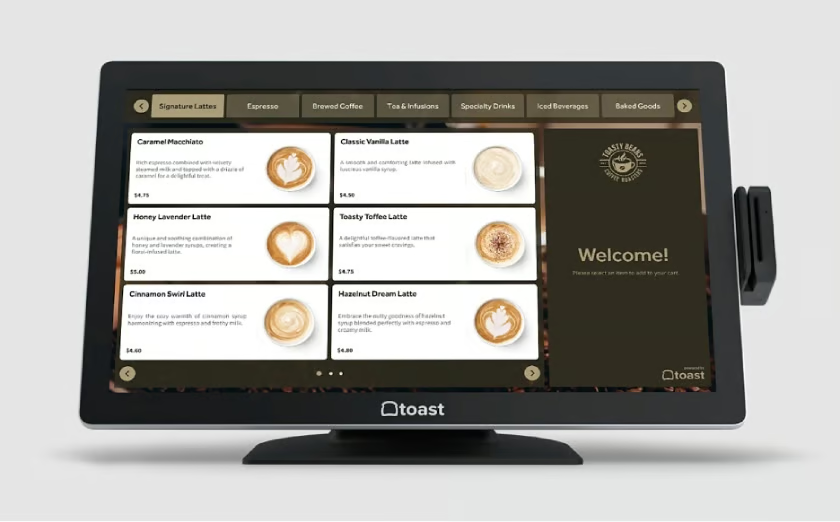
Toast’s robust customer-facing displays make them great for coffee shop menus. (Source: Business News Daily) 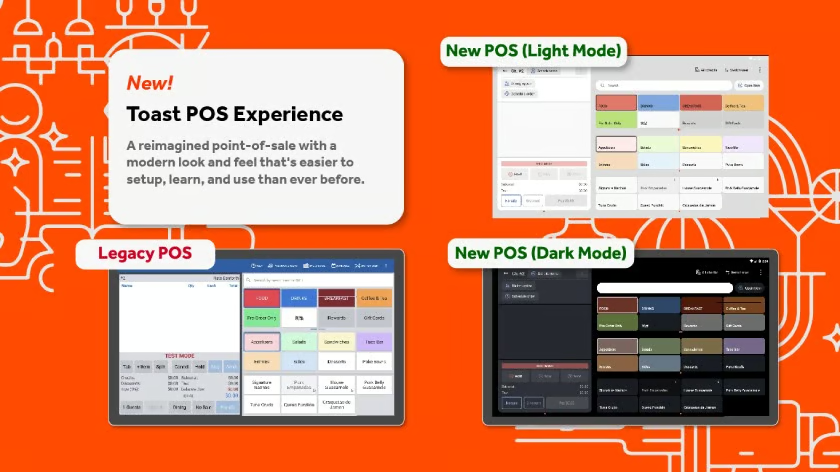
Toast offers different modes to fit your business’s specifications. (Source: Toast) 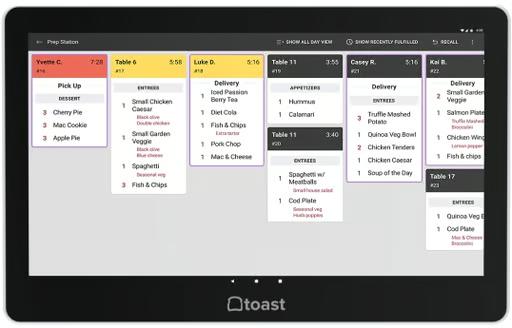
Toast’s color-coded KDS screens fit right into the many different orders a cafe will take in a day. (Source: Toast)


Toast hardware
| Hardware Starter Kit | Handheld Terminal Starter Kit | Customer-facing Display |
|---|---|---|
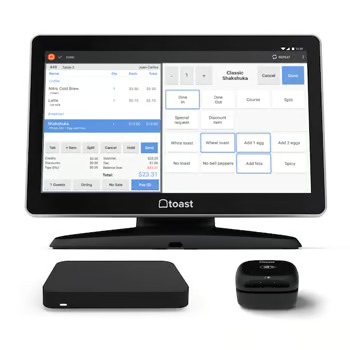 | 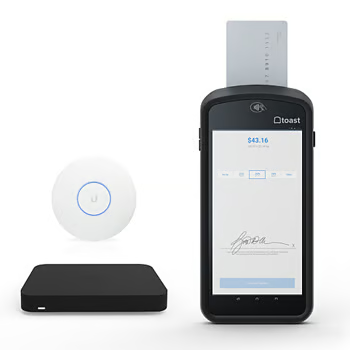 | 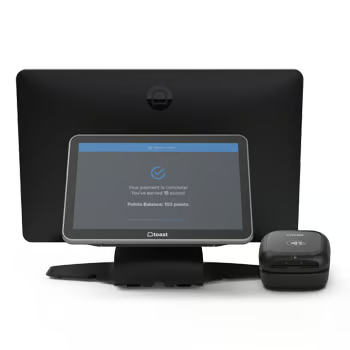 |
| Toast Flex terminal, Toast Tap payment device, PCI-Compliant router | Toast Go 2 Handheld, Mobile Access Point, PCI-Compliant router | Customer-facing display for Toast Flex terminal |
| Purchase from Toast | ||
Square for Restaurants: Best fast, simple coffee shop operations
Why I chose Square for Restaurants
Square for Restaurants’ POS systems are popular among coffee shops due to their ease of use for both staff and customers. The free level of Square’s subscription does not include table management, making it ideal for coffee shops only serving drinks. However, its higher tiers offer great features for a relatively affordable monthly rate. Month-to-month contracts make it a flexible POS software option over others in our guide.
Square’s online store functionality is a great asset to cafes with a lot of pickup orders, and the supporting software makes order-taking easy on staff. A lack of key, niche features like drive-thru management landed Square behind Toast, but it is still a formidable POS system for small coffee shops.
Who should use it:
Small coffee shops and those that serve only drinks will find the best use of Square’s services.
Square for Restaurants pricing
- Monthly software costs:
- Free: $0
- Plus: $49
- Premium: $149
- Hardware costs:
- From $59 for a card reader (though Square will send your first card reader for free) to $1,119 for a complete Square POS kit with a stand, cash drawer, receipt printer, and kitchen printer (iPad not included). Add $399 for Square Handheld for ordering and payments.
- $0 installation; Square is self-installed, but you can request on-site installation assistance for $600
- Processing fees:
- 2.6% + 15 cents for in-person transactions
- 3.3% + 30 cents for online or invoice transactions
- 3.5% + 15 cents per transaction for manually keying in a customer’s credit card
Standout features
- Easy management and pay software: On the customer end, Square’s iconic touch-to-pay and phone magstripe payment processors are very approachable and easy to understand in-store and online. It has an integrated online store with loyalty program capabilities and basic employee management software that includes punching in and out of work.
- Flexible hardware: It is not necessary to purchase any new equipment to run Square. This POS will run on any iPad. You can bulk up your existing hardware with iPad stands, various types of card readers, cash drawers, barcode scanners, and KDS screens as needed. This makes Square one of the most versatile POS systems on our list.
- No long-term contracts: Square is not only easy to join but easy to leave. There are no long-term contracts with Square. This makes it one of the most flexible POSes on our list.
- Compatible with Square small business tools: In addition to free POS software, Square offers many other free tools that all work together, including Square Online store and Online Checkout for pickup and delivery orders, customer feedback tools, and reporting dashboards.
- Square small business suite: Square for Restaurants POS users also gain access to the full suite of Square’s small business tools. In addition to the Square Online store, you can get their easy-to-use marketing, payroll, and appointment booking.
- Modular add-ons: Square offers plenty of paid add-ons in addition to the ecosystem of free tools, including payroll and team management, loyalty programs, marketing, gift cards, and customer management tools. Businesses can add and remove any of these features at any time.
What it’s like to use Square for Restaurants
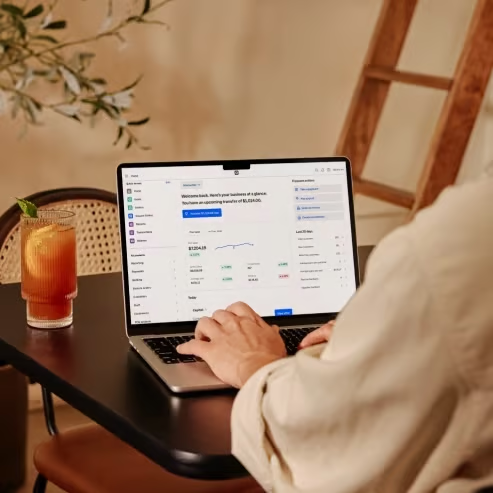
Square focuses on delivering key insights that help coffee shops grow. (Source: Square) 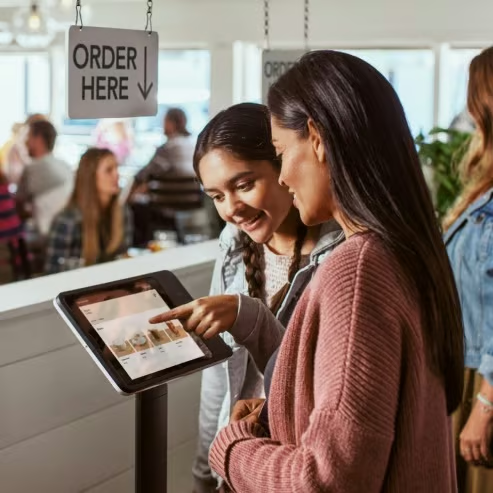
Square offers self-kiosk features, allowing coffee shops to manage busy lines automatically. (Source: Square) 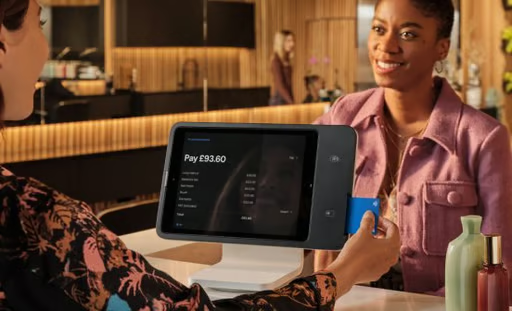
Square’s Card readers pair with iPads to support tap or chip payment functionality. (Source: Square)


Square for Restaurants hardware
| Square Stand | Square Register | Square Terminal | |
|---|---|---|---|
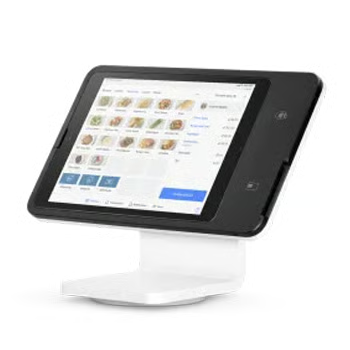 | 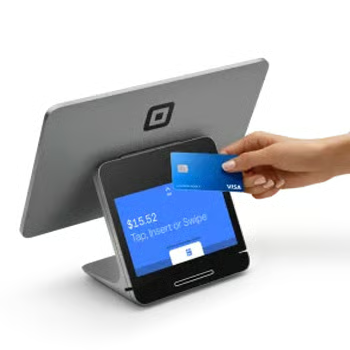 | 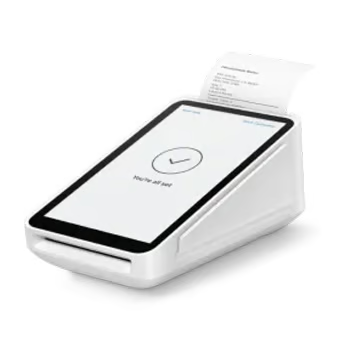 | 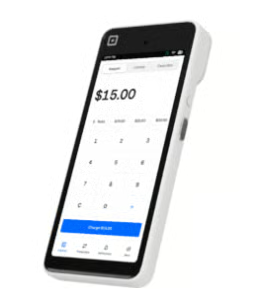 |
| Swivel-enabled iPad stand with built-in tap and chip card reader | Square-built touch-screen terminal with built-in swipe, tap, and dip card reader and customer-facing display | Handheld order and payment terminal | Square Handheld |
| Purchase from Square | Purchase from Square | Purchase from Square | Purchase from Square |
SpotOn: Best for new cafe owners needing guided setup
Why I chose SpotOn
SpotOn is an easy-to-use POS system with drive-thru functionality at an added fee. The robust installation process, customer support, and online learning resources make it super accessible for new cafes. This software also delivers excellent workforce and delivery tools, making it a breeze to manage for expanding coffee shop businesses. It does lock you into SpotOn’s payment processing, so some cost flexibility is lost in that regard.
One key feature is the customizability of order screens on the POS, allowing your business to maneuver the software how you see fit. SpotOn’s staff is super friendly and it genuinely feels like they are there to support you. However, some key features, such as inventory management, leave room to be desired.
Who should use it:
SpotOn is perfect for cafes new to POS systems, as its customer support can help get a business on its feet. Additionally, coffee shops with large amounts of staff or delivery orders will find use in its robust tools.
SpotOn pricing
- Monthly subscription plans:
- Quick Start: $0; software and hardware costs are included in payment processing fees
- Counter-service: $99/month, +$3 per employee
- Full-service: $135/month, +$3 per employee
- Customize Your Own: Custom-quoted
- Hardware:
- Station POS: Custom-quoted
- Counter POS: Custom-quoted
- Kitchen Display System: Custom-quoted
- Processing fees:
- Quick Start: 2.89% + 25 cents
- Counter-service, Full-service, Customize Your Own: 1.99% + 25 cents
Standout features
- Loyalty and marketing: A key factor for success with cafes is the ability to grow a customer base that has a lot of repeat visits. SpotOn’s suite of customer loyalty features reward points, automated messaging, and analytics on how your rewards are driving sales.
- Online branded menu: One important feature is an online website and branded menu, helping a new brand establish its business online and drive sales. This, along with key marketing features, allows for a seamless brand identity in person and online.
- POS includes one-tap or no-tip settings: SpotOn allows you to ask for tips from customers or to include no tips at all as a setting. Their one-tap payment capability is fast, and they tout their payment processing as super efficient and speedy for customers. This slight edge can bring a lot of benefits to cafes trying to get customers in and out the door.
- Customizable POS ordering buttons: All the buttons, commands, and other aspects of your POS can be customized to your liking. This can be very helpful to new cafes, as they can reset buttons and map commands in ways that suit their staff.
- Robust customer support: SpotOn’s customer service is accessible 24/7. They also offer one-on-one support, robust resources, and an overall ecosystem in which new users can learn and make the most of what they are paying for. This alone can be a deciding factor for new business owners.
What it’s like to use SpotOn
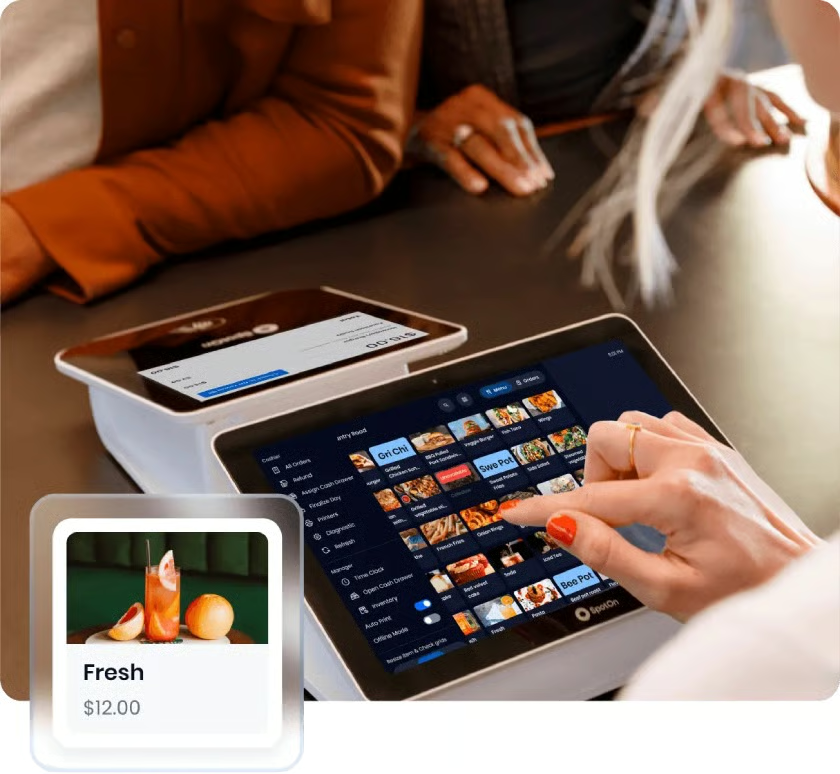
SpotOn delivers excellent order mapping and customer payment options for ease of use. (Source: SpotOn) 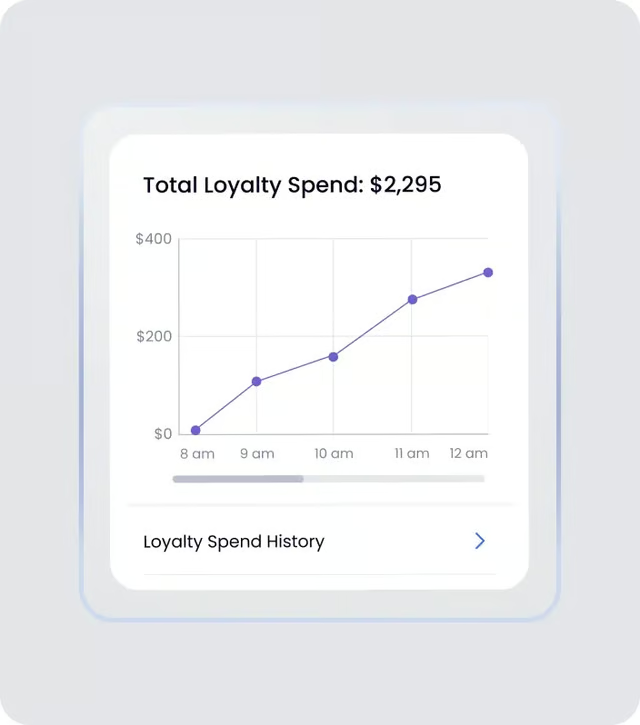
Loyalty spend features are great for seeing how loyalty campaigns are going. (Source: SpotOn)


SpotOn hardware
| Station POS | Counter POS | Kitchen Display System Screen |
|---|---|---|
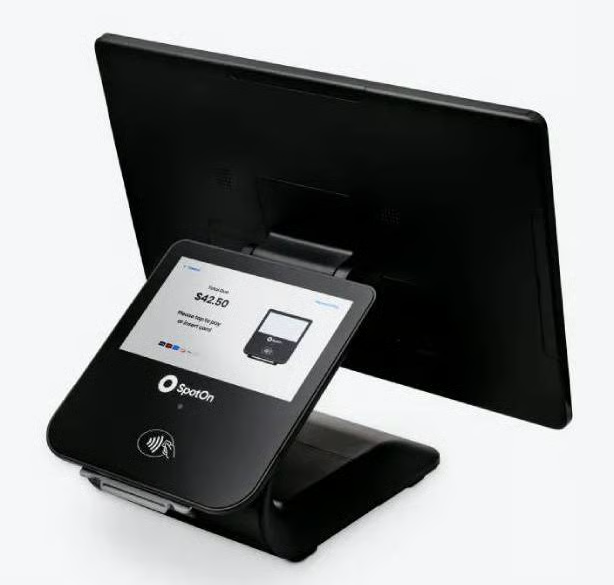 | 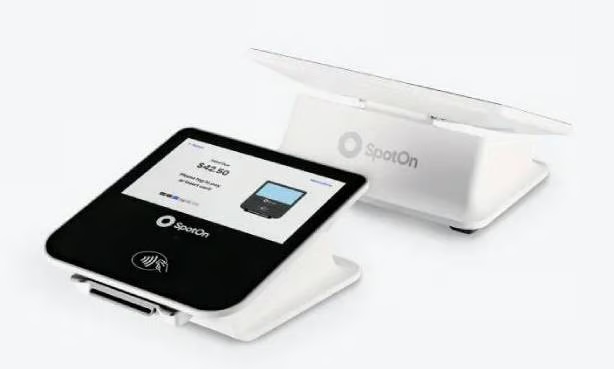 | 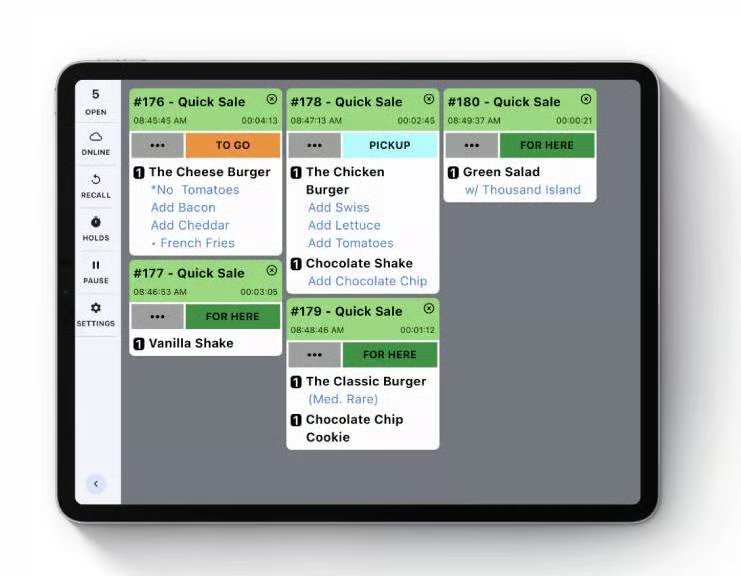 |
| $750 | $850 | $600 |
| Flexible countertop terminal with built-in card reader and optional customer-facing display | Low profile countertop terminal with satellite customer-facing touchscreen | Touch-screen KDS screen |
| Purchase from SpotOn | ||
Lightspeed Restaurant: Best for advanced inventory and multi-location cafes
Why I chose Lightspeed Restaurant
Cafes with larger inventories will be pleased with Lightspeed’s inventory management tools due to the nature of larger menu varieties, along with multiple payment processor options. It also offers user-friendly inventory and dual cash drawers and is super easy to self-install. We docked points for Lightspeed’s lack of drive-thru management, limited offline mode, and pricing.
Who should use it:
Busy cafes with complex inventories, those needing to track their ingredients, or those preferring a different payment processor would do well to use Lightspeed Restaurant.
Lightspeed Restaurant pricing
- Monthly subscription plans*:
- Starter: $69
- Essentials: $189
- Premium: $399
- Enterprise: Custom quote
* Prices are lower for users who pay fees annually and enroll in Lightspeed Payments.
- Hardware:
- One-time Installation fee: None
- You can bring your own compatible hardware; prices from Lightspeed are custom-quoted
- Processing fees:
- Lightspeed Payments start at 2.6% + 10 cents for in-person payments
- Varies by processor; Lightspeed supports Worldpay, Cayan, and BridgePay
Standout features
- High-caliber inventory management: Lightspeed’s inventory tool includes low-stock alerts and automated suggested orders. It is in-depth and easy for different users to learn. The one positive to its pricing consolidation is that advanced inventory is now offered in the $189 tier; previously, it was offered at $399.
- Easy self-installation: Lightspeed is quick to set up and easy to install yourself. You can purchase iPads from Lightspeed or bring your own and use Lightspeed cases and stands. You can download the POS software directly from the Apple App Store and get started taking orders in a single afternoon.
- Order Ahead: Contactless service is popular with customers. Lightspeed’s built-in Order Ahead feature allows customers to place pickup orders from any web-enabled device. It is perfect for curbside pickup. While this is notably not the same as a drive-thru feature, it still allows on-the-go customers to place orders and pay without going indoors.
- Supports multiple payment processors: Lightspeed allows owners to shop around for the best payment processors for their needs while still offering the convenience of built-in payments. Other cafe POS systems on this list (Square and Toast) only support built-in processing, locking you into their in-house rates.
- Dual cash drawer tills: High-volume counter service businesses know the headache of trying to keep cash balanced among multiple people, across breaks, and between multiple shifts. It is nearly impossible. The dual cash drawer feature allows both managers and staff to keep track of individual cash drawers easily, regardless of meal and shift breaks. In a fast-paced cafe, this is vital.
What it’s like to use Lightspeed Restaurant
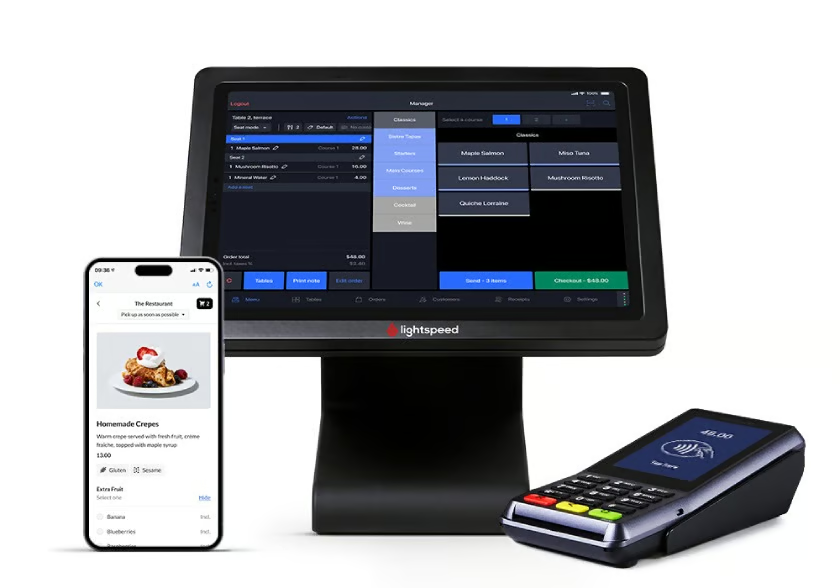
A look at Lightspeed Restaurant’s coffee shop interface. (Source: Lightspeed) 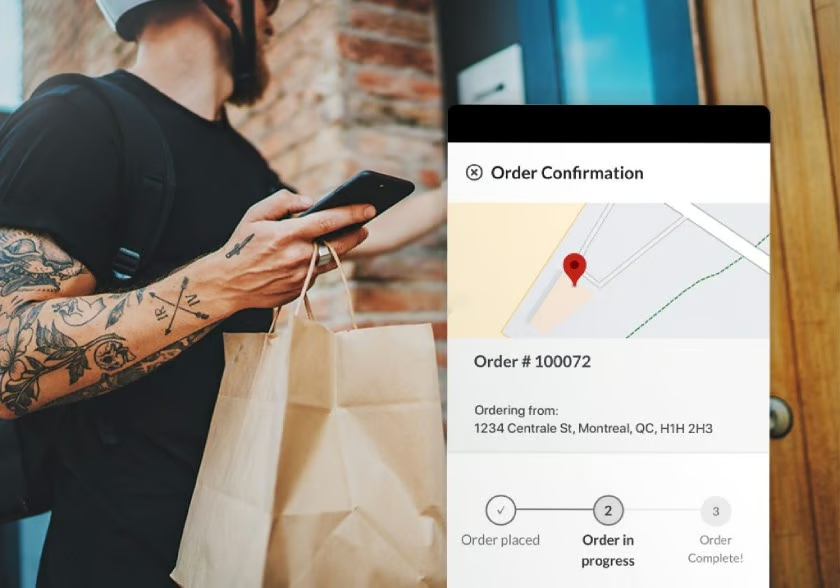
Lightspeed’s delivery features are great for cafes with a lot of delivery sales. (Source: Lightspeed) 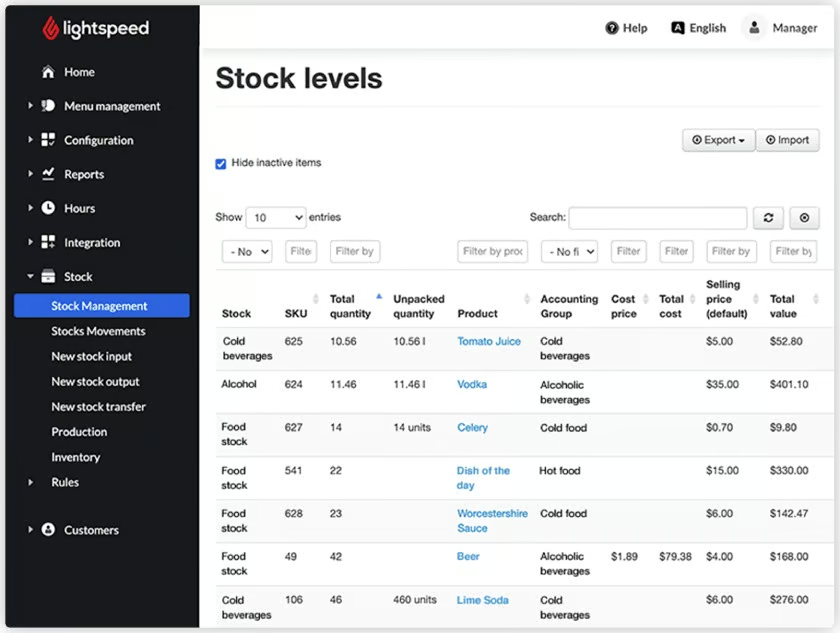
Lightspeed’s inventory is one of the most in-depth in the industry. (Source: Lightspeed)


Lightspeed Restaurant hardware
| iPad POS Hardware Kit | BBPOS Chipper 2X Card Reader | Socket 7Ci Barcode Scanner |
|---|---|---|
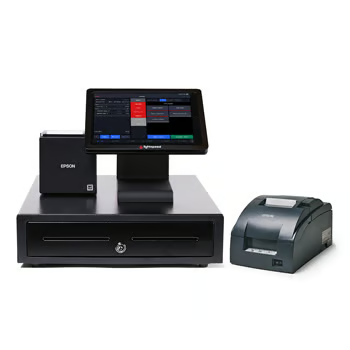 | 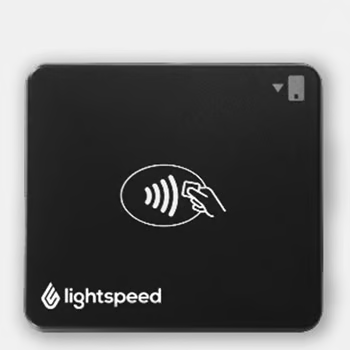 | 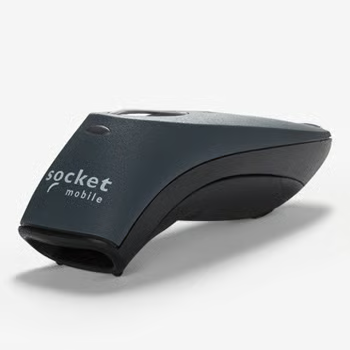 |
| iPad stand, cash drawer, receipt printer, kitchen printer | Lightning connected tap, dip, and swipe card reader | Bluetooth-enabled barcode scanner |
| Contact Lightspeed for Pricing | ||
KORONA POS: Best for flexible payment processing and lower fees
Why I chose KORONA POS
KORONA POS offers flexible payment processing, which is a big deal for cafes with a lot of orders. Being able to choose your payment processor can lead to a lot of savings over time and may be a deciding factor for some. However, KORONA does lack some of the other niche cafe features, like drive-thru management, that others in this guide provide.
Who should use it:
Cafes that find savings in different payment processors should look to use KORONA POS. Additionally, cafes that want the ability to add on features when needed and that are affordable are a good fit for this software.
KORONA POS pricing
Monthly software fees:
- KORONA POS Core: $59
- KORONA POS Retail: $79
Software add-ons:
- KORONA Food (+$10/month/terminal): Adds restaurant and quick-service tools
- KORONA Plus (+$20/month/terminal): Advanced analytics and automation features
- KORONA Invoicing (+$10/month/terminal): Built-in invoicing for customers and suppliers
- KORONA Ticketing (+$50/month/gate): Admission and ticketing management tools
- KORONA Franchise (+$30/month/franchise): Multi-location franchise management features
- KORONA Integration (+$45/month/token): API access for custom integration
Hardware costs: You can use compatible existing hardware or purchase from KORONA for custom-quoted prices
Processing fees: Bring your own processor; KORONA integrates with all major processors
Standout features
- Flexible pricing: KORONA POS users choose a baseline POS subscription for $59 to $79 per month. The main difference between the two subscriptions is that the Retail POS ($79 per month) includes inventory tracking and customer management tools. Then, you can add various modules at a la carte prices (from $10 to $45 per month).
- KORONA Food: KORONA offers food-business-supporting tools like item modifiers and check splitting as an a la carte add-on to the baseline POS subscription for $10 per terminal per month. The Food functions include table and course management as well if your cafe operates with table service.
- KORONA Plus: KORONA’s Plus add-on extends your KORONA POS reporting and multi-location management functions. With Plus, you can centralize multi-location reporting, rank stores, and get advanced stock management like product movement reports. These tools are great for growing coffee shops and cafes that have more than one location.
- Flexible processing: KORONA integrates with every major credit card processor. Users can shop for the best processing rates and use whichever processor they like. You can also change processors down the line if you find a better rate after a couple of years in business. For busy cafes with check averages below $10, this feature can have a huge impact on the bottom line.
- Month-to-month contracts: Users can cancel their service at any time without penalties. So, it is easy to update your POS plan as your business grows or your needs change. This is unusual for POS systems in general, though on this list, Square for Restaurants and Loyverse also require no long-term commitment.
- 24/7 customer service: One perk we enjoy with this service is the free 24/7 support in case your system ever goes down. Having that access is key for bakeries, where most work is done outside of the normal 9-to-5 workday.
What it’s like to use KORONA POS
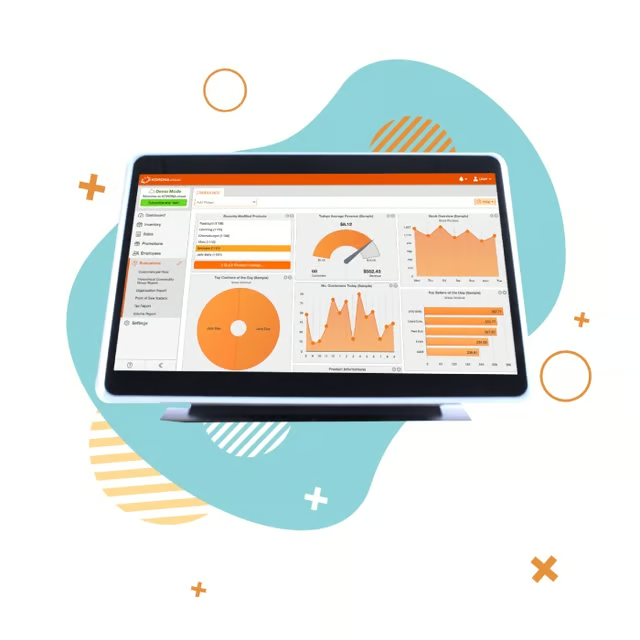
KORONA offers great reporting on sales in your cafe. (Source: KORONA) 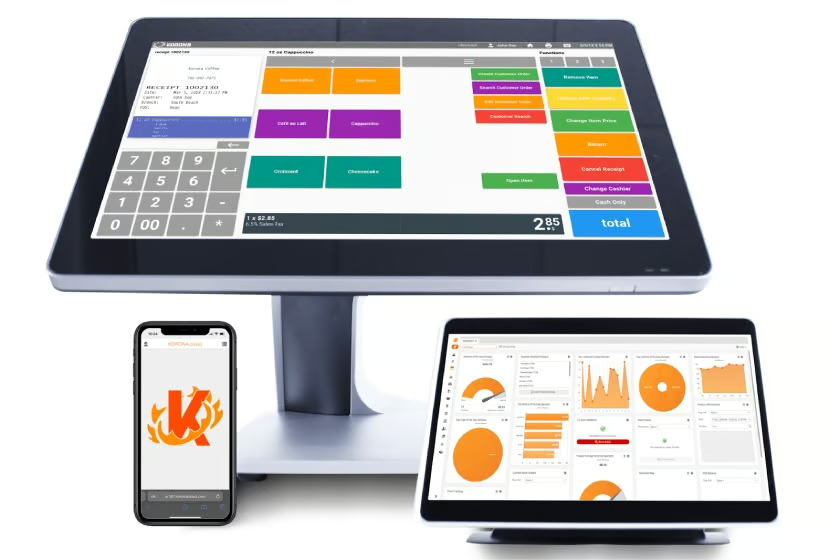
KORONA offers its software on a variety of devices. (Source: KORONA)


KORONA POS hardware
| Mobile POS Tablet | Desktop POS Terminal | POS Hardware Bundle |
|---|---|---|
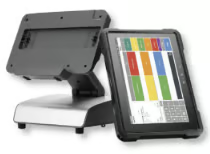 | 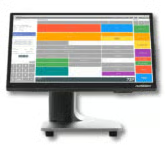 | 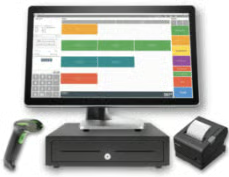 |
| Handheld, Wi-Fi enabled mobile POS tablet | Countertop POS with touch-screen terminal for stationary checkout | Countertop POS with touch-screen terminal, handheld barcode scanner, and receipt printer |
| Purchase from KORONA | ||
How I evaluated coffee shop POS systems
Our cafe POS methodology is built on years of evaluation by Fit Small Business experts and has been continuously refined, re-tested, and updated as POS technology evolves. We’ve adapted our scoring to reflect how modern cafes operate, balancing speed at the counter with tools that support growth, repeat customers, and multi-channel sales.
Cafe POS systems need to handle quick, high-volume drink orders while still offering features like inventory tracking, customer management, and reporting. Our criteria account for both day-to-day efficiency and long-term scalability to help you choose the right system for your cafe.
We evaluated each provider across five weighted categories:
- Pricing (20%): For pricing, we looked at whether or not the base plan offered was free, or if a free trial was offered. We then took note of contract length, whether or not integrated payment processing was offered, and if payment processing was open to many options or the select system a POS system has.
- General POS features (20%): Inventory management and contactless payments were key features we believe coffee shop POS systems should offer in some capacity. Beyond this, online ordering and customized report options were also taken into account. Finally, the ability to issue gift cards to customers had weight in our decision.
- Niche cafe features (20%): Coffee shops and cafes have niche, POS functions that we looked for in each system. Dual cash drawer tills, tip management, and drive-thru management were some features considered. Additionally, the ability to offer sticky-label ticket printers and barcode scanning were cafe-specific features that helped systems reach higher scores.
- Ease of use (20%): Having robust customer service hours and training resources are both factors in how easy a POS is to use. Cloud-based functionality makes data backup and access easier for cafe owners. Finally, installation of the system and offline mode were considered in this category.
- Expert score (20%): Our expert score looked at the overall features and the value for the money paid for the subscription to see which guide offered the most. We also took into account customer reviews on Capterra, the general popularity of each software, and overall perceived ease of use from a real-world user standpoint.
Key features to look for in a cafe POS system
Cafe POS systems are designed for speed, repeat customers, and high-volume transactions. These are the core features I look for when evaluating coffee shop POS systems:
- Speed ordering screens: Cafes and coffee shops are fast service businesses; you don’t want to waste time navigating to separate screens. Speed screens reduce button presses to process sales faster.
- Forced and unforced modifiers: Coffee beverages and other common cafe fare (like smoothies) are commonly modified items, so you need a POS that can swiftly handle modifications like “no foam” and “extra shot.”
- Dual cash drawer tills: Most cafes and coffee shops still do some cash sales. Tracking cash means assigning individual tills to each cashier. I’ve run coffee shops both ways — with single drawer and dual drawer tills—and dual drawer is so much more efficient.
- Drive-thru management: Many coffee shops do a brisk drive-thru business. A dedicated drive-thru order flow streamlines your business and reduces errors.
- Loyalty: A strong loyalty program is an absolute must-have for coffee shops and cafes that rely on regular customers to return day after day. Loyalty programs will sway customers to your shop, which is needed in such a competitive market.
- Marketing: Built-in text and email marketing tools save you time and help convert first-time visitors into loyal customers.
- Reporting: The sheer amount of data that a POS tracks gives you deep insight into your cafe’s health and helps you plan for the future.
- Online ordering: Blame it on Starbucks, but customers now expect to order their morning coffee from their smartphones. A POS with online ordering helps you provide what customers want.
- Inventory management: A POS can track individual items or even ingredients as you sell throughout the day, alerting you to low stock. Some systems will even generate a suggested vendor order so you never run out of supplies.
- Workforce management: These tools can be everything from basic time tracking and schedule-building all the way to tip pool management and completely digital employee onboarding.
The POS features you need will vary mostly based on your shop’s service style. So the first question you should ask when choosing a cafe or coffee shop POS is:
How to choose a cafe POS system
The right cafe POS depends on how you operate day to day. I use this step-by-step process to narrow down the best option.
Step 1: Identify the features your cafe actually needs
As mentioned above, a cafe POS can have a wide range of features. But the only features that matter are the ones you will use. If you are a small shop with two full-time employees, you probably don’t need tip pool management and drive-thru functions. Make a list of all the functions you’ll actually use. Then, look for a coffee shop or cafe POS systems that have those tools built into them.
Start by listing:
- How you take orders (counter, mobile, drive-thru)
- Menu complexity (drinks only vs food and modifiers)
- Staff size and scheduling needs
Then match your requirements to systems that support those workflows.
Step 2: Set your POS budget
Coffee shop and cafe POS systems have three main costs: the one-time, upfront price of hardware and installation (from $0 to $1000+), ongoing monthly software fees (from $0 to $300+), and ongoing payment processing fees (usually around 3% to 5% of credit card sales).
As with most things, the more tools you need, the pricier your cafe or coffee shop POS will be. So you need to balance the system you want with the budget you have. Take a look at your monthly sales (actual sales if your shop is open, projected sales if you aren’t open yet). How much of your profit can you afford to spend on a POS system?
Learn more in our guide to POS system costs.
Step 3: Choose the right hardware setup
Many coffee shop and cafe POS systems run on iPads and consumer-grade tablets. This makes them easy to replace if they are lost or damaged. But in a high-volume cafe, you might want something more robust that can withstand spills and steam. If you need industry-grade hardware, you’ll immediately narrow your field of choices.
Consider:
- Counter vs handheld devices
- Kitchen display systems
- Spill-resistant hardware
Find the best options in our article on POS hardware.
Step 4: Test systems with live demos
Once you have answered your questions, it’s time to schedule some POS demonstrations. Contact the sales teams of your top contenders. Prepare a list of questions to ask the sales representative. You should know exactly what functions you need your cafe POS to perform, so make sure you know if each system can do what you need.
Most POS sales reps follow a specific script and workflow. They’ll typically show you how the system rings in order, then show you some back-end reporting. If you don’t ask specific questions, you’ll only see the surface-level functions of each system. So, ask your questions as you go through the demo. Don’t be afraid to interrupt the sales rep’s pitch, if you must, to get the information you need.
Even better is to let the rep know before your demo what functions you are interested in seeing. This will give them time to check with technicians or product designers to ensure they have the most up-to-date information. Allow for at least one hour for each demo so you have time to see everything you need. Take notes during each demo, then compare your notes to see which system best provides the functions you need at a price you can afford.
Step 5: Compare ease of use and support
During demos, pay attention to:
- How many taps it takes to complete an order
- How easy it is to train staff
- Customer support availability
Choose a system your team can learn quickly and use efficiently during busy periods.
Frequently Asked Questions (FAQs)
Below are some of the most commonly asked questions regarding cafe POS systems.
What POS is used by Starbucks?
Starbucks uses a custom-built POS system by Oracle’s MICROS Simphony. The POS system has been built and detailed specifically for Starbucks stores, meaning that the exact functions and technology ecosystem they use are not available to the public. Oracle does provide POS options for businesses, but not specifically the one Starbucks uses.
What is the most successful cafe?
For years, Starbucks has remained the leading coffee shop chain in the United States. The company has over 35,000 stores globally and is recognized as a leader when it comes to coffee. Its brand reputation is recognizable, and its customer base is loyal and spans an international level.
Which POS does McDonald’s use?
McDonald’s uses NewPOS software and hardware for their POS systems. The product is built in-house and is made exclusively for McDonald’s. The restaurant chain has spent decades refining the system to meet its exact needs and specific requirements. This system is used globally throughout their stores.
What system do most restaurants use?
Restaurants use a POS system for taking orders, order management, employee management, and many other functions. Some of the most popular include Toast, Square for Restaurants, and Oracle MICROS Simphony. The restaurant POS market is diverse, and there is no one-size-fits-all POS system. Instead, each one is developed to cater to certain needs of one or more restaurant types.
How much does a coffee shop or cafe POS system cost?
The price range of a POS system for a cafe can vary based on your needs, number of locations, and volume of business, often costing between $0 to $99 per month for software fees. You may also have one-time upfront costs for hardware (from $0 to $1,000+), and you’ll need to budget for ongoing payment processing fees of 3% to 5% of your credit and debit card sales.
Why do cafes need a POS system?
A cafe POS helps solve several pain points that cafes and coffee shops experience. Cafes are typically high-volume businesses that sell to a highly engaged customer base. They also experience high staff turnover. Cafe POS systems track your product as it sells and alert you to low stock so you never run out of oat milk. A coffee shop POS can help you offer a detailed loyalty program to convert first-time visitors into long-time customers. A cafe or coffee shop POS also streamlines your ordering and payment process to reduce human errors that are common when you have a constant flow of new employees.
Bottom Line
If your cafe is in need of a POS system, look no further than Toast. Industry-grade hardware, fast payment processing, excellent customer loyalty options, and extensive built-in tools allow you full control over your cafe. Menu management, real-time data reporting, and employee management tools also help make Toast best-in-class for coffee shops in 2024. If you are looking for an excellent POS for your coffee shop, then we highly recommend Toast.
If you are looking for an excellent POS for your coffee shop, then I highly recommend Toast.
