






KORONA POS stands out for its strong backend control, flexible setup, and true payment processor independence. It performs especially well in inventory management, reporting, and multi-location oversight, making it a strong fit for retail operations that need precision. KORONA is also highly customizable, and its newer headless POS approach (“POS Next”) adds more flexibility for growing businesses.
The main drawback with KORONA is its learning curve. The dashboard can feel overwhelming at first, and some advanced tools are locked behind higher-tier plans. It also lacks built-in marketing features like email and SMS campaigns. Pricing starts at $59 per month, and KORONA holds strong user ratings at 4.7 out of 5 across G2, Capterra, and GetApp.
Why You Can Trust Fit Small Business
KORONA POS Overview
KORONA POS deciding factors
| Supported business types | Retail High-risk, convenience, rental, ticketing |
|---|---|
| Standout features |
|
| Monthly software fees | Average $59-$79 |
| Setup and installation fees | $0 DIY only |
| Contract length | Month-to-month; cancel at any time with no additional fees or surcharges |
| Payment processing options | Processor agnostic KORONA can integrate with most major processors via PAX or Dejavoo |
| Payment processing fees | Depends on processor |
| Customer support | 24/7 |
Use cases
- Retailers with large product catalogs (high-SKU environments) needing real-time inventory tracking, automated low-stock alerts, and purchase order automation.
- Specialty retail stores, such as liquor stores, vape and smoke shops, CBD retailers, gift shops, thrift stores, hobby stores, and convenience stores, with thousands of items to manage.
- Multi-location retail chains (typically 2-50 stores) that need centralized product catalogs and roll-up reporting to compare performance across locations.
- Franchise or regional retail operators that want consistent POS workflows and reporting across multiple stores.
- Regulated retail environments, such as liquor, vape, or CBD stores, that require tighter inventory monitoring and reporting controls.
- High-volume checkout environments like convenience stores or small specialty shops that need fast product lookup, barcode scanning, and support for EMV and contactless payments.
- Retailers that want flexibility to choose their own payment processor or reuse existing hardware instead of being locked into a POS ecosystem.
KORONA POS alternatives and comparison
| Monthly pricing | Free trial | Offline mode | Multi-location support | Hardware options | |
|---|---|---|---|---|---|
 | $59-$79 | Unlimited | Yes | Yes | Hardware-agnostic |
 | $0-$149 | 30 days (for paid plans) | Yes | Yes | Proprietary |
| Visit Square | |||||
 | $0-$69 | None | Yes | Yes | Proprietary |
| Visit Toast | |||||
 | $5-$89 | 3 days | Limited | Yes | Proprietary |
| Visit Shopify | |||||
| Best for | Learn more | |
|---|---|---|
| Small retail shops, cafes, and service businesses that want an easy-to-set-up POS with built-in payments, basic inventory, and simple reporting. | Read our Square review |
| Restaurants and food service businesses that need restaurant-specific tools like tableside ordering, menu management, kitchen display systems, and online ordering. | Read our Toast review |
| Retailers that sell both online and in-store and need tight integration between ecommerce, inventory, and physical store sales. | Read our Shopify POS review |
KORONA POS reviews from users
| Users like | Users dislike |
|---|---|
| Strong customer support | Learning curve for new users |
| Advanced inventory management | Setup and customization can take time |
| Real-time reporting and analytics | Some integrations and features feel limited |
| Flexible features for retail operations | Occasional reliance on support for advanced tasks |
| Good value for money | Niche gaps (e.g., age verification, language options) |
What users like
Across G2, Capterra, and GetApp, customer support stands out as KORONA’s biggest strength. Users consistently describe the support team as responsive, knowledgeable, and patient. In many cases, this offsets the product’s learning curve.
Inventory management and reporting are also major wins. Users highlight real-time sales tracking, detailed reporting, and strong stock control as key reasons they chose KORONA. These features are especially valued by multi-location and specialty retailers that need tight operational oversight.
There is also strong sentiment around value. Many reviewers say KORONA delivers more depth and functionality at its price point compared to competitors like Lightspeed.
What users dislike
The most consistent complaint is the learning curve. While day-to-day use is often described as intuitive, initial setup and advanced features can be harder to grasp. Users mention needing time or support to fully understand workflows and configurations.
Customization is another friction point. The system is flexible, but some users feel too dependent on support for setup or deeper adjustments. This slows implementation for businesses that want a faster, self-serve setup.
There are also smaller but notable complaints about limited integrations, occasional performance issues, and niche functionality gaps, such as age verification or language support.
What actual KORONA POS users say
- “My overall experience with KORONA POS has been really positive. It’s one of those tools that just works the way you expect it to. From setup to daily use, it’s been smooth and reliable. The platform has helped us stay more organized, especially with inventory and sales tracking, and I genuinely feel like it’s added value to how we run our business. I also appreciate that whenever we’ve needed help or had questions, their support team was quick to respond and actually helpful and not just reading off a script. It’s made a noticeable difference in how efficiently we operate, and I’d definitely recommend it to other businesses looking for a solid POS system.” — Capterra reviewer
- “Through pre-sales, partner resources and onboarding, sales presentation to my client – All the way to importing products to end user resources, hardware installation, production support and technical support; Korona has been hand in hand, working for success. Working with with these on-shore professionals has been refreshing and profitable” — Capterra reviewer
- “I have worked closely with KORONA POS to create a powerful sales and marketing system that tracks customer data. The training session is usually flexible and efficient for new users. The platform serves more customers with less time and is highly accurate in cash processing.” — G2 reviewer
KORONA POS pricing
KORONA POS earned a score of 4 out of 5 for pricing in my evaluation. It uses a simple subscription model priced per terminal. I like that the platform offers an unlimited free trial, which lets you test the system before committing to a paid plan. Pricing starts at $59 per month, per terminal, with a higher-tier Retail plan that adds advanced inventory tools.
You can also add optional modules for food service, ticketing, invoicing, or franchise management if your business needs more specialized functionality. From my experience evaluating POS pricing structures, these add-ons can raise the total monthly cost quickly, especially for multi-terminal setups, so it’s worth confirming which modules you actually need before committing to a configuration.
Pricing plans
- Unlimited free trial with no credit card required, so businesses can test the system before subscribing.
- Core ($59 per terminal/month): Includes core POS functionality, customizable dashboard, unlimited users and sales, promotions and discounts, gift cards, KPI reports, API access, ecommerce capabilities, and 24/7 support.
- Retail ($79 per terminal/month): Adds advanced inventory tools such as stock management, inventory counts, barcode automation, supplier integrations, price and shelf labels, customer management, real-time stock tracking, item combinations, and automated ordering.
Optional add-on modules
- KORONA Food (+$10/month per terminal): Adds restaurant and quick-service features such as table management, server management, courses, modifiers, graphical table layouts, multiple order printers, check splitting, time tracking, and cash journals.
- KORONA Plus (+$20/month per terminal): Advanced tools designed to add deeper insights and operational features for businesses that need more analytics and automation.
- KORONA Invoicing (+$10/month per terminal): Lets businesses generate and send invoices to customers or suppliers directly from the POS.
- KORONA Ticketing (+$50/month per gate): Designed for admission-based businesses such as museums, amusement parks, and water parks.
- KORONA Franchise (+$30/month per franchise): Adds tools for franchise operations to manage communication and processes between franchisors and locations.
- KORONA Integration (+$45/month per token): Supports custom integrations using the platform’s open API for specialized workflows.
KORONA POS Payments
KORONA is processor agnostic, meaning it can integrate with almost every popular merchant service account via either PAX or Dejavoo. This means you can choose the best payment processor for your business.
While having a separate merchant account can be more complicated for new and small businesses, shopping around for the lowest rates can help you save a lot of money, especially for large and multilocation companies. Plus, choosing your merchant account means KORONA POS is a viable option for companies operating in high-risk industries like dispensaries.
Check out our reviews of the top payment processing companies to find the best one for your needs.
KORONA POS Hardware
KORONA sells touch-screen registers and hardware from Aures, Partner Tech, and Hisense, and offers hardware leasing options. Prices vary by device, but you can contact KORONA for a detailed price sheet. It also advertises pricing plans for hardware purchases, so you won’t need to pay the full cost upfront.
| Mobile POS Tablet | Desktop POS Terminal | POS Hardware Bundle |
|---|---|---|
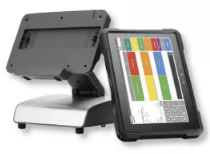 | 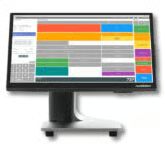 | 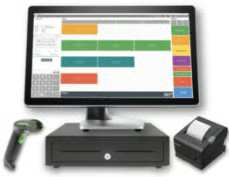 |
| Handheld, Wi-Fi enabled mobile POS tablet | Countertop POS with touch-screen terminal for stationary checkout | Countertop POS with touch-screen terminal, handheld barcode scanner, and receipt printer |
| Purchase from KORONA | ||
KORONA POS new features
KORONA POS recently announced a major evolution of its platform, based on a product update shared directly by CEO Till Frier. In the announcement, he introduces “POS Next,” a new headless POS approach designed to give enterprise retailers more flexibility, control, and scalability as their tech stacks grow more complex.
- Headless POS architecture (POS Next): KORONA introduces a headless POS, separating the frontend and backend so businesses can build custom experiences without being locked into a fixed interface.
- Greater workflow and journey control: Retailers can now tailor how transactions, customer flows, and backend processes work, giving more control over day-to-day operations.
- True customization across the system: Instead of a one-size-fits-all setup, KORONA now allows businesses to configure their POS ecosystem based on their specific operational needs.
- AI-powered smarter ordering: New AI tools help automate purchasing decisions by analyzing sales patterns and inventory data to reduce stock issues.
- Built-in loyalty and delivery features: Loyalty programs and delivery capabilities are now integrated, reducing the need for third-party tools.
- Expanded ecommerce connections: Improved ecommerce integrations allow for tighter syncing between online and in-store sales, inventory, and customer data.
- Self-checkout support: Businesses can deploy self-checkout options, helping reduce labor strain and improve checkout speed.
- Smart shelves and upselling tools: New tools support in-store upselling and product visibility, helping increase average order value.
- New payment methods and device support: KORONA expands payment flexibility, supporting more payment types and modern POS hardware.
- Cross-platform hardware flexibility: The system now works across more operating systems and devices, giving businesses more freedom in hardware selection.
- Improved inventory and reporting automation: Managers can automate more backend tasks, making reporting and stock management more efficient.
- Enhanced transaction reliability and security: The platform continues to strengthen secure, compliant transaction processing while scaling to enterprise needs.
KORONA POS features
In my evaluation, KORONA POS performs best in backend management, where it earned strong marks for inventory tracking, reporting, staff controls, and specialized retail tools. It’s clear the platform is built for operational control rather than surface-level features. That said, it didn’t earn a perfect score. Marketing tools like email and SMS campaigns are missing, and some core functions, including inventory counts, shelf labeling, and item combinations, are restricted to higher-tier plans. Its integration options are also more limited compared to other POS systems.
On the register side, KORONA scored 3.94 out of 5, reflecting a solid but not outstanding performance. I found the dashboard easy to use and highly customizable, with reliable support for returns, discounts, promotions, and customer tracking. However, it lost points for requiring additional hardware for mobile selling and for placing some CRM, inventory, and loyalty features behind paywalls. While the interface is functional, it also feels slightly dated compared to newer POS systems.
Overall, KORONA scored 3.38 out of 5 for management tools and 3.94 out of 5 for register features, showing that its strength lies in backend operations, while its front-end experience is good but comes with a few tradeoffs.
Checkout dashboard
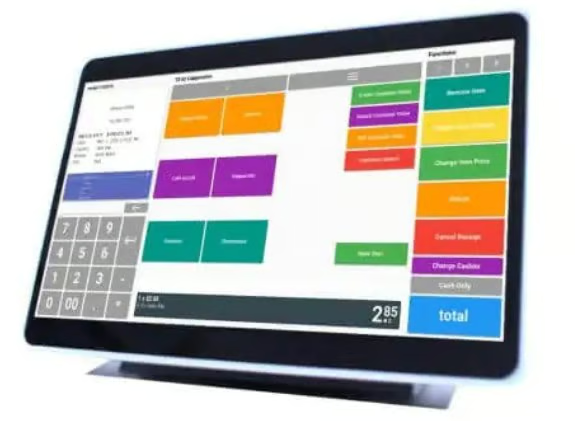
KORONA has a completely customizable checkout screen dashboard. You can set the customer display screen to show any arrangement of fonts, text placements, and images that you want. That means while this POS system can work for a liquor store, it could also work for an apparel retailer, just with different configurations for their specific workflows.
Once you have your checkout screen set up, KORONA creates user PINs. Cashiers can log in by codes or key cards, so they are tagged on transactions, and their access is limited. Another way to customize your checkout is by limiting the payment types of a specific item. You can also set up reminders to check IDs for age-restricted items.
KORONA also makes it easy to schedule discounts and location-specific events so that promotions will appear at checkout at the right times and places. You can set prices for locations, times (like happy hour or a particular season), or loyal customers.
Also, KORONA has an extensive tax categorization. When loading the product, you can set multiple tax categories, including sales and liquor taxes, or make taxes dependent on where the item is sold. KORONA applies taxes automatically at checkout.
It also offers a built-in point-based loyalty program that lets you take customer information and track sales. If KORONA’s loyalty tools are not enough for you, the software integrates with other third-party loyalty programs, like bLoyal.
Inventory management
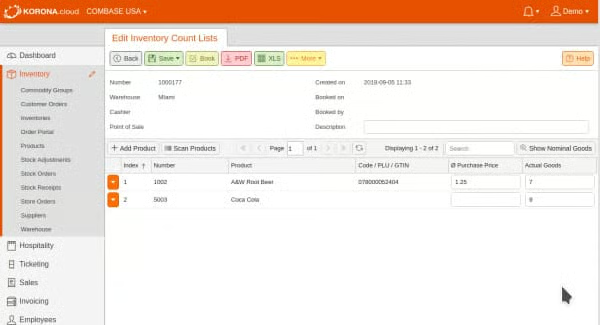
KORONA’s full inventory management functions come with the higher Retail Plan, and these are worth the higher price. In addition to the usual barcode scanning, vendor management, and inventory tracking, the Retail Plan can consider promotions, sales, and even seasonal sales history when calculating reorder levels and sending alerts. This can help ensure you keep critical items in stock. Want to discontinue an item? You can set the inventory to a slow order category to phase it out.
If you need to create kits, such as making a custom bike or a wine basket, KORONA can accommodate you. It also has deli inventory functions for food services. You can assign multiple product codes to consider container quantities or special pricing without creating a new product. It’s easy to print labels and shelf tags from the software as well.
However, KORONA POS lacks tools for creating item variants within its inventory list. If you have inventory items that need some sort of modifier, such as different sizes and male/female cuts for clothing, KORONA POS might not provide enough granularity for you.
Employee management
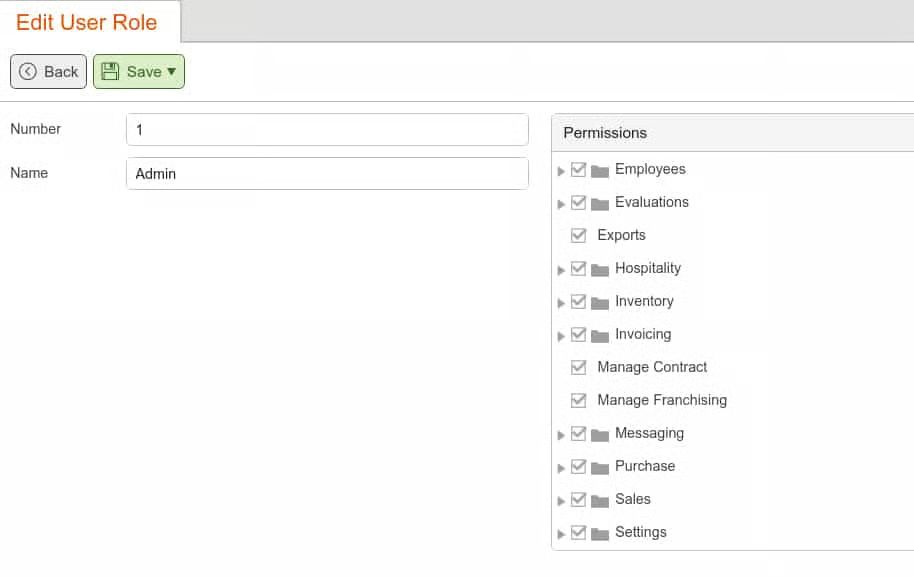
KORONA’s employee functions are not as robust as other POS systems; for example, there are currently no tools to directly measure employee productivity. Nonetheless, they cover the basics, allowing you to set up user roles and logins for individuals and program messages to pop up in the system for everyone or specific people or groups. KORONA POS also has time-tracking functions, although it does not do scheduling or appointments.
You can set up user roles and associated permissions to ensure employees only access the part of the software they need. KORONA offers features to prevent employee theft, including void restrictions, forced drawer closing, and blind balance drops. These functions benefit businesses that accept many cash payments and have high turnover rates, like convenience and liquor stores. They also make it easier to perform regular POS reconciliation.
Ticketing
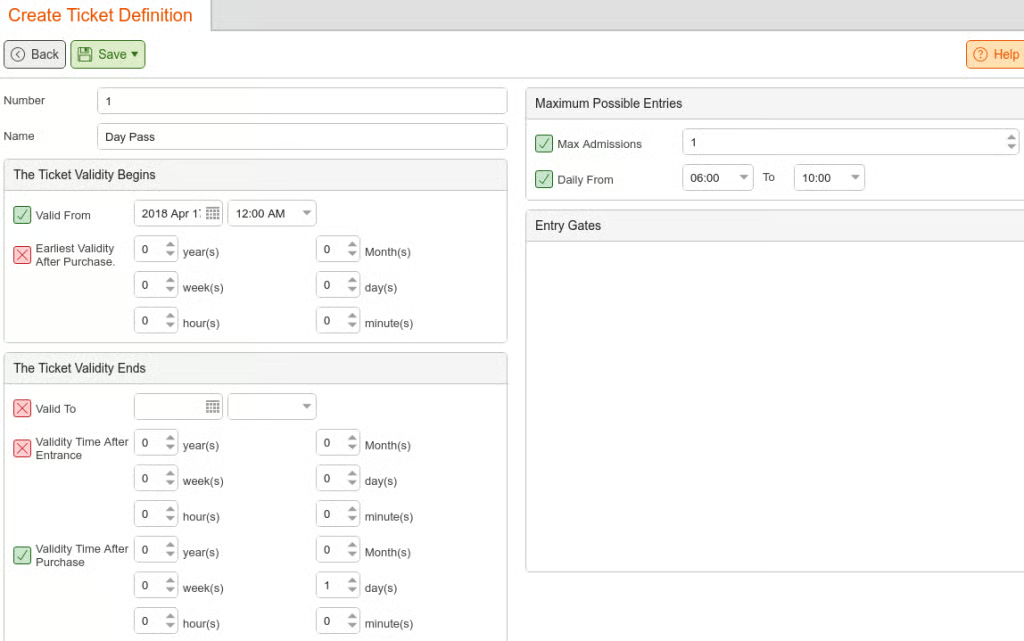
KORONA offers a Ticketing add-on (+$50 per month, per gate) for its POS plan. This add-on lets you perform ticketing and event management, including ticket printing, customer management, time tracking, and cash journals.
It serves ticket-based businesses like museums, or short-term ticket-based events, like concerts or fairs. The ticketing function works in conjunction with the retail arm so that you can use the same system for all your needs. You can even set group rates, memberships, and special pricing. KORONA also lets you quickly print durable tickets and integrate ticketing functions with turnstiles.
Reporting and analytics
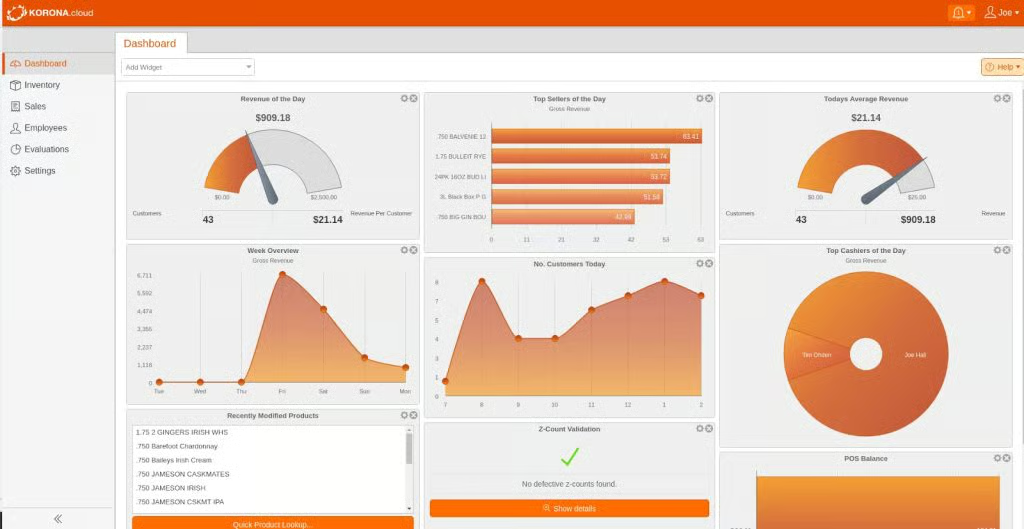
KORONA offers nearly 100 different reports, from ABC analysis and cash journals to KPI and tax reports. You can customize them in many ways. As with most POS software, you can narrow data down to particular periods, specific stores, or certain products or classes of products.
The reporting system even lets you run comparisons, such as a year-over-year analysis of specific categories. KORONA has options to analyze foot traffic, which is a crucial reporting metric that few POS systems have. But, like most POS systems, you can use KORONA to set reorder points for products, monitor inventory levels, view return rates by product, and track conversion rates.
Tax reports are generated by the economic zone. You can download all reports as Excel or PDF files, in addition to viewing them as spreadsheets or visualizations in the KORONA dashboard.
KORONA POS ease of use & customer support
KORONA is an easy-to-use and highly customizable program, earning it a 4.63 out of 5 in our evaluation for ease of use. It has a bright interface with color-coding options and a logical, menu-based system for adding products or functions in the backend. If you put in the wrong code or the wrong cash amount (such as when closing), you will get alerted. You can also create your register workflows, menus, and tab functions.
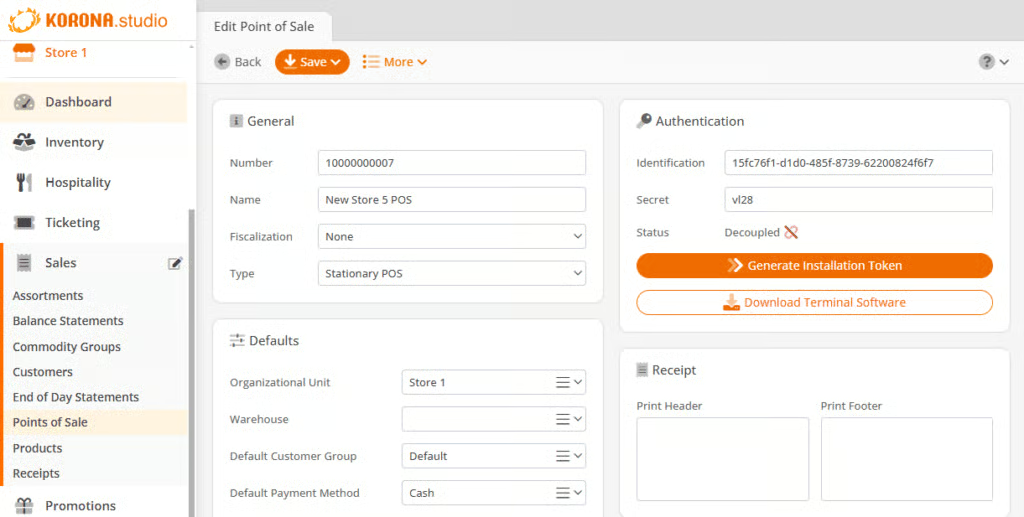
KORONA also offers tons of resources. The Beginner’s Guide manuals are all online, and some come with videos. In addition, technical customer support is offered 24/7, but is English-speaking only. Also, you cannot get on-location installation assistance, so you need to be comfortable with setting the system up yourself — though KORONA does at least walk you through all of the steps of installation via free training.
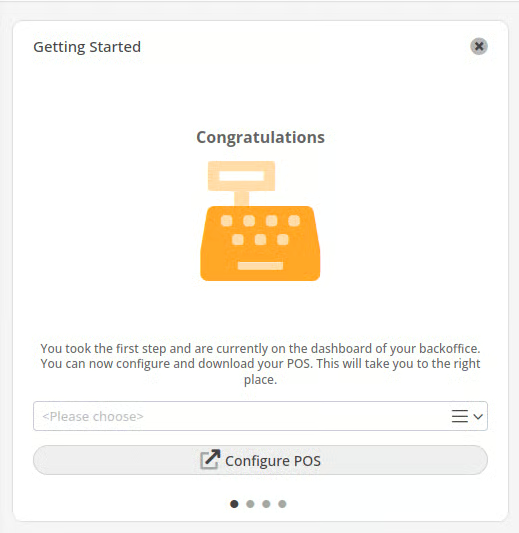
I found KORONA POS’ YouTube videos genuinely useful when I was setting up and configuring a test system. They walked me through the basics without much friction, which helped offset the initial setup time.
Once inside the dashboard, though, there’s a noticeable jump in depth. There’s a lot of data, settings, and configuration options upfront, which can feel overwhelming if you’re used to something simpler like Square. In my experience, that learning curve comes from how customizable KORONA is. It’s not trying to be plug-and-play. Instead, it gives you more control over how your POS operates, which pays off once you get past the initial setup phase.
How I evaluated KORONA POS (methodology)
To evaluate KORONA POS and other POS systems, our Fit Small Business experts developed a rubric that evaluates affordability while still delivering essential POS functionality. This includes tools for order and checkout management, the ability to accept multiple payment types, and inventory tracking.
Below is our criteria for scoring. I included notes on how KORONA POS scored, too:
- Pricing (30%): Pricing was the most heavily weighted factor in my evaluation. I prioritized POS systems that offer a free plan or free trial, affordable subscription tiers, and scalable plans that businesses can grow into. I also gave higher scores to platforms with competitively priced integrated payment processing, flexible hardware options, and no strict limits on users, inventory items, or transactions. Systems that required long-term contracts or large installation fees lost points.
KORONA POS performed well across most of these criteria. However, it lost some points because its hardware options are not always the most affordable and its payment processing flexibility is somewhat limited compared to some competitors.
- Register features (15%): For register features, I evaluated how well each system supports fast and customizable checkout workflows. I looked for capabilities such as customer management, mobile selling tools, order tracking, and online order processing. Because retail and restaurant operations have shifted significantly in recent years, I also considered support for contactless payments, online ordering, and ecommerce features.
KORONA POS offers efficient checkout and order management tools, but its CRM capabilities and sales mobility options are more limited than some competing systems.
- Management tools (15%): Inventory management was the most important management feature in my scoring rubric. I also evaluated the quality and usability of each platform’s reporting dashboard, along with built-in tools for marketing and employee management.
KORONA POS scored strongly in this category thanks to its advanced inventory tracking and purchasing tools, along with robust vendor and order management features. However, it lacks built-in tools for creating and launching marketing campaigns through channels such as email or SMS.
- Ease of use (20%): To evaluate ease of use, I looked closely at support availability, onboarding, and system reliability. I prioritized POS systems with 24/7 phone support and also considered the availability of help tickets, chat, or email support. Installation processes, offline functionality, and hybrid deployment options were also part of my evaluation since businesses need to continue operating even during internet outages. Finally, I reviewed training resources such as knowledge bases, tutorial videos, and training modes for new staff.
KORONA POS includes 24/7 support, an offline mode, and compatibility with multiple device types. It also offers an online tutorial resource, although the materials are relatively basic. Some users also report that the onboarding and setup process can take time to work through.
- Expert score (20%): My expert score reflects the overall quality of each POS system’s features, along with its reliability, stability, and security. I also evaluated whether each platform delivers strong value at its price point and whether it offers standout functionality for specific industries. Finally, I incorporated my hands-on experience researching POS systems, along with customer reviews and feedback from small business owners.
KORONA POS performed well overall in this category. It offers a solid feature set for high-risk retail, high-volume stores, and ticketing businesses, and it delivers strong value with most features available for under $80 per month.
Frequently asked questions (FAQs)
Is KORONA POS easy to use?
KORONA POS is easy to use for daily transactions, especially at the register level. The interface is customizable and straightforward for staff handling sales, returns, and discounts. However, the backend system includes many advanced tools that can take time to learn. Most users find that once set up, the system becomes much easier to navigate.
What businesses should use KORONA POS?
KORONA POS is best for retail businesses that need strong inventory control and detailed reporting. It works well for liquor stores, convenience stores, specialty retail, and multi-location operations. Businesses that want more control over operations will benefit the most. It is less ideal for very small businesses that want a simple, plug-and-play system.
Does KORONA POS have good inventory management?
Yes, inventory management is one of KORONA POS’s strongest features. It includes real-time tracking, automated stock updates, and detailed reporting tools. Businesses can manage large product catalogs and monitor performance across locations. Some advanced inventory tools may require higher-tier plans.
Does KORONA POS support ecommerce integration?
KORONA POS supports ecommerce integrations, allowing businesses to sync online and in-store sales data. This helps maintain accurate inventory and consistent reporting across channels. However, its integration options are more limited compared to those of some competitors. Businesses should confirm compatibility with their ecommerce platform before committing.
Does KORONA POS include marketing tools?
KORONA POS does not include built-in email or SMS marketing tools. While it offers customer tracking and loyalty features, businesses will need third-party software for campaigns. This can add extra cost and setup time. It is better suited for operations than marketing automation.
Can KORONA POS be used for mobile sales?
KORONA POS can support mobile sales, but it usually requires additional hardware. It is not as mobile-first as some POS systems that run directly on tablets or smartphones. This may increase setup costs for businesses that need mobility. It works better in fixed retail environments.
Is KORONA POS customizable?
Yes, KORONA POS is highly customizable, especially with its newer headless POS approach. Businesses can tailor workflows, reporting, and system settings to fit their operations. This makes it a strong option for complex retail setups. The tradeoff is that customization can increase the learning curve during setup.
Bottom line
KORONA POS is a solid choice for retail businesses that need advanced inventory management, detailed reporting, and customizable workflows. It performs best for operators who are willing to invest time in setup to get a system tailored to their needs. While it lacks built-in marketing tools and has some feature limitations depending on the plan, its strengths in backend control and reliability outweigh those gaps. If you want a POS that scales with your operations rather than a simple plug-and-play solution, KORONA delivers.
Download the unlimited trial version and see if KORONA is right for your business.
