







Sales apps help small businesses manage leads, communicate with prospects, track deals, and organize sales tasks from one device. The best sales apps for small business also offer mobile access for iOS and Android. This makes it easier for reps to update CRM records, join meetings, make calls, manage projects, and prospect while in the field.
I reviewed sales apps across key categories, including CRM, deal management, omnichannel outreach, video conferencing, business phone systems, B2B prospecting, customization, and sales project management. Based on features, affordability, usability, and mobile accessibility, these are the eight best sales apps for small businesses.
| Provider | Best for | Starting price per month, billed annually |
|---|---|---|
| HubSpot CRM | All-in-one sales app | Free or $9/user |
| Pipedrive | Deal management | $14/user |
| Freshsales | Omnichannel outreach | Free or $9/user |
| Zoom | Video sales meetings | Free or $14.16/user |
| Nextiva | Business phone system | $15/user |
| UpLead | B2B prospecting | $74 for 2,040 credits |
| ClickUp | Customizable sales workflows | Free or $7/user |
| Asana | Sales project management | Free or $10.99/user |
Why you can trust Fit Small Business
Methodology: How did I evaluate the best sales apps?
The best sales apps help businesses manage leads, track deals, communicate with prospects, and stay organized throughout the sales cycle. Because this category includes CRM platforms, prospecting tools, phone systems, meeting software, and project management solutions, I evaluated each provider based on how effectively it supports revenue-generating activities while remaining accessible and affordable for small businesses.
I assessed core functionality, mobile capabilities, ease of use, pricing, customer support, and specialized features tied to each platform’s primary use case. Review my criteria for ranking the best sales apps for small businesses.
- General features: I reviewed the core capabilities needed to support sales teams, including contact and lead management, reporting and analytics, integrations, mobile access, task management, automation, and collaboration tools.
- Advanced/niche features: Because each provider serves a different purpose, I evaluated specialized capabilities such as pipeline management, omnichannel outreach, business calling, video conferencing, prospecting databases, workflow customization, and project management.
- Pricing: I assessed free plan availability, entry-level pricing, scalability, billing flexibility, and overall value for small businesses. I also considered whether key features were included in base plans or reserved for higher tiers.
- Ease of use: I evaluated navigation, onboarding, setup requirements, mobile usability, automation tools, and how quickly teams could adopt and use each platform effectively.
- Support: Customer support was evaluated based on availability through phone, live chat, and email, along with self-service resources such as tutorials, product documentation, training materials, and user communities.
- Expert score: In addition to firsthand testing, I reviewed verified user feedback to assess usability, reliability, feature quality, and overall value. This helped validate how well each platform performs in real-world business environments.
Overview of the best sales apps for small business
| Provider | Built-in CRM | Sales prospecting tools | Project management |
|---|---|---|---|
| HubSpot CRM | ✓ | ✓ | ◐ |
| Pipedrive | ✓ | ◐ | ◐ |
| Freshsales | ✓ | ◐ | ◐ |
| Zoom | ✕ | ✕ | ✕ |
| Nextiva | ◐ | ✕ | ✕ |
| UpLead | ✕ | ✓ | ✕ |
| ClickUp | ◐ | ◐ | ✓ |
| Asana | ◐ | ◐ | ✓ |
Legend: ✓ Built-in | ◐ Via integration/add-on/customization | ✕ Absent
Best CRM sales apps
Customer relationship management (CRM) software is the ultimate app for sales because it offers a single platform to generate, track, and manage sales activities. These products include contact databases, deal-tracking systems, communication tools, to-do list apps, collaboration software, and marketing platforms on a single platform. Below are three of the best CRMs for small business that sales teams can leverage.
What makes HubSpot CRM the best all-in-one sales app for small business?
Why I chose HubSpot CRM
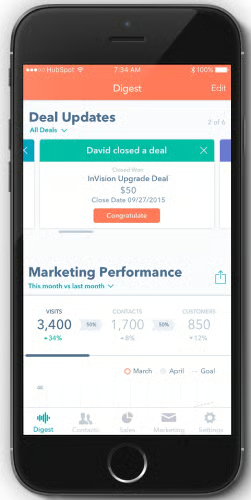
HubSpot CRM is the strongest all-in-one sales app for small businesses that want lead management, deal tracking, marketing, content, and customer service tools in one place. In my review, its biggest value is how much of the sales workflow it covers without forcing teams to stitch together separate apps. Reps can manage contacts, update deals, track activity, send emails, and access customer records from the mobile app, which is especially useful for field sales or teams that need to work between meetings.
Its free-forever plan is also a major advantage for small teams getting started with sales software. While HubSpot can become expensive once you need advanced automation, reporting, or higher-tier sales features, the free tools and mobile access still make it one of the most practical entry points for businesses that want a scalable sales system. For teams that need one app to manage the full customer journey—from first touch to follow-up—HubSpot CRM offers the best balance of accessibility, functionality, and room to grow.
Key features for sales
- Lead and deal management: Users can store contact and company records, track activity, engage customers or prospects via email, phone, live chat, or chatbot, and monitor progress on sales opportunities.
- Marketing and content management module: Teams can create and deploy mass marketing campaigns through email, online ads, and social media content. They can also manage content from the platform, such as landing pages, blog posts, and web forms, and a video library.
- Mobile CRM app: Sales reps can access their mobile CRM from their phone or tablet devices to manage data records, track tasks to-do lists, and send communications via live chat or email. The app will provide notifications and a microphone to dictate notes in the CRM system.
HubSpot CRM pricing
| HubSpot Sales Hub plans | Free | Starter | Professional | Enterprise |
|---|---|---|---|---|
| Monthly price, billed annually | $0 for 2 users | $9/user | $90/user | $150/user |
| Monthly price, billed monthly | $0 for 2 users | $15/user | $100/user | N/A |
What makes Pipedrive the best sales rep app for deal management?
Why I chose Pipedrive
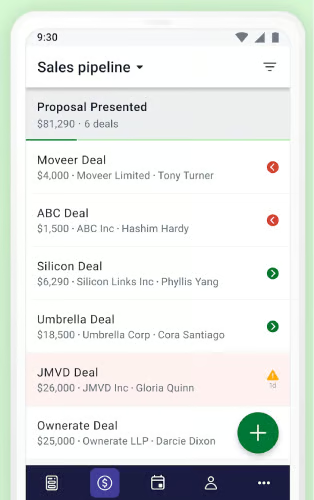
In my evaluation, Pipedrive delivered one of the clearest deal management experiences of any sales app I tested. Its visual pipeline makes it easy to track opportunities, identify bottlenecks, and keep follow-up activity moving without adding unnecessary complexity.
I also like how focused the platform is on the sales process. Reps can manage tasks, emails, activities, and deal stages from desktop or mobile, which is especially useful for small teams that need a straightforward way to stay on top of active opportunities. Its automation and reporting tools also help managers see which deals need attention before they stall.
The tradeoff is that Pipedrive is not as all-in-one as HubSpot, so teams needing built-in marketing, service, or project tools may need integrations. Still, for businesses that primarily want to manage deals more efficiently, Pipedrive’s simplicity, pipeline visibility, and mobile usability balance that limitation well.
Key features for sales
- Deal and proposal management: Teams can create and monitor sales opportunities on a customizable pipeline and get updates on potentially “rotting” deals. The system also includes the Smart Docs feature for auto-generating proposals using CRM data, then tracking outbound proposal status and getting digital signatures.
- Sales projects tracking: Users can oversee specialty large projects within the sales operation or manage client deliverables associated with a service contract or engagement after the deal is closed.
- Mobile CRM: Mobile sales tools for teams to track deals, monitor activity and tasks, view CRM records, and manage email communications from their iOS or Android devices.
Pipedrive pricing
| Lite | Growth | Premium | Ultimate | |
|---|---|---|---|---|
| Monthly price, billed annually | $14/user | $24/user | $49/user | $69/user |
| Monthly price, billed monthly | $19/user | $34/user | $64/user | $89/user |
Free trial:
What makes Freshsales the best for omnichannel sales outreach?
Why I chose Freshsales
Freshsales is a strong choice for teams that need omnichannel outreach from one sales app. It supports communication via email, phone, chat, and other channels, helping reps stay organized when prospects come in through multiple touchpoints.
In my review, Freshsales was especially useful for teams that want outreach and CRM tools in one system instead of jumping between separate calling, email, and lead management apps. Its AI-powered features, lead scoring, built-in calling, and automation tools help reps prioritize the right prospects and respond faster.
Some of Freshsales’ more advanced capabilities require higher-tier plans, which can affect smaller teams on tight budgets. However, its combined CRM, outreach, mobile access, and automation features make it a well-rounded option for businesses that need to manage customer conversations across multiple channels.
Key features for sales
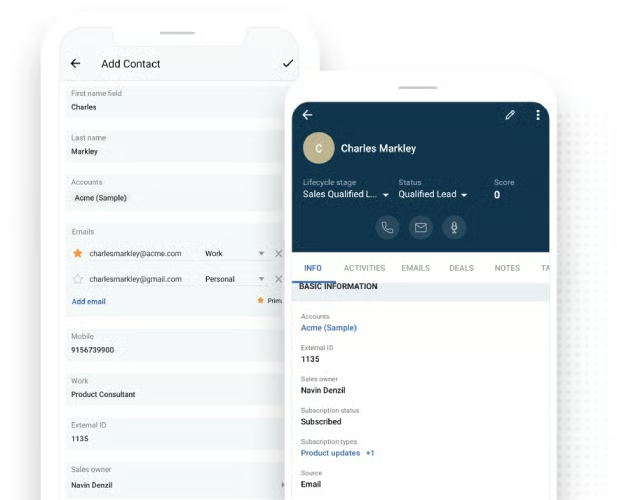
- Sales record and activity management: Users can store data records, such as accounts, contacts, and deals, and track progress throughout the sales process. From there, teams can monitor activity, qualify leads with lead scoring, and directly engage with contacts from the profiles.
- Omnichannel communications: Sales reps can support customers or run outreach and follow-up campaigns using an array of channels. These include email, live chat communications, a built-in telephone, text, artificial intelligence (AI) chatbot, and third-party tools like Facebook Messenger, WhatsApp, or Google Business Messaging.
- Complete mobile sales app: Robust mobile sales app with nearly all web app functionality, including data management, task tracking, communications through phone or email, appointment scheduling, and activity logging.
Freshsales pricing
| Free | Growth | Pro | Enterprise | |
|---|---|---|---|---|
| Monthly price, billed annually | $0 for 3 users | $9/user | $39/user | $59/user |
| Monthly price, billed monthly | $0 for 3 users | $11/user | $47/user | $51/user |
Free trial:
Communications software
Communications software are sales applications that let you engage leads or customers. They either contain telephonic capabilities, video conferencing tools, or entire contact center modules to manage inbound and outbound calls. These products can also be useful for internal collaboration with other reps to coordinate sales deals or projects within a small business operation.
What makes Zoom the best for video sales meetings?
Why I chose Zoom
Zoom earned its spot on this list because sales conversations increasingly happen over video, and few platforms make that experience as frictionless for both reps and prospects. During testing, I found it especially effective for product demos, discovery calls, and presentations where reliability and ease of use matter more than advanced sales features.
Its screen sharing, meeting recording, mobile access, and familiar interface make it easy for sales teams to meet with prospects without creating unnecessary technical barriers. That matters when a delayed join link or clunky meeting setup can disrupt an otherwise strong sales conversation.
Zoom’s main limitation is that it does not manage leads, deals, or follow-up workflows on its own. But when paired with a CRM, it becomes a dependable sales app for relationship-driven selling, especially for teams that rely heavily on virtual meetings and live presentations.

Key features for sales
- Video conferencing: Users can schedule, host, and attend video calls with one another or leads. The system comes with recording options and meeting scheduling tools to make it easy to get on the calendar.
- Sales collaboration: Includes apps for sales reps to communicate and collaborate from within video meetings, such as an interactive whiteboard, polling tools, screen sharing, breakout rooms, and live chatting with individuals or all attendees.
- Mobile capabilities: The Mobile Zoom app lets sales reps create, host, and attend calls while on the go or in the field using a phone or tablet device.
Zoom pricing
| Basic | Pro | Business | |
|---|---|---|---|
| Monthly price, billed annually | $0 for 1 user | $14.16/user | $18.33/user |
| Monthly price, billed monthly | $0 for 1 user | $16.99/user | $21.99/user |
Free trial:
What makes Nextiva the best business phone system for sales?
Why I chose Nextiva
For teams that spend a significant portion of their day on the phone, Nextiva offers a more complete communication experience than many sales-focused apps. It helps reps manage calls, voicemails, SMS, and customer conversations from desktop or mobile, which is especially valuable for businesses doing high-volume outreach or follow-up.
In my evaluation, Nextiva was strongest as a sales communication tool rather than a traditional CRM. Managers get better visibility into call activity, while reps can stay connected with prospects and customers without relying on personal phones or disconnected communication apps.
The drawback is that Nextiva still needs a CRM for pipeline and deal management. Even so, its business calling, messaging, reporting, and CRM integrations make it a strong sales app for companies where phone conversations play a major role in generating revenue.
Key features for sales
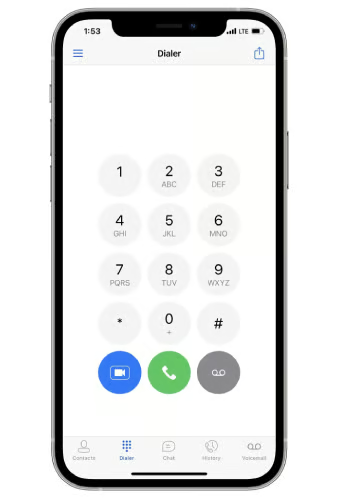
- Telephone system: Unlimited inbound and outbound calling to engage leads or customers via a voice-over-internet-protocol (VoIP) system. Users can also log calls after completion and view call activity reports.
- Expanded communications: Teams can reach out to leads through text, fax, voicemail drop, and video conference call. There are also internal chat messaging features to collaborate with other reps.
- Nextiva mobile: Web app functions like calling and texting can be completed on iOS or Android devices. Users can also share files, manage contacts, and log calls on the go.
Nextiva pricing
| Nextiva Small Business plans | Core | Engage | Scale |
|---|---|---|---|
| Monthly price, billed annually | $15/user | $25/user | $75/user |
| Monthly price, billed monthly | $23/user | $50/user | $75/user |
Prospecting Tools
Prospecting tools are used early in the sales process to help identify potential customers who would be a good fit for your products or services. These are large-scale databases full of company and contact information, which can be filtered to create lead lists based on criteria such as industry, job title, company size, and location.
What makes UpLead the best for B2B prospecting?
Why I chose UpLead
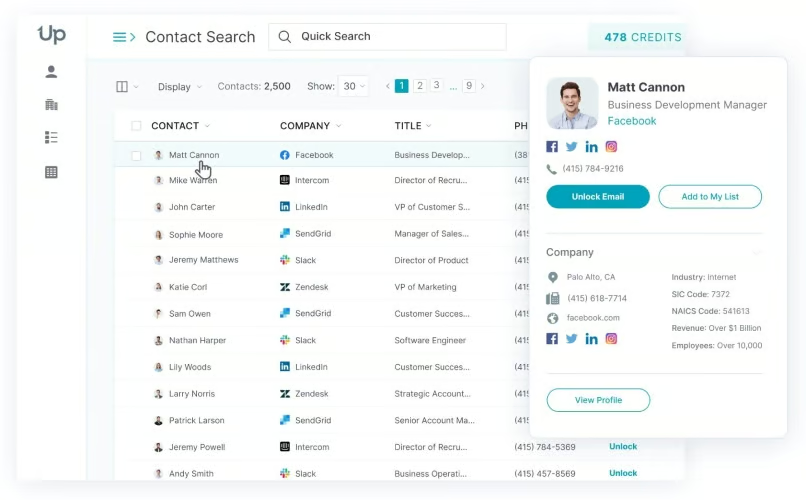
UpLead is built for B2B teams that need better lead sources before outreach begins. What impressed me most was the quality of its filtering and data verification capabilities, which help sales teams build more targeted prospect lists instead of relying on broad or outdated contact databases.
Users can filter prospects by job title, industry, location, company size, and other criteria, making it easier to match outreach with an ideal customer profile. Its enrichment and sales intelligence features also give reps more context before they make contact.
UpLead is not designed to manage the full sales cycle, so teams will still need a CRM for pipeline tracking and follow-up. But for top-of-funnel prospecting, its verified contact data and targeting tools make it a valuable sales app for improving outbound efficiency.
Key features for sales
- List creation: Teams can search and filter out business-to-business (B2B) sales lists of contacts based on company size, role, industry, and location.
- Prospect insights: Users can obtain intelligence on their leads and companies, such as technographic data starting on the Plus plan, which shows what software products they currently use. Teams can also get enriched profiles that update data based on information found online, company news alerts, and buyer intent data.
- Data integration: UpLead offers CRM integrations with popular products like Salesforce, HubSpot, Zoho CRM, Pipedrive, Copper, Nimble, Close, and Insightly to import contact lists and sync enriched data between systems.
UpLead pricing
| Essentials | Plus | |
|---|---|---|
| Monthly price, billed annually | $99/user | $199/user |
| Monthly price, billed monthly | $74/user | $149/user |
Free trial:
Work/task management systems
Work management systems are used to oversee sales tasks and projects. They’ll be highly customizable in terms of tailoring data fields, project milestones, and viewing options to meet user and operational requirements. These tools allow sales teams to track sales opportunities and day-to-day tasks. They also help manage large initiatives, such as CRM migrations, content development projects, or software implementations, that can improve the overall sales operation.
What makes ClickUp the best for customizable sales workflows?
Why I chose ClickUp
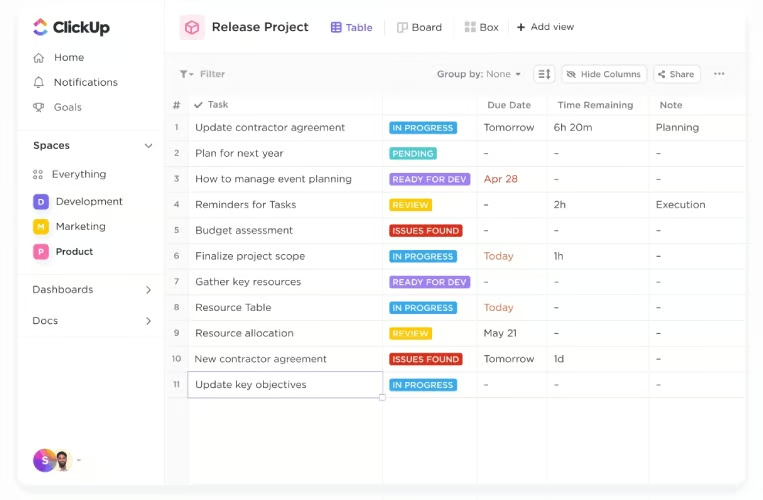
ClickUp is the most customizable sales app in this lineup, especially for teams that want to manage sales workflows, tasks, docs, and projects in one place. As an active ClickUp user, I’ve found it particularly effective for connecting sales activities with projects, documentation, and team workflows that would normally live across multiple systems.
Its flexibility makes it useful for building custom pipelines, tracking follow-ups, assigning tasks, managing deliverables, and documenting sales processes. This is especially helpful for teams that want more control over how their sales workflows are organized.
That flexibility can also create a learning curve because ClickUp is not a traditional CRM out of the box. However, for businesses that want an adaptable workspace for sales operations and collaboration, its customization, mobile access, templates, and task management tools make the setup effort worthwhile.
Key features for sales
- Task and sales work management: Software uses a system of custom workspaces to indicate processes, operations, or projects, and tasks that represent data records or to-do lists that need to be completed. It can be customized for sales uses, such as designing pipeline stages for deal tracking, as well as any other function that needs to be managed.
- Multi-view capabilities: Users can get full insights into their workspaces on various viewing or reporting options, such as list, board or Kanban, calendar, box, Gantt, activity, visual timeline, workload capacity, and table or spreadsheet views.
- Workflow automation: Teams can create CRM workflows or workspace automations that automatically assign, update, create, and transfer tasks or sales data records based on preset conditions and triggers.
ClickUp pricing
| Free Forever | Plus | Business | Enterprise | |
|---|---|---|---|---|
| Monthly price, billed annually | $0 for unlimited users | $7/user | $12/user | Custom |
| Monthly price, billed monthly | $0 for unlimited users | $10/user | $19/user | Custom |
What makes Asana the best for sales project management?
Why I chose Asana
While many sales apps focus exclusively on leads and pipelines, Asana excels at the operational work that happens before and after a deal closes. It is especially useful for managing proposal tasks, onboarding steps, internal handoffs, campaign-related sales work, and post-sale deliverables.
In my review, Asana made it easy to assign owners, set deadlines, track dependencies, and keep sales-related projects visible across the team. That level of accountability is helpful when deals involve multiple departments or when customer work continues after the sale.
Asana is not a dedicated CRM, so it will not replace tools like HubSpot or Pipedrive for lead and deal tracking. But for teams that need better execution around sales projects, its timelines, task management, workflow templates, collaboration tools, and mobile access make it a strong supporting app.
Key features for sales
- Project and workflow management system: Unlimited projects with custom milestones, team collaboration tools, and task management where you can assign work to users, provide project briefs, and set due dates. Teams can also customize their data fields and milestones for sales workflows, such as deal tracking and cold outreach campaigns.
- Project visualization, reporting, and time tracking: Teams can monitor their projects on Kanban boards, lists, calendars, timelines, and workload capacity views. There’s also custom progress reporting for projects, plus time-tracking capabilities for individual tasks.
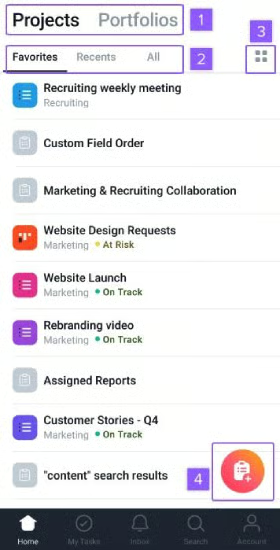
- Mobile management: Asana app on iOS and Android devices for users to view project records, make updates, communicate with team members, and monitor work progress, all on the go.
Asana pricing
| Plus | Starter | Advanced | |
|---|---|---|---|
| Monthly price, billed annually | $0 for 2 users | $10.99/user | $24.99/user |
| Monthly price, billed monthly | $0 for 2 users | $13.49/user | $30.49/user |
Frequently asked questions (FAQs)
What is a sales app?
A sales app is a web or mobile software product that reps can use to organize their sales activity, manage data records, communicate with leads, and track workloads. Because one rep performs many different tasks, a sales app can take numerous forms depending on the use case, such as a CRM system, communications tool, work management system, or prospecting database.
What is the best online sales app?
The best sales app will depend on your objectives and business needs. For example, if your sales team needs an all-in-one system to manage leads, deals, and outreach campaigns, you’ll likely want to purchase a CRM, such as HubSpot or Pipedrive. Alternatively, if all you need is B2B lead data, then UpLead would be the best sales app for you, while you may look to Zoom to interact virtually with prospects.
Which app is used to track sales?
Many apps can be used to track sales activity, such as emails sent, calls made, and proposals sent, as well as performance metrics like deals closed and revenue generated. CRMs like HubSpot and Pipedrive include sales-tracking capabilities that can be reported on the system dashboard or downloaded as a file.
Bottom line
Sales apps allow teams to improve data organization, task efficiency, and lead engagement. The best sales apps will include both web and mobile capabilities for in-the-office or on-the-go sales management. Because of the wide range of software categories, teams will need to consider whether they want a full set of tools, as seen in a CRM like HubSpot, or specialized software like ClickUp, which is used only for task and project management.
