







Sales management software helps managers reduce sales process silos, improve team visibility, and track performance using shared data and consistent metrics. These tools, often built into CRM systems, help sales teams manage pipelines, monitor deals, forecast revenue, and support reps as they guide customers through the buying journey.
I reviewed eight of the best sales management software solutions based on pipeline management, forecasting, reporting, automation, communication tools, pricing, and ease of use.
| Provider | Best for | Starting price per month, billed annually |
|---|---|---|
| Zoho CRM | Customizable sales pipelines | Free or $14/user |
| Freshsales | AI-powered sales performance insights | Free or $9/user |
| Apollo.io | Automated outreach | Free or $49/user |
| HubSpot CRM | Free dashboard reporting | Free or $9/user |
| Nextiva | Multichannel customer engagement | $15/user |
| UpLead | B2B lead sources | $99/month |
| Clari | Sales revenue forecasting | Custom pricing |
| Gong.io | Simplified sales forecasting | Custom pricing |
Zoho CRM stood out as the best overall option, while the other providers on this list are better suited for needs like AI-powered performance insights, automated outreach, free dashboard reporting, multichannel engagement, B2B lead sourcing, and revenue forecasting.
Why you can trust Fit Small Business
Methodology: How did I evaluate the best sales management software?
Sales management involves more than just tracking deals. Managers also need visibility into team performance, sales activity, forecasting, communication, and pipeline health to keep revenue moving efficiently. To determine the best sales management software, I evaluated platforms that help sales teams manage pipelines, automate workflows, monitor performance, improve collaboration, and support reps throughout the sales process.
I reviewed CRM systems, sales enablement platforms, forecasting tools, and sales analytics software using the following criteria:
- Pricing (25%): Free plan availability, entry-level pricing, scalability, and whether providers offer monthly and annual billing options.
- General features (30%): Core sales management capabilities, including pipeline tracking, workflow automation, reporting and analytics, built-in calling, customizable pipelines, sales activity monitoring, and third-party integrations.
- Advanced/niche features (20%): Specialized tools such as lead management, email sequencing, sales forecasting, gamification, collaboration features, file sharing, and virtual meeting capabilities.
- Customer support (10%): Available support channels, including live chat, phone, email, and self-service resources, along with customer service availability.
- Expert score (15%): In addition to firsthand testing, I analyzed user feedback to evaluate feature quality, ease of use, overall value, and how well each platform supports day-to-day sales management workflows.
- Overview of the best sales management software
- What makes Zoho CRM the best for customizable sales pipelines?
- Zoho CRM
- What makes Freshsales the best for AI-powered sales performance insights?
- Freshsales
- What makes Apollo.io the best for automated outreach?
- Apollo.io
- What makes HubSpot CRM the best for free dashboard reporting?
- HubSpot
- What makes Nextiva the best for multichannel customer engagement?
- Nextiva
- What makes UpLead the best for B2B lead sources?
- UpLead
- What makes Clari the best for sales revenue forecasting?
- Clari
- What makes Gong.io the best for simplified sales forecasting?
- Gong.io
- Frequently asked questions (FAQs)
Overview of the best sales management software
| Provider | AI sales insights | Native lead database | Forecasting tools | My expert score out of 5 |
|---|---|---|---|---|
| Zoho CRM | ✓ | ✕ | ✓ | 4.80 |
| Freshsales | ✓ | ✕ | ✓ | 4.51 |
| Apollo.io | ✓ | ✓ | ✕ | 4.44 |
| HubSpot CRM | ✓ | ✕ | ✓ | 4.39 |
| Nextiva | ✓ | ✕ | ✕ | 3.97 |
| UpLead | ✕ | ✓ | ✕ | 3.73 |
| Clari | ✓ | ✕ | ✓ | 3.43 |
| Gong.io | ✓ | ✕ | ✓ | 3.39 |
What makes Zoho CRM the best for customizable sales pipelines?
Why I chose Zoho CRM
Zoho CRM is my top overall choice for sales management software because it combines customizable pipelines, AI-powered insights, automation, quoting, and inventory tools in one platform without the high cost or complexity of many enterprise CRMs. In my testing, it consistently offered the best balance of flexibility, functionality, and value for growing sales teams.
What stood out most was Zia, Zoho’s AI assistant, which can enrich lead records with minimal initial input, helping teams maintain cleaner, more useful CRM data for follow-ups, forecasting, and sales planning. I also like that Zoho CRM goes beyond basic pipeline tracking with built-in quoting capabilities and a full inventory management module, making it especially useful for businesses managing both sales operations and product-based workflows inside one system.
Because it supports so many parts of the sales process well — from lead management and automation to quoting, inventory, and reporting — Zoho CRM is one of the most complete sales management platforms I tested.
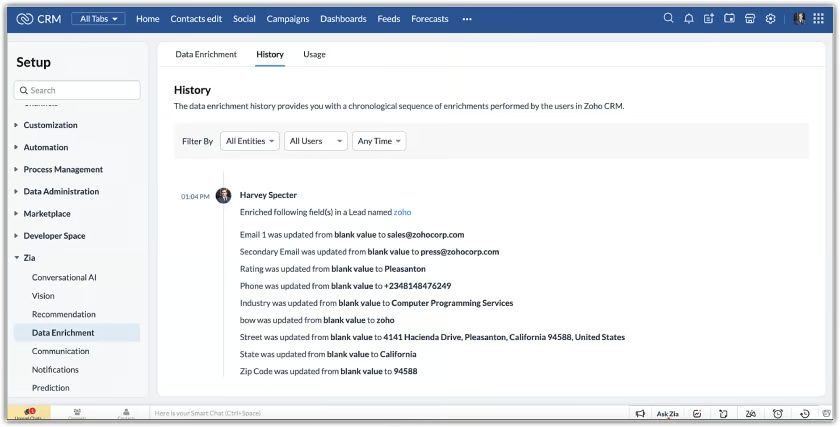
Zoho CRM’s data enrichment history provides info in chronological order. (Source: Zoho) 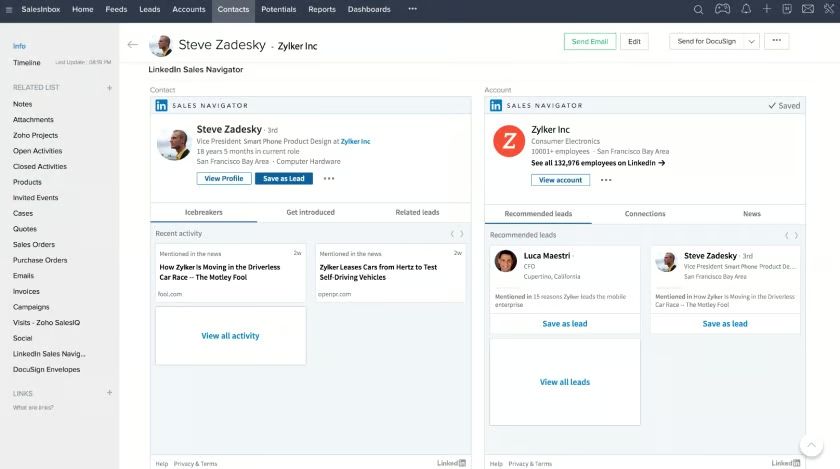
Zoho CRM integrated with LinkedIn displays samples of Sales Navigator lead profiles. (Source: Zoho)


When to use Zoho CRM
- You need a sales data enrichment tool: Zoho’s Zia feature enables users to enrich sales lead records with LinkedIn profiles automatically. This AI-powered sales assistant crawls the web for public information across online directories and company websites. This ensures that your CRM data has all the updated information. It also helps Zia predict lead conversion and helps sales teams personalize their communication.
- You need a reasonably priced Sales Navigator connection: Zoho CRM offers different LinkedIn capabilities through CRM integration. The Zoho LinkedIn Sales Navigator integration only costs $23 per user monthly, which is cheaper than other CRM systems. Users can get prospect recommendations and updates on career and company info changes on LinkedIn.
When to use an alternative
- You need a simpler CRM with LinkedIn integration: Usability can be a problem for non-tech-savvy users because Zoho has advanced capabilities and many modules. This makes sophisticated features difficult to navigate and operate. Moreover, integrating with LinkedIn can be complicated.
- Alternatives: Zoho CRM and HubSpot CRM are both great simple CRM options that integrate with LinkedIn. These two are included in our best simple CRMs that on-the-go salespeople can use for faster lead generation, nurturing, and closing deals. Freshsales is also an easy-to-use CRM with cost-effective CRM LinkedIn integration based on our review.
- You want to manage ads: Connect to LinkedIn ads from Zoho CRM to monitor ad performance and engagement. However, there are no tools for creating ads from the CRM.
- Alternative: We recommend HubSpot for the best CRM LinkedIn integration for ad campaign management. Its connection with LinkedIn ads lets you design, schedule, and manage ad campaigns. Moreover, its mobile app connects you with leads and customers active on LinkedIn.
Pricing
| Free | Standard | Professional | Enterprise | Ultimate | |
|---|---|---|---|---|---|
| Monthly price, billed annually | $0 for 3 users | $14/user | $23/user | $40/user | $52/user |
| Monthly price, billed monthly | $0 for 3 users | $20/user | $35/user | $50/user | $65/user |
Free trial:
What makes Freshsales the best for AI-powered sales performance insights?
Why I chose Freshsales
Freshsales is my top pick for AI-powered sales performance insights because its Freddy AI tool helps sales teams identify and prioritize high-converting leads using engagement and behavioral data. Instead of relying only on manual lead qualification, Freddy AI analyzes website activity, in-app behavior, engagement history, and customer profiles to score prospects and surface stronger sales opportunities.
I also like that Freddy AI goes beyond lead scoring by recommending next-best actions, including the best channels and times for follow-ups. That gives reps more guidance on how to engage leads effectively and keep deals moving. Combined with built-in calling, email tracking, workflow automation, and visual pipeline management, Freshsales offers a strong balance of AI-driven insights and practical day-to-day sales tools without feeling overly complex.
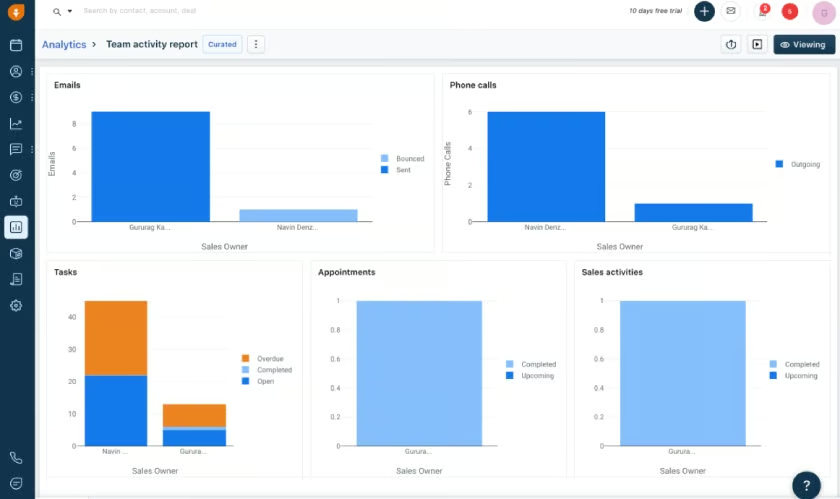
Freshsales activity reports track sales activities and performance. (Source: Freshsales) 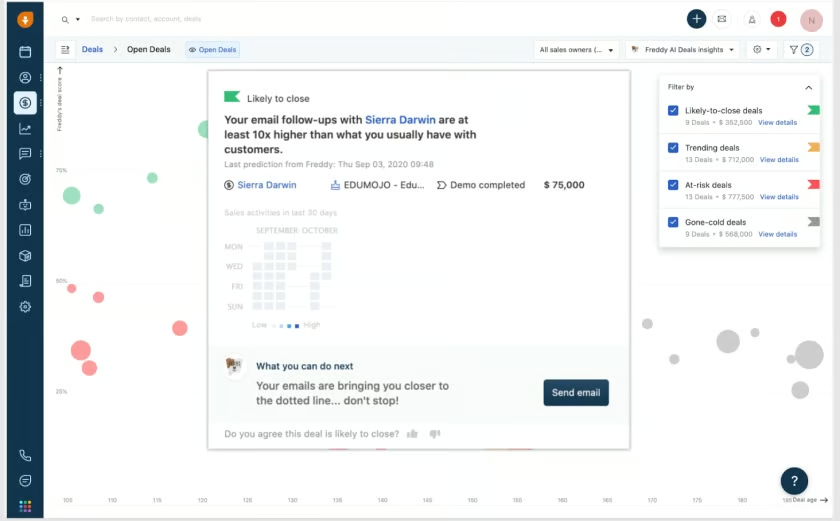
Freshsales’ Freddy AI is a sales assistant that helps salespeople predict wins. (Source: Freshsales)


When to use Freshsales
- You want to prioritize and manage bids effectively: Freshsales’ Pro plan ($39 per user monthly) features Freddy AI for bid management, contact scoring, performance tracking, and other sales management activities. Gain in-depth insights based on the bids you submit to determine the likelihood of converting a bid into a contract. It is our best simple CRM, so expect easy setup and experience using its intuitive interface.
- You need sales forecasting and quota management capabilities: If you have a growing sales team, Freshsales’ Pro plan offers sales forecasting and quota management for only $39 per user monthly. Also, this plan provides you with custom fields and reports for CRM to perform calculations for easy sales performance tracking.
When to use an alternative
- You require built-in project management tools: While Freshsales has excellent lead and deal management capabilities, it has no built-in project management tools.
- Alternative: Zoho CRM’s free plan includes Zoho Projects integration, which uses a central feed to help users collaborate on a project’s status. Users can also use the document library to upload documents for project updates. You can also log data obtained after a call and have them appear in the projects feed, keeping your team informed on customer feedback for prompt action.
- You’re looking for a more affordable CRM with forecasting insights: Freddy AI makes suggestions on deals with a high likelihood of closing based on historical data and trends. However, some users may find the Enterprise plan costly at $59 per user monthly.
- Alternative: Zoho CRM is a cheaper option. This sales management solution’s Enterprise plan, which includes AI-powered forecasting, is only $40 per user monthly.
Freshsales pricing
| Free | Growth | Pro | Enterprise | |
|---|---|---|---|---|
| Monthly price, billed annually | $0 for 3 users | $9/user | $39/user | $59/user |
| Monthly price, billed monthly | $0 for 3 users | $11/user | $47/user | $51/user |
Free trial:
What makes Apollo.io the best for automated outreach?
Why I chose Apollo.io
For teams focused on outbound sales, Apollo.io is one of the stronger platforms I tested for automated outreach. Its multi-step email sequences make it much easier to nurture prospects consistently and keep follow-ups moving without requiring reps to manually track every interaction.
I also like that Apollo.io combines outreach automation with detailed prospect filtering and buying intent data. Sales teams can narrow leads by company attributes, job roles, engagement signals, and purchase intent, helping them focus on prospects more likely to convert. Its built-in B2B contact database is another major advantage, as it keeps prospecting and outreach within the same workflow rather than relying on multiple separate tools.
For businesses running high-volume outbound campaigns, Apollo.io offers a strong mix of lead sourcing, targeting, and automated engagement tools while still being relatively easy to manage.
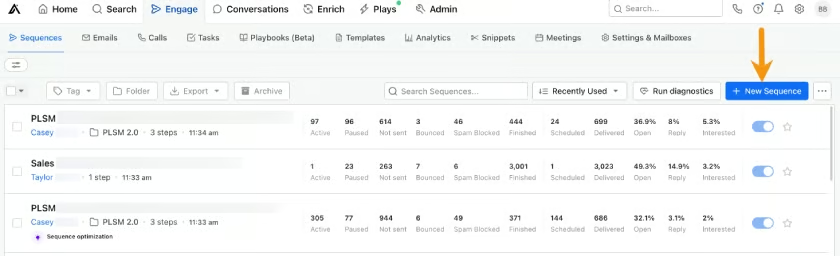
Apollo.io’s dashboard shows how to create a new sequence for outreach automation. (Source: Apollo.io) 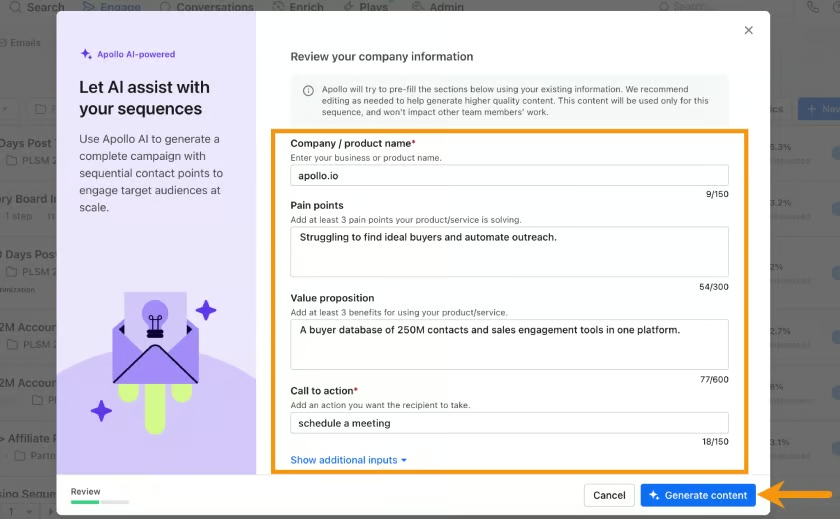
Apollo.io automates outreaching with AI-assisted sequences. (Source: Apollo.io)


When to use Apollo.io
- You need automated outreach capabilities: This sales management provider’s free plan includes basic sequencing to create automated, repeatable processes for prospecting activities. Its Organization plan features account-based workflow automation for $119 per user monthly. This sales team management software helps reps and managers quickly identify lead signals for successful account-based sales motion.
- You need a buying intent feature: Apollo.io has a buying intent feature for filtering company searches and prospects interested in your products and services. The free plan already includes three intent topics, and the basic plan has six topics at $49 per user monthly. As you upgrade your subscription, your intent topic limit increases.
When to use an alternative
- You need software for generating marketing qualified leads: While Apollo.io has 275 million contacts across 73 million companies, it has limited marketing capabilities. Its marketing account intelligence requires a third-party app, like 6sense.
- Alternative: Zoho CRM lets you connect to LinkedIn ads to track ad performance and social tools for sales and marketing purposes.
- You need a cold calling feature for lead generation: Apollo.io is equipped with a dialer for cold calling. However, you need a different provider if you need to regularly cold call leads to book appointments.
- Alternative: Freshsales is equipped with built-in cloud telephony to handle calls efficiently. You can also book appointments and notify all the attendees before the meeting commences. Furthermore, you can integrate Nextiva for cold calling with your existing appointment system as an alternative if you need these capabilities.
Apollo.io pricing
| Free | Basic | Professional | |
|---|---|---|---|
| Monthly price, billed annually | $0 for 900 credits | $49/user | $79/user |
| Monthly price, billed monthly | $0 for 900 credits | $65/user | $99/user |
Free trial:
What makes HubSpot CRM the best for free dashboard reporting?
Why I chose HubSpot CRM
HubSpot CRM is one of the better options I tested for free dashboard reporting. It gives sales managers meaningful visibility into pipeline performance and team activity without requiring an immediate paid upgrade. Its reporting dashboards are easy to customize, making it simple to track sales, marketing, and customer service metrics from one platform.
I also like that HubSpot’s forecasting tools help managers analyze deal progress based on close probability instead of relying purely on manual estimates. Teams can also create custom forecast categories to organize deals and adjust projections more accurately. Combined with HubSpot’s clean interface and strong free plan, it gives small businesses an accessible way to monitor performance and make more data-driven sales decisions.
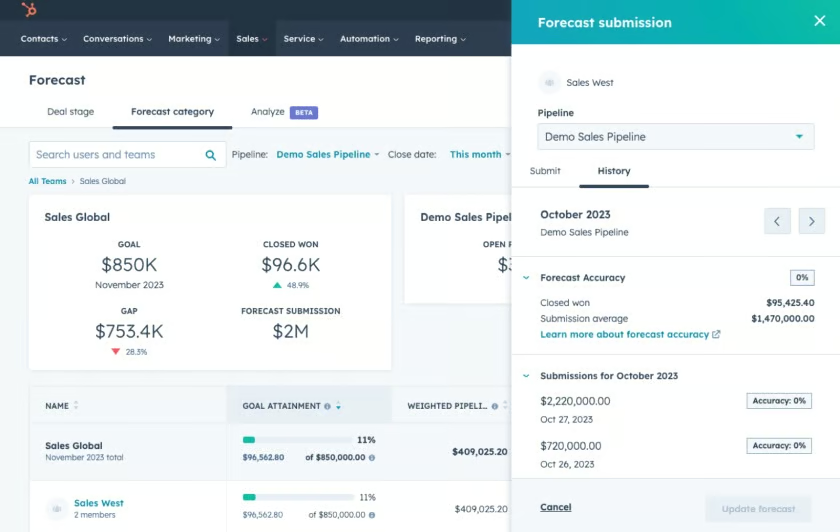
HubSpot CRM’s forecast tool for sales performance insights (Source: HubSpot) 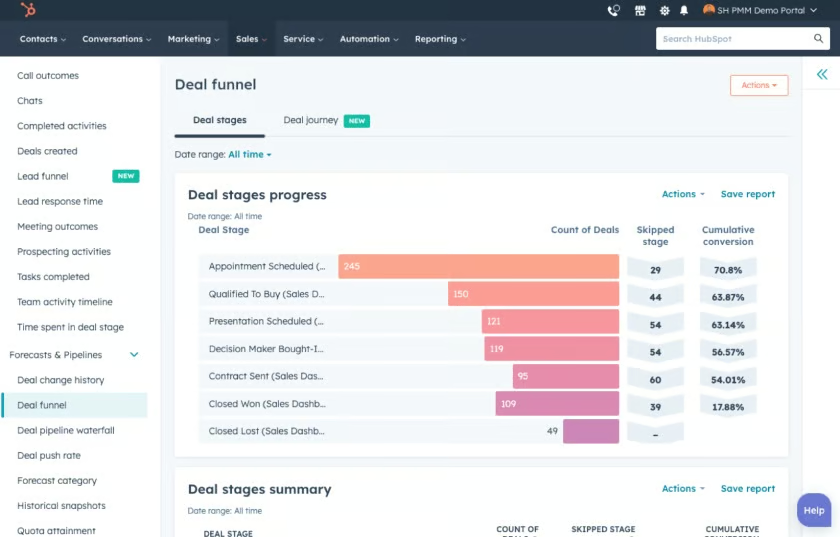
HubSpot sales analytics showing deal stage progress (Source: HubSpot)


When to use HubSpot CRM
- You need free reporting tools: HubSpot CRM’s free plan offers up to three dashboards with 10 reports per dashboard. A reporting dashboard provides in-depth, customizable data on sales and marketing performance. This helps sales teams determine how they’re doing and areas to improve.
- You need a CRM with essential and advanced marketing tools: HubSpot CRM includes essential and advanced marketing tools. The free plan includes a marketing events object feature, which stores, tracks, and manages marketing event data from an event integration or API. Professional plan users can use omnichannel marketing automation, campaign management, and blog content optimization.
When to use an alternative
- You need more affordable sales forecasting software: HubSpot CRM requires a subscription to its higher-cost plans to activate sales forecasting, which can be expensive for some users. The Professional plan costs $1,080 per month for five users and the Enterprise plan costs $4,000 per month for seven users.
- Alternative: Zoho CRM has forecasting tools at a cheaper price in its Standard plan at $23 per user a month. This is friendlier on the pocket for startups and expanding teams.
- You’re looking for a CRM with gamification features: HubSpot CRM lacks gamification features. While the provider offers motivational pop-up messages and a checklist that turns green upon completing a task, these aren’t as robust as other providers. This can be a drawback for sales teams wanting to take sales competition and gamification strategies to a higher level.
- Alternative: Zoho CRM offers built-in sales gamification through Zoho Motivator in the Professional plan at $23 per user, monthly. Sales managers can set targets for sales reps like emails sent or deals closed, which come with a progress bar to visualize performance.
HubSpot CRM pricing
| HubSpot Customer Platform plans | Free | Starter | Professional |
|---|---|---|---|
| Monthly price, billed annually | $0 for 2 users | $9/user | $1,300 for 6 users |
| Monthly price, billed monthly | $0 for 2 users | $20/user | $1,450 for 6 users |
What makes Nextiva the best for multichannel customer engagement?
Why I chose Nextiva
Nextiva combines VoIP calling, SMS, video meetings, contact management, and team collaboration tools in one platform. For sales managers, that centralization makes it easier to keep customer communication visible and organized instead of spread across separate apps.
I also like that Nextiva includes call activity reporting and conversation tracking tools, which help managers monitor rep performance and customer interactions more effectively. Its integrations with CRMs like HubSpot are another advantage because they connect communication activity directly to sales workflows and customer records.
While it is not as sales-process-focused as a traditional CRM, Nextiva works especially well for teams that rely heavily on calls, messaging, and virtual meetings throughout the customer journey.
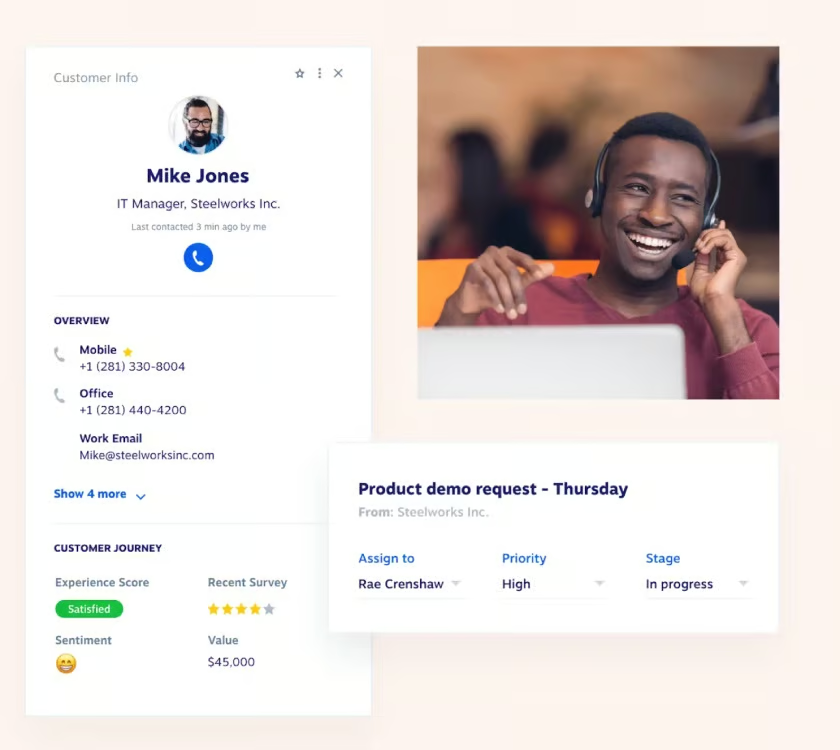
Nextiva’s app for service teams shows the customer journey. (Source: Nextiva) 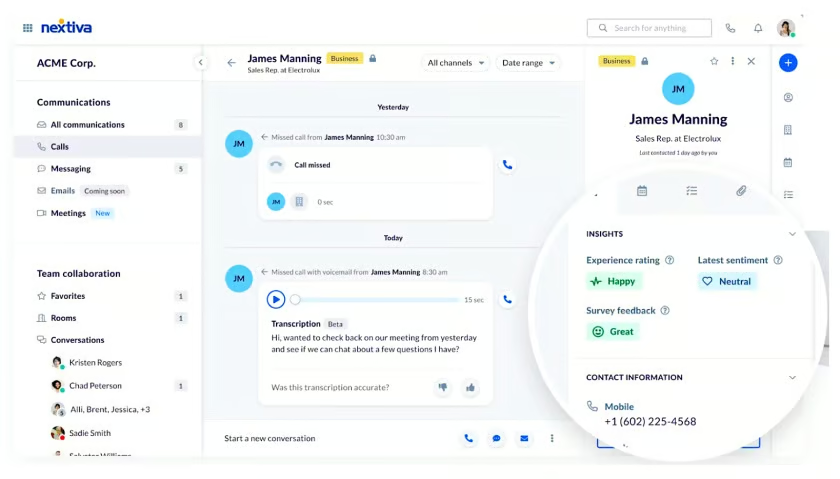
Nextiva’s dashboard shows customer data, including the experience rating and feedback. (Source: Nextiva)


When to use Nextiva
- You need multichannel customer engagement tools: Sales managers can use Nextiva to help their sales reps place more calls. The product includes customer-facing applications like a mobile app, a built-in phone to place and receive calls, a video meeting scheduler, and live chat tools. All these features help sales teams engage with leads and customers while improving collaboration and communication.
- You need omnichannel collaboration tools: Nextiva’s starting plan, Essential, already includes unlimited high-definition (HD) voice and video calls for only $18.95 per user monthly. It has file-sharing tools, a contact directory, shared calendars, and virtual meetings. Aside from lead nurturing, you can use all these features for individual or team collaboration, especially for field and remote salespeople.
When to use an alternative
- You need sales management software with robust email features: Nextiva can be integrated with Microsoft Outlook, Salesforce, HubSpot, and Zendesk to take advantage of their robust email features. However, Nextiva lacks email capabilities with only voicemail to email notifications available.
- Alternative: Apollo.io offers unlimited email credits and AI-assisted email writing for your lead nurturing, sales outreach, and team collaboration for free. The Basic plan is equipped with email open and tracking that allows users to track the performance of email marketing campaigns. You can see the subject lines and email messages that lead to the highest open and click rates.
- You need a more affordable Microsoft Teams integration: Sales teams wanting to integrate Nextiva with Microsoft Teams for sales collaboration must subscribe to the Enterprise plan at $32.95 per user monthly. This can be expensive for some users.
- Alternative: Zoho CRM offers Microsoft Teams integration across all paid plans. This means that you can subscribe to Zoho CRM’s Standard plan at $14 per user, monthly, which is more than half the price of Nextiva’s Enterprise plan.
Nextiva pricing
| Nextiva Small Business plans | Core | Engage | Scale |
|---|---|---|---|
| Monthly price, billed annually | $15/user | $25/user | $75/user |
| Monthly price, billed monthly | $23/user | $50/user | $75/user |
What makes UpLead the best for B2B lead sources?
Why I chose UpLead
UpLead gives sales teams access to verified business contact data with advanced filtering capabilities. In my testing, it made it much easier to build targeted prospect lists using criteria like job title, industry, company size, and location instead of relying on broader, less qualified lead lists.
Aside from that, UpLead includes data enrichment tools and technographic insights that show the technology stacks companies are using. That extra context can help sales teams personalize outreach and identify businesses that are a better fit for their products or services. While UpLead is not a full CRM or sales management platform on its own, it is a valuable tool for teams that need cleaner B2B data and more precise prospect targeting to support outreach and sales campaigns.
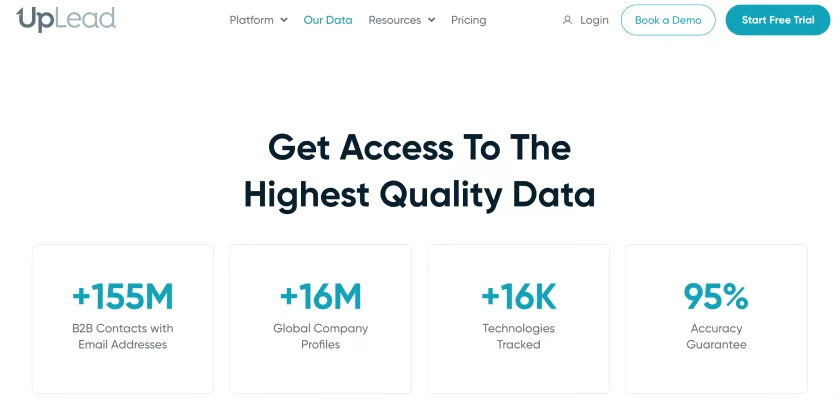
UpLead guarantees 95% data accuracy. (Source: UpLead) 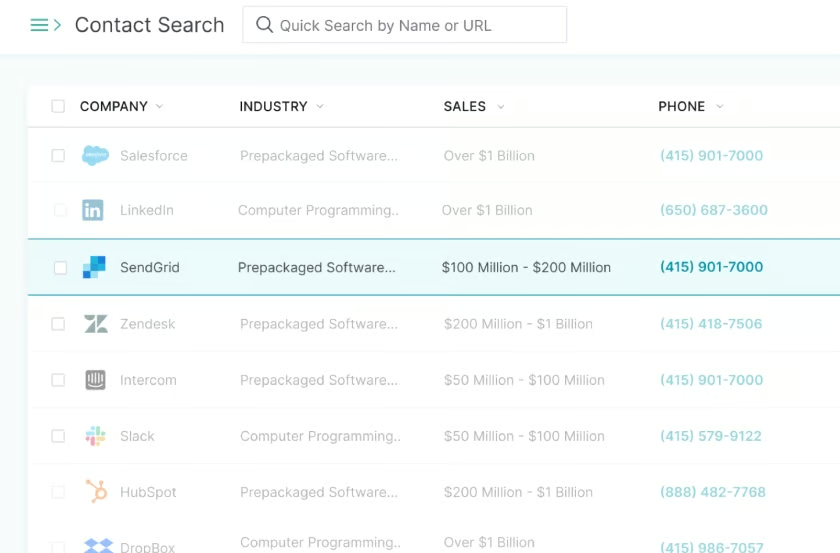
UpLead contact search by technographic for qualifying leads (Source: UpLead)


When to use UpLead
- You want to obtain clean and accurate contact data: UpLead provides sales teams with a 95% data accuracy guarantee for sales enablement, lead generation, and marketing. You acquire only the best leads with the highest chance of converting to paying customers with 50 search filters for running advanced searches.
- You need an intuitive sales database with technographics: This business-to-business leads database has a simple interface. UpLead’s technographic feature can inform your sales enablement strategy, giving you a full scope of the solutions leads use. Sales teams use technographic insights to uncover opportunities, showcase your unique selling points, and demonstrate why your solutions outshine
When to use an alternative
- You’re looking for free sales management software with a buying intent feature: One of the main downsides of UpLead is the lack of a free option. It also has a high starting price starting at $99 per user monthly. Moreover, the buying intent data is only available in the highest plan, the Professional Plan (custom pricing). UpLead’s plans can be costly for startups and budget-restricted small businesses.
- Alternative: Apollo.io offers a free plan with the buying intent feature already included, with a three-intent topic limit and intent filters. Buying intent lets you filter company searches to those interested in your products and services.
- You need revenue intelligence and forecasting tools: UpLead is equipped with supporting revenue features like buyer intent, technographic tools, and competitor intelligence. However, this software management tool doesn’t have specific revenue tools such as sales intelligence, forecasting, and reporting.
- Alternatives: Clari and Gong.io are our recommended industry-specific revenue software systems. The Clari Integration Hub unites partner solutions across the end-to-end revenue process, optimizing and accelerating time to revenue. Gong.io has built-in revenue intelligence that can be extended through its integration capabilities via Zapier.
UpLead pricing
| Essentials | Plus | |
|---|---|---|
| Monthly price, billed annually | $99/user | $199/user |
| Monthly price, billed monthly | $74/user | $149/user |
Free trial:
What makes Clari the best for sales revenue forecasting?
Why I chose Clari
Clari is one of the more advanced platforms I tested for sales revenue forecasting because it focuses heavily on revenue intelligence, predictive analytics, and real-time sales visibility. Its reporting tools help sales managers monitor pipeline health, identify deal risks earlier, and build more repeatable forecasting processes across the sales team.
Another advantage is Clari’s modular approach, which lets businesses mix and match features depending on their operational needs instead of committing to a rigid all-in-one system. That flexibility can help reduce upfront costs and make the platform easier to scale as sales processes change over time. While Clari’s pricing is not publicly transparent, its forecasting depth and analytics capabilities make it especially useful for teams prioritizing revenue visibility, forecasting accuracy, and long-term sales planning.
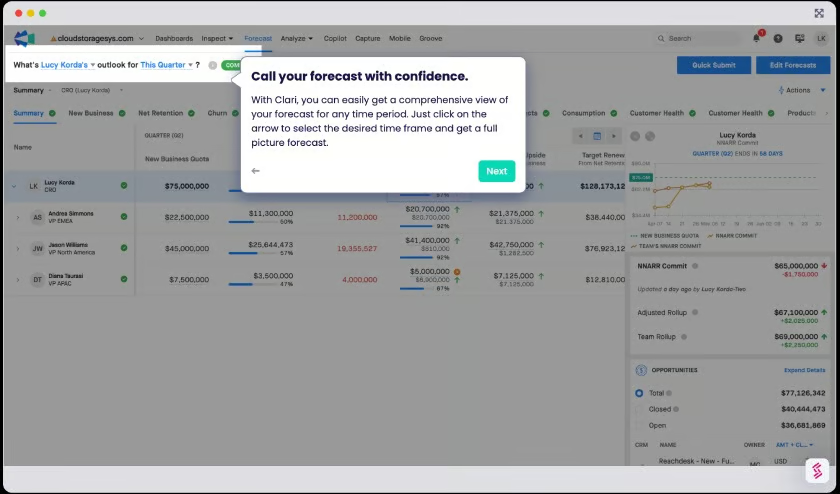
Clari’s guided tour shows how to obtain a full-picture forecast. (Source: Clari) 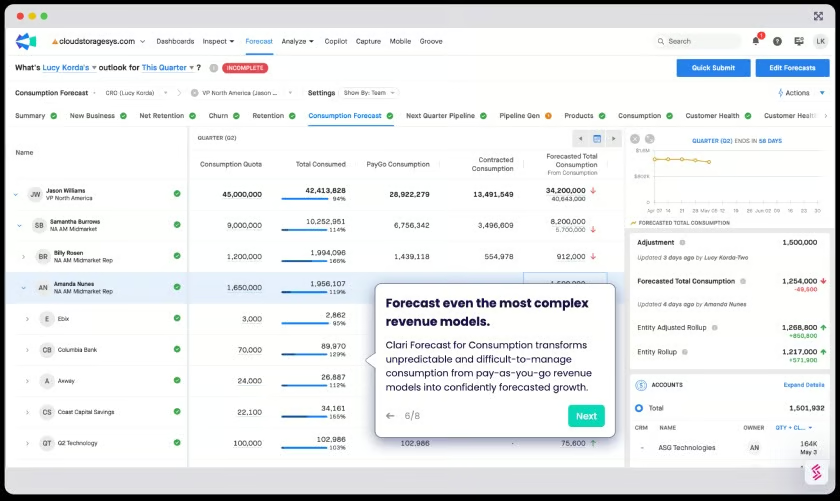
Clari’s forecast view guided tour for revenue models (Source: Clari)


When to use Clari
- You need a revenue database with forecasting features: Clari is an AI-powered revenue intelligence platform you can use to determine what’s happening with marketing, sales, and customer success teams. Its Revenue Database (RevDB) and sales forecasting features like data capture and analytics optimize sales process operation and business revenue.
- You want customized sales software: Clari is customizable, enabling you to add and remove modules for rapid deployment without disrupting system operations. If you have a startup business, you can begin with a basic configuration to reduce upfront costs. Then add modules as your company grows to use this software for sales management.
When to use an alternative
- You need a sales management tool with transparent pricing: Clari has custom pricing. You need to contact the provider for the quote, which is inconvenient for busy business owners and those who simply want transparent pricing.
- Alternative: Apollo.io, HubSpot, UpLead, and Freshsales offer transparent pricing. Startups can try free plans Apollo.io, Freshsales, and HubSpot to test the features before purchasing.
- You need simple sales software with revenue features: Clari is a sophisticated platform, which can be challenging to set up and navigate.
- Alternative: Gong.io is an easy-to-use, industry-specific tool with revenue capabilities. The sales forecasting tools are highly intuitive, too.
Clari pricing
Clari uses custom pricing based on your business size, selected modules, and revenue operations needs. Its modular platform lets businesses combine forecasting, revenue intelligence, pipeline management, and sales engagement tools to suit their workflows, making it more flexible than fixed-tier CRM pricing. Because costs vary by features, users, and integrations, you’ll need to contact Clari directly to get a customized quote for your business.
What makes Gong.io the best for simplified sales forecasting?
Why I chose Gong.io
Gong.io is one of the more approachable platforms I tested for sales forecasting because its interface makes complex deal and revenue data easier to understand. New users can quickly review pipeline activity, analyze deal progress, and interpret forecast insights without a steep learning curve.
A major advantage of Gong.io is its ability to pull data from CRMs, communication tools, video conferencing platforms, calendars, and performance management systems to create a more complete picture of sales activity.
That broader visibility helps managers identify pipeline gaps, deal risks, and coaching opportunities earlier before they impact revenue forecasts. For teams that want forecasting insights without an overly technical platform, Gong.io offers a strong balance of usability and revenue intelligence.
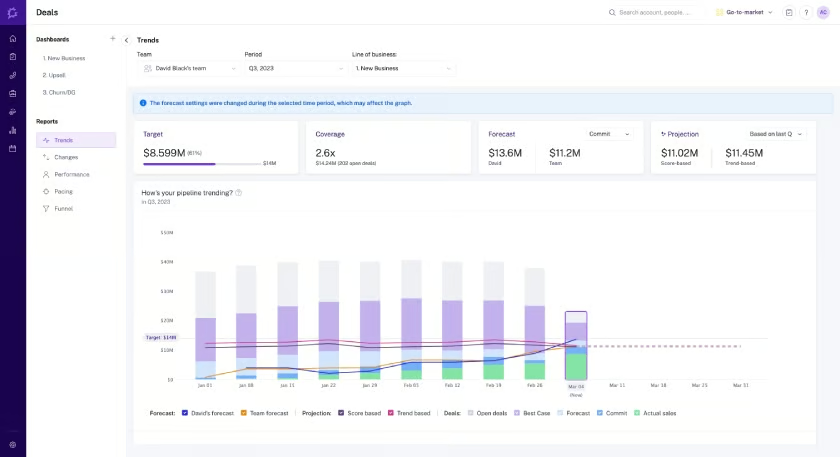
Gong.io’s trends report for sales forecasting (Source: Gong.io) 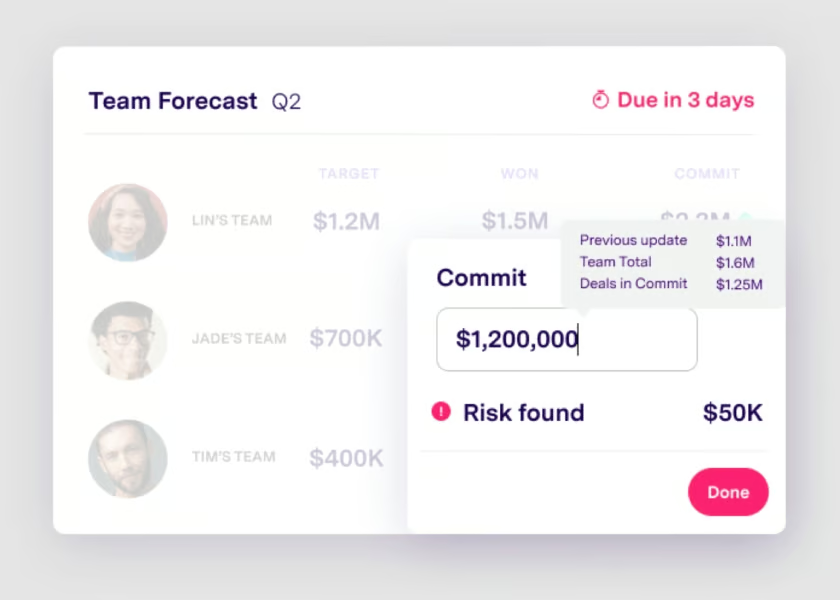
Gong.io’s forecasting across teams (Source: Gong.io)


When to use Gong.io
- You need user-friendly forecasting features: Gong.io has a modern yet simple and intuitive interface, ideal for smoothly navigating complex tasks like forecasting. It leverages over 300 unique signals to forecast deal outcomes. With AI-powered projections, sales teams can quickly determine what strategies to prioritize and streamline execution with automated workflows to resolve deal risks and track progress.
- You want to create insights-driven customized coaching programs: Gong.io lets you design coaching programs based on sales rep performance and activities. AI-powered coaching gives you total visibility into common topics and turns data insights into winning playbooks and deals.
When to use an alternative
- You want a sales management system with transparent pricing: While Gong.io has great sales features like revenue forecasting, unclear pricing could be a huge drawback. They would rather choose software with transparent pricing to avoid the hassle of contacting the provider for a sales talk.
- Alternative: Zoho CRM, HubSpot, Apollo.io, and Freshsales are our top picks for transparent pricing. These providers also offer free plans and scalable paid plans that cater to any small business budget.
- You need a sales management tool with robust CRM integrations: Gong.io doesn’t charge extra for integrations. Sales teams can integrate their existing tech stack and have 360-degree visibility into their deals for free. However, CRM and other third-party integrations are limited.
- Alternative: If you’re looking for more advanced features, excellent alternatives include HubSpot and Freshsales. These general-use CRMs can be integrated with payment processing, inventory management, and project management software systems.
Gong.io pricing
Gong.io uses custom pricing based on factors like team size, user licenses, and platform requirements. Pricing includes per-user licensing plus a platform fee based on the number of supported users, while integrations with existing tech stacks are included at no additional cost. Because pricing varies depending on your sales organization, forecasting needs, and implementation scope, you’ll need to contact Gong directly for a customized quote.
Frequently asked questions (FAQs)
What are the best qualities of good sales management software?
The best sales management software has performance tracking, analytics, and omnichannel collaboration tools. It helps sales teams overcome silos, particularly a lack of communication and streamlined team management. Moreover, a good sales management system is easy to use and provides excellent customer support.
What is the best sales management software product?
The best sales management software depends on your needs. While Zoho CRM and Freshsales are our top picks, the best choice for you may be a different provider if you’re not looking for a CRM system. UpLead is great for generating B2B leads, while Clari is an excellent tool for revenue forecasting.
Who benefits from sales management?
All types of businesses can benefit from sales management. Whether you’re a solo entrepreneur, a startup, or a small and midsize business (SMB), handling your sales transactions and processes using the right techniques and tools can save you time, effort, and resources. This allows sales teams to focus more on lead nurturing and closing deals for revenue growth.
