






The best time-tracking software for you depends on whether you’re trying to ensure accurate payroll for hourly staff, assign labor costs to jobs, or use employee hours to track projects and bill customers—or all of the above.
In this guide, we considered 20 time tracking solutions for all those use cases and narrowed them down to our top eight recommendations. Providers offering a free plan, a mobile app, and multiple clock-in options, among other features, were rated favorably.
- Clockify: Best overall time tracking software for employers and freelancers
- Deputy: Best for seasonal businesses that keep employees on standby
- Homebase: Best for free work hour tracking in one physical location
- TimeCamp: Best for employers, contractors, or freelancers looking for a lightweight project management tool
- busybusy: Best for independent contractors or construction business startups
- ClockShark: Best for midsize construction companies (fewer than 100 employees)
- QuickBooks Time (formerly TSheets): Best for QuickBooks users who need to track billable hours and monitor the work hours of their hourly workforce
- Harvest: Best for small business owners and freelancers looking for free time tracking, invoicing, and expensing tools
- Best Time Tracking Software Compared
- Clockify: Best Overall Time Tracking Software for Employers & Freelancers
- Deputy: Best for Seasonal Businesses That Keep Employees on Standby
- Homebase: Best for Free Work Hour Tracking in One Physical Location
- TimeCamp: Best for Employers, Contractors, or Freelancers Looking for a Lightweight Project Management Tool
- busybusy: Best for Independent Contractors & Construction Business Startups
- ClockShark: Best for Midsize Construction Businesses
- QuickBooks Time: Best for QuickBooks Users Requiring Billable Hours Monitoring & Hourly Workforce Time Tracking
- Harvest: Best for Small Business Owners & Freelancers Needing Free Time Tracking, Invoicing & Expensing Tools
- Frequently Asked Questions (FAQs)
- Bottom Line
Best Time Tracking Software Compared
| Paid Plan Monthly Pricing | Free Plan | Invoicing | Scheduling | Payroll Integration | |
|---|---|---|---|---|---|
 | $4.99–$14.99 per user | ✓ | Optional add-on | ✓ | ✕ |
| Visit Clockify | |||||
 | $4.50–$6 per user | ✓ | ✕ | ✓ | ✓ |
| Visit Deputy | |||||
 | $24.95–$99.95 | ✓ | ✕ | ✓ | ✓ |
| Visit Homebase | |||||
 | $3.99–$14.99 per user | ✓ | ✓ | ✕ | ✕ |
| Visit TimeCamp | |||||
 | $11.99–$17.99 per active use | ✓ | ✕ | ✓ | ✓ |
| Visit busybusy | |||||
 | $40 + $8 per user–$60 + $10 per user | ✕, 14-day free trial | ✓ | ✓ | ✓ |
| Visit ClockShark | |||||
 | $20 + $8 per employee–$40 + $10 per employee | ✕, 30-day free trial | ✓ | ✓ | ✕ |
| Visit QuickBooks Time | |||||
 | $12 per user | ✓ | ✓(extra fees) | ✕ | ✕ |
| Visit Harvest | |||||
Check out our best time and attendance software guide to see other providers and what businesses they best serve.
Can’t decide which time-tracking software is best for your business? Take our quiz below.
Answer this three-question quiz, and we'll give you a personalized match.
Find out which time tracking software is best for your business.
Question 1 of 3
Which of the following describes your business and employees?
Clockify: Best Overall Time Tracking Software for Employers & Freelancers
Clockify Overview
Clockify tracks hours for unlimited projects for an unlimited number of users for free. This is an excellent tool for employers and freelancers who need to monitor time on projects as it captures all non-billable and billable hours worked. You can even send invoices to bill clients for the hours that you and your team worked on projects. Its robust time tracking features for its free option and affordable paid plans made Clockify our top pick.
Clockify’s time-tracking apps are different from Homebase and Deputy’s time clock tools, which require employees to clock in/out. With Clockify, your staff simply needs to type in the project name or task they’re working on and then click the start/stop button to record actual hours.
Clockify earned an overall score of 4.15 out of 5 in our evaluation. It got a perfect mark for pricing since it offers a free plan, affordable paid plans of less than $10 per user, and transparent pricing. It also got high marks for ease of use and popularity. However, it scored low for reporting because it doesn’t allow you to create custom reports.
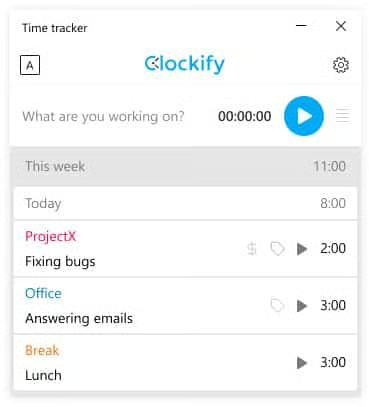
- Free option: Access to online timers and timesheets, project and task tracking, reporting tools, and calendar; supports unlimited projects and employees
- Basic ($4.99/mo per user): Administration tools; project templates, time audits, and the capability to add time for one or multiple users
- Standard ($6.99/mo per user): All features of the Basic plan, plus timesheeting and billing tools, and QuickBooks integration
- Pro ($9.99/mo per user): All features of the Standard plan, plus productivity and profit tools, scheduled reports, GPS tracking
- Enterprise ($14.99/mo per user): All features of the Pro plan, plus account management, single sign-on (SSO), and custom subdomain
- Server (custom-priced): Lets you host Clockify on your own servers
- Flexible time tracking: Time tracking is an important tool for employee management. With Clockify, you’re not limited to tracking time on specific devices. You can access its online timer on iOS and Android mobile devices, computers, and web browsers (Firefox, Google Chrome, and Microsoft Edge). However, you can’t track work hours via the Apple Watch as Deputy does. You also can’t set up a tablet as a centralized time tracking kiosk—a functionality that Homebase, Deputy, and QuickBooks Time all offer.
- Project and task monitoring: Clockify helps you track time by projects and tasks. You can even break down projects into several activities and categorize tasks by job type.
- GPS tracking: With Clockify’s GPS tracking tool, you can view and check all the client sites that your staff visited during a workday. This is an essential feature to have, especially if you employ field employees. However, you have to buy Clockify’s Pro package if you need geolocation tracking, unlike QuickBooks Time’s mobile app, which shows GPS points on the map for employees’ locations throughout the day regardless of which plan you choose.
- Computer screenshots: Clockify’s screenshot recording app allows you to show clients your work progress. It takes screenshots of your computer screen every five minutes while your timer is running. This is perfect for freelancers who want to provide detailed work updates to clients.
- Invoicing: You can create invoices based on tracked time and send these as PDF documents to bill clients—provided you purchase Clockify’s Standard package. If you need an online timer with free invoicing, Harvest may be a good option. However, if you’re a QuickBooks user, then QuickBooks Time is a better alternative as it connects seamlessly with QuickBooks Online, enabling you to generate invoices and manage payments.
Deputy: Best for Seasonal Businesses That Keep Employees on Standby
Deputy Overview
If you’re looking for a flexible, simple-to-use time tracking software that works well for inconsistent time tracking needs, Deputy is the right tool for you. It has a flexible weekly plan option ($2.50 monthly per employee) that allows you to keep inactive employees in the system at a low cost, so when you schedule them again, you don’t have to re-enter their data—plus, they can stay in the loop while they’re off. Aside from that, it makes it easy to capture clock-ins/outs of hourly staff and export timesheets for payroll processing. It offers a standalone scheduling solution and paid plans that include both time tracking and scheduling tools.
Deputy earned an overall score of 4.10 out of 5 in our evaluation with high marks in ease of use, reporting, and popularity. Its score was pulled down by the lack of built-in invoicing tools and no free option for time tracking. Integrating its platform with third-party solutions, like ADP Run and Gusto, can also be challenging given the occasional data sync and connection glitches. However, users said that Deputy is generally easy to learn and use.
- Free plan: Only for those in the US. Includes 100 approved and published shifts per month, PTO and leave management, news feed, and 24/7 email support
- Standalone packages*: $4.50/employee/month for separate Time and Attendance and Scheduling options
- Time and Attendance: Online timesheets, payroll integrations, and time clock apps (for iOS and Android)
- Scheduling: Schedule builder with auto-scheduling functionalities
Paid plans with complete time tracking and scheduling solutions:
- Premium plan ($6/employee/month)*: Includes everything in the free plan, plus employee scheduling, auto-scheduling, timesheets, payroll integration, POS integration, tasking, and reporting
- Enterprise plan (custom-priced): All features of the Premium plan, plus advanced demand planning, advanced reporting and analytics, custom-built enterprise agreements, custom implementations, custom roles and permissions, dedicated support, and more
- Flexible weekly plan ($2.50/active user/week; $0.50/inactive user/month): Premium features; inactive employees remain on Deputy
* Scheduling, Time and Attendance, and Premium plans require a minimum monthly spend of $10 per invoice
- Affordability: Although it does have a free plan available for its US customers, the time tracking feature is not included. However, Deputy’s paid products are budget-friendly with monthly fees that start at $4.50 per employee—making it the most affordable paid time tracking solution on this list.
- Online time clocks: Deputy’s time tracking apps can help you monitor employee attendance and manage your workforce from any Android and iOS device. Your staff can even clock in/out from the Apple Watch—a functionality that none of the other software in this guide offers.
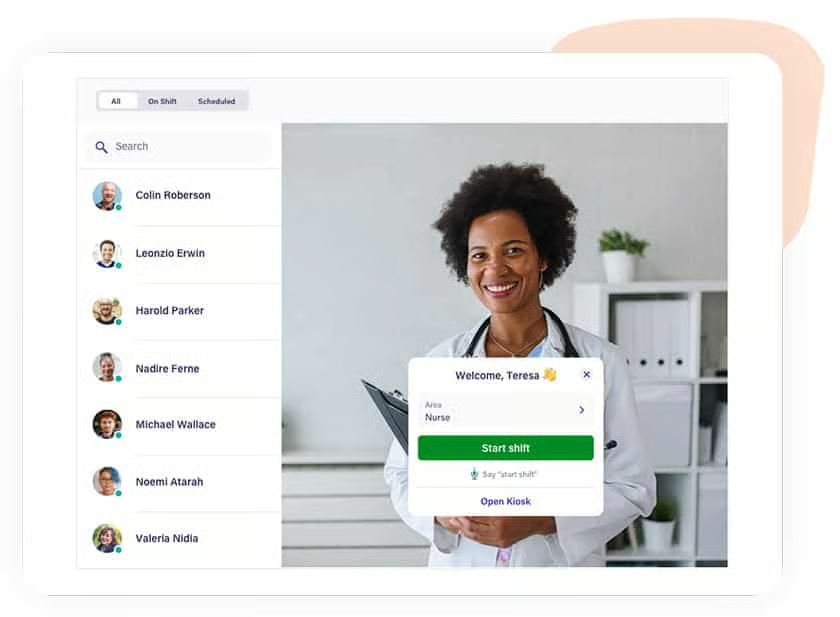
- Touchless clock-ins: Deputy is the only provider on our list that supports voice commands. Its Deputy Kiosk app for tablets uses voice commands and facial recognition scans to capture employee clock-ins/outs.
- Task assignments: With Deputy, you can add single and recurring tasks to staff schedules. Although it doesn’t record the actual hours that your employees spend on each task, it sends you notifications whenever an assignment has been completed. However, if you require a time tracker with start/stop controls for capturing hours spent on tasks, we recommend QuickBooks Time, Harvest, Clockify, or ClockShark.
Homebase: Best for Free Work Hour Tracking in One Physical Location
Homebase Overview
Homebase is great for small businesses, especially restaurants and retail shops, with one physical location because it has all scheduling and time tracking features plus point of sale integration in its free plan. Additionally, Homebase’s other plans let you create staff schedules, post jobs, track applicants, and onboard new hires. It also comes with compliance tools to ensure that standard breaks and overtime rules are followed, plus its budgeting and labor cost controls help you stay within your targets.
Based on our evaluation, Homebase earned an overall rating of 4.05 out of 5. It didn’t get a higher score because it lacks invoicing capabilities and doesn’t integrate with third-party scheduling systems (it has its own scheduling solution) or accounting and project management software—features that would further streamline client billing, budget monitoring, and task tracking processes.
In terms of user feedback, many appreciate Homebase’s intuitive interface and robust scheduling and time-tracking features. A few users, on the other hand, said that its mobile time-tracking apps (for iOS and Android) can be glitchy at times.
- Free plan: Manage schedules, track employee time, and communicate with teams; supports unlimited schedules and employees for businesses with one location
Paid plans:
- Essentials ($24.95/month/location): All features of the Free plan, plus team communication, performance tracking, remote tools
- Plus ($59.95/month/location): All features of the Essentials plan, plus labor costing, hiring tools, time off limits, PTO tracking, permissions
- All in One ($99.95/month/location): All features of the Plus plan, plus onboarding, employee documents, HR, compliance
- Add fully-integrated payroll to any paid plan:
- $39 base fee/month + $6/employee/month
- Per-location pricing: The other time-tracking software in this guide charge monthly fees on a per-employee basis, but only Homebase bills you based on the number of business locations you have. This is optimal for employers with plans to grow their workforce in one location since they don’t have to worry about buying extra user seats.
- Intuitive interface: Homebase has an easy-to-use platform with intuitive controls that enable users to create schedules, view actual work hours, approve timesheets, and more with just a few clicks.
- Efficient time and scheduling tools: Online timesheets, administrator alerts for late clock-ins and overtime, and a drag-and-drop schedule builder are just some of the basic tools you’ll get with Homebase. You can allocate hours by jobs, and it can help you calculate employee hours and wages for payroll (including tip payments—which is great for restaurants). Additionally, you get reports that allow you to compare planned versus actual work hours and labor costs.
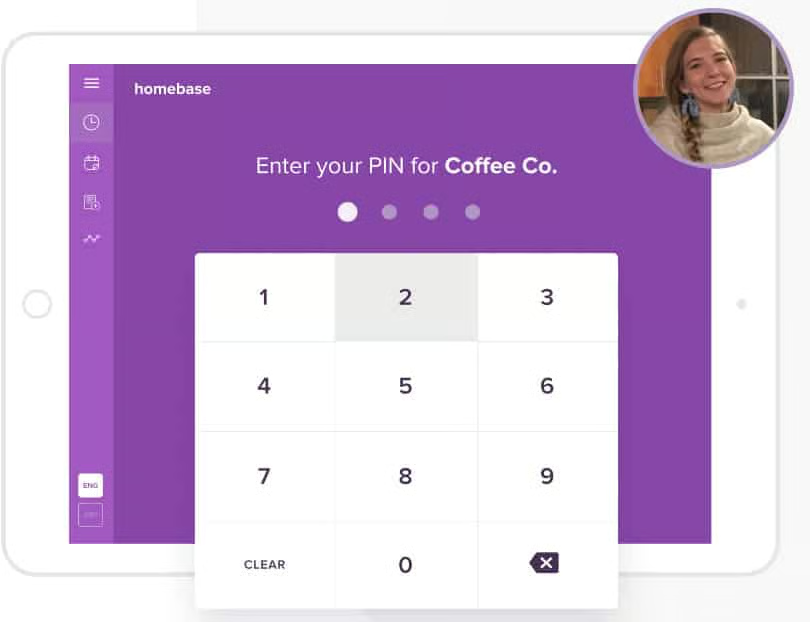
- Online time clocks with secure clock-ins: You can turn any computer, point-of-sale (POS) device, tablet, or smartphone into an online time clock with Homebase’s time-tracking app. Your staff can clock in and out using personalized PIN codes, plus its GPS functionalities let you know exactly where employees are clocking in/out from. However, it doesn’t track time spent on tasks like ClockShark, Harvest, QuickBooks Time, and Clockify.
TimeCamp: Best for Employers, Contractors, or Freelancers Looking for a Lightweight Project Management Tool
TimeCamp Overview
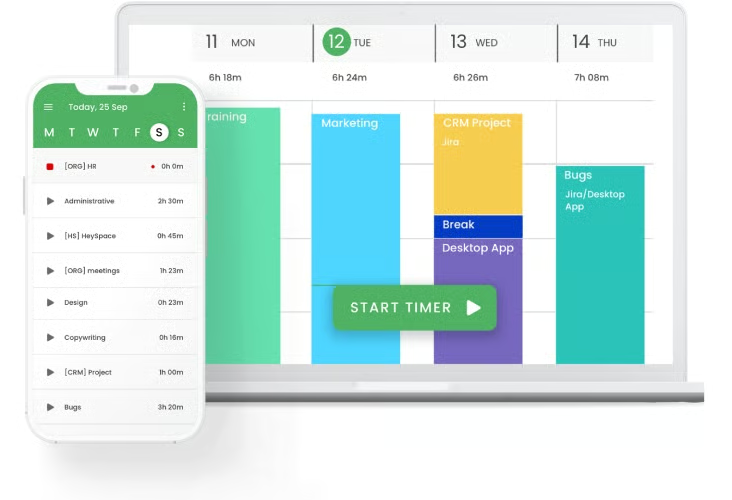
TimeCamp, like Clockify, offers a free plan with unlimited projects and user seats. Its automated time-tracking feature captures time and assigns it to the right client or project, which helps with project tracking and management. It didn’t top our list since it lacks multiple clock-in options and because it doesn’t have integrations with payroll software. It also has a lower number of average user reviews on G2 and Capterra as of this writing.
Scoring an overall 4 out of 5, TimeCamp earned perfect marks in pricing and reporting. It is also rated highly in billable hours and job labor costing features, given its productivity, invoicing, and online payment tools. Many users even said that TimeCamp is a good tool for monitoring hours spent on projects and provides useful reports about their daily work routine and productivity. It scored lowest in popularity because of its limited number of reviews.
- Free plan: Includes timesheets, unlimited projects, time clock kiosk, unlimited users, web and mobile apps, and geofencing
- Starter plan ($3.99/user/month): All features in the Free plan, plus invoicing, Excel reports export, attendance, time-off, unlimited tasks, and overtime tracking
- Premium plan ($6.99/user/month): All features in the Starter plan, plus billable time, budgets and estimates, apps and website tracking, management roles, projects archiving, and one integration
- Ultimate plan ($9.99/user/month): All features in the Premium plan, plus timesheet approvals, billing rates, expenses, pivot table, screenshots, and unlimited integrations
- Enterprise package ($14.99/user/month): All features in the Ultimate plan, plus priority support and SLA, self-hosted instance, private cloud instance, custom integrations, training and assistance, and setup sessions
Annual pricing comes with a 10% discount on all plans.
- Attendance and leave management: Not only does its time tracker help you log hours for projects, but it can also be used to monitor clock-ins/outs and overtime. Similar to Clockify, TimeCamp has leave management capabilities to help you track vacation, sick, and holiday leaves.
- Productivity tools: TimeCamp tracks idle time and monitors the hours spent on websites, apps, and documents. With its productivity assistant feature, you can set goals and measure your productive and idle hours. You also have the option to activate its computer screenshots function in case you want full transparency and present proof of work to clients. TimeCamp has a private time mode that you can turn on if you want to take breaks.
- Project management features: TimeCamp is the only software on this list with an automated time-tracking feature that allows users to set up keywords for clients or projects. Once TimeCamp detects the keywords, it automatically assigns this time to the right client or project. The web-based and desktop apps can then run silently in the background. Users can also monitor project profitability with its broad range of reporting features.
- Invoicing and client payments: TimeCamp has smart invoices that you can easily generate and send to clients via email, a private link, or a PDF file. Clients can even pay you directly from the invoice through PayPal. However, you have to upgrade to at least its Pro plan to get these features. For a more budget-friendly option, consider Harvest since it offers its invoicing and online payment tools for free—provided you need only one user seat and two active projects.
busybusy: Best for Independent Contractors & Construction Business Startups
busybusy Overview
busybusy is one of the two time-tracking systems on our list designed for the construction industry (ClockShark is the other). Because of its free plan and affordable pricing compared to ClockShark, we’ve deemed busybusy best for independent contractors or small construction teams—its equipment tracking feature is available even with the free plan. We also recommend busybusy for independent contractors over ClockShark because of its fair billing policy, which factors in the seasonal fluctuations of the industry.
Larger businesses may find its free offering limited, but startups can benefit from tools like location features, mobile time clocks, and equipment tracking.
While busybusy also offers a paid version with a useful scheduling feature, businesses with larger crews may find it inefficient to manage time off. Only supervisors can log time off, so without an employee self-service option, administrators and supervisors may have to go through emails or texts before they can log time off requests. This might be okay for small businesses—but the more employees you have, the more time-consuming it can be to process time off.
busybusy got an overall score of 3.9 out of 5, with a perfect mark for ease of use and high scores for pricing and time-tracking functionality. Its inability to create custom reports and invoices and the low number of user reviews brought its score down.
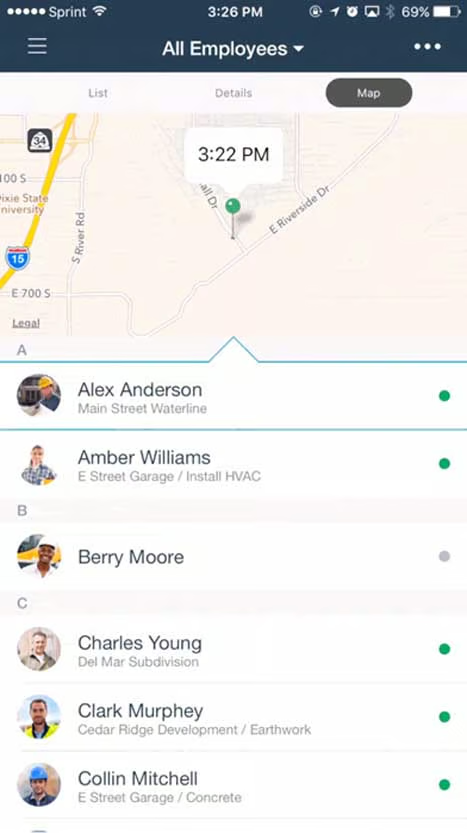
- Free option: Unlimited users; includes GPS time tracking, job costing, and equipment tracking
- Pro ($11.99/active user/month): All Free features, plus GPS breadcrumbing, supervisor tools, daily sign-offs, photos and notes, and scheduling
- Premium ($17.99/active user/month): All Pro features, plus documents, daily project reports, progress tracking, checklists, team messaging, and Zapier
- Payroll add-on ($45/month + $6/person/month): includes full-service payroll, W2 state and federal e-file and pay, 1099 e-file and pay, state tax reconciliations, mobile payroll processing, free expert product support, payroll onboarding assistance, dedicated account manager, and more
- Simple clocking in/out: A worker can clock in and out using the mobile app or via a kiosk. With the app, they can also track materials and equipment and even report work accomplished.
- Supervisor tools: Like ClockShark, busybusy allows a supervisor to clock in and out for the whole crew. Other group actions include breaks and time off.
- Scheduling: All providers in this guide offer scheduling functions, except for TimeCamp and Harvest. With busybusy, supervisors or contractors can create schedules, add a location pin, and attach detailed instructions. The crew will then be notified of their schedules.
- Universal map: This map lets you see active projects, real-time employee locations, and equipment locations. This is very similar to what QuickBooks Time offers minus the equipment tracking feature.
- Geofencing: Aside from its geolocation tracking tools, busybusy also lets you create a geofence, only enabling employees to clock in and out whenever they’re inside the required location.
- Location-based reminders: Employees are also notified once they enter the geofence and with a reminder to clock out when they’re leaving.
- Timecard signatures: At the end of the workday, employees should verify that their logged times are correct. To quickly spot and correct errors before processing payroll, timecards must also be signed by supervisors. Signing can be done right from their mobile phones.
- Equipment locations: busybusy is the only provider in this guide with equipment tracking. It’s easy for contractors and employees to keep tabs on their equipment, who’s using it, and what project they’re working on.
ClockShark: Best for Midsize Construction Businesses
ClockShark Overview
We recommend ClockShark for midsize and larger construction businesses. Compared to busybusy, it has a self-serve function useful for efficiently managing timesheets and time-off requests, especially for a large number of employees. It can also help you minimize time theft with facial recognition, GPS tracking, geofence notifications, and pictures to show the progress of the job. Like busybusy, it has a crew punch feature that allows a supervisor to clock in for their staff using its mobile app. It tracks hours by job and service code, plus its time data can be exported to popular payroll and accounting programs.
What’s also great about ClockShark is that it provides you with one platform to track time, manage jobs, and collaborate with team members on all of your work tasks. It also streamlines the process of organizing jobs since it stores all documents, in-app communications, client information, and progress updates for every job.
Scoring 3.78 out of 5, its online time clock can help you track actual hours spent on jobs and tasks. However, it doesn’t have a free option like Homebase, Deputy, and busybusy, and while its monthly fees are reasonably priced (starting at $40 plus $8 per user monthly), it is still more expensive than Deputy. ClockShark comes with a 14-day free trial. These factors, including the inability to create custom reports and user reviews of occasional mobile app glitches and GPS tracking issues, prevented ClockShark from ranking higher on our list of best time-tracking software.
- Standard plan ($40 + $8/user/month): Includes time and attendance tracking, GPS tracking, job and task tracking, built-in Spanish language support, drag-and-drop scheduling, manager roles and approvals, and third-party integrations
- Pro plan ($60 + $10/user/month): All Standard features, plus PTO tracking, multi-department/office controls, advanced job costing controls, clock out questions, and draft schedules
* 14-day free trial on all plans
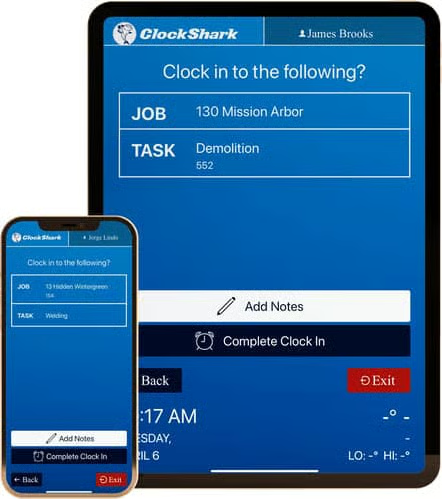
- Multiple time clock options: In addition to mobile time tracking apps for iOS and Android devices, ClockShark has a web-based time tracker that works on laptops and desktop computers. If you require secure clock-ins, its “KioskClock” apps for smartphones and tablets support PIN codes and facial recognition scans.
- Job and customer management: While Clockify and Harvest have similar job and client management functionalities, their tools aren’t as robust as ClockShark’s. In addition to organizing job/client information, you can easily view which customers are associated with each project or job in ClockShark. You can also add files to client profiles, such as pictures of completed tasks and receipts. It even has a communication tool where you can share job details, provide updates, and discuss client issues with your team. ClockShark then saves all in-app conversations for easy reference.
- Built-in invoicing with online payments: ClockShark automatically adds tracked hours from online timesheets into invoices—provided you set the applicable tasks as billable. And unlike Clockify, which only allows you to create and send invoices, ClockShark lets you receive payments from customers. It partners with JPMorgan Chase Bank to offer a secure platform where clients can simply click the payment button on ClockShark’s electronic invoices to transfer payments to their business accounts.
- Timesheet attachments: Construction workers and field staff who need to send information from the field to your main office can attach work files, notes, and job-related photos to ClockShark’s online timesheets.
- GPS and geofencing tracking: Although ClockShark’s Basic plan has GPS functionality, it isn’t as detailed as the geolocation tools included in its Standard to Expert plans which show location breadcrumb trails on a map. Meanwhile, its geofencing capabilities help to remind employees to clock in/out as they enter/leave the job site.
QuickBooks Time: Best for QuickBooks Users Requiring Billable Hours Monitoring & Hourly Workforce Time Tracking
QuickBooks Time Overview
QuickBooks Time (formerly TSheets) is terrific for monitoring the costs of freelance jobs and the attendance of your hourly workforce with its versatile time tracking apps. Its web and mobile apps (for iOS and Android devices) can track hours spent on jobs, while its time kiosk solution captures clock-ins/outs via PIN code entries and facial recognition scans. It even offers PTO management, employee scheduling tools, and budget estimates vs actuals reporting. QuickBooks users can easily integrate data from QuickBooks Time and make payroll processing more efficient.
Scoring 3.7 out of 5, it earned high marks in employee time tracking, ease of use, and popularity. On the other hand, QuickBooks Time scored poorly in reporting and pricing because its reports have limited customizability, it lacks a free option, and its paid plans are more costly than other providers—monthly fees start at $20 plus $8 per employee. However, many users still commended QuickBooks Time for providing them with an easy way to manage time tracking and capture billable hours.
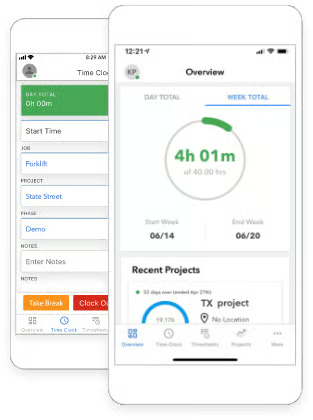
- Premium plan ($20 + $8/employee/month): Access to mobile apps with GPS tracking and the QuickBooks Time Kiosk, PTO management, job and shift scheduling, automated overtime alerts, and unlimited live customer support
- Elite option ($40 + $10/employee/month): All Premium features, plus mileage tracking, geofencing, timesheet signatures, and reports that show project estimates versus actual hours/labor cost
* Free 30-day trial for monthly plans or 50% off for 3 months if you pay annually
- Versatile time tracking apps: QuickBooks Time has time tracking apps that work across devices—from computers to smartphones and tablets. It is also the only provider on our list that offers both an online time clock for capturing your hourly workforce’s clock-ins/outs and an online timer for tracking billable hours to invoice clients.
- Secure clock-ins: QuickBooks Time has a clock kiosk that serves as a dedicated time-tracking terminal for your hourly employees working in the same location. Aside from PIN codes, it supports facial recognition scans to help prevent buddy punching. However, if you want your employees to use voice commands when clocking in/out, consider Deputy.
- Geofencing and geolocation tracking: In addition to tracking where field employees are working, QuickBooks Time’s mobile app reminds your staff to clock in and out as they enter and exit a job site. And like ClockShark, it displays GPS points on a map, showing a “breadcrumb trail” of the job/client locations that employees visited throughout the workday.
- Seamless QuickBooks integration: QuickBooks Time connects well with other QuickBooks products (like QuickBooks Online and QuickBooks Workforce) for streamlined invoicing and payroll runs. It also integrates with online payroll services (like Gusto and ADP) to allow easy transfers of time data for employee pay processing.
Harvest: Best for Small Business Owners & Freelancers Needing Free Time Tracking, Invoicing & Expensing Tools
Harvest Overview
Harvest offers its time tracking, invoicing, and expense reporting tools for free—provided you have only one user and two active projects. This makes it a good option for freelancers and small business owners with a few employees looking for an efficient way to monitor project time and work tasks. It also has a paid plan that comes with unlimited seats and projects.
This software earned an overall score of 3.68 out of 5 in our evaluation. It received perfect marks for billable hours tracking and job labor costing, followed by popularity and pricing. However, Harvest lost points since it doesn’t support GPS tracking and facial recognition scans, and has limited task management tools. Although it connects with more than 50 third-party software, it lacks integration with payroll, scheduling, and POS solutions.
In terms of user feedback, most of the online reviews are positive, with users praising Harvest’s simple yet efficient time tracking app. Some, on the other hand, said that its reports aren’t robust and its mobile app can be a bit clunky at times.
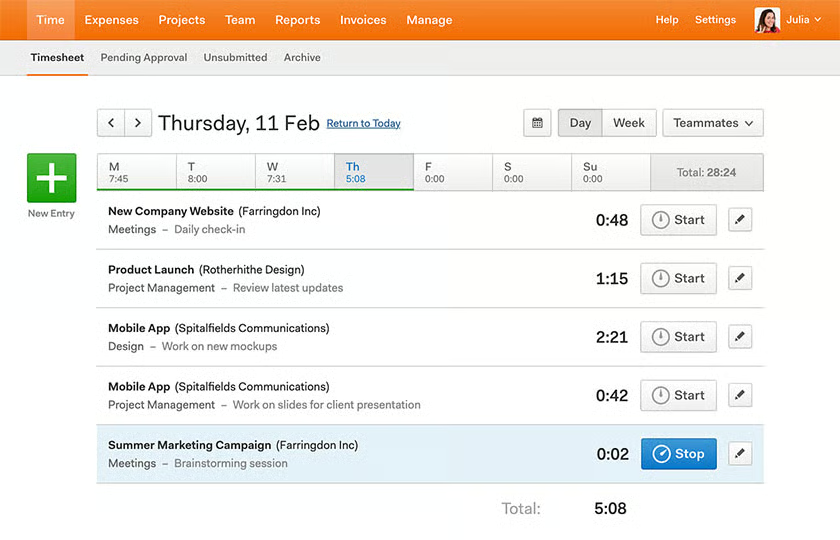
- Free plan: Includes online timers, client invoicing, and expense reporting for one user seat and time tracking for up to two projects.
- Pro plan ($12/user/month): All features in the Free plan, plus unlimited user seats and projects.
- Desktop and mobile time tracking apps: Harvest has simple-to-use time tracking apps that work on laptops and desktop computers, including iOS and Android mobile devices. However, unlike Deputy, its mobile app isn’t compatible with the Apple Watch. It also doesn’t have a time clock kiosk for capturing the actual work times of your hourly workforce.
- Expense reporting: Harvest is the only time tracking software we reviewed that lets you log business expenses, take photos of receipts, and tag the transactions as billable. You can even turn details of tracked expenses into invoices that you can send to clients.
- Robust third-party integrations: Harvest partners with over 50 third-party solutions that include accounting software, analytics and reporting apps, project management systems, and productivity tools. Its integration with Stripe and PayPal has even enabled it to accept online payments from clients. However, unlike Deputy, Homebase, and ClockShark, it lacks integration with scheduling and payroll software.
How We Evaluated The Best Time Tracking Software
We started our evaluation with 20 time-tracking software, comparing each product’s ease of use, pricing, and online user reviews. We also looked for essential features like secure clock-ins/outs, geolocation tracking, invoicing, pre-built reports, mobile apps, and the capability to allocate hours to jobs. We even considered the provider’s integration options with third-party software like payroll and project management solutions.
To see our full evaluation criteria for best time tracking software, click through the tabs in the box below.
We checked to see if the provider has a free plan and transparent pricing for its paid plans. We also considered the cost of paid subscriptions and gave those that are priced $10 or less per employee monthly extra points.
The best time tracking system includes at least basic tools, such as exportable time data, multiple time clock types, breaks and PTO tracking, and administrator alerts. Plus, having access to mobile apps and a self-service portal is also ideal.
Time tracking solutions that allow users to allocate hours by job code, compare budget versus actual hours, and generate invoices to bill clients were rated highly. Additional points were also given to software that can export time data to software that can calculate profit and loss by jobs for easy project management.
Having time-tracking software that is intuitive and easy to learn is a must. We also looked at whether the provider offers live phone support, training, quick system implementations, and integration options with payroll, accounting, and scheduling systems.
Aside from having access to standard and pre-built reports, users should be able to customize reports.
We considered online user reviews, including those of our competitors, wherein any option with an average of 4+ stars is ideal. Also, software with 1,000 or more reviews on third-party sites is preferred.
Frequently Asked Questions (FAQs)
What do companies use to track employee time?
There are many ways to track employee time—manual timesheets, Excel spreadsheets, wall time clocks, and time-tracking software. We recommend using time-tracking software because of the accuracy and security measures many offer.
What time tracking tools should I look for in an employee time tracking software?
The best tools not only track employee time, but allow you to track the location of your employees, track projects, and let managers approve and make changes to timesheets on the go. Additionally, a time-tracking software that allows you to schedule employees can help you keep all records in one place.
Is free time tracking software robust enough?
Free time-tracking software generally offers only basic timekeeping tools. It would be robust enough for very small businesses, however, small companies that are growing and midsize to large companies may need features only found with a paid plan.
Bottom Line
Tracking time by hand is time-consuming and difficult to monitor. Time tracking apps can help alleviate the stress of manually computing work hours and preparing timesheets since its system will do that for you. Some even allow you to assign time to jobs and service codes, build staff schedules, track billable hours, and invoice clients.
Based on our evaluation, we found Clockify to be the best time-tracking software for small businesses and freelancers. It can efficiently capture when hourly employees start and stop working, plus it has a project management feature that allows you to export hours information to software to calculate profit or loss by job. Sign up for a free plan today.
