






QuickBooks Payments is Intuit’s payment acceptance product built into QuickBooks Online. It accepts credit and debit cards, ACH bank transfers, Apple Pay, PayPal, and Venmo on invoices. Eligible payments receive next-business-day standard deposits; instant deposits are available for an additional fee.
I recommend considering QuickBooks Payments for service businesses, contractors, and existing QuickBooks users who want customer payments connected with their accounting records.
My QuickBooks Payments review gives it 3.90 out of 5. The standard online Payments service has no monthly processing subscription fee, although paid accounting plans add to your total cost.
Its main advantage is reducing payment tracking and bookkeeping work; its main drawback is that this convenience may cost more than another processor, particularly for large invoices. Money movement services are provided by Intuit Payments Inc., licensed as a money transmitter by NYDFS.
- Why you can trust my advice
- QuickBooks Payments at a glance
- QuickBooks Payments alternatives & comparison
- QuickBooks Payments reviews from users
- QuickBooks Payments pricing
- QuickBooks Payments contract terms and account approval
- QuickBooks Payments new features
- QuickBooks Payments features
- QuickBooks Payments ease of use & customer support
- Bottom line
Why you can trust my advice
I have more than seven years of experience evaluating payment processors, POS systems, ecommerce platforms, and retail software. My reviews look at the details that affect daily operations: how easily a business can start taking payments, what each payment method costs, how invoices and recurring billing work, hardware options, payout timing, accounting reconciliation, support, and user feedback.
For this review, I checked Intuit’s published rates, product documentation, and support guidance against the payment workflows small businesses rely on. I applied our payment processor scoring criteria to weigh costs, contract terms, features, and overall value, then used customer feedback to identify issues worth considering before signing up. My recommendations follow the Fit Small Business editorial policy.
Deciding factors
| Best for | Invoice-based small businesses and existing QuickBooks users |
| Monthly Payments fee | $0 for the standard online service; Desktop has separate options |
| Account requirements | A supported QuickBooks account and Payments eligibility and approval |
| Invoice payment options | |
| In-person tools |
|
| Accounting connection | Built into QuickBooks Online; eligible payments are recorded and matched within QuickBooks |
| Funding | Next-business-day standard deposits for eligible payments; optional instant deposits carry a fee |
| Support |
Self-service resources and account-dependent access to live assistance |
Use cases
- If you already use QuickBooks Online or QuickBooks Desktop
- For B2B payment processing
- If you are also looking for accounting software
QuickBooks Payments makes the most sense when your business already sends invoices through QuickBooks. A consultant collecting monthly retainers or a contractor billing clients after completing a job can benefit from keeping invoices and payments together. I would also consider it for a small service business that occasionally collects payments in person.
QuickBooks Payments alternatives & comparison
Provider | Best fit | Starting monthly processing fee | Accounting connection |
| QuickBooks Payments | Invoice payments within QuickBooks | $0 for standard online Payments; account costs vary | Built into QuickBooks Online, with eligible payment recording and matching |
| Square | Businesses prioritizing in-person sales and POS | $0 with Square Free | Evaluate a separate accounting integration |
| Helcim | Businesses comparing interchange-plus costs | $0 | Offers accounting integrations |
| Stripe | Businesses prioritizing online checkout | $0 for standard Payments | Evaluate an accounting integration or connector |
QuickBooks Payments reviews from users
Users like | Users dislike |
| ✅ Integration with QuickBooks | ❌ Processing fees |
| ✅ Convenient invoice payments | ❌ Customer support experiences |
| ✅ Straightforward payment tracking | ❌ Funds held for review |
Positive QuickBooks Payments reviews highlight straightforward setup, convenient invoice payments, and integration with QuickBooks accounting. However, feedback is mixed: some users report high fees, limited integration flexibility, and frustrating support experiences.
QuickBooks Payments
- G2: QuickBooks Payments is rated 4.0 out of 5 from a little over 50 reviews. Users frequently mention the convenience of keeping invoicing, payments, and accounting together.
- Capterra: This rating now identifies the product as QuickBooks Money, rated 4.3 out of 5 from more than 100 reviews. Note that this is a related product, so don’t consider it a standalone QuickBooks Payments rating.
QuickBooks GoPayment
The mobile payment app has the following ratings:
- App Store: 4.8 out of 5 from approximately 6,400 ratings.
- Google Play: 3.4 out of 5 from approximately 7,800 reviews.
My takeaway is that QuickBooks’ accounting connection remains its main appeal, but businesses should also consider app reliability and support. The difference between its iOS and Android ratings makes recent reviews for your device particularly useful.
QuickBooks Payments pricing
Pricing score: 3.81/5
QuickBooks Payments cost depends on three things: your underlying QuickBooks account, how customers pay, and whether you use optional services. Its published rates are easy to compare, but businesses should calculate the full cost rather than focusing only on the absence of a monthly Payments fee.
Monthly software and account fees
The standard online Payments service has no separate monthly processing subscription fee. QuickBooks currently advertises a Free account, while its main paid Online accounting plans have the following standard monthly prices:
Account or plan | Standard monthly price | Users |
| Free | $0 | 1 |
| Simple Start | $38 | 1 |
| Essentials | $85 | 3 |
| Plus | $140 | 5 |
| Advanced | $340 | 25 |
Accountant access is separate from the listed user limits. Free does not include accountant access. It ordinarily allows two invoices per month, but QuickBooks says qualified users who enable Payments can send unlimited invoices. Introductory discounts are temporary.
QuickBooks Payments fees by payment method
Payment method | Published standard online rate |
| In-person card reader or Tap to Pay on iPhone | 2.5% |
| Invoice cards and supported digital wallets | 2.99% |
| Manually keyed cards | 3.5% |
| ACH bank payments | 1% |
| Affirm invoice payments, where enabled | 2.99% |
Notes:
- These are published rates for the standard online offering. Desktop, negotiated, and legacy account pricing may differ.
- Affirm is subject to eligibility. See lending terms at affirm.com/disclosures. Money movement services are provided by Intuit Payments Inc., licensed as a money transmitter by NYDFS.
For example, applying the standard rates to a $1,000 customer payment produces a fee of $29.90 through an invoice card payment, $35 when manually keyed, or $10 through ACH. These calculations exclude optional services and other applicable charges.
ACH can reduce the fee compared with cards, but the current public rate table does not advertise a universal cap. Confirm your account’s terms before budgeting for large bank payments.
Additional fees and optional services
Service or charge | Published cost* |
| Instant deposits | Additional 1.75% |
| Payment Dispute Protection | Additional fee starting at 0.99% on card transactions |
| Standard chargeback fee | $25; waived when enrolled in Payment Dispute Protection |
| Non-US-issued cards or international PayPal accounts | Additional 1% |
*Eligibility, account terms, and transaction restrictions apply.
I would use instant deposits selectively. Paying an extra fee repeatedly can substantially change the effective cost of processing payments. Likewise, compare dispute protection costs against your actual chargeback exposure before enrolling.
Hardware and installation costs
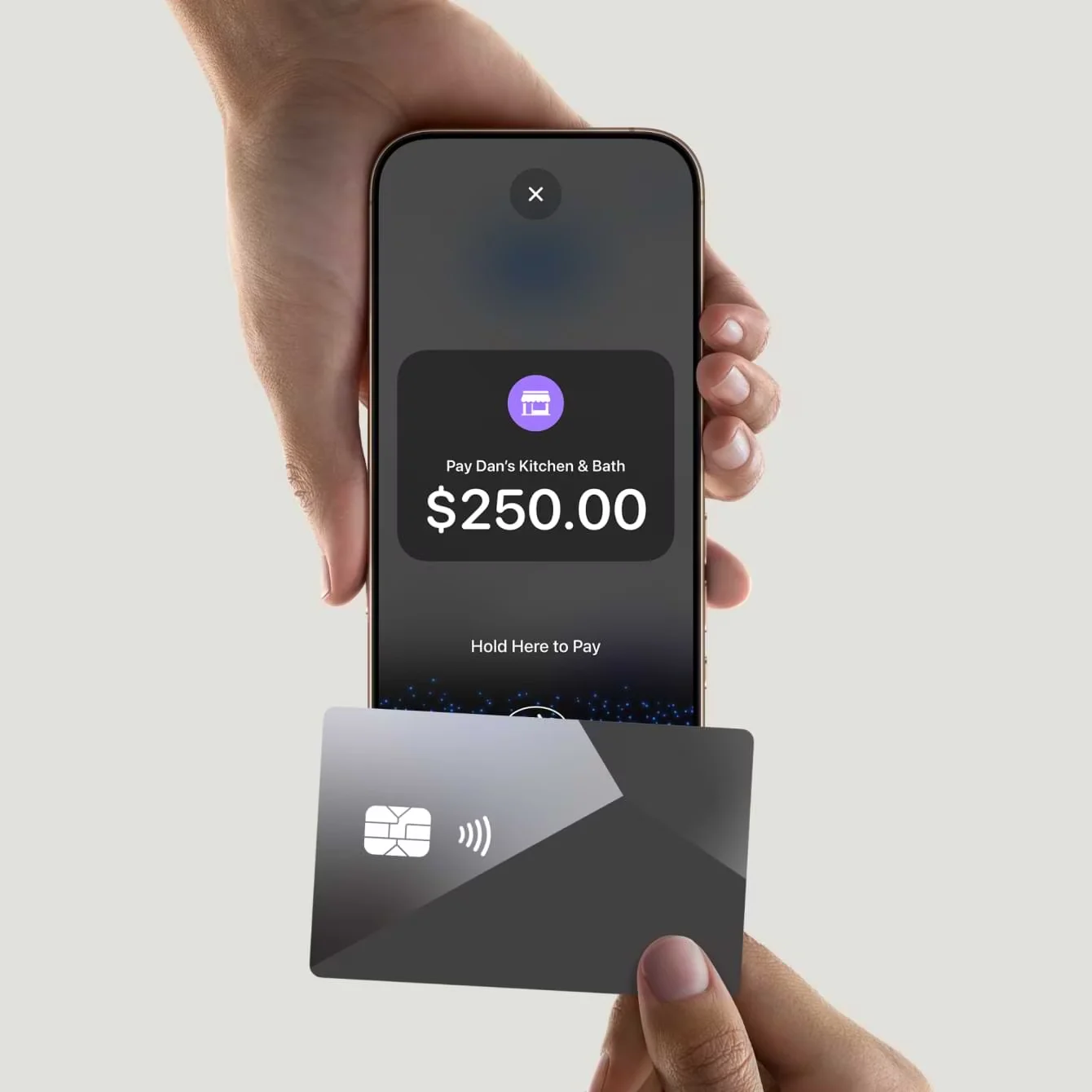
QuickBooks accepts in-person payments through the GoPayment app and card reader, as well as Tap to Pay on iPhone where supported. Its $49 Bluetooth reader accepts tapped, inserted, and swiped cards, plus supported digital wallets. Eligible users can accept contactless payments on an iPhone without a separate reader.
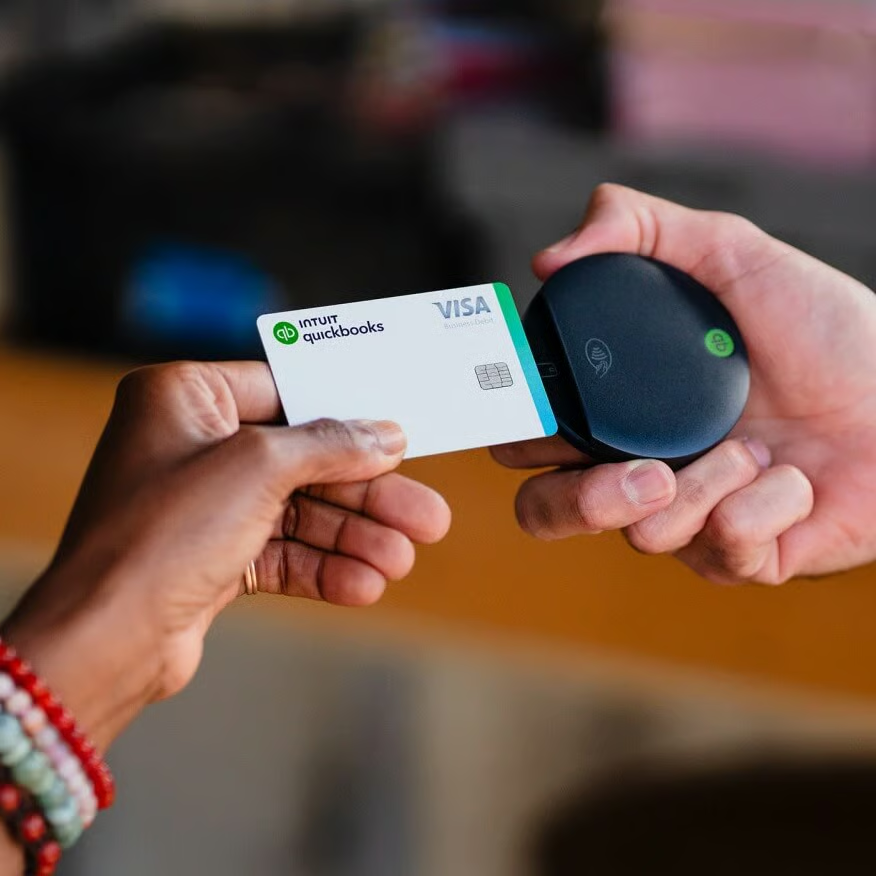
I would consider Tap to Pay for mobile services that primarily accept contactless payments. A reader remains useful when customers need to insert a card. Confirm device compatibility before purchasing hardware.
QuickBooks Desktop Payments pricing
Desktop Payments uses a separate pricing structure and requires a supported Desktop subscription.
Fee | Pay as you go | Pay monthly |
| Monthly Payments fee | $0 | $20 |
| Swiped cards | 2.4% + 30 cents | 1.6% + 30 cents |
| Invoiced cards | 3.5% + 30 cents | 3.3% + 30 cents |
| Keyed cards | 3.5% + 30 cents | 3.3% + 30 cents |
| ACH | 1% | 1% |
The underlying Desktop software cost is separate. Intuit advertises no termination fees, setup fees, or monthly minimums for these Payments plans.
The monthly option can make sense when processing savings exceed its subscription cost. Calculate that using your actual payment mix rather than choosing it solely because one rate looks lower.
QuickBooks Payments contract terms and account approval
Contract terms score: 4.25/5
QuickBooks’ online overview advertises pay-as-you-go processing without monthly Payments fees or minimums. However, payment acceptance remains subject to eligibility and account review.
You need to verify business and owner information, select a deposit account, and accept the terms. Once approved, you can manage merchant details, deposit settings, and statements from the Payments tab.
Before signing up, review the processing agreement alongside your software subscription terms. Pay particular attention to payment limits, reserves, and circumstances in which funds may be held. Intuit’s Payments terms allow risk controls that can affect access to funds.
QuickBooks Payments new features
Payments Agent for invoice follow-ups
QuickBooks’ Payments Agent helps identify inconsistent invoice payment patterns, draft reminders, and suggest recurring payments. Businesses that regularly spend time following up on overdue invoices can get great value from this feature. Access depends on the account and plan.
Review suggested messages before sending them, especially when a customer has already arranged a payment date or disputed an invoice.
Affirm on invoices
Affirm is the pay-over-time option built into QuickBooks Payments. It is available on QuickBooks invoices where enabled, with availability rolling out in phases. The business receives payment upfront under the applicable terms; Affirm provides the financing and carries the customer’s repayment risk. QuickBooks Payments processes payment acceptance.
I would consider this for higher-value services where payment flexibility could help customers proceed. As of this update, Affirm does not support recurring invoices, batch or multi-invoice payments, or estimates. Compare the processing cost and customer experience before making it a regular option.
Native invoice surcharging
QuickBooks now documents native surcharging for eligible online invoice payments, including recurring invoices. It does not apply to in-person or manually processed payments, and rollout is gradual.
Enabling it changes the available payment methods. Debit cards, prepaid cards, Apple Pay, American Express, and Discover are blocked on surcharged invoices. Applicable laws, disclosure requirements, and card network rules still apply.
I would weigh the savings against the effect on customers. Passing along a fee may reduce processing expense while making an invoice less convenient to pay.
QuickBooks Payments features
Features score: 3.50 out of 5
QuickBooks Payments covers the main ways an invoice-based small business collects money. Received payments automatically connect with accounting (QuickBooks Online). Businesses that need a broader retail system or specialized checkout should evaluate those requirements separately.
Online invoices and payment requests
QuickBooks lets businesses send invoices, track when customers view and pay them, and request payment through links when a full invoice is unnecessary. For a service business, I find this more useful than simply accepting cards. Seeing whether an invoice was viewed helps you decide whether to resend it, clarify the amount, or follow up about the due date.
Recurring payments
With Payments enabled, you can set up recurring charges and send customers a request to confirm the terms and provide their payment details. This supports ongoing billing without manually collecting the same payment each period.
Take note that a recurring invoice and a recurring charge serve different purposes. The first requests payment on a schedule; the second authorizes scheduled collection.
Automatic payment recording and matching
QuickBooks Online can automatically match eligible Payments transactions to downloaded bank activity. However, automatic matching is not available in every account, and some transactions still need manual matching when the bank supplies insufficient information.
In-person payments and GoPayment
QuickBooks supports in-person payment acceptance through GoPayment and a card reader, plus Tap to Pay on iPhone where supported. The QuickBooks mobile app serves business owners, while GoPayment lets team members accept payments without providing access to sensitive business information.
I find this ideal for a contractor taking payment after a job or a service provider collecting an outstanding invoice during a visit. For a busy retail counter, assess the complete checkout workflow, including products, receipts, returns, and staff access.
Deposits and cash flow
QuickBooks Payments offers next-business-day standard deposits for eligible payments. Instant deposits are available for an additional fee. Cutoff times, account history, payment reviews, and bank processing can affect availability. Intuit says a new account’s first batch may take up to five business days.
I would maintain enough cash to cover operating expenses during setup and potential payment reviews. A customer payment marked as received is not the same as money available to spend.
Payment Dispute Protection
Optional Payment Dispute Protection covers eligible card disputes up to $10,000 per chargeback and $25,000 over a rolling 365-day period. It excludes ACH, PayPal, Venmo, and Affirm transactions.
The additional processing charge applies to card transactions while enrolled, and charges continue after the coverage limit is reached.
QuickBooks Payments ease of use & customer support
Expert score: 4.00 out of 5
My assessment is that QuickBooks Payments offers its clearest convenience to businesses already comfortable with QuickBooks. Its documented activation process keeps setup and payment settings within the account, reducing the number of separate systems to manage.
That convenience becomes less important if your team does not need QuickBooks accounting. In that case, compare the effort of learning the platform with choosing a payment provider built around your main sales channel.
QuickBooks provides help articles, community resources, and routes to live assistance through the product. Its current support documentation describes chat and callback options. For Simple Start, Essentials, Plus, Lite, and Solopreneur, listed Online expert hours are Monday through Friday, 6 a.m. to 6 p.m. PT, and Saturday, 6 a.m. to 3 p.m. PT. Payments-specific help and available channels can depend on the account and issue.
Before committing, check how you would contact support about a held deposit or failed payment. Those situations have a more immediate effect on daily operations than a general software question.
Methodology: How I evaluated QuickBooks Payments
I evaluated QuickBooks Payments using four weighted categories focused on the costs, terms, and payment tools that matter to small businesses.
I compared fee structures, monthly costs, volume discounts, cancellation charges, and chargeback fees, prioritizing transparent and predictable pricing.
I assessed contract requirements, account stability, hardware purchasing options, application and setup fees, and monthly minimums.
I reviewed support availability, including software, in-person and online payments, ACH and eCheck processing, virtual terminal tools, stored payments, surcharging, and deposit speed.
I considered pricing transparency and value, ease of use, popularity, and integration with other small business software.
Frequently asked questions (FAQs)
Can I use QuickBooks Payments without a paid QuickBooks Online subscription?
Yes. QuickBooks currently advertises a Free account with payment acceptance subject to qualification and approval. Paid plans add accounting features and access options, so choose based on your business needs rather than assuming payment acceptance always requires a paid plan.
Can I negotiate lower QuickBooks Payments fees?
Possibly. QuickBooks invites businesses processing more than $2,500 per month to request a rate review and advertises potential discounts of up to 25%. Discounts are not automatic or guaranteed. Ask for the resulting rates and terms in writing.
How long does a new QuickBooks Payments account take to receive deposits?
Intuit says the first batch may take up to five business days. Next-business-day standard deposits apply to eligible payments, while instant deposits carry an additional fee. Check your account’s deposit schedule for payment-specific timing and conditions.
Can I pass QuickBooks Payments processing fees to customers?
Eligible accounts can use native surcharging for supported online invoice payments. It has payment-method restrictions and does not apply to in-person or manual transactions. Confirm that the feature is enabled for your account and that your use meets applicable requirements.
Can I use another payment processor with QuickBooks?
Yes, depending on the provider and integration. However, accounting integration does not necessarily recreate the same invoice payment experience as QuickBooks Payments. Check how the connection handles fees, refunds, deposits, and reconciliation. Helcim, for example, advertises accounting integrations among its payment tools.
Bottom line
I recommend considering QuickBooks Payments when your business already uses QuickBooks and collects most sales through invoices. It keeps payment collection and bookkeeping together to save your team regular administrative work.
Before signing up, calculate fees using your typical invoice size and payment mix. Compare another provider if processing costs, POS requirements, or online checkout flexibility matter more than the built-in accounting connection.
