







In my 2025 Ecwid review, I found that the platform still offers good value for small sellers with a tight catalog and for businesses that mainly want to add shopping cart functionality to an existing site.
Ecwid’s paid plans now start at $5 per month, and while you get useful tools for multichannel selling and basic marketing, the removal of its forever-free plan, product limits on every tier, and the way core features are held for higher plans all drag down its overall appeal.
Ecwid earned a score of 3.86 out of 5 in my latest evaluation, based on 38 data points and hands-on testing of the software.
Ecwid overview
Deciding Factors
| Supported business Types | Ecommerce, multichannel retailers, dropshipping, print-on-demand, physical and digital goods, services, subscriptions |
|---|---|
| Standout features |
|
| Monthly software fees | No free plan; four paid tiers from $5-$130 per month, with lower effective pricing on annual subscriptions and no formal free trial for paid plans. |
| Payment gateways | FlexibleNo built-in payment gateway but has over 70 integrations, including PayPal and Stripe |
| Payment processing fees | Standard Rates, No Transaction Fees2.9% + 30 cents for payment providers; zero transaction fees |
| Contract length | Month-to-month, with discounts available if you pay annually. |
| Customer support | VariesFree plan: Email support only (Monday–Friday). Live chat during the first 30 days after the sign-up (Monday–Friday).Paid plans: Live chat, email, and callback support. Chat is available 24 hours, Monday–Friday. Callback is available 2 p.m.–10 p.m., Pacific time, Monday–Friday, in English. |
Is Ecwid right for you?
Ecwid’s biggest advantage over other ecommerce platforms is that you can add a store component to an already existing website easily without having to build an ecommerce store from scratch (such as integrating a payment provider and activating plugins or apps).
What’s even better is that Ecwid can adapt to the current styles of your existing website, and the transition to your website and online store is seamless.
When to use Ecwid
- Businesses that already have an existing website: Although Ecwid can be used as a standalone ecommerce platform, it’s best suited and most commonly used as a plugin to add ecommerce functionality to an existing site. Wix, Weebly, and Squarespace users have the added advantage of native Ecwid integrations. Though it’s not as customizable as other shopping cart plugins like WooCommerce, no code is required to set up Ecwid, making it much easier to use.
- Hobbyists and those who sell as a side business: Ecwid’s basic plan ($30 per month) lets you sell on Facebook and Instagram and provides you with inventory tracking, marketing tools, and a mobile app. This is less expensive than Shopify’s basic package ($39 per month), which offers similar features.
When to use an alternative
Ecwid does have its limitations, though. Since it was designed to be an add-on to an existing site, building a standalone store complete with website pages on Ecwid can be limiting, as it only lets you build on a single page. If you are starting from scratch and don’t have a website yet, I recommend ecommerce platforms like Shopify and Squarespace, which give you both — a standalone store complete with multiple web pages.
- If you want a full-blown ecommerce website, Shopify is what you need. Its platform caters to new businesses but has room for growth and scalability. The provider also allows you to build a full website.
- If you run a brick-and-mortar store, then Square Online is your best option. It lets you build a full website or a simple one-page site for free with tools for pickup and local delivery sales.
- If you have a high-revenue business or an extensive product catalog, BigCommerce is a better fit. It offers zero transaction fees and can host an unlimited number of products and services—physical or digital.
Ecwid alternatives
| Best For | Monthly Fee Starts at: | Learn More | |
|---|---|---|---|
 | Small businesses with ecommerce as their backbone and multichannel retailers | $39 for a full-blown standalone store, $5 for a store landing page and social media checkout links | Read our Shopify review |
| Visit Shopify | |||
 | Small storefronts wanting to add an online store | $0 | Read our Square Online review |
| Visit Square Online | |||
 | Artists and creators wanting top-rated templates | $36 | Read our Squarespace review |
| Visit Squarespace | |||
Are you looking for something different? See our evaluation of the best ecommerce platforms for small businesses and best free ecommerce website builders.
Ecwid user reviews
Most recent Ecwid reviews still highlight how easy it is to get a store online and how simple the interface is to learn. Users like that they can plug Ecwid into an existing website and start selling quickly, but recurring complaints mention limited design and SEO control, a smaller app ecosystem than competitors, and increasingly expensive pricing as more features move to higher tiers.
At the time of publication, Ecwid reviews earned the following scores on popular user review sites:
- Capterra1: 4.6 out of 5, based on about 580+ reviews
- G22: 4.7 out of 5, based on just over 400 reviews
- TrustRadius: 10 out of 10, based on about 20 reviews
When reading through Ecwid user reviews, I noticed these Ecwid pros and cons trends:
| Users like: | Users don’t like: |
|---|---|
| Easy to set up and use, even for beginners | Limited design flexibility and customization options |
| Works well as an add-on store for existing websites and social channels | Fewer integrations and apps compared to platforms like Shopify |
| Good value for small stores that only need basic ecommerce features | Key features such as advanced marketing tools and some integrations sit behind higher-priced plans, so Ecwid can feel expensive as you grow |
Ecwid pricing and payments
2.94 / 5
In past evaluations, Ecwid earned high marks for its generous forever-free plan. With that plan now gone, its pricing structure is much harder to justify: each tier comes with strict product limits you don’t see with Shopify or BigCommerce, and Ecwid locks basic revenue-saving tools like abandoned cart recovery behind its higher-priced plans.
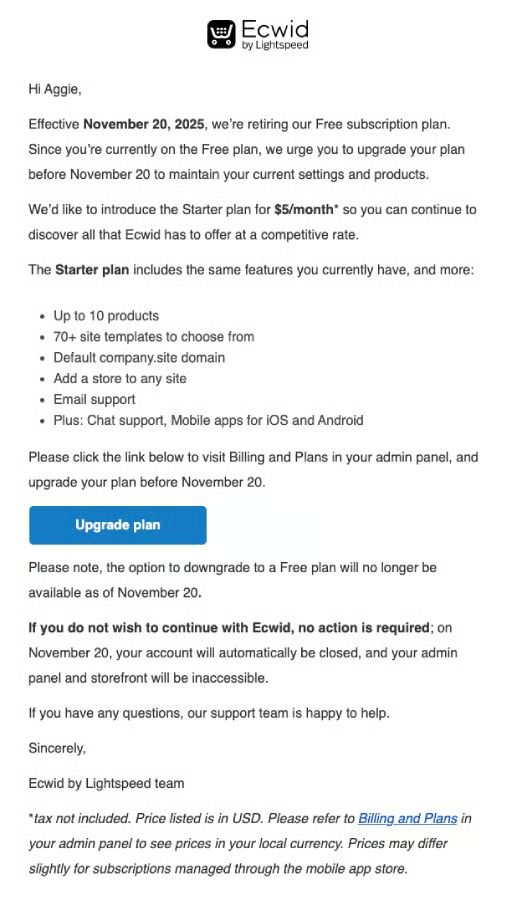
Ecwid also emailed me to confirm that my own free plan will end on November 20, 2025. I had assumed the free tier was only discontinued for new users, but Ecwid is phasing it out entirely. To keep a storefront active, existing users must switch to the $5-per-month Starter plan; accounts that don’t upgrade will be closed and their storefronts taken offline on the cutoff date.
Ecwid now has four paid subscriptions starting at $5 per month (Starter, Venture, Business, and Unlimited). The main differences between the plans include product limits per tier, available sales channels (such as social and marketplace selling), access to marketing tools like abandoned cart recovery, support level, and integrations, including POS.
All plans let you build an online store, embed it into existing websites, and sell in multiple places at once. Your storefront includes a mobile-responsive shopping cart and one-tap checkout options like Apple Pay and other express wallets where supported. You can click on the tab below to get an in-depth look at what each tier includes.
Ecwid pricing plans
| Starter | Venture | Business | Unlimited | |
|---|---|---|---|---|
| Monthly software fee (monthly billing) | $5 | $30 | $55 | $130 |
| Monthly software fee (annual billing, per month) | $5 | $25 | $45 | $105 |
| Number of products | Up to 10 | Up to 100 | Up to 2,500 | Unlimited |
| Social media channel integration (sell on Facebook and Instagram) | N/A | ✓ | ✓ | ✓ |
| Access to App Market (extensions) | N/A | ✓ | ✓ | ✓ |
| Inventory tracking | N/A | ✓ | ✓ | ✓ |
| Advanced SEO tools | N/A | ✓ | ✓ | ✓ |
| Sell on Amazon and eBay (via marketplace apps) | N/A | N/A | ✓ | ✓ |
| Abandoned cart email recovery | N/A | N/A | ✓ | ✓ |
| POS integration (sell in person with POS) | N/A | N/A | N/A | ✓ |
| Mobile app (Ecwid store management app) | ✓ | ✓ | ✓ | ✓ |
| Live chat | N/A | ✓ | ✓ | ✓ |
| Email support | ✓ | ✓ | ✓ | ✓ |
| Callback phone support | N/A | N/A | ✓ | ✓ |
Ecwid’s entry-level plan is now called Starter. It costs $5 per month and lets you list up to 10 products, build a simple Instant Site, or embed your store into an existing site on platforms like WordPress, Wix, or Squarespace. You still get social sharing buttons and a responsive checkout, but no Facebook or Instagram shops, no digital products, no discounts, and no App Market access.
Starter works as a low-cost way to learn the dashboard and test a very small product line before deciding whether it’s worth moving to a full-featured plan.
Venture, Ecwid’s cheapest full-featured plan, starts at $30 per month (or $25 when billed annually) and unlocks Facebook and Instagram selling, the mobile management app, live chat support, automated tax calculations, discount coupons, checkout custom fields, App Market apps, and the option to connect a custom domain.
You can upload digital files up to 25 GB each, which is far more generous than Shopify or BigCommerce, so Venture is the real starting point for hobby sellers, makers, and side hustles that need social selling and downloadable products without paying for enterprise-level tools.
The Business tier includes everything in Venture but raises your limit to 2,500 products and adds higher-level tools like marketplace integrations (Amazon, eBay, Walmart through apps), subscriptions, abandoned cart recovery, wholesale pricing groups, a multilingual storefront, planned promotions, custom URL slugs, and more advanced analytics.
At $55 per month (or $45 with annual billing), Business is fit to serve a full online retail operation. If you’re moving beyond casual sales and need features that support growth, this is the tier that has the structure in place to scale.
Ecwid’s top plan, Unlimited, removes the product limit entirely and costs $130 per month (or $105 on an annual plan). It includes everything from Business plus POS integrations for Square, Clover, and Lightspeed Retail, unlimited staff accounts, priority support, and support for a large volume of scheduled promotions. Annual subscribers also receive six hours of free customization work, which is helpful if you want assistance with deeper design or integration needs.
Unlimited is best suited for established retailers that need true omnichannel selling, a larger team, and the freedom to expand their catalog without limits.
Payment processing (payment gateways)
Ecwid does not have built-in payment processing and instead connects with more than 70 payment gateways, including PayPal and Stripe. Even if it doesn’t have a native payment provider, it does not charge transaction fees or markups on top of the payment provider’s processing fees.
Lightspeed’s 2021 acquisition of Ecwid allowed for the inclusion of Lightspeed Payments as a payment provider for the platform, letting merchants offer subscriptions and accept Google Pay and Apple Pay. A great advantage of using Lightspeed Payments is that you can see your balance and payouts on the Finance page in your Ecwid admin.
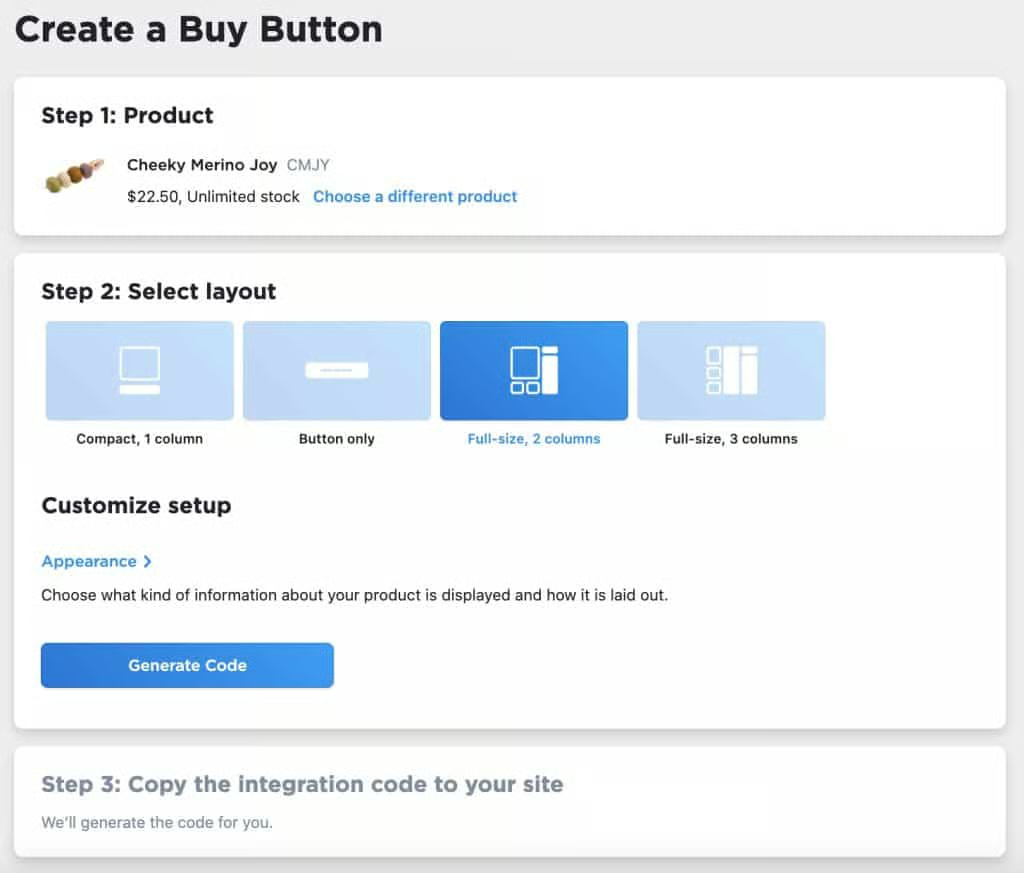
Buy Now button
Its Buy Now button can be added to any webpage and links directly to your products. It even automatically adapts to the website’s colors and style.
Ecwid new features
Since our last update in 2024, Ecwid has rolled out numerous changes to its platforms. I have summarized key Ecwid updates for 2025 that are most relevant for you:
- A more flexible Instant Site. New industry-specific templates, rich text formatting on pages, brand menus in the header, age-verification pop-ups, multilevel dropdown navigation, and more control over how product cards, filters, and categories look are now all directly available inside the Instant Site editor. You can also add contact forms, contact widgets, and even custom HTML/CSS/JS blocks anywhere on the site.
- Built-in AI features for content, SEO, and design workflows. Ecwid now offers AI tools to generate and edit product descriptions, translate product content into other languages, and create SEO meta descriptions from the admin or mobile app, plus an AI-assisted feature to generate custom site sections from a short description or screenshot.
- Product presentation upgrades. You can show color options as customizable swatches on product pages and grids, pick swatch colors directly from product photos, and add on-image text labels to highlight details like size worn in a photo.
- One-click checkouts and automatic tax features. Ecwid added one-click checkout for stores using Lightspeed Payments or Stripe (with Apple Pay and Google Pay in the checkout flow), plus multi-state tax nexus for US merchants, tax handling for pickup orders and bulk manual tax updates.
- Easier promotions and catalog rules. Category-level promotions now automatically include all subcategories, and Ecwid reworked the promotions interface and order-creation workflow so you can apply deals faster, search more easily, and see accurate totals as you go.
- Filtering and navigation are more shopper-friendly. You can now choose where filters appear (catalog vs category pages), which side of the page they sit on, and whether they open by default, while shoppers get a dedicated brands menu and richer promo sliders and featured product sections on Instant Site.
- Ecwid mobile app improvements. The mobile app is becoming a serious back-office tool. From the app, you can generate AI product descriptions, set up all promotion types, view analytics widgets on the phone’s home screen, use shortcuts for common tasks, scan multiple barcodes, see at-a-glance sales data, and manage automated email campaigns.
- Marketing and shipping integrations are stronger. Meta Pixel integration now sends key conversion events (views, add-to-cart, checkout, purchase) despite browser privacy limits to improve Facebook and Instagram ad performance, and UK merchants can connect to Royal Mail Click & Drop to buy labels and ship Ecwid orders.
Ecwid site builder and maintenance features
3.88 / 5
Ecwid’s site builder is easy to use but can be limiting for those wanting to have a full-blown website. Its tool kit is basic and not that bad, but since Ecwid focuses on adding shopping cart functionality to other websites or channels, its site builder and design tools aren’t as good as products like Wix and Squarespace that are primarily meant to be used to create standalone sites.
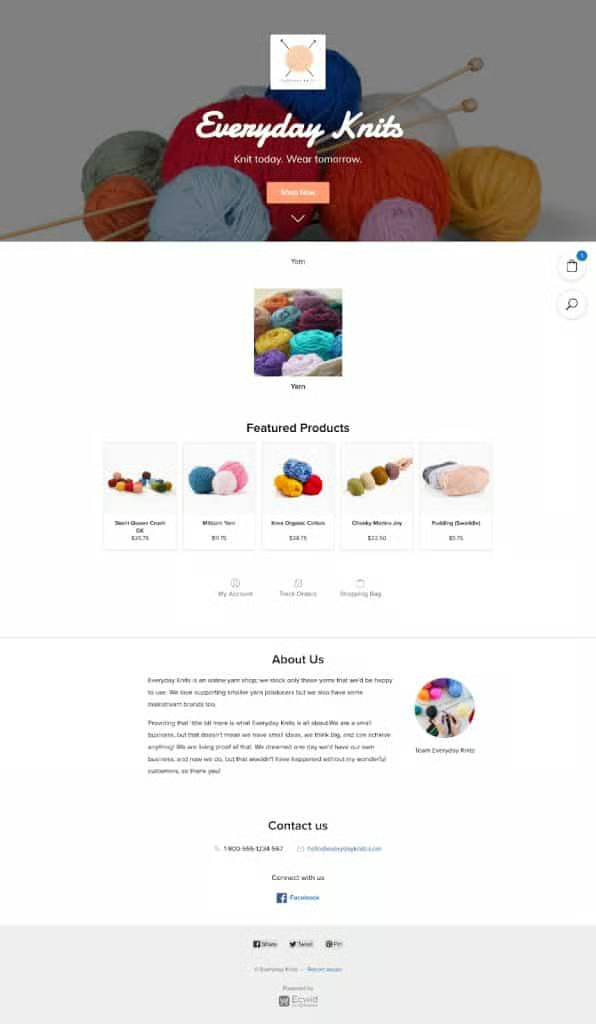
I created a demo store using Ecwid’s free plan to test its website builder, a screenshot of which you can see below. My guide on how to set up an Ecwid store takes you through the process in seven easy steps.
Instant Site builder
Ecwid was actually made to be an ecommerce widget (hence its name) added to an existing website, but it now also allows you to set up a standalone store called Ecwid Instant Site.
It isn’t a full-blown website compared to Squarespace or Shopify, as it only provides a single page, functioning more like a landing page than a website. Although limiting, it can be an advantage for businesses needing to get an online store up and running right away.
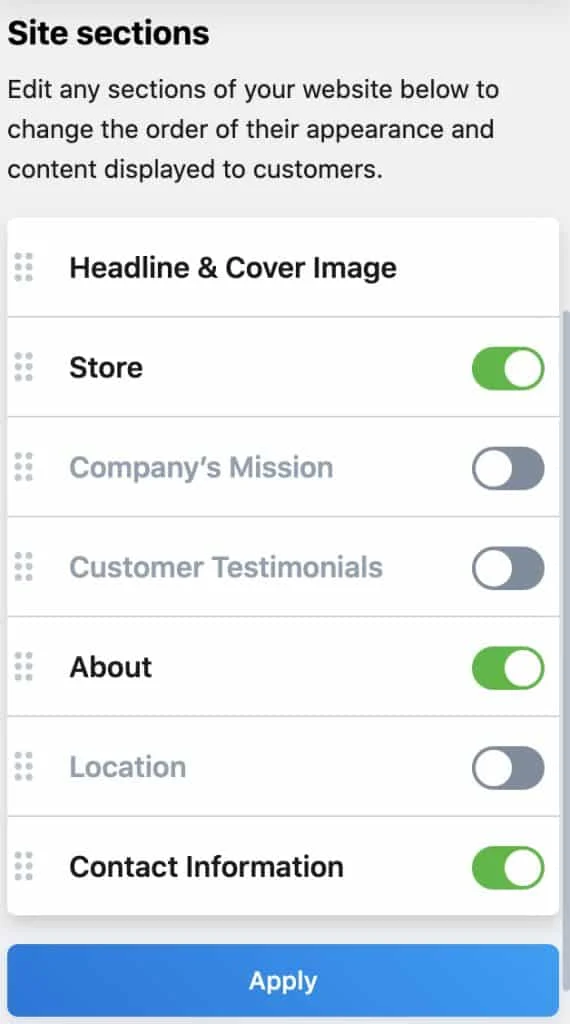
Its website builder is intuitive, although there are only a handful of sections you can add to your Instant Site — you can remove some, but you can’t add any more than what’s available.
Aside from your landing page, you can also customize product pages and include as many details as you want.
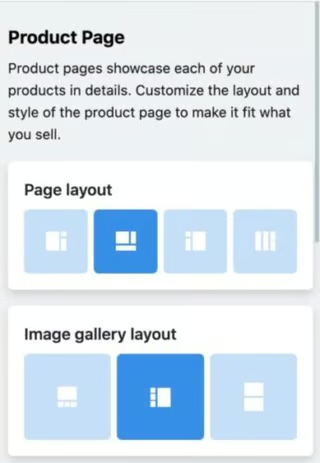
Choose how to display your product photos and layout and be as detailed as you want to provide as much information as you can to your customers. 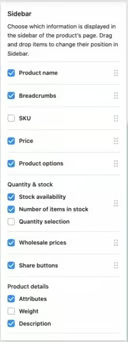
Choose how to display your product photos and layout and be as detailed as you want to provide as much information as you can to your customers.


Themes
Ecwid offers more than 70 free site themes to build your online store. All of its themes are mobile-responsive but provide limited customization.

Add to an existing site
What gives Ecwid an edge over other ecommerce platforms is its ability to let you add a store to your existing website — even going as far as to give your store the exact look and feel of your current site; customers will not even notice that your store is from another platform.
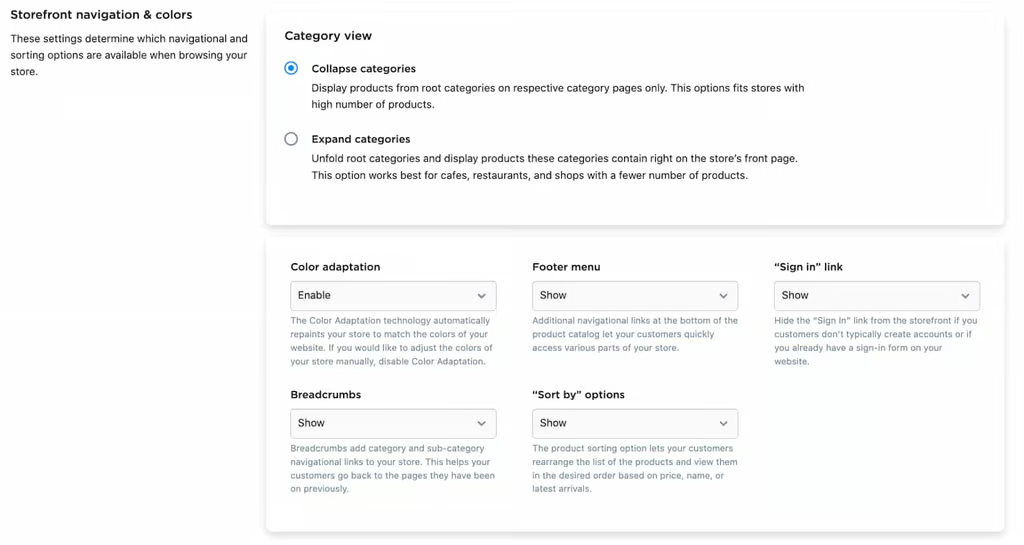
You can enable color adaptation to match the colors of your existing website automatically. 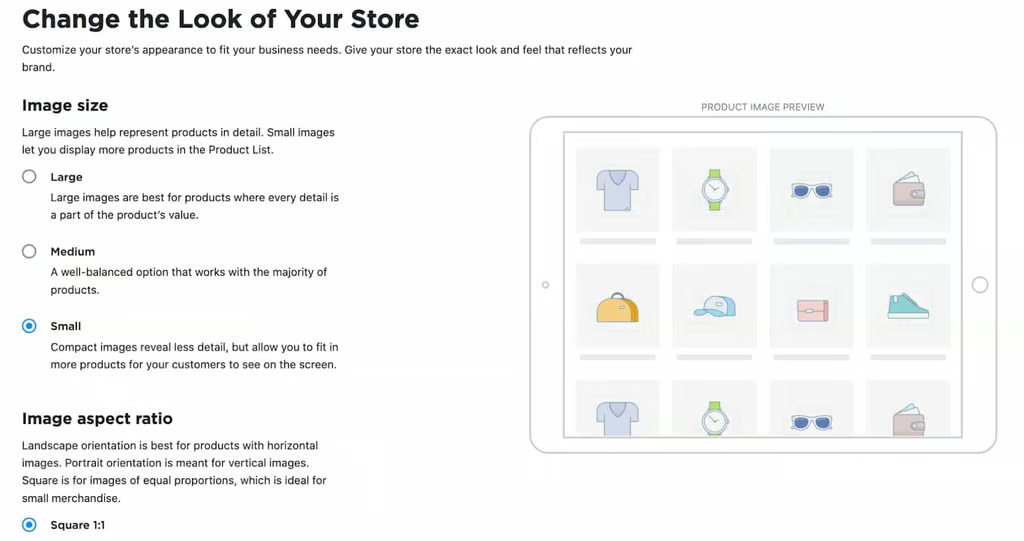
Your Ecwid store can be a one-page catalog or a product gallery from specific categories.


Security and PCI compliance
Ecwid is PCI DSS certified and doesn’t collect credit card information. Payments happen on the payment processor’s secure page.
Edwin uses secured hosting. Its team regularly scans the platform for breaches, protecting this information with software updates, and stores backups of users. Edwin stores data on Amazon Web Services.
Related:
- PCI Compliance for Small Business: What You Need To Know
- Ecommerce Payment Security: 10 Small Business Best Practices
SEO
This is one of Ecwid’s weaknesses and is even unavailable in the Free tier. SEO features include the ability to change page titles and meta descriptions—but Ecwid automatically generates URLs for product pages based on your product title. This is not ideal, as it can get confusing if you want to change product titles to reflect better SEO
Ecwid also adds random numbers to the end of URLs, as seen in the image below.

Another area where the platform doesn’t perform quite so well when it comes to SEO involves AMP (Accelerated Mobile Pages). Unlike competing products, such as BigCommerce and Shopify, Ecwid doesn’t let you create AMP for your products.
Third-party integration
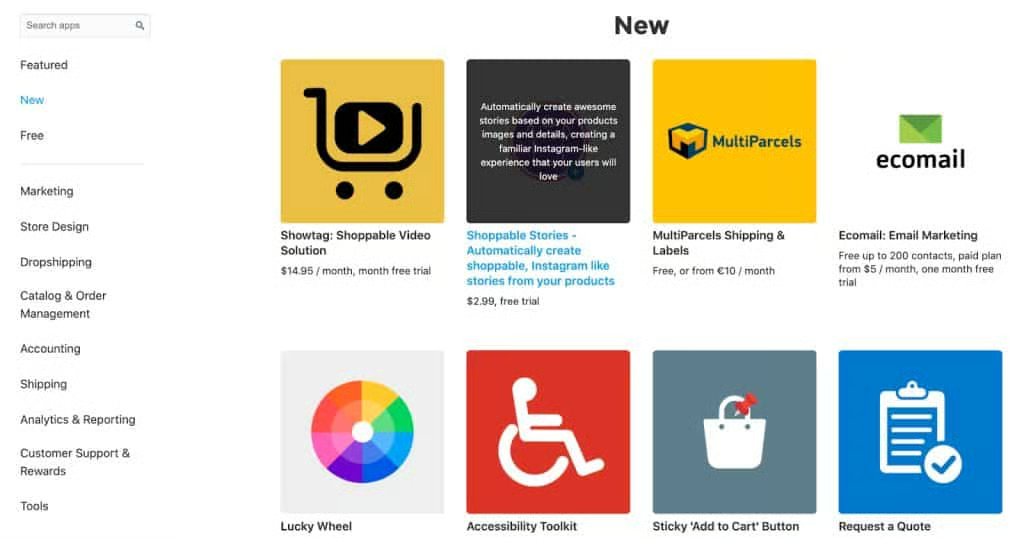
Ecwid’s app marketplace, App Market, is not as extensive as those of Shopify and BigCommerce. As of this writing, Ecwid has just over 100 integrations.
Ecwid sales and product features
4.44 / 5
Ecwid features great sales and product tools, but only makes it available in varied tiers in paid plans. While some features, such as social media selling, are available on Venture, its first-entry plan, the abandoned cart saver is only available on the next paid tier, Business ($39).
In-person selling (the ability to integrate a POS), meanwhile, is only unlocked on the highest tier ($99/month). This is expensive considering you also have to pay for POS monthly fees if you forgo using its own version of POS, Sell on the Go, which is available only in iOS and certain countries.
Product management
Product limits are enforced on each plan; however, there’s no limit on product variants. You can also enable shopper-facing customizations when ordering, such as attaching images as files. However, inventory tracking for variants is only available on the Business and Unlimited plans.
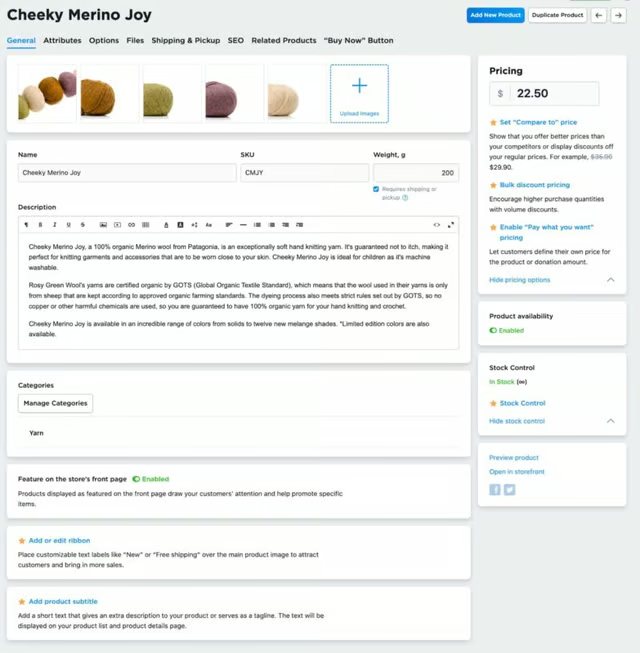
Set up your product name, photos, SKU, weight, description, and price on the Product page. 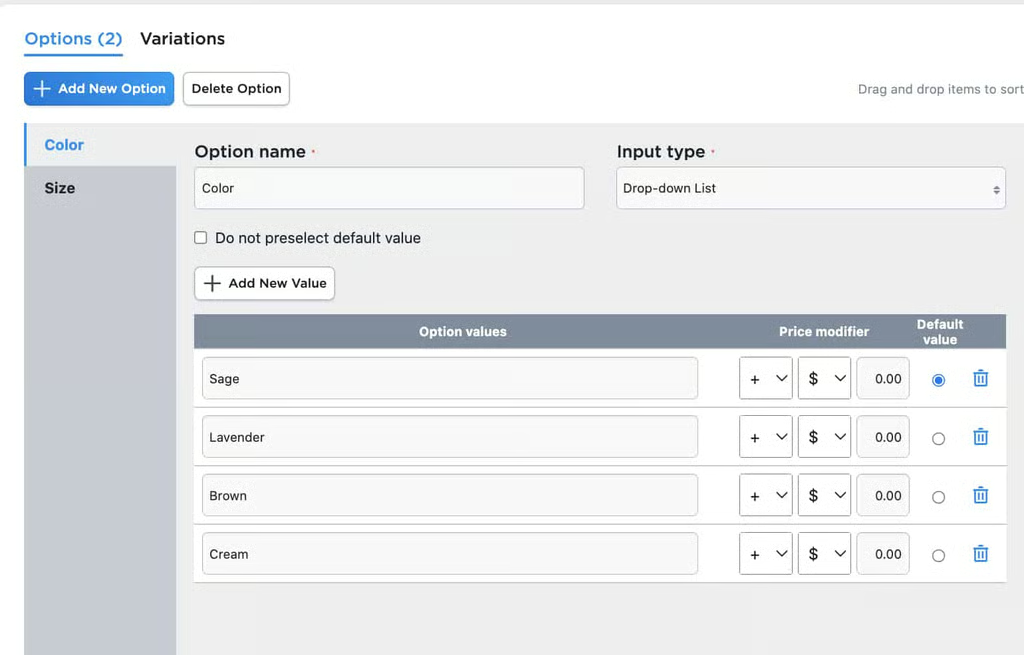
Ecwid lets you set up product options with unlimited variants.


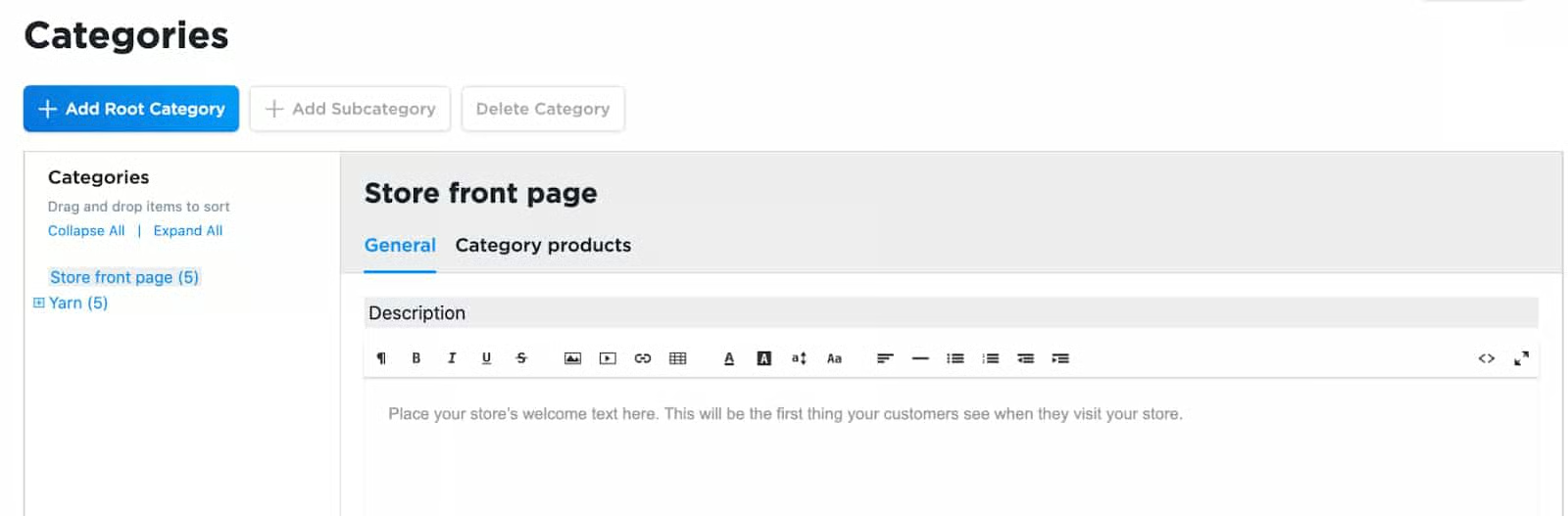
Setting up product categories involves a hierarchical setup. You need to set up categories in a different section of the dashboard — instead of right inside the product setup pages.
Point-of-sale (POS) integration
Ecwid still does not offer its own POS hardware or a native in-store checkout system. Instead, you integrate third-party POS platforms like Lightspeed Retail POS (X-Series), Square POS, Clover, and Alice POS through Ecwid’s POS apps so your in-person and online sales share the same product catalog, customers, orders, taxes, and inventory.
These integrations are only available on the Unlimited plan, which costs $130 per month, so using Ecwid as a true omnichannel system sits behind its highest tier. If you need an integrated POS and online store system, I recommend choosing one of our recommended multichannel POS systems like Shopify.
For simple in-person selling, Ecwid also offers the free Sell on the Go app for iOS. The app syncs with your Ecwid store and lets you select or scan products, accept cash or card payments via connected readers, and automatically update inventory and orders. You need to be on a paid Ecwid plan to use Sell on the Go, but it works well for pop-ups, fairs, and cash-on-delivery sales without requiring a full POS system.
Multilingual and multicurrency capabilities
Ecwid storefronts support 36 languages and can automatically switch the interface based on the shopper’s browser language or location. The platform automatically translates default store elements such as buttons, labels, and system messages, while you provide translations for catalog content like product names and descriptions (manually or using Ecwid’s built-in AI translation tools).
There is no extra app or fee required to enable multilingual support. Ecwid still does not offer native multi-currency display, but you can show prices in shoppers’ local currencies using third-party currency converter apps from the Ecwid App Market. This multilingual feature is available only on the Business and Unlimited plans.
Dropshipping
Dropshipping in Ecwid is done through apps like Wholesale2B, Syncee, Spocket, Sup, NextsChain, Printy6, and Printful, all of which are established dropshipping providers.
Related:
Marketing tools
Ecwid offers a solid set of built-in marketing features, but several key tools only unlock on higher tiers. Messenger live chat, coupons, promotions, and gift cards are available starting on the Venture plan, while automated abandoned cart recovery is limited to the Business and Unlimited tiers.
Email marketing is handled through integrations rather than a native newsletter tool. Ecwid connects with Mailchimp so you can sync customers, orders, and coupon data and send campaigns from inside Mailchimp instead of the Ecwid dashboard.
Ecwid also supports wide multichannel selling. You can add your store to multiple websites (including WordPress, Wix, and Squarespace) and connect to social and marketplace channels like Facebook Shop, Instagram Shopping, TikTok, Amazon, and eBay.
Compared with other ecommerce platforms, Ecwid’s marketing features are a mixed bag. Shopify and BigCommerce include many essential tools — such as abandoned cart recovery, gift cards, and advanced discounting — on their entry or mid-tier plans, while Ecwid keeps some of these basics behind its higher-priced tiers.
However, Ecwid has an advantage in offering built-in Facebook Messenger live chat on all paid plans, something that typically requires third-party apps or paid add-ons on Shopify, BigCommerce, and Squarespace
Shipping tools
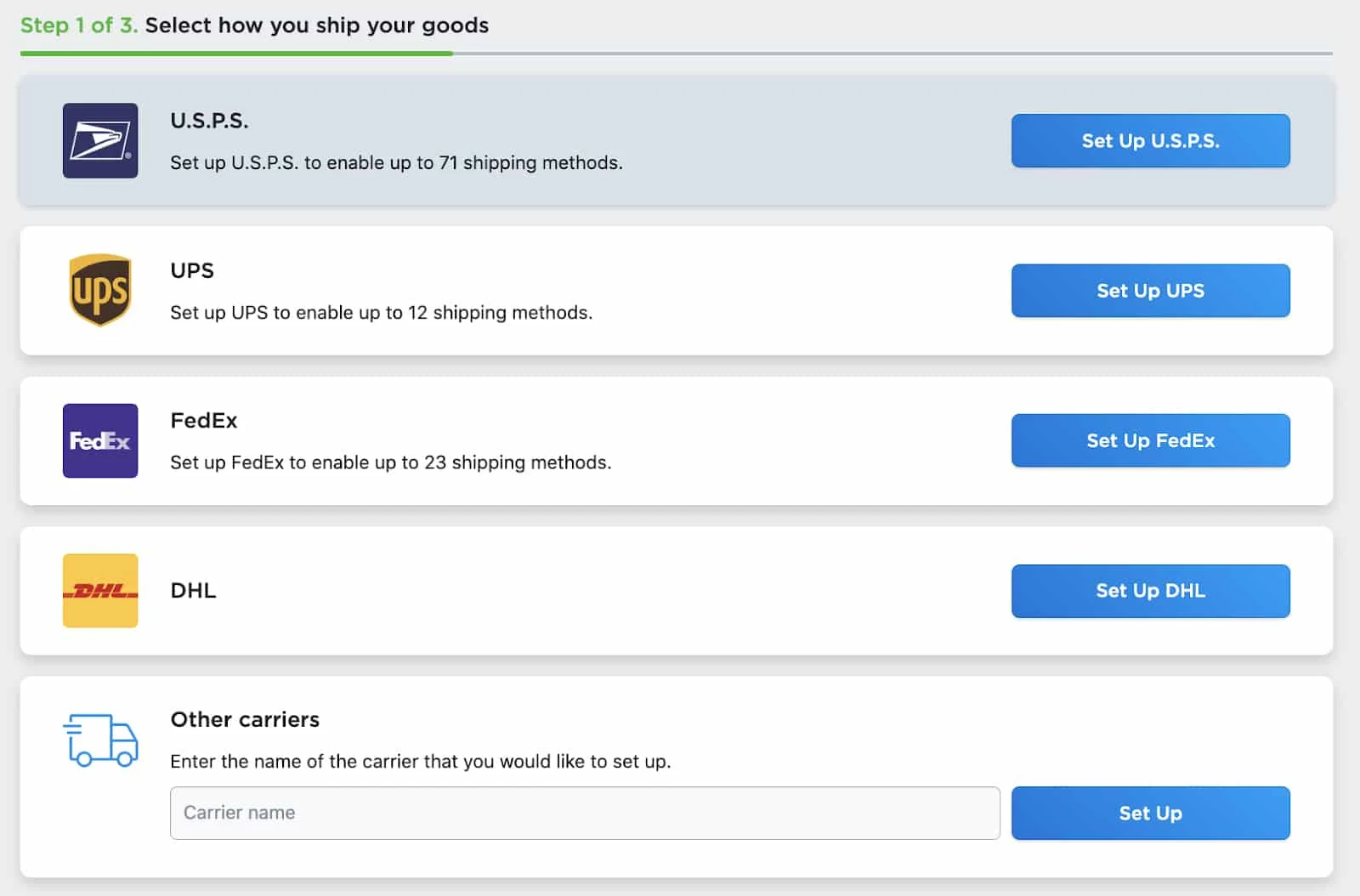
Like most competitors, Ecwid offers different shipping options (flat fee, based on weight, free shipping, etc.). However, its advantage is its built-in integration that allows for real-time shipping rates for UPS, USPS, and FedEx among others—and making it available on all plans.
Reporting
Ecwid doesn’t have native reporting at all, a clear disadvantage compared to Shopify and other platforms. However, you can install reporting analytics apps like MonkeyData for free. Ecommerce tracking can also be enabled via Google Analytics.
Mobile App
Ecwid provides a store management app (iOS and Android) for paid subscribers. You can also manage your store through the app by updating inventory, managing orders, and receiving notifications. Images, prices, availability, and any changes that you make online automatically sync with the mobile app. This is different from the Sell on the Go app, which processes in-person sales.
Ecwid ease of use
4.25 / 5
- Intuitive user interface
- Guided prompts in dashboard
- Help center, guides, and videos
- Customer support: live chat, email, and phone
- Priority support for those under Unlimited Plan
- Free customization on higher tiers (paid annually)
Based on experience, signing up for Ecwid is easy. The dashboard’s navigation is intuitive, with the prelaunch tips displayed prominently on the homepage upon logging in. It outlines the steps that you need to launch your store.
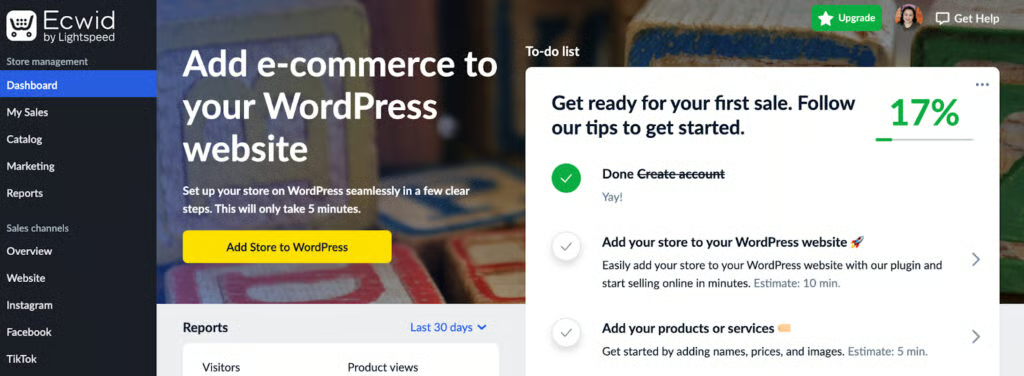
Adding products and customizing the Instant Site was also a breeze. Given the rudimentary features you have access to under the free plan, you can easily set up an online store and start selling in a few hours.
If you use Ecwid to integrate or embed to an existing site, there are also clear and easy instructions in the dashboard. A non-technical user can definitely follow the steps necessary to embed the code to an existing site.
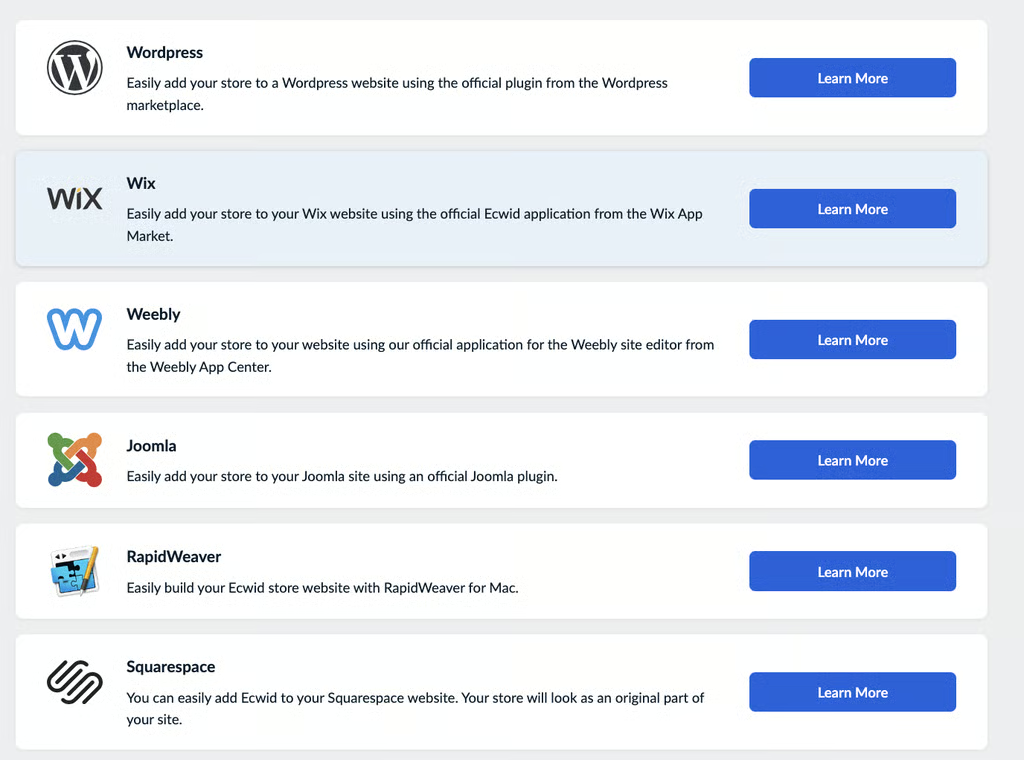
You don’t have to look further when embedding an Ecwid store to an existing site, as there are instructions found straight from your dashboard. 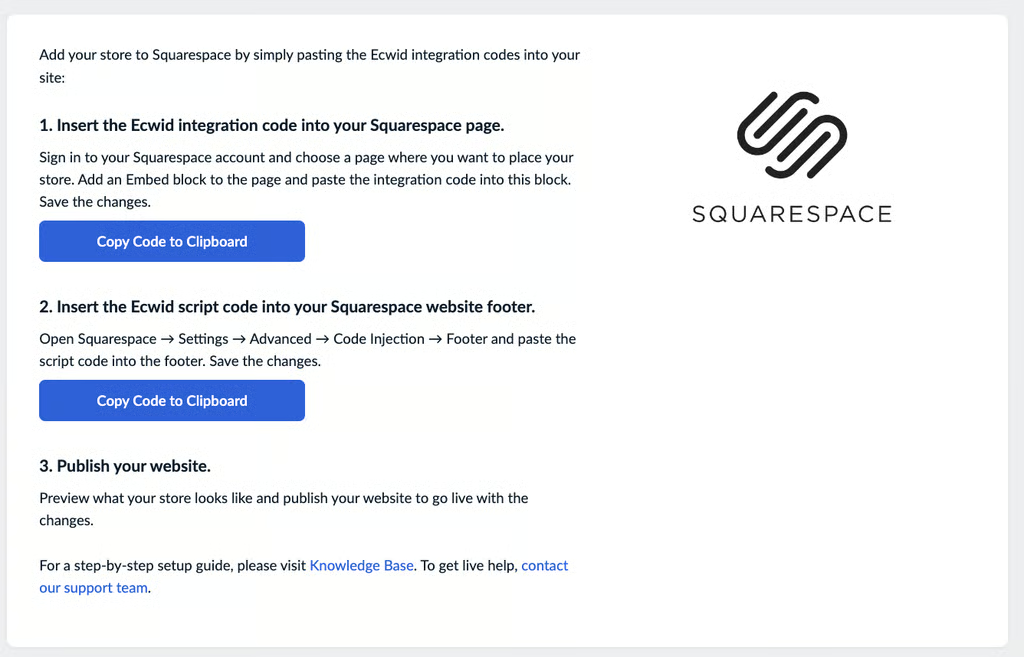
Here is an example on how to embed an Ecwid store to an existing site, such as Squarespace.


Customer support
Customer support is one of the weaker areas in my Ecwid evaluation. Entry-level users on the Starter plan (and remaining legacy free accounts) get email support plus access to the help center, video guides, and community resources, but no direct live chat with a human agent or phone support.
Paid plans add real-time help, but it is still limited compared with key rivals. Venture, Business, and Unlimited customers get 24-hour live chat on weekdays and email support, while phone help is only available as a callback for Business and Unlimited users and only in English. Annual Business and Unlimited plans also include 2 and 12 hours of free store customization time, and Unlimited gets priority routing.
By contrast, platforms like Shopify and BigCommerce promote 24/7 support across chat, email, and phone in multiple regions and languages, which makes Ecwid’s support offering feel more restricted, especially on its lower tiers.
Ecwid expert score
3.44 / 5
Here, we considered any standout features, the overall value Ecwid provides, user reviews, and feedback based on our own experience testing the platform.
Ecwid’s new Starter plan is fine if you only need to list a handful of products and add a basic store widget to an existing site or social profile, but the real value only starts at the Venture tier and up.
As you move into Business and Unlimited, Ecwid becomes a capable multichannel tool, yet several core features that growth-minded sellers expect by default (like abandoned cart recovery, marketplace and POS integrations, and broader automation) sit behind its higher-priced plans.
If you are serious about scaling an online store and want a stronger built-in marketing tool kit, Shopify is usually the better long-term choice. Shopify’s entry plan ($39 per month) costs more per month than Ecwid’s lower tiers, but it bundles in many tools that Ecwid reserves for Business or Unlimited, such as native POS, more advanced discounting and automation, and a larger ecosystem of themes and apps.
In practice, the price difference narrows quickly once you factor in the Ecwid plan you would actually need to match that feature set, which makes Shopify the stronger value for growth-focused ecommerce businesses.
Methodology: How I evaluated Ecwid
I evaluated Ecwid by testing the platform and building a demo store. Then, I graded it against the criteria we use to evaluate the best ecommerce platforms. I looked at affordability along with essential ecommerce features every online store should have, such as intuitive site builder tools and scalable sales and product features.
Ease of use, customer support, and the overall value each system offers were also considered.
Finally, I added my own expert opinion based on years of experience testing different ecommerce platforms.
I looked for free or low-cost plans under $100, flexible pricing that supports growth, and integrations with mobile wallets, Stripe, PayPal, and buy-now-pay-later options.
I checked for good templates, customization flexibility, third-party extensions, and essentials like SEO tools, SSL certificates, and hosting resources.
I evaluated how easy it was to manage products, track inventory, offer local pickup or shipping, and sell across marketplaces and social media. I also looked for built-in marketing tools like email, discounts, and personalization.
I gave higher scores to platforms that were simple to set up, had clear guidance or help centers, and offered 24/7 support through multiple channels.
I considered standout features, how well each platform fits small business needs, and how they integrate with other tools. I also tested each one myself and interacted with support to rate the overall experience.
Frequently asked questions (FAQs)
Click through the questions below to get answers to some frequently asked Ecwid review questions.
What are the downsides of Ecwid?
The main downsides are Ecwid’s strict product limits on every tier, the loss of its old forever-free plan, and the way it paywalls core tools like abandoned cart recovery, wholesale customer groups, marketplaces, and POS integrations on higher plans. Compared with platforms like Shopify and BigCommerce, you also get less flexibility around themes, design, and built-in features unless you rely heavily on apps.
Does Ecwid allow for selling to wholesale customers?
Yes. Ecwid supports wholesale selling through bulk discount pricing, customer groups, and group-specific discounts, so you can give logged-in wholesale customers different price tiers or special deals. Many merchants either create a “Wholesale” customer group with its own discounts or run a separate storefront dedicated to wholesale buyers.
Does Ecwid have a free trial?
Ecwid does not offer a traditional time-limited free trial of its paid plans. Instead, new users start on a low-cost paid tier (Starter) and can upgrade at any time, while some individual apps in the Ecwid App Market offer their own short free trial periods.
Is Ecwid user-friendly?
Yes, it is. User navigation and site building can be done intuitively, and its help center is jam-packed with tutorials and videos that are clear and easy to understand.
Is Ecwid good for beginners?
Yes, Ecwid is definitely good for beginners. Its site builder is limited to a single-page website, so setting up is quick and easy. Embedding the Ecwid store to an existing site also comes with clear-cut instructions that are achievable even for non-technical users.
What are the advantages of Ecwid?
Ecwid’s biggest advantage is letting merchants add shopping cart functionality to their existing sites by embedding the Ecwid store.
What is the best alternative to Ecwid?
Shopify earned the highest score in our evaluation of best ecommerce platforms. We have reviewed close to 20 ecommerce software and found Shopify to be the best fit for startups, small businesses, and those scaling their operations.
Bottom line
Ecwid is still a strong ecommerce option, especially if you already have a site and want to add a store rather than rebuild everything on a new platform. Its paid plans are reasonably priced and include useful features like real-time shipping rates, multilingual storefront support on higher tiers, and custom product fields, plus broad multichannel selling across websites, social channels, and marketplaces.
In my opinion, Ecwid makes the most sense if you already have an existing website with steady traffic and you want to bolt on ecommerce without migrating to Shopify or BigCommerce. Just be aware that there is no longer a free plan, product limits apply at every tier, and you will need Ecwid’s higher-priced plans to access key growth tools like abandoned cart recovery, marketplaces, and POS integrations.
User Review References:
