





.jpg?w=288)

The best free ecommerce platform lets you launch an online store without a monthly subscription while still giving you enough tools to add products, accept payments, manage orders, and grow. The real challenge is finding a free plan that stays usable without strict product caps, forced upgrades, or payment lock-ins.
I researched and tested 12 ecommerce website builders that offer forever-free plans and built the same demo store on each one to compare setup speed, customization, checkout flow, and day-to-day management. I added physical and digital products, configured shipping, tested payment integrations, and reviewed SEO settings to see what actually works on the free tier.
I also analyzed customer reviews and support documentation to confirm reliability and long-term usability. The goal was simple: identify which free ecommerce website builder options truly let small businesses launch and operate without a monthly subscription, and which ones require tradeoffs.
- Best free ecommerce platforms
- Best free ecommerce website builders compared
- How I chose the best free ecommerce website builders
- Square Online: Best overall free ecommerce website builder; best for brick-and-mortar businesses selling online
- WooCommerce: Best for WordPress users who want full control and customization
- Shift4Shop: Best free Shopify alternative and for US sellers willing to use Shift4 Payments
- PrestaShop: Best for developers needing open-source flexibility
- Freewebstore: Best for sellers wanting unlimited product listings
- Odoo: Best for businesses wanting ecommerce plus back-office tools
- WebStarts: Best for beginners wanting simple setup
- Big Cartel: Best for artists and small creative sellers
- Mozello: Best for multilingual small businesses
- Methodology (How I evaluated the best free ecommerce website builders)
- Free vs freemium ecommerce platforms (what “free” really means)
- How much does a free ecommerce website really cost?
- SEO and marketing tools in the best free ecommerce website builders
- Performance and checkout experience on free ecommerce platforms
- Security, SSL, and PCI compliance on free ecommerce website builders
- Free-plan support and developer access
- Who should (and shouldn’t) use a free ecommerce website builder?
- How to choose the best free ecommerce website builder
- When to upgrade from a free ecommerce website builder
- Frequently asked questions (FAQs)
- Bottom line
Best free ecommerce platforms
| Best free ecommerce website builder | Best for | Standout feature |
|---|---|---|
| Square Online (Editor’s Choice) | Brick-and-mortar businesses selling online | Unlimited products |
| WooCommerce | WordPress users who want full control and customization | Full WordPress control |
| Shift4Shop | US sellers willing to use Shift4 Payments | Free plan for eligible US sellers |
| PrestaShop | Developers needing open-source flexibility | Open-source customization |
| Freewebstore | Sellers wanting unlimited product listings | Free online store tools |
| Odoo | Businesses wanting ecommerce plus back-office tools | One-app free plan |
| WebStarts | Beginners wanting simple setup | Easy site builder |
| Big Cartel | Artists and small creative sellers | Creator-focused storefront |
| Mozello | Multilingual small businesses | Multilingual selling |
Important: While these platforms do not charge a monthly subscription on their free plans, you will still pay standard credit card processing fees, typically around 2.9% + 30 cents per transaction. Some platforms also require you to use their native payment processor to remain on the free plan. I outline these conditions and potential upgrade costs in the sections below.
Best free ecommerce website builders compared
| My expert score (out of 5) | Payment gateways | Product limit | Custom domain | Shipping tools | Developer skills required | |
|---|---|---|---|---|---|---|
 | 4.44 | Built-in (Square Payments) | Unlimited | ✕ | ✕ | ✕ |
 | 4.19 | Stripe, PayPal, others via extensions | Unlimited | ✓ | ✓USPS | ✓ |
 | 4.13 | Built-in (Shift4 Payments) | Unlimited | ✓ | ✓USPS, UPS, and FedEx | ✕ |
 | 4.02 | Stripe, PayPal, others | Unlimited | ✓ | ✕ | ✓ |
 | 3.64 | PayPal, Stripe | Unlimited | ✓ | ✕ | ✕ |
 | 3.39 | Stripe, PayPal | Limited | ✓ | ✓ | ✓ |
 | 3.37 | Stripe, PayPal | Limited | ✕ | ✕ | ✕ |
 | 2.77 | Stripe, PayPal | Limited | ✓ | ✕ | ✕ |
 | 2.35 | Stripe, PayPal | Limited | ✕ | ✕ | ✕ |
| Note: The above rating and features reflect the forever-free plans only. | ||||||
How I chose the best free ecommerce website builders
I tested 12 free ecommerce platforms by building demo stores, adding products, configuring payments, reviewing checkout flows, testing SEO settings, and checking which features are actually available on the free plan.
I gave the highest scores to platforms with usable forever-free plans, built-in payments, product management, SSL/security, SEO tools, support, and clear upgrade paths. You can learn more about my full methodology below.
Square Online: Best overall free ecommerce website builder; best for brick-and-mortar businesses selling online
Why I chose Square Online
I regularly test free ecommerce website builders, and most come with frustrating limitations — missing features, product caps, or intrusive ads. Square Online stood out to me because it has surprisingly few restrictions, making it the best free ecommerce store builder for small businesses. It’s as close as you can get to a fully functional, professional online store without entering a credit card.
The setup is fast and intuitive, I built a complete demo store in just a few hours. While layout customization and third-party integrations aren’t as flexible as some competitors, Square Online makes up for it with speed and simplicity.
In my evaluation, Square Online earned the highest score: 4.44 out of 5. It got perfect marks for its unlimited product listings, one-click checkout options, and support for digital products. It’s also the only platform that lets you sell online and in person using its POS system — even on the free plan.
Free plan inclusions
Square Online’s forever-free plan lets you list an unlimited number of products (physical or digital), track inventory, and manage SEO. It also integrates marketing software like Mailchimp, things you might not need right away but are very nice to have as you grow.
- Unlimited products: List and sell unlimited physical and digital products like e-books and videos with no website storage or photo upload limits.
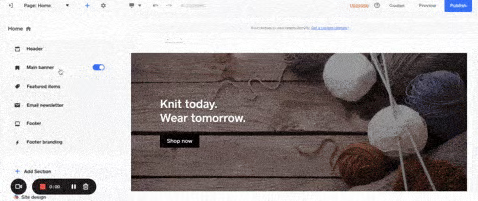
- Full website: You can create the usual main navigation pages a website has, such as a Contact Us page, then customize it with your logo and colors. You can also add blank pages, a gallery, and email capture forms.
- Coupon codes: Create coupon codes that visitors can enter to receive a percentage or dollar amount discount or free shipping. Coupons can be valid for all orders, orders over a certain amount, or specific items.
- Subdomain: Free plans come with a customizable “square.site” subdomain, so your website will appear as “yourstore.square.site” on the address bar.
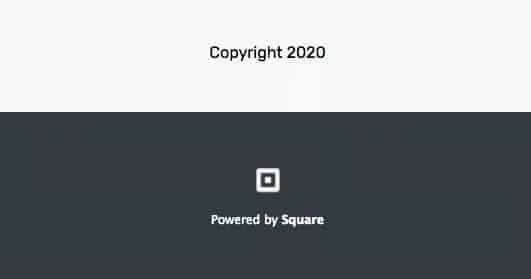
- Square branded footer: Free websites also display “Powered by Square” on the footer of each page. It’s subtle and doesn’t look too bad compared to other free website builders with ecommerce. However, you’ll need to upgrade to at least the Plus edition ($49 per month) to remove it.
- Customer support: Support for Square Online is a little tricky to reach. You have to chat with its support robot and request to speak with a representative. Phone and live chat support are available weekdays from 9 a.m. to 9 p.m. Eastern time and weekends from 11 a.m. to 8 p.m. Eastern time. During my evaluation, it took about 30 minutes to connect to a live support agent and one business day to respond through email.
Free plan limitations
An upgrade to a paid plan is necessary when you need one or more of the following features:
- A custom domain: One of the main reasons to upgrade from the free plan is to use your domain name instead of yourstore.square.site. To do this, you’ll need to upgrade to Square Online’s Plus ($49 per month), which includes a free custom domain that’s good for a year.
- Shipping tools: With a Premium account ($149 per month), you can use a shipping calculator to charge customers real-time rates from USPS, UPS, FedEx, or DHL. Transaction fees are also discounted. If you aren’t ready to upgrade yet, note that with WooCommerce and Ecwid, you can access some of these shipping tools for free.
- Customer reviews: If you want to give customers the ability to leave reviews of your products, you’ll need to upgrade to at least the Plus plan ($49 per month).
WooCommerce: Best for WordPress users who want full control and customization
Why I chose WooCommerce
WooCommerce is one of the most feature-rich free ecommerce platforms I have tested, earning a 4.19 out of 5 in my evaluation. It stands out for its extensive third-party integrations and unlimited storage, making it a powerful option for those who want full control over their online store.
From my hands-on experience building a WooCommerce demo store, I found it to be one of the most customizable platforms available, but that flexibility often comes at a cost. You need to pay for hosting and have a WordPress site, before you can actually use WooCommerce. Customer support also comes at a premium, although it has an active and helpful user community, being an open-sourced platform.
Moreover, many advanced features require paid extensions, and the platform can feel overwhelming if you’re unfamiliar with WordPress, plugins, or coding. That said, for tech-savvy users willing to invest time into setup and customization, WooCommerce offers unmatched scalability and control.
Free plan inclusions
- Unlimited products: List an unlimited number of products, including physical and digital goods (like e-books and videos). WooCommerce also includes tools to manage your inventory, such as low stock alerts.
- USPS integration: Calculate the shipping price in real time when a customer checks out, then print discounted USPS postage straight from WooCommerce with the customer’s name and address already filled in. You can integrate other carriers like UPS and FedEx for an additional fee.
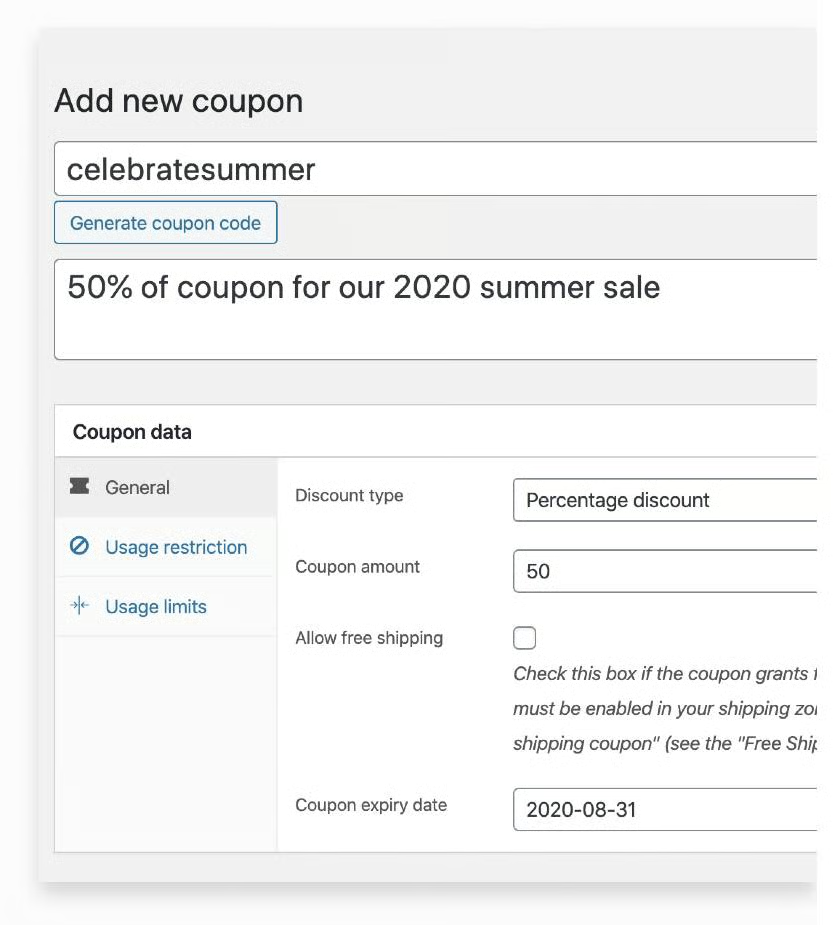
- Coupon codes: WooCommerce lets you create coupon codes for discounts on the customer’s order. You can also create special rules, such as requiring a minimum spend and excluding certain items.
- Product reviews: Allow customers to rate and submit reviews of your products.
- Support: WooCommerce does not have customer support available to free users, although there is a help forum where you can ask other users questions.
Free plan limitations
WooCommerce is a free WordPress plugin and offers several third-party integrations. An upgrade to a paid plan is necessary when you need one or more of the following features:
- SEO: WooCommerce does not include great SEO tools out-of-the-box, so many users will install an SEO plugin like Yoast to help them edit search engine titles and descriptions for their products and pages.
- Multilanguage capability: An extension is required to display your site in multiple languages, and this can cost around $200 per year.
- Marketing: Another common way users upgrade WooCommerce is by installing one of the dozens of marketing extensions. You can sell on Facebook, start an affiliate program, or create targeted email campaigns with unique offers based on a customer’s previous purchases. Prices range from $0 to hundreds of dollars per year.
Shift4Shop: Best free Shopify alternative and for US sellers willing to use Shift4 Payments
Why I chose Shift4Shop
Shift4Shop (formerly known as 3dcart) offers several advanced ecommerce features — which are only available in Shopify’s higher tiers — for free. Some of its features include search engine optimization, mobile website templates, sales tracking, and free domain name registration.
Sounds too good to be true? Don’t worry, Shift4Shop doesn’t have any hidden charges. Note, though, that Shift4Shop’s free End-to-End plan is only available for US merchants, provided they use its built-in payment provider, Shift4 Payments, and process $1,000 in sales a month (minimum).
Shift4Shop scored 4.13 out of 5 in my evaluation. It earned high marks in almost all of our criteria, from pricing, payments, to features, but mixed reviews about its customer service and complicated user interface cost it points. I also ran into issues, such as error messages and pages not responding, during account setup.
Free plan inclusions
- Free domain
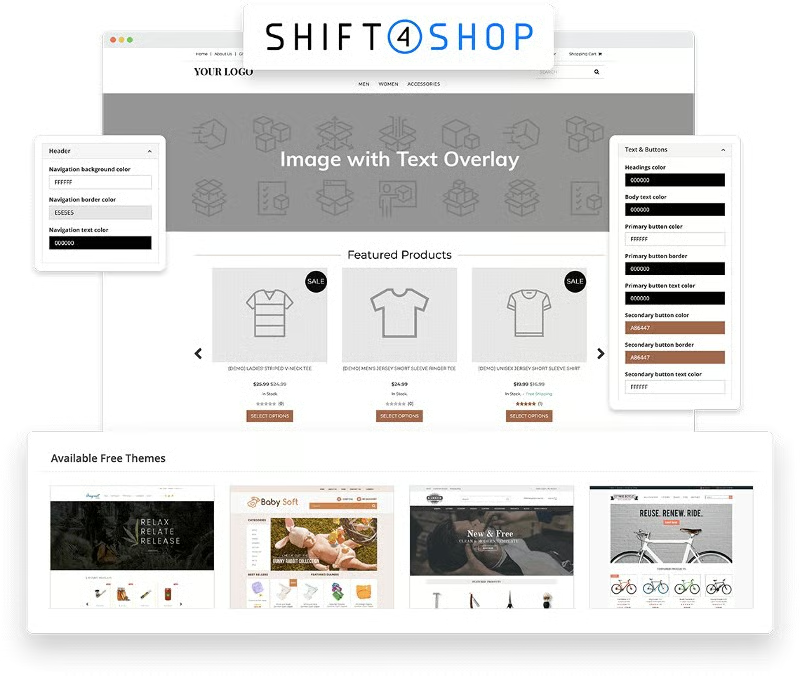
- Website builder: 50-plus mobile-ready website themes with a built-in blog.
- Product management features: Sell an unlimited number of products—even digital goods — categories and images. You can also set up upsell and cross-sell for your products and create waiting lists.
- Multichannel selling: Sell your products on sales channels, such as Amazon, Facebook, Instagram, eBay, and Google Shopping Feed.
- Marketing tools: There is a wealth of marketing tools available on the free plan, including product reviews, Google customer reviews, wish lists, gift certificates, affiliate programs, coupons and discounts, and Mailchimp or Aweber integrations.
- SEO: This is an area where the software excels. It lets you set up 301 redirects, navigation and breadcrumb links, and customizable meta descriptions. Integration with Google Analytics is also available. What we like is that it has pop-ups and prompts that remind you to fill in fields like image alt tags and meta descriptions.
Free plan limitations
An upgrade to a paid plan is necessary when you need one or more of the following features:
- More payment provider options: If you would like to have the freedom to choose another payment provider that is a better fit for your business, you need to upgrade to a paid tier (From $29).
- Automation features: Shift4Shop’s highest plan, Pro ($229/month), unlocks automation features, such as auto-shipping, autoresponder email campaigns, pre-orders, and back-in-stock notifications.
PrestaShop: Best for developers needing open-source flexibility
Why I chose PrestaShop
PrestaShop earned a 4.02 out of 5 in my evaluation, with perfect marks for the quality of its native integrations; most features are already available in the software, eliminating the need for paid add-ons from its app marketplace. However, PrestaShop’s steep learning curve and the need to pay for customer support prevented it from earning a perfect score.
Like WooCommerce, PrestaShop is free to download and install as long as your computer and hosting meet its minimum requirements. The software provides features for store customization, inventory management, payment processing, and marketing campaigns. You can also build your features as needed but will need to code them yourself or use a developer since most of its features are open-sourced, specifically built for developers.
Free plan inclusions
- Inventory management: PrestaShop offers basic and advanced inventory management solutions. Once you enable advanced stock management, you can specify quantities for every product (or combination) in your store, select the warehouse in which the product is stored (with multiple carriers), track inventory movements, current product status, and more.
- Payment processing: Set up payment methods, such as payments by invoice, COD, check, bank transfers, credit cards, subscriptions, and POS or payment via physical stores.
- Marketing: You can enable features for promo codes, coupons, and discounts, as well as have price rules like special offers based on product, customer, or order. You can also make abandoned cart recovery and engagement emails.
- Customer support: Support is a premium (paid) service. However, PrestaShop has a large and supportive community that contributes to its forum or help center.
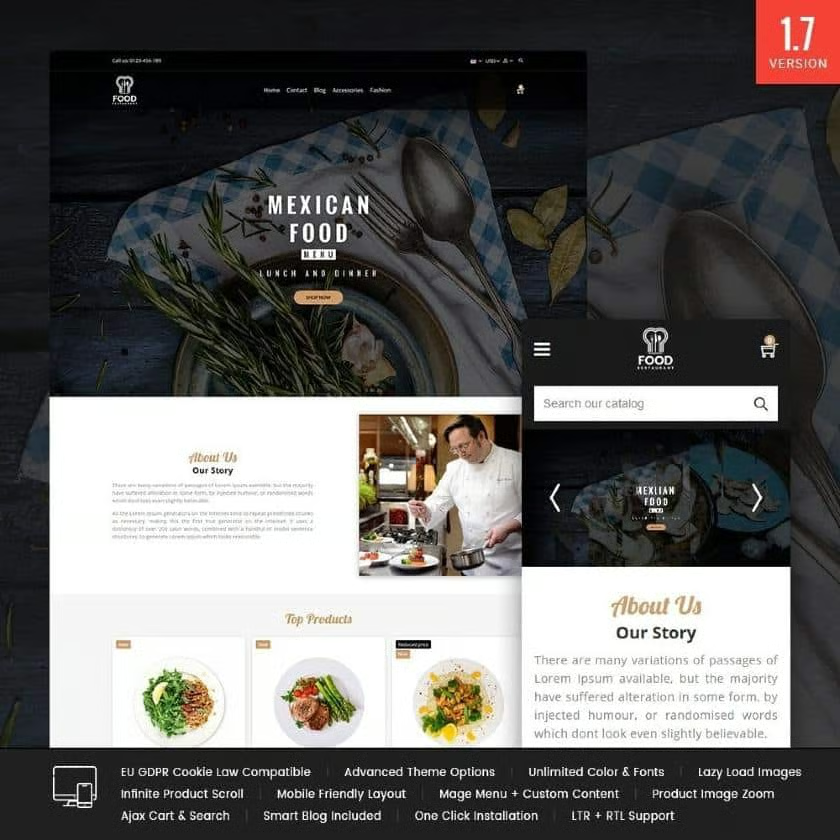
An example of a premium template in PrestaShop. (Source: Prestashop.com) 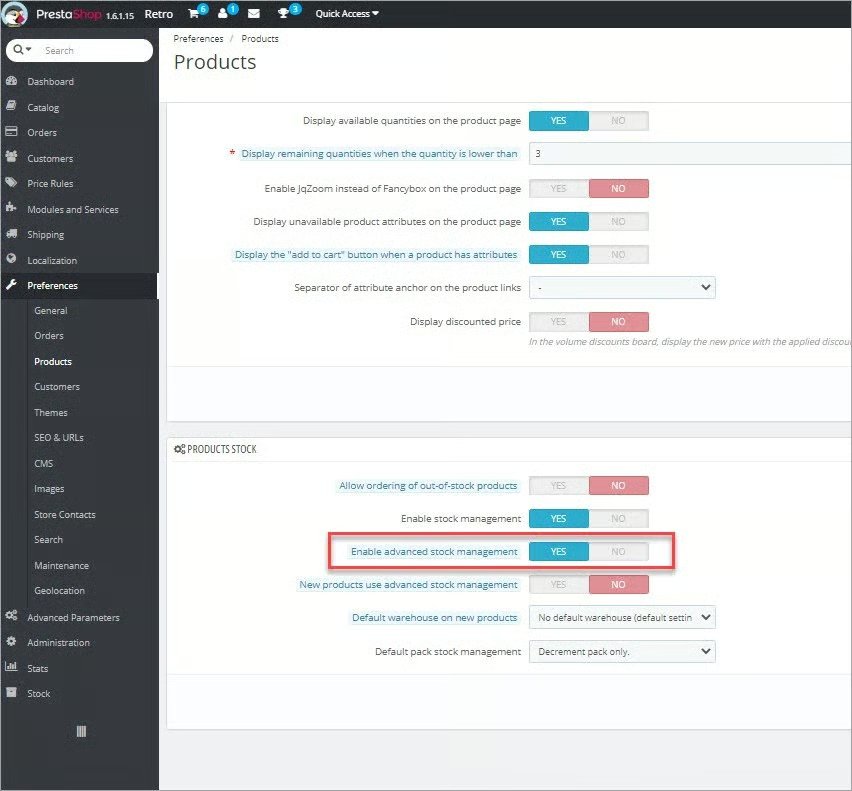
This is a view on how to enable the Advanced Stock Management Option in PrestaShop. (Source: PrestaShop Manager)


Free plan limitations
An upgrade to a paid plan is necessary when you need one or more of the following features:
- Customized website themes: While PrestaShop offers free website templates, most free offerings have limited customization abilities or unappealing designs.
- Marketplace selling: If you want to connect your store to common marketplaces, such as Amazon, eBay, Etsy, and Google Shopping, you’d need to pay for an extension module.
Freewebstore: Best for sellers wanting unlimited product listings
Why I chose Freewebstore
I included Freewebstore because it is one of the few free ecommerce website builders that allows unlimited product listings on its free plan. During testing, I was able to upload a full catalog without hitting artificial product caps, which makes it appealing for sellers with large inventories.
While it does not offer the most advanced marketing automation or design flexibility, it covers the fundamentals of selling online without requiring a monthly subscription. For sellers who prioritize product volume over advanced features, Freewebstore offers a practical entry point.
Free plan inclusions
- Unlimited products: Freewebstore allows unlimited product listings on its free plan, which is rare among free ecommerce website builders.
- Full online store: Includes product management, order tracking, and shipping configuration tools.
- SSL security: Free stores include HTTPS encryption.
- Payment integrations: Supports PayPal and Stripe for online payments.
- Basic SEO tools: Includes editable page titles and basic search optimization settings.
- Freewebstore subdomain: Stores are hosted on a branded subdomain.
- Basic support: Access to help documentation and support resources.
Free plan limitations
An upgrade to a paid plan is necessary when you need one or more of the following features:
- Remove branding: Platform branding remains visible on the free plan.
- Advanced marketing tools: Abandoned cart recovery and enhanced email tools require a paid plan.
- Expanded design control: Greater customization options are available on paid tiers.
- Custom domain: Connecting a custom domain may require upgrading depending on plan level.
Odoo: Best for businesses wanting ecommerce plus back-office tools
Why I chose Odoo
I included Odoo because it offers more than just a free ecommerce website builder. When I tested it, the ecommerce module worked well on its own, but the real advantage was how tightly it connects with inventory, accounting, CRM, and other back-office tools.
Most free ecommerce platforms focus only on storefront features. Odoo is different. If you plan to manage operations, customer data, and inventory from one system, Odoo gives you that flexibility from the start. The trade-off is a steeper learning curve compared to simpler drag-and-drop builders, but for businesses that want ecommerce plus operational control, it delivers more long-term value.
Free plan inclusions
- Ecommerce website builder: Create an online store with product catalog management.
- Business app integration: Connect ecommerce with accounting, CRM, and inventory tools.
- SSL security: Includes HTTPS encryption for hosted environments.
- Payment gateway integrations: Supports Stripe, PayPal, and other gateways.
- Built-in analytics: Access reporting tools within the Odoo dashboard.
Free plan limitations
An upgrade to a paid plan is necessary when you need one or more of the following features:
- Additional business apps: Many advanced modules require paid subscriptions.
- Expanded user access: Additional users may increase subscription costs.
- Advanced automation tools: Marketing automation and extended functionality require upgrades.
- Technical customization: Advanced customization may require developer resources or paid plans.
WebStarts: Best for beginners wanting simple setup
Why I chose WebStarts
WebStarts is one of the easiest free ecommerce website builders to set up. During testing, the drag-and-drop editor was intuitive, and I was able to build a basic storefront quickly without technical setup or configuration.
WebStarts works best for beginners who want a simple online presence with light ecommerce functionality. It does not offer the depth or scalability of higher-ranked platforms, but it provides a straightforward starting point for small sellers who need ease of use more than advanced features.
Free plan inclusions
- Drag-and-drop builder: Easy-to-use editor designed for beginners.
- Basic ecommerce tools: Add products, manage orders, and accept payments.
- SSL security: Includes HTTPS encryption.
- Payment integrations: Supports Stripe and PayPal.
- Google Analytics integration: Track visitor activity and store performance.
- WebStarts subdomain: Free stores use a branded subdomain.
Free plan limitations
An upgrade to a paid plan is necessary when you need one or more of the following features:
- Custom domain: Connecting your own domain requires upgrading to a paid ecommerce plan.
- Advanced ecommerce features: Limited built-in marketing and automation tools on the free plan.
- Expanded product functionality: Higher-tier plans unlock additional ecommerce tools.
- Remove branding: Branding restrictions may apply on the free tier
Big Cartel: Best for artists and small creative sellers
Overview
Originally designed for creatives, Big Cartel works best for businesses with small, rotating inventories. If you only need to sell a handful of products at a time, it’s a solid, hassle-free option. Its stylish, modern templates help showcase products beautifully, and unlike many competitors, it doesn’t plaster your site with ads. The only branding is a subtle Big Cartel logo in the footer, which can be removed with a bit of coding.
Big Cartel earned a 2.77 out of 5 in my evaluation, primarily due to its strict product limit and lack of inventory tracking. While it’s not built for scaling a full-fledged ecommerce business, it remains a popular choice for artists, artisans, and makers who sell limited product runs or one-of-a-kind items.
Free plan inclusions
- Use a custom domain: Big Cartel is one of the few free ecommerce website builders in my list that we’re aware of that lets you connect a custom domain, such as www.yourstore.com. If you don’t own a custom domain, you can use a Big Cartel subdomain, like yourstore.BigCartel.com, for free.
- Up to five products: Free plans list up to five unique products at a time, with one photo per item. Customers can check out using a credit card, which is processed through PayPal or Stripe. Free users cannot sell digital items like e-books and videos.
- Full website: Create a complete website with multiple pages and a contact form. Big Cartel lets you choose from many stylish themes that you can customize with your own logo and colors. Big Cartel gives you a surprising amount of control over your website’s layout and lets you integrate a small but solid set of apps, including Mailchimp, ShipStation, and live chat apps.
- Support: Big Cartel has email support available from 8 a.m. to 6 p.m. ET, including weekends. During my evaluation, I submitted a question after hours and received a helpful response first thing in the morning.

Free plan limitations
An upgrade to a paid plan is necessary when you need one or more of the following features:
- More products and photos: The most prominent reason to upgrade Big Cartel is to add more than five products and upload more than one photo per item. The $9.99 per month edition lets you sell up to 50 products, with the $19.99 per month edition 500 products. All paid versions of Big Cartel also let you sell digital items.
- Coupons: All paid versions of Big Cartel allow you to create digital coupons for customers. This can be a percentage or dollar amount discount or free shipping.
- More SEO options: Neither free nor paid versions of Big Cartel allow you to edit the SEO title and description of products. For most users, this won’t be an issue since Big Cartel simply generates them automatically. However, those looking for more SEO control should consider Square or WooCommerce instead.
Mozello: Best for multilingual small businesses
Overview
Mozello is one of the few free ecommerce platforms that let you display your website in multiple languages. Choose from more than 60 languages and let your customers change the language by clicking a link at the top of your site.
Based on my evaluation, Mozello earned a 2.35 out of 5 score. Mozello is extremely easy to use and is a solid website builder; however, this also translates to limitations on more advanced ecommerce features — related products and marketing integrations, for example, are not available.
Free plan inclusions
- Up to five products: Free users can list up to five unique products at a time. Unlike Big Cartel, you aren’t limited by how many photos you can upload, but there is an overall storage limit of 500MB for free accounts.
- Full website: Mozello makes it easy to create a full website with multiple pages and a contact form. Along with Square and Big Cartel, it’s easily the fastest ecommerce website to get up and running. That said, its design options are considerably more limited, and it has very few integrations.
- Multilanguage: Mozello is the only free ecommerce website builder on our list that supports multilanguage sites, and it’s the only one we’re aware of that covers more than 60 languages worldwide. Simply choose which languages you want to support and write your website content, like product titles and descriptions for each language. At the top of your site, visitors will click on which language they want to see.
- Subdomain: Free websites come with a customizable mozello.com subdomain, so your website will appear as yourstore.mozello.com on the address bar.
- Mozello footer: Free websites also display a small message on the footer that reads, “Created with Mozello — the world’s easiest-to-use website builder.” While it doesn’t stand out too bad, it makes the website a bit less classy than the others on this list — particularly Big Cartel, Ecwid, and WooCommerce.
- Support: Mozello has free email support in English. I sent a few questions during my evaluation and received a detailed and personalized response three hours later. While there is a phone support line, the office is based in Eastern Europe, so you will have to call early in the morning to reach them, and may incur international charges.

Free plan limitations
An upgrade to a paid plan is necessary when you need one or more of the following features:
- More products and storage: One of the main reasons to upgrade is to add more products and increase your storage for photos, videos, and other types of files. The $8 per month plan allows up to 15 items and 50GB of storage, while the $16 per month plan allows unlimited items and unlimited storage.
- Custom domain: Another key reason to upgrade is to use a custom domain instead of the yourstore.mozello.com subdomain, which is provided for free. All paid users can do this (starting at $8 per month), and a custom domain is even provided for free for one year. However, you can also connect a domain purchased from an outside registrar.
- SSL certificate: Paid users (starting at $8 per month) can enable SSL encryption, make your website more secure, and change your URL from HTTP to HTTPS. This makes your website more appealing to search engines and can help you rank higher in the results. Free accounts get HTTPS during checkout automatically to secure credit card information, but the rest of the site is HTTP.
- Coupon codes: Paid users can create promotional coupons for customers to use at their store.

Methodology (How I evaluated the best free ecommerce website builders)
To build this list, I researched and scored 12 free ecommerce website builders and open-source platforms using a structured rubric designed specifically for “forever-free” ecommerce plans
I focused only on features available on each platform’s free tier, not paid upgrades. I created demo stores, added products, tested checkout flows, reviewed SEO settings, and evaluated payment integrations to see how each system performs in real-world small business use.
Update notes
I’ve been evaluating free ecommerce website builders for several years, and with each update, I revise the scoring rubric to reflect changes in free plan availability, payment requirements, feature access, and small business priorities. Below are the most recent updates to this guide and our grading system.
- June 2026: I added a developer access and support comparison to help readers choose the best free ecommerce website builder for their needs, refreshed the comparison table for easier scanning, and reviewed provider details for accuracy.
- February 2026: I applied an updated scoring rubric to reassess all providers using weighted criteria across Pricing & Payments (40%), Site Builder & Maintenance Features (15%), Sales & Product Features (15%), Ease of Use (20%), and Expert Score (10%). I retested checkout flows, verified payment processor requirements, rechecked product limits, and confirmed which features are truly available on free plans. Scores were recalculated using 30+ weighted subcriteria so rankings reflect what small businesses actually receive at no monthly cost.
- November 2025: Ecwid was removed from the list because it no longer offers a free plan. The company ended free accounts for new sign-ups in March 2025 and announced it would retire all remaining legacy free storefronts. Existing users were notified that free stores would shut down on November 20, 2025, and accounts not upgraded by that date would be closed. Since this guide evaluates only active free ecommerce platforms, Ecwid no longer qualifies.
- August 2025: I rescored all providers to reflect updated payment processor requirements, product limits, and feature availability on free tiers. I verified which platforms require use of their native payment processor to maintain free status and adjusted pricing scores accordingly. I also re-evaluated digital product support, abandoned cart functionality, multichannel selling tools, SSL security, and PCI compliance to ensure the scoring reflects real free-tier capabilities.
- November 2023: I expanded scoring to include built-in marketing tools, abandoned cart recovery, integrated social selling, and site performance factors such as mobile friendliness. These elements now influence both the Sales & Product Features and Expert Score categories because they directly affect conversion rates for small online stores.
- August 2022: I added scoring considerations for mobile wallet support, BOPIS (buy online, pick up in store), and inventory management features to reflect the growing importance of omnichannel selling. These updates increased the weight of fulfillment tools and integrated payment flexibility in the overall rubric.
Evaluation criteria for the rubric
Below is a more detailed breakdown of our evaluation criteria. Note that we only evaluated the free plans of each software:
- Pricing (40%): I looked at product limits on free plans and whether small business owners have affordable upgrade options as they scale. I also gave points to platforms that integrate with popular payment processors like Stripe, PayPal, and Apple Pay, with bonus points for one-click checkouts since they improve both user experience and sales. Square Online and PrestaShop earned perfect scores in this category.
- Site builder and maintenance features (15%): I evaluated website templates, the flexibility of the site builder, and essential features like SSL security, storage, bandwidth, and built-in analytics. PrestaShop, Shift4Shop, and Ecwid led in this category.
- Sales and product features (15%): I assessed critical ecommerce tools, including the ability to sell digital products, seamless product setup, in-store and mobile selling, and integrated social media sales. WooCommerce, Ecwid, Shift4Shop, and PrestaShop ranked highest, thanks to their advanced integrations and customizable sales features.
- Ease of use (20%): Since online stores operate 24/7, I prioritized platforms that offer round-the-clock customer support (phone, email, and chat) even on free plans. I also gave points to solutions that are easy to set up or provide guided onboarding and a comprehensive help center. Square Online was the clear winner here, offering phone and live chat support, even for free plan users.
- Expert score (10%): I factored in standout features, overall value, small business popularity, and compatibility with other business software. My rating also included personal experience using each platform and interacting with their customer support. Square Online and WooCommerce earned the top scores in this category.
Free vs freemium ecommerce platforms (what “free” really means)
When evaluating the best free ecommerce website builder, it’s important to understand what “free” actually includes. Not all free ecommerce platforms operate the same way. Some offer ongoing access with no monthly subscription, while others use free plans as a temporary entry point before requiring an upgrade.
Before choosing a platform, clarify whether it is truly free, conditionally free, or simply a trial.
- Forever-free: No monthly subscription fee and ongoing access to core ecommerce features. You still pay payment processing fees, but the platform itself does not charge a recurring fee.
- Freemium: Free to start, but meaningful features such as custom domains, advanced marketing tools, or full checkout functionality require an upgrade to scale.
- Free trial: Temporary access to premium features. This guide does not include platforms that only offer time-limited trials.
“Free but not forever”: What history shows
Free plans can change. A recent example is Ecwid, which ended free accounts for new users and later retired all remaining legacy free storefronts. Existing free users were required to upgrade or close their stores.
This highlights three important risks when choosing a free ecommerce platform:
- Plan volatility: Providers can change pricing structures, restrict features, or eliminate free tiers entirely.
- Payment lock-in: Some platforms require you to use their built-in payment processor to remain on the free plan.
- Migration costs: Moving your store later can involve data exports, design rebuilds, new app purchases, and temporary downtime.
If you’re asking, “Is this ecommerce platform really free?”, the better question is, “How long is it likely to stay free?” Reviewing upgrade terms, export options, and payment requirements upfront can help you avoid surprises later.
How much does a free ecommerce website really cost?
A free ecommerce website builder has no monthly subscription fee, but you still pay credit card processing fees and, at higher volumes, optional tool costs. The table below shows what a free ecommerce platform with no monthly fee typically costs at different sales levels.
Assumed processing rate: 2.9% + 30 cents per transaction.
| Cost category | Hobby store (10 orders) | Growing store (500 orders) | Scaling store (2,000 orders) |
|---|---|---|---|
| Average order value (AOV) | $40 | $50 | $50 |
| Monthly revenue | $400 | $25,000 | $100,000 |
| Processing cost per order (AOV x processing rate) | $1.46 | $1.75 | $1.75 |
| Total monthly processing (processing cost per order x total orders) | $14.60 | $875 | $3,500 |
| Apps and tools | $0 | ~$40 | Varies |
| Domain cost (avg monthly) | $0 | ~$1 | Included above if applicable |
| Total monthly cost | $14.60 | ~$916 | $3,500+ |
| Net revenue (after fees) | $385.40 | ~$24,084 | ~$96,500 |
What these costs mean
| Scenario | What to expect |
|---|---|
| Hobby store: 10 orders per month | Processing fees are usually the main cost. A free ecommerce website builder is often enough if you only need basic product pages, checkout, and order management. |
| Growing store: 500 orders per month | Processing fees become more noticeable, and a custom domain, marketing tools, paid apps, shipping features, or better reporting may justify upgrading. |
| Scaling store: 2,000 orders per month | Processing costs, site performance, automation needs, support limits, and checkout restrictions can make a free platform risky for ongoing growth. |
The best free ecommerce platform is the one that fits your current order volume without creating expensive upgrade pressure too early. Before choosing, compare the free plan’s transaction fees, payment options, product limits, support, export tools, and upgrade costs.
SEO and marketing tools in the best free ecommerce website builders
The best free ecommerce website builders include basic SEO controls and discount tools, but advanced marketing features often require plugins or paid upgrades. When choosing a free ecommerce website builder, marketing capability determines how far you can grow without upgrading. Some platforms offer built-in tools, while others depend on extensions or third-party apps.
| Platform | Custom meta titles & descriptions | Blog included | Built-in email marketing | Coupons / discounts | Abandoned cart | Analytics integration | Structured data support |
|---|---|---|---|---|---|---|---|
| Square Online | Yes (basic) | No | Limited | Yes | Limited | Google Analytics | Basic |
| WooCommerce | Yes (plugins) | Yes | Via plugins | Yes | Via extensions | Google Analytics | Yes |
| Shift4Shop | Yes | Yes | Yes | Yes | Paid tier | Google Analytics | Yes |
| PrestaShop | Yes | Via module | Via module | Yes | Paid modules | Google Analytics | Yes |
| Freewebstore | Yes | Yes | Yes | Yes | Paid tier | Built-in + GA | Yes |
| Odoo | Limited | No | No | Yes (limited) | No | Limited | Limited |
| WebStarts | Basic | Yes | No | Yes | No | Basic | Limited |
| Big Cartel | Basic | Yes | No | Yes | No | Google Analytics | Limited |
| Mozello | Basic | Yes | Limited | Yes | Paid feature | Basic | Limited |
Performance and checkout experience on free ecommerce platforms
Hosted platforms provide more consistent performance, while open-source options depend on your hosting setup. Even the best free ecommerce website builder must deliver fast load times and a smooth checkout. Performance issues directly affect revenue.
Key considerations:
- Subdomain trust: Free plans often require branded subdomains, which may reduce perceived credibility compared to a custom domain.
- Performance limits: Some free ecommerce platforms restrict bandwidth or advanced optimization.
- Mobile checkout: Platforms with built-in payment processing typically provide smoother mobile experiences.
- Conversion impact: At scale, even a 1% drop in conversion rate can cost thousands per month.
Security, SSL, and PCI compliance on free ecommerce website builders
Most hosted free ecommerce platforms include SSL and PCI compliance, while open-source platforms require you to manage security through your host. Security should be verified before launching any free ecommerce website. SSL encryption, PCI compliance, and reliable backups protect both customer data and your business reputation.
Security comparison (free plans)
| Platform | SSL included | PCI compliance | Backups included | Data export available |
|---|---|---|---|---|
| Square Online | Yes | Yes (via Square Payments) | Platform-managed | Yes |
| WooCommerce | Depends on host | Depends on gateway | Host-dependent | Yes |
| Shift4Shop | Yes | Yes (via Shift4) | Yes | Yes |
| PrestaShop | Depends on host | Depends on gateway | Host-dependent | Yes |
| Freewebstore | Yes | Yes | Yes | Yes |
| Odoo | Yes | Yes | Limited | Yes |
| WebStarts | Yes | Yes | Limited | Yes |
| Big Cartel | Limited | Limited | Limited | Yes |
| Mozello | Yes | Platform-based | Limited | Yes |
Free-plan support and developer access
Free ecommerce platforms vary widely in how much support and technical flexibility they offer. Some are better for beginners who want guided setup, while others give developers more control over code, hosting, integrations, and custom workflows.
| Platform | Free-plan support | Developer/API access | Best fit |
|---|---|---|---|
| Square Online | Help center and limited live support | Limited compared with open-source tools | Nontechnical sellers |
| WooCommerce | Community and host-dependent support | Strong developer access through WordPress | WordPress users |
| Shift4Shop | Platform support | Built-in ecommerce tools and integrations | US sellers using Shift4 |
| PrestaShop | Community support; paid support available | Strong open-source customization | Developers |
| Freewebstore | Platform support | Limited | Simple free storefronts |
| Odoo | Community and documentation | Stronger inside the Odoo ecosystem | Business app users |
| WebStarts | Basic support | Limited | Beginners |
| Big Cartel | Help center and platform support | Limited | Artists and makers |
| Mozello | Basic support | Limited | Multilingual small stores |
Choose a beginner-friendly platform like Square Online, WebStarts, Big Cartel, or Mozello if you want a simpler setup. Choose WooCommerce or PrestaShop if you want more control and are comfortable managing hosting, updates, plugins, or developer support.
Who should (and shouldn’t) use a free ecommerce website builder?
A free ecommerce website builder is ideal for testing ideas and low-volume selling, but it is not built for long-term scale. Free ecommerce platforms work well when you want to launch quickly without paying a monthly subscription. However, they come with limitations in customization, automation, and performance that can slow growth.
A free ecommerce website builder is a good fit if you are:
- A new or small business testing demand: You can validate products before committing to a paid platform.
- A side hustler or hobby seller: If you sell handmade goods, digital products, or occasional inventory, a free plan keeps overhead low.
- A brick-and-mortar store expanding online: If you already sell in person, a simple free ecommerce site builder can extend your reach.
- A nonprofit or community group: A free platform can help manage donations or merchandise without upfront costs.
- A low-volume seller: If sales are occasional and branding limitations are acceptable, a free plan may be sufficient.
A free ecommerce platform may not be right if you:
- Plan to scale aggressively
- Need full design control and advanced customization
- Expect high order volume
- Rely on automation, abandoned cart recovery, or advanced analytics
How to choose the best free ecommerce website builder
Choosing the right free ecommerce website builder depends on your business needs, technical skill level, and long-term growth plans. While a free plan can help you get started, it’s important to find a platform that balances ease of use with essential ecommerce features. Here’s what to consider when making your decision:
Step 1: Understand the limitations of free plans
Free ecommerce website builders often come with trade-offs, such as product limits (e.g., only allowing you to list a certain number of products), branding restrictions (e.g., the platform’s logo or domain appearing on your site), limited payment processing options, fewer customization and marketing features, and transaction fees on each sale.
Look for a platform that offers the most flexibility within its free plan while minimizing restrictions that could slow down your business.
Step 2: Prioritize ease of use
If you’re new to website building, choose a platform with a simple drag-and-drop editor, pre-designed templates that look professional, guided setup wizards or onboarding tutorials, and an intuitive dashboard for managing orders and inventory.
Step 3: Check the sales and product features
Your ecommerce platform should support the types of products you want to sell. Consider whether the free plan allows you to:
- Sell both physical and digital products.
- Offer in-person sales or sync with a POS system.
- Sell through social media platforms like Facebook, Instagram, or TikTok.
- Easily set up product variations (size, color, etc.).
- Offer coupons, discounts, or subscription-based products.
Some platforms restrict digital downloads, in-person sales, or certain payment methods on their free plans, so make sure to check before committing.
Step 4: Evaluate payment processing options and fees
Your ability to accept payments easily and affordably is crucial. Compare available payment gateways (PayPal, Stripe, Apple Pay, etc.), check whether the platform imposes transaction fees on free plans, and see if you can accept multiple currencies or alternative payment methods.
Some free ecommerce builders only allow payments through their own processing system, which might have higher fees.
Step 5: Consider mobile optimization and SEO tools
Your online store should look and function well on mobile devices, as most shoppers browse and buy on their phones. Ensure the platform offers mobile-responsive templates, a fast, seamless checkout process, and basic SEO tools (custom URLs, meta descriptions, and alt text for images).
A free ecommerce site that isn’t optimized for mobile or search engines can limit your ability to attract customers.
Step 6: Review customer support options
Since technical issues can arise, check what kind of support is available on the free plan. Consider 24/7 availability (chat, phone, email), help center resources, guides, tutorials, and active community forums.
Step 7: Study your upgrade options
A great ecommerce platform should support essential marketing tools, such as email marketing, social media selling, analytics and reporting to track sales performance, and discount codes. While these typically are only available on paid plans, choosing a platform with strong upgrade options ensures you won’t have to switch later.
When to upgrade from a free ecommerce website builder
Free ecommerce platforms work well for testing ideas or selling a small number of products. However, if you plan to scale, run ads, build email campaigns, or customize checkout, upgrading to a paid ecommerce platform often makes financial sense.
Here are affordable platforms to consider once you outgrow a free plan:
- Shopify ($39/month): Best for growing online brands that need advanced checkout, built-in marketing tools, and reliable performance. If you plan to run paid ads or scale past a few hundred orders per month, Shopify offers stronger long-term value. Alternatively, you can get started selling on social media and have a landing page for as low as $5 per month. Read my reviews about Shopify and Shopify Starter.
- Wix ($29/month for ecommerce): Ideal if design flexibility matters most. Wix allows you to build for free, but ecommerce features require a paid plan. It’s a good step up if you want more control without switching to a more technical platform. Read our Wix review.
- Squarespace ($25/month for ecommerce): Best for visually driven brands that want a polished storefront and simple product management. It does not offer a forever-free ecommerce plan, but its design tools are strong. Read our Squarespace review.
Frequently asked questions (FAQs)
Is a free ecommerce platform really free?
A free ecommerce platform can be free to use, but selling online is not completely free. Most free plans remove the monthly software fee, but you will still pay payment processing fees, and you may need to pay for a custom domain, apps, themes, marketing tools, shipping tools, or upgraded features later.
What is the best free ecommerce platform with no monthly fee?
Square Online is the best free ecommerce platform with no monthly fee for most small businesses because it includes a forever-free plan, unlimited products, built-in payments, inventory tools, and an easy setup process. WooCommerce is better for WordPress users, while Big Cartel is better for artists with small product catalogs.
Can I accept payments on a free ecommerce website?
Yes. Many free ecommerce website builders let you accept payments, but you still pay standard payment processing fees on each sale. Some platforms also require you to use their preferred payment processor or upgrade to access more payment options.
Can I export my free ecommerce store later?
It depends on the platform. Open-source tools like WooCommerce and PrestaShop generally offer more control over your store data, while hosted free ecommerce platforms may limit exports, theme access, or migration options. Before choosing a free platform, check whether you can export products, orders, customers, and content.
When should I upgrade from a free ecommerce platform?
Upgrade when the free plan starts limiting sales, branding, marketing, support, performance, product management, or payment options. Common upgrade triggers include needing a custom domain, abandoned cart tools, better SEO features, email marketing, more integrations, advanced shipping, or a smoother checkout experience.
What is the best free Shopify alternative?
Square Online is the best free Shopify alternative for most small businesses because it offers a free online store, built-in payments, inventory tools, and POS support. WooCommerce is the better Shopify alternative if you want more control and already use WordPress.
What is the best free ecommerce platform for artists?
Big Cartel is one of the best free ecommerce platforms for artists because it is simple, creator-focused, and works well for small catalogs. Square Online is better for artists who also sell in person, while WooCommerce is stronger for artists who want more design and SEO control.
Bottom line
The best free ecommerce website builder should meet your immediate needs while giving you room to grow. Based on hands-on testing, Square Online stands out because it has the fewest limitations, no hosting fees, and an intuitive setup that makes launching fast and simple. If you want the easiest way to build a free ecommerce website and start selling right away, start selling for free with Square Online.
If you need deeper customization or advanced integrations, platforms like WooCommerce or PrestaShop may be worth exploring. Before deciding, consider your product type, sales channels, and long-term growth plans to ensure your chosen platform can support your business as it scales.
