







Learning how to check email address owners’ information increases the chance that your message reaches its intended recipients and protects you from falling for email phishing scams. This goes for small businesses, too, since consumers are increasingly becoming cautious about unknown senders and often check sender credibility before engaging.
The most common ways to check the details of an email address owner include using Google Search, a browser extension, and social media. Explore how to trace an email address to its owner using various email tools and their benefits.
- 1. Perform a Google search
- 2. Use CRM auto-enrichment tools
- 3. Pull email data using a browser extension
- 4. Use email verification services
- 5. Invest in a reverse email lookup service
- 6. Dig into social media profiles
- 7. Trace the IP address
- 8. Perform a WHOIS lookup
- 9. Contact the company associated with the email domain
- Why should you check email address owner information?
- Best practices for email owner identification
- Frequently asked questions (FAQs)
- Bottom line
1. Perform a Google search
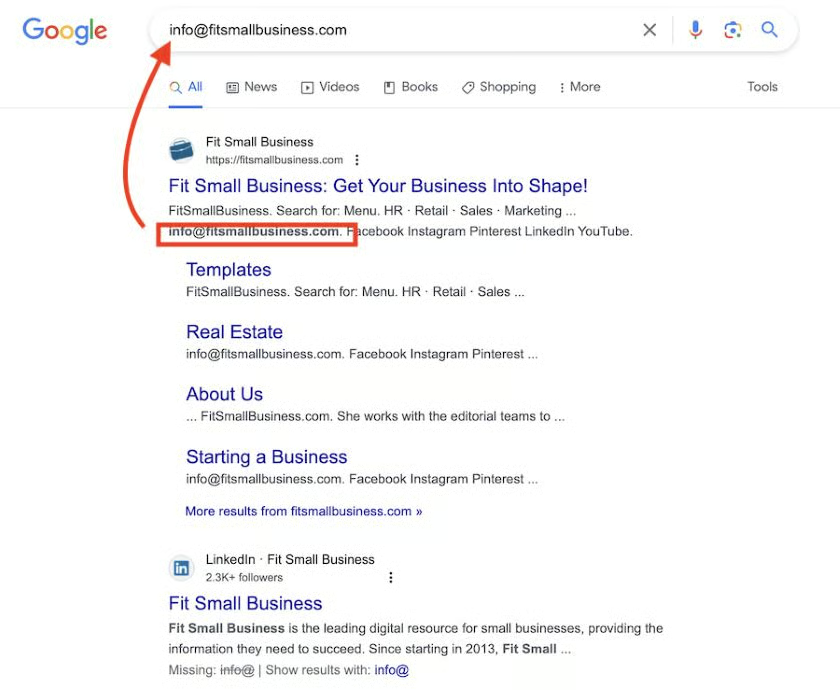
If you received a message from someone who didn’t leave a name or email signature, the first and easiest way to check email address owner details is to use Google. Plus, you can use it to confirm an address from an email list you purchased from lead generation websites like UpLead or Lead411. Just follow these two simple steps to learn how to find a person with an email address using a Google search:
- Copy and paste the address in the Google search bar and press Enter.
- Check if the email address matches the information on a directory, web page, or online profile, such as LinkedIn.
Alternatively, other search engine platforms like Bing offer the same functionality despite not being nearly as popular as Google. There’s also DuckDuckGo, which lets you search email address owner details from the web without being tracked. It does not store your personal information or follow you with online advertisements.
2. Use CRM auto-enrichment tools
Many of the best CRMs with artificial intelligence (AI) or data enrichment features automatically keep contact information up-to-date. These tools monitor publicly listed information (e.g., a company website’s contact page and social media profiles) where data — including email addresses — is constantly updated. Instead of manually searching on Google or Facebook, let the CRM automation find the owner of an email address for you.
3. Pull email data using a browser extension
If you are a Google Chrome user, you’ll love this method on how to trace an email address to its owner, as it’s extremely easy to access. Simply use browser extensions, such as FullContact, to compile robust information from your Gmail accounts and the web. These include a new contact’s job title, company, phone number, and social media links when you receive an email or do an email owner lookup.
You can also use a global database like RocketReach to instantly verify contacts from Gmail, LinkedIn, or company sites.
Here’s how to find the owner of an email address using a browser extension:
- Add an extension to your browser and enable it.
- Open the browser extension.
- Type in the name you are looking for in the search box, then press Enter.
- Check the results showing the list of email addresses associated with the name you entered and the sources.
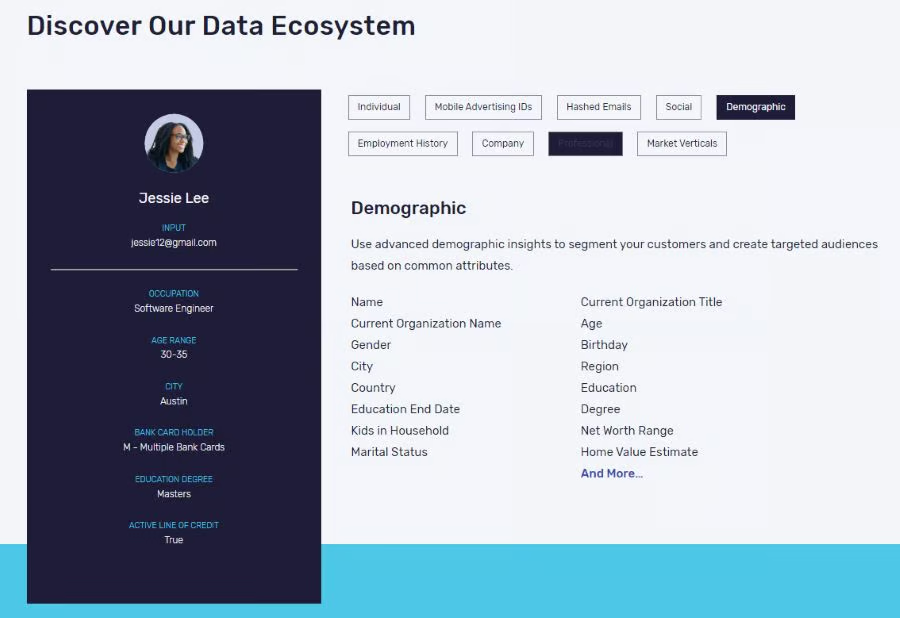
FullContact’s data ecosystem can be used for lead generation. (Source: FullContact) 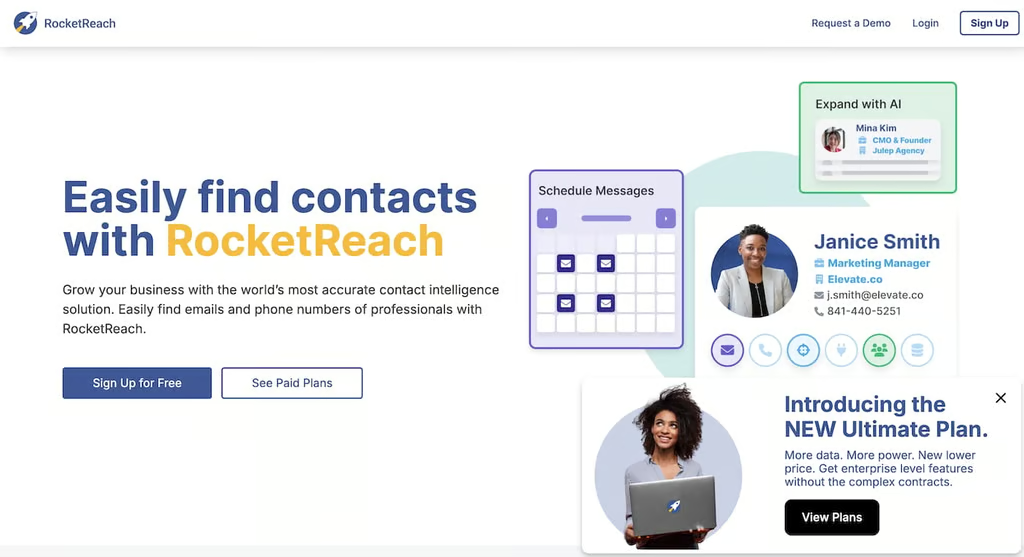
RocketReach’s global database can be used for instant email verification. (Source: RocketReach)


4. Use email verification services
Email verification services confirm the authenticity of an email address. An email verification service can implement bulk validation to instantly verify incoming email addresses through an access programming interface (API) or third-party integration. This capability helps prevent fake registrations and ensures only valid data enters your business system.
5. Invest in a reverse email lookup service
Another way to compile information from multiple sources and gain additional insights into someone is to reverse lookup an email address. Platforms like Spokeo, InfoTracer, and BeenVerified let users search contacts by name, email address, phone number, or social media profiles. They pull from white pages, public records, websites, and social media profiles to obtain results for anything associated with that person.
Spokeo also provides information on the email address owner’s address history, work history, and family connections, but it costs between $15 and $20 per month. You can also unlock an individual profile for as low as $0.95. Because it’s a paid service, we recommend it for sales teams that heavily use email marketing or email introductions in their sales activities.
Be cautious with reverse email lookup services that claim to be free but charge you to access the full report. For example, InfoTracer advertises a “Free People Search,” but when I tested it, I was redirected to a checkout page for $2.95 to get seven days of unlimited access to my search results.
While InfoTracer does provide a detailed search, I think sites like this should be more transparent about whether their services are truly free.
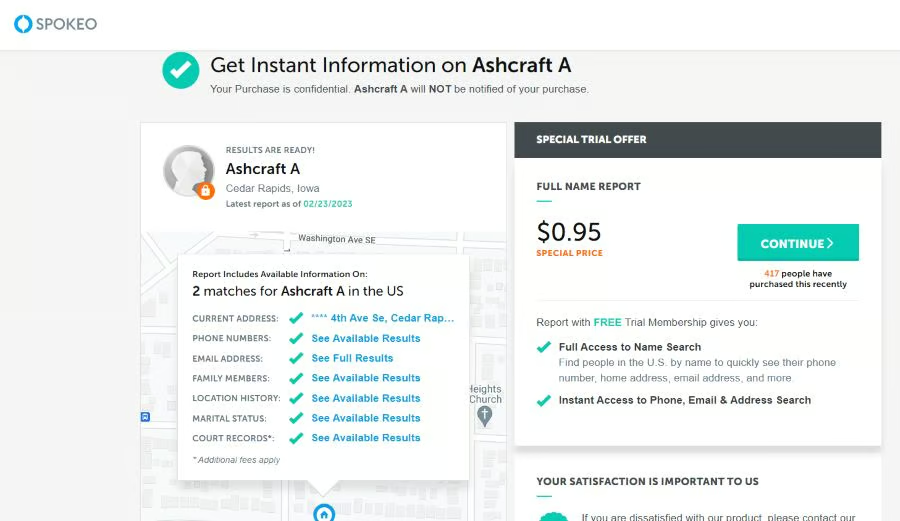
Spokeo’s profile search feature gives you instant information about a contact you are trying to find. (Source: Spokeo) 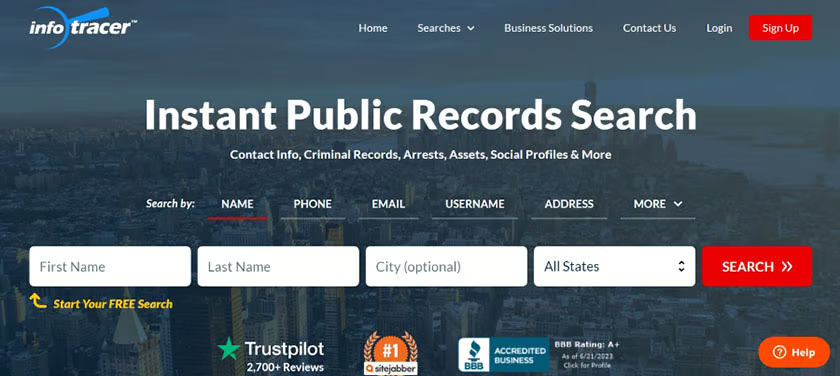
InfoTracer’s reverse email lookup option can aid in lead generation. (Source: InfoTracer) 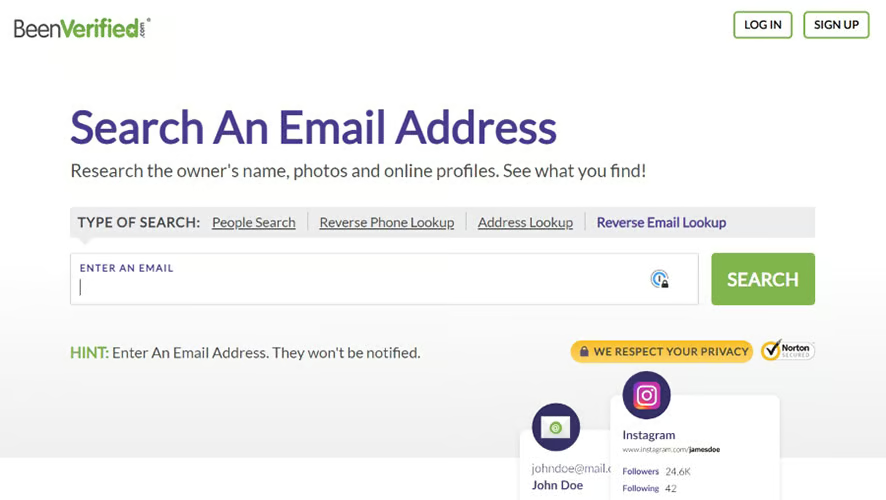
BeenVerified’s reverse email lookup can help you find the owner of an email address. (Source: BeenVerified)


6. Dig into social media profiles
Checking social media profiles can be a valuable method for learning how to look up an email address — assuming that the information is public. While you can’t search email addresses for matches, you can search and view profiles. Users publish their professional email addresses on their pages even if you aren’t connected with them.
Facebook and LinkedIn, for example, are great places to find out who owns an email address. Business-to-consumer (B2C) businesses can enter an email address into Facebook to see profiles that match. B2B organizations can use LinkedIn similarly.
You can also implement this method before launching lead generation campaigns. Prospect research on social media can help you confirm the accuracy of an email address or find prospects to target.
7. Trace the IP address
One way to locate an email address owner is by tracing an IP address. The email header or the area that contains important email information (like the names of the sender and recipient) can be checked to verify an email address for security reasons, such as preventing cybersecurity breaches.
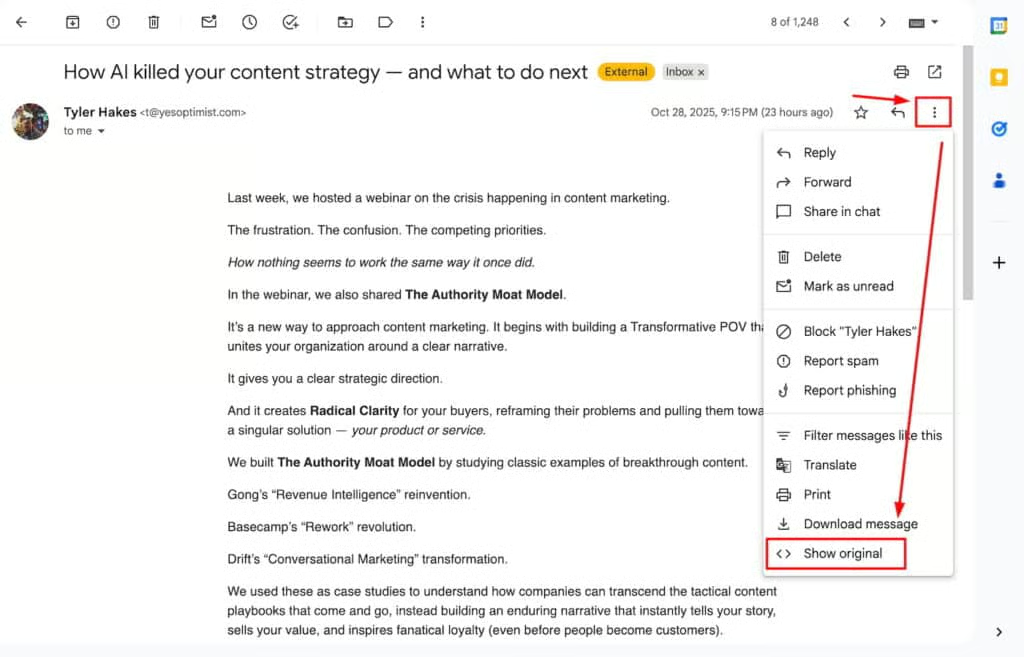
The process of tracing email address owners will vary slightly depending on whether you use Outlook, Gmail, or Yahoo systems, but it ultimately involves these steps:
1. When you receive a message, go to the message options to view the email header, which will be in different spots based on your email provider.
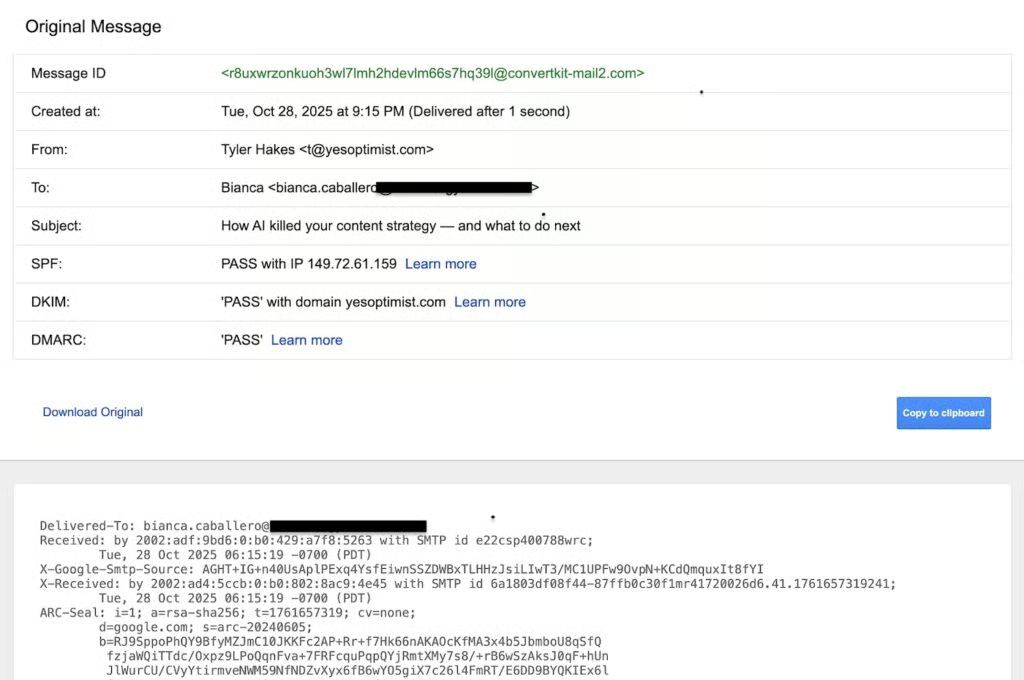
2. Once there, you can view the IP address from which the email came.
3. For additional data, search the address using an IP address search tool, such as whatismyip.com.
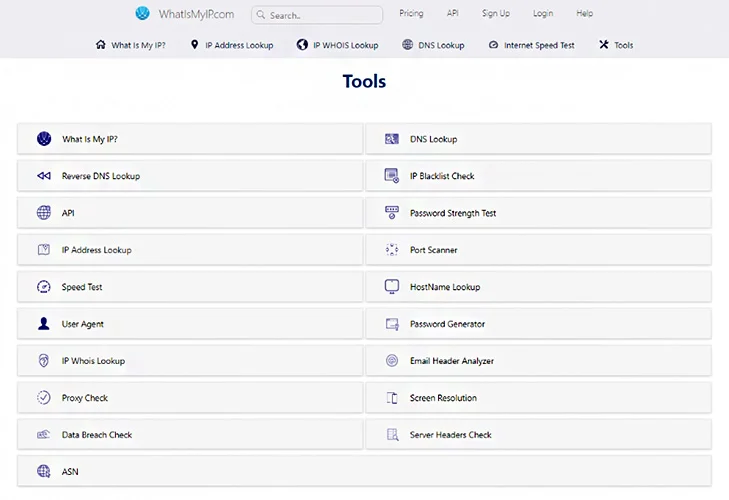
There are a few limitations to using this method to look up Gmail account owner information or confirm other email addresses. For instance, if the sender used a virtual private network (VPN), the address information may not be accurate. This is because VPNs, by design, hide your IP address to provide you with an additional level of internet security protection.
8. Perform a WHOIS lookup
A WHOIS lookup utilizes online tools such as WHOIS.com or ICANN Lookup to retrieve important information about a domain. These include the individual or organization that owns the domain, the registrant’s contact information, the domain registration date, the domain expiration date, and the nameservers.
Here are the steps involved in a WHOIS lookup:
- Go to the homepage of your chosen WHOIS lookup tool.
- Enter the domain name you want to look up and select Search.
- Scroll down the results page and look for the registrant details.
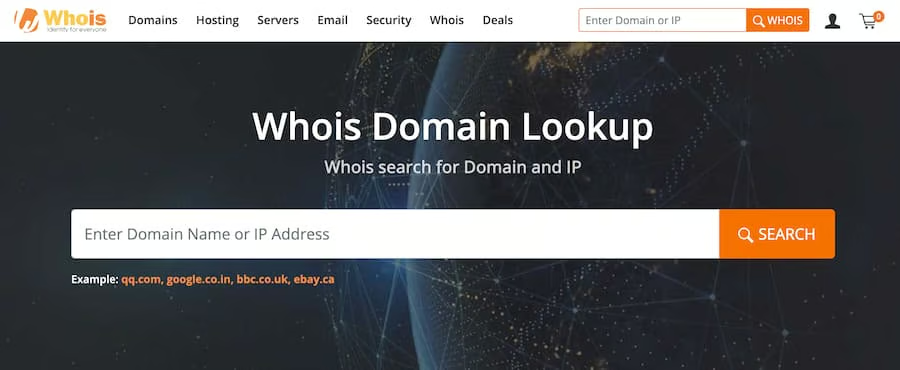
The Whois domain lookup page. (Source: Whois.com) 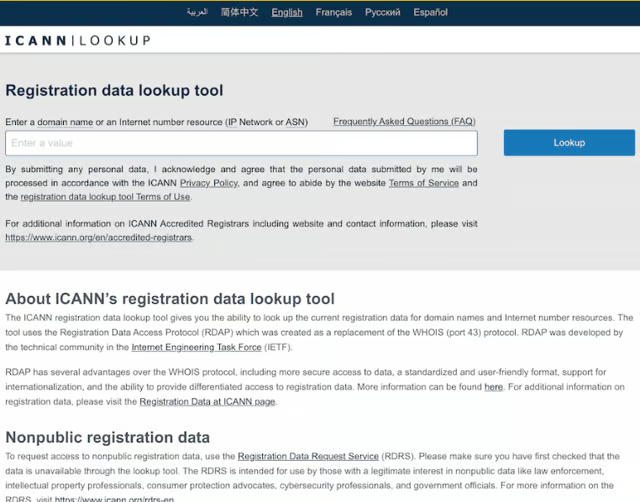
The ICANN Lookup domain search tool. (Source: ICANN Lookup)


9. Contact the company associated with the email domain
The final option for learning how to find owners of email addresses is simply to ask for the information. Most email address domain names are associated with the organization from which they originated. This method is ideal if you received an email from a new sender, want to verify one from a list, or want to ensure an address is accurate before making an introduction.
To check the owner of an email address via the associated company:
- Contact the organization and request the sender’s email address.
- Google the company name on the address for a phone number if you receive a message from an address without a name, and you’ve exhausted other options.
- Call the number and ask them to confirm that the address is from their company, and ask who owns the email.
Why should you check email address owner information?
If you don’t know how to find the owner of an email address, you can’t verify the sender of a message or confirm the address you’re sending to. There are also additional reasons for security, sales productivity, and data integrity. In fact, one of the key aspects of sales management that sales leaders are responsible for is ensuring tools and processes are in place to help their teams with email verification.
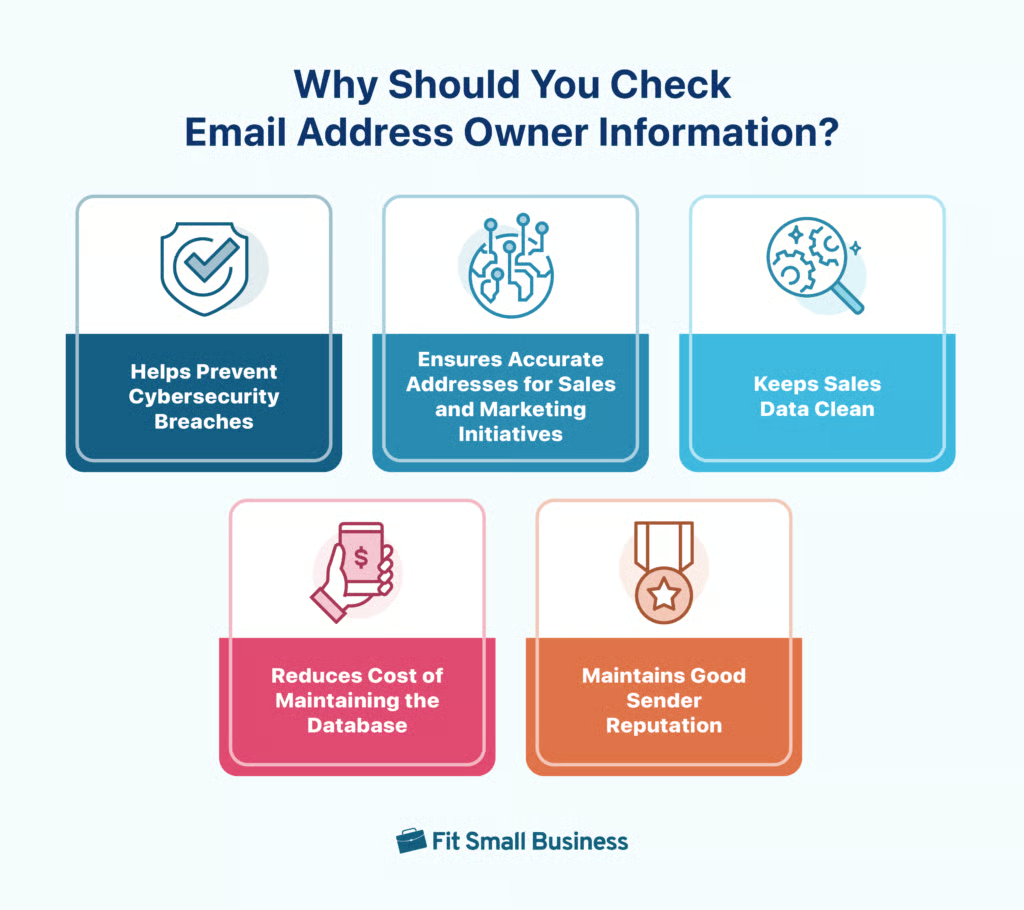
Helps prevent cybersecurity breaches
Many cybersecurity incidents can be traced back to email messages phishing for credentials or attempting to get someone to download a malicious file. Verifying an address from the sender helps determine whether the message is legitimate and if the sender is who they claim to be.
Ensures accurate addresses for sales & marketing initiatives
Crafting personalized sales email messages takes ample time and research to get robust response rates. However, that time is wasted if the email address is inaccurate. This is why checking the email address owner’s details is essential.
Keeps sales data clean
Whether you’re still learning how to generate sales leads or are already a pro, remember that email addresses are some of the most crucial data you can have on a lead or customer. Emails are used for lead generation, lead nurturing campaigns, and promoting special offers. This makes it key to keep your data up-to-date and accurate.
Reduces the cost of maintaining a database
Maintaining a contact database and sending emails cost money. Checking and verifying email addresses is the first step in weeding out unwanted emails from your list. Trimming down this list also means fewer recipients for your email, thereby reducing the cost of sending emails.
Maintains a good sender reputation
Email sender reputation is a score that email and internet service providers (ISPs) assign to any organization that sends email. This is one of the factors in email deliverability, which includes the frequency at which your emails are marked as spam. The higher this score is, the higher the possibility that an ISP will deliver your emails to your intended recipients.
Best practices for email owner identification
Verifying email owner identification requires an organized workflow, attention to detail, and adherence to ethical standards. Follow these best practices to ensure your email search efforts are effective and secure.
Protect your privacy
Internet searches risk attracting unwanted attention and compromising your personal information. Use VPNs and anonymous browsing to guard your privacy when searching for email address owner information. Additionally, manage your digital footprint by using only secure communication channels and refraining from sharing unnecessary personal information online.
Comply with privacy laws
In the same way you want to protect your privacy, respecting the email address owner’s right to privacy is also important. Adhere to privacy laws such as the California Consumer Privacy Act (CCPA) and the General Data Protection Regulation (GDPR). In addition, respect email address owners’ opt-out preferences. Obtain permission before using the data you obtain, and don’t misuse this information.
Maintain good data acquisition practices
Set up your web forms to only gather valid and high-quality email information. You can do this through real-time validation during the data acquisition process. This involves adding a prompt for users to correct the information before submitting their forms and creating a rule to reject email addresses from disposable services.
Use a reliable email verification tool
When choosing an email verification service, look for one that’s reliable and has the following features and attributes:
- Easy-to-use interface and features
- Real-time email verification
- Secure data transmission
- Compliance with global privacy laws
- Realistic email deliverability rate
Frequently asked questions (FAQs)
Is there a free email lookup tool?
Yes. Hunter.io allows you to look up 50 professional emails by name and company/domain per month for free. Mailmeteor is another tool that lets you use its email finder, email checker, and email lookup tools for free. There’s no need to sign up.
Can an email address be traced back to its owner?
Yes, in some instances, you can track a person using their email address if they set it up with recent information, including their name, address, or phone number. Otherwise, you can use a free reverse email lookup tool like PeepLookup to find information linked to a certain email address. Note that you cannot trace a person’s actual location using just an email address because you’ll need an IP geolocation tool.
How to find out who hosts an email address?
To find out who hosts your email, open your email client on your device and go to the Account, Server, or Preferences Settings for the mail app. Click on your email account to see the server hostname, username, and password. If you’re using a business email, you can contact your hosting provider’s support team to obtain incoming mail server details.
How can I find out who owns an email address on Gmail?
If a person used their real name to set up their Gmail account, you can use Google Calendar to find out the owner. Use the “share to specific people” option, then select “add people.” Enter the email address, and the owner’s name and profile picture will appear. You can use a free reverse email search tool like Radaris or a paid alternative like Spokeo to trace Gmail email account owner information for more accurate results.
How to trace an email address to its owner on Facebook?
First, log in to your Facebook account and open the profile of the person you’re looking for. On mobile, scroll down to “See About Info” under “Details” and look for their email address under “Contact Info.” Tracing an email address to its owner via Facebook will only work if the person has not made this information private.
Bottom line
Knowing how to trace an email address to its owner is powerful for becoming more efficient in sales activities and fostering data integrity. The methods presented range from no-cost to paid options, manual to automated, and standalone to integrated. Based on your tools, budget, and technical knowledge, these nine email verification approaches can help you prevent cybersecurity attacks and run effective marketing campaigns.
