






PayPal Point of Sale (POS) System is PayPal’s free mobile point-of-sale app that replaced PayPal Zettle. It provides a complete POS system for tablets or mobile devices with built-in PayPal payment processing.
In our evaluation of the best POS systems, PayPal POS earned an overall score of 3.24 out of 5 and did not make our list of the top 10. Regardless, it is a decent choice for small business owners, particularly artists, hobbyists, and solopreneurs, looking for free POS software. In fact, it made our list of the best mobile POS apps we’ve seen.
While it has low in-person processing rates compared to other POS systems and a user-friendly app, the system provides only standard register features, basic business management tools, and very limited integrations. It also does not yet integrate with PayPal’s online store.
Who Should Use PayPal POS:
- PayPal users looking for free POS software
- Artists, crafters, and hobbyists
Who Should Use An Alternative:
- Growing brick-and-mortar businesses
- Ecommerce businesses
- A store that needs complex inventory management
- Restaurants, salons, spas, and other appointment-based businesses
| Supported Business Types | Retail, service, restaurant (not recommended) |
|---|---|
| Standout Features: |
|
| Monthly Software Fees | Very Competitive $0 |
| Setup and Installation Fees | $0 |
| Contract Length | Pay-as-you-go |
| Payment Processing Options | PayPal payments processing |
| Payment Processing Fees | Very competitive In-person: 2.29% + 9 cents Keyed-in: 3.49% + 9 cents |
| Customer Support |
|
 |  |  |
|---|---|---|
| Visit Square | Visit Toast | Visit Shopify |
| Best for: Free and easy POS without using PayPal | Best for: Restaurants | Best for: Multichannel sales |
| Monthly plans from: $0-$149 | Monthly plans from: $0-$69 | Monthly plans from: $0–$89 (+$39-$399 ecommerce subscription) |
| Payment processing from: 2.6% + 15 cents | Payment processing from: 2.49%+ 15 cents | Payment processing from: 2.4% + 10 cents |
| Hardware from: Individual devices: $0-$799 Hardware kits: $399-$1,799 | Hardware from: $799+ ($0 down payment for starter kit) | Hardware from: $49-$459 |
| Read our full Square Review | Read our full Toast Review | Read our full Shopify POS Review |
.cls-1{fill:#155E85;fill-rule:evenodd;}
Learn more about PayPal alternatives.
We’ve tested dozens of POS systems of various types, and after reviewing PayPal POS, we find it a strong mobile payments competitor to Square, the industry leader. It’s simple enough for the solopreneur and, with PayPal’s affordable processing rates, a good option for the hobbyist. Click through the images below to see what PayPal POS does best:
Key PayPal POS features
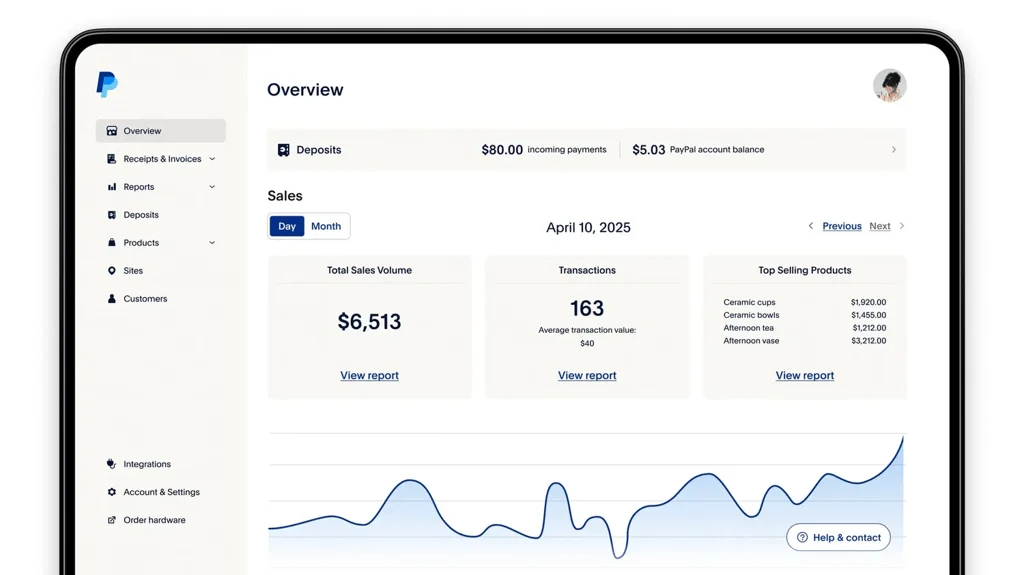
The PayPal POS dashboard overview shows daily sales volume, transactions, top-selling products, and account balance in one centralized reporting interface. (Source: PayPal) 
The POS includes built-in invoice and receipt tracking tools. 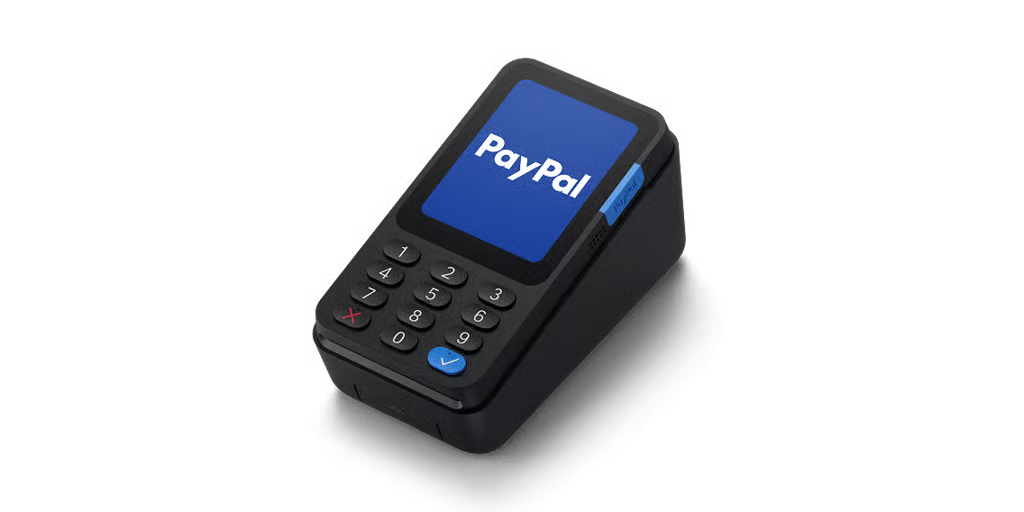
PayPal POS hardware options include a mobile debit and credit card reader with PIN pad. 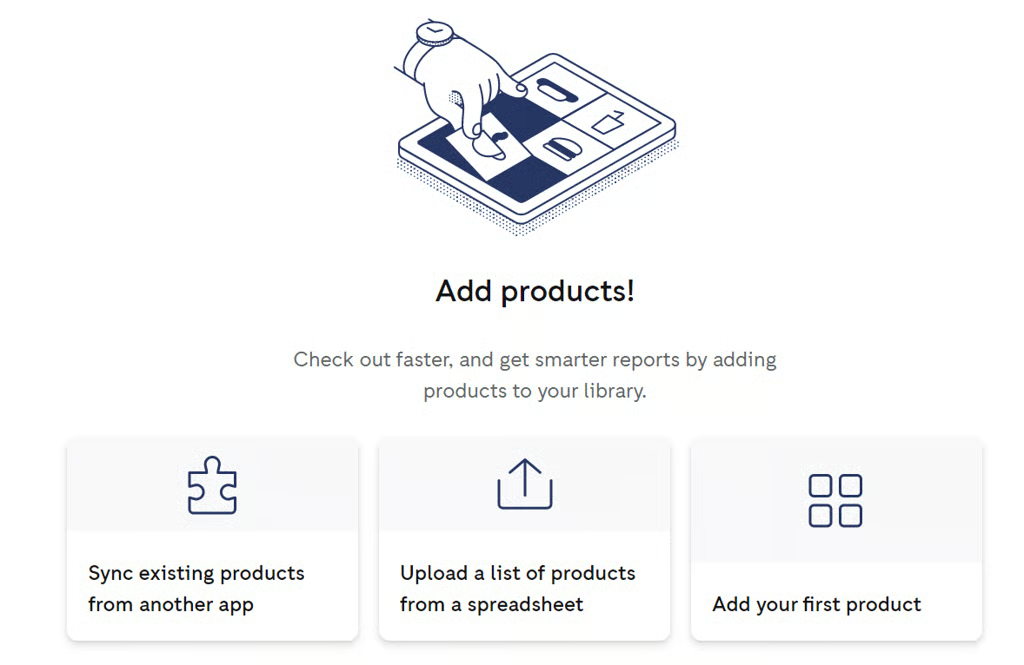
PayPal POS has a product library into which you can upload existing product lists. 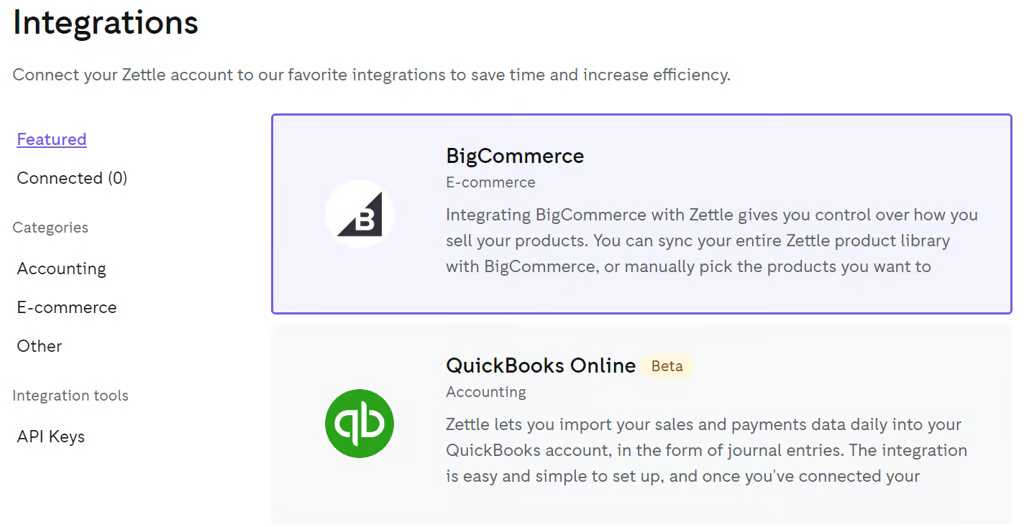
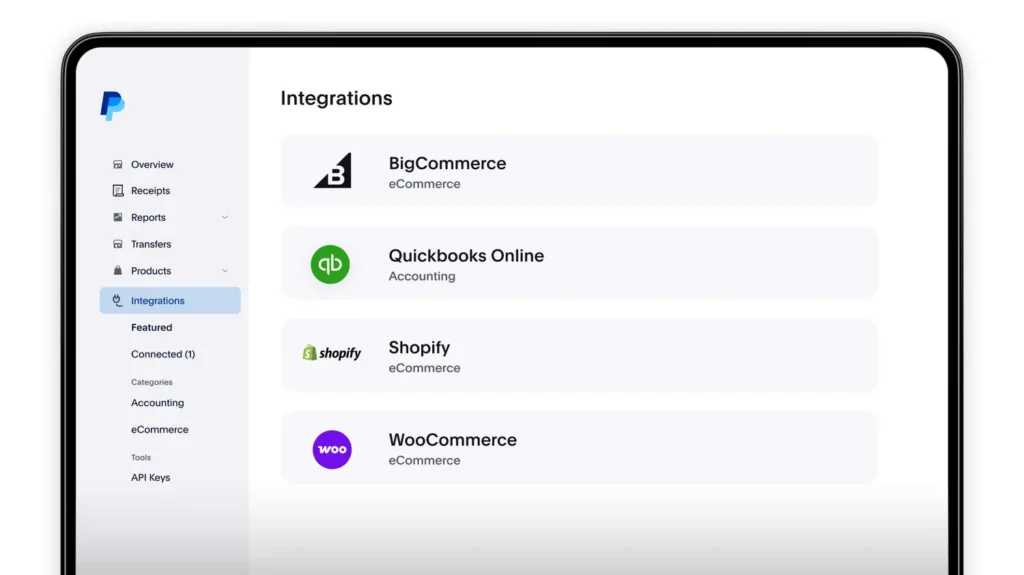
You can view a list of all available integrations, with categories that allow for faster searching. Shopify and other ecommerce platforms are available. 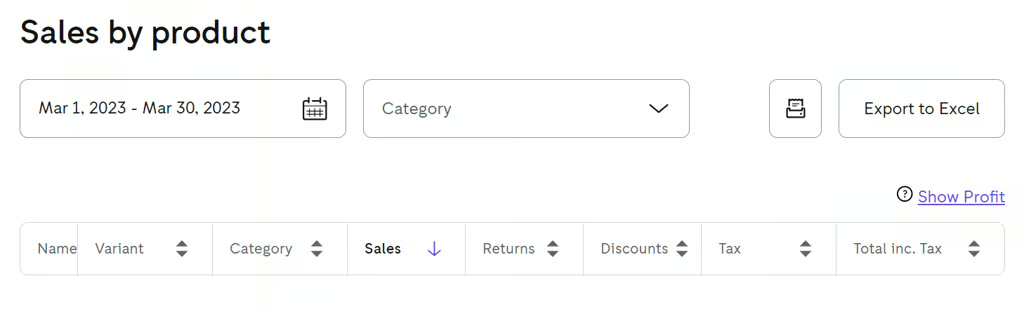
The reports page lets you view and filter sales by date, product, and category. 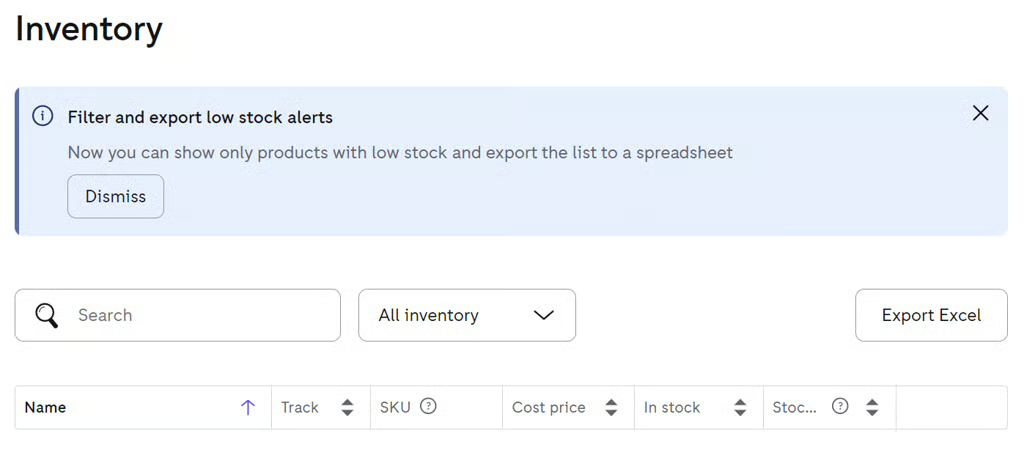
The inventory page includes low-stock alerts and filters to make searching more efficient.


On the other hand, while PayPal easily integrates into some of the best POS systems, you need to consider alternative solutions if you have a growing business:
- Unlike Square, PayPal POS does not have any paid plans or add-ons, so you may quickly need a more robust POS solution.
- PayPal POS has some inventory functions, like low stock alerts and variants; however, it lacks kitting and vendor management.
- PayPal has an online store, a virtual terminal, and integrations, but they do not work through PayPal POS.
- PayPal POS has some features that might work in a restaurant, like printing order numbers on receipts, but it’s not the best option. It does have a food and drink solution, but it costs extra and is not yet available in the US.
PayPal POS Fee Calculator
PayPal Zettle Fee Calculator
PayPal POS pricing
4.38 / 5
PayPal POS got high marks for its free software plan, low payment processing rates, affordable hardware, and lack of setup or installation fees. It got minor deductions for lacking payment processing flexibility; third-party processors are currently not compatible with the POS.
The POS software is completely free — no trials or premium plans. It has extremely reasonable rates of 2.29% + 9 cents for card-present transactions, and 3.49% + 9 cents for keyed-in transactions. Most mobile POS systems charge higher rates, for example, 2.5% or higher for card-present transactions.
Chargeback fees are $20, which is fairly standard.
Payment Processing Fees
| In-person transaction fees | 2.29% + 9 cents per transaction |
|---|---|
| Keyed-in transaction fees | 3.49% + 9 cents per transaction |
| Invoicing transaction fees | 3.49% + 9 cents per transaction |
| QR code transactions: $10 and below | 2.40% + 5 cents per transaction |
| QR code transactions: $10.01 and above | 1.90% + 10 cents per transaction |
PayPal POS processes credit cards, online and touchless payments, bitcoin and other cryptocurrencies, and, of course, PayPal. Learn more about PayPal as a commerce platform and its pros and cons in our articles.
- PayPal POS processing fees: Its fees are often cheaper than other flat-rate payment processors — in particular, Square, which is its closest competitor. However, alternatives, including those that provide interchange-plus pricing, may provide better rates if you do high-volume business. Find alternatives in our review of the best merchant services. You cannot use PayPal POS software with them, however.
- International sales: PayPal processes payments in over 200 countries and 100 currencies. For an additional fee, it will also do cross-border transactions. However, we did not find any tools within PayPal POS to support this, such as multiple currency designations, although you can set it for your preferred currency. You can also set different VAT rates.
- Transaction and processing limits: PayPal POS can process up to $500,000 for all transactions per 24 hours, with a limit of $50,000 per card transaction. These numbers will likely be sufficient for most small businesses. Of more importance, perhaps, is the minimum transaction limit of $1.
- Deposit speed: PayPal POS deposits into your PayPal account and should be visible within minutes, but transferring funds into a checking account takes two or more days. PayPal has also been known to hold funds for up to 30 days. The most common complaint against PayPal is withheld funds.
- No obligation: PayPal does not charge monthly fees or have contracts like many other payment processors. That makes it easy to use when starting out, or as an additional service.
There’s a lot to consider when choosing a merchant service. If you are just starting out, read our guide on merchant services and learn what they should do for you before signing up with anyone.
PayPal POS hardware
PayPal POS card readers are $79, excluding tax. For your first card reader, this is discounted to $29. Unlike other popular mobile payment processors such as Square, it does not offer a free reader. However, PayPal’s reader processes chip and contactless payments at high speed and has a PIN pad. It runs approximately eight hours or 100 transactions between charges. It’s also EMV (Europay, Mastercard, and Visa)-certified.
If you want something similar from Square, for example, you would need to upgrade to a card reader terminal, which costs $299. You can order the PayPal reader through the app, although, ironically, you cannot pay for it with PayPal.
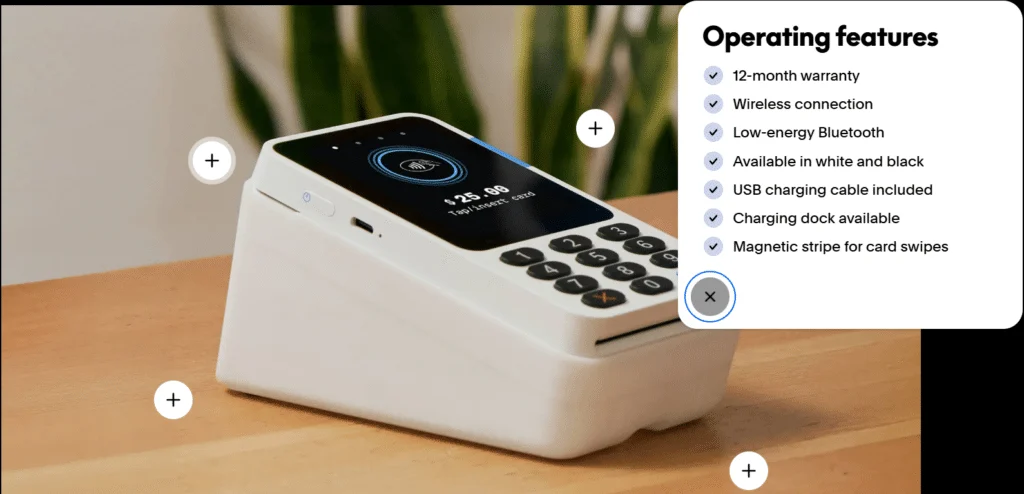
For a more complete mobile POS solution, you can get PayPal POS’ all-in-one terminal. This is a touchscreen device that incorporates card reader technology, receipt printing, and barcode scanning functions. It comes with its own activated SIM card and accepts major credit and debit cards and contactless payments. The all-in-one terminal will likely be a good investment for businesses that rely on high mobility, for example, on the sales floor or at events.
You can purchase the terminal alone for $199, or pay $239 for a terminal with a built-in barcode scanner. For another $70, you’ll also get a printer and terminal dock.
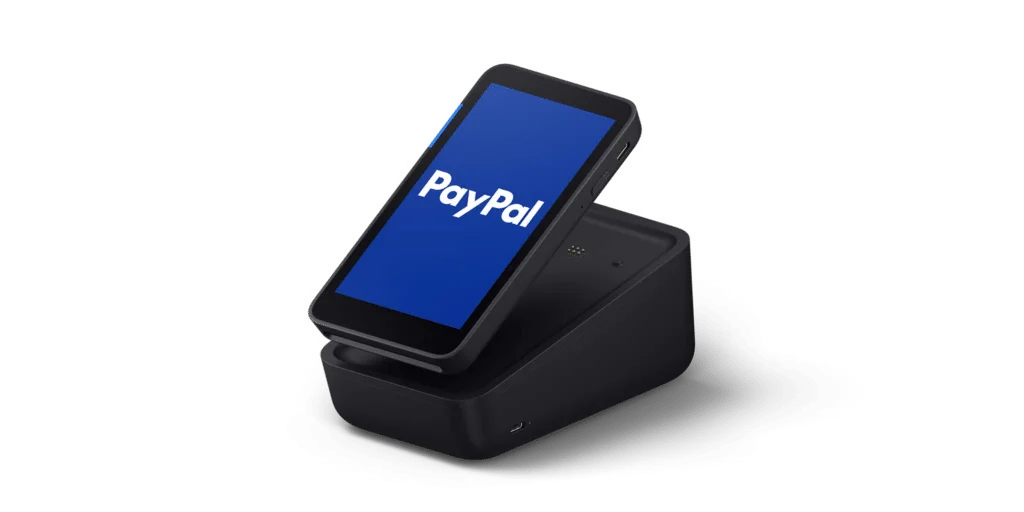
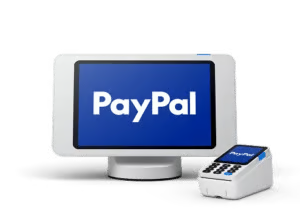
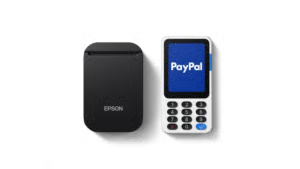
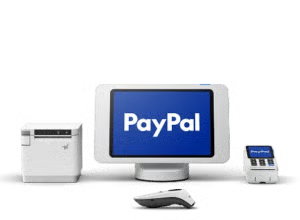
PayPal POS also has hardware kits that cost $249 to $699, which makes them among the least expensive POS systems that we’ve reviewed. The kits include combinations of a touch screen, receipt printer, and other peripherals. The cheapest, for example, has a reader, a dock, and a stand for an iPad. Other peripherals include receipt printers and barcode scanners.
 |  |  |
|---|---|---|
| Store Kit Mini | Store Kit Portable | Store Kit Standard and Plus |
| Best for: In-store startup | Best for: In-store mobility and curbside sales | Best for: Retail businesses issuing paper receipts and handling larger inventories |
| Includes: Card Reader, Card Reader Dock, Tablet Stand (iPad only), and an optional iPad | Includes: Card Reader, wireless and battery-driven receipt printer, pack of thermal receipt rolls | Includes: Standard: Card Reader, a Card Reader Dock, Tablet Stand, receipt printer, receipt paper rolls, and an optional iPad Plus: All items in Standard, plus Barcode Scanner |
| Cost: Starts at $229 (add $349 for iPad) | Cost: $339 excluding tax | Cost: Standard: $479 excluding tax/div> Plus: $699 excluding tax (add $349 for iPad) |
| Buy Store Kit Mini | Buy Store Kit Portable | Buy Store Kit StandardBuy Store Kit Plus |
Contract & Terms of Service (TOS)
Aside from the standard PayPal merchant terms of service, those who sign up for PayPal POS are required to agree to its TOS. One of the interesting pieces of information we noticed within the PayPal POS contract is that while PayPal is known for its international payment processing, POS users are limited to processing US transactions unless otherwise approved by PayPal.Other important points to note are the sections on restrictions, fees, chargebacks, and termination. Click on the copy of PayPal POS TOS below for details:
PayPal POS register and checkout features
4.00 / 5
PayPal POS’ hardware allows for good sales mobility, and its intuitive register has a lot going for it, like generating order tickets, letting customers include tips, issuing refunds, and printing receipts. Overall, PayPal POS’ simplicity is an asset to small businesses.
However, while PayPal POS allows online ordering, this ironically does not work with PayPal online (though it is compatible with WooCommerce and other website builders). It does not have any dedicated order management and loyalty management features. You get basic customer directory and other CRM tools.
And, while PayPal POS integrates with Shopify for multichannel sales, users will be required to use PayPal as a payment processor. This means that Shopify will also charge a commission fee for each transaction, making it more expensive to accept payments.
Here are a few things you can do with a PayPal POS register:
- Payment types: You can accept credit cards, gift cards, PayPal, and Venmo. The card reader is EMV-certified, which is now required by law in the US. (For manual card entry, you need a PayPal Business account.) PayPal can host various cryptocurrencies; when making transactions, customers can convert these to fiat currencies before sending the payment through. You can also record cash transactions.
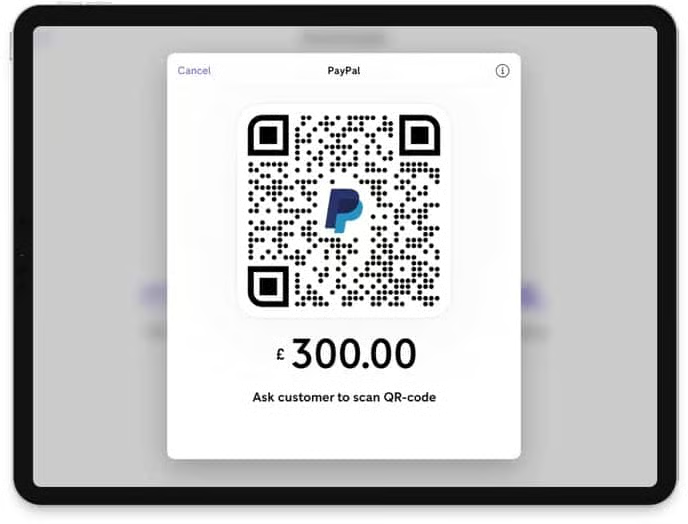
- QR codes: A feature that’s growing in popularity with POS software is generating a QR code that your customer can scan in order to pay. You need to activate this feature on PayPal POS to use it.
- Sell by units: You can set your prices in the inventory section to sell by units such as ounces, cases, etc. Keep in mind that there’s no kitting capability.
- Partial refunds: PayPal POS recently added partial refunds, allowing you to refund the cost of one or more items on a receipt rather than the entire transaction. Note that this function is only available in the mobile app.
- Multiple logins: You can set up logins for your employees to track sales. You can also handle multiple accounts on one device, switching between them as needed. This is one way to get around the fact that PayPal POS, unlike Square, does not have multi-location functions.
Mobile app
PayPal’s POS mobile app, called PayPal POS (formerly Zettle) , requires iOS 12.1 or higher or Android 5.0 or higher. It has a complete register and backend system, from ringing up credit card sales to analyzing sales reports. User complaints include the card reader not connecting, changes due to the acquisition by PayPal, and problems with a recent upgrade making it hard to log in. However, the majority of reviews say it’s easy to use.
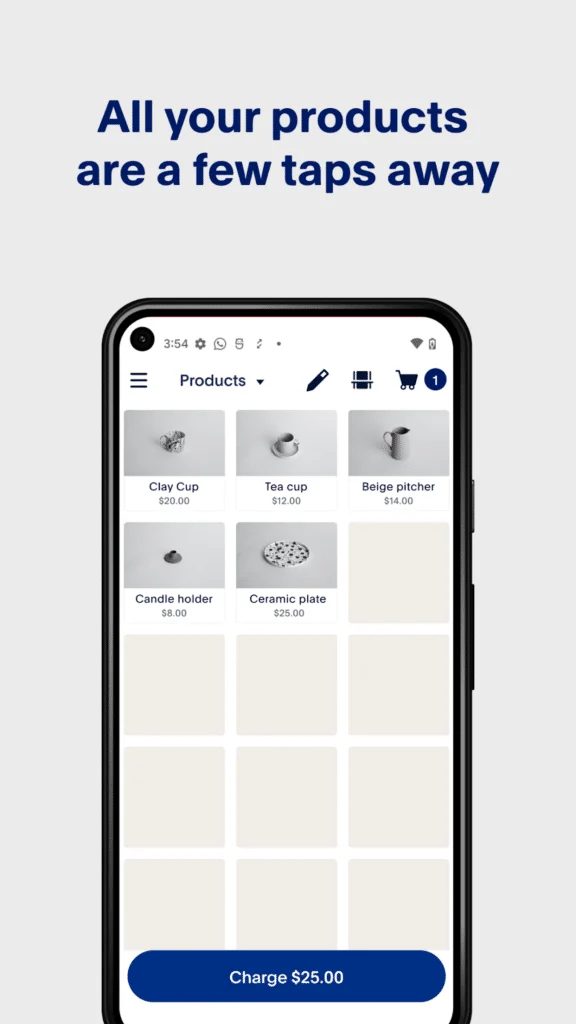
As of this writing, the apps have these scores:
PayPal POS management tools
2.19 / 5
PayPal POS did not score very highly for this criterion. It has a serviceable inventory management system and on-hand counting (if you use the barcode scanner), along with basic reporting and employee management tools. However, several points were deducted due to missing features for purchase order and vendor management, multilocation management, and marketing.
Inventory management
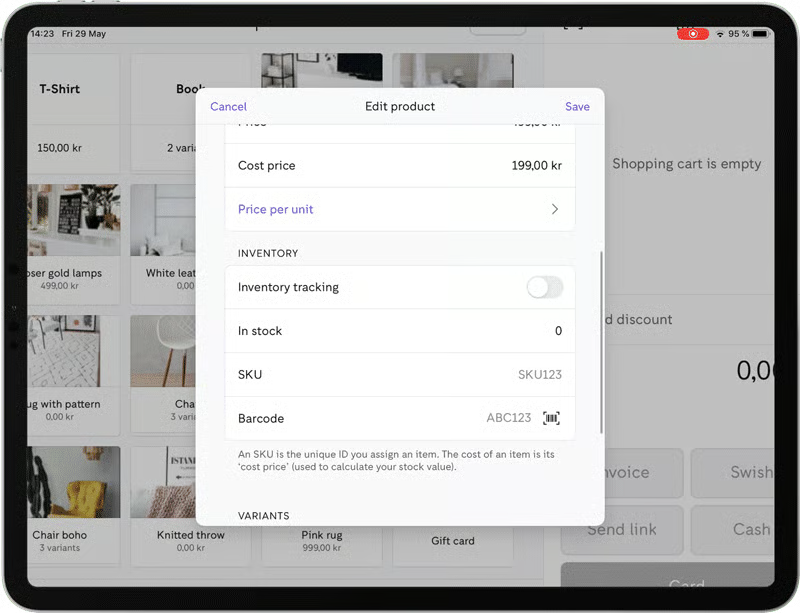
PayPal POS’ inventory software is very simple but has several features that can make it a powerful tool. However, it does not handle vendors, create kits, or build menu items.
- Bulk actions: You can load, assign categories, and delete items in bulk.
- Low-stock alerts: PayPal POS tracks items and issues low-stock alerts. These show up in the shopping cart when you are selling a low-stock item.
- Variants: You can add up to three options. These are pre-defined as Color, Size, Style, Material, and Finish. Once you set the variant, you create different values and assign a price to each.
- Gift cards: You can manage gift cards that are premade, emailed, or physically created by you. These are tracked in inventory.
Reports
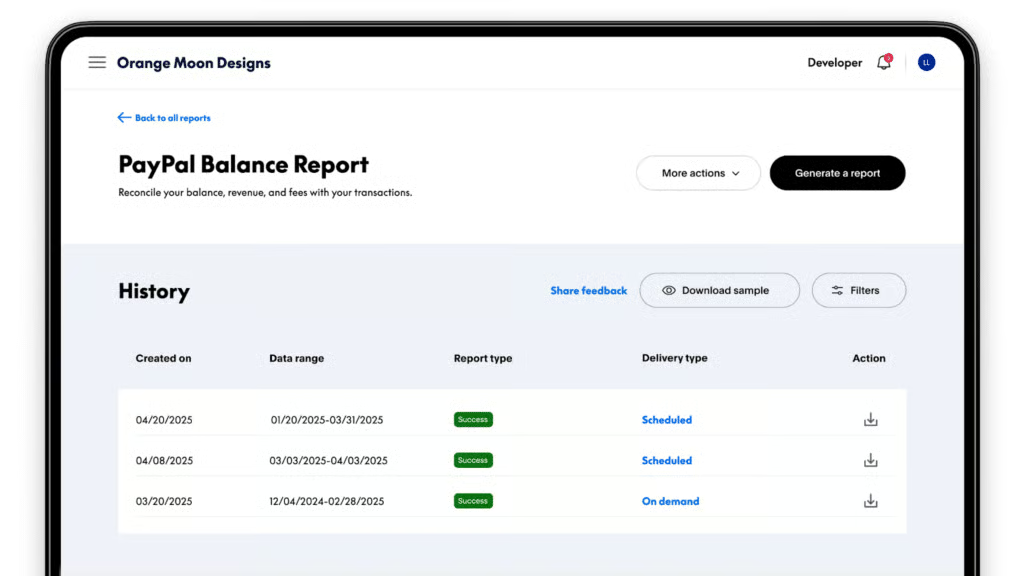
PayPal POS only offers basic sales reports, including an overview of a particular period, sales by product or category, staff performance, payments made, fees paid, and refunds granted. You can export your reports or data in PDF or Excel format.
Employee management
Unlike most popular POS systems, PayPal POS does not have a wide range of tools for employee management. You can use your PayPal POS settings to create sub-accounts and assign each to your staff with individual usernames and passwords. This gives them access to limited functions such as payment processing and sales tracking.
With this feature, you can add more checkout terminals within your store or link multiple store locations. Note that creating sub-accounts for multiple users is important as PayPal is known for freezing accounts when it detects unusual activity, such as multiple access. This is specifically mentioned in the Terms of Service.
Customer management
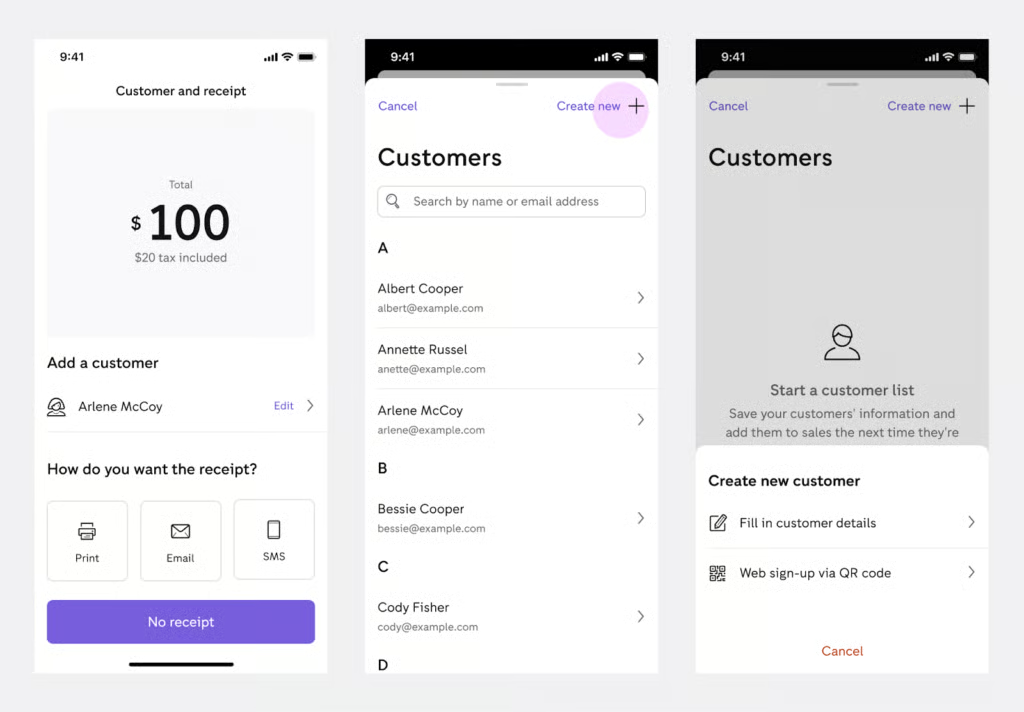
Like Square, PayPal POS lets you sign up customers at the point of checkout; however, PayPal POS’ tools are quite limited compared to other POS software providers. You can store customer email addresses and export them in bulk to upload to an email marketing software. PayPal POS currently does not have any available marketing software integration, nor does it include a built-in or dedicated loyalty program.
Fraud protection and chargebacks
PayPal POS is EMV-approved and complies with the strict Payment Card Industry Data Security Standard (PCI DSS) for handling card data. PayPal POS uses advanced machine learning systems to monitor every transaction being processed, 24 hours a day, to flag suspicious activity.
You can open a dispute within 180 days of a payment date. When a customer files a dispute, PayPal gives you a chance to address the issue, and if it can be resolved, then there are no charges. You have 20 days to work with the customer to fix any problems, after which, the dispute will automatically close unless it has been escalated. If either you or the buyer escalates the dispute to a claim, PayPal will make a decision regarding the outcome — usually within 14 days, but sometimes exceeding 30 days. If the issue cannot be resolved and the customer is refunded their money, PayPal charges you a $20 chargeback fee. There is no fee for bank reversals.
PayPal POS ease of use
2.00 / 5
PayPal POS scored fairly low for ease of use. It earned points for being available on a variety of devices, being easy to install, and having a good knowledge base available. Like most of PayPal’s products, PayPal POS is easy to use and popular.
However, the POS system lost points for its lack of integrations and somewhat limited customer support accessibility. Support is available by chat, phone, and email; but only the last of these is available 24/7. The strongest factor that cost PayPal POS points in this category is the lack of an offline mode for payment processing. This may cause problems if users are away from data or Wi-Fi.
PayPal Here was officially discontinued in 2023 and replaced by PayPal Zettle, which has since been rebranded as PayPal Point of Sale in the US. Small businesses that previously used PayPal Here’s mobile app and card reader are now required to transition to the newer PayPal POS platform for continued in-person payment processing.
While PayPal does provide support articles explaining the transition, information can feel fragmented between legacy Here content and updated POS documentation. The help articles themselves are generally clear, but they’re light on visuals and step-by-step walkthroughs, which may require some extra digging for new users.
PayPal POS expert score
3.00 / 5
In our evaluation, PayPal POS achieved only a middling score of 3 out of 5. High points include its easy-to-use features and competitive fees compared to other POS systems. As a payment processor, PayPal has always scored high in our evaluation due to its value for money, software reliability, and ease of use; we saw those same qualities in PayPal POS, not to mention a more simplified set of payment processing fees.
However, PayPal POS suffered due to the lack of key POS features; while its relatively basic tools may be sufficient for small solo businesses and hobbyists, larger or fast-growing companies may struggle to find everything they need. There are no add-on options and very limited integrations to supplement these tools. The point-of-sale software has also received below-average user reviews.
What users say in PayPal POS reviews
We were only able to find PayPal POS user reviews from a few websites. On Trustpilot, PayPal POS has over 5,000 reviews and a score of 3.3 out of 5. User reviews on Capterra totaled over 2,000 and give PayPal POS a better overall score of 4.6 out of 5.
The most common positive feedback from merchants mentions flexibility and security when receiving payments via PayPal POS. The most frequently cited complaint is that users often find that their PayPal accounts have been frozen for unknown or unclear reasons.
| What Users Like | What Users Don’t Like |
|---|---|
| High flexibility and security when receiving payments | PayPal accounts being frozen (a common complaint) |
| Easy POS setup and usage | Weak connections and slow loading times |
| Competitive processing fees | Lack of customer support |
| Fast payment transfers | Large difference in processing fees between card-present and keyed-in transactions |
Methodology: How we evaluated PayPal POS
We test each POS system ourselves to provide you with an extensive review of the product. We start by comparing the system’s core set of features against what is expected of a functional POS software, such as easy transaction and order management and flexible payment processing. We then evaluate its affordability and value for money, making sure that the system is easy to use, offers good value, and is able to grow with your business.
We use these criteria to examine the best overall POS systems. However, when looking at specific use cases, such as for retailers, complex inventory management, or mobile POS, we adjust the criteria to match the needs of those business types, which is why every POS has multiple scores across our site depending on the use case you are looking for.
Click through the tabs below for our overall POS evaluation criteria:
We reviewed the pricing structure for hardware, software, and payment processing. Points are awarded to systems with a starter plan and monthly fees less than $75 (extra points for free plans). Transparent payment processing fees, including negotiable or volume discount rates, are also given high marks, while points are docked for caps on the number of users, products, transactions, or sales you can process without upgrading plans. PayPal POS unsurprisingly earned above-average marks here, given its free plan and transparent and competitive payment processing fees.
We look for customizable hotkeys and easy product lookup; transaction management (including voids and returns); mobility to process sales curbside or on the sales floor; and flexible payment tools like contactless, gift card, store credit, layaway, and order-ahead options. Finally, we considered whether the system can process custom, work, or service orders such as repairs. PayPal POS struggled in this section, missing out on online ordering and loyalty program tools, while also scoring low for order management features.
Our main focus is on inventory management—low-stock alerts, matrix inventory, and purchase orders, plus easy stock counts and shipment receiving. We also consider marketing tools, employee management features, omnichannel management for creating an online store, and reporting capabilities. PayPal POS did not do well in this category, lacking advanced inventory management tools and having limited employee and multilocation management functions.
We look for easy installation, detailed training materials, and 24/7 customer support. We also consider whether the system is a hybrid installation or otherwise offers an offline mode so you can still operate if the internet goes down.
We also favor software that can run on various hardware so retailers can choose their preferred devices. Finally, we took our own experience using the software into account, examining how features performed in practice. PayPal POS did not fare too well in this category, missing points for 24/7 customer support availability, but mostly for its lack of an offline payment processing mode.
In this section, we evaluated PayPal POS by its full feature set (including any standout tools), the value it offers for the price, popularity, user reviews, whether or not the system experiences a lot of downtimes, and the overall experience of navigating the system’s interface. PayPal POS earned average marks here, missing out on a few points due to negative feedback from users, including slow loading times and accounts being frozen.
Frequently asked questions (FAQs)
Who should use PayPal POS?
PayPal merchants with a business account who want to sell in person will find PayPal POS an ideal choice. We recommend PayPal POS for small retailers with infrequent sales, such as hobbyists and those who participate in trade fairs and sell at farmers’ markets. Note, however, that users in these environments will need to ensure they have a stable internet connection, as PayPal POS cannot process card payments while offline.
When should I use a PayPal POS alternative?
Consider an alternative if you want to start growing your business with larger inventory management capabilities and regular monthly sales. Businesses that need robust vendor management tools or restaurant-specific features may also want to look elsewhere.
What’s the difference between PayPal Here, PayPal Zettle, and PayPal POS?
PayPal Here was PayPal’s original mobile point-of-sale app and card reader. It was officially discontinued in 2023 and replaced by PayPal Zettle, which has since been rebranded in the US as PayPal Point of Sale (POS). New US merchants are now onboarded to PayPal POS, which serves as PayPal’s current in-person payment solution. Existing Here users must transition to PayPal POS to continue processing in-person payments.
How do I get my money from PayPal POS?
Like any PayPal merchant, users have immediate access to their funds through their PayPal balance. Funds can also be withdrawn to a linked card or bank account within two business days or instantly for a 1.5% fee.
Can I use PayPal POS with a mobile device?
You can pair your PayPal POS card reader via Bluetooth with an iOS or Android smartphone or tablet. The PayPal POS app is free to download from the iOS App Store and Google Play.
What are the common complaints from users of PayPal POS?
Some common user complaints mention:
- Freezing of accounts
- Poor customer service
- Significantly higher fees for remote payments vs face-to-face transactions
- Limited customization options
- Difficulties in connecting to the card reader
- Previous POS users said services were interrupted, support went down, and readers stopped working after PayPal took over
Bottom line
PayPal is a remarkably versatile payment processor that works in online stores, social sites like Facebook, multichannel sales like eBay, and more. However, its POS app, is somewhat limited. You can use it for basic inventory, ringing up sales, and gift cards. Nonetheless, PayPal POS is free to use, and with low transaction rates, it’s a good tool for solopreneurs or small businesses.
