







The Health Insurance Portability and Accountability Act of 1996 (HIPAA) sets standards for protecting sensitive patient information. For healthcare providers, this means choosing phone systems that help safeguard protected health information (PHI) during calls, voicemails, faxes, texts, video visits, appointment reminders, and patient intake workflows.
The best HIPAA-compliant VoIP providers combine secure calling with features that support patient communication, such as business associate agreements (BAAs), encryption, access controls, telehealth tools, and healthcare software integrations. After comparing pricing, compliance, and usability, RingCentral for Healthcare is my top pick for HIPAA-compliant VoIP service.
Here are the best HIPAA-compliant VoIP providers for healthcare practices:
| HIPAA-compliant VoIP Providers | Best for | Monthly starting price (per user) |
|---|---|---|
| RingCentral for Healthcare | HIPAA-compliant phone service | $30 |
| Zoom for Healthcare | HIPAA-compliant video conferencing | $15.99 |
| Nextiva | Medical office management | $23 |
| RingRx | Solo practitioners | $15 |
| Phone.com | Patient intake and scheduling | $18 |
| Dialpad | Healthcare chatbots | $27 |
- Why you can trust Fit Small Business
- Comparing the top HIPAA-compliant VoIP Providers
- RingCentral: Best overall HIPAA-compliant phone service
- Zoom for Healthcare: Best for HIPAA-compliant video conferencing
- Nextiva: Best for medical office management
- RingRx: Best for solo practitioners
- Phone.com: Best for patient intake & scheduling
- Dialpad: Best for healthcare chatbots
- How to choose the best healthcare VoIP services
- Frequently asked questions (FAQs)
- Bottom line
Why you can trust Fit Small Business
Comparing the top HIPAA-compliant VoIP Providers
| HIPAA-compliant VoIP Providers | HIPAA-specific strength | Key features | My score (out of 5) |
|---|---|---|---|
| RingCentral for Healthcare | Healthcare integrations and secure communications |
| 4.33 |
| Zoom for Healthcare | Telehealth and virtual patient consultations |
| 4.27 |
| Nextiva | Patient communication and office management |
| 4.14 |
| RingRx | Purpose-built healthcare phone system |
| 4.10 |
| Phone.com | Intake and document management |
| 4.07 |
| Dialpad | AI-powered patient self-service |
| 3.98 |
RingCentral: Best overall HIPAA-compliant phone service
My expert opinion
RingCentral tops my list as the best HIPAA-compliant phone service due to its extensive industry-specific features and commitment to security. With HITRUST certification and end-to-end encryption for voice, video, and messaging, it excels at protecting sensitive patient information.
Its ability to integrate with over 500 third-party apps, including EHR systems, is a major plus. While it is the most expensive option, its robust feature set justifies the cost. However, if budget is a concern, I recommend exploring Zoom for Healthcare or RingRx for similar functionality at a lower price point.
RingCentral pricing
- Core: $30 per user, per month; $20 per user, per month billed annually
- Advanced: $35 per user, per month; $25 per user, per month billed annually
- Ultra: $45 per user, per month; $35 per user, per month billed annually
- Free trial: 14 days
Standout features
- Call transcription: Make sure you never miss a message with real-time transcriptions of audio and video calls. This feature also simplifies the recording of meeting notes and patient details using artificial intelligence.
- Receptionist console: View all incoming calls in one place with the attendant console, a central hub for managing extensions and connecting callers to the correct department.
- Appointment reminders: Send follow-up messages to patients using the business text messaging feature, such as appointment or prescription reminders.
Zoom for Healthcare: Best for HIPAA-compliant video conferencing
My expert opinion
Zoom for Healthcare is one of the leading providers of HIPAA-compliant video conferencing, making it an excellent choice for healthcare practitioners providing telehealth services. I chose the platform because it supports meetings lasting up to 30 hours, which is more than enough time for virtual consultations. Additionally, staff members can communicate and send announcements via team chat and group paging.
But, although Zoom for Healthcare offers many features that support virtual and in-person care, it does not offer as many plans as other providers. While the initial tier is lower priced, it lacks Zoom Rooms, making the Business and Enterprise plans a better option. However, these plans lack transparent pricing, so consider RingCentral for similar features and more options in monthly subscriptions.
Zoom for Healthcare pricing
Zoom Pro:
- $16.99, billed month and $14.16/month, billed annually
Zoom Business, Business Plus, and Enterprise:
- Contact a sales representative for pricing information
Standout features
- Team chat: Send messages between staff members during and after meetings to assign tasks and provide feedback. You can also integrate third-party apps to share files and coordinate patient care.
- Digital whiteboard: Collaborate with team members by using the whiteboard during virtual or in-person meetings. You can also share your whiteboard with patients during visits for more transparent planning.
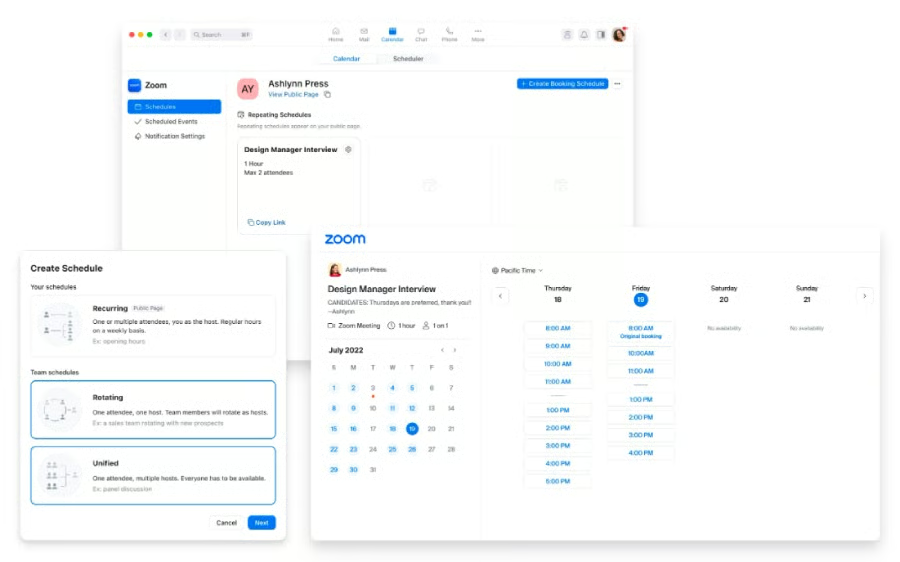
- Scheduler: Create a customizable calendar to book appointments and schedule meetings all within the Zoom platform. The scheduler also provides information on staff availability, such as recording when specialists are in or out of the office.
Nextiva: Best for medical office management
My expert opinion
Nextiva offers the best VoIP features for managing a medical office because the platform is designed to support current and prospective clients throughout the patient journey. Many of Nextiva’s key features are powered by artificial intelligence (AI), and I appreciate that you can use an AI chatbot to schedule appointments or route patients to the correct department via intelligent call routing.
At the same time, it’s important to note that essential VoIP features are limited on the base plan. If you want a more comprehensive HIPAA-compliant VoIP provider, I suggest considering Dialpad, which offers similar artificial intelligence features across all its plans.
Nextiva pricing
- Core: $23 per user, per month; $15 per user, per month billed annually
- Engage: $50 per user, per month; $25 per user, per month billed annually
- Scale: $75 per user, per month
Standout features
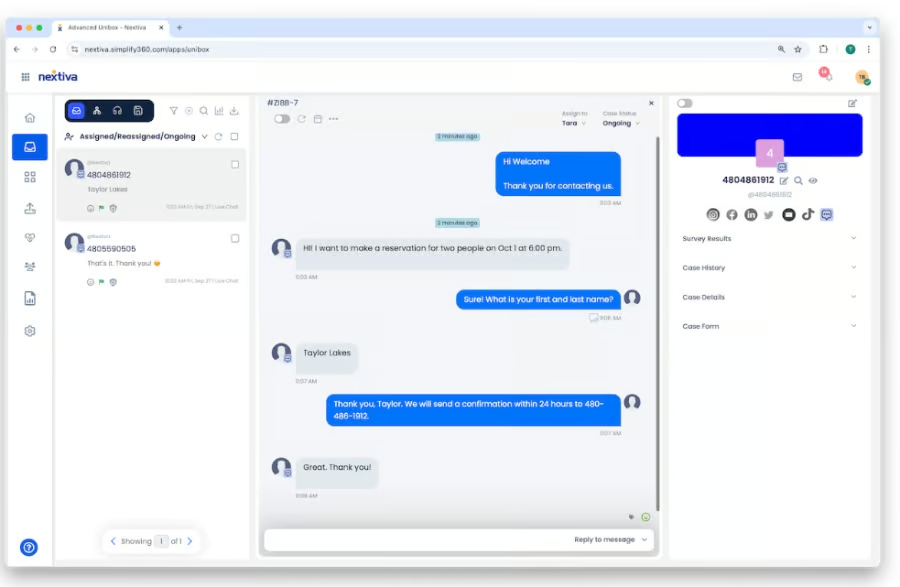
- User inbox: Manage all conversations and patient interactions through a unified mailbox. This system ensures that all communication goes to a single place, making it easier for staff to manage daily operations and respond to messages.
- Skills-based routing: Create more efficient call journeys with customizable menu options and staff prioritization. This ensures you can match callers with the best staff member for their needs, such as creating call flows for appointment scheduling or payment processing.
- Chatbot: Provide 24/7 availability for patients via a virtual assistant that offers live chat support across communication platforms.
RingRx: Best for solo practitioners
My expert opinion
I find that RingRx stands out because it offers plans for healthcare practices of all sizes, unlike many competitors focused only on large clinics. With lower prices than others on this list, I believe solo practitioners can easily choose a plan that fits their needs, whether it’s the Lite plan for basic service or the Grow plan for fax.
Unlike providers that limit compliance to specific plans, RingRx offers it across all features, including secure voicemail, video, text, and fax, and lets you keep your existing business number. While virtual receptionist features simplify call management without extra staff, keep in mind that add-ons like call recording can increase costs; for a more all-inclusive subscription, I recommend RingCentral.
RingRx pricing
- Lite: $15 per user, per month
- Grow: $19 per user, per month
- Clinic: $25 per user, per month
Standout features
- Conference calls: Customize audio or video calls with waiting room music, moderators, and access controls.
- Call queues: Manage call volume and reduce wait times with a call routing structure that places patients in the correct queues for their inquiries.
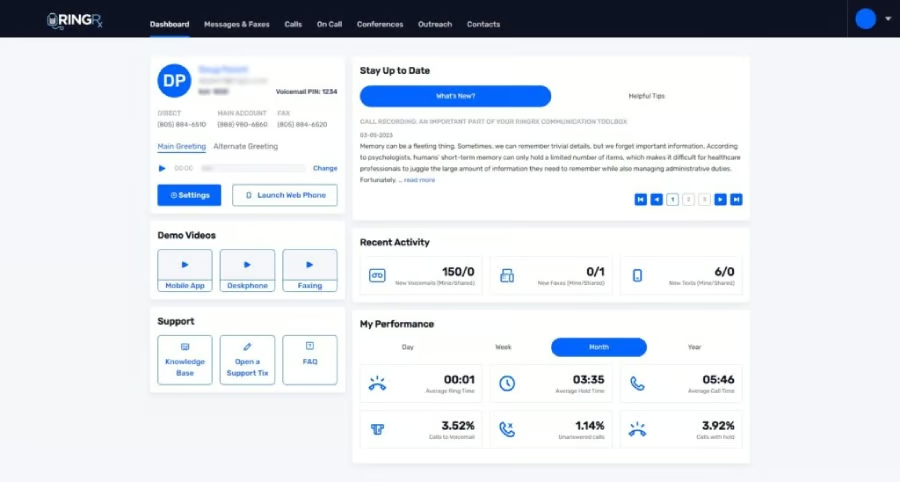
- Online portal: RingRx plans include an intuitive dashboard for patients, staff, and practitioners to access information. The portal also provides performance metrics and a centralized space to view and receive voicemails, texts, and documents via fax.
Phone.com: Best for patient intake & scheduling
My expert opinion
I find Phone.com to be an affordable, HIPAA-compliant option for medical offices that need robust patient intake and scheduling tools. Its virtual fax and custom call handling make it efficient for busy practices.
However, keep in mind that call analytics is available only on the Pro plan and lacks industry-specific integrations. If you need a more tailored healthcare solution, I recommend considering RingRx instead.
Phone.com pricing
- Basic: $18/user/month; $15/user/month, billed annually
- Plus: $27/user/month; $22.50/user/month, billed annually
- Pro: $40/user/month; $33.33/user/month, billed annually
- Money-back guarantee: 30 days
Standout features
- Voicemail to email: Instead of just listening to voicemails, transcribe your messages from audio to text. Phone.com can also send your voicemails to a business email.
- Dial-by-name directory: Allow callers to access the office they need by dialing the name of the person they want to reach. You can then spend less time transferring patients and more time responding to messages and inquiries.
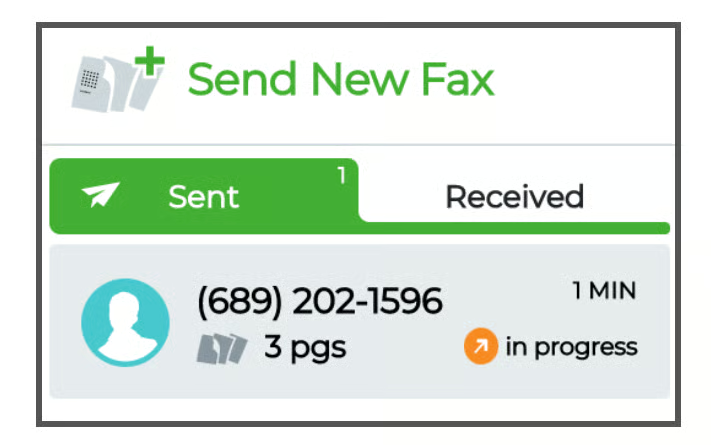
- Virtual fax: Upload, send, and receive documents from your computer, such as patient intake forms. This feature makes sending and receiving signed documentation, payments, or insurance claims easier.
Dialpad: Best for healthcare chatbots
My expert opinion
Dialpad stands out to me for its extensive AI features, including real-time healthcare chatbots, sentiment analysis, and intelligent routing that streamline patient-provider communication. I also found its AI-driven call summaries and post-call feedback surveys particularly useful for improving service quality.
However, internet fax remains an add-on across all plans, and phone extensions are restricted to the Enterprise tier. For healthcare providers with multiple offices or departments, I suggest RingCentral, which more comprehensively bundles AI features with shared line support.
Dialpad pricing
- Standard: $27/user/month, or $15/user/month billed annually
- Pro: $35/user/month, or $25/user/month billed annually
- Enterprise: Contact sales
- Free trial: 14 days
Standout features
- Call recording: Keep a record of important meetings and conference calls by enabling recordings in the Dialpad app. After recording, a call is saved to cloud storage for easy access.
- Ring groups: Manage how your phones ring with hunt groups and queue prioritization. Then customize your ring order to reduce wait times and respond to calls efficiently.
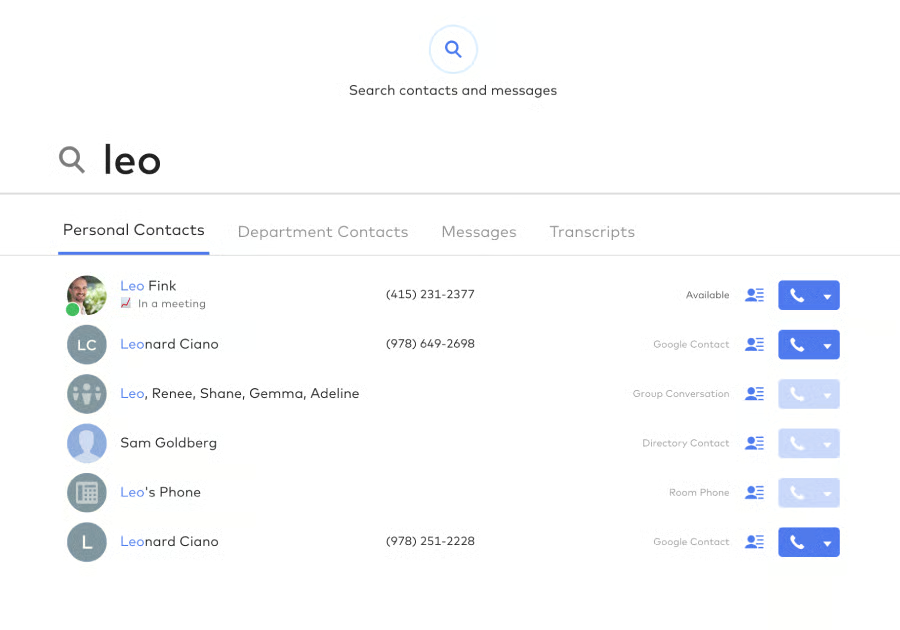
- Contact syncing: For healthcare practitioners who manage communication in Google Workspace or Microsoft 365, Dialpad lets you sync your contacts across platforms. This feature simplifies searching for messages or contacts.
Methodology: How I evaluated HIPAA-compliant VoIP providers
To evaluate the best HIPAA-compliant VoIP providers, I researched business phone systems offering a combination of products and services most beneficial to healthcare providers. Each VoIP phone system provider was assessed using a six-part evaluation criteria based on key factors such as pricing, features, and usability.
Pricing is a primary concern for healthcare service providers, so I compared phone system costs across providers based on first- and second-tier subscription plans. Additional points were given to providers with free trials, discounts on annual plans, and increasing user counts.
Phone systems for healthcare providers should be HIPAA-compliant and include standard VoIP features such as interactive voice response, call queuing, and call recording. Additionally, I evaluated features integral to supporting patients, like integrations with medical systems, virtual fax for intake forms, and a mobile app for easy access.
In addition to the standard features, advanced features include any helpful tools available on the platform that are best for medical offices. For this category, I assessed the security of each system with a focus on data storage, encryption, and auditing. Additional points were given to providers for team collaboration and telehealth features, such as video conferencing.
The interface of a phone system is just as important as its features, so I analyzed user reviews, product demos, and training documentation to assess each product’s learning curve. Providers who required minimal technical skills to use and set up received the most points in this category.
I assessed the capacity and quality of user support, such as customer service features, community forums, and knowledge base accessibility. Providers offering 24/7 service across plans received the highest points, while those offering comprehensive support only through a priority support package or an enterprise plan received fewer points.
To calculate this score, I evaluated each VoIP service for solo practitioners and small medical offices, focusing on four main criteria: features, pricing, popularity, and availability, based on my research into each provider and phone service.
How to choose the best healthcare VoIP services
When choosing a HIPAA-compliant phone service, healthcare providers should consider key features that help maintain data privacy and security and safeguard electronic health records. Additionally, you want a system that makes it easier to manage inquiries and schedule appointments. Therefore, the following list includes some of the top features to look for in healthcare VoIP.
Certifications & agreements
For a VoIP provider to be HIPAA compliant, there are specific certifications and agreements that you will need to protect your healthcare information. Business associate agreements, or BAAs, are contracts that ensure your provider will uphold the standards of protected health information and are often an additional requirement for using a VoIP phone system.
Additionally, many providers hold additional certifications that indicate a higher level of adherence to data standards. Therefore, you should look for VoIP services that are certified by organizations such as the Health Information Trust Alliance (HI-TRUST), which offers validated cybersecurity assessments.
Data security standards
Any healthcare provider managing patient data must utilize tools and technology that provide proper storage and stewardship. Most HIPAA-compliant VoIP providers offer end-to-end encryption on audio and video calls, secure call recording, and cloud storage. Additional security features, like configuring password protection and user permissions for calls or record retrieval, are also crucial for providers of telehealth services.
Compliance management
Each VoIP provider has a method of protecting data privacy through a compliance management system. When choosing a system, you should research how the provider monitors the safety of their platforms, including how often they provide audit logs and monitoring, and how you can access this information.
Patient care
The best VoIP healthcare providers include features that improve patient care from intake to consultation. For solo practitioners, look for smart VoIP features such as interactive voice response, which routes calls to voicemail, and chatbots that simplify patient scheduling. Medical offices can also benefit from a system that supports telehealth services, including patient portals, video conferencing, and post-visit surveys.
Healthcare integrations
VoIP phone systems often integrate with workspace management tools, such as CRM software and communication platforms, but healthcare providers should look for integrations with medical systems, such as electronic health record (EHR) systems and devices. For example, VoIP providers that integrate with EHR systems make updating patient records easier by providing a central platform for recording call notes and tracking doctors’ visits and prescriptions.
Team collaboration
In addition to enabling communication with patients and other healthcare institutions, VoIP systems are also beneficial for team collaboration. Many VoIP phone systems provide unified communication tools, such as video conferencing and messaging, that work well for hosting virtual staff meetings and sending team updates. Some systems also offer group paging to broadcast messages and announcements through your phone system.
Frequently asked questions (FAQs)
What is healthcare VoIP?
VoIP, or voice-over-internet-protocol, for healthcare systems, uses the internet instead of traditional landlines to make phone calls or manage communication. Compared to other VoIP phone systems, VoIP for healthcare must be HIPAA-compliant and include any necessary agreements or security features to maintain compliance with providers and other covered entities.
Can VoIP services integrate with EHR systems?
Yes. Many VoIP service providers integrate with electronic health records or EHR systems. For example, RingCentral integrates with multiple healthcare applications, such as Athena Health, Allscripts, and MedTech. If your practice uses a specific system for storing patient records, choose a VoIP provider that integrates with it.
Which VoIP is best for small medical practices?
Based on our ranking, RingRx is one of the best providers for solo practitioners and small medical practices, offering affordable, scalable plans for clinics of all sizes. However, a small practice could benefit from many of the HIPAA-compliant VoIP providers in this guide.
Bottom line
As telehealth becomes more popular, healthcare providers can greatly benefit from a HIPAA-compliant VoIP phone system that integrates call management with patient care. Unlike traditional phone systems, VoIP providers offer unified communication tools, such as video conferencing and team messaging, as well as secure cloud storage, encryption, and monitoring features to support patients and staff.
Additionally, VoIP for healthcare providers is designed to deliver comprehensive services to solo practitioners and medical offices, prioritizing both in-person and virtual care. Therefore, RingCentral is my top choice for HIPAA-compliant VoIP phone services because of its hybrid healthcare solutions, data security, and integrations. If you want to learn more about RingCentral, sign up for a free trial.
