




.jpg?w=288)

Square makes it easy for small businesses to accept credit card payments in person, online, remotely, and through invoices. Whether you sell at a counter, on the go, through an ecommerce store, or by sending digital bills, Square offers multiple ways to take payments without requiring a traditional merchant account.
In this guide, I explain how to use Square to accept credit card payments across the most common sales channels, including in-person transactions, online checkout, payment links, virtual terminal, and invoices. I also break down which Square payment methods work best for different business types, how Square’s credit card processing fees apply, and what to watch out for so you can choose the most practical option for your business.
- How to Use Square Credit Card Processing Video
- Ways you can accept credit card payments with Square
- Best ways to use Square for different business types
- How to use Square for in-person payments
- How to use Square for online payments
- How to use Square for remote payments
- How much does it cost to use Square?
- Common mistakes to avoid when using Square
- Frequently asked questions (FAQs)
- Bottom line
How to Use Square Credit Card Processing Video
Ways you can accept credit card payments with Square
Square lets you accept credit card payments in several ways, depending on how and where you sell. You can use Square to take payments in person with a card reader or countertop hardware, accept contactless payments directly on a compatible phone, sell online through your website or payment links, and collect remote payments through a virtual terminal or invoices.
For most businesses, the right option depends on your sales channel, checkout setup, and whether you need hardware. Mobile businesses and occasional sellers may prefer Square Reader or Tap to Pay, while storefront businesses often need Square Handheld, Square Terminal, Square Stand, or Square Register. Online sellers and service-based businesses may be better served by Square Online, payment links, virtual terminal, or invoices.
| Square payment method | Best for | How it works |
|---|---|---|
| Square Reader | Mobile sellers, pop-up shops, market vendors | Accept tap, dip, and swipe payments using Square’s compact card reader paired with the Square app. |
| Tap to Pay | Solo operators, mobile businesses, businesses that want to avoid extra hardware | Accept contactless cards and digital wallets directly on a compatible phone without a separate card reader. |
| Square Handheld, Terminal, Stand, or Register | Retail stores, restaurants, and fixed-location businesses | Use Square’s countertop hardware to process in-person card payments at a checkout counter. |
| Square Online | Ecommerce businesses, online ordering, omnichannel sellers | Accept payments through an online store that syncs with Square’s payment system. |
| Payment links or checkout buttons | Social sellers, service providers, businesses taking simple remote payments | Send customers a payment link or add a checkout button so they can pay online without visiting a full ecommerce store. |
| Virtual Terminal | Businesses that take phone orders or remote card payments | Manually enter card information from a computer to process payments remotely. |
| Square Invoices | Freelancers, home service providers, B2B businesses, recurring billing | Send digital invoices customers can pay online, either one time or on a recurring schedule. |
Related reading: Square also leads our list of best POS systems.
Best ways to use Square for different business types
Square’s biggest advantage is that it gives small businesses several ways to accept payments without locking them into a one-size-fits-all setup. The best way to use Square depends on where you sell, how your customers prefer to pay, and whether you need a simple mobile solution or a more complete checkout system.
For example, a market vendor may only need Square Reader or Tap to Pay, while a retail store will usually benefit more from Square hardware at the counter. Meanwhile, service-based businesses often get more value from invoices and remote payment tools than from a full in-person POS setup.
| Business type | Best Square option | Why it works |
|---|---|---|
| Mobile businesses and market vendors | Square Reader or Tap to Pay | Low-cost, portable, and easy to use anywhere |
| Retail stores | Square Terminal, Stand, or Register | Better for fixed checkout and steady foot traffic |
| Restaurants and food businesses | Square hardware at the counter | Speeds up in-person ordering and checkout |
| Service businesses | Square Invoices or Virtual Terminal | Good for deposits, after-service billing, and phone payments |
| Freelancers and independent professionals | Square Invoices or payment links | Easy to request payment without a full POS setup |
| Ecommerce businesses | Square Online, payment links, or checkout buttons | Lets you accept payments online through Square |
| Omnichannel businesses | Square Online plus in-person tools | Keeps online and in-person payments in one system |
| New or occasional sellers | Tap to Pay or Square Reader | Simple setup with low upfront cost |
How to use Square for in-person payments
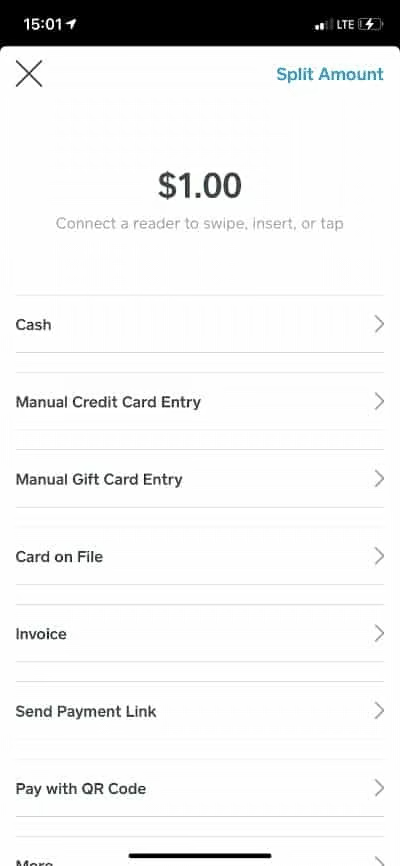
Square gives businesses several ways to accept in-person credit card payments, whether you want to use your phone, a mobile card reader, or a full checkout device at the counter. The right option depends on how and where you sell.
If you want the simplest setup, Tap to Pay lets you accept contactless payments on a compatible phone without extra hardware. If you need a more traditional card reader, Square offers both a free magstripe reader and a contactless and chip reader. Businesses that need a more complete checkout setup can use Square Handheld, Square Terminal, Square Stand, or Square Register.
The basic process is similar across all of Square’s in-person tools: ring up the sale, have the customer tap, dip, or swipe their payment method, and send a receipt by text, email, or printer if your setup supports it.
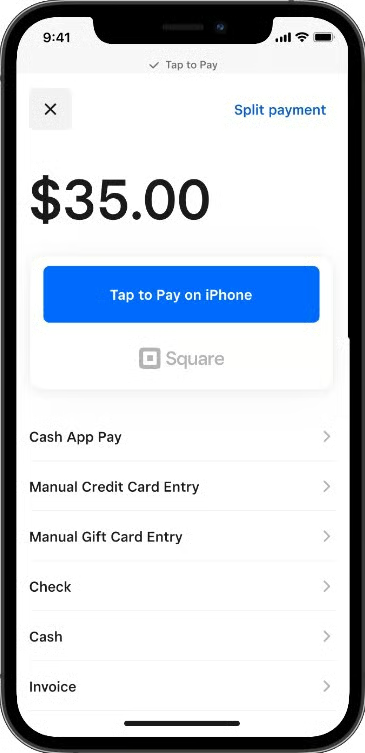
Use Tap to Pay for contactless payments without hardware
Tap to Pay lets you accept contactless cards and digital wallets directly on a compatible phone, so you can start taking in-person payments without a separate card reader. This is a strong option for solo sellers, mobile businesses, and new merchants that want the lowest hardware setup possible. Square positions Tap to Pay as the no-extra-reader option for taking tap payments on your phone.
- Open the Square app on your compatible phone.
- Enter the sale amount or add the items the customer is purchasing.
- Review the total, including tax, discounts, or tip if applicable.
- Choose the Tap to Pay option at checkout.
- Ask the customer to hold their contactless card, phone, or smartwatch near your device.
- Wait for the payment confirmation on screen.
- Send the receipt by text or email, or complete the transaction without a receipt if the customer does not need one.
Tap to Pay is best for businesses that want the fastest, most portable way to accept in-person card payments without purchasing hardware first.
Use Square Reader for simple mobile card payments
Square Reader is Square’s low-cost mobile card reader option for businesses that want to accept card payments with a phone or tablet. Square offers two main reader options: the Square magstripe reader, which lets you swipe cards and is free for new users, and the Square Reader for contactless and chip, which accepts tap and dip payments, including contactless cards and mobile wallets.
The magstripe reader is the more basic option, while the contactless and chip reader is better for businesses that want to accept more modern payment methods.
- Connect your Square Reader to your phone or tablet.
- Open the Square app and enter the sale amount or ring up the items.
- Review the total and confirm the transaction details.
- Ask the customer to swipe their card if you are using the magstripe reader, or tap or insert their card if you are using the contactless and chip reader.
- Wait for the transaction to process and confirm that the payment is approved.
- Send a digital receipt or provide a printed receipt if your setup supports it.
Square Reader is best for pop-up shops, market vendors, mobile service providers, and other businesses that want a lightweight, portable way to take payments without moving to a full POS device.
| Square Magstripe Reader | Square Contactless and Chip Reader (2nd Gen) |
|---|---|
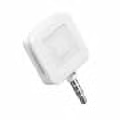 | 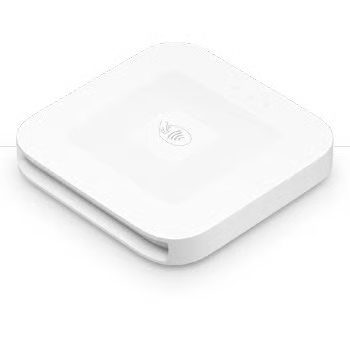 |
| First free, additional $10 | $59 |
|
|
| Buy Square Magstripe Reader | Buy Square Contactless and Chip Reader (2nd Gen) |
Use Square Handheld for portable in-person checkout
Square Handheld is a dedicated portable POS device designed for businesses that need to take payments, orders, or inventory actions while moving around. Square describes it as a pocket-sized POS with built-in payments, a camera, and a barcode scanner, making it more capable than a simple add-on card reader.
- Sign in to Square Handheld and open the checkout screen.
- Ring up items or enter the amount owed.
- Review the order total and any taxes, modifiers, or tips.
- Ask the customer to tap, dip, or otherwise complete payment on the device.
- Wait for the transaction to process and confirm approval.
- Send a digital receipt or provide a printed one if you are using a connected printer.
Square Handheld is best for restaurants, retail staff on the floor, line-busting, tableside service, and businesses that need a true mobile POS instead of just a card reader paired with a phone.
| Square Handheld |
|---|
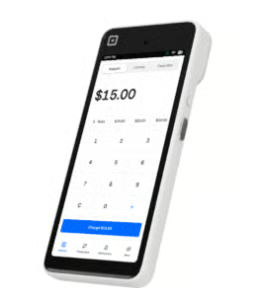 |
| Best for: Businesses that need a portable all-in-one POS for taking orders and payments on the go |
| Buy Square Handheld |
Use Square Terminal, Stand, or Register for countertop checkout
Square Terminal, Square Stand, and Square Register are Square’s main countertop checkout options for businesses with a fixed payment station. Square Terminal is an all-in-one card machine with a built-in receipt printer, Square Stand turns a compatible iPad into a countertop POS, and Square Register is Square’s more complete dual-screen register setup for higher-volume counters.
- Sign in to your Square device or connected POS setup.
- Add the items being purchased or enter the sale amount.
- Review the cart total, including taxes, discounts, and tips if applicable.
- Ask the customer to tap, dip, or swipe their card or mobile wallet on the device.
- Wait for the payment to process and confirm the transaction.
- Provide a printed or digital receipt based on your checkout setup.
These Square hardware options are best for retail stores, restaurants, and other fixed-location businesses that want a more traditional checkout flow and a more complete in-person POS experience.
| Square Stand | Square Terminal | Square Register |
|---|---|---|
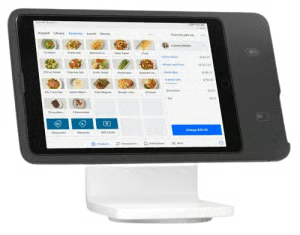 | 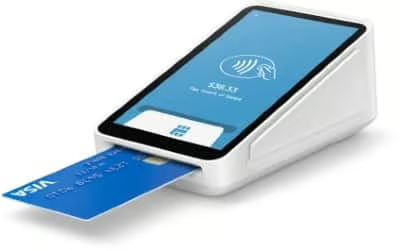 | 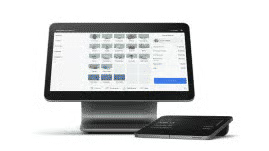 |
| Best for: Businesses using an iPad as a countertop POS | Best for: Businesses looking for a portable POS machine | Best for: Small businesses looking for a sleek countertop system |
| $149 or $14 per month for 12 months | $299 or $27 per month for 12 months | $899 or $44 per month for 24 months |
| Buy Square Stand | Buy Square Terminal | Buy Square Register |
You can also choose from Square’s different hardware kits designed for retail and restaurants.
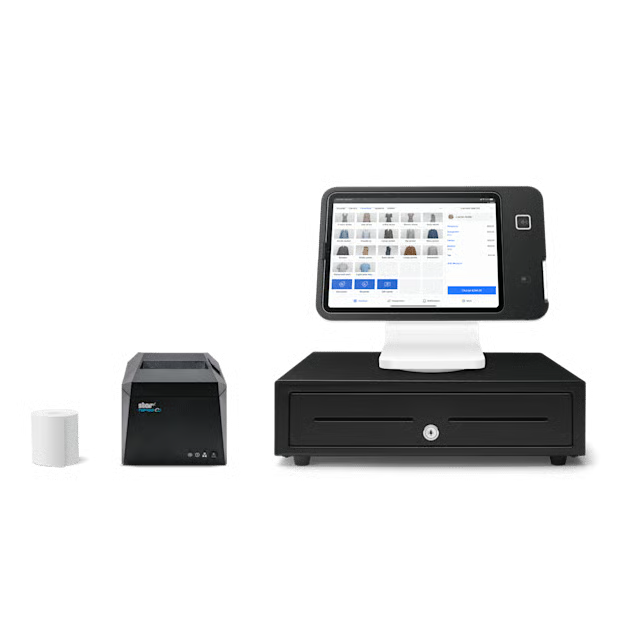
Square Stand Kit: $689 Includes Square Stand (2nd generation), cash drawer, and receipt printer. Add on Square Handheld for tableside ordering and payments. iPad not included. Buy Square Stand Kit 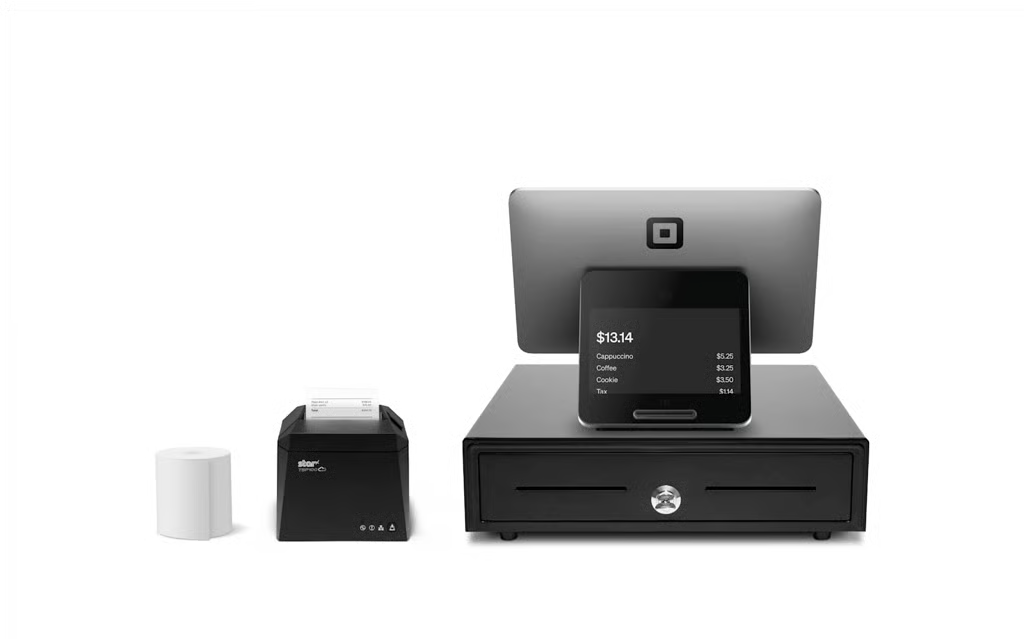
Square Register Kit: $1,189 Includes Square Register (2nd generation), cash drawer, and receipt printer. Add on Square Handheld for tableside ordering and payments. Buy Square Register Kit 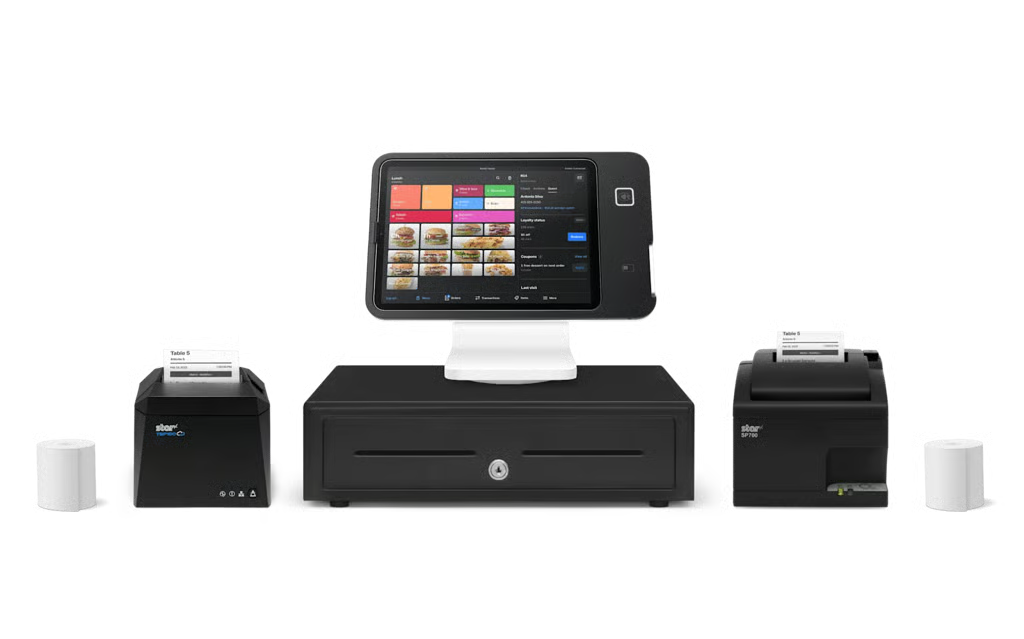
Square Stand Kit for Restaurants: $1,199 Includes Square Stand (2nd generation) cash drawer, receipt printer, impact printer, and paper. Add on Square Handheld for ordering & payments. iPad not included. Buy Square Stand Restaurant Kit 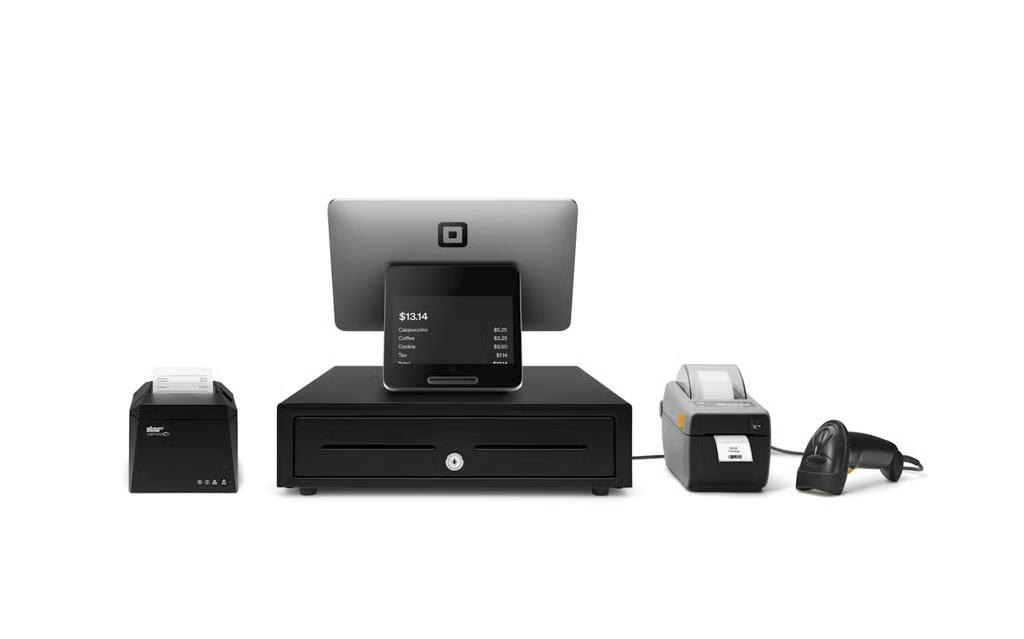
Square Register Retail Kit: $1,799 Includes Square Register (2nd generation), cash drawer, receipt printer, barcode label printer and barcode scanner Buy Square Register Retail Kit


How to use Square for online payments
Square gives businesses a few different ways to accept online payments, whether you want to sell through a full ecommerce store, send customers directly to a payment page, or connect online and in-person sales in one system. The best option depends on how much of an online selling setup you need and whether you want customers to browse products, click a payment link, or pay through a checkout flow tied to your website or social channels.
For most businesses, Square Online is the best fit if you want a full online store, while payment links or checkout buttons work better if you just need a quick way to collect payments online. If you sell both online and in person, Square’s synced tools can also help you manage payments across channels without using separate systems.
Sell through a Square Online store
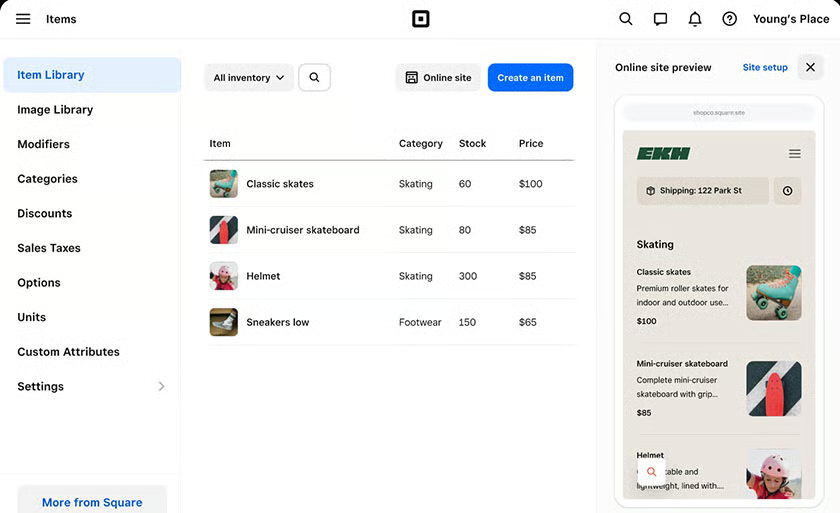
Square Online is Square’s website and ecommerce solution for businesses that want to accept payments through a full online storefront. This option works best if you want customers to browse products, place orders, and complete checkout directly on your website rather than through a one-off payment request.
- Sign in to your Square account and open Square Online.
- Choose a website or store template and add your business information.
- Add products or services you want to sell online.
- Set up shipping, delivery, pickup, or other fulfillment options if needed.
- Review your checkout settings and payment options.
- Publish your site and direct customers to your store to place orders and pay online.
Square Online is best for retailers, restaurants, and service businesses that want a branded online presence with built-in payment processing.
Send payment links or checkout buttons
Payment links and checkout buttons are better if you do not need a full ecommerce site but still want to accept payments online. They let you direct customers to a Square-hosted checkout page, which can be useful for social selling, text or email requests, deposits, event payments, or simple remote sales.
- Log in to your Square Dashboard and open the payment links or checkout tools.
- Create a new payment link, button, or checkout option.
- Enter the item, service, or payment amount you want to collect.
- Add a description, image, or quantity settings if needed.
- Copy the payment link or install the checkout button on your website.
- Share the link by email, text, social media, or another customer touchpoint.
Payment links and checkout buttons are best for businesses that want a simple way to collect payments online without building a full store.
Accept payments across online and in-person sales
If your business sells both online and in person, Square can help you manage payments across both channels in one system. This is especially useful for omnichannel businesses that want online orders, in-store sales, and customer payment activity tied together rather than split across separate platforms.
- Set up your online sales channel through Square Online, payment links, or another Square-supported checkout option.
- Use Square for in-person payments through Tap to Pay, Square Reader, or Square hardware.
- Keep your product catalog, pricing, and basic business information aligned across both channels.
- Monitor incoming payments from your Square Dashboard so you can track online and in-person sales together.
- Review reporting, order activity, and customer transactions in one place.
This setup is best for businesses that want to sell through both a website and a physical sales channel while keeping payment processing under one platform.
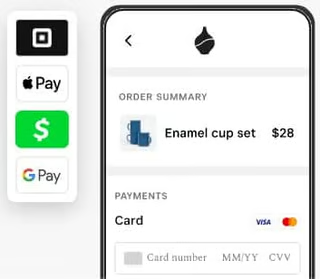
Customers that access your online store from their mobile have a range of mobile-friendly payment methods like Apple Pay, Google Pay, and Cash Pay. (Source: Square) 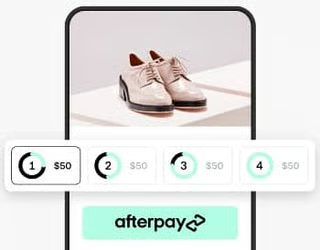
Square’s recent acquisition of Afterpay now allows Square merchants to offer the buy-now-pay-later payment method for customers. (Source: Square) 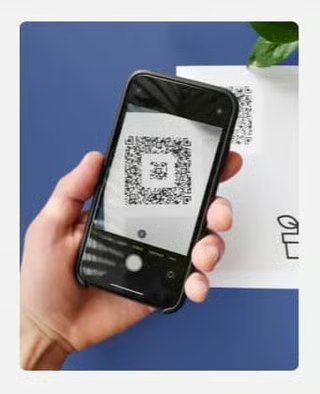
Businesses can use Square Online’s free account to create an online store and generate a standalone checkout link or QR code for speedy ordering. (Source: Square)


How to use Square for remote payments
Square also lets businesses accept credit card payments remotely, which is useful when the customer is not physically in front of you. This includes phone payments, one-time invoices, and recurring billing for ongoing services. These tools are especially helpful for service businesses, freelancers, B2B sellers, and any business that needs to collect payment after a job is done or without a face-to-face checkout.
The virtual terminal is best for taking payments over the phone, while Square Invoices is better for sending customers a payment request they can complete on their own. If you bill clients on a regular schedule, Square also lets you set up recurring invoices and stored card payments.
Process phone orders with Virtual Terminal
Square Virtual Terminal lets you manually enter a customer’s card information from a computer to accept payment remotely. This is a practical option for businesses that take orders by phone, collect deposits, or need to process a payment when the customer is not checking out online themselves.
- Sign in to your Square Dashboard and open Virtual Terminal.
- Enter the payment amount or item details for the sale.
- Add the customer’s billing information if needed.
- Manually enter the customer’s card details.
- Review the total and confirm the payment.
- Send the customer a digital receipt after the transaction is approved.
Virtual Terminal is best for businesses that regularly take card payments by phone or need a simple way to process remote transactions from a desktop.
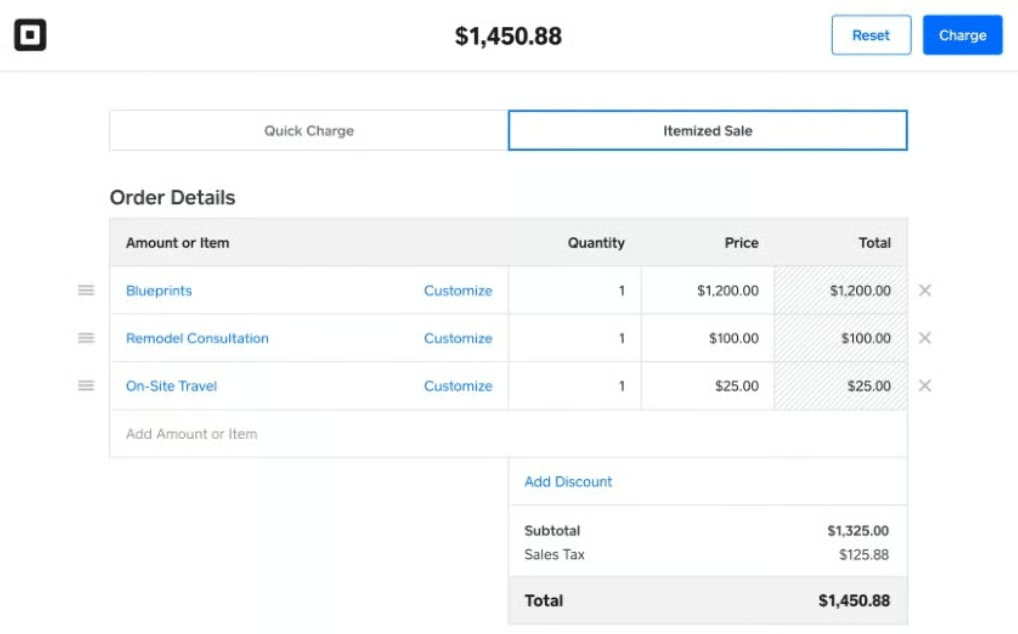
Accept remote payments (over the phone) and process them from your browser without requiring any special equipment or device. (Source: Square) 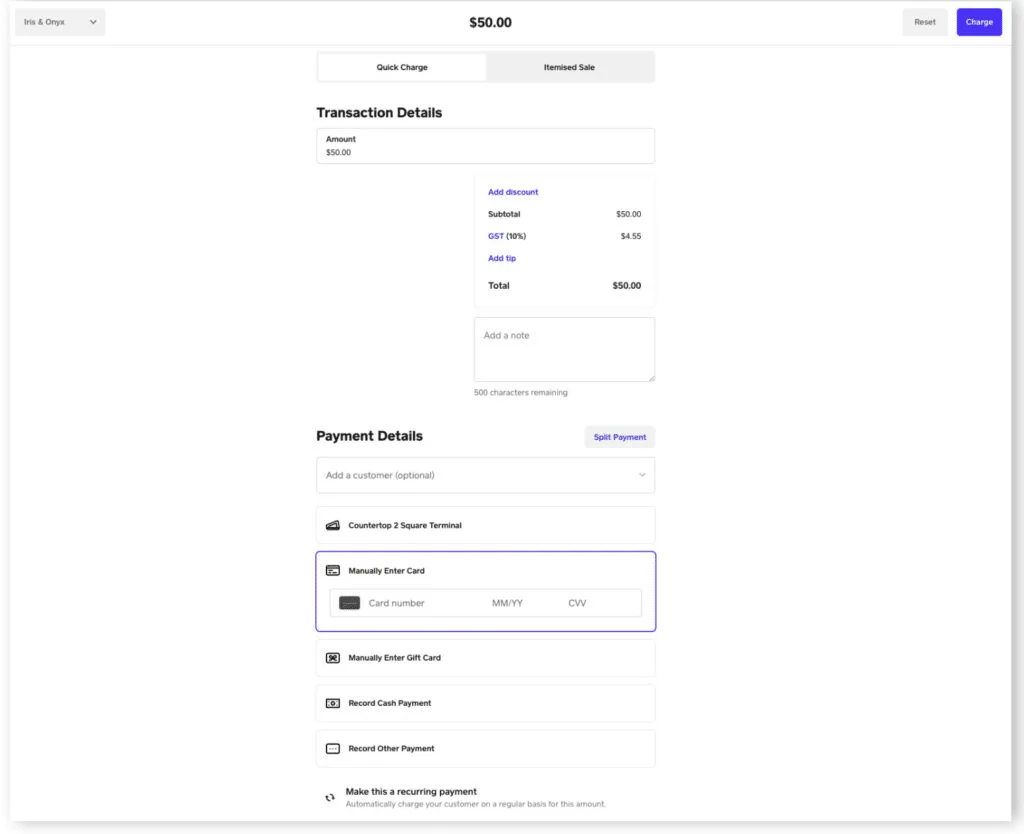
The Square Virtual Terminal allows you to manually enter customer credit card details. (Source: Square)


Send one-time invoices
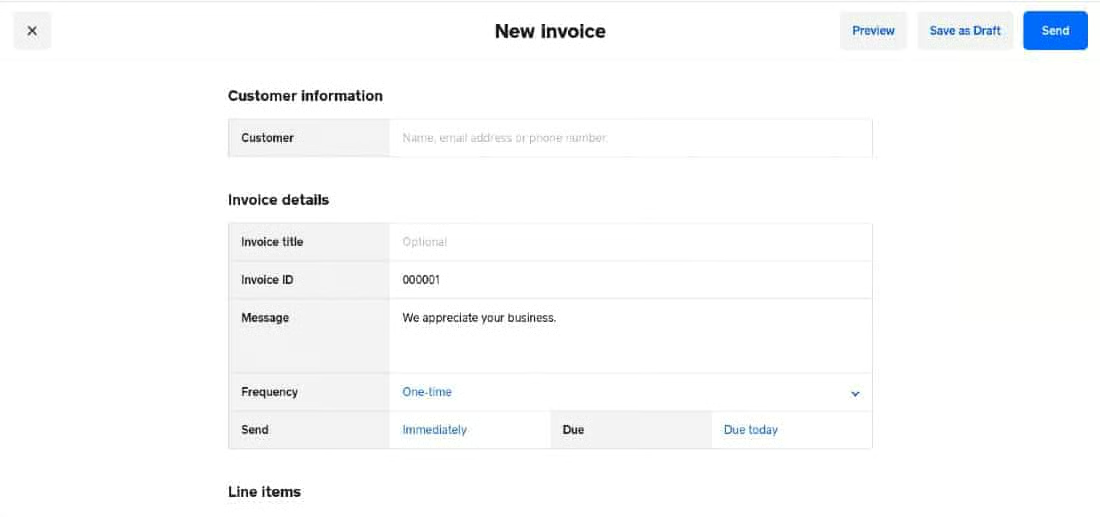
Square Invoices lets you bill customers electronically and have them pay through an online invoice link. This is often a better option than Virtual Terminal when you want the customer to enter their own payment details, review the bill, or pay later.
- Open Square Invoices from your Dashboard or app.
- Create a new invoice and add the customer’s information.
- Enter the items, services, or amount due.
- Set the due date and any payment terms.
- Review the invoice and send it by email or shareable link.
- Wait for the customer to open the invoice and submit payment online.
One-time invoices are best for service providers, freelancers, contractors, and businesses that bill customers after a sale or project.
Set up recurring invoices and card-on-file payments
Square can also automate repeat billing for businesses that charge customers on an ongoing basis. This works well for subscriptions, retainers, installment payments, and other recurring services where you do not want to create a new invoice each time.
- Open Square Invoices and create a new invoice or recurring series.
- Add the customer and enter the products or services being billed.
- Choose the billing frequency, such as weekly, monthly, or custom intervals.
- Set the start date, due date, and any end date if needed.
- Enable card-on-file or saved payment details if the customer agrees to automatic billing.
- Review the schedule and send or activate the recurring invoice.
Recurring invoices and card-on-file payments are best for businesses with ongoing client work, membership-style billing, or repeat service charges.
How much does it cost to use Square?
It’s free to create your Square account and use the POS and payments software. Square charges a processing fee for every transaction, which varies depending on the payment processing method. Some of these tools, such as Square Online, offer paid plans for access to more advanced features.
When you create your Square account, you’ll receive a free magstripe card reader that can connect to your device and accept swiped card payments. You can purchase additional hardware and POS equipment, like chip/contactless card readers, terminals, registers, and accessories.
Square POS rates and credit card processing fees
| Plan | Square Free | Square Plus | Square Premium |
|---|---|---|---|
| Monthly fee | $0 | $49 | $149 |
| Tap, dip, swipe | 2.6% + 15 cents | 2.5% + 15 cents | 2.4% + 15 cents |
| Square Online, Invoice | 3.3% + 30 cents | 2.9% + 30 cents | 2.9% + 30 cents |
| Square Virtual Terminal | 3.5% + 15 cents | 3.5% + 15 cents | 3.5% + 15 cents |
Common mistakes to avoid when using Square
Square is easy to start with, but choosing the wrong payment method can cost more or create extra work. The most common mistakes happen when businesses pick a tool that does not match how they actually sell.
- Using manual entry when a card-present option would cost less: Virtual Terminal and other manually entered payments are convenient, but they usually carry higher processing fees than in-person payments. If the customer is standing in front of you, Tap to Pay, Square Reader, or Square hardware is usually the better-value option.
- Buying hardware before deciding how you want to sell: Not every business needs Square Terminal, Stand, or Register right away. If you mainly sell on the go or only take occasional payments, Tap to Pay or Square Reader may be enough.
- Using Virtual Terminal when invoices make more sense: If the customer can enter their own payment details later, Square Invoices is often the better choice. It is usually more convenient for the customer and can be a better fit for service-based billing.
- Choosing the free magstripe reader when you really need tap and chip payments: The free reader is a good starter option, but it only accepts swiped cards. If you want to accept modern payment methods like tap-to-pay cards and mobile wallets, the contactless and chip reader is the better long-term choice.
- Treating online and in-person sales as separate systems when they do not have to be: If you sell both online and in person, Square works best when you keep those payment channels connected. That makes it easier to track sales, orders, and customers in one place.
- Using card on file when a customer-paid invoice would be simpler or cheaper: Card-on-file billing can be useful for recurring payments, but it may come with a higher processing fee. In some cases, it is better to send a recurring invoice and let the customer complete payment themselves.
The easiest way to avoid most of these mistakes is to match the Square tool to the type of sale. Use in-person tools for face-to-face payments, online tools for website sales, Virtual Terminal for phone payments, and invoices for billed or recurring payments.
Frequently asked questions (FAQs)
Here are some questions we commonly encounter about using Square for credit card processing.
How does credit card payment processing with Square work?
Square POS comes with a built-in payment processing feature (Square Payments), allowing merchants to accept credit card payments from customers. Square partners with large financial institutions that approve transactions and safely transfer funds from customers to your bank in exchange for a flat-rate fee.
How much does Square charge per credit card transaction?
Square has a flat rate fee for credit card transactions. Square charges 2.6% + 10 cents if you accept swiped, dipped, and tapped credit card payments. Meanwhile, fees are 3.5% + 15 cents if you or your customers key in their credit card information to pay for their purchases. For credit card payments made over the internet (through a website or payment links), the rate is 2.9% + 30 cents per transaction.
How do I process a credit card payment with Square?
Square allows you to accept credit card payments in-person (via swiped, tapped, and dipped transactions in-store or from a mobile device) and online (through a website, payment links, and payment buttons from a website or virtual terminal). You can also set up Square to accept credit card payments for invoices and recurring payments.
How do I get started with Square?
Create an account on Square, provide your business information and banking details, download the app to your mobile device or iPad, and set up your store. Square offers instant approval, so you can start accepting payments immediately, even without a credit card reader, by keying in your customer’s credit card information.
Bottom line
Square is one of the easiest ways for small businesses to accept credit card payments in person, online, and remotely. It works well for a wide range of sales setups, from Tap to Pay and mobile readers to ecommerce, virtual terminal, and invoicing.
Its biggest advantage is flexibility. You can start with a low-cost option, like Tap to Pay or the free magstripe reader, then add more advanced tools as your business grows. If you want a simple, all-in-one way to accept payments across different sales channels, Square is a strong choice.
