





.jpg?w=288)


Retail customer service (CS) should enhance shoppers’ experience by simplifying in-store procedures, proactively answering concerns, and giving customers attention and care. It is an invaluable tool for building customer loyalty and ultimately driving the bottom line of your retail business. Positive experiences with your store and associates will make your customers (and their buying power) come back again and again.
Here are 20 retail customer service tips that will help increase your sales, boost customer retention, and enhance the buying experience for shoppers.
- 1. Train Your Staff on Retail Customer Service
- 2. Write Down Your Policies
- 3. Remember the Goal
- 4. Offer Suggestions
- 5. Optimize Retail Customer Service in All Your Channels
- 6. Greet Every Customer at Entry
- 7. Engage With Every Customer (in the Way They Want)
- 8. Anticipate Customer Questions & Concerns
- 9. Remember Your Loyal Customers by Name
- 10. Send Welcome Emails to New Shoppers
- 11. Offer Apology Discounts for Logistical or Clerical Errors
- 12. Create an Accommodating Return Policy
- 13. Practice Good Inventory Management to Avoid Stockouts
- 14. Equip Your Staff With Product Knowledge
- 15. Keep Your Store Tidy & Clean
- 16. Make Your Customer Base Feel Like a Community
- 17. Provide 24-hour Support Lines
- 18. Allow Shoppers to Provide Anonymous Feedback
- 19. Have a Plan for Dealing With Angry Shoppers
- 20. Hire Strong Leadership
- Retail Customer Service Frequently Asked Questions (FAQs)
- Bottom Line
1. Train Your Staff on Retail Customer Service
Your staff is the face of your business and will handle most customer interactions. To ensure they represent your business the way you want, you must train your staff on your customer service policies.
You will want to ensure this training is part of any onboarding process and that you hold periodic training sessions every quarter or six months. At my store, we reviewed customer training topics monthly during store meetings. This meant time was built into our schedules to review customer service topics.
2. Write Down Your Policies
In addition to training, you will want to create a written or electronic document with all your customer service policies that employees can look to when questions arise. Your goal here is to make things as scannable and easy to find as possible.
Use tables of contents to improve content navigation, bulleted lists to save on reading time, and bolded text to draw attention to key concepts so staff members can find their answers and resolve issues quickly. You will want to use these formatting techniques even on one-to-two-page documents.
3. Remember the Goal
As with any job, there will always be gray areas in retail customer service that you cannot cover in your written policies. For these cases, you need to be sure your staff is focused on the ultimate goal of your retail customer service initiative: to create an experience that makes people want to come back.
Teach your staff to keep this “north star” in view whenever an issue arises. At my boutique, for example, I would get many unexpected return requests and customer demands. While I couldn’t turn to the rulebook when a button popped off on someone’s third wear, I could keep in mind the overall goal of my role as a customer service person. I always tried to resolve situations by making the customer feel cared for and like their problem would be favorably settled.
4. Offer Suggestions
Another area you should train your staff on to improve your store customer service is offering suggestions. In addition to answering customer questions and providing product recommendations, you should also teach your team about cross-selling and upselling.
- Cross-selling is when an associate recommends a complementary product, and the shopper buys an item they didn’t intend to purchase. Associates can inspire ideas by showing how a combination of products can work together or remind shoppers of a need. Along the same lines, cross-merchandising can encourage cross-departmental purchases.
- Upselling is a sales tactic that inspires customers to purchase additional suggested products or services directly related to the original item of interest. The best time to upsell a customer is at the point of purchase by suggesting add-on items or showing an upgraded version of the product in question.
For example, when I went to a local running store, I intended only to purchase shoes, but once I picked out my pair and was ready to check out, the salesperson asked if I wanted a pair of socks to enhance my comfort and better secure my feet. With this small nudge and my preexisting buying intent, she successfully upsold my initial purchase, and I bought the socks.
5. Optimize Retail Customer Service in All Your Channels
In today’s digital age, retail customer service is not just about the in-store interactions your customers have; it is also about their online experience with your brand. This includes your website, social media pages, and online support availability and efficacy.
To provide a positive experience from the screen to your sales floor, you should create a seamless retail customer service experience across all your channels.
For your online store, you need to be sure there is a contact form or built-in messaging feature where customers can get assistance. Additionally, you will want to create an About page where customers can learn about your brand and its philosophies and a frequently asked questions (FAQs) page where shoppers can find answers to their questions.
In addition to providing services that help solve customer problems, retail customer service for your online store is anything that makes website navigation easier or streamlines the shopping and purchasing processes. Running user experience trials and using your site as customers will be great ways to test your website’s usability.
As with your online store, for your brand’s email and SMS channels, you need to ensure that you create a clear line of communication for customers to reach out. Include customer service email information in your correspondence and do what you can to provide answers within 24 hours.
Additionally, to improve your retail customer service in this space, use friendly and informative language in your brand voice and avoid overwhelming your customers with incessant emailing.
6. Greet Every Customer at Entry
One of the easiest ways to make every customer feel special and let them know you are available for assistance is to greet them upon entry. In addition to a greeting, I suggest you and your associates create short spiels that include:
- Your name
- A greeting
- Any specials you might have
- An offer of assistance
In my own experience with training and running a store, if you have a prepared statement that you use to greet every customer, you are more at ease and able to deliver all relevant information without worrying about what you will say.
A good greeting will not only welcome people into your space but will also orient them to your offerings and open the door for a customer-associate interaction. The shoppers I didn’t greet rarely asked for help or clarification, but those I did were more apt to interact with me. These interactions led to sales and helped the customer have a better experience—and they all started with a hello!
7. Engage With Every Customer (in the Way They Want)
To optimize every customer and create the best experience for them, you and your associates should engage with every customer. However, this engagement will look different depending on the customer. Some shoppers want associates to provide suggestions, product information, and assistance throughout their experience; others want to browse, and too much attention annoys them.
The last thing you want to do is annoy a customer who wants space, but you also don’t want to leave a shopper feeling ignored. The best way to determine what type of assistance a customer wants is to ask. I would suggest doing this upfront before they begin shopping as part of your greeting. “Can I help you with anything today?” is an easy opener.
You typically will receive three types of answers:
- Affirmative: When a shopper wants help and expects your attention, they will provide an affirmative response.
- Delayed: This is when a shopper sounds open for help but doesn’t want it immediately. You should check in with this customer frequently and be attentive should a question or need arise.
- Decline: When customers prefer space instead of assistance, they will typically decline any customer service advances. You should not completely ignore this customer; provide attentive and professional baseline services like making a fitting room available or being cordial at checkout, but avoid hovering or being overly attentive.
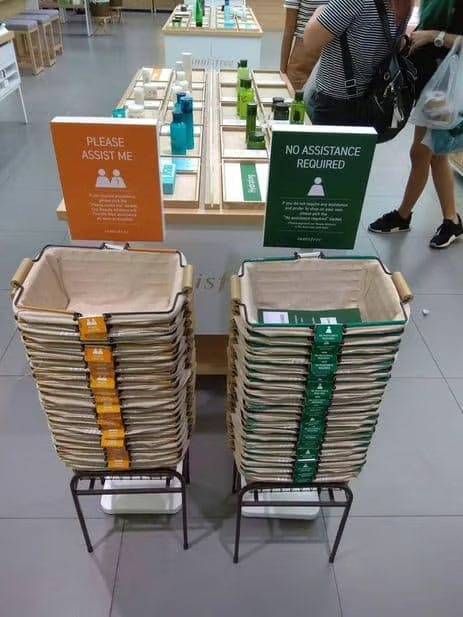
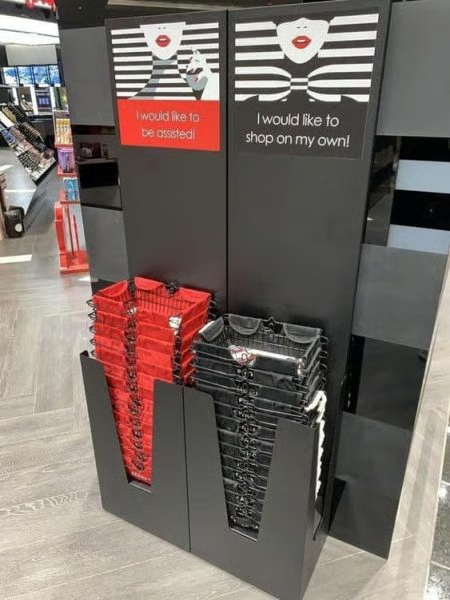
In addition to verbal communication, some retailers get creative with non-verbal tools that shoppers can use to indicate the kind of service they are looking for. This is especially effective at busy stores where shoppers may encounter many different associates.
(Source: Pinterest)
8. Anticipate Customer Questions & Concerns
The best way to create a positive experience for your customers is for them to require no customer service at all. To do this, you should try and anticipate customer questions and shopping pain points and mitigate them accordingly.
Put yourself in the shoes of someone shopping at your store, and consider the information you might want to know or the issues that might arise. Post that information around your store and train your staff on those areas of concern. Institute procedures that optimize your space and streamline operations like checkout and traffic flow.
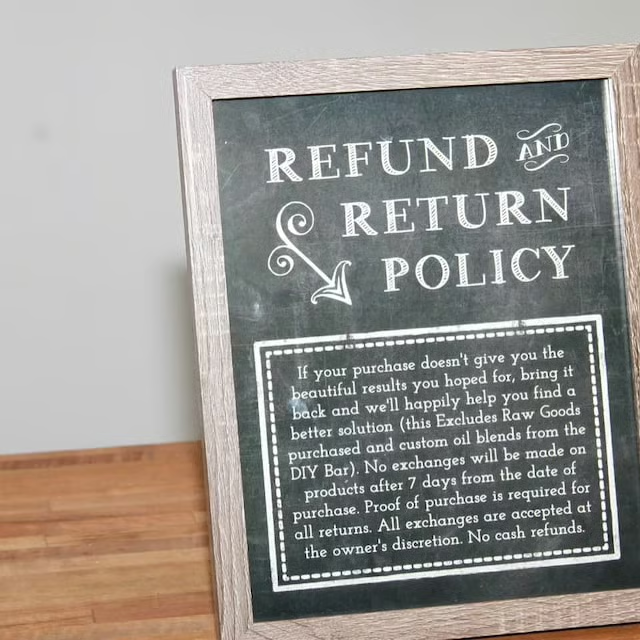
Signage with your return policy and store promotions, sizing guides, ratings, reviews, and FAQ resources are all things you can implement in your store and website to make the shopping experience self-sufficient and easy.
9. Remember Your Loyal Customers by Name
One of the best ways to make your customers feel special and build their loyalty is to learn their names and greet them with familiarity. This will help them feel valued and form a relationship with your store and associates.
The best way to encourage this first name recognition is to create a shared document where employees log loyal customers. This log should include a brief description of the person, their preferences, shopping habits, and any miscellaneous information. It can be created on Google Sheets or another document-sharing platform—just ensure this sheet is accessible to all your employees and that they check it regularly. Consider implementing a rewards structure for learned first names. You can also keep your staff on a consistent schedule so they are in-store at regular times.
For example, at my store, I always worked the weekends because a large group of regulars would come by to shop on weekend days. I knew their names, personalities, and clothing preferences so I could give them highly personalized service and build their loyalty.
10. Send Welcome Emails to New Shoppers
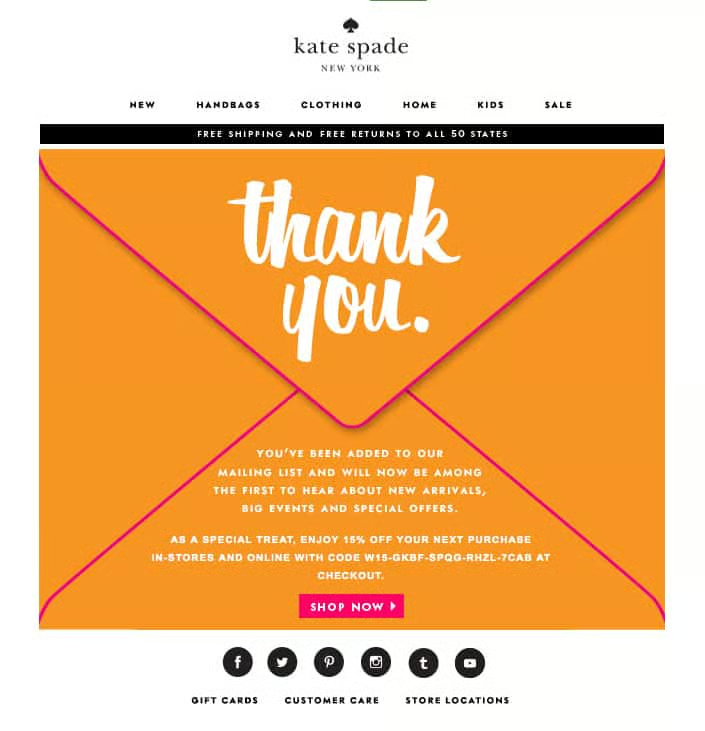
One way to impress your new customers and foster their loyalty is to send out welcome emails. Rather than leaving your store and never thinking of you again, an email will force them to remember your brand and boost their chances of shopping with you again. You might even consider including a discount code in your email to further incentivize a return visit.
To send out emails, you will first need to acquire them. The best way to do this is to create a customer loyalty program where shoppers exchange information for exclusive access to discounts and offers.
11. Offer Apology Discounts for Logistical or Clerical Errors
Mistakes happen—it’s part of running a business. But clerical and logistical errors are not deal breakers for most companies. In fact, most customers go back to a brand even after a mistake, so long as customer service helps them reach a favorable resolution.
Offering a fast solution—a replacement or store credit, for example—will take you far and help you amend the situation for your shoppers favorably. Create an apology email template that you or your employees can send out with a custom discount code when issues arise. This will create not only more incentive to keep shopping with you but a positive final impression.
12. Create an Accommodating Return Policy
While it is often difficult for small businesses to offer store credit or extended return windows, you should do what you can to accommodate your customers. Write a return policy that makes sense for your business and train your employees on its rules. Consider the ways you can make it beneficial to customers and flexible for unexpected situations.
Nearly 60% of shoppers expect the return process to be easy and hassle-free, so consider these factors when creating your return process:
- Refund speed: Customers expect to wait five days or fewer for their refunds to land in their accounts.
- Return fees: Offer free returns unless completely unfeasible, like for bulk or oversized orders.
- Return window: Extend your return window as long as possible to create shopper assurance. I would suggest giving at least two weeks for in-store and up to one month for online returns.
- Create flexibility for unpredictable circumstances: You want to be sure that you can offer refunds, store credit, or special offers for situations where the products are damaged, or there are logistical problems.
13. Practice Good Inventory Management to Avoid Stockouts
With the internet full of alternate options and ways to buy products, when a store is out of stock, few shoppers are going to wait. They will likely buy the item online instead. While you cannot control the supply chain, you can take steps to prevent avoidable stockouts by practicing good inventory management.
If you can keep an eye on your inventory levels and spot when items are running low, you can place re-orders before you run out of stock. Additionally, many inventory management software options allow you to set low stock alerts and automated re-orders when items are low.
Devise an inventory management system—choose an inventory management software or create a manual process. Be sure to create a strategy that will spot low-stock items, not waiting until items are gone to trigger a response.
14. Equip Your Staff With Product Knowledge
Retail customer service also means that you and your staff can answer questions about your merchandise. This means that your staff needs to be equipped with product knowledge and receive ongoing training to stay up to date. For example, at my store, we had to try on every cut and designer for our denim to understand its fit and stiffness. We also had to try on any new brands we received and learn about the metal composition of our jewelry.
Incorporate product knowledge into your onboarding training and schedule periodic retraining sessions as new inventory arrives. Write down the most important product information where employees can readily access it.
15. Keep Your Store Tidy & Clean
The way your store looks, its overall cleanliness, and how well it is organized play a big role in your customers’ ultimate impression of your business and brand. You will want to be sure to maintain a clean space at all times.
Create cleaning procedures for opening and closing your store, and ensure that staff is returning items and keeping things in their place throughout the day. These daily cleaning tasks will ensure that things stay clean and organized. There will also likely be some procedures, like dusting and floor cleaning, that can be done weekly rather than daily.
Use our downloadable checklist below to stay on top of your store’s cleanliness.
16. Make Your Customer Base Feel Like a Community
Another way to improve your retail customer service is to use sales and marketing strategies, many of which we’ve discussed above, to make your customers feel like family. Introduce a loyalty program, use branded and familiar language in your emails and SMS messaging, or hold exclusive sales and events—introduce exclusivity to foster a positive brand impression and customer loyalty.
For example, Andre Assous, a small footwear retailer, held an exclusive 30% off sale for their VIP members. Additionally, they used familiar and exclusive language in their messaging, as you can see in the image below:

17. Provide 24-hour Support Lines
You want to be sure that you have 24-hour retail customer support access so customers can reach you as soon as they run into a question or issue. While this might not mean that you have someone on call 24 hours every day, you should have an email or message center where customers can leave their questions at any time.
Be sure that you monitor your customer service email or message center daily and respond to customers as soon as possible.
18. Allow Shoppers to Provide Anonymous Feedback
Many people do not like to confront businesses head-on with their complaints. Give these shoppers the opportunity to air grievances by sending out surveys, leaving a place for people to drop off written complaints, or providing a customer email address.
Anonymous feedback will not only help you learn from any mistakes but might just save you from a negative public review.
One way to send out surveys is through outreach marketing tools on your POS system or another software.
19. Have a Plan for Dealing With Angry Shoppers
While uncommon, there are going to be angry customers that come into every store. Whether because of a faulty product, poor service, or other situations, you should equip your staff with a plan for dealing with these shoppers that works toward a calm resolution and keeps your staff safe.
Train your staff on how to handle angry customers during onboarding. Create a plan of action that looks to find the problem and provide a solution. Also include a caveat for dealing with a customer that is scaring an associate, including staying behind the cash wrap, communicating fear, and keeping the store phone close for emergency dialing.
20. Hire Strong Leadership
The person who will deal with the larger or more complex issues is your store manager. This person should have a strong understanding of your customer service policies and be a leader to the rest of your staff in abiding by those rules.
Train your store managers on your customer service policies and review those policies periodically. Managers will also review your CS policies when onboarding new staff members. You should also consider the personality of your manager hires, seeking out leaders with experience who will be able to influence your associates.
Retail Customer Service Frequently Asked Questions (FAQs)
Expand the questions below to get answers to some of your most common retail customer service questions.
How do you give excellent customer service in retail?
You give excellent customer service in retail by putting the satisfaction of the customer first, so you don’t lose them as a shopper or hurt the reputation of your brand.
What is an example of retail customer service?
Retail customer service can be anything from helping a customer find a product to facilitating a refund for a damaged good.
Is there a difference between retail customer service and regular customer service?
Retail customer service is a type of customer service, but the overarching goal of both is the same: to provide favorable solutions and brand experiences for customers.
Why is customer service important in retail?
Customer service is important in retail to improve customer experience, boost retention, and ultimately drive a business’s bottom line.
Bottom Line
Creating a strong retail customer service approach and writing your policies will create a positive experience for your shoppers. Ultimately, their satisfaction is what builds loyalty, drives your bottom line, and allows your business to flourish. With the tips above, you are ready to craft an effective retail customer service approach and reap its rewards.
