








Voice-over-internet-protocol (VoIP) has become the go-to solution for businesses wanting a more affordable, efficient, and flexible approach to communications. With the rise of remote and hybrid work, usage and expectations toward VoIP have changed dramatically. In this guide, we summarized some of the most trending VoIP statistics and explained how this technology has evolved into a cloud-based telephony solution.
General VoIP Statistics
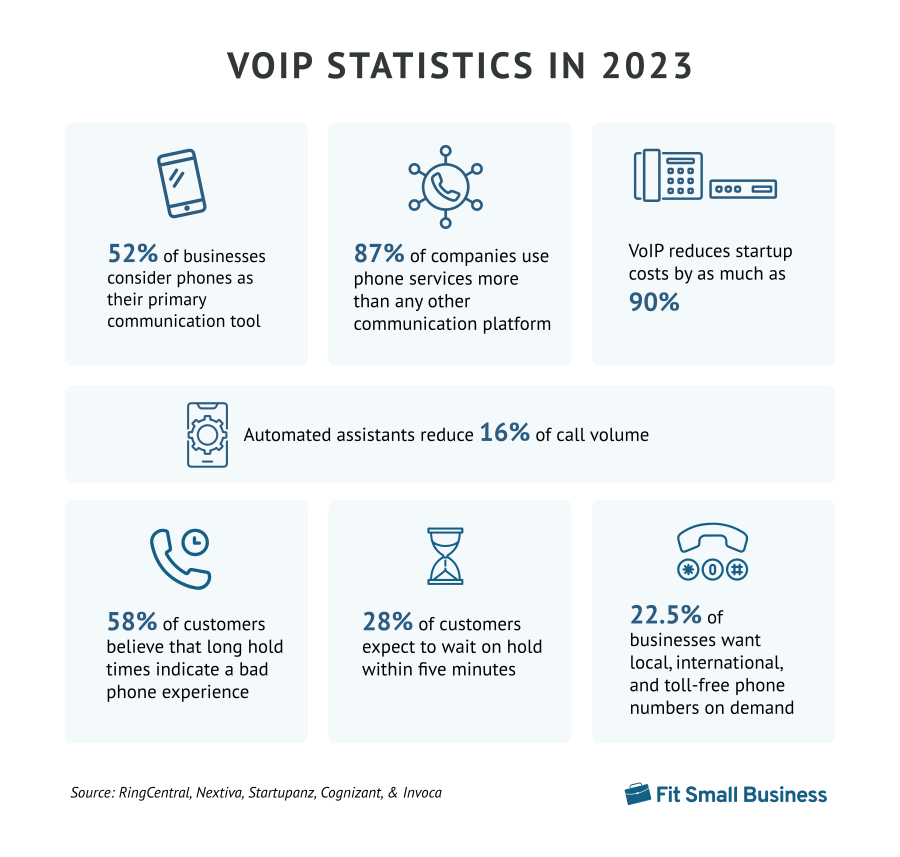
More businesses are recognizing the benefits of adding VoIP systems to their tech stack. In turn, VoIP providers are delivering new capabilities to provide users with the most flexible way to communicate. Here are interesting statistics on how VoIP is used in business:
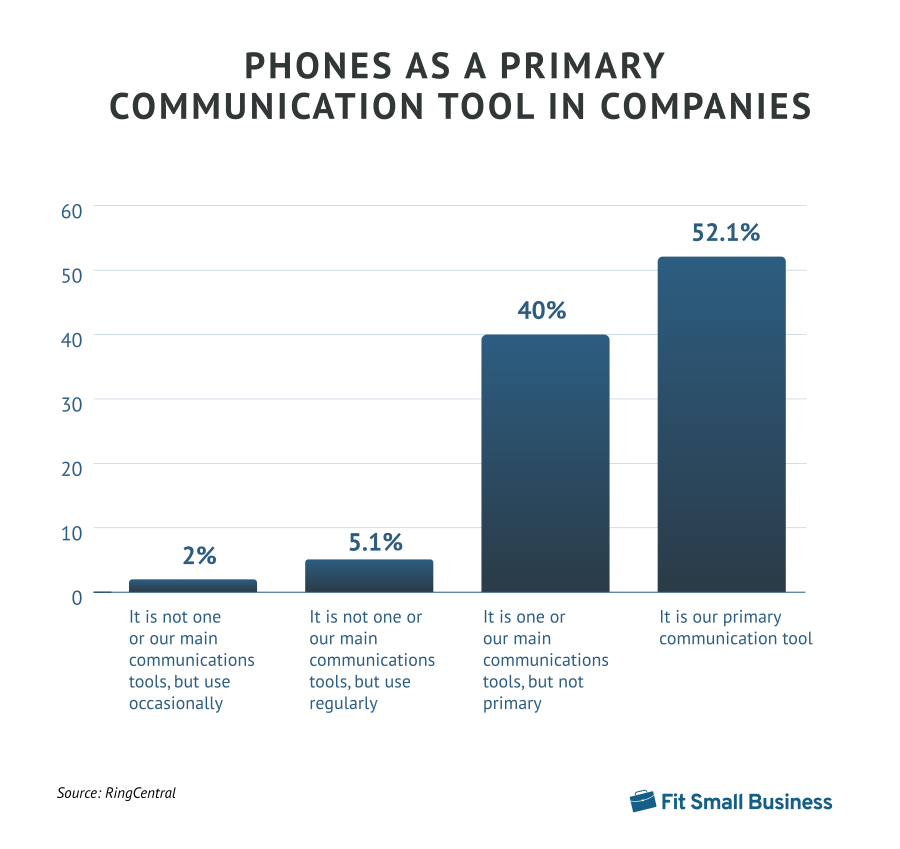
1. 52% of businesses consider phone as their primary communication tool
(Source: RingCentral)
While digital channels continue to gain ground, voice calling is still the preferred communication channel of companies of all sizes. Businesses are relying more than ever on their phone systems to communicate. Voice calls through cloud-based phone apps like Ooma enable them to connect with multiple people simultaneously.
2. 68% of small businesses saw an increase in employee mobility after deploying cloud communications
(Source: RingCentral)
The mobility features in VoIP services transform mobile devices into extensions of office phone systems. Instead of being tied to desk phones, employees can answer calls on laptops, smartphones, or home computers. Providers like GoTo Connect offer features like call flip that lets you switch ongoing calls between devices.
VoIP Usage Statistics
The productivity and cost benefits of VoIP encourage businesses to switch from traditional telephony to a cloud phone system. Here, we’ve listed the business phone call statistics proving how vital VoIP is in workplace communication.
3. 64.8% of employees use a business number on a mobile phone
(Source: RingCentral)
More than half of business users get a second phone number to keep work and personal communication separate without requiring another device. Virtual number providers like Google Voice provide a free phone number when you sign up, including access to a wealth of features like voicemail and call forwarding. You’ll also find VoIP providers with options for toll-free, vanity, and international phone numbers.
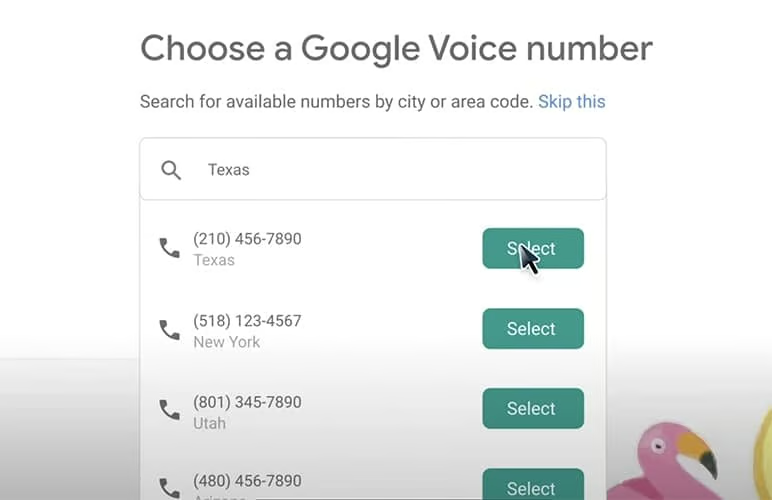
Google Voice offers a free plan for solopreneurs needing a local phone number to separate personal and business calls. Monthly business plans are available for those needing basic calling features like a multi-level auto-attendant. Use your Google account to sign up for a personal plan and explore its capabilities.
4. 34.1% of companies expect that business phone use will increase a little over the next few years
(Source: RingCentral)
A significant percentage of businesses expect phone use to increase in the coming years, while only 5% expect it to drop. VoIP stats from RingCentral reveal how resilient telephony continues to be despite the increasing adoption of digital channels. VoIP providers like Nextiva are rolling in video calls, team chat, and voice calling to provide companies with an omnichannel strategy.
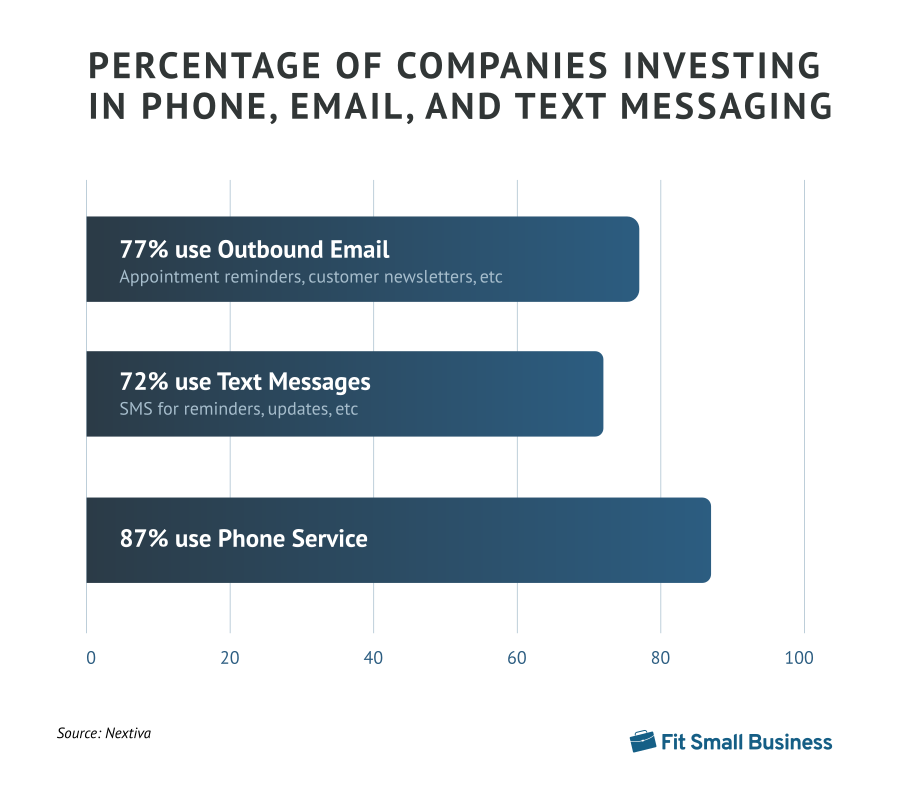
5. 87% of companies use phone service more than any other communication platform
(Source: Nextiva)
A survey by Nextiva found that the majority of companies continue to use phone service to communicate. With more employees working remotely, it makes sense to use phones to send and receive work calls. Cloud-based VoIP services often come with a mobile and desktop app, allowing on-the-go users to move calls from their smartphones, laptops, and desk phones without interruptions.
6. 58% of small businesses are more likely to use a phone system as their primary communication tool
(Source: RingCentral)
Businesses with no more than 99 employees were more likely to use phones as their main communication channel. Small businesses have gone exclusively mobile to keep track of employees or communicate with customers in real time via push notifications and smart alerts. Having a business phone number also helps smaller businesses look more reliable and professional than simply having a social platform.
7. 53.2% of companies still use traditional phone systems for business communication
(Source: RingCentral)
More than half of companies still choose legacy on-premise phones over cloud phone systems. One reason is that most businesses suffer from the “fear of the unknown,” thinking that replacing their legacy systems will disrupt their workflows. Still, experts say that the number is expected to decrease over time as more businesses embrace remote and hybrid work.
8. 56.7% of employees use a desk phone every day
(Source: Nextiva)
Despite the obvious benefits of cloud communications, more than half of employees prefer to keep their phones separate from their desktops and smartphones. Desk phones are known for their dependability and superior call quality compared to softphones that rely on high-speed internet.
Cost Savings of VoIP
From affordable pricing and cheaper calling charges, VoIP provides small businesses with several cost-saving opportunities. The following statistics about VoIP provide further information on how adopting a cloud phone system helps in reducing overhead costs.
9. VoIP reduces startup costs by as much as 90%
(Source: Startupanz)
The cost benefits of VoIP make it suitable for new businesses with budget constraints. Its cloud-based nature eliminates infrastructure costs associated with hardware-based communication systems. VoIP services help you scale up or down, depending on your company’s current needs. It also utilizes existing network lines and connected phones to access a wealth of call features at no additional cost.
10. 50% of a voice conversation is silent, allowing VoIP to save data
(Source: Tech.co)
Data from Tech.co reveal that up to half of audio conversations are complete silence. However, traditional phone lines continuously transmit data even when nobody’s speaking. As a result, traditional phone lines send twice as much data during phone calls, potentially increasing call charges. By contrast, VoIP providers use “silence suppression” technology to prevent their systems from sending data if it only detects noise without speech.
11. VoIP helps businesses save up to 90% on international calls
(Source: Tech.co)
Making international calls over legacy landlines gets expensive due to upkeep costs, long-distance fees, and tax charges. With VoIP providers, international calls are much cheaper due to the presence of a global internet network. Check out our guide about VoIP international calling to learn about overseas call rates and providers offering unlimited call plans.
Artificial Intelligence (AI) in VoIP Services
The integration of AI in VoIP helps service providers to deliver improved capabilities and enhance the efficiency of communication systems. Let’s look at some VoIP facts and statistics about how AI helps businesses create the best possible connection with their clients.
12. Conversational AI results in a 5% improvement in the customer service experience score
(Source: Cognizant)
Conversational AI tools like interactive voice response (IVR) systems help automate common and repetitive requests, providing employees more time to respond to more complex customer queries. AI also helps personalize interactions by gathering relevant customer information to handle an inquiry efficiently, which helps in increasing customer engagement and loyalty.
13. Automated assistants reduce 16% of call volume
(Source: Cognizant)
VoIP providers have expanded their AI offerings by providing virtual agents that recognize caller intent and respond to questions accurately. With AI-powered conversations, companies are able to significantly reduce call volumes without the help of a human representative.
Customer Expectations on VoIP
Customers demand superior experiences when they call your business. That’s why it’s important to get the calling experience right more than any other communication channel. The selection of VoIP stats below offers insights into how phone communications help in increasing customer satisfaction.
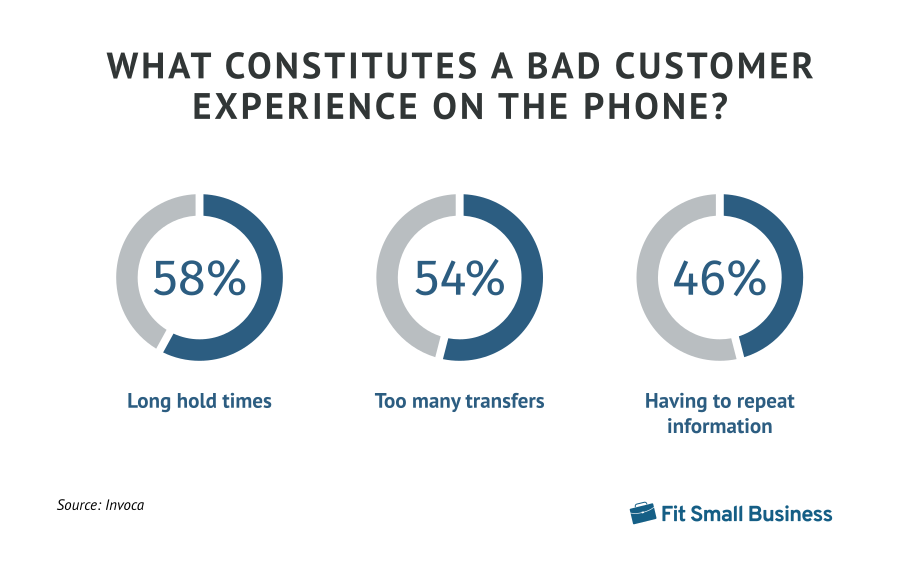
14. 58% of customers believe that long hold times indicate a bad phone experience
(Source: Invoca)
Long hold times are one of the top reasons behind a bad phone experience, which in turn, drives customers to stop doing business with a company. This reveals how important VoIP’s call routing and handling features are in managing customer expectations. Combined with automatic call distribution, these tools help reduce hold times and ensure caller expectations are positive.
15. 28% of customers expect to wait on hold for three to five minutes
(Source: Invoca)
Average hold time is a vital metric in measuring the length of time a customer waits in the queue before being answered. VoIP systems have call analytics and reporting features that help monitor the average hold time. Knowing how long customers wait will help you develop strategies to increase operational efficiency and client satisfaction.
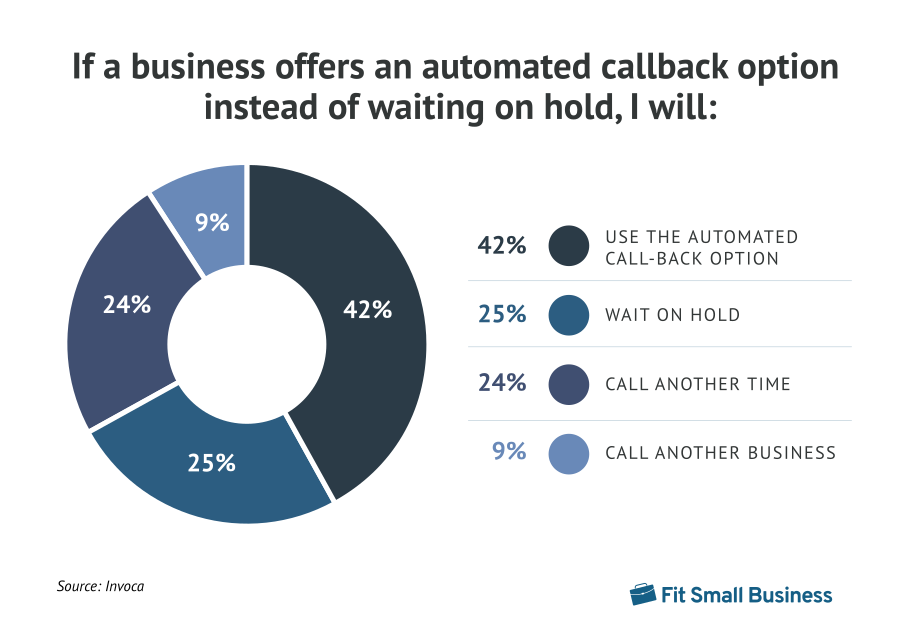
16. 40% of customers trust the automated callback option
(Source: Invoca)
More customers are confident that businesses would call them back if they choose the automated callback option instead of waiting on hold. Meanwhile, the other 58% believe the callback option doesn’t work. Modern VoIP providers like 8×8 have callback functionalities to give callers an option to leave the queue and be called back when an agent becomes available.
Popular VoIP Feature Requests
Businesses want flexibility from their VoIP services to manage communications from multiple devices. While VoIP providers deliver a wide selection of powerful features, there are specific capabilities that businesses use the most. Here are the most requested features based on VoIP statistics:
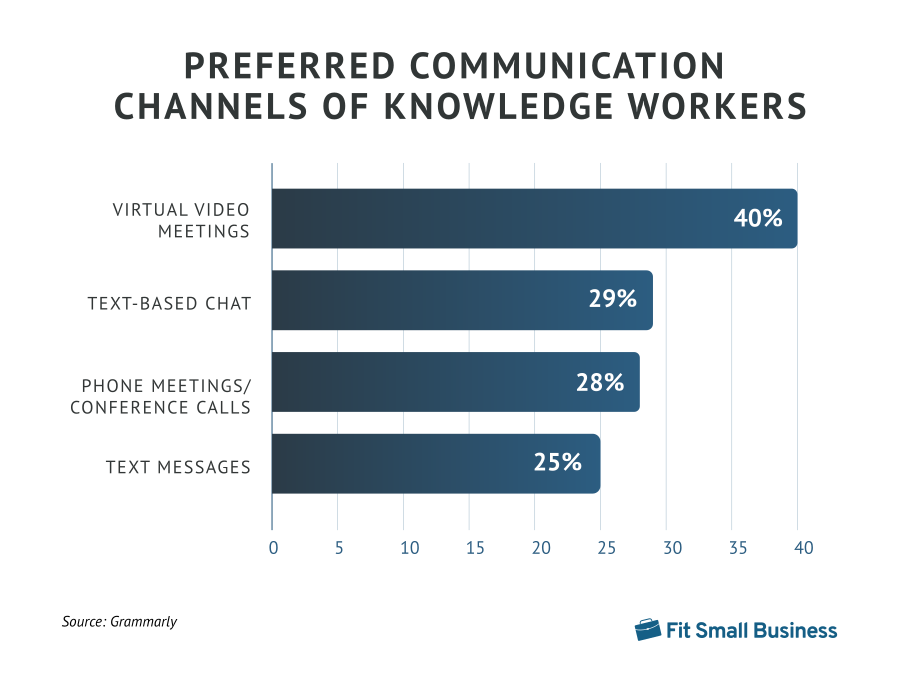
17. Only 28% of knowledge workers prefer phone meetings & conference calls as their preferred communication channels
(Source: Grammarly)
Knowledge workers spend at least 20 hours of their work week on written communication. Their most used channels include email, video meetings, and text-based chat. Meanwhile, only 28% of them prefer to communicate by phone. Top-rated VoIP providers like RingCentral combine video conferencing, SMS, team chat, and phone call to provide businesses with different options to connect.
18. 30.1% of business users want the ability to send & receive SMS from their desktop
(Source: RingCentral)
Texting from your desktop comes with perks: typing is faster, and it’s easier to deliver messages at scale. VoIP providers provide a desktop app to access and track conversations more smoothly on a computer than on your phone.
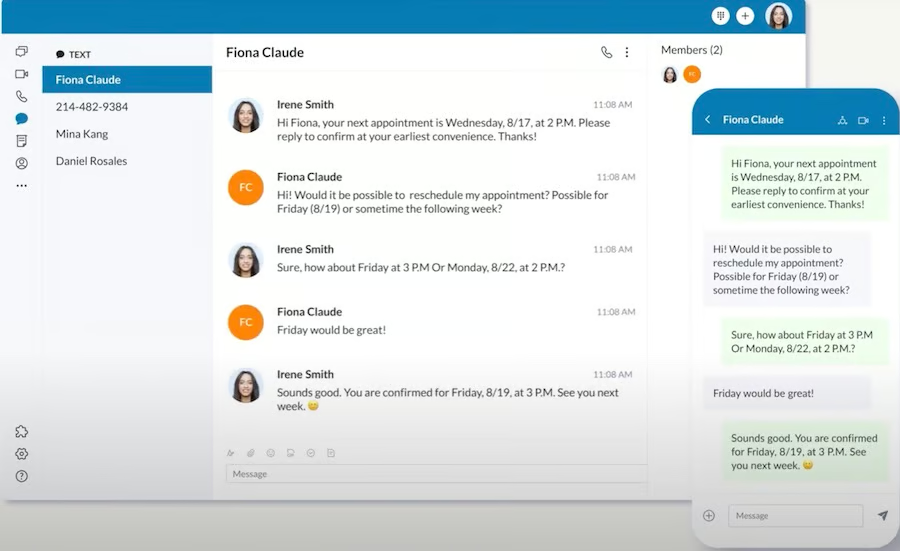
Boost customer engagement with RingCentral’s enhanced business SMS. Send automated and templated text messages, whether from mobile or desktop. Prebuilt SMS integrations help trigger automatic payment notifications, booking, and appointment reminders. Sign up for a 14-day free trial to learn more.
19. 22.5% of businesses need local, international & toll-free phone numbers for customer service
(Source: RingCentral)
Business phone numbers serve as a bridge between your business and customers. It helps establish credibility and provides callers a convenient way to reach your business. Depending on your business needs, you can choose from local, toll-free, vanity, or international numbers to appeal to customers from other areas who prefer to make a local call.
20. 16.3% of businesses want to use online faxing
(Source: RingCentral)
In the age of emails and file sharing, a few businesses still rely on faxing. Online faxing is considered a secure and confidential way of sending and receiving documents. It’s also cloud-based, allowing you to use its services from anywhere.
21. 27.6% of businesses want the ability to record calls & store recordings in the cloud
(Source: RingCentral)
Call recording is one of the most useful VoIP features for businesses wanting to unlock the full potential of every customer interaction. By recording phone calls, you can quickly capture missed information and evaluate conversations for quality assurance. VoIP providers offer call recording as an on-demand feature or as part of a subscription package.
22. 25.9% of businesses want bulk SMS marketing
(Source: RingCentral)
Providers like 800.com and Twilio support bulk SMS marketing to help businesses send texts to everyone on their contact list without sacrificing efficiency and quality. It is often used for alerts, reminders, and marketing campaigns.
23. 25.1% of businesses need number porting when switching VoIP providers
(Source: RingCentral)
Number porting gives businesses the freedom to keep their existing phone numbers as they change their VoIP providers. While only one-fourth of companies use this feature, many VoIP services like RingCentral still offer number porting free of charge.
24. 23.4% of businesses want the ability to automatically log calls in their customer relationship management (CRM) system
(Source: RingCentral)
VoIP integration with CRM helps sync all the valuable information between your phone system and CRM software. Businesses use this feature to automatically save calls along with customer details directly into the CRM system. All call histories are under each customer record, so you always keep track of previous conversations.
25. 22.5% of businesses want voicemail features
(Source: RingCentral)
Voicemail is still frequently used by companies wanting to provide customers an alternate way to reach their business, especially if no one is available to accept the call. Many VoIP providers offer this feature as part of their entry-level plans. Typically, users look for the visual voicemail feature to access incoming voicemails through a convenient user interface.
Bottom Line
Looking at the VoIP industry statistics above, it is clear that VoIP systems have transformed business communications. Its efficiency, inexpensive nature, and convenience ensure that any size business will only prosper when they adopt the technology.
Want to learn more? Take a look at our guide about VoIP trends to learn how the VoIP industry is expected to evolve in the coming years.
