


.jpg?w=288)
.jpg?w=288)


I identified emerging trends in ecommerce in 2025 to help your business stay on top of the trend cycles and conquer the ecommerce landscape.
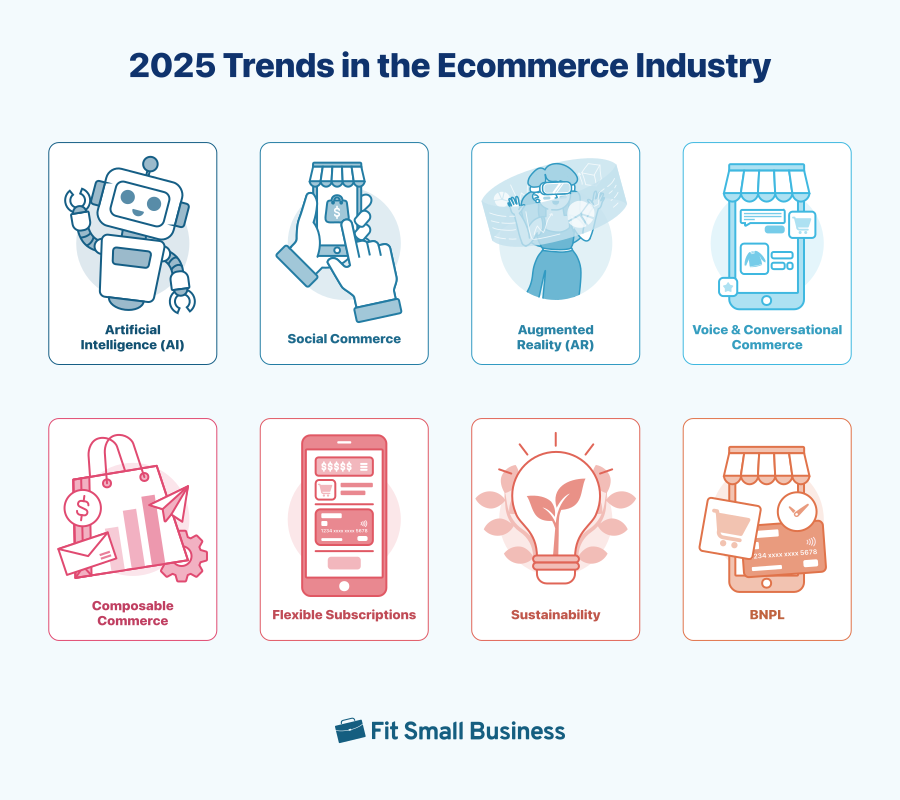 As more consumers shift to shopping online, retailers and merchants need to be flexible and adapt their strategies based on ecommerce trends. Read the top B2C ecommerce trends I have identified from monitoring retail and ecommerce trends and consumer behavior for the past five years.
- 1. AI will be the cornerstone of ecommerce trends in 2025
- 2. Online shopping is social
- 3. Online shopping is happening on mobile
- 4. AR brings the in-store experience online
- 5. Voice & conversational commerce are on the rise
- 6. Composable commerce will help brands innovate faster
- 7. Subscriptions are back, but better
- 8. Sustainability is walking the talk
- 9. Flexible payment options are preferred
- Frequently Asked Questions (FAQs)
- Bottom Line
1. AI will be the cornerstone of ecommerce trends in 2025
2024 saw the adoption of AI in ecommerce grow by leaps and bounds. For ecommerce businesses, generative AI has been used to create and enhance product descriptions and improve customer service. But these are just the tip of the iceberg. AI will definitely be the cornerstone of all ecommerce industry trends in 2025.
Here are some of the ways ecommerce brands can leverage AI to boost their sales, operations, and marketing efforts:
- Enhancement of product descriptions, images, and searches
- Personalization through product recommendations
- Customer service and sales agents through ecommerce chatbots
- Voice search
And take note—AI has definitely become mainstream. In Twilio Segments’ The State of Personalization Report 2024, 85% of business leaders are already planning to adjust or optimize their marketing strategy using AI. This year, 59% of those businesses surveyed expect their teams to be using AI daily.
Related:
AI in Retail: Ultimate Small Business Guide
2. Online shopping is social
Social commerce is an online shopping trend you definitely should jump aboard in if you want to increase sales. These days, you need to meet your customers where they are, and it’s on social media. Social commerce stats show there are 239 million social media users (70% of the population) in the US alone, and 57% of them have bought through social media.
It’s the prime place to ignite impulse purchases and even with the TikTok ban hanging up in the air, social channels like Facebook and Instagram continue to see sales increases.
So if you haven’t yet, enable in-app shopping for your social channels. Check out these guides to get started:
- Selling on Facebook Shops and Facebook Marketplace
- How to Sell on Instagram
- How to Sell on TikTok
- Selling on Pinterest
3. Online shopping is happening on mobile
Mobile commerce, also called mcommerce, is expected to reach $3.4 trillion and make up 62% of all ecommerce sales by 2027. If it’s any indication that shopping online will increasingly be done on mobile devices, Cyber Monday stats reveal that mobile drove 74% of traffic to sites, accounting for 57% of Cyber Monday’s total sales ($7.6 billion).
Ensure your ecommerce website is mobile-ready, if not mobile-first. Using an ecommerce platform like BigCommerce or Shopify makes it easy to create a responsive, mobile-optimized experience for all online shoppers.
Follow our recommended ecommerce website design principles when creating your online store.
Related: 10 Biggest Mobile Commerce Trends + Stats
4. AR brings the in-store experience online
The greatest challenge of ecommerce brands is the in-person experience or the ability to see, touch, and experience a product before buying. Now, thanks to augmented reality (AR), online shoppers can “try before they buy.” AR and virtual reality (VR) are bridging the gap between physical and online/digital selling environments.
Statistics show that AR users in the US will reach more than 100 million by the end of 2025, and 41% of US shoppers will use AR to shop online this year. Big-brand retailers like Ray-Ban and IKEA are already implementing AR for virtual try-ons and interactive 3D product views.
As a small business, you can create filters on social media platforms, such as Instagram, TikTok, and Snapchat, that employ AR/VR on products to help consumers “see” how your products look on them.
For instance, you can invest in AR/VR features such as virtual fitting rooms.
Read More: Virtual Reality (VR) in Retail: Guide With Examples
5. Voice & conversational commerce are on the rise
Unlike AI, voice and conversational commerce haven’t really gained traction yet but I see it changing for 2025. With 75% of US households projected to own a smart speaker by 2025 and with smartphone usage, messaging apps, and AI becoming a normal part of the online shopping experience, I can definitely see voice commerce picking up this year.
Now is the time to optimize your ecommerce store for voice search to ensure quick and accurate responses to voice queries. Prioritize creating engaging features for your store, such as product and review videos as well as a smooth buying experience. Remember, voice assistants typically crawl Google to generate customer suggestions, so it’s crucial to appeal to shoppers and search engines alike.
Read More:
6. Composable commerce will help brands innovate faster
Ecommerce storefronts will greatly benefit from utilizing composable commerce this year. Composable commerce lets you build custom online storefront experiences across various channels and touchpoints using different technologies that work with your business needs.
Industry experts describe composable commerce setups as modular so you can adapt your ecommerce storefront using different “modules” or microservices, instead of the traditional full-stack ecommerce platform most online stores run on these days.
Composable commerce lets you respond to trends at lightning speed. For example, you can easily integrate payment gateways, shopping carts, and content management systems without having to redesign your whole storefront. This is going to be huge—especially for small businesses.
7. Subscriptions are back, but better
With ecommerce brands looking for new ways to harness brand loyalty, it is no surprise that the subscription market is forecast to grow at 71%, surging to more than $2 trillion by 2028. While subscription commerce has been a huge part of ecommerce sales for years, it’s expected to undergo a revamp—becoming more flexible and adaptable to the demands of personalization and convenience.
For example, consumers nowadays want more than just regular deliveries; they expect subscriptions to adapt to their preferences in real time. Harnessing the power of AI, online retailers can address this demand by refining subscriptions and offering more personalized experiences.
In 2025, brands should consider moving beyond seeing subscriptions as fixed monthly boxes to ship. Create flexible subscriptions, those that allow customers to swap products, adjust delivery frequencies, and receive personalized recommendations based on browsing and purchasing history.
Read More:
- What Is a Subscription Business Model
- How to Start a Subscription Box Business
- How to Accept Recurring Payments
8. Sustainability is walking the talk
If there’s one thing you need to know about sustainability trends in 2025, it’s that sustainability needs both words and actions. In short, you need to walk the talk for consumers to consider buying from your brand.
Sustainability records have been a crucial factor for buyers in the past years—almost half of consumers believe that a retail brand’s sustainability record is an important deciding factor for whom they’ll do business.
As an ecommerce brand, consider using more sustainable packaging solutions and adopt a sustainable marketing approach. Be careful not to employ greenwashing
Read more articles about sustainability below:
- Consumer Behavior Trends for Small Businesses
- Ethical Consumerism for Retailers
- Ethical Sourcing: A Small Business Guide
9. Flexible payment options are preferred
Customer financing or buy now, pay later (BNPL) services came on the scene only a few years ago and, since their introduction, have become incredibly popular for purchases large and small. In fact, BNPL is outpacing credit card use, especially among younger generations.
And, during the past holiday season, consumers spent more than $18.2 billion via BNPL services like AfterPay, Klarna, and PayPal. While you can expect to incur higher processing fees for BNPL transactions, offering the service is important, which appeals to the modern consumer.
Frequently Asked Questions (FAQs)
Click through the questions below to get answers to some of your most frequently asked questions on top trends in ecommerce.
What is the new trend in ecommerce?
Artificial intelligence (AI) will greatly impact all trends in the ecommerce industry in 2025. Augmented reality, personalization, subscription commerce, voice search, and conversational commerce are technologies that can be enhanced by AI.
What is the next big thing in ecommerce?
Composable commerce and harnessing data through AI will be ecommerce trending technologies in 2025.
Is ecommerce still profitable in 2025?
Yes, ecommerce will remain profitable in 2025 as more consumers shop online. The latest trends in ecommerce include people shopping more from their mobile devices and it is expected that it’s going to be a primary way of shopping online.
Bottom Line
The world of ecommerce is ever-changing and you have to stay on top of its evolution if you want to stay competitive and capitalize on growth potential. The ecommerce trends outlined in this article should serve as a guide for your online business as you evaluate how you want to grow in the year to come. They should empower you to understand the ecommerce landscape so you can choose apt strategies to grow your ecommerce business and reap the rewards of a growth mindset.
