







Business communication involves sharing information between people within and outside an organization, including colleagues, partners, clients, and stakeholders. Effective business communication is the backbone of efficient operations and contributes to informed decision-making and reduced errors. In this article, we’ll cover what business communication is, its types and channels, and our recommended service providers.
Business Communications Explained
A strong communication strategy is crucial to achieving business goals because it ensures teams receive and deliver clear messages to internal and external audiences. Business communication revolves around how people exchange information within a work or professional environment. Effective connection and collaboration allow companies to better align on fundamental values and objectives while enhancing organizational procedures.
Effective communication requires communication skills (e.g., active listening, providing feedback, and presenting) and the communication process (i.e., channels used). Communication’s importance and value can be seen in high sales, decision execution, and innovative ideas. Successful business interactions align goals, improve collaboration, boost productivity, and support a cohesive company and partnership culture.
5 Key Elements
Any interaction between different stakeholders, whether internal or external, can be categorized as business communication. To understand what business communication is, it is essential to grasp its five key elements and their significance.
- Sender: The source (person or group) initiates the communication and passes on the information.
- Message: This refers to the subject matter being transmitted or passed by the sender to another person or group. The message is the information a sender wants to communicate. It can be an opinion, order, suggestion, message, memo, email, or report.
- Channel: The sender selects the medium to transmit the information, such as phone, email, letter, or chat. Selecting the channel considers factors like time, accessibility, audience, and content.
- Receiver: These are the audience members or recipients of the business information.
- Feedback: When a receiver replies or acknowledges the sender’s message, feedback takes place. Communication is incomplete without feedback, making it an integral part of business communication. Feedback confirms whether the message is successfully sent and interpreted.
Types of Business Communication
The dynamic business landscape makes communication critical to achieving organizational objectives. Here is a breakdown of the four leading types of business communication: upward, downward, lateral, and external.
| Business Communication Type | Description | Examples |
|---|---|---|
| Upward Communication | Upward communication is a form of internal communication that occurs when an entry or mid-level employee shares information up the chain of command. This type of communication is crucial to giving management a clear picture of how projects and strategies are progressing.Unfortunately, employee-supplied information can be skewed based on a staff member’s comfort level when communicating with supervisors and optimism regarding management action. | Memoranda, feedback and suggestion forms, surveys, sales target achievements, review reports, etc. |
| Downward Communication | This type of communication lets leaders share information with lower-level employees. Downward communication often aligns team members and provides clear business objectives.Some disadvantages include the slow flow of information from the top to the bottom and possible distortion of details through the chain of command. | Town hall meetings (video conferencing or face-to-face), company-wide revised business targets, instant message announcements, departmental newsletters, etc. |
| Lateral Communication | This is the most common form of internal business communication, which refers to the information flow between colleagues with similar authority levels. This type of communication prevents information silos and keeps all team members in the know.While lateral communication helps with information sharing and problem-solving, discussions may be more casual, leading to resentment or miscommunication. | Inter-department emails, manager-to-manager discussions about collaboration, etc. |
| External Communication | This refers to communication between stakeholders outside an organization, such as customers, vendors, distributors, investors, partners, and the general public.External communication is a significant part of operations but may differ from routine processes. Its time frame and format are often more flexible. External communications may send conflicting or inaccurate messages when poorly executed, affecting the company’s reputation. | Press releases, company newsletters, advertisements, social media posts, financial reports, etc. |
Benefits of Effective Communications
Clear communication ensures an uninterrupted and streamlined flow of information within and outside an organization. Here are some benefits small businesses can expect from effective communication:
Enhances Productivity & Efficiency
Business communication ensures team members are on the same page, reducing confusion and preventing duplication of effort. Since colleagues spend less time worrying about miscommunication and trying to understand their tasks and responsibilities, they can better focus on job performance and efficiency. This minimizes the need to repeat instructions or tasks, saving money, resources, and time.
Improves Teamwork & Collaboration
Communication is the pillar of business operations because it enables teams to function as a cohesive unit where everyone knows their responsibilities and tasks. Clarity fosters better relationships between colleagues and management, boosts teamwork and collaboration, and enhances team morale and job satisfaction.
For companies with remote workers or multiple locations, consider using video conferencing to host large meetings or facilitate online collaboration between geographically distributed teams. Providers like RingCentral, Nextiva, and Dialpad offer video conferencing solutions with their voice-over-internet-protocol (VoIP) phone systems for real-time collaboration.
For example, RingCentral, a cloud-based service provider, offers unlimited calling, team messaging, business texting, and robust call management tools. Its virtual meeting tool makes file sharing easy and comes with other features like in-meeting chat and editable backgrounds.

Builds & Maintains a Positive Reputation
Maintaining consistent and authentic messaging establishes trust and credibility, boosting your reputation as a reliable and efficient organization. Effective communication fosters trust, making product and service promotions and customer retention easier.
Ensures Compliance With Regulations
Clear communications ensure compliance with regulations, laws, and internal company policies, including health and safety regulations and labor laws. Compliance fast-tracks your company to success by reducing legal risk and financial penalties and streamlining processes.
Promotes Better Problem-solving & Decision-making
Ensure all pertinent information is accurately conveyed to leadership and decision-makers by providing clear context, implications, and potential outcomes of decisions. Effective business communication improves decision-making and information sharing, minimizing costly misunderstandings and oversight. Clear interaction among colleagues enables them to share different perspectives and consider multiple viewpoints more effectively.
Common Mistakes & Best Practices
Effective interactions establish trust, improve productivity, and resolve conflict. The easiest way to build a successful communication strategy is to understand and utilize best practices in the real world. Given the importance of business communications, knowing the common mistakes that hinder productivity allows businesses to address them proactively. Here’s a rundown of common communication pitfalls and suggestions for solving them:
Delivering Unclear Messages
When vague messages lack detail, they are open to interpretation, leading to confusion and misunderstanding. Unclear communication wastes time and resources as individuals spend more time seeking clarifications and rectifying errors rather than progressing toward the objectives. Concise communication can lead to frustration and dissatisfaction, erode trust, and poor outcomes due to incomplete or misunderstood details.
Best Practice: Convey Clear & Concise Messaging
Convey your message in a clear and easy-to-understand manner using simple language. Remember that the objective is to share information, so avoid jargon or technical terms that may confuse recipients. Structure your communication logically, eliminating unnecessary information with utmost clarity. Contextualize a task’s importance by explaining how it fits into the bigger picture so employees feel more motivated and valued.
Relatedly, workplace misunderstandings can occur because of differences in communication styles and the belief that your message is understood as intended. To avoid this issue, encourage team members to ask questions and seek clarification when necessary. Also, rather than waiting for them to reach out, periodically ask employees if something needs clarification.
Over-reliance on Email
Excessive use of email, or any communication tool, can contribute to information overload and cause response delays. While email offers instant and geographical reach, it has limitations when it comes to tone and nuance, which can lead to misinterpretation and feel impersonal. A high volume of emails with no alternative mode of communication can be overwhelming and cause difficulty in prioritizing communication.
Best Practice: Maximize Technology
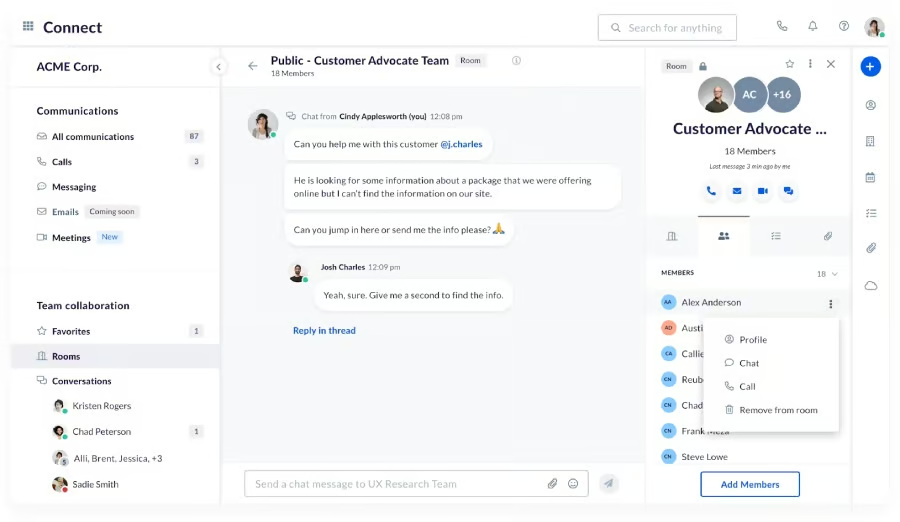
Email is a great tool, but it might not be the most effective for real-time collaboration on complex projects. Explore alternative communication channels that support real-time collaboration and invest in practical internal communication tools like instant messaging to keep your team connected and organized.
Use available technology and communication tools to keep in touch with your colleagues, direct reports, partners, and supervisors. Use business communication tools like mobile apps and video conferencing to connect with others quickly and easily. Maintain a professional tone in all work-related communications, including text and instant messaging. Tailor your strategy and medium to each situation, considering the urgency, audience, and available resources.
Insufficient Feedback
With regular feedback or options for input and critique, team members will feel more connected, empowered, and relevant. Lack of performance feedback reduces motivation and irrelevance within an organization.
Best Practice: Encourage Feedback & Institute Recognition Programs
Feedback is essential to effective communication because it ensures messages and information are received as intended. Integrate routine feedback sessions across multiple channels, preferably weekly or monthly, so employees understand their performance and identify improvement areas. When providing feedback, focus on the behavior or outcome, not the individual, and highlight strengths and suggestions for continuous improvement.
To learn more about effective communication and how to create a culture of discourse, read our guide, which outlines seven expert tips for effective business communication to drive positive workplace interactions.
Information Hoarding & Silos
Working in isolation creates communication barriers, limits knowledge, and adversely affects response time and issue resolution. Departments or teams working in silos often lead to issues like duplication of efforts or misalignment in terms of priorities. This lack of cross-functional coordination leads to workflow inefficiency and decision-making, particularly when implementing change or adapting to new circumstances.
Best Practice: Build Cross-functional Teams
Establish a clear internal communication line with accountable persons so colleagues know who to turn to for guidance and action. Encourage teamwork and emphasize the importance of data and resource sharing across units and departments. By creating inter-departmental or interdisciplinary teams, you break down silos and facilitate information sharing. Lastly, as a manager or business owner, lead by example by demonstrating collaborative behavior,
As people interface, provide communication tools and skills through training and team-building programs that emphasize the importance of collaboration and provide employees with the skills they need to work effectively across departments. For example, include skills like active listening, which is intentional listening. Develop empathy and demonstrate concern during conversations to show understanding.
Top VoIP Business Communication Software
With more teams embracing remote and hybrid work models, the collaboration tools you use greatly impact team dynamics and business results. Unified communications (UC) tools integrate voice, video, messaging, fax, and email. Finding the right service to match your needs can be challenging, so we’ve curated a list of the top six providers for VoIP business communication solutions providers.
| Business Communication Software | Monthly Starting Price (per User) | Key Features | FSB Review |
|---|---|---|---|
 | $30 |
| RingCentral Review |
| Visit RingCentral | |||
 | $30.95 |
| Nextiva Review |
| Visit Nextiva | |||
 | $23 |
| Dialpad Review |
| Visit Dialpad | |||
 | $19.99 |
| Vonage Review |
| Visit Vonage | |||
 | $4 annually |
| Microsoft Teams Review |
| Visit Microsoft Teams | |||
 | $14.99 |
| Zoom Review |
| Visit Zoom One | |||
Frequently Asked Questions (FAQs)
How frequently do I need to communicate with colleagues & clients?
Communication frequency depends on different factors, including job responsibilities, season, and industry. In general, it’s best to communicate with colleagues regularly, often daily or weekly, depending on collaboration and workflow needs. For clients, the frequency varies widely based on project timelines, support requirements, and communication needs. Include this in your discussions at the start of the project and adjust check-ins as needs change.
Is there a way to measure successful communication?
Yes, you can measure communication success in several ways, including feedback surveys about communication frequency, quality, and experiences. Consider using network analysis, which identifies key communication leaders and studies communication patterns and interactions within an organization or network. Insights can enhance decision-making and strengthen relationships among team members.
What’s the best way to improve my communication skills?
To maximize your effectiveness in interpersonal interactions, you must be present and mindful when communicating. Focus on clear and concise messaging, building emotional intelligence, watching your tone, and being open to feedback. Remember, business communication aims to convey information effectively and efficiently to achieve specific goals, so focus on skills that support this, such as active listening and conflict resolution.
Bottom Line
Implementing the right communication strategies in business optimizes client engagement and fosters collaboration between colleagues. Effective communication in business is fundamental to company success and sustainability because it impacts all aspects of an organization. Organizations can better cultivate company culture by fully understanding business communication and its best practices.
