






A free business email service should offer reliable spam protection, adequate storage, mobile access, and practical productivity tools without requiring an immediate upgrade. The first decision is whether you need an address tied to your business domain or can start with a provider-branded address, such as Gmail or Outlook.com.
I compared seven providers based on free plan value, email features, security, productivity tools, ease of use, and support. The table below shows which option best fits each business need, from custom-domain email and team collaboration to privacy and generous storage.
Provider | Best for… | Lowest cost to upgrade, billed annually |
| Zoho Mail | Free custom-domain email | $1/user/month |
| Google Workspace (Gmail) | Team collaboration and productivity | $7/user/month |
| Outlook | Microsoft users | $7/user/month |
| Proton Mail | Private, encrypted email | $3.99/user/month |
| Yahoo Mail | Organizing high-volume inboxes | $5/user/month* |
| Mail.com | Industry-specific email domains | $9.99 for 3 months |
| GMX Mail | Large attachments and free storage | Free |
*Monthly billing only.
- An overview of the best free business email platforms
- Is a free business email good for professional use?
- What makes Zoho Mail the best for free custom-domain email?
- Zoho Mail
- What makes Google Workspace the best for easy team collaboration and productivity?
- Google Workspace
- What makes Outlook the best free business email for Microsoft users?
- Outlook
- What makes Proton Mail the best for private, encrypted email?
- Proton Mail
- What makes Yahoo Mail the best free business email for organizing high-volume inboxes?
- Yahoo Mail
- What makes Mail.com the best for industry-specific email domains?
- Mail.com
- What makes GMX Mail the best for large attachments and free storage?
- GMX Mail
- Methodology: How I evaluated the best free business email providers
- How do you choose the best free business email platform?
- Frequently asked questions (FAQs)
- Bottom line
An overview of the best free business email platforms
Provider | 100% free plan | Starting storage | Security | Expert score |
| Zoho Mail | ✓ | 5GB/user | Spam and phishing protection, TLS, MFA | 4.36/5 |
| Google Workspace | ✕ | 15GB with Gmail | Spam, phishing, and malware protection; 2FA | 4.32/5 |
| Outlook.com | ✓ | 15GB | Spam, phishing, and malware protection; 2FA | 4.23/5 |
| Proton Mail | ✓ | 500MB; expandable to 1GB | End-to-end and zero-access encryption; 2FA | 4.07/5 |
| Yahoo Mail | ✓ | 20GB | Spam filtering, 2FA, security alerts | 3.83/5 |
| Mail.com | ✓ | 65GB | Spam and virus protection, SSL, 2FA | 3.65/5 |
| GMX Mail | ✓ | 65GB | Spam and virus protection, optional PGP encryption, 2FA | 3.62/5 |
Is a free business email good for professional use?
In most cases, free business email addresses don’t include a custom domain — the @fitsmallbusiness.com. Instead, most fully free email services use shared domains (for example, @gmail.com or @outlook.com), which can make a business appear less established or professional.
A custom domain is what gives your email address professionalism and credibility in the business world. But unfortunately, they don’t come free because they’re like internet real estate — you have to pay for a domain to own one.
That’s why, in the long run, a generic, non-custom domain isn’t generally recommended for creating a professional email address, especially once your business grows and you have a steady customer base.
Once you start communicating with customers, clients, investors, or other professionals, that’s when it’s time to upgrade to a professional email address with a custom domain.
Why you can trust Fit Small Business
To ensure we provide readers with the best answers, the Fit Small Business editorial process adheres to strict standards, including rigorous research, assessment, and provider scoring.
For this guide, I assessed the best free business email providers based on ease of setup, storage, security, productivity features, custom-domain support, and overall value for small businesses. My full methodology also included firsthand testing of account setup, email usability, administrative controls, and real-world business functionality, as well as analysis of user feedback and provider documentation.
I also considered a distinction buyers often overlook: most free providers supply a branded address, while only select services support custom-domain email at no cost. I therefore compared each option based on its free plan limitations, upgrade requirements, and long-term practicality for a growing business.
Furthermore, I leveraged the following professional experience when reviewing business software and communication tools:
- Over 14 years of editorial research and writing
- Over six years of writing expert reviews about sales and business technologies
- Over two years in insurance sales and team management
- Almost two years in sales territory management


How I chose the best free business email address services
For this guide, “free business email” covers free custom-domain email and permanent provider-branded accounts suitable for freelancers and small businesses. Google Workspace is included as a paid benchmark for custom-domain email and collaboration tools. I compared providers based on free-plan value, essential email features, security and privacy, productivity tools, support, usability, and overall professional value. Because plans and regional eligibility can change, verify domain support, storage limits, and signup requirements before choosing.
What makes Zoho Mail the best for free custom-domain email?
Why I chose Zoho Mail
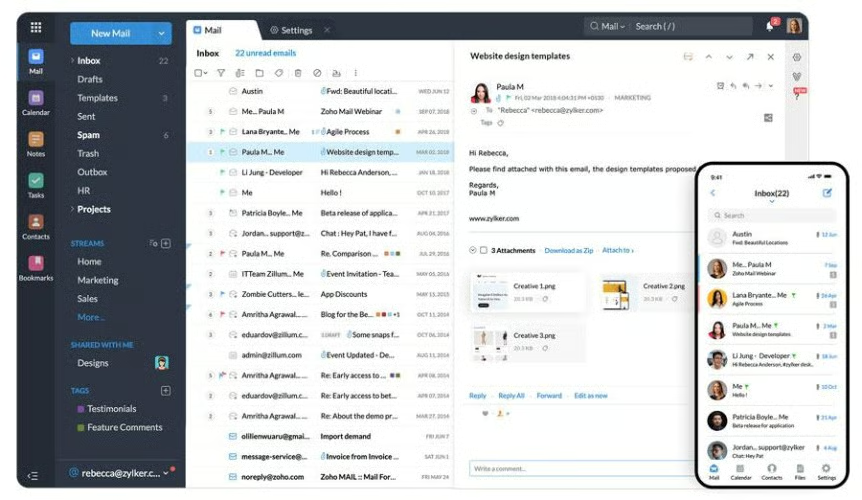
From a small business marketing perspective, Zoho Mail is the overall best free business email platform. Zoho Mail is a marketing and sales powerhouse, with a free-forever business email plan for a small team of up to five members.
The catch: You’ll need to have your own domain first. Zoho Mail does not provide an email domain — it’s solely an email hosting platform. But it does have online documents, spreadsheets, and calendars, and up to 5GB storage for each user.
It’s all-around a great, no-commitment platform to get up to five free business email accounts if you don’t need anything too fancy — just an email platform that works.
However, I wouldn’t recommend doing any bulk emailing on Zoho Mail. One, because it doesn’t have a large storage space, and two, it risks your emails being labeled as “spam.” This is because Zoho Mail doesn’t have a private server for your emails on the free plan. That usually requires an extra cost.
But for a secure, easy-to-use, and reputable free email platform, Zoho Mail is still my top option. Bonus points for its suite of free marketing and sales tools, like its CRM and social media scheduling platform.
Plus, setting up Zoho Mail is also an easy process. You’ll only need to click on the free plan on its website, connect your domain, and then create your and your team’s email addresses.
Key freemium features
- Free custom-domain email: Eligible businesses can create professional addresses using their own domain rather than a provider-branded address.
- Five free mailboxes: The Forever Free plan supports up to five users, with 5GB of email storage per user.
- Web and mobile access: Users can manage email, calendars, and contacts through Zoho Mail’s web interface and mobile apps.
- Inbox organization: Search, folders, filters, signatures, and limited alias support simplify everyday email management.
- Security and administration: Spam and phishing protection, multifactor authentication, encrypted connections, and a central admin console help protect and manage business accounts.
Zoho Mail pricing
Forever Free | Mail Lite | Workplace Standard | Mail Premium | Workplace Professional | |
| Monthly price, billed annually | $0 for 5 users | Starts at $1/user | $3/user | $4/user | $6/user |
| Monthly price, billed monthly | $0 for 5 users | N/A | $4/user | N/A | $7/user |
How to get a free email
- Visit Zoho Mail and create an account.
- Choose either “Use my own domain” or “Get a domain” (you can also purchase a domain through Zoho during sign-up).
- Verify your domain by adding Zoho name server records where your domain is hosted.
- Update your mail records to officially receive emails from your domain. Zoho also provides a one-click verification process for IONOS and GoDaddy domains.
Also read: How to Set Up & Use Zoho Free Business Email Accounts
What makes Google Workspace the best for easy team collaboration and productivity?
Why I chose Google Workspace
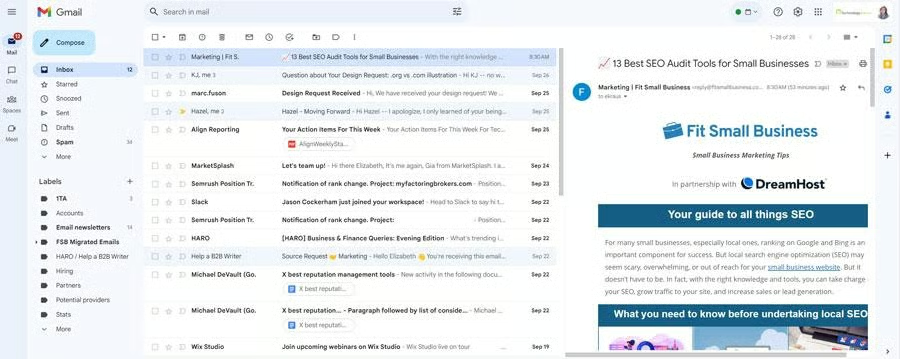
It’s just hard to top Google’s value and features as an all-around business email platform. The Gmail platform is efficient and intuitive, and its team collaboration and productivity features (Google Docs, Sheets, etc.) are the industry standard.
Plus, no other email platform has yet to come close to Google’s real-time collaboration, which is its biggest asset and a game-changer for remote teams. If you’ve ever used a Google Doc or Google Sheet before, you’ll know how easy and intuitive Google’s productivity tools are.
Google Workspace’s tools are available to anyone with a Gmail account (even a free one), but unfortunately, the free plan doesn’t come with a free email domain. You’ll need to upgrade to a paid Workspace plan to get a custom email domain, and starting at $6.30, it’s a slightly higher price point than the others here.
But I’ve never found Google Workspace lacking in the many years I’ve used it personally and professionally, and while it doesn’t provide a free email domain, it’s still a good place for beginners to start.
Also read: 8 Best CRM for Google Workspace
Key freemium features
- Free Gmail address: Provides a permanent @gmail.com address accessible through Gmail’s web and mobile apps. Custom-domain email requires a paid Workspace plan.
- 15GB of shared storage: The free allowance is shared across Gmail, Google Drive, and Google Photos.
- Productivity applications: Includes Docs, Sheets, Slides, Forms, Keep, and Drive for creating, storing, and collaborating on files.
- Calendar and video meetings: Google Calendar supports shared scheduling, while Google Meet provides browser-based video conferencing.
- Email management and security: Gmail includes search, labels, filters, scheduled sending, spam and phishing protection, security alerts, and two-step verification.
Also read: Google Workspace vs Office 365: Which Is Better in 2026?
Google Workspace pricing
Free Gmail | Starter | Standard | Plus | |
| Monthly price, billed annually | $0 for 1 user | $7/user | $14/user | $22/user |
| Monthly price, billed monthly | $0 for 1 user | $8.40/user | $16.80/user | $26.40/user |
Free trial: 14 days
How to get a free email address
- Visit Google Workspace, then choose Create an Account, and select for my work or business.
- For a 100% free email address, choose “Get a Gmail address” on the next screen. For the paid Workspace plans, choose “Start Google Workspace trial.” You’ll automatically be enrolled in the 15-day free trial after inputting your info and payment details.
- If you chose the 100% free option, you’ll need to set up your account name and information before accessing your mailbox.
What makes Outlook the best free business email for Microsoft users?
Why I chose Outlook
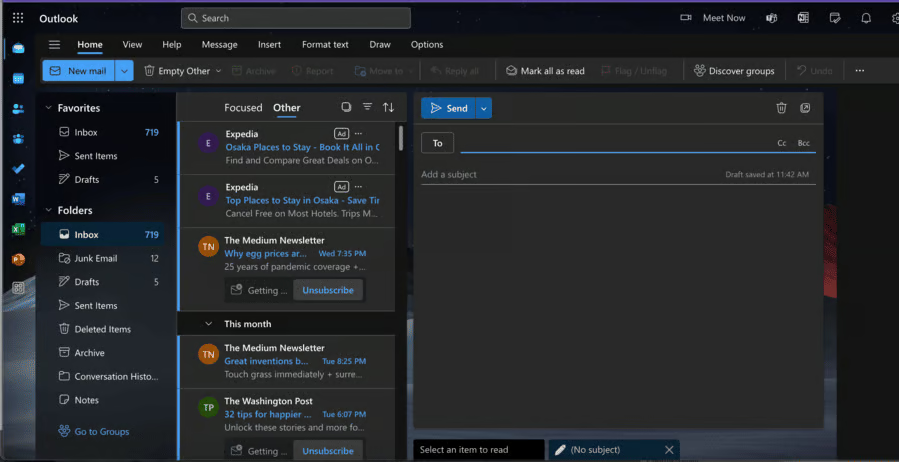
Outlook.com is the best free email provider for Microsoft users because it connects email, calendars, contacts, tasks, and cloud files within one familiar ecosystem. A free email for business with Microsoft also includes OneDrive and web versions of Word, Excel, and PowerPoint, giving freelancers and small businesses a practical set of productivity tools at no cost.
However, Outlook.com does not provide free custom-domain email. Businesses must upgrade to Microsoft 365 Business Basic for branded addresses, centralized administration, and expanded collaboration tools. This limitation aside, Outlook.com offers a capable free starting point and a straightforward upgrade path for growing Microsoft-based teams.
Also read: Best Outlook CRM Systems for Small Businesses in 2026
Key freemium features
- Free email address: Create a permanent @outlook.com address and access it through Outlook’s web and mobile apps.
- 15GB email storage: The mailbox allowance is separate from the 5GB of OneDrive storage included with a free Microsoft account.
- Microsoft app connections: Use Outlook with Calendar, People, To Do, OneDrive, and free web versions of Word, Excel, and PowerPoint.
- Inbox organization: Manage messages with folders, categories, rules, Focused Inbox, scheduled sending, search, and Sweep.
- Built-in security: Spam, phishing, and malware filtering screen suspicious messages, while security alerts and two-step verification help protect the account.
Outlook pricing*
Microsoft 365 Business plans:
- Outlook Free: $0 for 1 user
- Basic: $7/user/month
- Standard with Copilot: $23.50/user/month
- Premium with Copilot: $32/user/month
Free trial: 30 days
*Annual pricing only.
How to get a free email
- Visit Outlook.com and select Create free account.
- Enter your preferred username and choose an available @outlook.com address.
- Create a password and provide the requested account information.
- Complete Microsoft’s verification process.
- Sign in and configure your profile, signature, inbox rules, and two-step verification.
Also read: How to Create a Business Email With Outlook in 5 Easy Steps
What makes Proton Mail the best for private, encrypted email?
Why I chose Proton Mail
What’s really noteworthy about Proton Mail is its security measures. All its emails are automatically end-to-end encrypted and password-protected — including on the free plan. Plus, you get a VPN for extra security.
Proton Mail takes security seriously, as it’s based in Switzerland and safeguarded by Swiss privacy laws. It even automatically blocks tracking pixels and hides your IP, so your mail can’t be used for ads.
It’s definitely my top pick if security is a major factor in your decision, say if you handle client records and invoices over email.
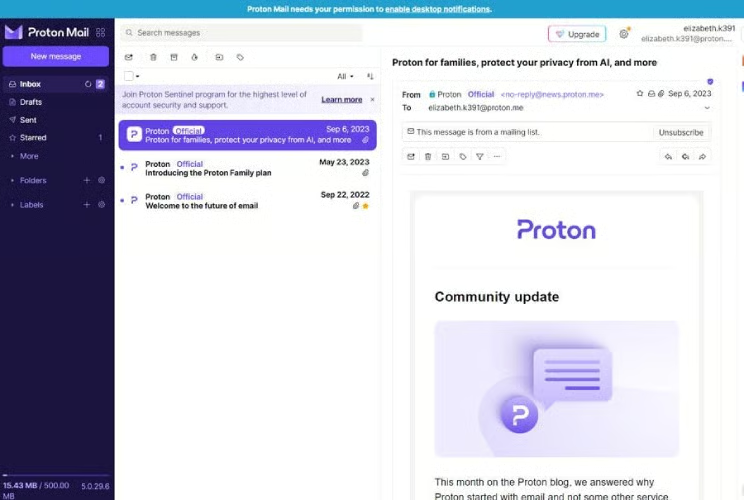
Aside from top-notch security, Proton Mail also has team calendars, up to 1GB email storage, and email folders and labels, the latter of which are handy for keeping your inbox organized and running smoothly.
However, unlike Zoho Mail, Proton Mail doesn’t have a productivity suite like shared documents, spreadsheets, and presentations, even on its paid plans. It’s solely a platform to get a business email for free, not for general productivity.
Also, the free plan uses a .proton.me email subdomain, and paid plans require you to use your own domain. Other than that, though, Proton Mail is easy to set up, reliable, and has some of the most advanced security you’ll find from a business email platform, free or paid.
Key freemium features
- Private, ad-free email: Create one permanent @proton.me email address without ads or behavioral tracking.
- Up to 1GB of email storage: Start with 500MB and unlock 1GB by completing Proton’s setup checklist.
- Strong email encryption: Messages between Proton Mail users are automatically end-to-end encrypted, while stored emails receive zero-access encryption.
- Easy Switch import tool: Transfer emails, contacts, and calendars from another email provider.
- Web and mobile apps: Access your inbox through Proton Mail’s web, iOS, and Android apps.
Proton Mail pricing
Free | Mail Plus | Unlimited | |
| Monthly price, billed annually | $0 for 1 user | $3.99/user | $9.99/user |
| Monthly price, billed monthly | $0 for 1 user | $4.99/user | $12.99/user |
How to get a free email address
- Go to Proton and click “Create a free account.”
- Fill out your account information, including your username, and then select “Get Proton for free” on the next page.
- Verify via CAPTCHA or email to complete the setup of your Proton Mail business email.
What makes Yahoo Mail the best free business email for organizing high-volume inboxes?
Why I chose Yahoo Mail
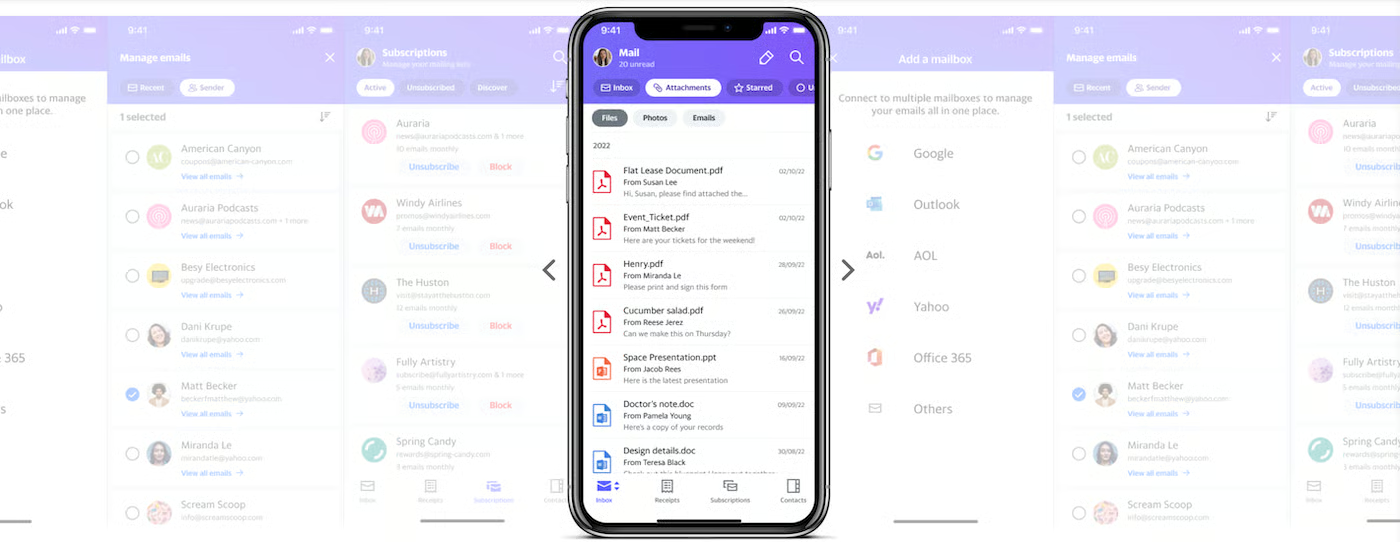
Yahoo Mail is a strong choice for users who prioritize free email accounts for business with free inbox storage. Its search, filters, folders, and dedicated views for attachments and subscriptions make high email volumes easier to organize. It also includes calendar and contact tools for basic business communication.
However, Yahoo Mail provides an @yahoo.com address and does not host email on a custom business domain. It also lacks the integrated productivity and collaboration suite available with Google Workspace or Outlook. I recommend it primarily to freelancers and small business owners who need a spacious secondary inbox rather than a branded business email system.
Key features
- Generous email storage: Store considerably more email than many competing free services allow, although capacity may vary by region.
- Inbox organization: Manage messages with folders, filters, search, starred emails, and dedicated views for attachments, receipts, subscriptions, and travel details.
- Web and mobile apps: Access your inbox through Yahoo Mail’s web interface or its iOS and Android apps.
- Calendar and contacts: Organize appointments and contact information using Yahoo’s connected calendar and address book.
- Spam and phishing protection: Filter suspicious messages, block unwanted senders, and add two-step verification for stronger account security.
Yahoo Mail pricing*
- Standard: $0 for 1 user
- Plus: $5/user/month
Free trial: 14 days
*Monthly pricing only.
How to get a free email
- Visit Yahoo Mail’s home page and select Create an account.
- Enter your name and choose an available @yahoo.com address.
- Create a password and provide the requested account information.
- Complete any required identity verification steps.
- Sign in and configure your recovery information, inbox filters, and two-step verification.
What makes Mail.com the best for industry-specific email domains?
Why I chose Mail.com
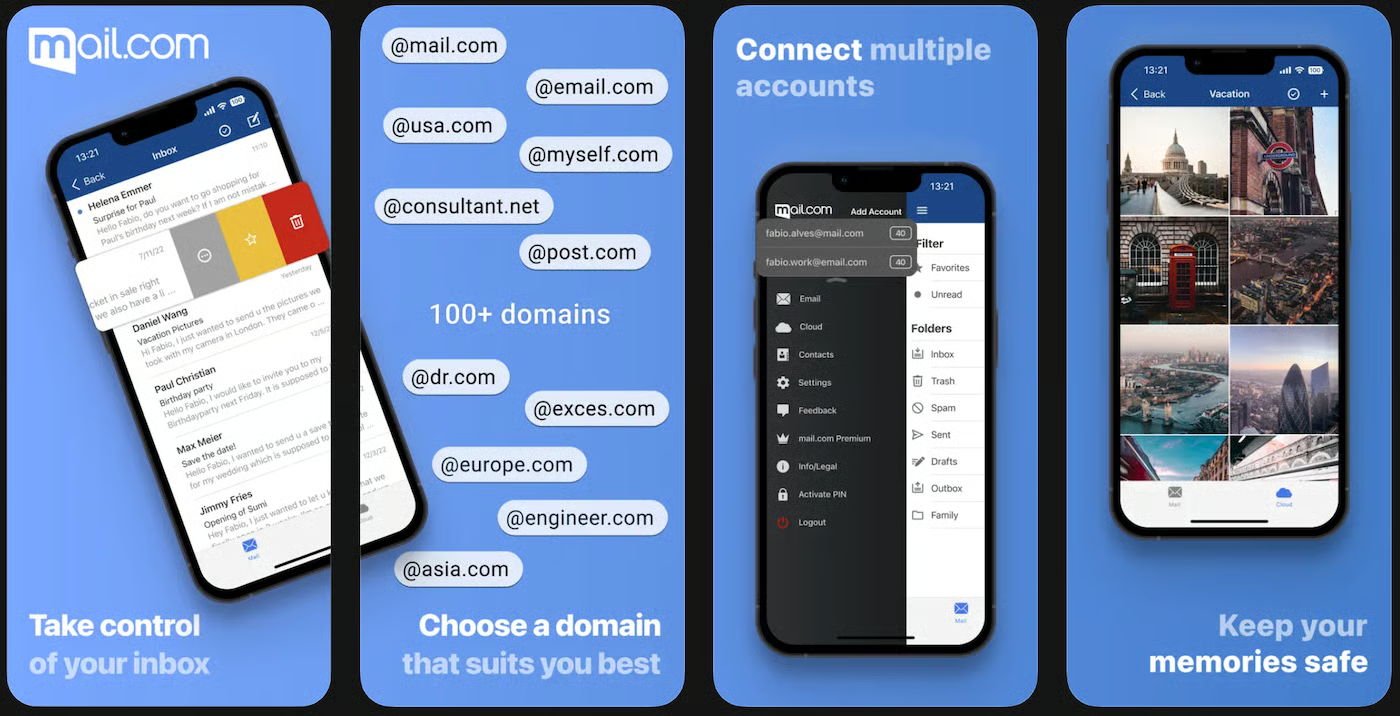
Mail.com is a practical choice for freelancers and independent professionals who want a more distinctive email address without buying a domain. It offers more than 100 provider-owned options, including profession-oriented domains such as consultant.com and engineer.com. These addresses can appear more relevant than generic personal email, but they do not provide the ownership or brand control of a custom business domain.
The free plan also stands out for its 65GB mailbox, up to 10 email addresses, and 30MB attachment limit. The trade-offs are inbox ads and no free POP3 or IMAP access, so free users must rely on Mail.com’s web or mobile apps. It is best for professionals who value address variety and ample storage more than custom branding or third-party email client support.
Key freemium features
- More than 100 email domains: Choose a provider-owned domain related to your profession, location, or interests.
- Up to 10 email addresses: Create one primary address and up to nine aliases, all managed through one login and inbox.
- 65GB of email storage: Store approximately 500,000 messages without purchasing more mailbox capacity.
- Free productivity tools: Access the Organizer calendar, Contacts, Online Office, and 2GB of cloud storage.
- Built-in email security: Protect your account with two-factor authentication, antivirus scanning, and spam filtering.
Mail.com pricing
- Free: $0 for up to 10 email addresses
- Premium 3 months: $9.99/user for 3 months
- Premium 12 months: $29.99/user for 1 year
- Premium+ 110 GB Cloud: $48.87/user for 12 months
How to get a free email
- Visit Mail.com and select Free sign-up.
- Enter your preferred username and choose an available Mail.com domain.
- Provide the requested account information and create a secure password.
- Add a recovery phone number or email address.
- Complete the CAPTCHA and accept the terms.
- Sign in and configure your aliases, filters, recovery settings, and two-factor authentication.
What makes GMX Mail the best for large attachments and free storage?
Why I chose GMX Mail
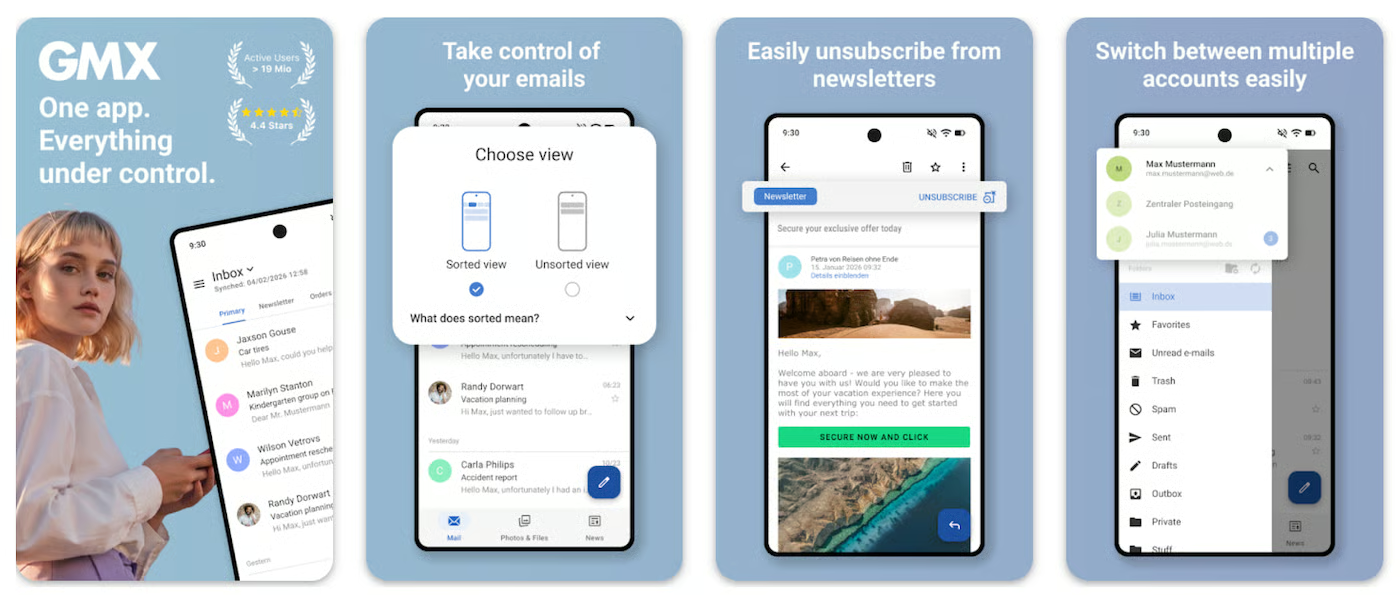
GMX Mail is best for users who need to send large files without paying for email. Its 50MB attachment limit exceeds what many competing free providers allow, making it useful for sharing presentations, high-resolution images, and other sizable business files. Larger files can be shared through the included GMX Cloud storage.
The free account also includes 65GB of email storage, up to 10 GMX addresses, and Mail Collector for consolidating messages from other accounts. However, it cannot host email on a domain your business owns, and its collaboration tools are more limited than those of Google Workspace or Outlook. I recommend GMX to freelancers and small business owners who value attachment capacity and ample storage more than custom branding or team productivity features.
Key freemium features
- 50MB attachment limit: Send large documents, presentations, images, and other files directly by email.
- 65GB of email storage: Store approximately 500,000 messages without purchasing additional mailbox capacity.
- Up to 10 email addresses: Create one primary address and up to nine aliases, all managed through one inbox.
- Mail Collector: Consolidate messages from supported external accounts and manage them through GMX.
- Productivity and security tools: Access Online Office, Organizer, Contacts, 2GB of cloud storage, spam filtering, antivirus protection, optional PGP encryption, and two-factor authentication.
GMX Mail pricing
GMX Mail provides a free email account with 65GB of mailbox storage, 2GB of cloud storage, up to 10 GMX addresses, and a 50MB attachment limit. The international and US sites do not advertise a paid business email plan or support custom-domain hosting.
GMX offers paid plans in select countries, including Germany and Austria. Available upgrades may provide an ad-free inbox, additional storage, larger attachments, email forwarding, and expanded support. Plans, prices, and included features vary by country, so check your local GMX website for current options.
How to get a free email
- Visit GMX Mail and select Create an account.
- Enter your preferred username and check its availability.
- Provide the requested account information and create a secure password.
- Add a mobile number or secondary email address for account recovery.
- Complete the CAPTCHA and accept the terms.
- Sign in and configure your aliases, filters, recovery details, and two-factor authentication.
Methodology: How I evaluated the best free business email providers
For this guide, “free business email” includes both custom-domain email offered at no cost and permanent provider-branded accounts that freelancers and small businesses can use professionally. I also included Google Workspace as a paid benchmark for businesses that prioritize custom-domain email and collaboration tools.
I scored each of the best free business email providers using the following criteria:
- Free plan value (30%): I evaluated whether the provider offers a permanent business email for free, free custom-domain email, mailbox storage, reasonable attachment limits, minimal advertising, and straightforward signup. I also considered geographic restrictions and other conditions that could limit long-term use.
- Core email features (25%): I compared web and mobile apps, calendars and contacts, aliases, inbox organization, migration tools, signatures, autoresponders, email scheduling, and baseline spam and phishing protection.
- Security and privacy (20%): I reviewed encryption in transit and at rest, end-to-end or zero-access encryption, multifactor authentication, privacy controls, account recovery, security alerts, and malware protection.
- Productivity and ecosystem (10%): I considered office applications, shared calendars and contacts, video meeting tools, cloud storage, integrations, and support for external email clients.
- Support and usability (5%): I assessed help center quality, support access on the free tier, setup and onboarding, and the usability of each provider’s web and mobile interfaces.
- Expert score (10%): I evaluated practical feature quality, ease of use, value for small businesses, and the transparency and reputation of each provider. This score reflects how well each option supports professional communication in everyday use.
I reviewed current plan details, product documentation, security policies, and support resources when assigning scores. Because free-plan availability and regional eligibility can change, confirm custom-domain support, storage limits, and signup requirements before choosing a provider.
How do you choose the best free business email platform?
You might have noticed that the platforms above all offer different ways to get free business email accounts. Some offer an email address completely free, while others include one as a freebie with other plans.
A free business email platform with a generic domain might be fine for now, but once you upgrade to a custom one, you might also need to consider things like storage data, productivity tools, and security features. These are just some of the things to keep in mind when choosing your business email platform.
- What do you need most from an email platform? Start with what you need most, based on what you already have. If you already own a domain, you probably won’t need a platform that provides one.Meanwhile, if you’re building your online presence from scratch, you might want an all-in-one platform that lets you build a website with an email address on the same domain, or collaboration features if you have a team.
- What will your business need in five or 10 years? You may only need a free email platform now, but consider how your business might grow in the next few years. It’ll take additional effort to transfer email records if you choose a different email platform later on, so it’s a good idea to choose one email platform now for the long term.
- How familiar are you and your team with business email platforms? Some platforms are easy to navigate even for beginners, like Google Workspace and IONOS, while others might take a little more learning curve, like DreamHost, where you’ll need to access a cPanel (control panel). Consider your comfort level with different email platforms.
- How much storage and security will you require? If you store lots of files online, you’ll need a platform that allows more storage. And if the files you store are particularly important or sensitive, you’ll need one with advanced security and anti-phishing protection.
- How much budget can you allocate to your business email? While some platforms have 100% free plans, other platforms offer paid plans that still have a lot of value.While free platforms work well if you have absolutely no budget, evaluate if you’re willing to pay a little extra for a lot more value. Most email platforms offer features like websites, productivity tools, and cloud storage for less than $6 per month.
Frequently asked questions (FAQs)
How can I get a free business email address?
Zoho Mail is the best option for creating a free business email address with a domain you already own. Its free plan supports one domain and up to five users, each with 5GB of mailbox storage. However, it is available only in select data centers and does not include IMAP, POP, or ActiveSync access.
If you don’t need a custom domain, Proton Mail, Outlook.com, Yahoo Mail, GMX Mail, and Mail.com provide free addresses using their respective domains.
What email should I use for my LLC?
Use an address tied to your LLC’s domain, such as jane@yourbusiness.com. It looks more professional than a generic address, reinforces your brand, and makes adding employees or departments easier.
Choose a consistent format like firstname@yourbusiness.com. You can also create role-based addresses such as sales@yourbusiness.com and support@yourbusiness.com.
Is Gmail business email free?
A personal Gmail account is free, but it uses an @gmail.com address instead of your business domain. Its 15GB of storage is also shared across Gmail, Google Drive, and Google Photos.
Using Gmail with an address such as you@yourbusiness.com requires a paid Google Workspace plan. Workspace also includes administrative controls, enhanced security, and productivity apps.
Can I create a business email without owning a domain?
Yes, but the address will use the email provider’s domain. Outlook.com, Proton Mail, Yahoo Mail, GMX Mail, and Mail.com let you create free email accounts without purchasing a domain.
To create a branded address such as name@yourbusiness.com, you must own a domain and connect it to a service that supports custom-domain email hosting.
What is the difference between a business email and a personal email?
A business email typically uses a company-owned domain and may include centralized administration, user management, security policies, shared calendars, and productivity tools.
A personal email generally uses the provider’s public domain and is managed by one account holder. It may be sufficient for a new freelancer, but a custom-domain email provides a more professional and scalable setup.
Bottom line
The best free business email provider depends on whether you need a custom domain, advanced security, ample storage, or productivity tools. Zoho Mail is my top recommendation because its free plan supports custom-domain email for up to five users in eligible regions.
If Zoho Mail isn’t available in your area or doesn’t suit your workflow, the other providers offer dependable free accounts with different strengths. Compare domain support, storage, security, integrations, and upgrade costs before choosing the best fit for your business.
Related articles: