







A sales funnel visualizes the stages of your sales process, showing the customer buying journey from awareness to purchase. The “funnel” shape reflects how if you add leads to the top of a funnel, the number decreases incrementally until only a small percentage that converts to customers reach the bottom of the funnel. In this article, we discuss what is a sales funnel, its benefits, and the five common stages applicable to most small business sales funnel strategies.
Monitoring the value of the deals in each stage of your sales funnel can help your sales forecasting activities. Use a customer relationship management (CRM) tool like HubSpot that automatically calculates the value of deals in each business funnel stage.
What Are the Benefits of Having a Sales Funnel?
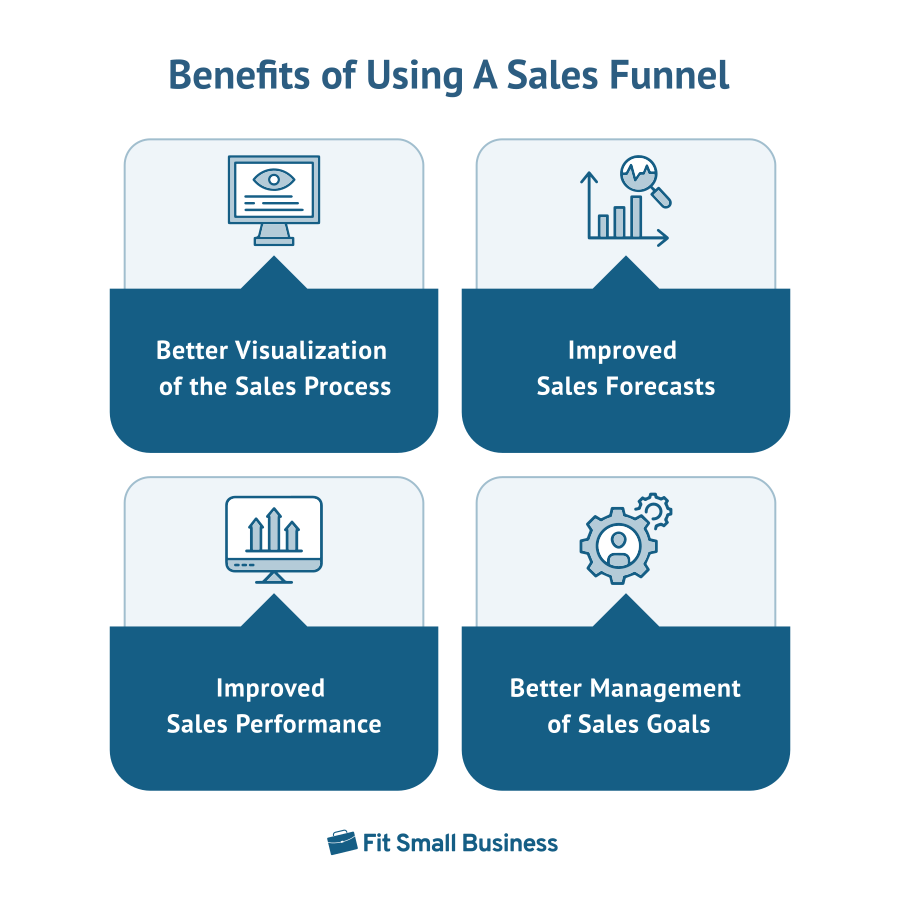
Building a business funnel provides your business with numerous advantages. Some of these benefits include visually organized sales information, improved sales forecasting capabilities, and insights for improving overall sales performance.
Here are the top benefits of using one:
Better Visualization of the Sales Process
A sales funnel is an effective way to visualize your sales process and manage potential opportunities. You can find out how many leads go from one stage to the next, how long a lead stays in each stage, and how many or what kind of sales pipeline activities are most likely to move them along. To do this, use aggregated views and analysis of current leads, prospects, and customers currently going through the sales process.
Improved Sales Forecasts
Because a sales funnel works by visualizing how prospects go through the sales process and convert to the next stage, it can also be used to predict future revenue. To make a sales forecast, use information like conversion rates from the consideration stage to the purchasing decision stage of the funnel. Then, calculate the percentages of leads you expect to close and multiply them by the total estimated deal value in the funnel.
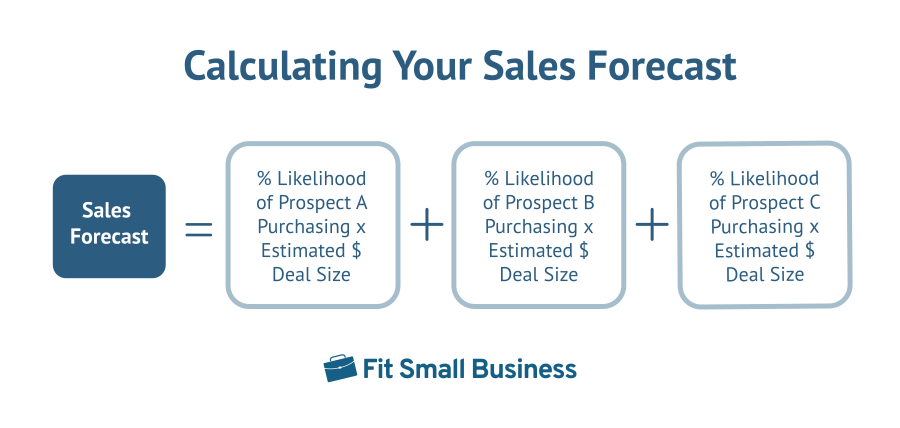
Calculating a sales forecast is based on the number of prospects in the consideration stage, the deal-closing probability of each prospect, and the estimated deal value of each opportunity. This gives you an estimate of how much sales revenue you expect to generate in a given time period.
The formula is as follows:
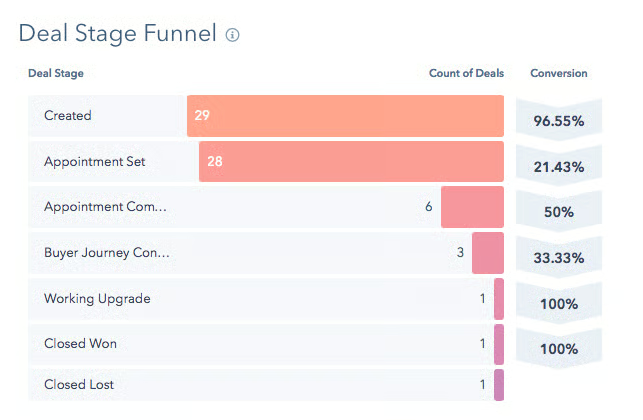
A business funnel example that includes forecasting capabilities is offered in HubSpot CRM. Users can view the status of each lead or opportunity in the form of a funnel with conversion rates, as well as the total potential deal values in the pipeline, creating a reliable sales forecast.
Improved Sales Performance
Visualizing leads going down a funnel through stages provides opportunities to improve sales performance at each level. For example, if you discover certain stages are taking longer than others, you can create training for sales reps on specific tactics for moving a lead to the next stage.
You can also use funnel information to allocate additional resources needed to maximize conversion rates at each funnel stage. This could entail technology that improves the speed of a workflow, such as sales automation software or customer relationship management (CRM) software with a lead scoring function.
Better Management of Sales Goals
Monitoring and tracking team and individual sales goals isn’t just about total sales revenue generated. It can also refer to the total conversions and conversion rates of a lead to the next sales stage. Since it is essentially a visual of sales stage conversions, it is an effective way to view progress in relation to the current goals in your sales plan.
You can also use sales funnels to determine how many leads are needed in each stage to hit your sales goals. For example, let’s say your goal is to close four deals by the end of the year, and you know the funnel conversion rates are as follows:
This means to hit your goal of four deals closed, you’ll need to create awareness for at least 100 leads, of which 25 will be interested in learning more. Of those 25, 10 will accept an offer, and eight will need further consideration. Then, four of those eight considering leads will agree to purchase.
5 Stages of a Sales Funnel
The sales funnel process varies for each business depending on product or service offerings, operations, and tasks required to close a sale. Regardless, funnel stages typically include stages when customers become aware of a business, are interested in what it offers, receive an offer, consider the offer, and make a purchase.
When thinking about the sales funnel process, it’s essential to distinguish it from a sales pipeline. The stages of a sales funnel are the current statuses of prospects, while sales pipeline stages refer to the activities taken to turn a prospect into a customer. The best way to relate the two visuals is by looking at a sales pipeline as the activities needed to get leads into the next stage of the sales funnel.
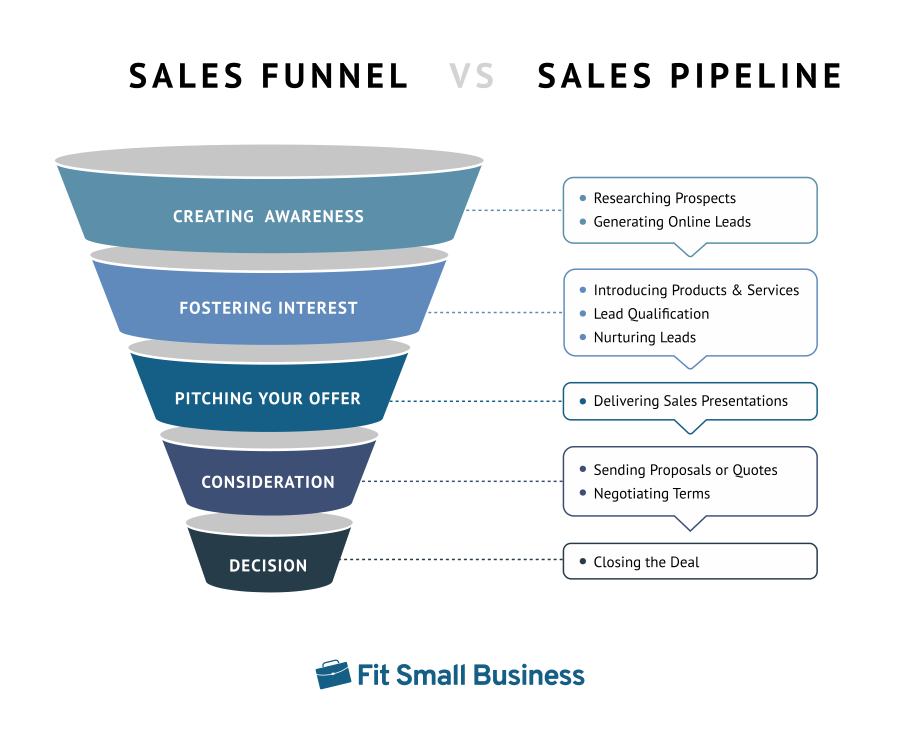
Here are the five common stages for small businesses:
This stage is where potential customers or leads first become aware of your brand and what your business offers, and where they enter the funnel. Marketing efforts, like advertising or special offers, are often used to start a customer journey. Sales activities, including cold calling and email introductions, are also excellent ways to create awareness.
.cls-1,.cls-2{fill:#155E85;}.cls-1{fill-rule:evenodd;}
Cold calling is an effective way to reach out to potential leads. However, knowing the right thing to say is crucial to convince potential customers to move to the next stage of the sales process. Read our guide on effective cold calling scripts to increase your chances of generating new leads.
To get leads into the fostering interest stage, you need pipeline activities that pique the interest of leads to encourage them to learn more about your offerings. Similar activities for creating awareness can also be used to foster interest, such as cold calling and email introductions, assuming the lead is already aware of your brand.
You can also use lead nurturing tactics to continuously follow up with a lead via phone or email. Additionally, offering a free trial or demo is a great way to get a lead interested in a risk-free environment before pricing is discussed. Qualifying a lead by asking relevant questions about their needs can also help foster interest.
At this stage, your lead is interested in receiving information useful for potential purchases. The offer can be presented through a sales pitch or as part of a product demonstration.
However, the pitch could also come as a formal business proposal. After receiving a request for proposal (RFP), communicate the pricing and scope of services to the prospect over the phone or by sending an email. A lead is not typically in this stage for long since after an offer is received, they either reject it or move to the next stage, so make this step straightforward.
After pitching an offer, the lead moves to the consideration stage. During this time, depending on the product or service, back-and-forth negotiation may be required to get everyone in agreement on pricing and terms of service.
This stage is also when a lead may have additional questions about the offer presented. To move the needle, lead nurturing may be required by consistently following up on the potential purchase. For example, when you send a prospect a proposal or contract for signature, you may have to place phone calls or send emails to overcome any lingering objections. You must also remind them to sign and return the form to finalize the sale.
After consideration, the lead decides to either purchase from your business and become your customer, to purchase another option, or not to make a purchase at all. If the deal is lost, you can try again down the line when they are put back in the fostering interest or presenting offer stages. This may depend on how your sales process is structured.
If the lead decides to purchase from your business, the next step is finalizing the transaction, which may involve a customer onboarding process. The good thing about this is that your business could have additional stages after a sale is completed. These could include cross-selling, customer loyalty and retention strategies, re-purchasing, upselling now or selling upgrades in the future, or establishing recurring purchases.
.cls-1,.cls-2{fill:#155E85;}.cls-1{fill-rule:evenodd;}
Acquiring new customers is an opportunity to turn them into repeat patrons. Read our guide on using a CRM to help with your customer retention strategy.
How to Create a Sales Funnel
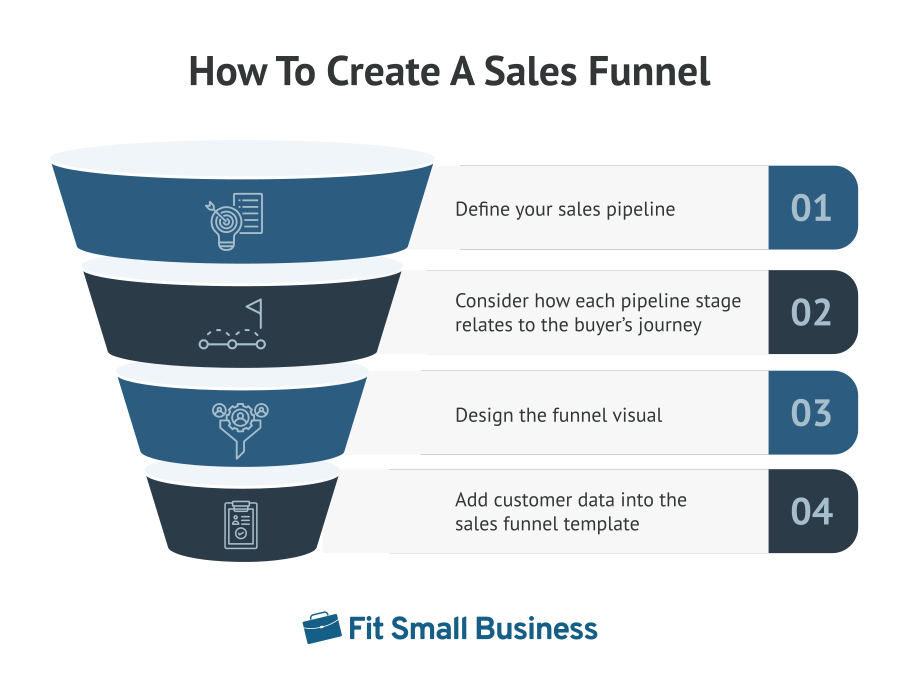
To create a sales funnel, visualize your customers’ buying journey through your sales process. In doing so, you need to understand and envision your company’s sales progression in a way that can be broken down into stages.
Each stage should represent a stage of the buying journey, such as brand awareness, lead nurturing, offer, consideration, and decision. This helps you define essential sales pipeline activities needed to move a lead from one stage to the next.
More information about developing its stages can be found in our sales funnel template guide. This article provides a step-by-step process and free templates you can download to create and customize your own.
How to Manage & Optimize Your Sales Funnel Successfully
Sales funnel management is all about tracking sales information. Once you establish the stages, assign each lead to the appropriate stage and then move them to the next level as their customer journey moves forward.
It can be used to calculate the conversion rates of a lead from stage to stage. This tells you exactly how many leads need to be in the funnel to produce your desired number of customers and meet your sales goals. Your funnel also tells a story about how effective your sales tactics are at each stage to identify adjustments to improve sales performance.
Top Tools With Sales Funnel Functionalities
Customer relationship management (CRM) systems are excellent tools for monitoring your funnel since CRMs organize contacts and sales opportunities. The records of each lead (or opportunity) can be viewed and edited to show accurate contact information, deal value, and stage in the sales process. These can then be aggregated and converted into a funnel-style visual.
Salesforce, for instance, has individual records for opportunities that indicate where they are in the sales pipeline stage and their potential value. That information can be combined with other opportunities to be converted and presented in a funnel chart.
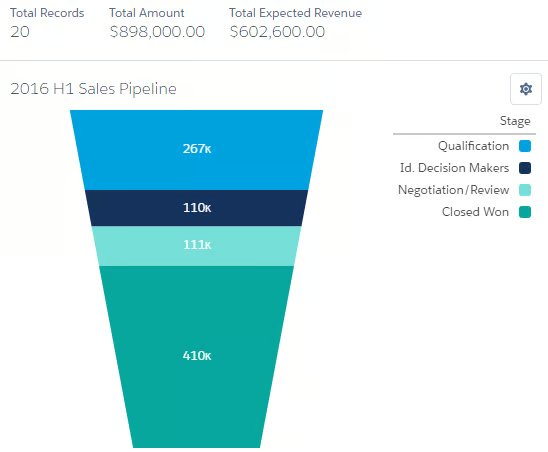
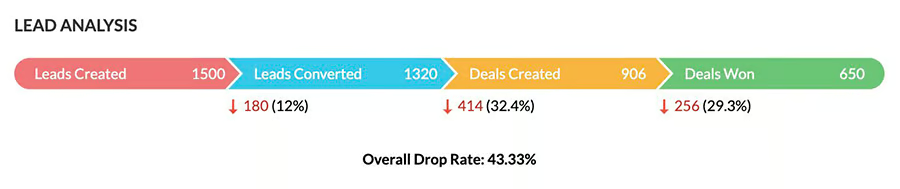
CRMs can also be used to show the conversion rates of the stages of the sales funnel. This helps with sales forecasting and enables you to evaluate bottlenecks in the sales process to make adjustments and get leads through the funnel faster. Zoho CRM aggregates data about each lead or opportunity stage and translates it into a conversion percentage.
.cls-1{fill:#155E85;fill-rule:evenodd;}
Pro tip: As a sales manager, you must keep your team’s funnel for sales full of opportunities and strategies to generate leads consistently. For more information on managing an effective sales operation, check out our ultimate guide to sales management for insights on training, motivating, developing, and leading a sales team.
Bottom Line: What Is a Sales Funnel?
The sales funnel definition can be summed up as a visualization used to manage the sales process by viewing each stage of the funnel as it relates to the customer journey. Your team can use sales funnels to assist in forecasting sales, making adjustments to improve performance, and setting and managing sales goals. Plus, sales CRMs leverage technology to help you track sales information and make it easier to compile data and produce one.
