







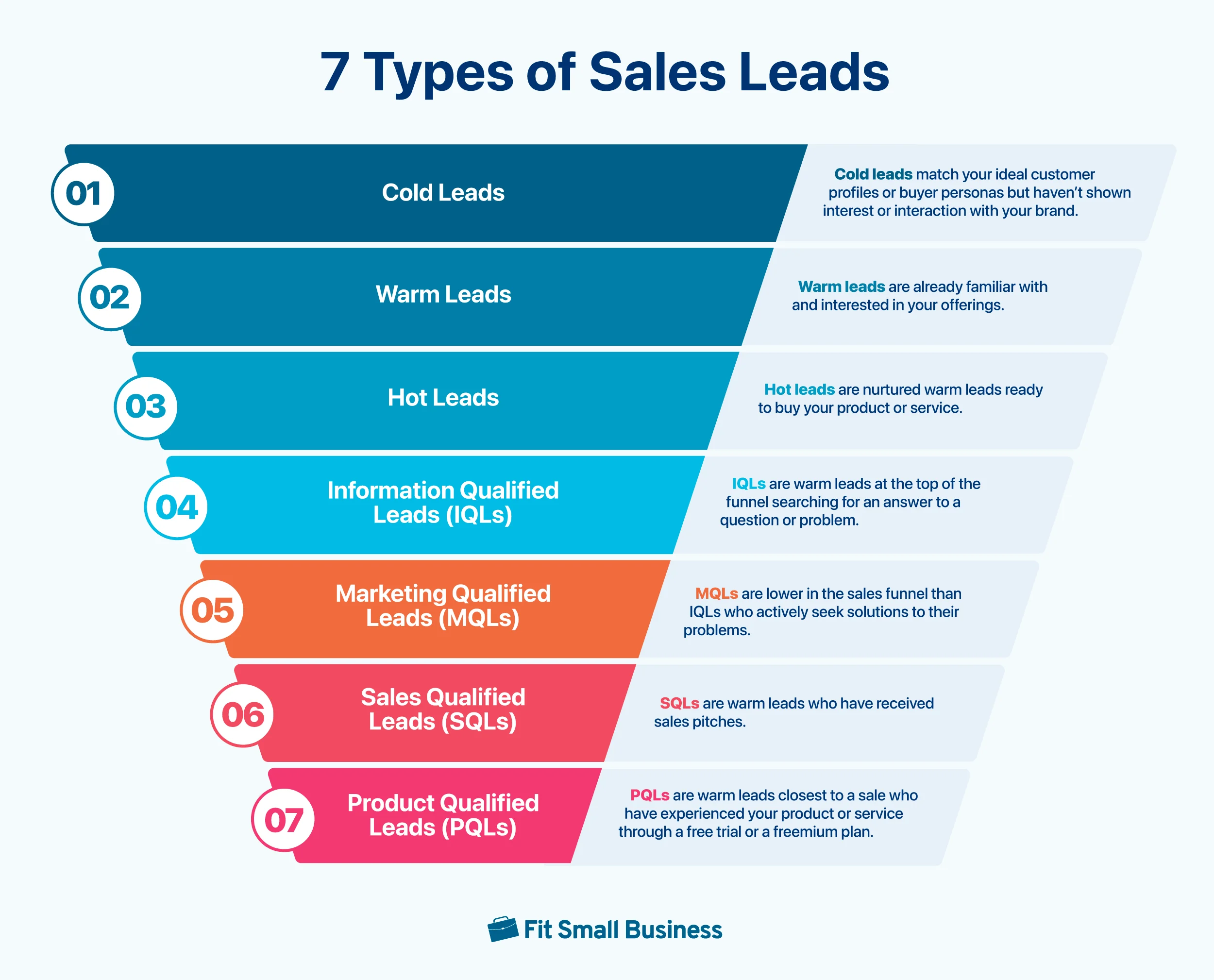
A sales lead refers to a person or company with the potential to become a customer. Every lead is unique, and converting them into loyal, paying customers requires an effective lead generation process. Learning the types of leads in sales is crucial to determine the best marketing efforts, increase conversion, and win more deals effectively.
1. Cold Leads
Cold leads are a type of lead in sales that match your ideal customer profiles or buyer personas but haven’t shown interest or interaction with your brand. They’re at the top of the sales funnel (TOFU) and are the most difficult to convert. Generating cold leads includes cold calling, cold emailing, and social media research. However, sales reps may find these cold lead generation strategies tedious and less impacting than warm leads.
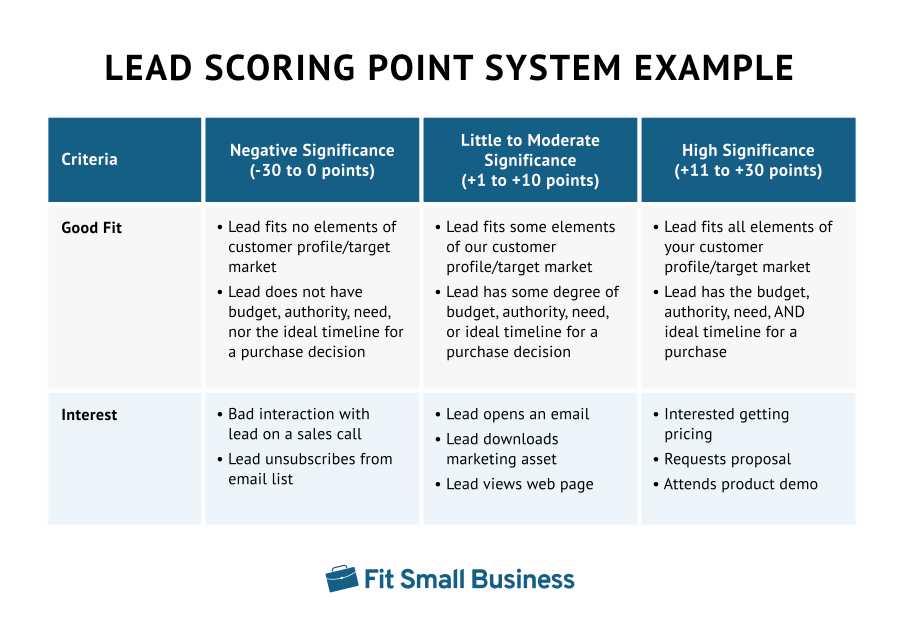
Lead scoring is another strategy that sales teams use to identify the best cold leads more effectively and efficiently. It involves setting a point system and implementing it on current deals in the sales pipeline. Sales managers can develop a lead scoring system with relevant criteria and clear scoring descriptions. That way, reps can use it to add or subtract points from a lead with every gathered piece of info or interaction until the lead turns into a paying customer.
2. Warm Leads
Warm leads are already familiar with and interested in your offerings, either because of your marketing efforts or word of mouth. They’re found in the middle of the sales funnel (MOFU). Lead generation strategies for warm leads include referrals, social media outreach, publishing quality content (to increase website sign-ups and newsletter subscriptions), and digital marketing. Unlike cold leads, it’s easier to start a conversation with warm leads.
Additionally, aligning sales and marketing strategies is a great way to generate warm leads. Marketers and sales reps can craft quality content, like blog posts, case studies, and sales copies, to attract readers and turn them into potential customers. Content elements, like calls to action (CTAs), also enhance engagement. You can include a CTA button or link in your business blog post or email to raise product awareness and encourage prospects to convert.
3. Hot Leads
When warm leads receive proper nurturing through regular follow-ups, they become readier to buy your product or service. At this point, they become hot leads, who are at the bottom of the sales funnel (BOFU) and are actively considering your offerings but aren’t committed to buying yet. These leads can be active users of your free trial or freemiums. To turn warm leads into hot leads, you can use follow-up email templates to send compelling emails, make a follow-up call, or send SMS reminders as lead nurturing strategies.
4. Information Qualified Leads (IQLs)
IQLs are warm leads that belong to the top of the funnel and are searching for an answer to a question or problem. IQLs already provide some information about their needs but are yet to demonstrate interest in your products and services. They simply want to gain general or specific knowledge related to your offerings. If you’re able to provide expert answers and compelling marketing landing pages, then they’ll likely prioritize you when they need such solutions later on.
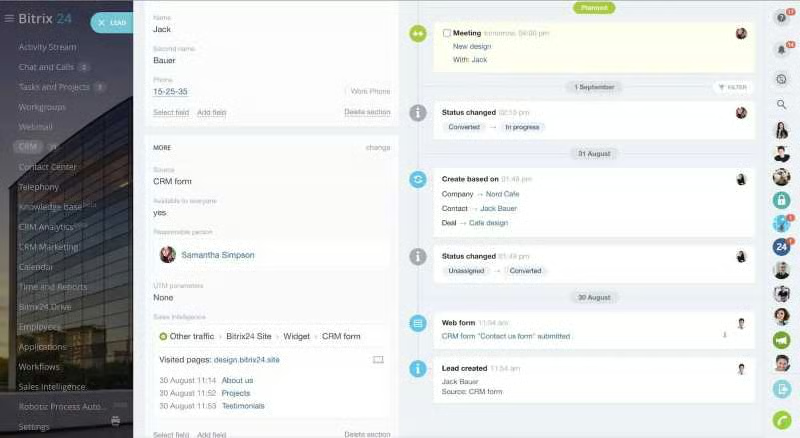
One of the most effective ways to generate IQLs is with top-of-funnel (TOFU) content, such as blog posts, webinars, and case studies. For example, you can create downloadable e-books or email templates to convince them to sign up for your website or newsletter to get more valuable data. Use a customer relationship manager (CRM) to track customer journeys automatically to tell which of your landing pages they visited or ads they clicked on.
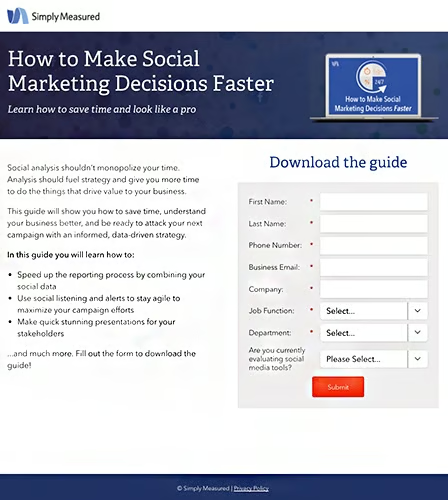
Request for more lead information in exchange of a free downloadable guide (Source: Simply Measured) 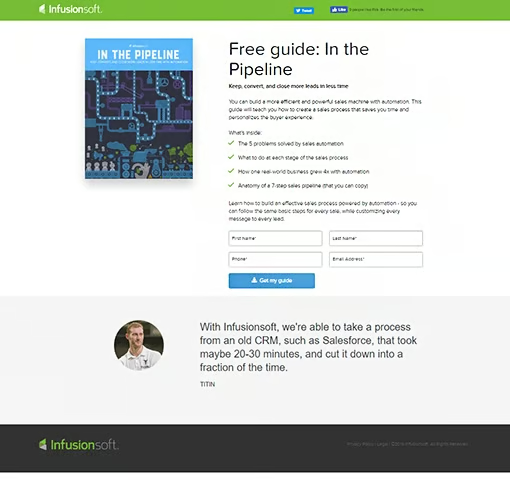
A basic lead generation form asks for the lead’s name and other contact information (Source: Infusionsoft)


5. Marketing Qualified Leads (MQLs)
Among the different types of sales leads, MQLs are leads that actively seek solutions to their problems. MQLs are past the awareness stage of TOFU and are currently in the interest stage, with some form of interaction with your brand. For instance, they already tried watching some of your product videos or downloading some of your e-books or case studies. Hence, they’re more willing to learn more about your solutions, which makes nurturing MQLs easier than IQLs.
6. Sales Qualified Leads (SQLs)
SQLs are also warm leads and are also called sales-ready or sales-accepted leads. Among the qualified types of leads in sales, SQLs are the next closest lead to the sale, Product Qualified Leads (PQLs). Hence, sales reps may have already conducted sales pitches and pricing discussions at this point. The sales management team can move SQLs to the next steps for further processing, like assisting them through the checkout process.
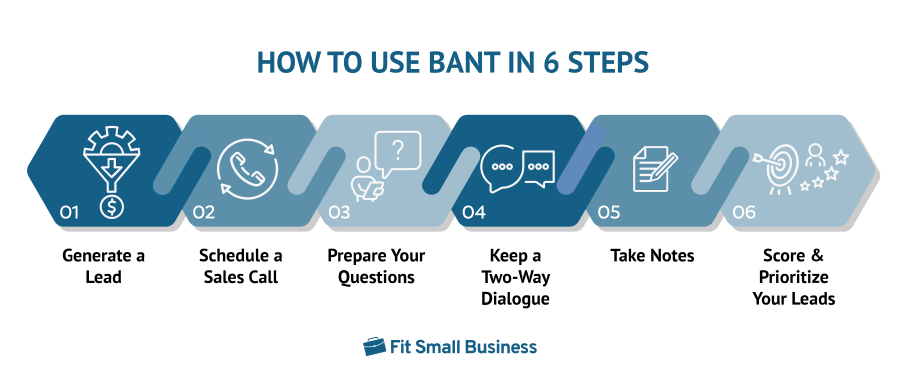
Generating SQLs entails applying the budget-authority-need-timeline (BANT) framework to identify qualified leads. For example, a sales rep can prepare questions like “Do you have budget restrictions for this type of solution?” or “What are the features you like about the current solution you’re using?” Tracking the sales qualified rate (the percentage of MQLs that become SQLs) gauges leads’ interest in a brand and the likelihood of making a purchasing decision.
7. Product Qualified Leads (PQLs)
PQLs are one of the types of leads in sales that have tried your product through a free trial, product sample, or a freemium plan. In short, they’re warm leads who have experienced some of the features and benefits of your solutions but haven’t received follow-up marketing materials. PQLs have high interaction with your business. Therefore, your sales team must analyze each user’s product usage and reach out to them to assist with their questions.
Sales reps can also offer discounts to convince PQLs to upgrade their plan. Dealing with PQLs could also be the perfect opportunity to showcase your sales reps’ upskilling skills. If your reps have good upskilling skills, they can convince PQLs to upgrade their free plan to a higher tier or buy your full-featured product.
Frequently Asked Questions
What types of leads are there in sales?
There are seven types of sales leads, which can be categorized into general and qualified leads. General leads include cold, warm, and hot leads, broadly used across different departments like marketing and customer support. Qualified leads are usually used for sales activities, which include information, marketing, sales, and product qualified leads.
How do you categorize leads?
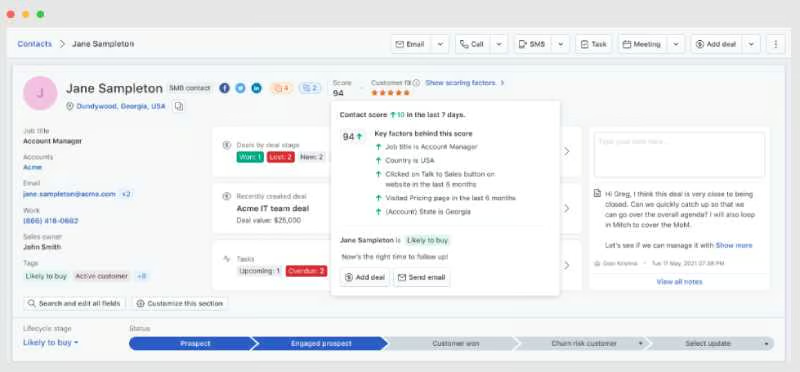
Categorizing leads involves qualifying and scoring leads to determine their temperature, or whether the sales leads are warm, cold, or hot. Sales teams must use the right tools like customer relationship management (CRM) systems with lead scoring, segmentation, analytics, reporting, and automation tools. These features help sales reps properly classify sales leads to come up with high-quality leads and close more deals.
What is a good lead in sales?
A good sales lead converts quickly. Sales teams must generally aim to generate sales qualified leads and product qualified leads, which have the highest intent and potential to convert. However, your lead generation efforts don’t always generate a hot lead. You should strike a balance between different types of leads to expand your conversion sources and ultimately increase your overall sales.
Bottom Line
Sales leads include qualified leads like information, marketing, sales, and product qualified leads as well as general leads like cold, warm, and hot leads based on lead qualification temperature checks. SQLs and PQLs are the types of leads closer to a sale. Your sales team can convert each sales lead into a valuable prospect and a paying customer by implementing the right lead generation strategies and tools, like a customer relationship management (CRM) system.
