







The best business email providers give you more than just a custom domain. They also include productivity tools, advanced security, and scalable storage to help your business run efficiently. To help you find the right fit, I tested and compared the top options on the market for 2026, evaluating each based on pricing, features, security, and real-world performance.
Based on my evaluation, Google Workspace is the best business email provider for small businesses overall because it combines professional email with a full suite of productivity and collaboration tools.
But if you are interested in other options, this guide breaks down the eight best business email providers for small businesses, including what each platform does best, its limitations, and which type of business it’s best suited for.
Business email providers | Best for | Monthly starting price |
|---|---|---|
Email and productivity tools | $7 per user (1-year commitment) | |
Email + website hosting bundles | $1.10 (3-year term) | |
Affordable business email | $1 per user (billed annually) | |
Security and end-to-end encryption | $6.99 per user (billed annually) | |
Spam protection | $1.67 per mailbox (billed annually) | |
Email aliases and flexibility | $0.39 per mailbox (48-month term) | |
| Titan-powered email hosting | $2 per mailbox (1-year term) | |
Smart email automation features | $1.67 per user (12-month term) |
Why you can trust Fit Small Business
- Comparing the best business email providers
- Google Workspace: Best overall business email provider with productivity tools
- IONOS: Best for email + website hosting bundles
- Zoho Mail: Best affordable business email
- Proton Mail for Business: Best for security and end-to-end encryption
- DreamHost: Best for spam protection
- Hostinger: Best for email aliases and flexibility
- InMotion Hosting: Best for Titan-powered email hosting
- Bluehost: Best for smart email automation features
- Methodology: How I evaluated the best business email providers
- 6 considerations when choosing a business email provider
- Bottom line
Comparing the best business email providers
Best business email providers | Productivity tools | Key features | My score (out of 5) |
Yes |
| 4.61 | |
Limited |
| 4.12 | |
Yes |
| 4.0 | |
Yes |
| 3.97 | |
Limited |
| 3.75 | |
Third-party tools |
| 3.74 | |
Limited |
| 3.55 | |
Limited |
| 3.25 |
Google Workspace: Best overall business email provider with productivity tools
My expert opinion
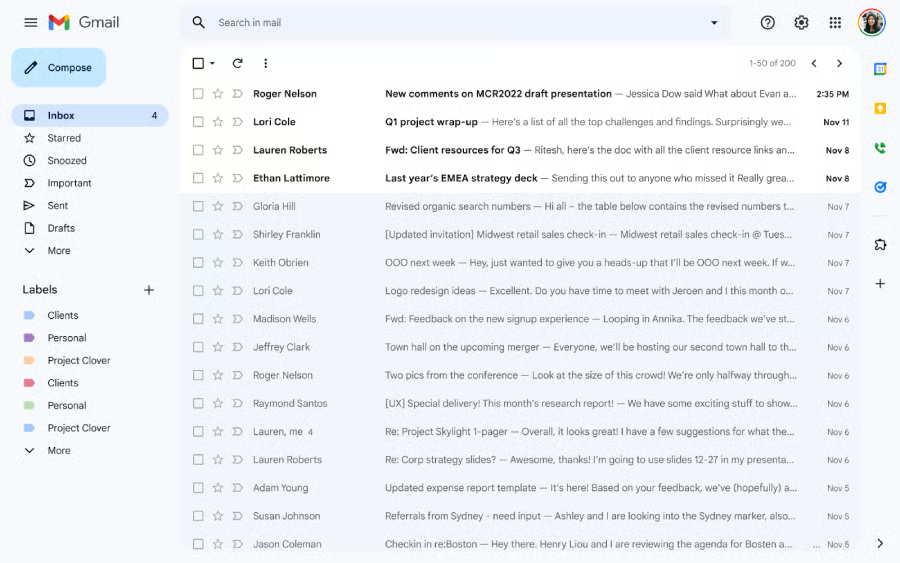
As someone who uses Gmail for personal and business accounts, Google Workspace is one of the easiest tools to set up and use, especially for small teams. If you are already familiar with Gmail or Google Docs, getting started feels very intuitive.
When I tested it, I was able to create accounts, send emails, and collaborate on documents within minutes. The built-in tools like Docs, Sheets, and Slides work seamlessly together, which makes it easy to manage everyday tasks without switching between multiple platforms.
I also found that while the platform offers strong security and reliable performance, storage can fill up quickly since it is shared across email and Google Drive. This can become a limitation if your business handles many large files. Even so, for most small businesses, Google Workspace delivers a well-rounded and dependable experience that is easy to adopt
Pricing
Plans* and pricing (per user) | Monthly | Annual |
|---|---|---|
Starter | $8.40 | $7 |
Standard | $16.80 | $14 |
Plus | $26.40 | $22 |
Enterprise | Contact sales for custom pricing. | |
*Google also offers free plans, but they don’t have the same features or Gmail access as the Google Workspace accounts.
Standout features
- Scalable cloud storage: Plans range from 30GB to 5 TB per user, making it easy to scale as your business grows.
- Customizable business email: Create professional email addresses using your domain with the familiar Gmail interface.
- Gemini AI assistant: Built-in AI helps draft emails, summarize content, and improve productivity across Google apps.
IONOS: Best for email + website hosting bundles
My expert opinion
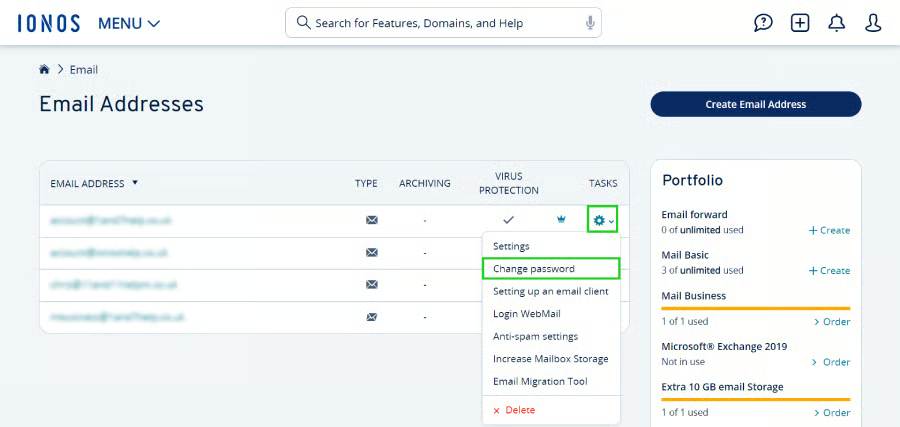
IONOS is a practical option if you want to manage both your business email and website in one place. When I set it up, the process was straightforward and did not require navigating a traditional control panel.
Instead, the guided onboarding made it easy to get started, even without much technical experience. I also found the built-in AI website builder useful for quickly creating a professional-looking site, especially for small businesses that need to get online fast.
While it is not quite as intuitive as Google Workspace, IONOS is still relatively easy to use once you get familiar with the interface. I found it to be a reliable and secure platform for handling business communications, and the bundled plans offer strong overall value.
Pricing
| Plans and pricing | Monthly rate | Monthly rate (for a 3-year term) | Renewal rate |
|---|---|---|---|
| Mail Basic 1 | $4 | $1.10 | $2 |
| Mail Basic 25 | $6 | $2 | $4 |
| Mail Business | $6 | $3 | N/A |
Standout features
- Spam filter: Built-in protection helps block unwanted and potentially harmful emails.
- Business integrations: Connect with essential tools to support your website and business operations.
- Team collaboration tools: Includes shared calendars and basic collaboration features for small teams.
Zoho Mail: Best affordable business email
My expert opinion
While many plans on this list are low-cost, Zoho Mail is one of the most affordable options for businesses. With plans starting at only $1 per month and forever-free business emails in some data centers, it is a great choice for very small teams or early-stage businesses. The free plan supports up to 5 users, each with 5GB of storage, which I found sufficient for basic day-to-day communication.
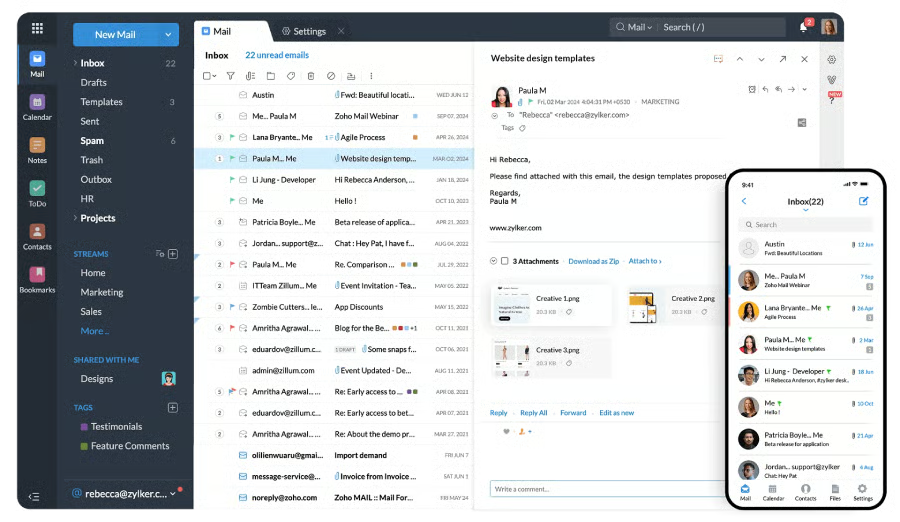
When using the platform, I found it fairly easy to navigate, with a clean interface and useful features like shared calendars for scheduling. While it does not include advanced tools like documents or video meetings on the lower tiers, it covers the essentials well. For businesses with limited budgets that still want a professional email setup, Zoho Mail offers strong value and reliability.
Pricing
Plans* and pricing (per user for 5GB) | Monthly | Annual |
Mail Lite | N/A | $1 |
Mail Premium | $4 | |
Workplace Standard | $4 | $3 |
Workplace Professional | $7 | $6 |
Workplace Enterprise | Contact sales for custom pricing. | |
*Forever free plans are available for teams with fewer than five users.
Standout features
- Migration assistance: Helps transfer existing emails and data from other providers with minimal disruption.
- Password manager: Securely store and manage login credentials within the Zoho ecosystem.
- Unified communication suite: Connect email with other Zoho apps for a more integrated business workflow.
Proton Mail for Business: Best for security and end-to-end encryption
My expert opinion
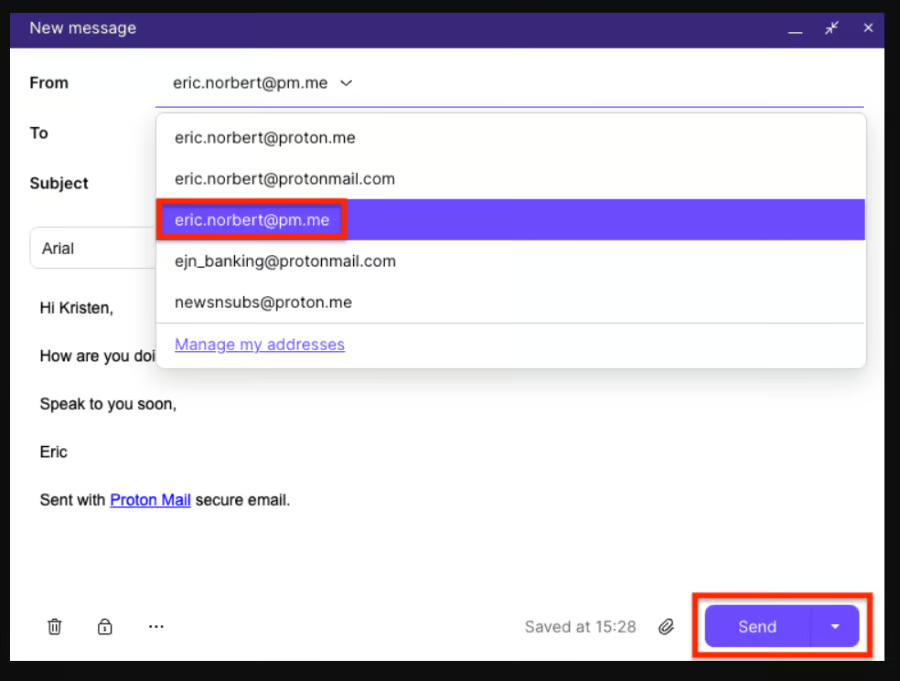
In my experience testing Proton Mail for Business, it is one of the most secure business email platforms available. Every plan includes end-to-end encryption, so emails are protected by default without extra setup.
When I evaluated it, I found it especially well suited for businesses that store healthcare data, legal documents, or other sensitive information. Its Swiss headquarters and strict privacy standards also add an extra layer of confidence in how data is handled.
The platform itself is clean and easy to navigate, and I found the migration process straightforward using its Easy Switch tool. Storage starts at a lower tier and is shared across email and files, which can be limiting if you handle a high volume of attachments.
Pricing
Business plans
| Plans and pricing (per user) | Monthly | Annual |
|---|---|---|
| Mail Essentials | $7.99 | $6.99 |
| Workplace Standard | $14.99 | $12.99 |
| Workplace Premium | $24.99 | $19.99 |
| Enterprise | Contact sales for custom pricing. | |
Standout features
- HTML signatures: Create professional, customizable email signatures.
- Desktop app: Access your email through a dedicated desktop experience for better productivity.
- Proton Sentinel: The advanced security program provides enhanced protection against targeted cyberattacks.
DreamHost: Best for spam protection
My expert opinion
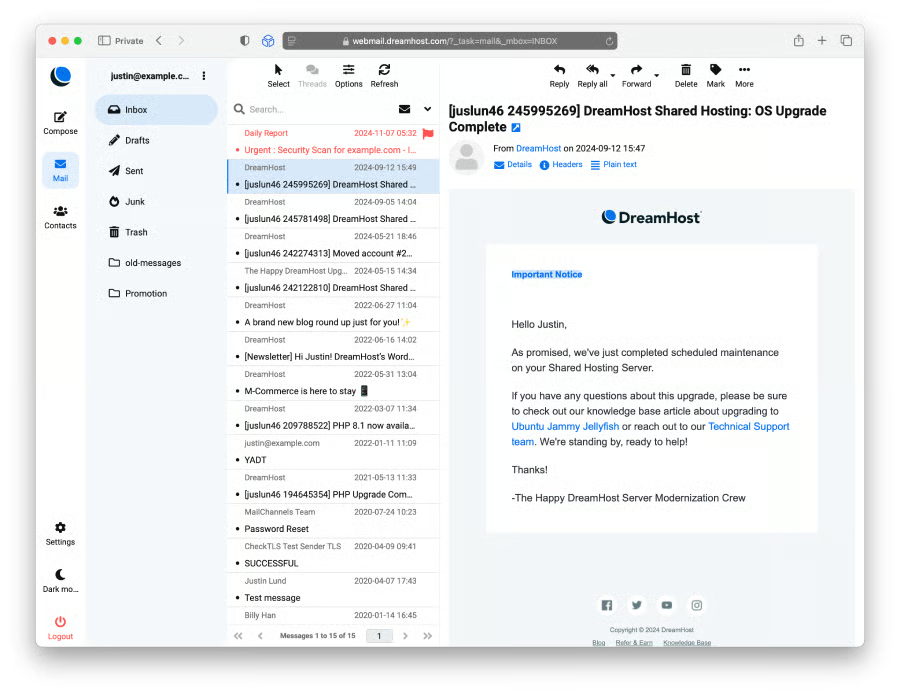
In my experience testing DreamHost, it stands out most for its built-in spam protection and email filtering capabilities. The 24/7 Spam Defense filters out unwanted emails, helping keep inboxes clean and reducing the risk of phishing or malicious messages. This makes it a strong option for businesses that rely heavily on email communication and want an added layer of protection without needing third-party tools.
I also found DreamHost to be reliable for managing email across multiple devices. Being able to sync email seamlessly between desktop and mobile made it easy to stay on top of communications without missing anything. Combined with its consistent performance, this makes it a practical choice for businesses that need dependable email access and strong inbox security.
Pricing
| Plans | Email Monthly | Email Yearly |
|---|---|---|
| Pricing (per mailbox) | $1.99 | $1.67 |
Standout features
- Ad-free webmail: Clean email interface without ads for a more professional experience.
- Mobile and desktop sync: Access your email across devices for consistent communication.
- Spam protection and filtering: Helps block unwanted and potentially harmful emails before they reach your inbox.
Hostinger: Best for email aliases and flexibility
My expert opinion
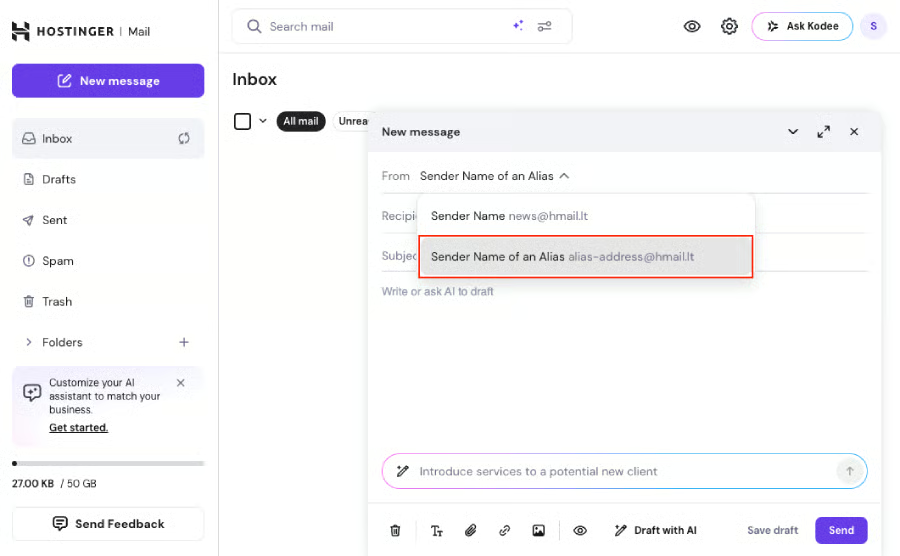
Hostinger’s greatest advantage is how easy it is to manage multiple email aliases under a single inbox. I was able to create addresses like sales@ and info@ that all route to one mailbox, which is especially useful for small teams handling shared communications without paying for multiple accounts. This makes it a practical and cost-effective solution for businesses that want to stay organized without adding complexity.
I also found Hostinger flexible in terms of storage, AI assistance, and day-to-day accessibility. The Starter plan works best for very small teams that need basic domain email, while the Standard and Premium plans add more storage, more aliases, AI writing and summary tools, and email tracking features. Overall, it works well for businesses that want simple email management with room to grow, as long as they are comfortable with the longer upfront term required for the lowest rates.
Pricing
Business Email
Plans and pricing | Monthly | 48-month term |
|---|---|---|
Starter | $2.99 | $0.39 |
Standard | $3.99 | $0.99 |
Premium | $5.99 | $1.99 |
*All Hostinger Mail plans are paid upfront. Monthly rates reflect the total plan price divided by the number of months in the term; promotional pricing can change.
Google Workspace Email
Plans and pricing | Monthly | Annual |
|---|---|---|
Starter Google Workspace | $9.99 | $6.99 |
Standard Google Workspace | $19.99 | $13.99 |
Plus Google Workspace | $29.99 | $21.99 |
Standout features
- Audit logs: Track email activity and access history for better visibility and security.
- Email aliases: Create 5 to 30 aliases depending on your plan.
- Hostinger Mail AI tools: Standard and Premium plans include AI writing, replies, summaries, and search; all plans include Agentic Mail.
InMotion Hosting: Best for Titan-powered email hosting
My expert opinion
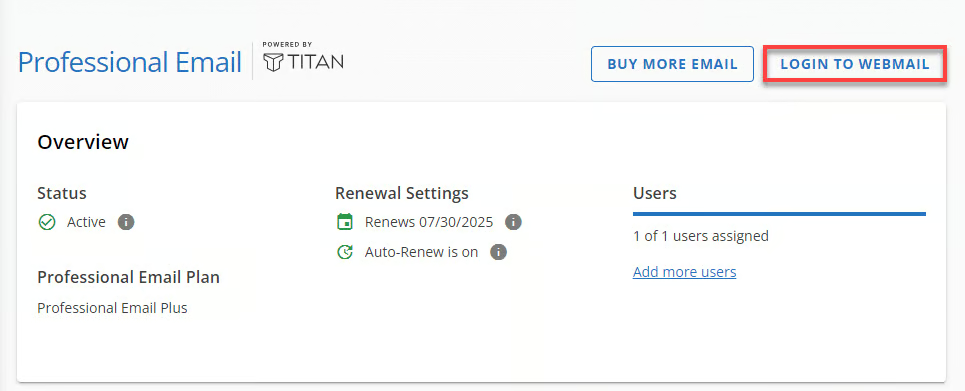
InMotion Hosting makes this list as a practical professional email option for businesses that want hosted email with generous mailbox storage and basic collaboration tools. Its Business Email plan is hosted by Titan and includes rich webmail, mobile apps, calendar, contacts, and 50GB of email storage, giving small teams a straightforward way to manage communications without moving to a full productivity suite.
At the same time, the platform is more focused on core email functionality rather than advanced productivity features. It does not include as many built-in business tools as Google Workspace or Zoho Workplace, but it covers the essentials well. For businesses that want dependable hosted email with a familiar interface, built-in contacts, and enough storage for daily communication, InMotion Hosting is a solid, practical choice.
Pricing
Plan | 1-year term | Renewal | 1-month term | Renewal |
Growth Email | $2.00/month per mailbox | $3.00/month | $2.50/month | $3.50/month |
Business Email | $3.00/month per mailbox | $4.50/month | $4.00/month | $5.00/month |
Enterprise Email | $6.99/month per mailbox | $8.49/month | N/A | |
Standout features
- Calendar and contact management: Keep track of schedules and contacts within the email platform.
- Business auto-reply: Set automated responses for customer inquiries and out-of-office messages.
- Data encryption: Protect email communications with built-in security measures.

Bluehost: Best for smart email automation features
My expert opinion
Bluehost’s email platform stands out most for its focus on AI-powered email automation. Specifically, it’sl Email Ultra plan includes AI-powered email tools such as Email AI for drafting and refining messages and AI Summary for quickly summarizing email conversations. Combined with features like follow-up reminders and auto-responders, it creates a more efficient workflow that reduces manual effort and helps you stay on top of conversations.
I also found that these smart features make a noticeable difference in day-to-day productivity, particularly for small teams managing customer communication or sales emails. While the platform does not include broader collaboration tools like documents or spreadsheets, its strength lies in making email itself more intelligent and easier to manage.
Pricing
Plan | Introductory price | Renewal price | Storage |
Professional Email | $1.67/user/month | $2.50/user/month | 10GB |
Professional Email Plus | $2.50/user/month | $4.17/user/month | 50GB |
Professional Email Ultra | $5.83/user/month | $9.17/user/month | 100GB |
Standout features
- Email templates: Create and reuse templates for faster communication.
- Contact group: Organize contacts into groups for easier email management.
- Email AI: Bluehost’s AI-powered assistant that helps draft emails and improve productivity.
Methodology: How I evaluated the best business email providers
To build this list of the best business email providers, I focused on platforms widely used by small businesses, as well as newer tools gaining traction in 2026. Each provider was evaluated using consistent criteria based on how businesses actually choose email platforms, as follows:
- Pricing (25%): Your business email needn’t take up a significant amount of your budget. However, email providers have different pricing plans. Therefore, I looked specifically for platforms that offered both standalone and scalable plans as well as all-in-one cost-saving bundles.
- General features (20%): General features address not only the essentials that business email users need (such as adequate storage, multiuser plans, and data, spam, and virus protection), but also the overall product value vs. cost.
- Advanced features (20%): Niche features include built-in AI writers, end-to-end encryption, HIPAA and GDPR compliance, private domain registration, and built-in communication tools for chat or video (and any other software that comes with the plan).
- Support (10%): The platforms above were also rated on the quantity and quality of available self-help resources, as well as the level of customer support for setup, troubleshooting, and account management. Platforms with longer customer service hours were also graded higher.
- Expert score (25%): Regardless of how a provider scores on paper, how it works in the real world is a key factor. I personally tested each of these providers and evaluated them based on their features, usability, and value for money.
6 considerations when choosing a business email provider
With dozens of business email platforms available, you’ll need to choose carefully to find the absolute best fit for your business. This includes considering factors such as your business’s specific needs and priorities.
For example, do you already own a domain and just need an email platform, or do you still need to purchase one? This will significantly narrow down your options. Here are other important things to consider when choosing your business email host.
- Your priorities: Do you prioritize security, ease of use, or affordability? Each provider specializes in its own features and benefits. For example, Google Workspace is heralded for its suite, which makes file creation and team collaboration easy.
- Productivity or advanced email features: The best business email providers can also offer productivity and team collaboration tools that can help your business substantially. Take note of any other features you may need to run your business.
- Scalability: As your business grows, will your email provider accommodate the additional accounts, storage, and features your team will need? What about future plans? For instance, you may not need a website now, but you may in the future, and hosting it on the same provider as your email will be more convenient.
- Cost: No small business marketing budget is the same. Aside from evaluating whether your email host fits your budget, consider whether you’re getting enough features and benefits from your plan, and whether your provider’s pricing scheme is sustainable.
- Storage: How many emails will you be sending or receiving, and how many files do you need to store in the cloud? Keep in mind that not all business email platforms let you add storage without upgrading your plan, which can cost you more.
- Security measures: Almost all business email providers offer antivirus and anti-spam protection, but not all offer data encryption, GDPR and HIPAA compliance, or anti-phishing protection.
Frequently asked questions (FAQs)
Do I need a domain for business email?
Yes. A custom domain is a hallmark of a business email address. Usually, your domain is also the name of your business. A custom domain signals your professionalism and credibility as a business more than a generic one like “@gmail.com,” and helps promote your business to recipients.
Which business email provider offers the most storage?
So far, Google Workspace offers the most email storage: 2 TB on the Standard plan and 5 TB on the Plus and Enterprise plans. Its Business Starter plan also offers 30GB of storage for each email account.
What is the best email provider for a business?
The best business email provider overall is Google Workspace, thanks to its productivity tools, ease of use, storage, and security. Some other good business email providers are IONOS and Hostinger if you don’t have a domain yet. If you already have a domain, Proton Mail and Zoho Mail are also good, secure options.
Bottom line
Getting a business email address is like taking the next step into making your business professional, legitimate, and customer-ready. The platforms above have all been tested and verified as the best business email providers for small businesses, providing a secure platform for your emails and files, a place to manage and collaborate with your team, and additional productivity tools such as documents, spreadsheets, and auto-replies.
You might also like…
