







Order fulfillment is the process of storing goods, packing orders, and shipping products to buyers. In a broad sense, order fulfillment is everything that happens after a customer places an order up to the moment they receive the order. Businesses can handle fulfillment in-house, outsource the function to fulfillment partners, dropship their orders, or combine methods.
How Does Order Fulfillment Work?
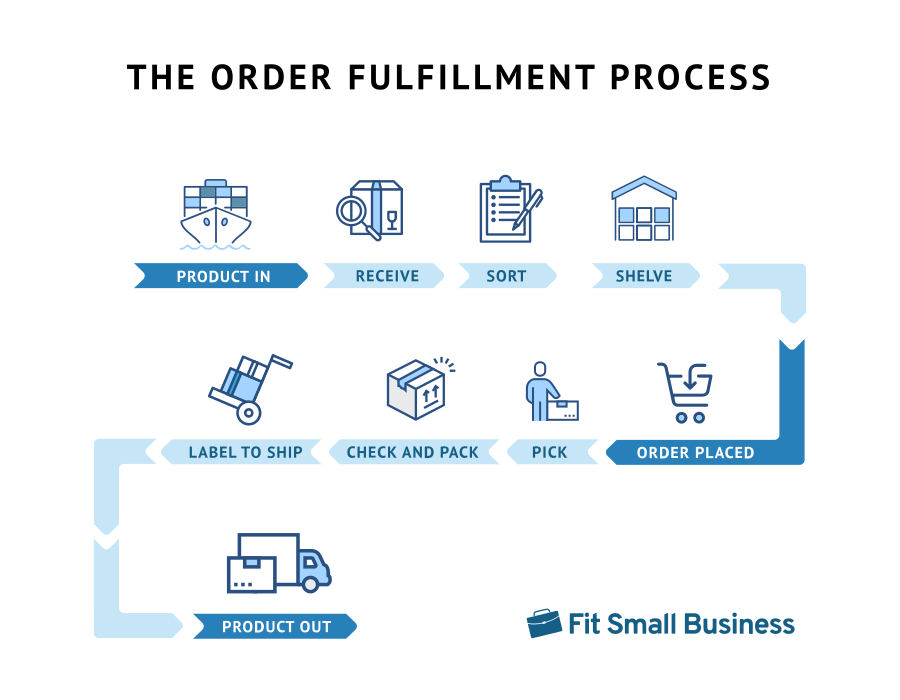
Order fulfillment starts with receiving inbound wholesale shipments, sorting stock, and shelving inventory for efficient picking and packing.
Then, as orders come in, products are picked, inspected for quality and accuracy, packed, and labeled for shipment. Returns management (or reverse logistics) is often considered an extension of the fulfillment process.
If you’re doing in-house fulfillment, all of these steps will be completed in your facility—whether it’s a warehouse, storage unit, garage, or other space. If you outsource the fulfillment process (or use dropshipping), your fulfillment company will complete these steps.
We will explore those different fulfillment strategies below.
Order Fulfillment Strategies
There are four primary strategies for handling order fulfillment:
- In-house order fulfillment
- Third-party order fulfillment
- Dropshipping
- Hybrid fulfillment solution
| PROS | CONS |
|---|---|
| Cost-effective | Hard to scale up or scale down |
| Offers complete control | Time-consuming |
| High upfront cost | |
In-house order fulfillment is when businesses manage their warehouse and shipping operations, typically with their own facility, equipment, and staff.
This method is generally best for:
- Small businesses processing fewer than 10 orders per day
- Well-funded, established operations seeking end-to-end control
- Businesses experimenting with different product offerings, sources, and processes
- Full-time store owners
| PROS | CONS |
|---|---|
| Fast delivery | Onboarding process |
| Save on shipping | Less control / personal oversight |
| Easy to scale up and down | Minimum order requirements |
| Easily adapt to seasonality | |
Businesses can outsource fulfillment to order fulfillment companies or larger third-party logistics companies.
Fulfillment companies specialize in inventory management, order processing, and shipping—so they handle all of these tasks for you with advanced infrastructure and guaranteed accuracy.
This method is best for:
- Growing small businesses processing 10+ orders per day (this is when outsourced fulfillment starts to be cost-effective)
- Solopreneurs busy managing their marketing, product sourcing, and development
- Multipreneurs needing to dedicate time to other ventures
- Part-time store owners who work a separate job
| PROS | CONS |
|---|---|
| No up-front inventory costs | Less control over product and fulfillment process |
| No warehouse or storage fees | Smaller profit margins |
| Saves time | Longer delivery times |
Dropshipping involves a third party but is different from using a fulfillment center. In the dropshipping business model, suppliers handle every step of the order fulfillment process. The seller doesn’t keep any inventory in stock. Instead, online stores that use dropshipping forward each order (along with payment) to the supplier as the orders come in. The supplier then packs and ships the merchandise to the customer.
Dropshipping is a good option for:
- Entrepreneurs looking to start a low-risk operation with a minimal investment
- Retailers wanting to test a new concept or product category
- Part-time sellers who can only manage an online store for a limited number of hours each week
- Established online stores seeking to expand their offerings
.cls-1{fill:#155E85;fill-rule:evenodd;}
Interested in dropshipping? Read our guide to starting a dropshipping business.
| PROS | CONS |
|---|---|
| Flexibility; easily add products or change direction | Lots of moving parts |
| Cost-effective | Time-consuming |
A hybrid approach to order fulfillment combines some (or all) of the above order fulfillment methods. Hybrid fulfillment is a popular solution for growing businesses because it offers a lot of flexibility.
For example, you can use in-house fulfillment for custom products or items that need assembly—such as gift baskets. You can supplement it with outsourced fulfillment for non-custom items that are steady sellers or to help manage seasonal sales spikes without expanding your warehouse.
In addition, you can use dropshipping to test potential new additions to your store before investing in a bulk wholesale order.
The hybrid option is best for:
- Retailers experimenting with new processes, products, channels, and concepts
- Full-time sellers with the available resources to manage multiple fulfillment methods
- Brick-and-mortar stores expanding into online sales
How to Choose an Order Fulfillment Strategy
- Measure Your Sales: Once you are consistently processing more than 10 daily orders, you are a candidate for outsourcing your fulfillment.
- Anticipate Future Growth: Once you hit the 10 orders per day threshold, consider your growth plans and whether your orders’ volume or complexity will change significantly in the near future. Outsourced fulfillment is much easier to scale quickly than expanding a personal warehouse or storage solution, software, and personnel.
- Identify and Locate Your Customers: Whether in-house or outsourced, ideally, your fulfillment center is located near your customers to minimize shipping time and fees.
Continue reading about the different fulfillment strategies:
- In-house vs Outsourced Fulfillment
- Dropshipping vs Fulfillment Companies
- How do Fulfillment Centers Work?
Why Is Order Fulfillment Important?
Beyond basic functionality, optimizing order fulfillment strategies is critical to ensure timely, cost-effective delivery. In fact, delivery windows influence 68% of purchase decisions, and many consumers want free shipping these days.
So, your order fulfillment strategies actually impact your bottom line—making it even more important to pay extra attention to your internal processes.
In short, order fulfillment is important because an effective fulfillment strategy will:
- Improve the customer experience through faster delivery times and choice of fulfillment options
- Lower operational and shipping costs
- Provide the infrastructure you need to grow
Order Fulfillment Best Practices
Whichever fulfillment strategy you choose, there are a few steps you can take to streamline your operations:
Dial in Your Inventory Management
Being able to fulfill orders quickly and efficiently also requires having the right products in the right places at the right time.
Make sure you have a strong foundation for your inventory management process. You should have accurate product and vendor information, a system for tagging and labeling products, real-time stock updates, an established process for regular inventory counts, and a process for handling damaged or returned goods.
Once your foundation is in place, use your product data by analyzing retail inventory metrics like turnover ratios and carrying costs.
Organize Your Warehouse Efficiently
If you’re outsourcing your fulfillment, your fulfillment partner likely has warehouse optimization down to a science. However, if you’re using an in-house or hybrid approach, optimizing your warehouse layout can significantly speed up the picking and packing process and inventory counts.
In addition to product storage, you’ll need to dedicate space for picking and packing orders, receiving shipments, and outbound shipping.
Anticipate Demand
Having the right product in the right places to fulfill orders quickly requires a lot of planning. You’ll need even more detailed planning if you have multiple fulfillment centers or locations.
Most sophisticated inventory management software, and even some retail point-of-sale (POS) systems like Shopify and Lightspeed, can help you automate demand forecasting so that you always have enough stock.
Maintain Strict Quality Control Practices
Whether you’re fulfilling orders in-house or through a fulfillment company, ensure all products are inspected as they are received and before they are shipped to customers. These checks should be systematized and documented for future reference.
In addition to inspecting individual products, your team or fulfillment partner should check orders against the packing slip or online order before being sealed up for shipping. Accidentally sending the wrong item is frustrating for customers. In addition to creating a poor customer experience, you’ll also spend time and money correcting the order and shipping out the right product.
Finally, standardize your packing procedures so that items are shipped safely and securely. Receiving a broken item is just as frustrating as receiving the wrong product. You can learn more in our guide to packing materials.
Not Sure Where to Start? Use These SOPs
If you’re unsure where to start, use our ecommerce shipping and handling standard operating procedure (SOPs) as a starting point. You can tailor them to fit the needs of your operation.
Order Fulfillment Challenges for Small Businesses
Fulfillment has some challenges you’ll need to navigate year after year, alongside unique obstacles brought about by specific events or environments. Here are some important factors to remember as you manage your fulfillment process.
The COVID-19 pandemic caused an increase in ecommerce demand and a shortage of labor, equipment, materials, and space—which culminated in a major supply chain crunch expected to impact retailers well into the future. And we still feel the effects nearly three years later.
Widespread and local supply chain disruptions are nothing new; they can result from natural disasters, political instability, transportation failures, cyber-attacks, and market fluctuations.
It’s best to be proactive about issues that could hinder your fulfillment operation. Here are some tips for handling disruptions and maintaining a resilient supply chain:
- Build inventory: Have a backstock of essential products that can support your business’ sales through multiple months of disruption.
- Identify backup suppliers: If your primary vendor cannot provide the goods you need, have backup suppliers available to avoid running out of stock. It’s best to build relationships with your secondary suppliers and even order a portion of your inventory from them throughout the year.
- Communicate with your customers: Transparency is key in retaining customers through a supply chain crunch. Be upfront with shoppers about delays and other problems and offer solutions to improve their experience.
- Optimize your safety stock: Figure out how much inventory you need on hand to meet demand without surplus or stockouts.
The holidays drive a significant increase in retail demand. It’s vital to keep up with the chaos as winter holidays bring order volume fluctuations and shipping and sourcing delays. Here are some helpful tactics:
- Stock sufficiently: To avoid backorders and lost revenue, ensure you order sufficient stock well in advance by forecasting demand for upcoming holidays.
- Outsource: It can be difficult to handle seasonal demand without bringing on additional staff and expanding your warehouse space. But these extra resources come along with the need for training, payroll, management, and trimming fat when business slows down in January. Before the holidays ramp up, consider outsourcing all or a portion of your fulfillment to a third-party company with scalable infrastructure to meet changing demand.
- Automate: For smaller businesses that don’t want to scale up for the holiday season or outsource to a fulfillment center, consider investing in software like Ordoro that can automate many of the labor-intensive tasks involved in fulfillment.
Many independent online stores only offer domestic shipping, but you still might have the occasional shopper from Canada or Great Britain who can’t live without your product. Or, you may wish to offer international shipping to broaden your customer base.
In any event, you have multiple options for fulfilling international orders. Consider using International Priority from USPS—it coordinates very well with Canada Post, Royal Mail, and many other international postal systems.
Order Fulfillment Frequently Asked Questions (FAQs)
Why Do Retailers Outsource Fulfillment?
Though order fulfillment is a simple logistical process, it can be time-consuming and labor-intensive. Plus, the infrastructure required to handle fulfillment efficiently (such as an industrial warehouse and ample staff) is too expensive for many small retailers.
New and growing companies often choose to outsource order fulfillment or use dropshipping. In contrast, more established businesses find that having operations in-house provides more control and can help them save on order fulfillment costs.
Where Can I Find an Order Fulfillment Warehouse?
You can find an order fulfillment warehouse in this list of the best order fulfillment companies for small businesses.
What Is Order Fulfillment Rate?
Order fulfillment rate, or fill rate, is a metric that demonstrates a business’s ability to fulfill orders from available stock. To calculate fill rate, divide the number of orders processed by the total number of orders received. The higher the number, the better.
What Does It Mean When an Order Is in Fulfillment?
When an order is in fulfillment, it is either being processed, packed, or shipped.
What Does Order Fulfillment Mean?
Order fulfillment is the process of storing goods, packing orders, and shipping products to buyers. It encompasses everything that happens after a customer places an order up to when they receive it.
Bottom Line
Accurate and timely order fulfillment is the lifeblood of a successful ecommerce operation. To stay ahead of your competition, you must understand the entire order fulfillment process, embrace efficient habits, and manage costs end-to-end.
There are many ways to get orders into the hands of your customers, and often, a mix of fulfillment solutions is the best choice for a growing business. So, as you grow, look for flexible, as-needed fulfillment options that let you expand your capacity while controlling costs.
