







Even the most tactical content won’t perform well if it doesn’t reach (enough of) the right prospects. As such, building email contact lists for marketing is foundational to success if you want to generate leads and sales with email marketing. However, getting people to opt in to your list isn’t always straightforward—people want to know what’s in it for them.
Below, you’ll find a dozen tried-and-true ways for how to get email lists for marketing. Find out how to leverage tools you already have with strategies that will get the sign-ups you need to gather email contacts and promote your small business.
- 1. Gather Email Addresses at the Point of Sale
- 2. Create Forms on Your Website
- 3. Use Website Pop-ups
- 4. Create Splash Pages
- 5. Extend Coupon or Discount Incentives
- 6. Leverage Social Media Tools
- 7. Drive Traffic to Email Registration Landing Pages
- 8. Create a Loyalty Program
- 9. Incentivize Customers With a Referral Rewards Program
- 10. Use Giveaways to Entice Users to Sign Up
- 11. Create Gated Content
- 12. Host or Sponsor Webinars
- Best Practices for Building Email Marketing Lists
- Frequently Asked Questions (FAQs)
- Bottom Line
1. Gather Email Addresses at the Point of Sale
One of the simplest yet highly effective methods to grow your email list is by collecting email addresses at the point of sale. What makes this a great strategy is that the contacts you’ll capture are individuals who are already engaging with your brand.
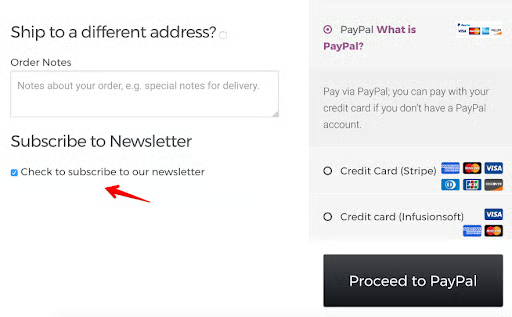
Offering customers the option to subscribe during the purchase process can look different among platforms. Physical stores can ask for a manual sign-up with a paper form or a QR code. Ecommerce stores can simply have features in the point-of-sale system, like a checkbox that customers can tick if they want to receive marketing email blasts upon checkout.
2. Create Forms on Your Website
Once you make a small business website, you’ll have vast opportunities to collect leads and contact info. A consulting or services business might have call-to-action buttons where site visitors can sign up for a free trial or consultation. Ecommerce sites can also offer exclusive offers to encourage sign-ups.
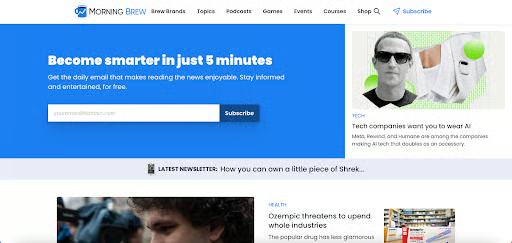
Morning Brew’s homepage is an excellent example of how to use a business website to collect email addresses. The compelling heading can encourage site visitors to input their email address even if they’re on the website for a different purpose.
3. Use Website Pop-ups
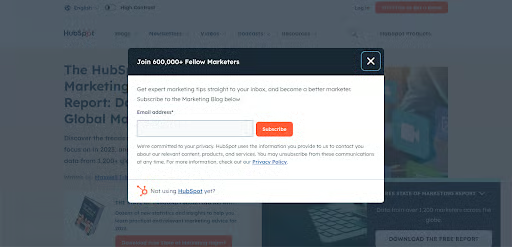
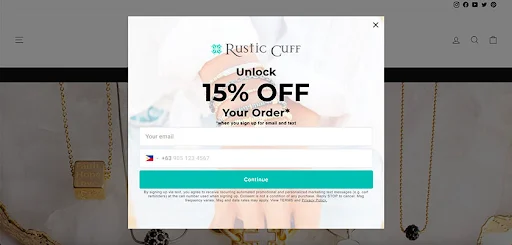
Pop-ups are the handy little windows or overlays that appear on your website. They are commonly used to get email sign-ups as part of permission-based email marketing strategies, and are versatile in targeting a wide range of website visitors, from first-time guests to loyal customers.
These are triggered by various user interactions like time spent on a page, exit intent, or scrolling. Website pop-ups, when used thoughtfully, can significantly boost your email list growth since they capture the interest of visitors before they leave your site.
Customize pop-ups with compelling offers or content teasers to encourage sign-ups. With that in mind, keep your messaging clear and concise to resonate with any audience. Be mindful not to overdo it; timing and relevance are key.
4. Create Splash Pages
A splash page serves as a dedicated entry point for site visitors interested in a website or landing page. These pages are designed to capture visitor attention immediately and encourage them to take a specific action, such as subscribing to your email list.
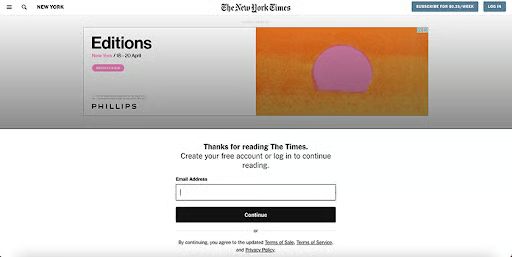
To use splash pages to collect email addresses, you need to prominently display your sign-up form. Ensure the content aligns with visitors’ expectations, delivering what you promised and leaving a positive impression. The New York Times does this in a straightforward manner by thanking readers for going to the page but asking for their email address to move forward.
5. Extend Coupon or Discount Incentives
Incentives are a powerful tool for enticing visitors to join your email list, and using coupon marketing is one of the most common strategies for building email lists for marketing. Offer something valuable in exchange for their email address, such as a discount on the first order, a free gift with purchase, free shipping, or some other type of coupon. (Aside from collecting emails, this strategy also helps encourage purchases.)
6. Leverage Social Media Tools
Social media marketing is more than just a strategy to interact with your target audience—it is also a reliable channel for increasing leads, conversion, and even email contacts. Collecting emails on social media can be done organically using in-profile email sign-up buttons, content with links to an email sign-up landing page, and Messenger chatbots that can guide users through the sign-up process.
The paid option (social media advertising), on the other hand, relies on paid ads to collect emails. This is usually recommended for businesses without a large social media following since ads will allow them to better reach their target audience.
7. Drive Traffic to Email Registration Landing Pages
A landing page is a dedicated page people are directed to when they click on an ad or respond to a marketing campaign. One of the biggest takeaways of how to create a landing page that converts is to ensure that there is one clear call to action. Use pay-per-click (PPC) ads on platforms like Google and Microsoft (Bing) to bring in traffic to these landing pages.
To make email registration the main call to action (CTA) on your landing page, show the email sign-up form as the highlight of the page. You can play around with sizing, choose a distinct website color palette, or even explore different web page styles to achieve this. At the same time, write your landing page copy to support the CTA by highlighting the value of what you offer once they sign up.

8. Create a Loyalty Program
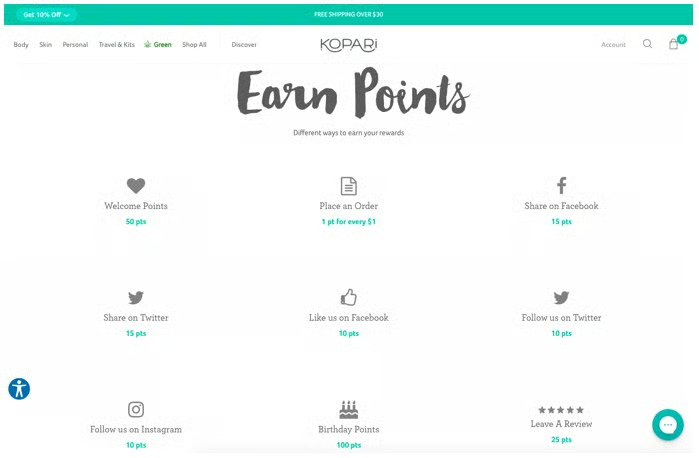
Creating a loyalty program not only increases customer purchase frequency, it is also an amazing opportunity to add people who already trust your brand to your contact list. A way to do this is by asking permission to send the loyalty program content (and other marketing emails) straight to their emails at the end of every purchase.
Marketers can also use loyalty programs to achieve other marketing goals. For example, businesses can award points to people who like their social media profiles or leave reviews on Google.
9. Incentivize Customers With a Referral Rewards Program
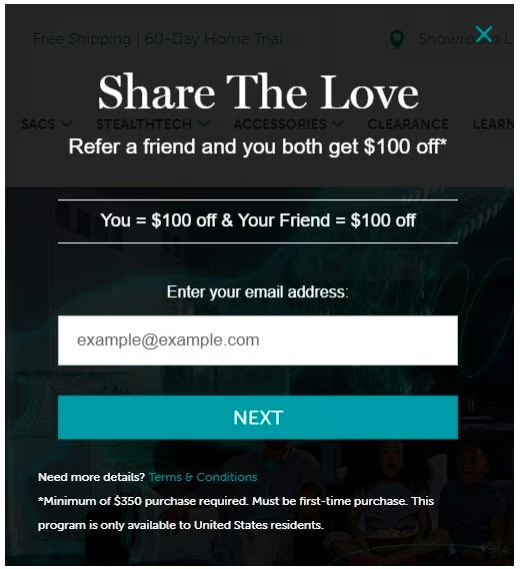
Getting referrals helps you find new prospects who are already similar to your customers in terms of demographics. Referral rewards such as discounts, gifts, or vouchers will incentivize customers to do word-of-mouth marketing for your business.
This strategy will help you reach more people and, at the same time, strengthen brand presence since it will be directly recommended by current customers.
10. Use Giveaways to Entice Users to Sign Up
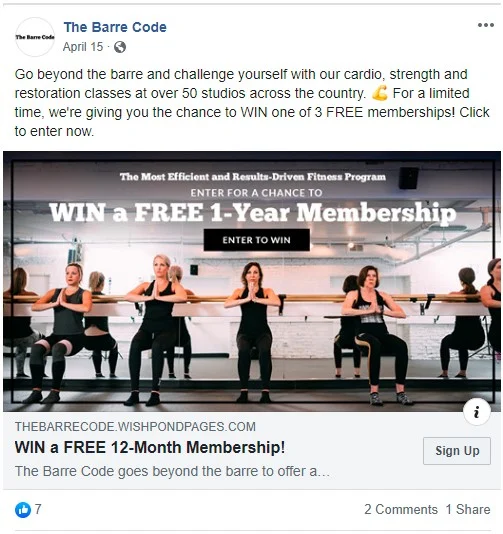
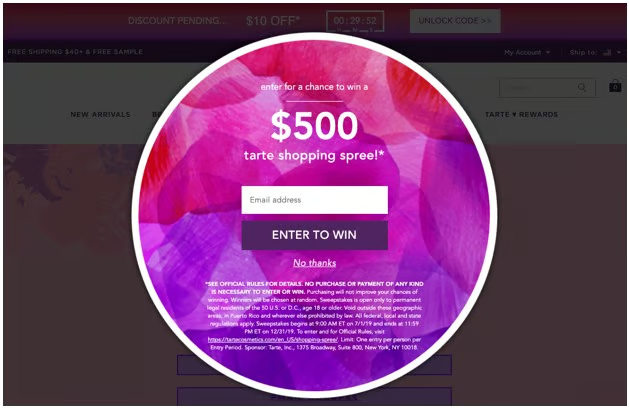
Giveaways are an excellent marketing strategy since it can help you achieve different marketing goals while establishing a positive impression on your target audience. A giveaway can be done both in-store and online. For in-store giveaways, it can be as straightforward as providing basic contact information like a name and email address to enter the giveaway.
For online giveaways, it’s common to use social media as the platform for sharing the terms and conditions of the giveaway. However, you can also promote the giveaway directly on your website for more visibility. It can also be as simple as needing an email address to join the giveaway, but you can expand this strategy by adding in other sign-up requirements like following your social media pages or commenting on a post.
11. Create Gated Content
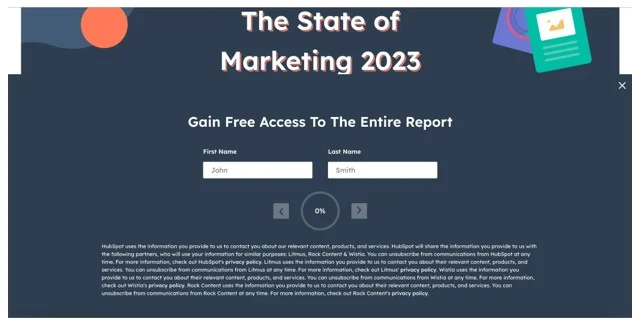
After creating a search engine optimization (SEO) content plan, use the content—such as whitepapers, e-books, exclusive reports, or templates—to help build your email list by requiring users to submit an email address before they can access the material. This strategy is fantastic for businesses that, aside from wanting to grow their email marketing lists, aim to create credibility for their brand by positioning themselves as a reliable source.
To use gated content to grow your email list, remember to prioritize quality over quantity. It may be tempting to create general content to have as many people sign up as possible, but the success of this strategy relies on the relevance of your content and the quality of people who sign up. Ensure that the content you create will be targeted toward a qualified audience—a good example is HubSpot’s State of Marketing Report for marketers.
12. Host or Sponsor Webinars
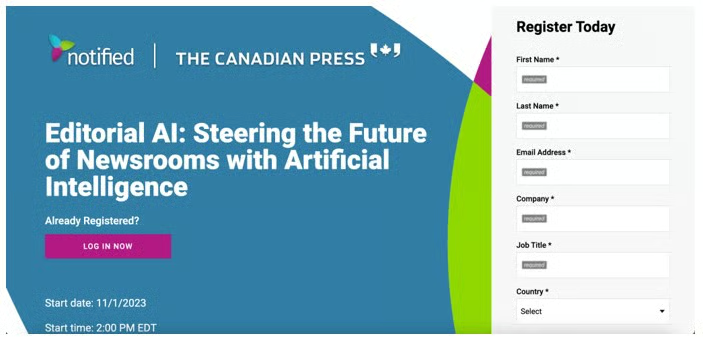
Businesses can create and host their own webinars for current and prospective customers, which typically require users to sign up in advance with their name and contact information. See to it that your topics are timely and valuable to your target audience to ensure that you get quality contacts as well.
If hosting a webinar proves to be too difficult or time-consuming for you, another approach is by sponsoring webinars hosted by others or contributing as an expert. This can reward you with the list of email registrants for the event, which can be used as the foundation for your email lists for marketing.
Best Practices for Building Email Marketing Lists
Not all email list-building strategies will work for every business. In fact, it is highly dependent on your target audience, their preferred methods of contact, your industry, and other external factors. But, no matter what strategy you use to build your email list, there are ground rules you can follow to ensure that you get a high-quality marketing email list that grows over time.
If you get only one takeaway from this section, it’s to focus on quality over quantity. Providing good, quality content is perhaps the most important email marketing best practice. It’s tempting to chase large numbers, but a list filled with disinterested or unengaged subscribers won’t help you reach your email marketing goals. At this point, if you cast too big of a net, you would need to spend your campaigns and resources on people who are unlikely to convert.
With that in mind, here are the dos and don’ts for how to build an email list for marketing and the best tools you can use.
Dos & Don’ts for Email List Building
| Dos | Don'ts |
|---|---|
| Offer valuable (but relevant) incentives for subscribing | Buy or rent email marketing lists |
| Place sign-up forms strategically on your site | Bombard subscribers with too many emails |
| Use exit-intent pop-ups | Make it challenging to unsubscribe |
| Maintain a consistent and predictable email schedule | Send emails without permission or consent |
| Be transparent about privacy policies and usage | Ignore feedback or unsubscribe requests |
| Segment your contact lists based on sales pipeline stages, list preferences, and more | Send irrelevant emails (e.g., prospect blasts to customers) |
Best Tools for Getting Email Addresses for Marketing
From point-of-sale email collection to landing pages, we have covered a range of options that you can explore to build your own email list for marketing. To make it even easier, we’ve rounded up a few tools that you can use for a quicker setup or better tracking.
- Mailchimp offers unlimited free sign-up forms including embedded forms and pop-up forms. This is why it’s our recommended option for the best free website builder with integrated email marketing tools.
- Square is our top choice for the best point-of-sale systems and includes email collection for in-store purchases.
- Google Workspace contains Webinar registration tools, like Google Forms, to help you come up with a list of email addresses upon sign-up.
- HubSpot is leading our best landing page builders. It is free and integrated with its own email marketing software.
- Facebook allows businesses to have call-to-action buttons on their posts, ads, and even right on their profiles. Use the “Sign Up” button to collect emails.
Frequently Asked Questions (FAQs)
Can I build an email list for free?
Yes, you can start building an email list for free by using email marketing platforms that offer free plans or trials. Many providers like MailerLite, Mailchimp, and HubSpot offer limited free options with basic features, making it accessible for businesses to begin collecting email addresses at no initial cost.
How do I get bulk email addresses for marketing?
Build your bulk email marketing list organically through website sign-up forms, social media promotions, and giveaways or gated content. Remember that building an email contact list must be done ethically and in compliance with privacy laws. Avoid purchasing email lists, as it can result in low-quality contacts and legal issues.
Do I need a website to build an email contact list?
While having a website is beneficial for email list building, it’s not an absolute requirement. You can collect email addresses through social media and events and in store with the email marketing list building strategies we listed in this article. However, a website offers a centralized platform for sign-up forms and can be helpful in building your contact list faster.
Bottom Line
There are plenty of ways to build email lists for marketing, like having sign-up forms on your website or building email registration landing pages. Just remember that although there are multiple ways to add people to your contacts, the key to building a strong email marketing list is not about the number of sign-ups. Instead, use these strategies tactically to target people who are already showing interest in your brand or are likely to convert.
Ready to get started today? Try Mailchimp. Starting for free (up to 500 contacts), you can grow your contact list with web forms, pop-ups, landing pages, and more.
