





The best credit card readers for iPhone give small businesses a quick way to accept payments without committing to a full countertop POS setup. All seven providers in this guide support Tap to Pay on iPhone, which means you can accept contactless cards and digital wallets directly on a compatible iPhone. A separate reader can still be worth buying if you need chip, swipe, PIN, offline, or other payment options that Tap to Pay alone may not cover.
Square is my top choice for most small businesses because you can start with free POS software and Tap to Pay, add its $59 mobile reader when needed, and continue using the same system as your business adds inventory, staff, online sales, or more advanced POS hardware. Square currently charges 2.6% + 15 cents for Tap to Pay and standard in-person transactions on its free plan.
I evaluated 13 providers using a 25-point rubric and selected these seven as the strongest fits for small businesses using an iPhone for in-person payments.
- Best credit card readers for iPhone at a glance
- Comparing the best credit card readers for iPhone
- Square
- Shopify POS
- Clover Go
- PayPal POS
- Payanywhere
- SumUp
- Helcim
- How to choose the best credit card reader for your iPhone
- Methodology: How I evaluated the best credit card readers for iPhone
- Bottom line
- You might also like
Best credit card readers for iPhone at a glance
Provider | Best for | Starting monthly software fee |
|---|---|---|
| Square | Best overall credit card reader for iPhone | $0 |
| Shopify POS | Ecommerce businesses adding in-person sales | $5 |
| Clover Go | Businesses that want to grow into a full Clover POS | Contact sales |
| PayPal POS | Solopreneurs and occasional sellers | $0 |
| Payanywhere | Mobile sellers that need offline payment tools | $0 |
| SumUp | Simple, low-volume card acceptance | $0 |
| Helcim | Growing businesses wanting interchange-plus pricing | $0 |
Comparing the best credit card readers for iPhone
Provider | Key features | Physical reader | In-person processing | My score out of 5 |
|---|---|---|---|---|
| Square | Tap to Pay; offline payments; free POS | $59 | From 2.6% + 15 cents | 4.83 |
| Shopify POS | Tap to Pay; ecommerce sync; multichannel inventory | $49 | From 2.4%-2.6% + 10 cents on core plans | 4.54 |
| Clover Go | Tap to Pay; Clover ecosystem; offline tools | Contact sales | 2.6% + 10 cents | 4.42 |
| PayPal POS | Tap to Pay; free POS app; fast PayPal access | $29 first reader; $79 additional | 2.29% + 9 cents | 4.30 |
| Payanywhere | Tap to Pay; offline transactions; fast funding | $77.95 | 2.69% | 4.18 |
| SumUp | Tap to Pay; simple app; low-cost reader | $54 | 2.6% + 10 cents | 4.13 |
| Helcim | Interchange-plus; Tap to Pay; volume discounts | $199 | Interchange + 0.40% + 8 cents* | 4.04 |
*Helcim adds 10 cents per successful Tap to Pay on iPhone transaction.
How I chose the best credit card readers for iPhone
I compared 13 payment providers across 25 weighted data points and selected the seven that performed best for small businesses accepting payments from an iPhone. I fact-checked current pricing, card reader features, Tap to Pay support, account tools, payment options, contract terms, and ease of setup using provider documentation.
Because every provider on this list now offers Tap to Pay on iPhone, I also considered whether buying its physical reader gives you meaningful benefits beyond contactless payments, such as chip or swipe acceptance, offline transactions, PIN entry, or a stronger path into a full POS system. See my full methodology below for the scoring breakdown.
Why you can trust Fit Small Business
Fit Small Business follows a strict editorial policy for researching and evaluating products for small businesses. For this guide, I applied the same weighted scoring criteria to each provider and checked pricing, iPhone payment options, physical reader features, account tools, and contract terms against first-party sources.
I have more than four years of experience evaluating POS and payment systems and more than a decade of ecommerce experience, including marketplace selling, inventory operations, payment processing, and third-party fulfillment. I have attended product demos with Square and Helcim, and as Fit Small Business' resident ecommerce expert, I regularly evaluate Shopify's ecommerce and in-person selling tools.
Why I chose Square
Square earned the highest score in my evaluation because it gives small businesses several ways to start accepting payments from an iPhone without adding much overhead. You can use Tap to Pay on iPhone without buying a reader, pair your phone with the $59 Square Reader for contactless and chip payments, or add more Square hardware later. Square's second-generation Reader connects wirelessly, accepts EMV chip cards and NFC payments, and can take offline payments for up to 24 hours under Square's offline payment terms.
What separates Square from simpler card readers is everything around the payment. Its free POS includes item management, reporting, customer tools, and online payment options, while paid plans add more operational and marketing features. Square actually ranked first in our buyer’s guide for best credit card readers overall.
Square is a better fit than SumUp if you expect your payment setup to eventually become a larger POS system. Helcim may be more appealing once processing volume grows enough for interchange-plus pricing to outweigh Square's flat rates.
Square pricing
- Monthly fee: $0
- In-person (including contactless): 2.6% plus 10 cents tap, dip, or swipe
- Keyed-in: 3.5% plus 15 cents
- Online, recurring, and invoicing: 2.9% plus 30 cents
- Chargeback fee: Waived up to $250 per month
- Free POS software
- Next-day funding, same-day with fee
- Card reader: $0 to $49 for chip and tap (one free swipe reader)
- Accepts tap, dip, Apple Pay, Google Pay, and other NFC payments
- Offline payment processing
Square hardware
Monthly software fees
- Square Free: $0 per location
- Square Plus: $49 per month, per location
- Square Premium: $149 per month, per location
- Square Pro: Custom pricing
Processing rates
- Square Free, tap, dip, or swipe: 2.6% + 15 cents
- Square Plus, tap, dip, or swipe: 2.5% + 15 cents
- Square Premium, tap, dip, or swipe: 2.4% + 15 cents
- Manual entry/card on file: 3.5% + 15 cents
- Tap to Pay on iPhone with Square Free: 2.6% + 15 cents
Hardware
- Square Reader for contactless and chip: $59
- Tap to Pay on iPhone: No reader required
Standout features
- Tap to Pay on iPhone: Square supports contactless cards, Apple Pay, and other digital wallets directly on an iPhone XS or newer running a supported version of iOS. No separate reader is required.
- Offline payments: Square Reader can continue accepting eligible payments during an internet outage and upload them after the connection returns. Square currently allows offline payments for up to 24 hours, subject to its offline-payment conditions.
- Scalable POS software: You can start with basic checkout and later add advanced inventory, ecommerce, appointments, restaurant tools, marketing, payroll, loyalty, and additional hardware.
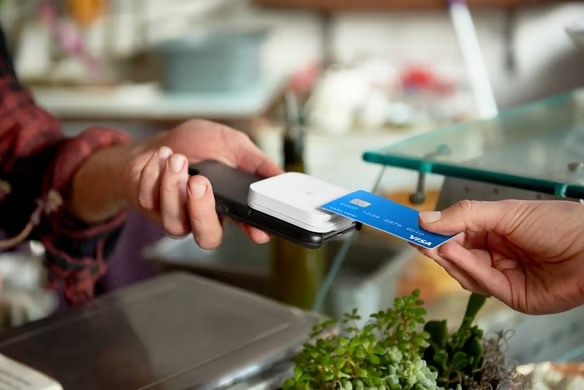
Square's $59 reader pairs with an iPhone for chip and contactless payments. (Source: Square) 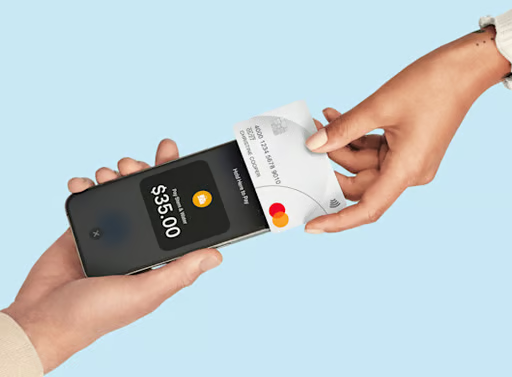
Tap to Pay on iPhone lets Square merchants accept contactless payments without a separate reader. (Source: Square)


Why I chose Shopify POS
Shopify is my pick for merchants that already sell online or expect ecommerce to remain a major part of the business. I have worked with Shopify and ecommerce operations for more than a decade, and its biggest advantage is the connection between the website and POS rather than the reader itself. Inventory, orders, products, and customer data can move through the same commerce system instead of requiring a separate online and in-store setup.
You can start accepting contactless payments with Tap to Pay on iPhone and add Shopify's $49 Tap & Chip Reader for chip transactions. Shopify’s Tap to Pay works on every Shopify POS plan with Shopify Payments and can prompt for PIN entry when a transaction requires it. Tap to Pay itself requires an internet connection.
Square is the better option if your priority is a free general-purpose POS. Shopify makes more sense if ecommerce is already central to the business and you want your iPhone checkout to share the same products, inventory, customers, and orders.
Shopify POS pricing
Monthly software fees
- Starter: $5 per month
- Basic: $39 per month when billed monthly, or $29 per month billed annually
- Grow: $105 per month when billed monthly, or $79 per month billed annually
- Advanced: $399 per month when billed monthly, or $299 per month billed annually
- POS Pro: Additional $89 per month, per location
Basic POS functions are included with paid Shopify plans. POS Pro adds more advanced retail inventory, staffing, customer, and reporting tools.
Processing rates
For the main ecommerce plans, Shopify currently lists:
- Basic in-person: 2.6% + 10 cents
- Grow in-person: 2.5% + 10 cents
- Advanced in-person: 2.4% + 10 cents
Shopify's Starter may cost less per month but has a much higher 5% in-person rate, so Starter makes the most sense for very light or social selling rather than regular retail volume.
Hardware
- Shopify Tap & Chip Reader: $49
- Tap to Pay on iPhone: No additional hardware required
Standout features
- Unified commerce: Shopify is particularly strong at keeping online and in-person products, orders, inventory, and customer data together.
- Tap to Pay with PIN support: Shopify states that transactions requiring a PIN automatically display a PIN-entry screen while using Tap to Pay on iPhone.
- Low-cost physical reader: The $49 Tap & Chip Reader connects through Bluetooth or USB and accepts chip and contactless payments.
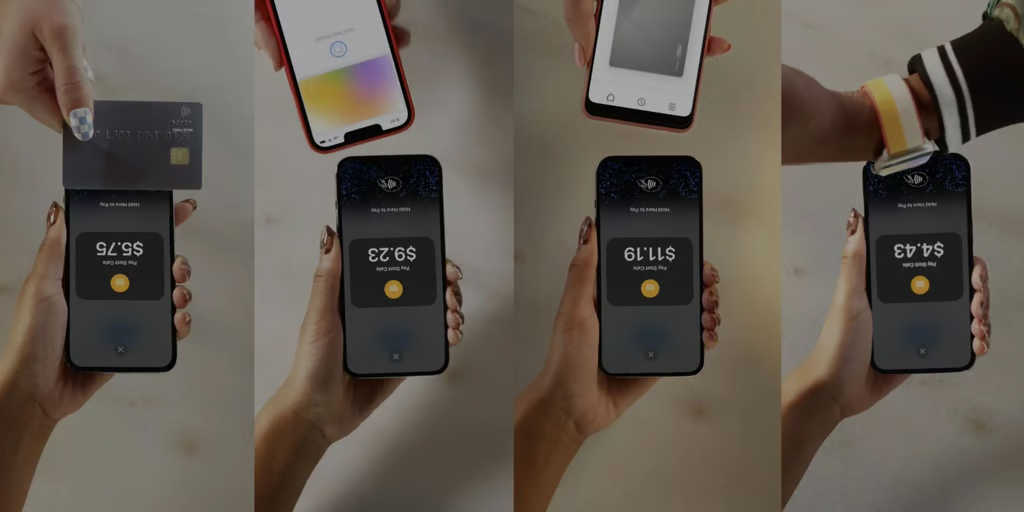
Shopify merchants can accept contactless payments directly from a compatible iPhone. (Source: Shopify) 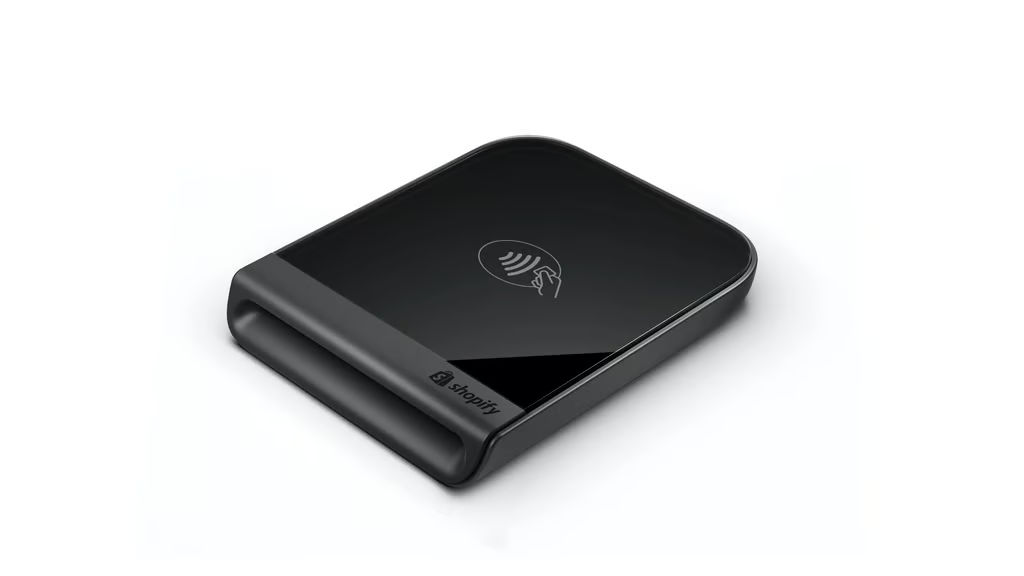
Shopify's $49 Tap & Chip Reader pairs with Shopify POS for mobile checkout. (Source: Shopify)


Why I chose Clover Go
Clover Go makes the most sense if you want a mobile iPhone payment setup now but expect to move into a larger Clover setup later. The same ecosystem extends from the Clover Go app and mobile reader to handheld and countertop POS devices, which gives growing businesses more hardware choices than payment-only services.
You can also skip the reader and use Tap to Pay on iPhone for contactless cards and digital wallets. Clover currently supports iPhone XS and newer devices and requires an internet connection. One limitation is that Clover explicitly states that PIN is not currently supported through Tap to Pay on iPhone, so businesses that regularly accept PIN debit should keep a physical reader or another payment device available.
Clover Go pricing
- Payments: $0 per month
- Card-present: 2.6% + 10 cents
- Keyed-in: 3.5% + 10 cents
- Clover Go hardware: $49 plus software fee
- Tap to Pay on iPhone: No additional hardware required.
Standout features
- Path into Clover hardware: Businesses can start with an iPhone and later add Clover handheld, countertop, and other POS devices.
- Tap to Pay on iPhone: Clover Go can accept contactless credit and debit cards, Apple Pay, and other digital wallets without a separate reader.
- Business management tools: Clover adds invoicing, recurring payments, sales tracking, employee management, inventory tools on eligible plans, and access to its app marketplace.
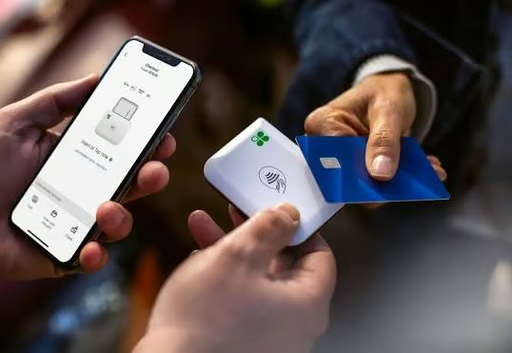
Clover Go turns an iPhone into a mobile checkout with an optional card reader. (Source: Clover) 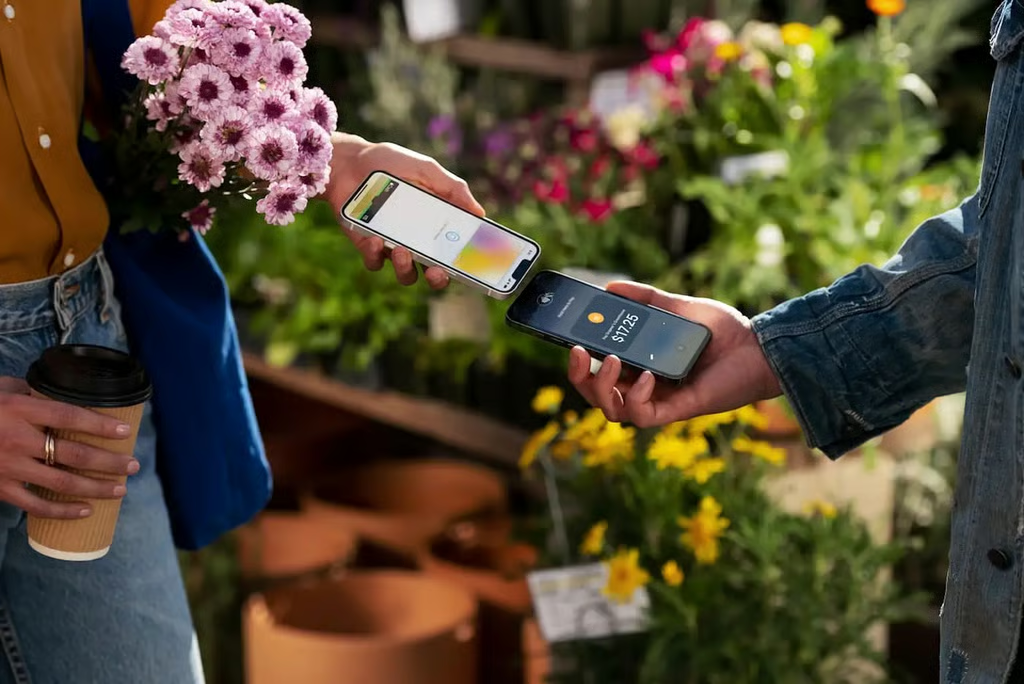
Clover Go also supports hardware-free contactless payments through Tap to Pay on iPhone. (Source: Clover)


Why I chose PayPal POS
PayPal POS is a good fit for solopreneurs, freelancers, event sellers, and small businesses that already use PayPal and want a simple way to take occasional face-to-face payments. There is no monthly POS subscription, and eligible new business users can purchase their first PayPal Card Reader for only $29.
The POS app includes payments, inventory, reporting, discounts, and staff tools, while sales become available in the merchant's PayPal business account. You can also use Tap to Pay from a compatible iPhone if you do not need separate hardware.
PayPal is less compelling for a busy storefront that needs stronger offline or retail management functions. Square offers more depth at the same $0 monthly starting price, while Shopify is better if online and in-person inventory need to stay closely synchronized.
PayPal POS pricing
Monthly software fee
- PayPal POS app: $0
- No startup fee
- No required monthly subscription
- No long-term commitment
Processing rates
- Card-present: 2.29% + 9 cents
- Manual card entry: 3.49% + 9 cents
- QR code: 2.29% + 9 cents
- PayPal invoice payment: 3.49% + 49 cents
- Card/alternative payment invoice: 2.99% + 49 cents (PayPal)
Hardware
- First PayPal Card Reader: $29 for eligible new business users
- Additional readers: $79 each
Standout features
- Low-cost first reader: The $29 new business offer gives occasional sellers a low-cost route into chip and contactless acceptance.
- Tap to Pay: Merchants can use the PayPal POS app to accept contactless payments without buying a separate card reader.
- PayPal account access: POS proceeds become available through the business's PayPal account, which is useful if PayPal is already part of the business's payment flow.
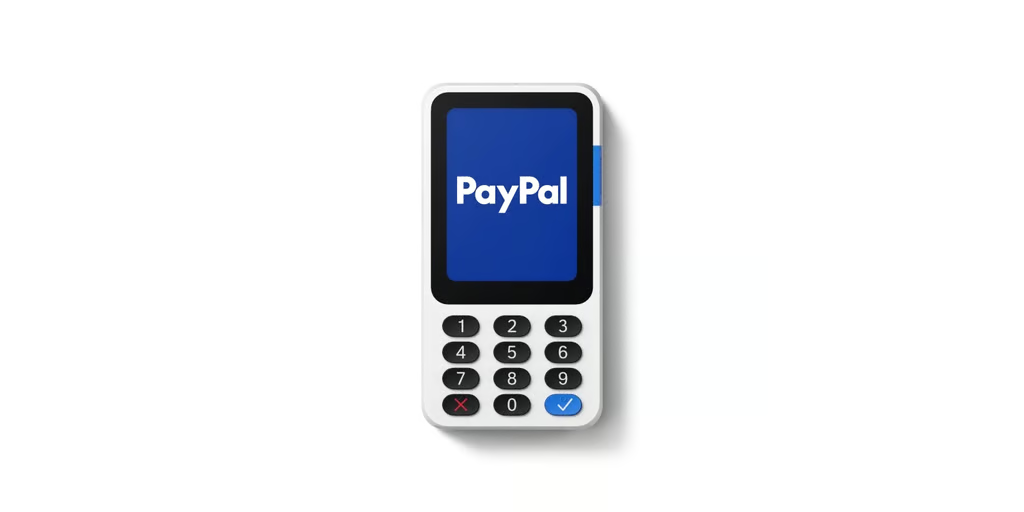
PayPal's mobile Card Reader starts at $29 for eligible new businesses. 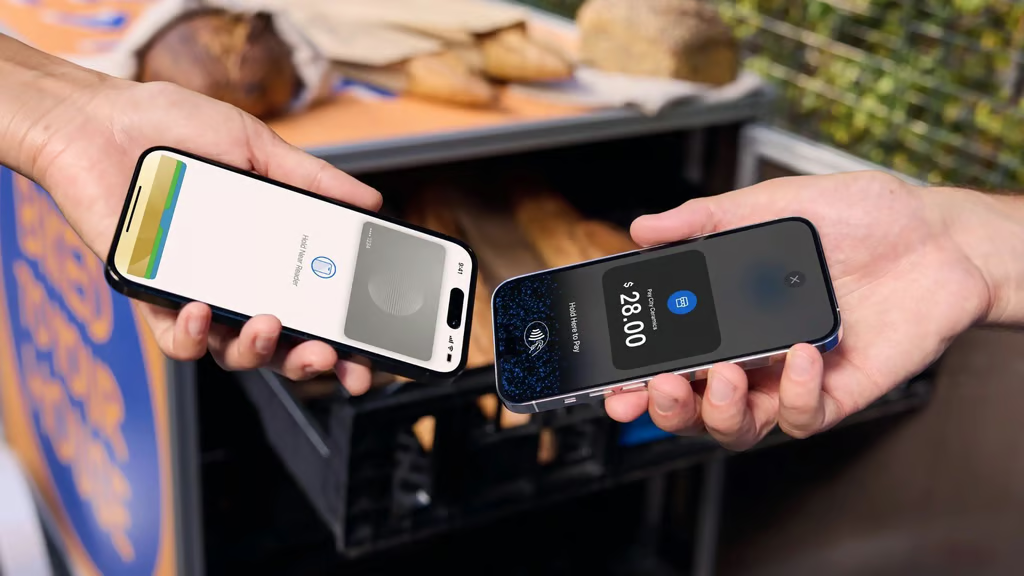
PayPal POS supports hardware-free contactless checkout through Tap to Pay. (Source: PayPal)


Why I chose Payanywhere
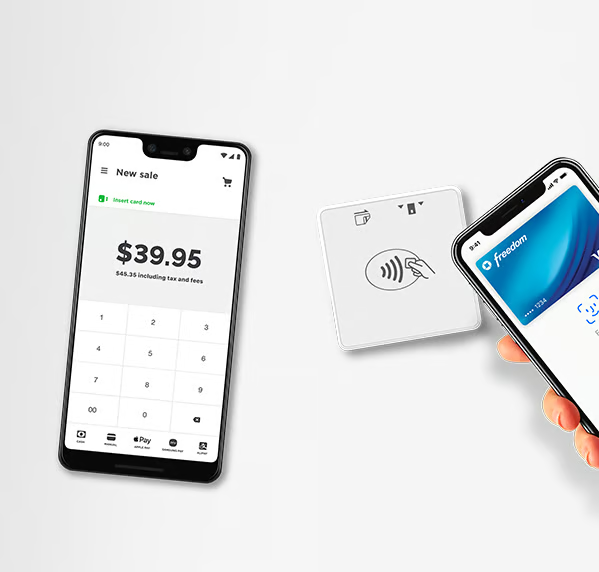
Payanywhere is best suited to sellers who routinely work away from a stable counter or internet connection. Its mobile app includes more merchant-management tools than a basic payment app, and its 3-in-1 Bluetooth reader accepts chip, contactless, and magstripe cards from an iPhone or Android device. Payanywhere also documents offline transaction support, which is useful for field services, events, markets, and mobile businesses.
Pricing is straightforward for active merchants: its pay-as-you-go rate is 2.69% for swipe, dip, or tap transactions. The main fee to watch is its $3.99 monthly inactivity fee, which applies after a merchant goes 12 months without processing a transaction.
Payanywhere pricing
Monthly software fee
- Pay as you go: $0
- Inactivity fee: $3.99 per month after 12 months with no transactions; stops when processing resumes
Processing rates
- Swipe, dip, or tap: 2.69%
- Keyed: 3.49% + 19 cents
- Virtual terminal: 3.49% + 19 cents
Hardware
- 3-in-1 Bluetooth Credit Card Reader: $77.95
- Tap to Pay on iPhone: No reader required
Standout features
- Three payment methods in one reader: The 3-in-1 reader accepts EMV chip, contactless, and magstripe payments.
- Offline transactions: Payanywhere's mobile platform supports offline transactions, giving mobile sellers a fallback when connectivity is unreliable.
- Business tools included: The platform includes inventory, customer management, employee tools, reporting, invoices, recurring payments, and dispute management.
Why I chose SumUp
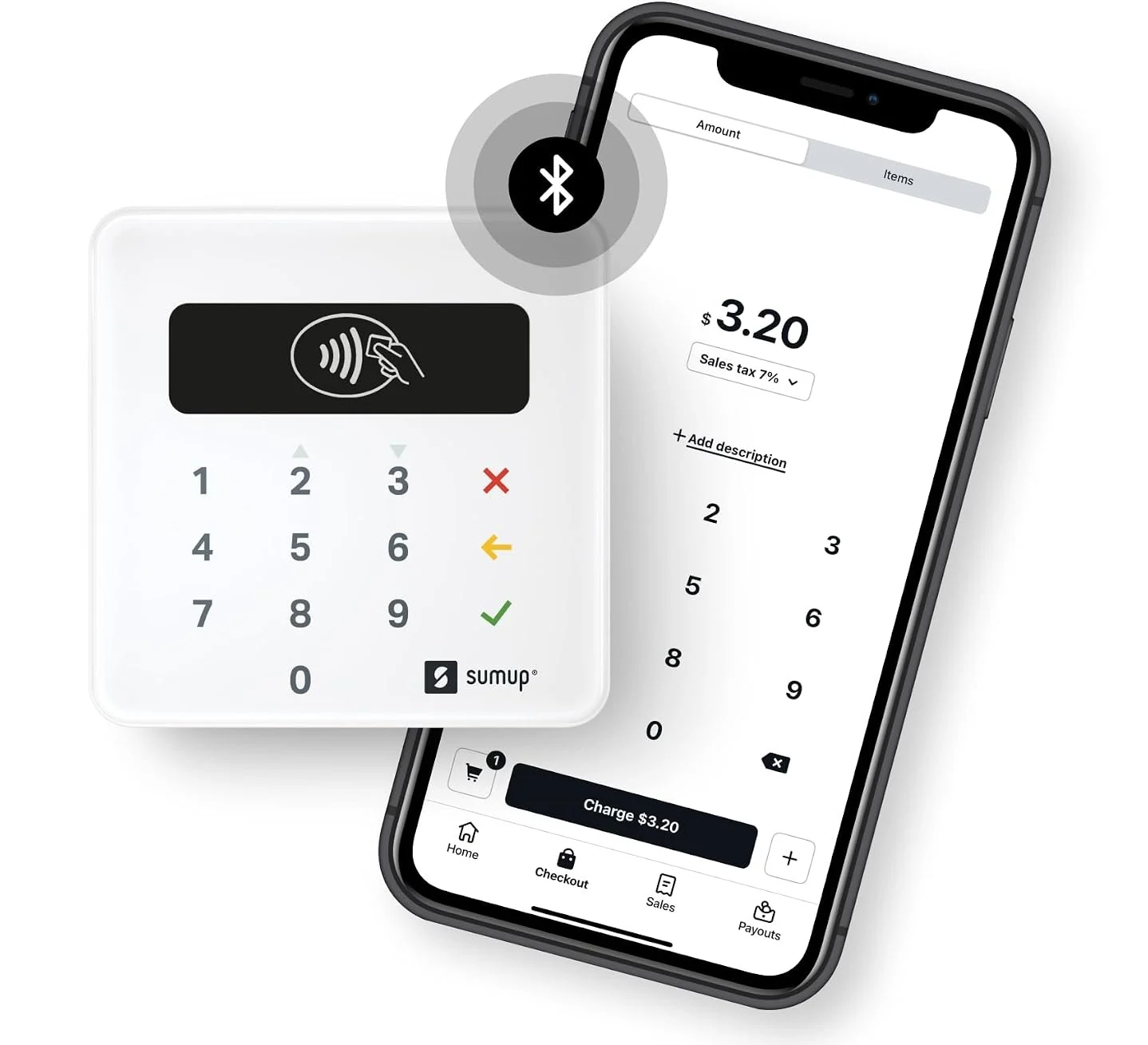
SumUp works well when you primarily need to get paid and do not want to pay for a large POS system. Its standard option has no monthly subscription fee, its Plus reader costs $54, and in-person transactions are priced at 2.6% + 10 cents.
The Plus reader connects to the SumUp app on a phone or tablet, accepts magstripe, chip, and contactless payments, and is rated for more than 500 transactions on a charge. This makes SumUp a good match for market sellers, side businesses, seasonal operations, and other merchants whose main requirement is portable card acceptance rather than advanced retail management.
SumUp does have an offline transaction feature in its iOS Reader SDK, but it requires merchant opt-in and does not apply to Tap to Pay. That matters if offline sales are a deciding factor.
SumUp pricing
Monthly software fees
- Standard: $0
- POS Plus: $49 per month
- SumUp POS: Starting at $99 per month
Processing rates
- Card-present: 2.6% + 10 cents
- Online/manual entry: 3.5% + 15 cents
Hardware
- SumUp Plus Reader: $54
- SumUp Solo: $99
- Tap to Pay on iPhone: Available through SumUp's iPhone support offering
Standout features
- Low-cost reader: At $54, the SumUp Plus is one of the least expensive physical card readers in this guide.
- Simple processing price: SumUp uses one standard 2.6% + 10 cents rate for card-present payments rather than multiple transaction tiers.
- Long reader battery life: SumUp says the Plus can process more than 500 transactions on a charge.
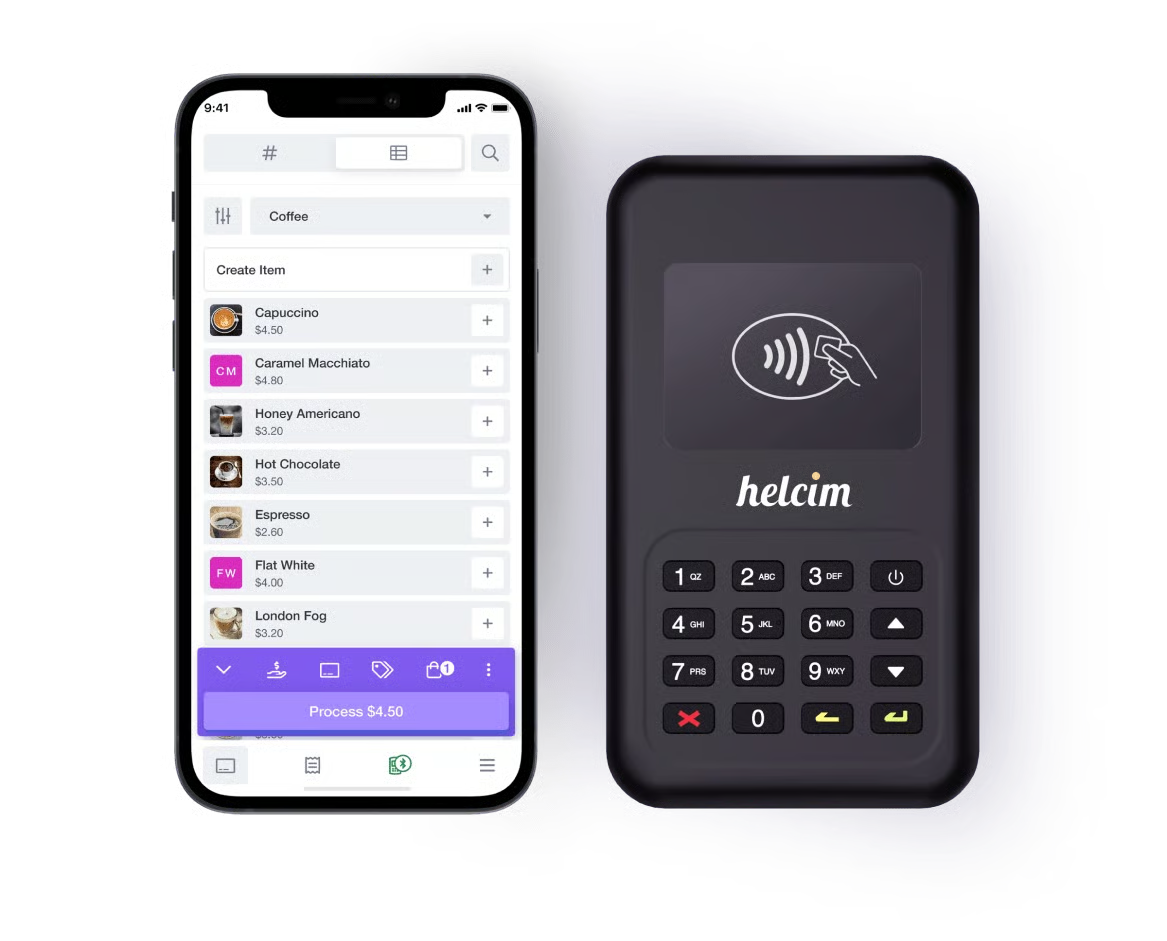
Why I chose Helcim
Helcim is different from the other providers here because it uses interchange-plus rather than a standard flat-rate percentage for card processing. I have attended a Helcim product demo, and one of the main reasons I continue to recommend it for growing businesses is its pricing structure: there is no monthly processing account fee, and Helcim automatically reduces its processing margin as monthly card volume rises.
The catch for an iPhone-focused setup is hardware. Helcim's physical reader costs $199, significantly more than the readers from Square, Shopify, PayPal, Payanywhere, and SumUp. However, merchants that only need contactless payments can skip that purchase entirely and use Tap to Pay on iPhone. Helcim adds 10 cents to its normal in-person processing rate for each approved Tap to Pay transaction.
That makes Helcim especially interesting for businesses comparing long-term processing cost rather than looking only at the reader price. For a very low-volume seller, Square or SumUp is easier to predict. As processing volume rises, Helcim's interchange-plus model and automatic discounts can become more relevant.
Helcim pricing
Monthly software fee
- Merchant account: $0
- Helcim POS: Included
Processing rates
For businesses processing up to $50,000 per month, Helcim currently lists its margin as:
- In-person: Interchange + 0.40% + 8 cents
- Keyed/online: Interchange + 0.50% + 25 cents
- Higher-volume businesses receive automatic pricing reductions
- Tap to Pay on iPhone: Additional 10 cents per approved transaction
Hardware
- Helcim Card Reader: $199 plus shipping
- Tap to Pay on iPhone: No hardware cost; extra 10 cents per approved transaction
Standout features
- Interchange-plus pricing: Helcim passes interchange costs through and adds a published processing margin instead of charging one flat percentage.
- Automatic volume discounts: Its markup decreases as processing volume increases, without requiring merchants to renegotiate their rates.
- Tap to Pay without the $199 reader: US merchants can download the free Helcim POS app and accept eligible contactless payments directly on a compatible iPhone.
How to choose the best credit card reader for your iPhone
An iPhone can now serve as both the POS interface and, with Tap to Pay, the payment device itself. That makes choosing a credit card reader less about finding something that simply connects to an iPhone and more about deciding which payment methods, fees, and business tools you need.
Step 1: Decide whether you need a physical reader
Start by asking whether Tap to Pay on iPhone covers most of your sales.
All seven providers in this guide can accept contactless payments directly on a compatible iPhone. If most customers pay using contactless cards, Apple Pay, or another digital wallet, you may not need to buy a reader immediately.
A physical reader becomes more useful if you need to accept inserted chip cards, magstripe cards, certain PIN debit transactions, or payments when Tap to Pay is not available.
Step 2: Check which payment types your customers use
Do not assume that “accepts cards” means every setup supports every payment type. Check whether the provider accepts contactless credit and debit cards, EMV chip cards, magstripe, PIN debit, Apple Pay and other digital wallets, keyed-in transactions, invoices, and payment links.
Provider support can differ even within Tap to Pay. For example, Clover accepts contactless debit and credit cards through Tap to Pay on iPhone but currently does not support PIN, while Shopify says its Tap to Pay flow can display a PIN-entry screen when required.
Step 3: Calculate the total cost, not just the reader price
A $29 or $49 card reader is not necessarily cheaper in the long run than a $199 reader. Compare the hardware price with monthly POS or account fees, card-present and keyed transaction rates, Tap to Pay surcharges, transfer fees, inactivity fees, and contract requirements.
Square, PayPal, Payanywhere, SumUp, and Helcim all offer a $0 monthly starting option. Shopify starts at $5 per month, but its lowest plan carries a higher processing rate, so active retailers will usually want to compare its Basic plan instead.
Step 4: Check offline payment support
If you sell at outdoor markets, events, client locations, or other places where internet access can be unreliable, check offline payment policies closely.
Square supports eligible offline payments for up to 24 hours with supported hardware. Payanywhere also supports offline transactions. SumUp has an offline reader function for approved merchants using its Reader SDK, but it does not extend to Tap to Pay.
Tap to Pay generally depends on an active connection, so businesses with unreliable service should not assume that a no-hardware checkout can replace an offline-capable physical reader.
Step 5: Compare how quickly you can access your money
Deposit speed can affect cash flow, especially for newer businesses.
Check:
- Standard bank-transfer time
- Whether same-day or instant transfers are available
- Added transfer fees
- Whether funds first settle into a provider account
Square includes free next-business-day transfers and offers instant transfers for a fee. PayPal makes POS sales available through the merchant's PayPal business account, while Payanywhere advertises same-day or next-day funding options.
Step 6: Choose the amount of POS software you actually need
A freelancer collecting a few payments per week has different requirements from a retailer selling both in-store and online.
For basic mobile payments, PayPal and SumUp keep the setup simple. Square provides more room to add POS and business tools without requiring an upfront monthly subscription. Shopify is the strongest match for ecommerce businesses that need online and in-person inventory and orders connected. Clover gives businesses several paths into additional POS hardware, while Helcim is worth considering when processing cost becomes a bigger priority as sales grow.
Methodology: How I evaluated the best credit card readers for iPhone
To find the best iPhone credit card readers, I evaluated 13 providers across 25 weighted data points and selected the seven strongest options for small and growing businesses.
I used current provider documentation to compare pricing, transaction costs, Tap to Pay availability, card reader functions, contract terms, account tools, funding, and iPhone-specific payment features. I also drew from my more than four years evaluating payment and POS systems, product demos with Square and Helcim, and more than a decade working in ecommerce.
Each provider was scored using the following criteria:
- Pricing and contract (20%): I compared cancellation fees, chargeback fees, card reader prices, in-person and contactless processing rates, and required monthly fees. Providers earned more credit for low startup costs, transparent pricing, and flexible agreements.
- Card reader features (25%): This was the largest category because the article is specifically about accepting payments from an iPhone. I evaluated card-present payment support, free POS or mobile software, Tap to Pay on iPhone, PIN support, digital receipts, and offline transaction options.
- Ease of use (20%): I considered the payment interface, setup process, card-reader reliability, and the overall experience of using the provider's mobile payment system.
- Account features (20%): I compared customer support availability, contract flexibility, included payment tools, omnichannel features, and deposit speed.
- Expert score (15%): Finally, I considered pricing transparency, ease of use, market presence, integrations, and how well each provider fits common small-business payment scenarios.
One limitation of this scoring model is that reader hardware price still carries weight even though Tap to Pay on iPhone lets businesses skip hardware altogether. This particularly affects Helcim, whose $199 reader lowers its pricing score even though merchants using only contactless payments do not have to purchase it.
Frequently asked questions (FAQs)
Do I need a card reader to accept credit cards on an iPhone?
No, you don’t. Square, Shopify POS, Clover Go, PayPal POS, Payanywhere, SumUp, and Helcim all support Tap to Pay on iPhone, allowing eligible merchants to accept contactless cards and digital wallets without a separate reader. A physical reader is still useful if you need to accept inserted chip cards, swipe cards, PIN payments, or other payment types that your provider's Tap to Pay setup does not support.
Which iPhones support Tap to Pay?
Most providers require an iPhone XS or newer, along with a currently supported version of iOS. Exact OS requirements can change as Apple ends support for older releases, so keep the device updated and check your payment provider's current compatibility list. Square, Shopify, Clover, and Helcim all currently identify iPhone XS or newer as the baseline for Tap to Pay.
Can Tap to Pay on iPhone accept PIN debit cards?
It depends on the provider. Shopify states that transactions requiring PIN entry can automatically display a PIN screen when using Tap to Pay on iPhone. Clover, on the other hand, currently states that PIN is not supported through its Tap to Pay feature. If PIN debit is common in your business, check the provider's current documentation before relying exclusively on Tap to Pay.
Do iPhone credit card readers work without the internet?
Some physical-reader setups support offline transactions, but availability and restrictions vary. Square and Payanywhere offer offline payment tools, while SumUp's offline reader functionality requires merchant enrollment and does not apply to Tap to Pay.
How much does it cost to accept credit cards with an iPhone?
You can start without buying hardware if your provider supports Tap to Pay on iPhone. Square, PayPal, Payanywhere, SumUp, and Helcim all have $0 monthly starting options, although transaction fees still apply. Physical mobile readers in this guide range from $29 for an eligible new PayPal merchant's first reader to $199 for Helcim's reader.
Bottom line
The best credit card reader for your iPhone should support how you actually sell rather than simply connect to your phone. With Tap to Pay now available from every provider on this list, start by deciding whether contactless-only payments are enough. Then compare physical-reader payment types, offline support, processing fees, deposit speed, and the POS tools you may need as your business grows.
Square is my top pick, earning 4.83 out of 5 in my evaluation. It combines a $0 software option, hardware-free Tap to Pay on iPhone, a $59 physical reader, offline payment support, and enough POS and business tools to serve both new and growing small businesses. Visit Square to create a free account and start accepting payments.
