






An iPad can reduce POS hardware costs, but the right system depends on how you sell, process payments, and manage inventory.
The best iPad POS system should turn a device you already know how to use into a reliable checkout station without sacrificing payment, inventory, customer, and reporting tools. I compared six iPad-compatible POS systems, looking closely at their pricing, core POS functions, iPad-specific features, ease of use, and overall value for small businesses.
Square is my top iPad POS system for most small businesses because its free plan, purpose-built iPad hardware, offline payment support, and broad retail, restaurant, and service tools give businesses plenty of room to start and grow. Shopify is a better fit for ecommerce-first retailers, while Helcim stands out for growing businesses that want interchange-plus payment processing with automatic volume discounts.
- Best iPad POS systems at a glance
- Best iPad POS systems compared
- How I chose the best iPad POS systems
- Why you can trust Fit Small Business
- Square: Best overall iPad POS system
- Shopify POS: Best for multichannel retail
- Loyverse: Best for tableside ordering
- Clover Go: Best for high sales mobility
- Helcim: Best for growing businesses seeking lower processing rates
- Lightspeed: Best for inventory management and specialty retailers
- Methodology: How I evaluated the best iPad POS systems
- How to choose the best iPad POS system
- Bottom line
- You might also like
Best iPad POS systems at a glance
| Provider | Best for | Monthly starting price |
| Square | Overall iPad POS system | $0 |
| Shopify POS | Multichannel retail | $5 |
| Loyverse | Tableside ordering | $0 |
| Clover Go | High sales mobility | Contact sales |
| Helcim | Growing businesses seeking lower processing rates | $0 |
| Lightspeed | Inventory management and specialty retailers | $89 |
Best iPad POS systems compared
| Provider | Key iPad and POS features | Offline payments | My score out of 5 |
| Square | iPad stand; free POS; retail and restaurant tools | Yes | 4.35 |
| Shopify POS | Omnichannel inventory; BOPIS; ecommerce sync | Limited | 4.13 |
| Loyverse | Free POS; KDS; loyalty program | Yes | 4.10 |
| Clover Go | Mobile card reader; iPad app; customer tools | Available in Clover ecosystem | 4.08 |
| Helcim | Free POS; interchange-plus pricing; unlimited users | No | 4.01 |
| Lightspeed | Advanced inventory; purchasing; supplier tools | Yes | 3.86 |
How I chose the best iPad POS systems
I compared popular POS systems that can run on an iPad and scored them according to the factors that matter most when a small business replaces a traditional register with tablet-based POS software. I looked at current pricing, payment-processing options, core POS tools, iPad-specific functionality, ease of use, customer feedback, and overall value. See themethodology below for more details.
Why you can trust Fit Small Business
I have more than six years of experience evaluating payment technology and more than three years of hands-on POS testing. My work has included setting up merchant accounts, processing test transactions, comparing POS hardware and software, reviewing payment costs, and evaluating how POS systems perform for small businesses.
For this guide, I compared six iPad POS systems across pricing, general POS features, iPad-specific functionality, ease of use and customer feedback, and my own experience working with POS and payment platforms. I also checked current provider documentation, pricing, hardware compatibility, payment-processing requirements, and product limitations. Fit Small Business follows anindependent editorial process for its product recommendations.
Square: Best overall iPad POS system

Square: Best overall iPad POS system
Pros
- Free baseline POS software
- Purpose-built Square Stand for iPads
- Offline card payment support
- Retail, restaurant, appointment, and ecommerce tools
- Unlimited items and transactions on the free plan
Cons
- Integrated payments require Square Payments
- Paid plans and add-ons can increase monthly costs
- Free-plan phone support is more limited than premium support
Why I chose Square
Square remains my top iPad POS system because it gives small businesses one of the easiest ways to build a complete checkout around an iPad without committing to monthly software fees. Square Free includes the core tools needed to take payments, manage an item catalog, track basic inventory, send invoices, and sell online. Square also offers restaurant, retail, and appointment-specific tools if your business needs more than a basic checkout system.
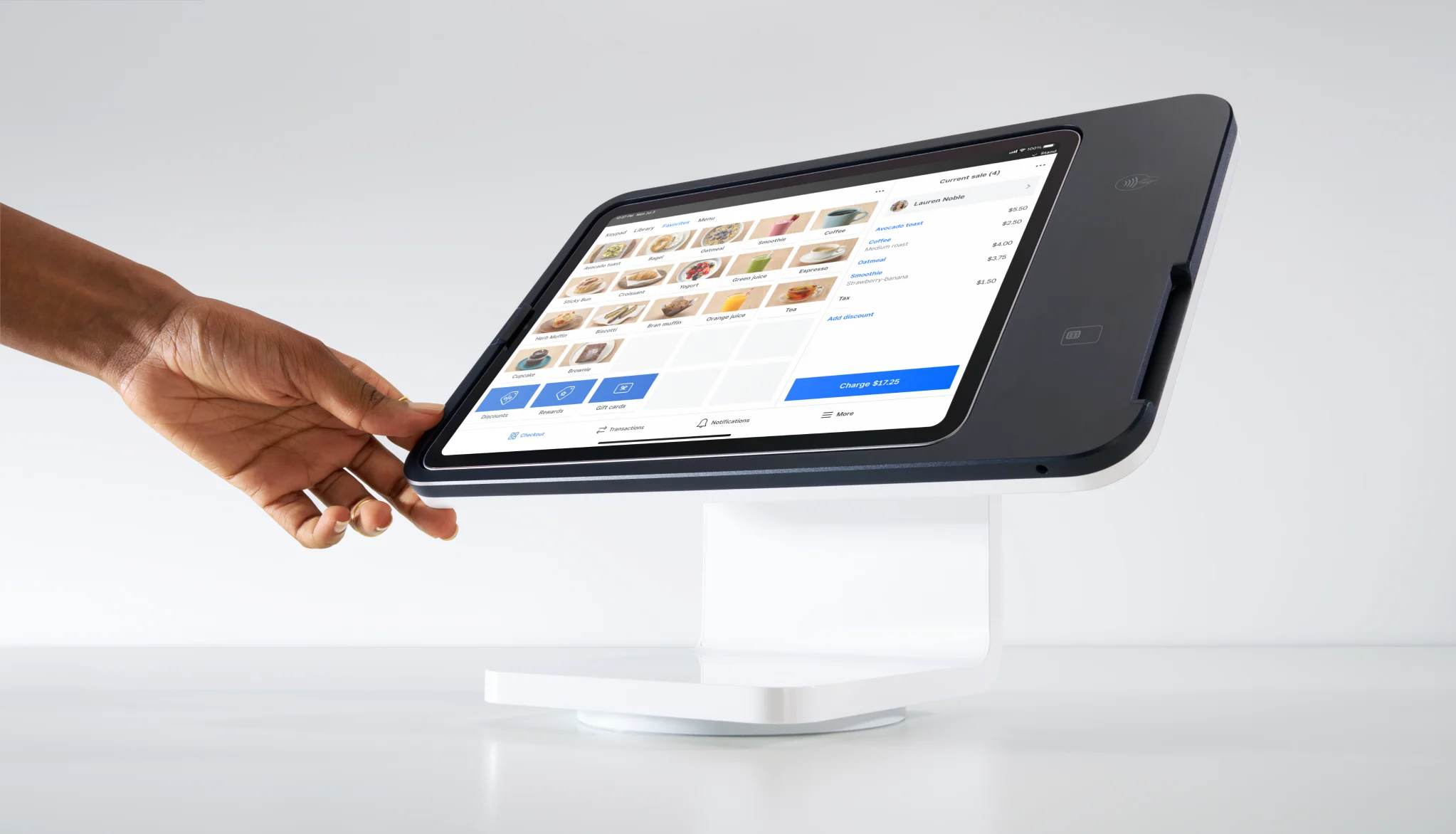
I also like Square's hardware options for iPad users. The $149 Square Stand creates a more permanent countertop register while still letting the iPad swivel between employee and customer. Square supports offline payments as well, which gives it an advantage over systems such as Helcim if your internet connection is unreliable. Offline transactions must reconnect to the internet within Square's required time period to finish processing.
Square may be less appealing if you want to shop around for a different integrated payment processor. Businesses with higher processing volumes may also want to compare Square's flat rates against Helcim's interchange-plus pricing.
Related: Square Stand Review: Square’s iPad POS System
Square pricing
- Monthly software fees:
- Square Free: $0 per location, per month
- Square Plus: $49 per location, per month
- Square Premium: $149 per location, per month
- Processing fees:
- In-person (tap, dip, swipe): 2.6% + 15 cents (Free), 2.5% + 15 cents (Plus), 2.4% + 15 cents (Premium)
- Online:3.3% + 30 cents (Free), 2.9% + 30 cents (Plus & Premium)
- Manual entry: 3.5% + 15 cents
- Afterpay: 6% + 30 cents
- ACH bank transfer: 1% ($1 min, $5-$10 fee cap)
- Hardware:
- Square Stand: $149 or $14 per month for 12 months
- Square Reader for contactless and chip: $59
Square standout features
- Square Stand: The Square Stand turns a compatible iPad into a countertop register with integrated payment hardware. Its rotating design lets employees turn the screen to customers during checkout.
- Offline payments: Square can store qualifying offline transactions and automatically submit them after the device reconnects. Square requires reconnection within 24 hours of the first offline payment.
- Business-specific POS tools: You can use Square's general POS or add retail, restaurant, and appointment features without switching to a separate payment ecosystem.
- Integrated ecommerce: Square includes online selling tools that keep products and orders linked with in-person transactions.
- Customer and employee tools: Square offers customer profiles, loyalty and marketing add-ons, staff management, permissions, and time tracking.
Shopify POS: Best for multichannel retail

Shopify POS: Best for multichannel retail
Pros
- Excellent ecommerce and in-store inventory synchronization
- Built for selling across stores, websites, social channels, and marketplaces
- Customizable POS interface
- Strong order fulfillment and pickup options
- Broad inventory and customer management tools
Cons
- Requires a Shopify ecommerce plan
- POS Pro costs extra per location
- Shopify Payments is the primary integrated option for in-person payments
Why I chose Shopify POS
Shopify is my pick for businesses that see their physical store and ecommerce operation as parts of the same retail business. Products, customers, inventory, and orders can move between online and in-person channels, making Shopify especially useful for retailers offering services such as buy online, pick up in store, local pickup, exchanges, and online fulfillment.
I have consistently found Shopify's strongest advantage to be its ecommerce foundation. If your business already runs a Shopify store, adding Shopify POS to an iPad lets you use the same product catalog and inventory rather than maintaining a separate in-store system. Shopify also supports social and marketplace selling from the same commerce platform.
The main drawback is cost. Unlike Square, Loyverse, and Helcim, Shopify does not provide a standalone $0 POS account. You need a Shopify plan, and advanced store features through POS Pro add another $89 per month for each POS Pro location.
Shopify POS pricing
Monthly software fees The basic Shopify POS software is included with Shopify ecommerce plans, while businesses that only need lightweight selling tools can use the $5-per-month Starter plan. For more advanced in-person selling features, Shopify POS Pro costs an additional $89 per month per location on top of a qualifying ecommerce plan.
- Basic POS: Included with a Shopify ecommerce plan
- Starter: $5 per month
- POS Pro: $89 per month, per location, plus a Shopify ecommerce plan
Processing fees
Shopify Payments processing rates vary by ecommerce plan. Businesses using a third-party payment processor will pay that provider's processing rates plus Shopify's additional transaction fee.
- In-person: 2.4% to 2.6% + 10 cents; 3.5% + 10 cents for manually keyed transactions
- Online: 2.5% to 2.9% + 30 cents
Shopify POS standout features
- Unified inventory: Shopify keeps online and in-store inventory connected, helping retailers reduce overselling and avoid maintaining separate catalogs.
- Omnichannel fulfillment: Retailers can support online purchases, local pickup, in-store sales, shipping, and other cross-channel workflows from Shopify.
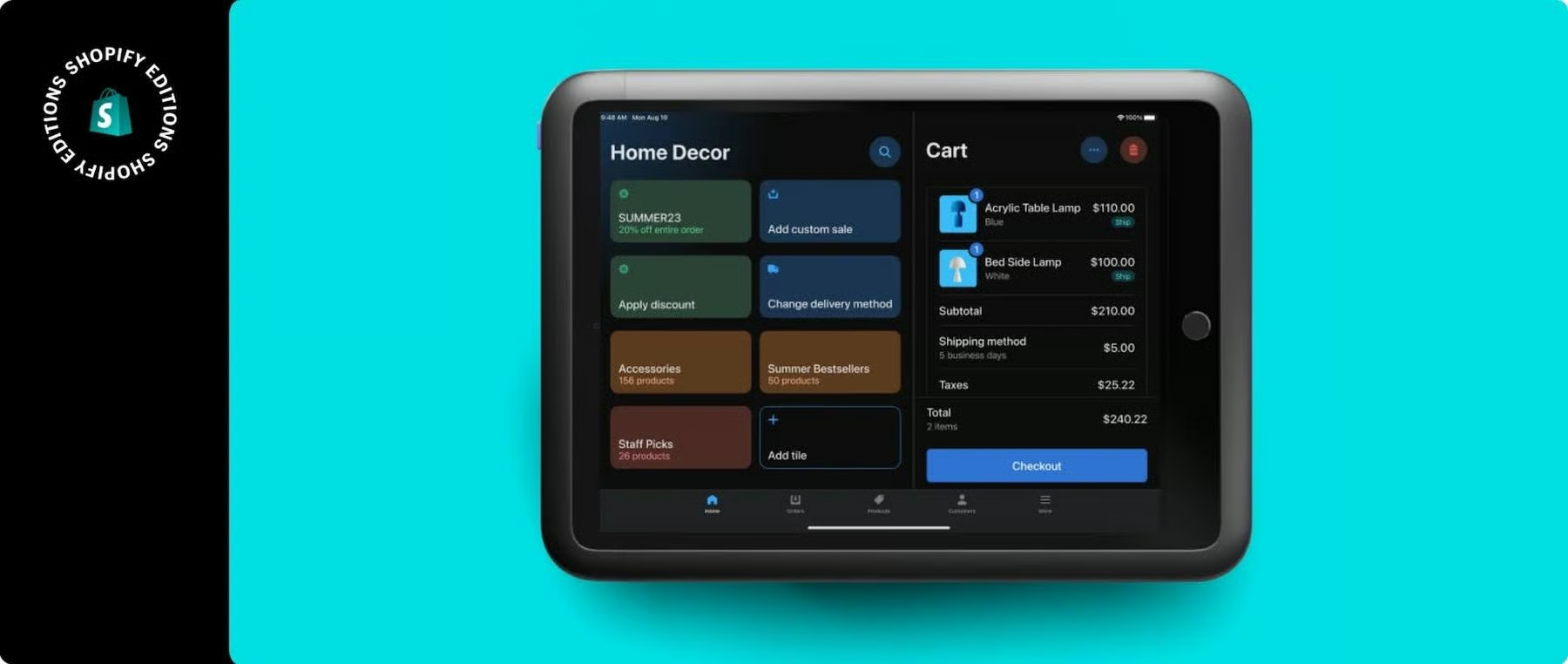
- Smart Grid: Shopify POS lets staff customize the checkout interface with commonly used products, discounts, apps, and actions.
- Customer profiles: Staff can attach customers to transactions and view purchase history to support repeat sales.
- Social and marketplace selling: Shopify connects product catalogs with online marketplaces and social platforms, making it especially useful for retailers selling across multiple channels.
Loyverse: Best for tableside ordering

Loyverse: Best for tableside ordering
Pros
- Free POS, kitchen display, customer display, and loyalty tools
- Works on tablets without per-device charges
- Built-in US payment processing now available
- Free multi-store management
- Optional advanced inventory and employee tools
Cons
- Advanced inventory requires a paid add-on
- Employee management is a paid add-on
- Native ecommerce tools are less extensive than Shopify's
Why I chose Loyverse
Loyverse is a strong option for small restaurants, cafes, food businesses, and retailers that want to use iPads around the sales floor without paying a software fee for every device. The free platform includes POS, essential inventory, loyalty, a customer display, kitchen display, basic sales analytics, multi-store management, and integrations.
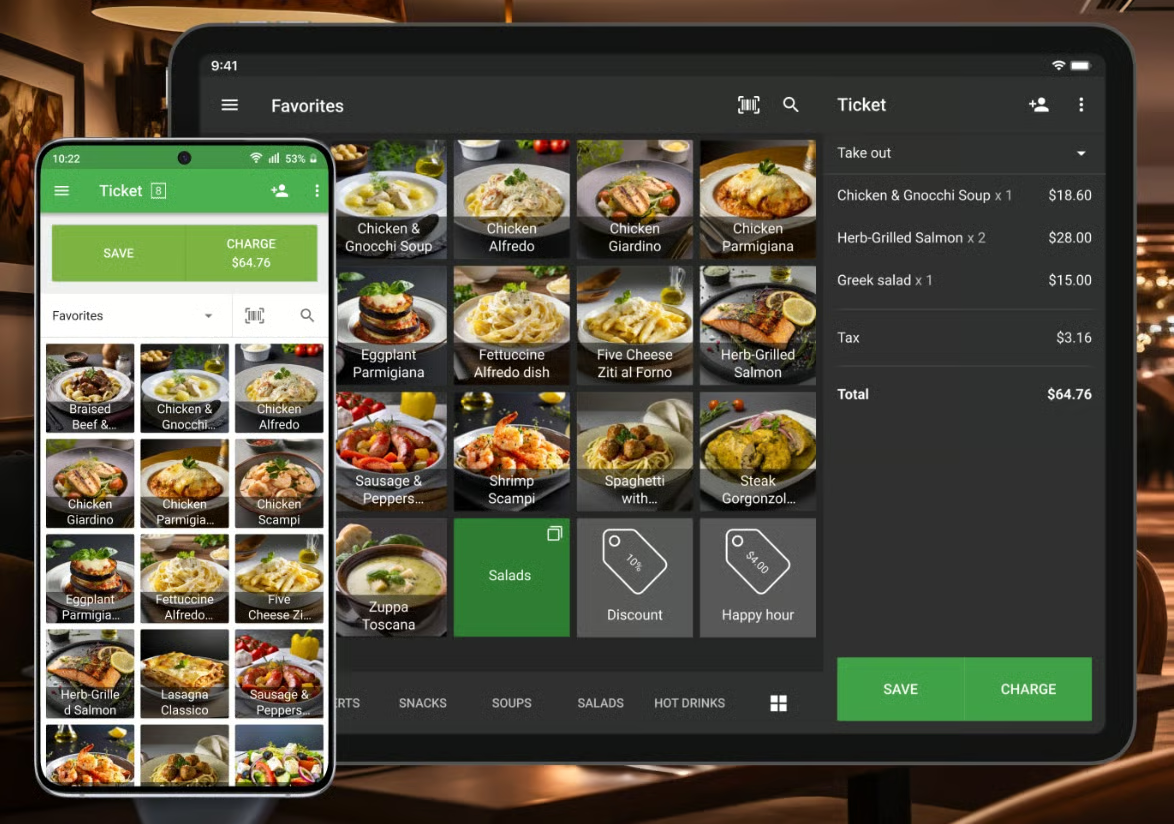
Its restaurant-friendly tools make it particularly useful for tableside ordering. Orders entered through the POS can feed into Loyverse's Kitchen Display System, while the customer display gives buyers a second-screen view of the transaction. Those tools are included without requiring a monthly POS subscription.
Loyverse has also changed significantly since our last update. It now offers Loyverse Payments in the US with published debit and credit card processing rates, so the old limitation that it had no built-in payment-processing option no longer applies.
Loyverse pricing
- Point of sale: $0
- Essential inventory: $0
- Kitchen Display System: $0
- Customer Display System: $0
- Loyalty: $0
- Multi-store management: $0
- Unlimited sales history: $5 per store, per month
- Employee management: $25 per store, per month
- Advanced inventory: $25 per store, per month
- Debit card processing: 1.99% + 15 cents
- Credit card processing: 2.49% + 15 cents
- Mobile reader: $59
- Smart reader: $269
Paid add-ons include a 14-day trial, and Loyverse states that its US payment service has no monthly minimums or contracts.
Loyverse standout features
- Free Kitchen Display System: Kitchen staff can receive orders electronically without requiring a paid restaurant POS package.
- Built-in loyalty: Loyverse includes a customer loyalty program in its free software rather than placing it behind a paid add-on.
- Loyverse Payments: US merchants can now use integrated card processing directly within the POS.
- Advanced inventory add-on: Businesses that need purchase orders, stock transfers, counts, and deeper inventory reporting can add Advanced Inventory for $25 per store monthly.
- No per-device fee: Businesses can use tablets and supported devices without paying an additional software charge for each POS device.
Clover Go: Best for high sales mobility

Clover Go: Best for high sales mobility
Pros
- Compact reader pairs with iPhones and iPads
- 24/7 support on Clover Go plans
- Starter and Essentials software options
- Customer, employee, inventory, and reporting tools available
- Broader Clover hardware ecosystem available as a business grows
Cons
- Direct pricing requires contacting Clover
- Features vary substantially by plan
- Clover pricing can be harder to compare than flat-fee competitors
Why I chose Clover Go
Clover Go is best suited to businesses that need to move checkout around a store, restaurant, service location, event, or sales floor. The mobile reader pairs with the Clover Go app, while the software supports payment acceptance, tips, invoicing, recurring payments, employee profiles, and basic sales reporting. Clover lists iOS 15 or later among its current compatibility requirements.
The Essentials plan adds product creation, stock tracking, itemized orders, more detailed reporting, customer profiles, promotions, loyalty, and gift cards. That gives businesses a path from basic mobile card acceptance to a more complete mobile POS without immediately buying a full Clover Station.
Clover's biggest weakness for this comparison is pricing transparency. The current direct Clover Go pricing pages list Starter and Essentials but direct customers to contact sales for pricing. That makes it harder to estimate total cost against Square, Helcim, or Loyverse before speaking with Clover.
Clover Go pricing
Clover currently lists both Starter and Essentials Go plans on its pricing page.
Both plans include:
- Card and debit acceptance
- Mobile payments
- Tips
- Invoicing and recurring payments
- Basic sales reports
- Employee profiles
- 24/7 support
Essentials adds:
- Item and category creation
- Inventory tracking
- Itemized orders
- Detailed sales and tax reporting
- Customer database
- Promotions and loyalty
- Gift cards
Reach out to Clover for a quote.
Clover Go standout features
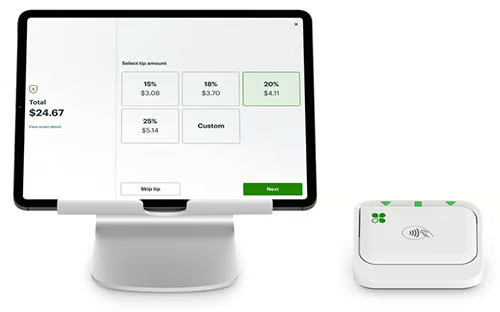
- Mobile checkout: Clover Go combines a compact card reader with its mobile app for taking payments from an iPad, iPhone, or other supported device.
- Go Dock: Businesses can mount the Clover Go reader on a countertop when mobility is not needed, then remove it when staff need to take payments elsewhere.
- Essentials POS tools: The higher Go software tier adds inventory, itemized orders, customer profiles, loyalty, and more detailed reporting.
- Clover ecosystem: Businesses can move to Clover Flex, Mini, Station, Kiosk, and other Clover hardware if their needs expand.
- 24/7 support: Clover states that all current Go plans include round-the-clock support.
Helcim: Best for growing businesses seeking lower processing rates
Helcim: Best for growing businesses seeking lower processing rates
Pros
- Free POS software with unlimited users
- Interchange-plus processing with automatic volume discounts
- Built-in invoicing, payment links, recurring billing, and online checkout
- Connects with compatible barcode scanners and thermal printers
- No long-term contracts or monthly POS subscription
Cons
- No offline card processing
- Integrated payments require Helcim processing
- $199 reader costs more than entry-level readers from several competitors
- Fewer advanced retail purchasing, loyalty, and marketing tools
- Lower App Store rating than the other leading iPad POS apps in this guide
Why I chose Helcim
Helcim earns a place in this guide because it brings a different pricing model to the iPad POS category. The software itself costs $0, while card processing uses interchange-plus rates instead of one flat percentage. Helcim automatically reduces its published markup as monthly processing volume rises, which can make it attractive to growing businesses that expect card sales to increase over time.
I also like how much Helcim includes outside the physical checkout. An account can support in-person POS transactions alongside invoicing, recurring payments, payment links, online checkout, customer records, inventory, and reporting. The POS can run on an existing tablet or computer paired with Helcim's card reader.
Its biggest iPad-specific weakness is offline processing. Helcim's POS is cloud-based and does not give merchants the same offline card-payment fallback offered by Square.
Helcim pricing
- Monthly POS software fee: $0
- In-person processing below $50,000 monthly volume: Interchange plus 0.40% + 8 cents
- Keyed and online processing below $50,000 monthly volume: Interchange plus 0.50% + 25 cents
- ACH: 0.5% + 25 cents, capped at $6 for approved transactions below $25,000
- Recurring payments: Additional 0.4% for applicable recurring transactions
- Card reader: $199
- Smart Terminal: $349 or $32 per month for 12 months
- Chargeback: $15 if lost; refunded if the dispute is resolved in your favor
Helcim's published in-person markup falls to 0.35% + 7 cents at $50,000 to $100,000 in monthly processing, 0.25% + 7 cents at $100,000 to $500,000, 0.20% + 6 cents at $500,000 to $1 million, and 0.15% + 6 cents at $1 million to $5 million.
Helcim standout features
- Free iPad POS: Helcim's POS app can run on tablets, phones, computers, and Helcim's dedicated Smart Terminal.
- Automatic volume discounts: Published card-processing markups decrease as monthly processing volume reaches higher tiers, without requiring merchants to negotiate a new rate.
- Inventory management: Merchants can manage products and inventory alongside payment activity instead of using a separate catalog for in-person transactions.
- Customer management: Helcim supports customer profiles and connected payment histories, which is especially useful for businesses mixing POS transactions with invoices or recurring payments.
- Remote payment tools: Invoices, payment links, online checkout, ACH, recurring billing, and other payment methods are included in the same platform.
- Unlimited users: Helcim advertises unlimited users without a monthly software charge.
- iPad-compatible hardware: The $199 Helcim Card Reader works with iOS, Android, macOS, and Windows.
Related: Compare the cheapest credit card processing companies.
Lightspeed: Best for inventory management and specialty retailers

Lightspeed: Best for inventory management and specialty retailers
Pros
- Advanced inventory tools
- Purchasing and supplier management
- One register included with plans
- Retail ecommerce and loyalty options
- 24/7 chat and phone support
Cons
- Higher starting software cost
- Many advanced features require higher plans
- More than many microbusinesses need
Why I chose Lightspeed
Lightspeed remains my recommendation for retailers whose inventory has outgrown simpler POS systems. It supports detailed stock management, purchasing, supplier catalogs, purchase order synchronization, inventory reporting, and more advanced retail workflows. It is a better fit than Square or Helcim for retailers managing a large number of products, variants, suppliers, or specialized inventory processes.
Lightspeed also supports iPad POS setups and lists compatible peripherals for iPad-based registers. Its supported hardware documentation covers items such as printers, scanners, payment terminals, and other peripherals that can be used with Retail POS.
The biggest tradeoff is price. Lightspeed now starts at $89 per month, considerably more than the free starting plans available from Square, Loyverse, and Helcim. For a very small shop with simple inventory, that extra cost may not be justified.
Lightspeed pricing
- Monthly software fees:
- Basic: $89 per month
- Core: $149 per month
- Plus: $289 per month
- Processing fees (Lightspeed Payments:
- In-person: 2.6% + 10 cents
- Online: 2.9% + 30 cents
Lightspeed does not disclose its hardware options or pricing. Contact the provider for a quote.
Lightspeed standout features
- Inventory management: Lightspeed is built for retailers managing substantial product catalogs, variants, stock counts, suppliers, and multiple locations.
- Supplier and purchasing tools: Lightspeed Wholesale and NuORDER tools help retailers source products and connect ordering more closely with inventory management.
- Purchase order synchronization: Retailers can create and manage purchase orders alongside product and inventory information.
- Advanced reporting: Higher tiers include forecasting, recommendations, custom reporting, and other data tools.
- Supported iPad hardware: Lightspeed provides documented hardware support for Retail POS running on iPads.
Methodology: How I evaluated the best iPad POS systems
I compared popular POS systems that can run on an iPad and scored them according to the factors that matter most when a small business replaces a traditional register with tablet-based POS software. The rubric uses the following five categories:
- Pricing (20%): I looked for affordable monthly software, free plans, unlimited transactions and inventory, flexible processing options, and short-term or month-to-month agreements. I also considered whether costs increase with additional registers, locations, users, or advanced features.
- General features (20%): I compared inventory management, payment methods, ecommerce, customer tools, employee management, reporting, integrations, and other core POS functions.
- iPad POS-specific features (30%): Because this guide focuses specifically on iPads, I gave the greatest weight to functions that make an iPad practical as a POS register. These include iPad compatibility, mobile card readers, multiple-register support, digital receipts, hardware options, and offline payment capabilities.
- Ease of use and user feedback (10%): I considered setup requirements, available customer support, documentation, and feedback from users of the POS apps and platforms.
- Expert score (20%): I compared the total feature set and hardware offering against the cost, then considered how each product performs for small businesses based on my experience testing POS and payment technology.
How to choose the best iPad POS system
The best iPad POS system should fit the way your business takes orders and payments rather than simply being an app that happens to run on iOS. Before committing to a provider, calculate what the complete setup will cost and check that its hardware, processing, and inventory tools fit how you actually sell.
1. Confirm your iPad is supported
Start with the provider's current iPadOS and hardware requirements. An older iPad may still work with the POS app but may not fit newer stands or run the newest version of the operating system.
Hardware compatibility is especially important if you plan to build a permanent countertop setup. Check your iPad model against the stand, card reader, printer, scanner, and cash drawer you intend to use before buying equipment.
2. Decide whether you need a mobile or countertop register
An iPad can serve very different roles. Retailers may want a fixed stand with a scanner, cash drawer, and receipt printer. Restaurants may need staff to carry tablets to tables. Service businesses and event sellers may only need an iPad and mobile card reader.
Square works particularly well for countertop setups because of Square Stand. Clover Go and Loyverse are good fits when mobility is a higher priority.
3. Calculate your total POS cost
Do not compare POS systems based on monthly software alone.
Include:
- Monthly software fees
- Card-processing costs
- Card readers and stands
- Additional register charges
- Paid inventory tools
- Employee management
- Loyalty and marketing tools
- Ecommerce subscriptions
- Additional locations
A free POS can still cost more overall if your processing volume is high, while a paid system can make sense if it replaces several separate business applications.
4. Check offline payment support
If you sell at events, markets, pop-ups, tableside, or anywhere with unreliable Wi-Fi, offline payment support deserves extra attention.Square supports qualifying offline card payments, while Helcim does not provide the same offline card-processing option.
Even with an offline-capable POS, there is risk. The processor cannot fully authorize the transaction while disconnected, so a card may later be declined when the device reconnects.
5. Match inventory tools to what you sell
A small cafe or boutique may only need stock counts, modifiers, and low-stock alerts. However, a specialty retailer may need:
- Variants and matrix inventory
- Purchase orders
- Vendor management
- Serial numbers
- Stock transfers
- Multi-location counts
- Supplier catalogs
- Demand forecasting
Lightspeed is the strongest option in this guide for these deeper inventory requirements. Square and Shopify sit in the middle, while Helcim and Loyverse provide simpler inventory functions at a lower starting cost.
6. Review your payment processing options
Some POS platforms tightly connect software and processing, while others give you more choice.
Square and Helcim operate their own integrated payment services. Shopify centers in-person processing around Shopify Payments. Clover pricing and processing may vary depending on where you purchase the system. Loyverse now provides its own US processing service while still supporting its broader POS platform.
7. Plan for more registers and locations
Check what happens when you add another register, store, employee, or sales channel. A system that is inexpensive for one iPad may become expensive once every additional register or location carries another monthly fee. Businesses planning to grow should also compare centralized reporting, multi-location inventory, user permissions, ecommerce synchronization, and volume pricing before signing up.
Frequently asked questions (FAQs)
Can I use an old iPad as a POS system?
It depends. POS providers have minimum iPadOS version requirements and hardware requirements so the iPad can run with any stand or accessories they offer. Check both software and hardware requirements before committing to a provider.
Which iPad POS systems work offline?
Square supports offline payments on qualifying devices and transactions, subject to its offline-processing requirements. Other providers vary by hardware and payment method. If offline selling matters to your business, check the provider's current device-specific offline documentation rather than assuming every version of its app and reader will work without internet access.
Do I need a card reader to use an iPad POS?
Not necessarily for every transaction. You can use an iPad POS to record cash transactions and manage orders without a card reader. To accept chip, contactless, or PIN card payments through the iPad, however, you will generally need compatible payment hardware. Some providers also support hardware-free contactless payment on supported phones, but this does not necessarily turn an iPad itself into a tap-to-pay terminal.
Can I use multiple iPads with the same POS account?
Many cloud POS systems support multiple devices, but fees and limits vary. Some providers let you install the POS on additional tablets without a per-device software charge, while others charge for additional registers or locations. Check how each provider defines a register and location before adding devices.
How much does an iPad POS system cost per month?
POS software in this guide ranges from $0 to hundreds of dollars per month. Square, Loyverse, and Helcim offer free starting software, while Shopify requires a Shopify subscription and Lightspeed Retail starts at $89 per month. You also need to account for payment processing, readers, stands, printers, additional registers, and optional software features.
Bottom line
An iPad POS can give a small business many of the functions of a traditional countertop system without requiring bulky proprietary hardware. The right choice depends on your payment volume, inventory needs, mobility requirements, ecommerce plans, and how many registers or locations you expect to operate.
Square is my top iPad POS system for most small businesses. Its $0 entry plan, $149 Square Stand, offline payment support, and mix of retail, restaurant, service, and ecommerce functions make it easy to start with one iPad and add tools as the business grows. Visit Square to create a free account and see whether its POS setup fits your business.
