







The best Outlook CRM systems help businesses manage emails, contacts, calendars, sales pipelines, and customer communication from a single platform while syncing seamlessly with Microsoft Outlook and Microsoft 365. I evaluated dozens of CRM solutions based on Outlook integration quality, email syncing, automation, contact management, ease of use, and overall value, with HubSpot CRM emerging as the best overall choice for most small businesses.
| CRM vendor | Best for… | Starting pice |
|---|---|---|
| HubSpot CRM | All-around free CRM Outlook integration | Free or $9/user/month |
| Zoho CRM | Low-cost Outlook lead management | Free or $14/user/month |
| monday CRM | Simple CRM Outlook integration | $12/user/month (3-user minimum) |
| Salesflare | Outlook email task automation | $29/user/month |
| Salesforce | Affordable Outlook email tracking | $25/user/month |
| Pipedrive | Outlook integration for sales meetings | $14/user/month |
| Capsule CRM | Tracking email conversations | Free or $18/user/month |
| Dynamics 365 | Microsoft 365 users | $65/user/month |
| Less Annoying CRM | Basic Outlook calendar and email logging | $15/user/month |
| Apptivo | A multifunctional Outlook integration | $15/user/month |
| Avid CRM | A CRM embedded in Outlook | $20/user/month |
- Best Outlook CRMs compared
- How I chose the best Outlook CRM system for small businesses
- HubSpot CRM: Best all-around free CRM Outlook integration
- Zoho CRM: Best for low-cost Outlook lead management
- monday CRM: Best for a simple Outlook integration
- Salesflare: Best for email tasks and data automation
- Salesforce: Best for affordable Outlook email tracking
- Pipedrive: Best Outlook integration for sales meetings and activities
- Capsule CRM: Best for storing and tracking email conversations
- Dynamics 365: Best for Microsoft 365 integrations
- Less Annoying CRM: Best for basic Outlook calendar and email logging
- Apptivo: Best multifunctional Outlook integration for various business operations
- Avid CRM: Best CRM with Outlook built in for automatic data syncing
- Methodology: How I evaluated the best Outlook CRMs for small businesses
- How to choose the best Outlook CRM for your business
- Frequently asked questions (FAQs)
- Bottom line
Best Outlook CRMs compared
| Standout feature | Free plan | Free trial | My expert score out of 5 | |
|---|---|---|---|---|
| HubSpot CRM | Two-way Outlook email and calendar sync with inbox CRM sidebar | ✓ 2 users | ✕ Free demo | 4.73 |
| Zoho CRM | Outlook add-in for managing leads, tasks, and deals directly from email | ✓ 3 users | 15 days | 4.52 |
| monday CRM | Outlook email activity syncing inside customizable sales workflows | ✕ | 14 days | 4.47 |
| Salesflare | Automatic Outlook email tracking and contact enrichment | ✕ | 14 days | 4.46 |
| Salesforce | Advanced Outlook email logging and Einstein activity capture | ✕ | 30 days | 4.43 |
| Pipedrive | Outlook meeting scheduler and email sync for sales pipelines | ✕ | 14 days | 4.35 |
| Capsule CRM | Automatic Outlook email logging into contact timelines | ✓ 2 users | 14 days | 4.28 |
| Dynamics 365 | Native Microsoft 365 and Outlook integration across sales workflows | ✕ | 30 days | 4.14 |
| Less Annoying CRM | Simple Outlook calendar syncing and email logging | ✕ | 30 days | 4.01 |
| Apptivo | Multifunction Outlook sync for emails, contacts, and tasks | ✕ | 14 days | 4 |
| Avid CRM | CRM workspace embedded directly inside Microsoft Outlook | ✕ | ✕ Demo by request | 3.8 |
How I chose the best Outlook CRM system for small businesses
I tested and compared Outlook CRM systems based on email and calendar syncing, contact management, automation tools, ease of use, and overall value for small businesses. I also evaluated how well each CRM integrates with Microsoft Outlook and Microsoft 365 for managing customer communication, sales pipelines, and day-to-day workflows.
Why you can trust Fit Small Business
HubSpot CRM: Best all-around free CRM Outlook integration
Why I like HubSpot CRM
For small businesses, HubSpot CRM is the most capable free CRM with robust Outlook integration, and not just because it’s free but because of its ease of use and scalability.
Its Outlook add-in seamlessly bridges the gap between your email inbox and your sales pipeline to save time and ensure that communication history stays centralized. You can track opens and clicks, log emails directly to contact records, and even insert templates or meeting links without ever leaving Outlook.
The free plan includes contact management, deal tracking, and powerful email tools, designed for startups and small sales teams to grow as their business evolves. There’s no steep learning curve or need for IT support; HubSpot’s clean interface and guided onboarding make setup simple for busy owners who wear multiple hats.
Finally, HubSpot’s Outlook integration doesn’t feel like an afterthought. It’s designed for real-world productivity because it syncs your inbox, calendar, and CRM data in real time. Whether you’re sending proposals, following up with leads, or booking appointments, the integration keeps everything aligned between Outlook and HubSpot automatically.
For small businesses that already live in Microsoft 365, HubSpot CRM delivers the perfect balance of professional-grade functionality and zero-cost accessibility.
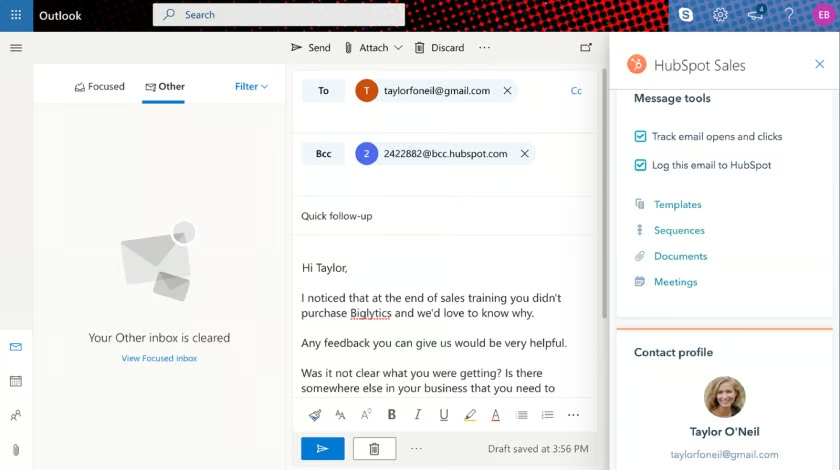
The HubSpot CRM and Outlook integration lets you monitor emails and view every detail from your CRM without leaving your inbox to streamline email management. (Source: HubSpot Marketplace) -
The HubSpot CRM and Outlook integration gives you access to sales tools like templates and access to all details about your contacts for efficiency and productivity. (Source: HubSpot Marketplace)

What actual HubSpot CRM users say
- “I find HubSpot Sales Hub’s automation features incredibly beneficial, significantly reducing time spent on data entry and scheduling for my sales team. I appreciate its user-friendly setup process, and I love the seamless transition of customer records between pipelines without manual handoff. The real-time summaries and data analysis are extremely helpful.” — G2 reviewer
- “I’ve been using HubSpot Sales Hub for a couple of years now, and it’s one of those tools that just makes sense once you start using it. Everything from updating opportunities to sending emails feels smooth and well-designed. It’s not perfect (what CRM is?), but it offers a nice balance between being simple and still giving you plenty of features. And they add new features literally every single week.” — G2 reviewer
- “Overall, a great and easy-to-use product with big results to keep my database organized and my follow-ups on point. I love to use the email tracking feature of my emails so I know which emails are being read and which are not.” — Capterra reviewer
HubSpot CRM pricing
| Sales Hub Starter | Starter Customer Platform | Sales Hub Professional | Sales Hub Enterprise | |
|---|---|---|---|---|
| Monthly price, billed annually | $9/user | $9/user | $90/user | $150/user |
| Monthly price, billed monthly | $15/user | $15/user | $100/user | N/A |
Zoho CRM: Best for low-cost Outlook lead management
Why I like Zoho CRM
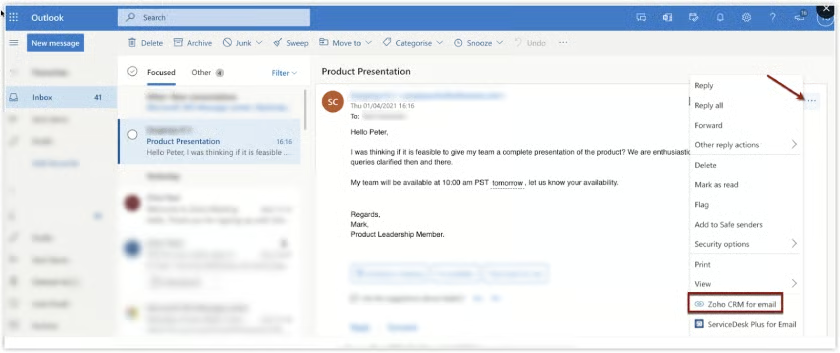
When paired with Outlook, Zoho CRM delivers tremendous value for small businesses focused on keeping costs low while improving sales organization. This integration allows you to sync leads, contacts, calendar events, and emails directly between Outlook and Zoho CRM, turning your inbox into a powerful lead-capturing hub.
Every time you interact with a prospect via Outlook, that information can automatically populate in Zoho CRM, eliminating the need for manual updates and reducing errors that often happen in growing teams.
Zoho CRM’s entry-level plan starts at $14 per user per month, which is a fraction of the cost of major competitors. Nevertheless, it includes essential CRM capabilities like lead scoring, workflow automation, task reminders, and email insights. Plus, its Outlook integration helps teams manage leads from first contact through conversion.
What actual Zoho CRM users say
- “Zoho CRM makes it simple to track leads, handle transactions, and engage with clients by providing a comprehensive view of all customer interactions. Additionally, I appreciate how it facilitates teamwork by integrating with phone systems, email, and other apps. The mobile app enables the team to handle customers and deals from any location, and the interface is easy to use.” — G2 reviewer
- Zoho CRM provides a centralized platform to manage leads, contacts, and client interactions in a much more structured way compared to spreadsheets. The automation features are especially helpful for follow-ups and reminders, which reduces manual work.” — G2 reviewer
- “Zoho CRM is like a Swiss Army knife jam-packed with tools and super versatile, particularly for value-conscious teams or those already living in Zoho’s ecosystem. You can grow with it from a free tier to advanced plans featuring AI, automation, and scalability.” — Capterra reviewer
Zoho CRM pricing
| Standard | Professional | Enterprise | Ultimate | |
|---|---|---|---|---|
| Monthly price, billed annually | $14/user | $23/user | $40/user | $52/user |
| Monthly price, billed monthly | $20/user | $35/user | $50/user | $65/user |
monday CRM: Best for a simple Outlook integration
Why I like monday CRM
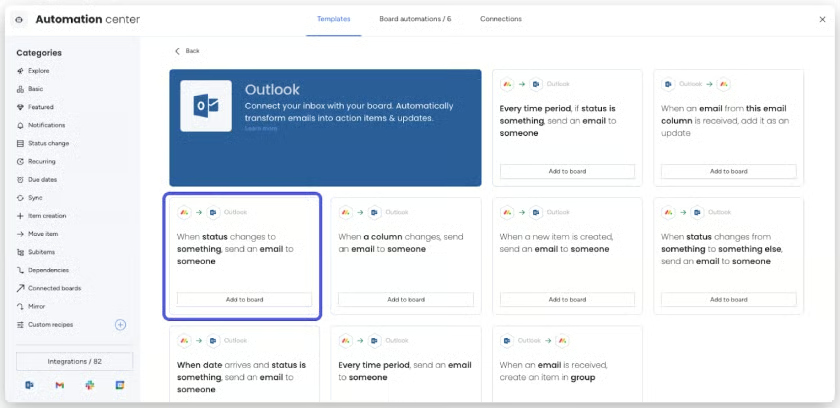
monday CRM is a great platform for small businesses looking for an easy, visual way to manage customers and emails. With just a few clicks, you can connect it with your Outlook account to instantly turn emails into CRM items, sync calendar events, and automate follow-ups.
The real beauty of monday CRM lies in its simplicity and flexibility. You can design your sales workflows using visual boards, drag-and-drop automation, and built-in Outlook triggers that automatically create tasks or update deal stages when emails arrive.
This ease of use translates into faster adoption and immediate productivity, which is a welcome benefit for small businesses that don’t have a dedicated tech team. Plus, your Outlook inbox becomes a dynamic part of your sales workflow.
What actual monday CRM users say
- “I like how I can easily centralize [the] sales pipeline effectively using API and numerous native integrations with popular software applications like Outlook, Gmail, Excel, etc. I can store and manage each lead with monday CRM. The best thing started happening after I’ve been using monday CRM to keep data organized. Now, I also can collaborate with my team members seamlessly with this software.” — G2 reviewer
- “I really like how visual monday CRM is. It’s easy to set up boards and customize them the way I want, without needing a ton of training. Moving deals through stages feels super intuitive, and I can see everything at a glance. The integrations are also helpful — especially with email and calendar — so I don’t have to jump between tools all the time.” — G2 reviewer
- “This product is very easy to use. The menus are very easy to navigate, and I don’t have to update anything manually … plus, it can read and analyze emails from your customers and then let you know if the customer is happy or unhappy and if they are probably about to buy or if they are unhappy about something or other.” — Capterra reviewer
monday CRM pricing*
| Basic | Standard | Pro | Enterprise | |
|---|---|---|---|---|
| Monthly price, billed annually | $12/user | $17/user | $28/user | Custom |
| Monthly price, billed monthly | $15/user | $20/user | $33/user | Custom |
*Requires a minimum of three users.
Salesflare: Best for email tasks and data automation
Why I like Salesflare
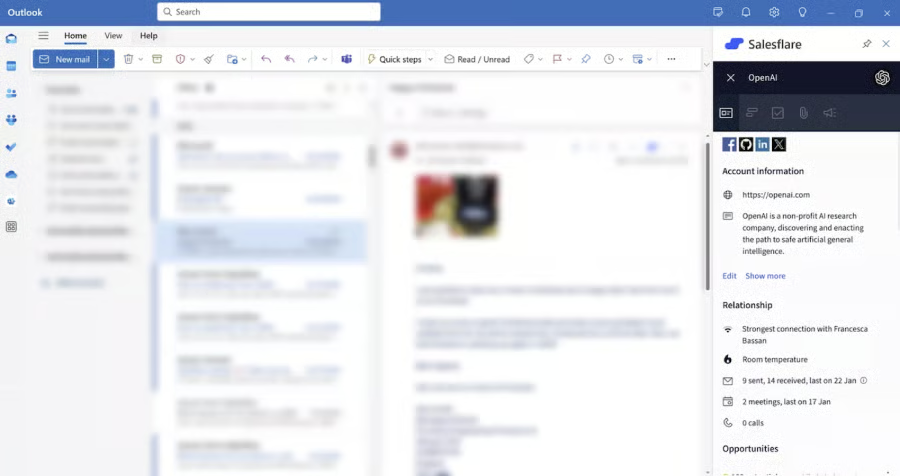
Salesflare boasts seamless email intelligence and hands-off data handling capabilities. Unlike CRMs that rely on manual updates, this platform automatically pulls emails, calendar events, and contact information directly from Outlook into the CRM.
This tight native sync means your Outlook activity instantly translates into deal and contact insights without data entry. Every thread, meeting, and touchpoint is logged and organized automatically.
With Salesflare, you can create personalized email sequences, track opens and clicks, and trigger follow-ups based on recipient engagement from a single connected workspace. For small and mid-size sales teams managing leads through Outlook, that means faster response times, cleaner data, and fewer lost opportunities.
What actual Salesflare users say
- “It is very useful for us. We can save our time because of this feature: automatic contact enrichment. Good Customer support, and we can easily generate leads to increase sales.” — G2 reviewer
- “Salesflare’s intuitive and modern interface allows seamless management of customer relationships, saving a significant amount of time. Among its best features are automatic email integration and interaction tracking, which simplify the sales team’s work and allow them to focus on higher-value activities.” — G2 reviewer
- “It’s very easy to use and automated. Great if you’re in B2B and want good automation with your mailbox and also for LinkedIn.” — Reddit reviewer
Salesflare pricing
| Growth | Pro | Enterprise | |
|---|---|---|---|
| Monthly price, billed annually | $29/user | $49/user | $99/user |
| Monthly price, billed monthly | $39/user | $64/user | $124/user |
Salesforce: Best for affordable Outlook email tracking
Why I like Salesforce
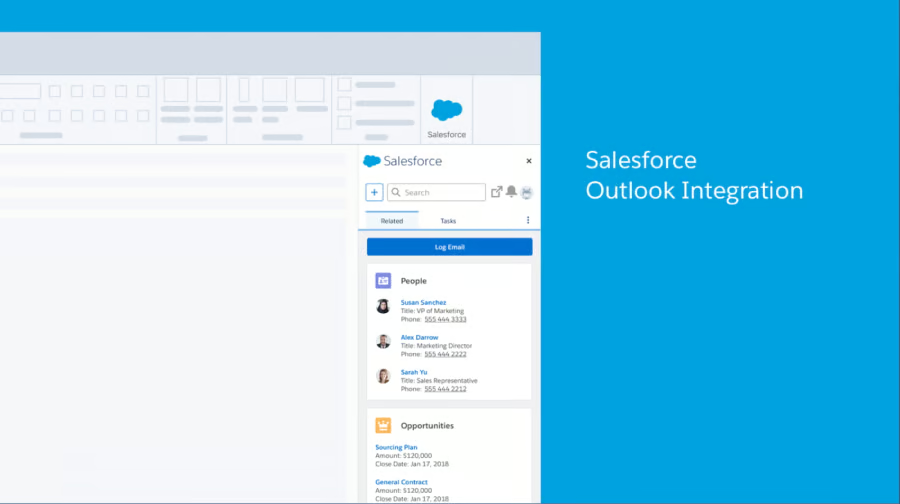
Salesforce strikes a compelling balance between power and usability when it comes to email tracking. With its Outlook integration, you can log emails, track opens and link clicks, sync calendar events, and relate messages to leads or contacts from within your inbox.
As a result, your sales team doesn’t waste time switching platforms or doing duplicate data entry. They simply work in Outlook and let Salesforce capture the details automatically.
What makes it especially “affordable” for small businesses is that you don’t necessarily need the highest-tier plans to benefit from this functionality. The core email logging and tracking features are included in its Einstein Activity Capture feature, which is available across all plans.
In practice, you can get robust email tracking capabilities without having to invest immediately in more expensive enterprise modules. That lets you level up your sales productivity early, without breaking the budget.
What actual Salesforce users say
- “What I appreciate most about Salesforce Sales Cloud is its ability to centralize all customer information and sales activities in a single location. This makes it very effective for tracking leads, managing opportunities, and gaining a clear view of the entire sales pipeline. Additionally, the dashboards and automation tools help me stay organized and support making informed, data-driven decisions.” — G2 reviewer
- “As a developer, it is fairly easy to customize the platform to meet business needs. Even then, the standard features are incredibly powerful out of the box. The UI can be a bit unintuitive or overwhelming to brand-new users. Some of the record pages can show too many things all at once.” — G2 reviewer
- “Overall, Salesforce Sales Cloud has been a reliable and robust CRM that has improved visibility into our sales pipeline and helped streamline processes across departments. While it does come with a learning curve and a higher price point, the value it delivers in terms of efficiency and data-driven decision-making has been worth it.” — Capterra reviewer
Salesforce Sales Cloud pricing
| Starter Suite | Pro Suite | Enterprise | Unlimited | Agentforce 1 Sales | |
|---|---|---|---|---|---|
| Monthly price, billed annually | $25/user | $100/user | $175/user | $350/user | $550/user |
| Monthly price, billed monthly | $35/user | N/A | N/A | N/A | N/A |
Pipedrive: Best Outlook integration for sales meetings and activities
Why I like Pipedrive
Pipedrive offers one of the cleanest and most reliable integrations with Outlook, particularly when it comes to managing sales meetings, activities, and follow-ups.
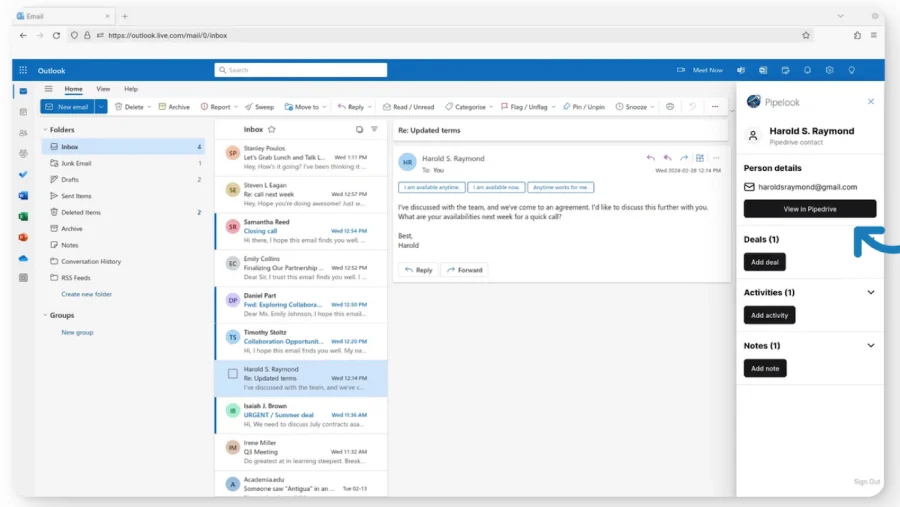
You can schedule meetings in Outlook (or Microsoft 365), sync them automatically to Pipedrive’s activity feed, and link them directly to deals or contacts. That means every time your team books a call or follow-up, it shows up in the CRM pipeline without manual data entry.
Thanks to the Outlook add-in, when someone responds or opens an email, Pipedrive captures that and surfaces the context in the relevant deal or contact view.
That tight coupling helps sales reps keep their calendar, communications, and pipeline in sync, and no context gets lost between tools. For me, Pipedrive’s balance of reliability, usability, and depth makes it especially strong for small sales teams.
What actual Pipedrive users say
- “Exactly what we need without paying for customizations. It was really easy to import our Outlook contacts and our array of Excel sheets we were using for lead tracking.” — G2 reviewer
- “I absolutely love Pipedrive’s intuitive setup and pipeline feature. It makes tracking leads and deals effortless, providing a clear, single pane of glass view to manage sales processes efficiently. The integration with Microsoft email is fantastic, as it allows me to email clients directly and monitor engagement, such as when they open emails or click links.” — G2 reviewer
- “Does everything I need without having to do massive amounts of configurations. Great UI/UX, fast, and intuitive. Data can be easily managed in bulk and exported and imported back in. Automation tools and integrations with Make.com [and] Zapier are relatively easy to set up. Smart Documents [is] a great inclusion, considering the alternatives out there are priced so high. Email integration is pretty solid if your team can be transparent [and] adds a lot of clarity to deals/organizations.” — Capterra reviewer
Pipedrive CRM pricing
| Lite | Growth | Premium | Ultimate | |
|---|---|---|---|---|
| Monthly price, billed annually | $14/user | $24/user | $49/user | $69/user |
| Monthly price, billed monthly | $19/user | $34/user | $64/user | $89/user |
Capsule CRM: Best for storing and tracking email conversations
Why I like Capsule CRM
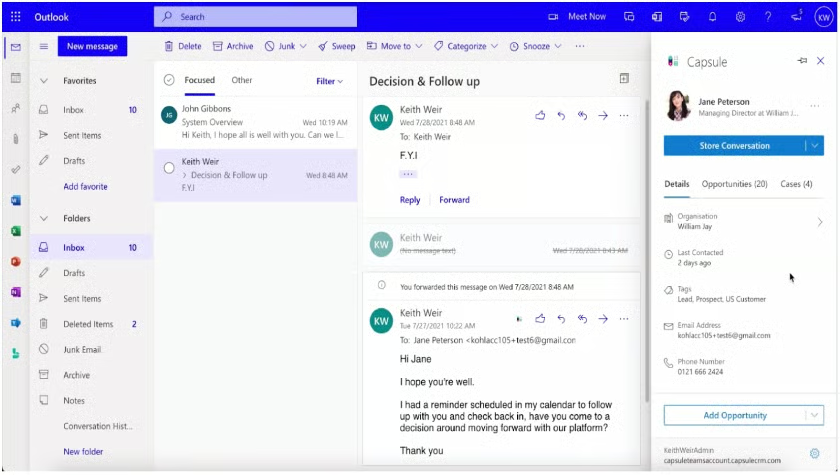
Capsule CRM has one of the simplest and most dependable tools for storing and tracking email conversations. Its Outlook integration lets you automatically log emails to contacts, opportunities, or cases, ensuring that every exchange is captured in one place.
Instead of juggling multiple inboxes or searching for old threads, you can see the full communication history for each client right inside the CRM. This is a huge time-saver for small teams managing dozens of relationships.
What I like most about Capsule CRM is that it avoids the complexity of larger CRMs while still providing a clear timeline of interactions, showing when emails were sent, replied to, or followed up. This organized view helps small businesses stay on top of conversations without needing dedicated IT support or complicated setup, and this is exactly what small teams need.
What actual Capsule CRM users say
- “I love the fact that calendar, email, and phone contacts integration works seamlessly with apps and desktop applications. It’s very easy to set up and create custom fields, suitable for your business. Customer support is great, and also very quick to respond to queries or help that you might need. I use it daily for keeping track of leads. Integration with accounts systems is also great, saves a lot of double inputting when leads are converted to customers.” — G2 reviewer
- “This CRM is very easy to use and easy to set up for someone with no prior CRM use. The opportunity feature enables us to keep on top of tasks per case. Also, the filtering options are helpful when trying to complete tasks at the same time and covering others’ tasks when they are not able to work. I also love that you can set email templates, and the amount of information in one space you can easily access in seconds makes it so efficient.” — G2 reviewer
- “Capsule software allows for efficient sending of email campaigns and tracks all campaign performance in real-time. Customizability of the software is very high.” — Capterra reviewer
Capsule CRM pricing
| Starter | Growth | Advanced | Ultimate | |
|---|---|---|---|---|
| Monthly price, billed annually | $18/user | $36/user | $54/user | Custom |
| Monthly price, billed monthly | $21/user | $38/user | $60/user | Custom |
Dynamics 365: Best for Microsoft 365 integrations
Why I like Dynamics 365
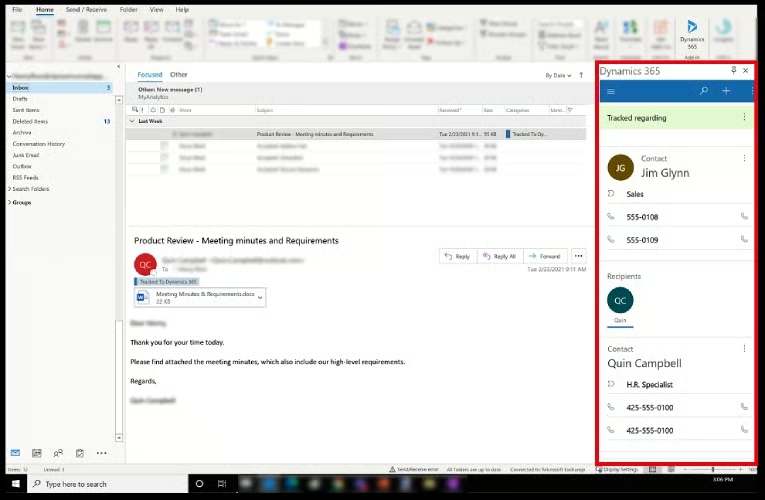
Dynamics 365 delivers unmatched synergy with Microsoft 365 apps, including Office, Outlook, Teams, SharePoint, and Power Platform. Unlike third-party CRMs that piece together integrations, Dynamics 365 is built by Microsoft, so the connections are native and deep. Your Outlook calendar, email, and contacts are seamlessly reflected in the CRM without the need for external plugins or complex bridging. When you schedule a meeting in Teams or add a contact in Outlook, those changes can flow automatically into your CRM environment.
Beyond email and calendar, Dynamics 365 lets you extend data and workflows across Microsoft tools. For example, you can combine CRM data with Excel, embed dashboards into Teams channels, store documents in SharePoint linked to Dynamics records, and automate cross-application processes using Power Automate. This level of integration helps reduce friction between apps and means your users don’t have to context-switch.
What actual Dynamics 365 users say
- “I primarily use Dynamics 365 CRM for managing our partner accreditations and reviewing their history with us as customers. It’s incredibly helpful to have all of that information in one place, making it easy to track interactions, keep records up to date, and ensure we’re supporting our partners effectively. The reporting tools and integration with Microsoft apps are a real plus, and they make collaboration much smoother.” – G2 reviewer
- “Been using since 2009 and find it essential in helping us run our business, manage customers, lead, and for marketing purposes. It’s easy to customize the software to add new fields and even new entities. It has the ability to integrate with other software applications, including Microsoft Outlook.” – Capterra reviewer
- “It has comprehensive CRM/ERP integration, powerful analytics, seamless Microsoft ecosystem connectivity, and customizable workflows to boost efficiency.” – Capterra reviewer
Dynamics 365 Sales pricing
| Professional | Enterprise | Premium | Microsoft Relationship Sales | |
|---|---|---|---|---|
| Monthly price, billed annually | $65/user | $105/user | $150/user | Custom |
| Monthly price, billed monthly | N/A | N/A | N/A | N/A |
Less Annoying CRM: Best for basic Outlook calendar and email logging
Why I like Less Annoying CRM
Less Annoying CRM is one of my favorite platforms because it stays true to its name. I recommend it for small businesses that don’t need flashy extras and just want their CRM to “do the job.”
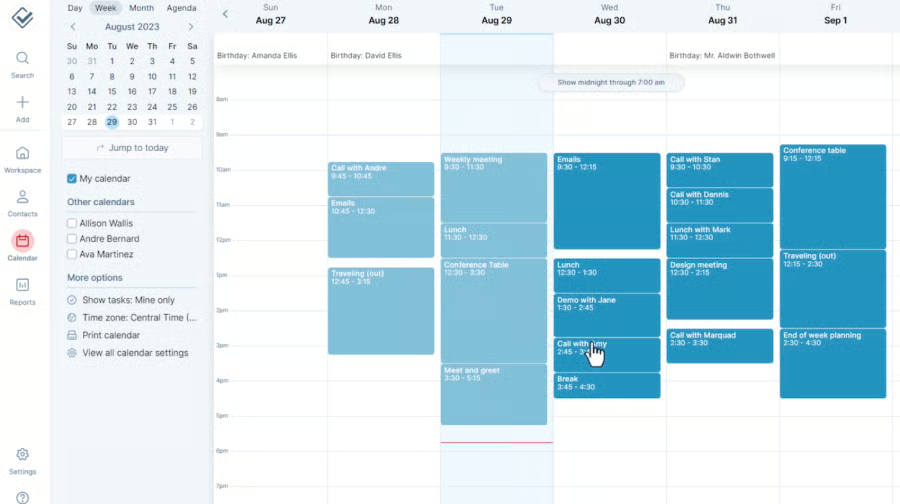
This provider gets the fundamentals right, especially when it comes to Outlook calendar sync and straightforward email logging. Its built-in two-way Outlook calendar sync ensures that appointments set in Outlook appear in the CRM and vice versa.
When it comes to email, Less Annoying CRM employs a BCC logging approach: You forward or copy (BCC) client emails to a special CRM address, and the CRM automatically attaches them to the correct contact record. It’s not high tech, but it works consistently, with minimal setup, minimal friction, and minimal risk of things breaking.
What actual Less Annoying CRM users say
- “I love LACRM because it is very simple to use and has everything our business needs. All at a very low cost to our company. Being a small company, we don’t want to pay large fees for features we won’t use. I love the repeating feature on the calendar. I love the Pipeline features, group features, and the activity documentation. I can tailor it to our specific needs.” — G2 reviewer
- “It’s very easy to learn and provides excellent customer service. I’ve been using this software for over 10 years, and their software engineers continue to provide useful updates based on customer feedback.” — G2 reviewer
- “We’ve used lots of tools, and implementation is important. More expensive tools have more features. They take longer to set up, longer to adopt, and cost more. If you just need a sleek CRM, this one is great value.” — Capterra reviewer
Less Annoying CRM pricing
Less Annoying CRM offers a flat pricing scheme that costs $15 per user per month (plus tax). This plan allows you to access all of its features and customer support channels. It also comes with a 30-day free trial. If you have more than 10 users in your team, contact their sales team to discuss a tailored plan that fits your unique business needs.
Apptivo: Best multifunctional Outlook integration for various business operations
Why I like Apptivo
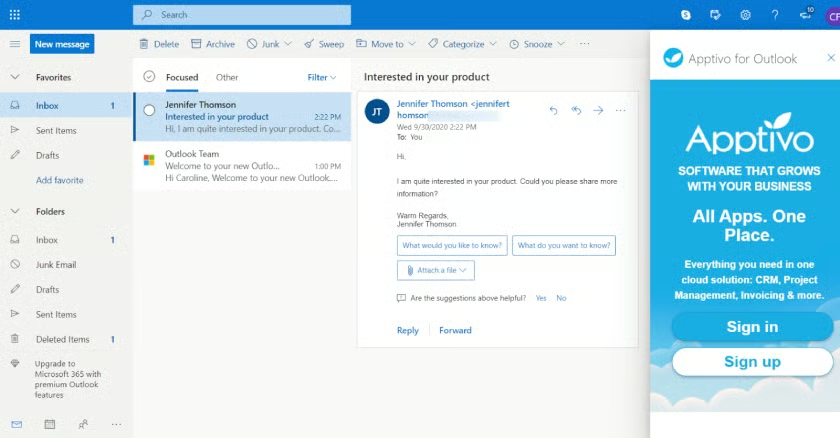
Apptivo’s Outlook integration is more than just email logging. You can also sync calendar tasks and events in real time, integrate email accounts via modern authentication, and even share documents through OneDrive tied to CRM records.
Its add-in allows direct access from Outlook to view or create CRM records (contacts, leads, opportunities) while associating inbox emails with those records.
From my experience evaluating CRMs for small businesses, Apptivo is one of the rare systems that blends deep Outlook connectivity with a full suite of business operations tools. While I’m not a fan of its outdated interface, Apptivo is an ideal option when you want one platform to cover CRM, invoicing, and projects.
What actual Apptivo users say
- “I appreciate how flexible and customizable Apptivo is for managing different business needs. The platform brings together CRM, project management, invoicing, and other essential tools in one place, which saves a lot of time and effort. The interface is straightforward, and it’s easy to adapt workflows to fit our team. Having so many features under one roof lets us keep things organized and collaborate more efficiently.” — G2 reviewer
- “Apptivo is a comprehensive business management software that offers a wide range of features designed to streamline operations for small to medium-sized businesses. The mobile apps, while useful, may not offer the full range of features available on the desktop version. This can be a limitation for users who need to perform complex tasks on the go.” — G2 reviewer
- “Apptivo is an incredibly powerful and versatile software, but with so many options and opportunities, it can be challenging to learn. Fortunately, Apptivo’s customer support has never let me down!” — G2 reviewer
Apptivo pricing
| Lite | Premium | Ultimate | Enterprise | |
|---|---|---|---|---|
| Monthly price, billed annually | $15/user | $25/user | $40/user | Custom |
| Monthly price, billed monthly | $20/user | $30/user | $50/user | Custom |
Avid CRM: Best CRM with Outlook built in for automatic data syncing
Why I like Avid CRM
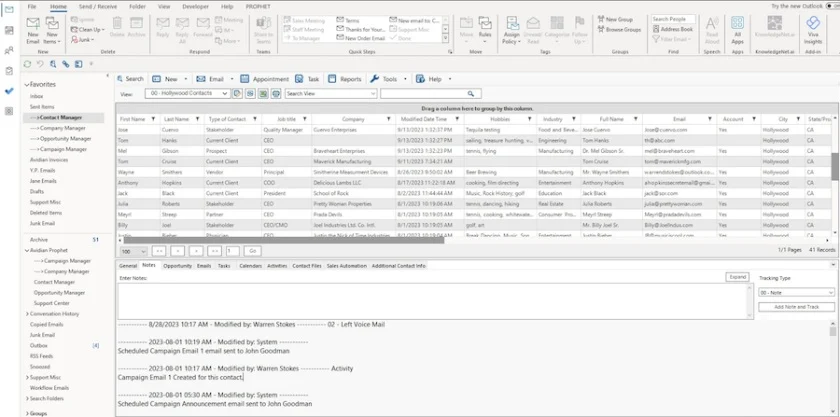
Avid CRM (formerly Prophet CRM) is unique from all the other providers in this list because it doesn’t treat Outlook as a separate connected app; Outlook is its home.
Because Avid CRM is embedded directly within Outlook, it enables seamless, automatic data syncing of contacts, emails, meetings, tasks, and notes without the need for third-party bridges or manual imports.
My least favorite thing about Avid CRM is its clunky interface. I believe it could greatly benefit from a major update. All things considered, from a small business perspective, Avid CRM’s built-in Outlook sync is a major advantage.
You get enterprise-level automatic syncing without needing to manage complex integrations, API connections, or separate sync tools.
What actual Avid CRM users say
- “The integration with Outlook makes Prophet CRM a useful tool in our business. It was easy to set up and integrate with our already in-use Outlook accounts. My team learned to use it very fast due to its intuitive design.” — Capterra reviewer
- “It is an excellent centralized database for our entire company. The ability to track sales and possible new business throughout our company makes it easy to stay up to date with what is going on.” — Capterra reviewer
- “[I like] that it is embedded in Outlook. Flexible enough to design the screens in a way that makes sense for my company to track case development through to a sale.” — Capterra reviewer
Avid CRM pricing
| Standard | Professional | Enterprise | |
|---|---|---|---|
| Monthly price, billed annually | $20/user | $30/user | $50/user |
Methodology: How I evaluated the best Outlook CRMs for small businesses
To build this list of the best Outlook CRM systems, I tested and compared CRM platforms based on how effectively they integrate with Microsoft Outlook and Microsoft 365 for email management, calendar syncing, contact organization, and sales tracking. I focused on CRM tools that reduce manual data entry, keep customer communication centralized, and help sales teams manage workflows directly from Outlook.
I scored each CRM using a weighted rubric based on Outlook integration quality, CRM functionality, pricing, ease of use, customer support, and overall value for small businesses.
- General features (25%): I evaluated the core CRM tools businesses need most, including contact and lead management, pipeline tracking, reporting, workflow automation, email management, mobile access, and third-party integrations.
- Advanced and Outlook-specific features (20%): I prioritized CRM platforms with strong Outlook integration features, including two-way email and calendar syncing, Outlook inbox integrations, contact importing, real-time synchronization, meeting scheduling, and activity tracking directly inside Outlook.
- Pricing (15%): I reviewed overall affordability, including starting costs, scalability, billing flexibility, and whether Outlook integration features required higher-tier plans. I also prioritized providers with free plans or affordable entry-level pricing for small businesses.
- Ease of use (15%): I assessed setup simplicity, onboarding experience, interface design, automation templates, and how easy each CRM is to learn and manage for teams already working inside Microsoft Outlook.
- Support (15%): I reviewed customer support availability, onboarding resources, live chat and phone support, help centers, and training materials to determine how accessible each platform is for new users.
- Expert score (10%): I incorporated my hands-on testing experience along with real customer feedback from trusted review platforms. This score reflects overall usability, Outlook integration reliability, feature quality, and value for money for small business sales teams.
How to choose the best Outlook CRM for your business
Choosing the best Outlook CRM depends on how your business manages email communication, customer relationships, and sales workflows inside Microsoft Outlook and Microsoft 365. Some CRM systems focus on simple email syncing, while others offer deeper integrations for contact management, automation, pipeline tracking, and meeting scheduling. Use the steps below to compare Outlook CRM systems and find the best fit for your sales process, team size, and daily workflow.
- Start with how your team uses Outlook today. Identify whether your team mainly needs email tracking, contact syncing, calendar scheduling, task management, or full sales pipeline visibility inside Outlook.
- Check the depth of the Outlook integration. The best Outlook CRM should support two-way email sync, calendar sync, contact import, email logging, and activity tracking without requiring too much manual entry.
- Decide whether you need a CRM inside Outlook or just Outlook syncing. Some CRMs let you manage records directly from the Outlook inbox, while others only sync emails and meetings in the background.
- Test contact and email logging. Make sure the CRM can connect emails to the right contacts, companies, and deals so customer communication stays organized.
- Review calendar and meeting features. Look for meeting scheduling, appointment syncing, reminders, and shared calendar visibility if your sales process depends on calls, demos, or follow-ups.
- Compare sales pipeline tools. Choose a CRM that makes it easy to track leads, deals, stages, tasks, and next steps without leaving your daily workflow.
- Check Microsoft 365 compatibility. Confirm the CRM works with your Microsoft 365 plan, Outlook desktop app, Outlook web app, and mobile setup.
- Evaluate automation and AI tools. Basic automations like follow-up reminders, lead assignments, email templates, and workflow triggers can save time for sales teams.
- Review pricing and plan limits. Some CRMs include Outlook integration on free or entry-level plans, while others require higher-tier subscriptions.
- Use a trial before committing. Test email sync, calendar sync, contact imports, pipeline updates, and Outlook add-ins with real customer data before choosing a CRM.
Frequently asked questions (FAQs)
What is an Outlook CRM?
An Outlook CRM is a customer relationship management system that integrates with Microsoft Outlook and Microsoft 365 to manage emails, contacts, calendars, deals, and customer communication from one platform.
What is the best Outlook CRM for small businesses?
The best Outlook CRM for small businesses depends on your workflow and budget. HubSpot CRM is one of the best overall options for Microsoft 365 users because it combines email syncing, contact management, automation, and sales tracking in one easy-to-use platform.
Can Outlook be used as a CRM?
Outlook can help manage contacts and emails, but it lacks dedicated CRM features like sales pipelines, workflow automation, lead tracking, reporting, and deal management. An Outlook CRM adds those capabilities while keeping Outlook connected to your sales process.
Which CRM integrates best with Microsoft Outlook?
HubSpot CRM, Dynamics 365, Salesforce, Zoho CRM, and Pipedrive are among the best CRM platforms for Outlook integration because they offer two-way email sync, calendar syncing, Outlook add-ins, and activity tracking.
What features should an Outlook CRM include?
The best Outlook CRM systems should include email syncing, contact management, calendar integration, sales pipelines, automation tools, meeting scheduling, mobile access, and Microsoft 365 compatibility.
Are there free Outlook CRM systems?
Yes. Some CRM platforms offer free plans with Outlook integration features, including HubSpot CRM and Zoho CRM. However, advanced Outlook automation and syncing tools may require paid plans.
How do I choose the best CRM for Outlook?
When choosing an Outlook CRM, compare email and calendar syncing, automation tools, ease of use, Microsoft 365 compatibility, pipeline management, integrations, pricing, and customer support. Testing the Outlook integration firsthand before committing is also important.
Bottom line
Integrating your CRM with Outlook lets you manage your email and customer data without switching platforms. The best CRMs for Outlook have automation, AI, and document management tools, improving efficiency and productivity.
Depending on your budget and feature preferences, various Outlook CRMs could better suit your business. For instance, HubSpot CRM is best for free email tools, while Zoho CRM is best for its cost-scalable plans.
